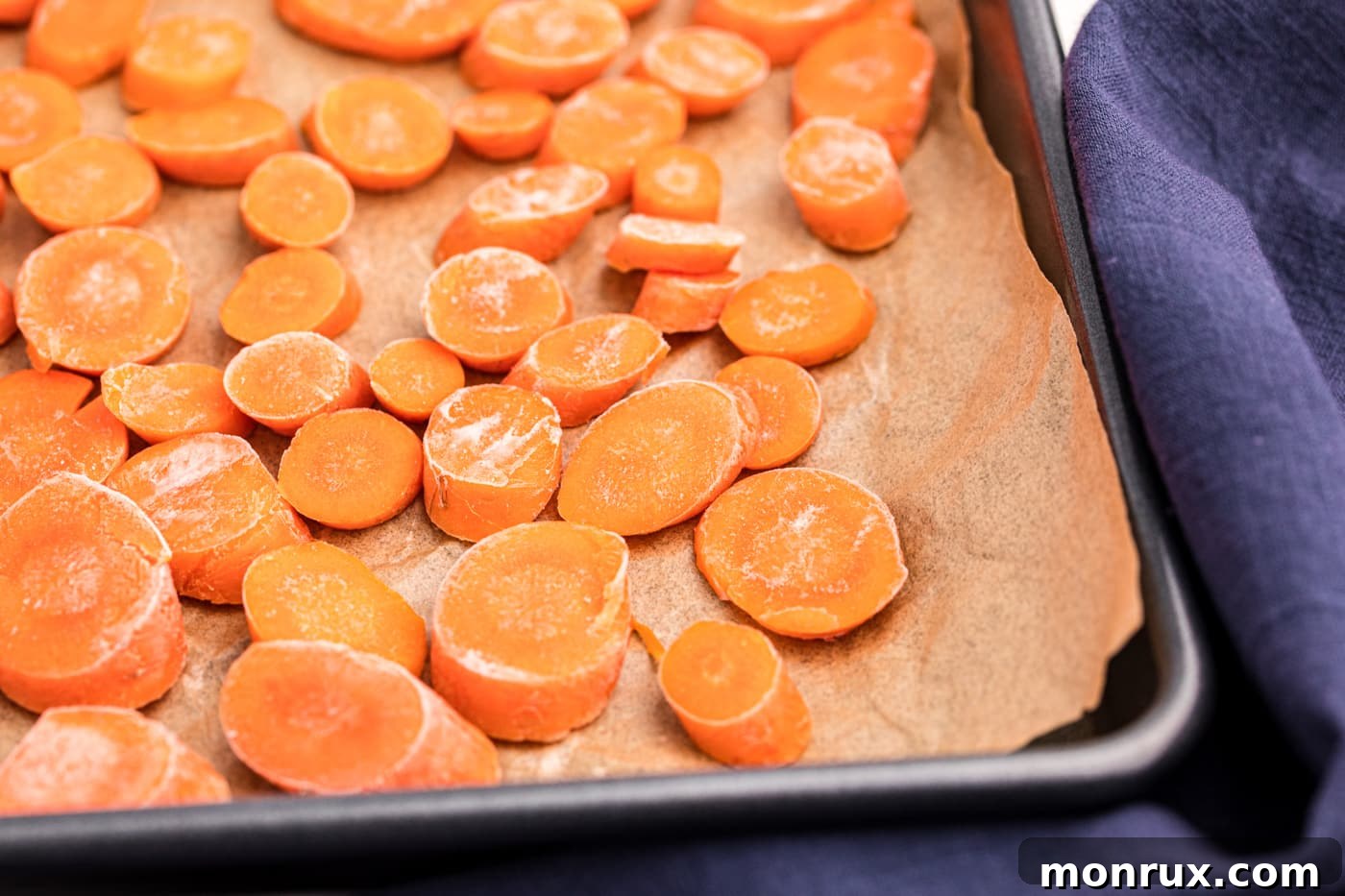
Carrots are not only a delicious and versatile root vegetable but also an excellent candidate for freezing, offering a convenient way to extend their shelf life and reduce food waste. Whether you’re dealing with an abundance from your garden, a great sale at the grocery store, or simply aiming for efficient meal preparation, knowing how to freeze carrots properly can be a game-changer. This comprehensive, step-by-step guide will walk you through the entire process, emphasizing the critical step of blanching to ensure your frozen carrots maintain their vibrant color, firm texture, and nutritional value for months to come. Imagine having perfectly prepared carrots ready to be tossed into your favorite soups, stews, casseroles, or even smoothies at a moment’s notice.
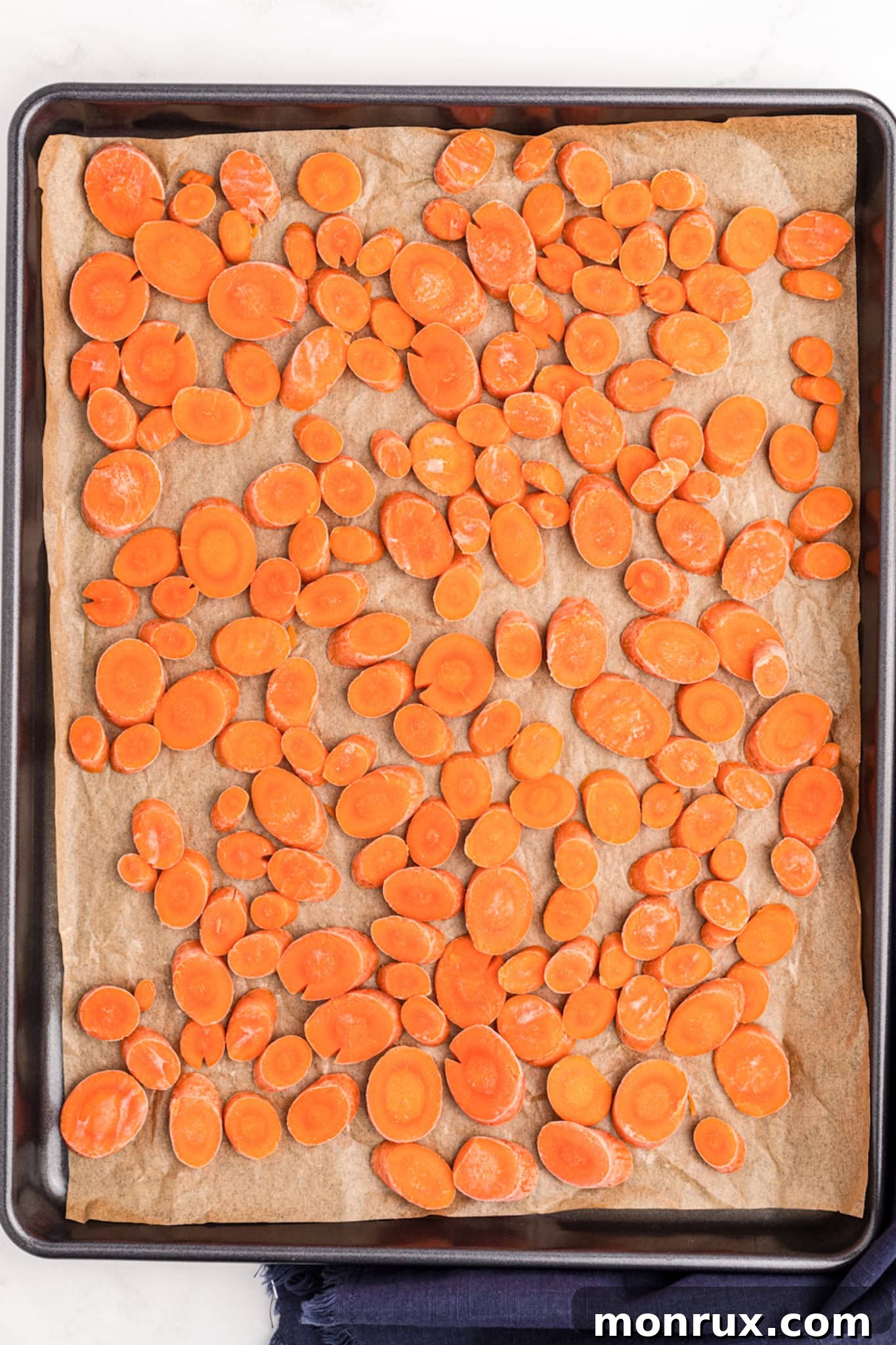
As a cornerstone of many cuisines, carrots are renowned for being both budget-friendly and incredibly versatile. While fresh carrots typically last in the refrigerator for a few weeks, their freshness diminishes over time, and they eventually become soft or mushy. Freezing offers a superior alternative to discarding excess carrots, allowing them to remain fresh and nutrient-rich for several months, especially when prepared using the optimal blanching method.
Let’s explore the most effective techniques for freezing carrots, focusing on methods that not only extend their usability but also help preserve their essential vitamins, minerals, and delightful flavor. By following these steps, you’ll ensure that every frozen carrot you use is as close to garden-fresh as possible.
Why Freeze Carrots? Benefits of Preservation
Freezing carrots isn’t just about extending their shelf life; it offers a multitude of benefits that can enhance your kitchen efficiency and promote healthier eating habits:
- Reduces Food Waste: Prevent perfectly good carrots from spoiling. Freezing allows you to preserve surplus vegetables, whether from your garden, a farmer’s market haul, or a bulk grocery purchase. This directly translates to saving money and being more environmentally conscious.
- Year-Round Convenience: Enjoy the taste and nutrition of fresh carrots any time of the year, even when they’re out of season or expensive. Having a stash of frozen carrots means you’re always ready to whip up a nutritious meal.
- Preserves Nutritional Value: Blanching and freezing correctly locks in the vitamins, minerals, and antioxidants, such as beta-carotene, that make carrots so healthy. This ensures you’re providing your body with nutrient-dense food, even when fresh produce might be scarce.
- Saves Time on Meal Prep: Pre-chopping and blanching your carrots before freezing means they are ready to use directly from the freezer in most cooked dishes. This saves significant time during busy weeknights, making healthy eating more accessible.
- Cost-Effective: Buying carrots in bulk when they are in season or on sale and then freezing them is a smart economic strategy, allowing you to enjoy them at a lower cost over several months.
The Science of Blanching: Why It’s Essential for Carrots
Blanching is a crucial step in preparing carrots for freezing, and understanding why it’s so important will highlight its value. This quick heat treatment followed by immediate cooling achieves several key objectives:
- Deactivates Enzymes: Carrots, like many vegetables, contain natural enzymes that continue to ripen and degrade their quality even at freezing temperatures. Blanching deactivates these enzymes, preventing changes in color, flavor, and texture during storage. Without blanching, frozen carrots can become dull, tasteless, and mushy.
- Cleanses and Brightens: The brief dip in boiling water helps clean the surface of the carrots, removing any residual dirt or microorganisms. It also brightens their natural orange color, making them more visually appealing when cooked.
- Preserves Texture: Blanching helps retain the crisp-tender texture of the carrots. While frozen carrots will never be as firm as raw ones, properly blanched carrots will have a much better texture than unblanched ones when thawed and cooked.
- Retains Nutrients: While some water-soluble vitamins can be lost during blanching, the process effectively stops enzymatic degradation, which would lead to a greater loss of nutrients over longer freezing periods. The brief blanching time minimizes nutrient leaching.
What You’ll Need: Key Ingredients & Equipment
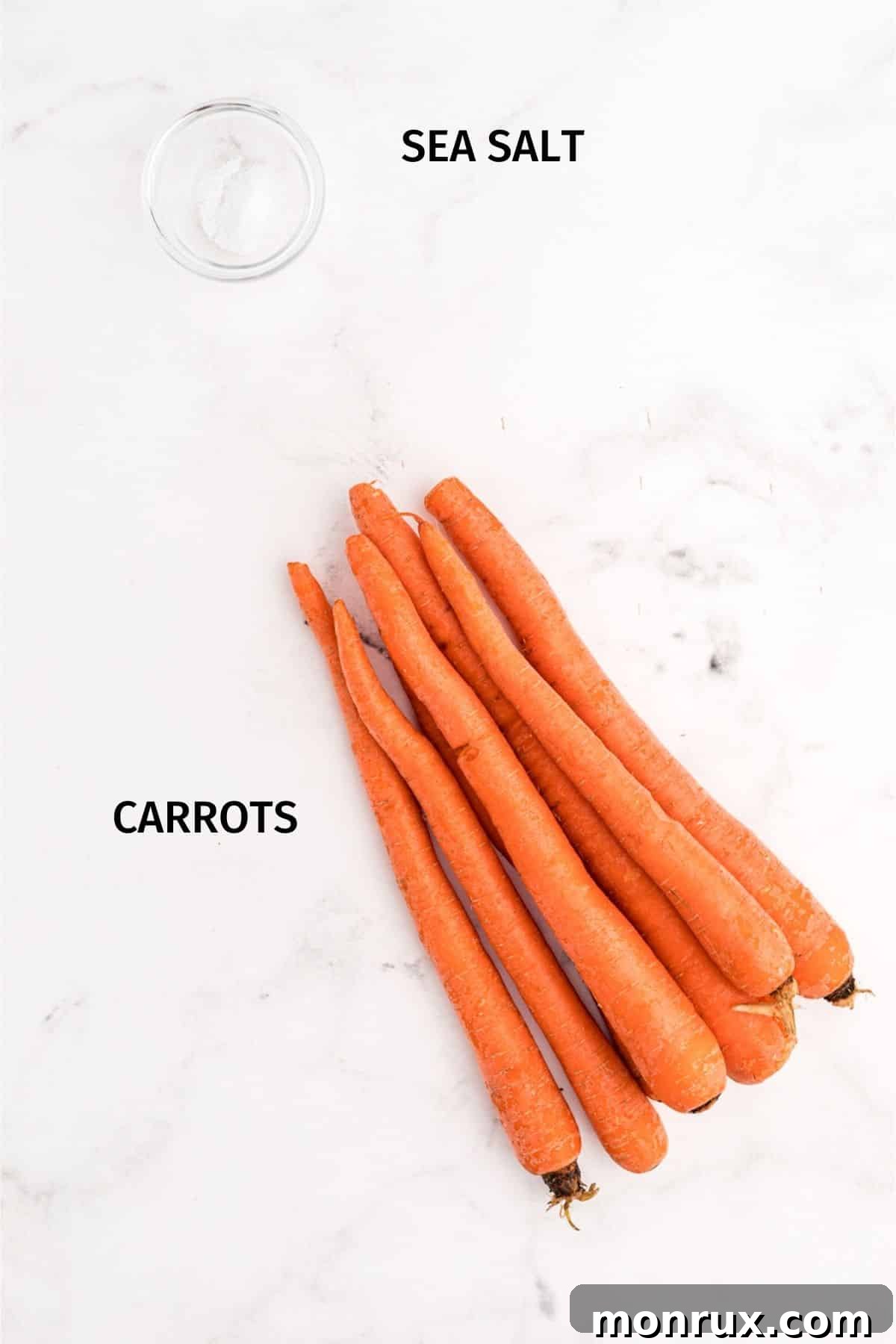
Ingredients:
- Fresh Carrots: The star of our show! Look for carrots that are firm, smooth, and boast a bright orange color. Avoid any with dark spots, cracks, or soft, mushy ends, as these indicate spoilage. You can use any variety, from tender young carrots to larger, mature ones. Before beginning, ensure they are thoroughly scrubbed clean. You can choose to peel them or leave the skins on for added nutrients and fiber, depending on your preference and the carrots’ condition.
- Sea Salt: A small amount of sea salt will be added to the blanching water. This helps season the carrots slightly and aids in the blanching process, enhancing their natural flavor.
Equipment:
- Large stockpot for boiling water
- Large bowl for ice water bath
- Slotted spoon or colander for transferring carrots
- Sharp knife or food processor with slicing disk
- Cutting board
- Parchment paper-lined baking sheets
- Freezer-safe bags (zip-top or vacuum sealable) or airtight containers
- Labels and a permanent marker
Step-by-Step Guide: How to Freeze Carrots Perfectly
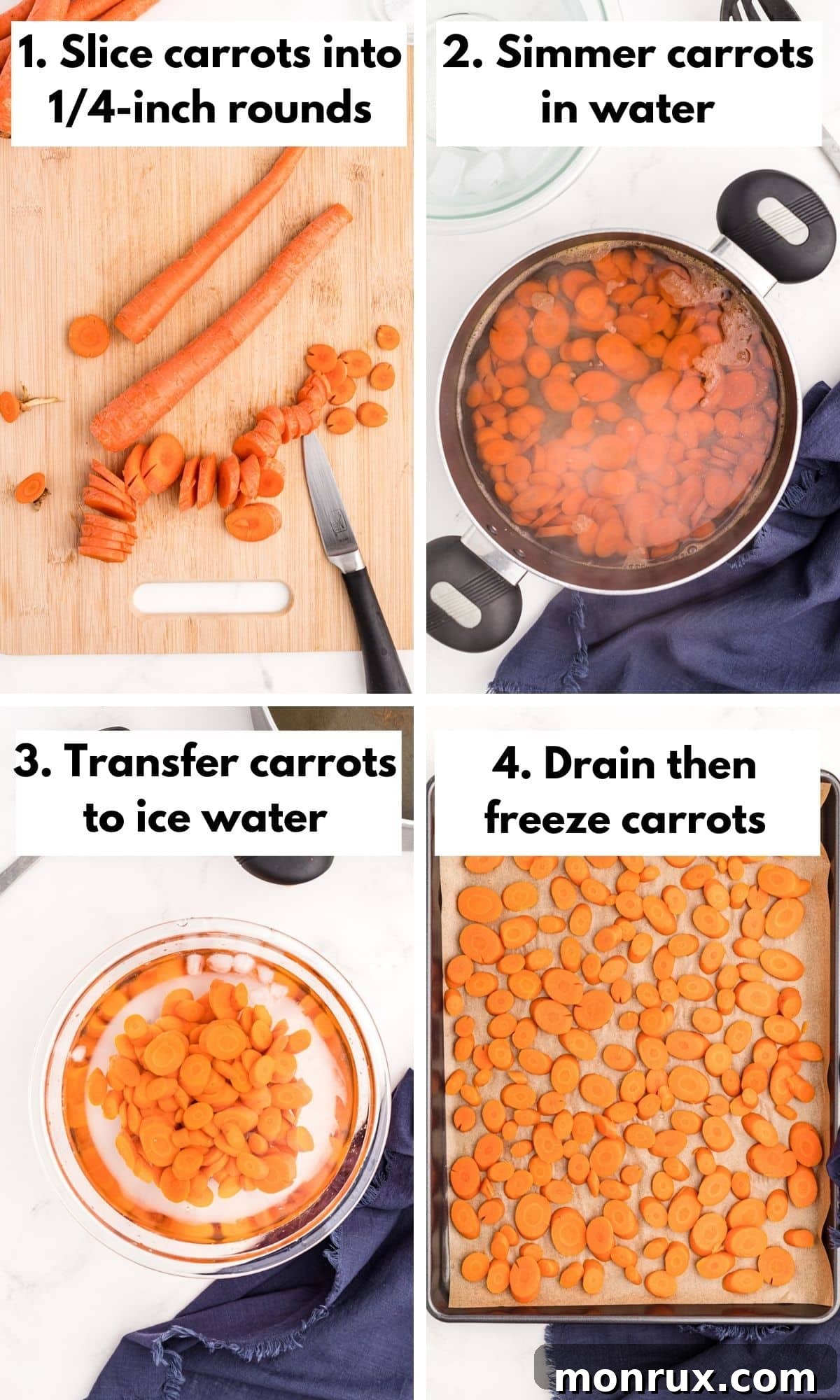
Step One: Prepare Your Carrots
Start by thoroughly washing your fresh carrots under cold running water. Scrub them well with a vegetable brush to remove any dirt or debris. If desired, you can peel the carrots with a vegetable peeler; however, leaving the skin on is perfectly fine, especially for organic carrots, as much of the nutrients are concentrated just beneath the skin. Next, trim off the green tops and the root ends. Place the clean carrots on a cutting board and cut them into uniform pieces. Slices about ¼-inch thick are ideal for even blanching and versatile use. You can also cut them into julienne strips, small cubes, or even baby carrot shapes, just ensure the pieces are relatively consistent in size to ensure they cook evenly. A sharp knife or a food processor with a slicing disk can make this task quick and easy.
Step Two: Prepare for Blanching
Fill a large stockpot with water, leaving enough room at the top to prevent overflow once the carrots are added. Add about ½ teaspoon of sea salt per gallon of water to slightly season the carrots and assist with the blanching process. Bring the water to a rolling boil over high heat. While the water is heating, prepare an ice bath: fill a large bowl with an equal mix of ice and cold water. This will be critical for quickly stopping the cooking process.
Step Three: Blanch the Carrots
Once the water is boiling vigorously, carefully add the chopped carrots to the hot water using a slotted spoon or a colander. Do not overcrowd the pot; blanch in small batches if necessary to ensure the water temperature remains high and the carrots cook evenly. Allow the carrots to cook for 2-3 minutes for slices or small cubes. If you’ve cut them into larger chunks or thicker sticks, you might extend the blanching time to 4-5 minutes. The goal is to heat them through but not cook them until tender.
Step Four: The Ice Bath (Shocking)
Immediately after blanching, use a slotted spoon or drain the carrots in a colander and plunge them into the prepared ice water bath. This rapid cooling, often called “shocking,” is essential. It instantly halts the cooking process, preserving the carrots’ vibrant color, firm texture, and nutritional integrity. Allow the carrots to cool completely in the ice bath for the same amount of time they were blanched. This ensures they don’t continue to cook from residual heat.
Step Five: Dry and Flash Freeze
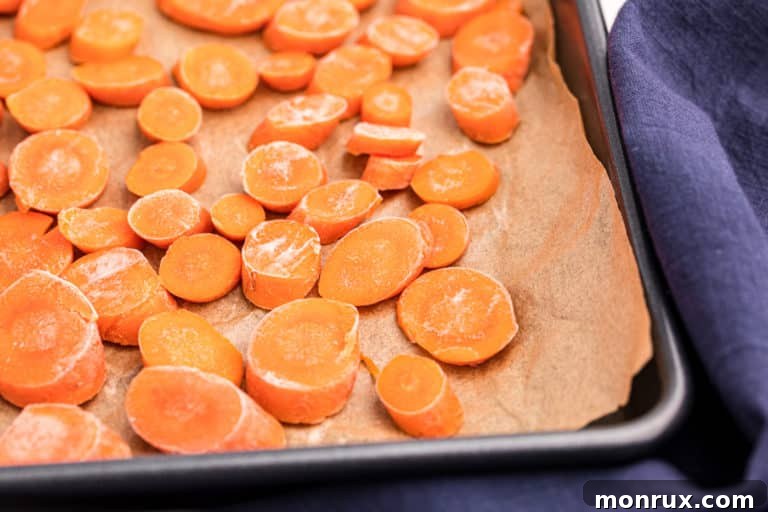
Once thoroughly chilled, drain the carrots completely and pat them dry with a clean kitchen towel or paper towels. Removing as much surface moisture as possible is crucial to prevent ice crystals from forming and causing freezer burn. Arrange the blanched and dried carrot slices in a single layer on a parchment paper-lined baking sheet or tray. Place the baking sheet in the freezer for at least 4-6 hours, or until the carrot pieces are individually frozen solid. This step, known as “flash freezing,” prevents the carrots from clumping together in the freezer bag, allowing you to easily portion out what you need later.
Step Six: Package and Store
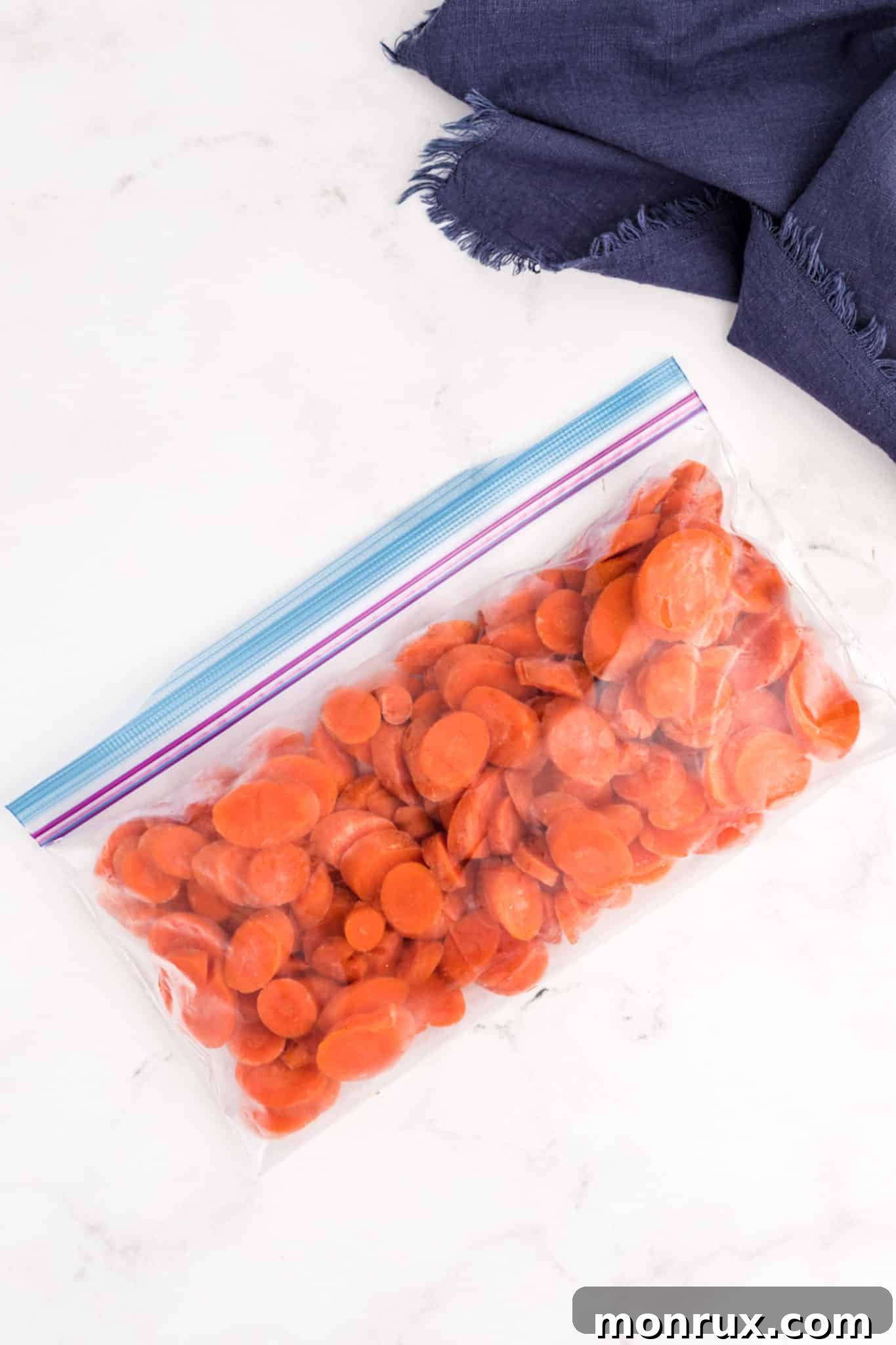
Once the carrots are thoroughly flash-frozen, transfer the solid pieces into freezer-safe zip-top bags or airtight containers. For optimal preservation and to prevent freezer burn, remove as much air as possible from the bags. If you have a vacuum sealer, this is an excellent time to use it for superior airtight sealing. Label each bag or container with the date of freezing. Properly stored blanched carrots can last in the freezer for 9-12 months. While they are safe to eat beyond this period, their quality may start to decline.
By following this detailed guide, you’ll successfully preserve your carrots, significantly reducing food waste and ensuring a convenient supply of healthy vegetables for future meals. Enjoy the satisfaction of knowing you’ve locked in freshness and flavor for the long term!
Using Your Frozen Carrots: Tips & Ideas
Creative Ways to Incorporate Frozen Carrots into Your Meals
One of the best advantages of having frozen carrots on hand is their versatility. They can be added directly to most cooked dishes without needing to thaw first, saving you valuable time. Here are some fantastic ways to use your perfectly preserved carrots:
- Soups and Stews: Frozen carrots are ideal for adding depth and nutrition to any soup, stew, chili, or broth. Simply toss them into the pot directly from the freezer; they will cook through as the dish simmers.
- Casseroles and Pot Pies: Incorporate frozen carrots into your favorite baked casseroles or savory pot pies for an extra layer of flavor and texture.
- Stir-Fries: While they won’t be as crisp as fresh, frozen carrots work wonderfully in stir-fries. Add them a few minutes before other quick-cooking vegetables to ensure they heat through properly.
- Roasted Vegetables: Toss frozen carrots with olive oil, herbs, and spices, then roast them in the oven. They’ll soften and caramelize beautifully.
- Purees and Baby Food: Steam or boil frozen carrots until very tender, then puree them for a healthy side dish or homemade baby food.
- Smoothies: For an extra nutrient boost, add a handful of frozen carrot pieces to your morning smoothie. They blend well and add a subtle sweetness.
- Mash: Boil until very soft, then mash with butter, salt, and pepper for a comforting side dish.
Common Questions About Freezing Carrots (FAQs)
While technically possible, it is not recommended for long-term storage or optimal quality. Raw carrots frozen without blanching can become tough, develop an off-flavor, and have a mushy texture due to enzyme activity. They will also only last for a much shorter period, typically 4-6 weeks, before significant quality degradation. Blanching is crucial for preserving their taste, texture, and nutritional integrity.
Frozen carrots are incredibly convenient! For most cooked dishes, such as soups, stews, casseroles, pot pies, or roasted vegetables, you can add them directly from the freezer. There’s usually no need to defrost them first, which saves time. They will cook through as part of your recipe. For dishes where a firmer texture is desired, add them towards the end of the cooking process.
As mentioned, blanching is highly recommended for carrots (and most vegetables) before freezing, especially if you plan to store them for more than a month or two. Blanching stops the enzymatic action that causes color fading, flavor loss, and textural changes. If you skip blanching, your carrots are likely to become soft, rubbery, and less flavorful upon thawing and cooking. The only exception might be very young baby carrots or shredded carrots that will be used very quickly, but even then, blanching significantly improves the outcome.
A typical bunch of carrots (often sold with their green tops) usually weighs about one pound and contains anywhere from 4 to 8 medium-to-large carrots, depending on their size. You can freeze as many carrots as your freezer space allows. Just ensure you process them in manageable batches to maintain the quality of the blanching and freezing steps. For best quality, aim to use your blanched frozen carrots within 9-12 months.
Absolutely! You can cut carrots into various shapes like lengthwise strips, julienne sticks, or cubes. The key is to ensure that the pieces are uniform in size to allow for even blanching and cooking. For strips, try to keep them no thicker than ½-inch to ensure thorough heat penetration during blanching.
Most fresh vegetables can be frozen, but the preparation method varies. Many, like carrots, green beans, and broccoli, require blanching to preserve their quality. Others, such as onions, peppers, and corn (off the cob), can often be frozen raw, though blanching can still improve their texture for longer storage. Leafy greens like spinach are often blanched and then squeezed dry before freezing. It’s always best to check specific recommendations for each vegetable to ensure the best results.
When properly blanched and stored in airtight containers or freezer bags, frozen carrots can maintain their quality for 9 to 12 months. Beyond this period, they are generally still safe to eat, but their texture, flavor, and nutritional value may start to diminish. Always label your packages with the freezing date to keep track.
We hope this guide empowers you to confidently freeze your carrots! If you try this method, please share your experience.
Stay connected for more clean eating recipes and tips by following us on social media: Facebook, Pinterest, Instagram, and YouTube!
How to Freeze Carrots (Blanching Guide)
5 Stars from 1 review
Carrots are an excellent vegetable for freezing, and frozen carrots can be used later in soups or stews. Learn how to freeze carrots with this helpful, easy-to-follow blanching guide, ensuring maximum freshness and flavor.
- Total Time: 25 minutes
- Yield: 4 servings
Ingredients
- 1 bunch of fresh carrots (about 1 lb)
- 1/2 teaspoon sea salt (for blanching water)
Instructions
- Wash the carrots thoroughly under cold water and scrub any dirt. Trim off the green tops and root ends. Decide whether to peel them or leave the skins on. Then, slice the carrots into uniform rounds, no thicker than ¼-inch. For larger carrots, you can cut them lengthwise before slicing for smaller pieces.
- Fill a large pot with water and add the sea salt.
- Place the pot over high heat and bring the water to a rolling boil. While the water is heating, prepare a large bowl filled with ice water; this is your ice bath.
- Carefully add the chopped carrot slices to the boiling water using a slotted spoon. Avoid overcrowding the pot; blanch in batches if needed to maintain the water’s temperature.
- Let the carrots cook in the boiling water for at least 2 minutes, but no longer than 4 minutes. The exact time depends on the thickness of your carrot pieces. They should be bright in color and slightly tender but still firm.
- Immediately after blanching, carefully remove the sliced carrots from the boiling water with a slotted spoon or drain them in a colander. Transfer them directly into the prepared ice water to stop the cooking process completely. Allow them to cool in the ice bath for the same amount of time they were blanched.
- Once thoroughly chilled, drain the carrots very well and pat them dry with paper towels to remove excess moisture.
- Spread the blanched and dried carrot slices in a single layer on a parchment paper-lined baking sheet. Place the sheet in the freezer for at least 6 hours, or until the carrots are individually frozen solid (flash freezing).
- Once flash-frozen, transfer the solid carrot slices to labeled freezer-safe zip-top bags or airtight containers. Remove as much air as possible from the bags to prevent freezer burn.
- Place in the freezer for up to 9-12 months for best quality.
Notes
- For most recipes using frozen carrots (like soups, stews, or roasts), you don’t need to defrost them first. You can add the frozen carrot slices directly into a hot pot or pan, allowing them to cook as part of the dish.
- Adding sea salt to your blanching water helps to lightly season the carrots and maintain their natural flavor during the freezing process.
- Frozen carrots are best suited for hot or cooked dishes. Due to the freezing process, they will lose some of their crisp, raw texture and will not be ideal for salads or raw snacking.
- Author: Carrie Forrest, MPH in Nutrition
- Prep Time: 15 minutes
- Cook Time: 10 minutes
- Category: Side Dish, Vegetable Preservation
- Method: Freezer, Blanching
- Cuisine: Healthy, American
- Diet: Vegan, Gluten-Free, Whole30
Nutrition
- Serving Size: 1/4 of recipe
- Calories: 37
- Sugar: 4.3 g
- Sodium: 62.1 mg
- Fat: 0.2 g
- Saturated Fat: 0 g
- Carbohydrates: 8.6 g
- Fiber: 2.5 g
- Protein: 0.8 g
- Cholesterol: 0 mg
Other Helpful Guides on How to Freeze Foods
Mastering food preservation can significantly enhance your kitchen efficiency and reduce waste. Explore these other guides for freezing various vegetables:
- How to Freeze Avocados
- How to Freeze Broccoli Florets
- How to Freeze Cabbage
- How to Freeze Cauliflower Florets
- How to Freeze Cherry Tomatoes
- How to Freeze Peppers and Onions
- How to Freeze Sweet Potatoes
Delicious Recipes for Using Frozen Carrots
Ready to put your perfectly frozen carrots to good use? They are a fantastic addition to a wide range of hearty and healthy dishes. Here are some of our favorite recipes where frozen carrots truly shine:
Don’t forget to join our newsletter list to get exclusive clean eating recipes and tips directly to your inbox. Our newsletter is 100% free with no spam; you can unsubscribe anytime.
About the Author: Carrie Forrest holds a master’s degree in public health with a specialty in nutrition and is a certified holistic nutritionist. She is a highly regarded wellness and food blogger, attracting over 5 million visitors to her site annually. Carrie shares an inspiring story of recovery from chronic illness and is deeply passionate about empowering other women to transform their health. Feel free to send her a message through her contact form.