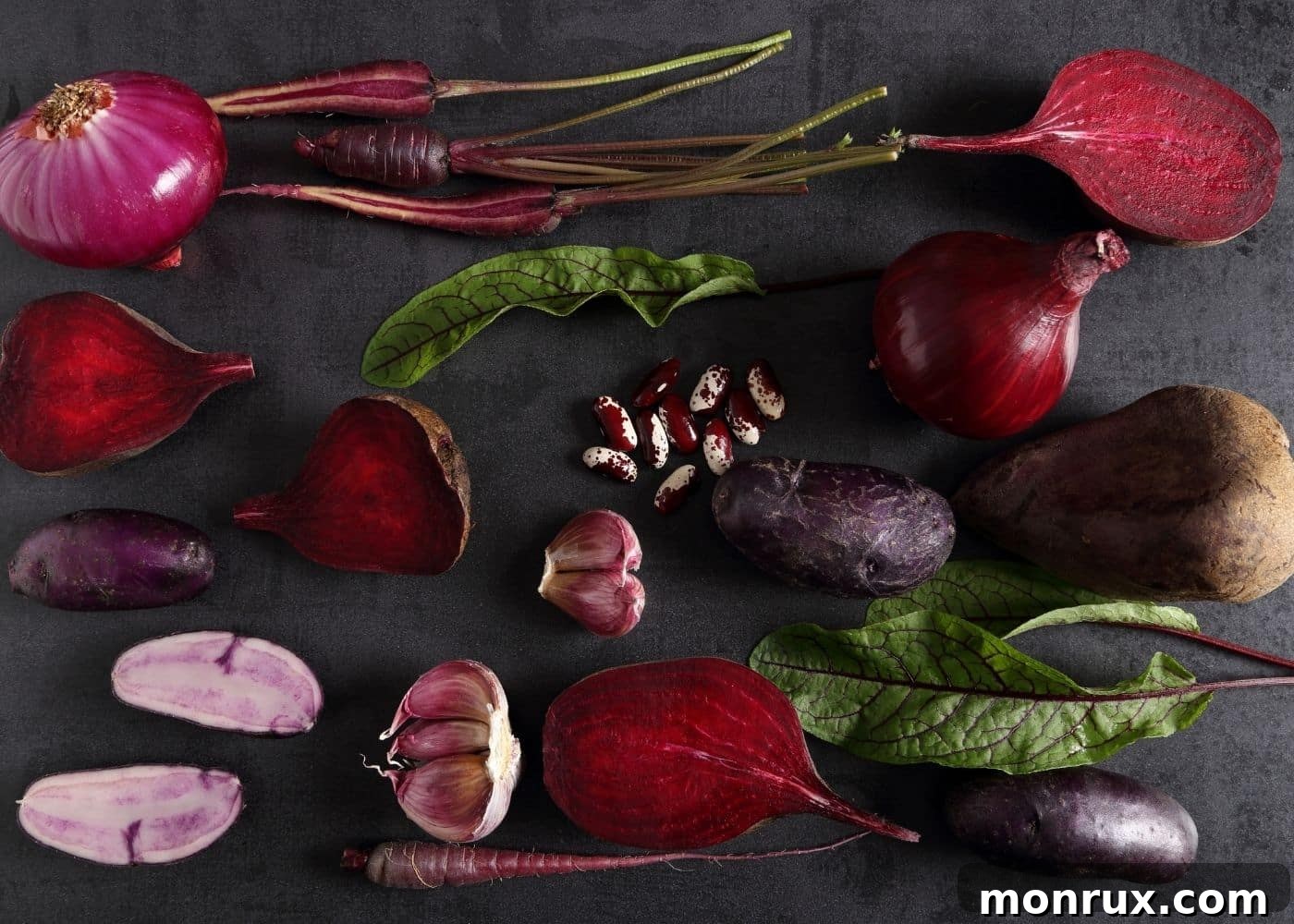
Step into the vibrant world of purple produce! Adding rich, deep hues to your plate isn’t just about aesthetics; it’s a powerful way to boost your nutritional intake. These visually stunning vegetables are celebrated for their distinctive color and, more importantly, for the incredible health benefits they offer. Packed with potent antioxidants, purple vegetables are a fantastic addition to any shopping list and an essential component of a truly balanced, “eat the rainbow” diet. This comprehensive guide provides a detailed list of purple vegetables and fruits, offering insights into their unique flavors, preparation methods, and why they deserve a prominent place in your daily meals.
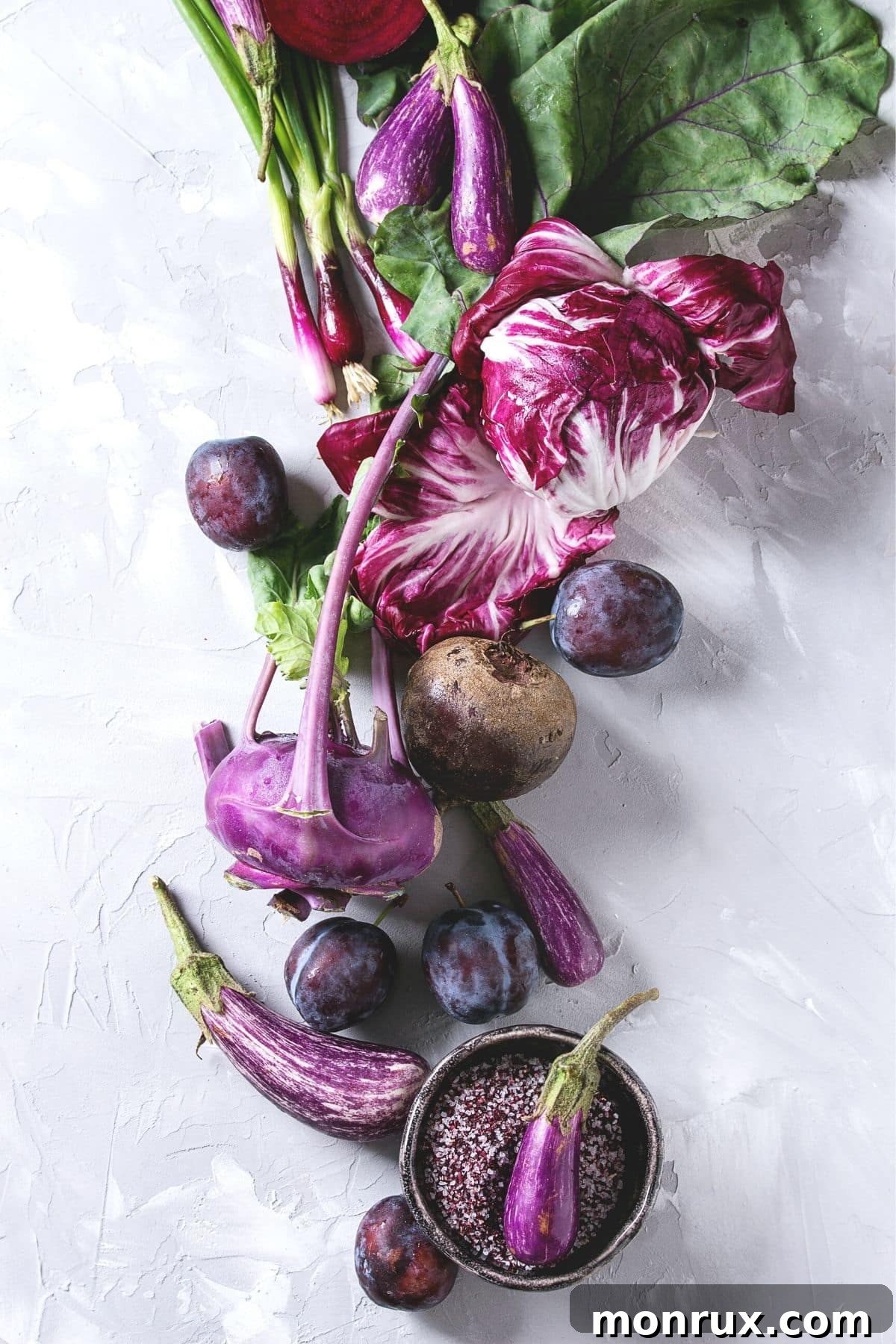
Embracing the spectrum of colors in your diet makes healthy eating an exciting adventure, and purple vegetables bring a unique charm to this culinary journey. Beyond their appealing appearance, their vibrant violet, indigo, and deep magenta tones signal the presence of powerful plant compounds essential for well-being.
The profound health benefits of purple vegetables stem primarily from a special group of antioxidants called anthocyanins. These naturally occurring pigments are responsible for the beautiful violet hue found in various plants and act as robust protectors against cellular damage. By incorporating purple produce, you not only add an appealing splash of color to your meals but also significantly enhance your intake of diverse nutrients and disease-fighting compounds.
Why Embrace Purple in Your Diet? The Science of Anthocyanins
Anthocyanins, the compounds giving purple vegetables their signature color, are more than just pretty pigments. They are powerful antioxidants that play a crucial role in protecting your body from oxidative stress and inflammation. Research suggests that a diet rich in anthocyanins can contribute to various health advantages, including improved cardiovascular health, enhanced cognitive function, and potential anti-cancer properties.
These remarkable antioxidants work by neutralizing free radicals, unstable molecules that can damage cells and contribute to chronic diseases. By reducing oxidative damage, anthocyanins support overall cellular health and can help slow down aging processes. Furthermore, their anti-inflammatory effects can benefit conditions like arthritis and other inflammatory disorders, making purple vegetables a valuable addition for anyone seeking to optimize their health and vitality. Eating a variety of colorful foods ensures a broader spectrum of nutrients and protective compounds, and purple vegetables are an indispensable part of this strategy.
Unveiling the Purple Pantry: A Detailed List of Purple Vegetables
Here’s a comprehensive list of purple vegetables, each offering unique flavors, textures, and an abundance of health-boosting anthocyanins. Discover how to prepare and enjoy these vibrant additions to your meals.
- Eggplant
- Purple Potato
- Purple Cabbage
- Purple Cauliflower
- Purple Asparagus
- Purple Carrots
- Purple Corn
- Purple Peppers
- Purple Kohlrabi
- Purple Artichokes
- Purple Okra
- Purple Basil
- Purple Kale
- Purple Radish
- Purple Yam
- Purple Broccoli
1. Eggplant (Aubergine)
Known as aubergine in many parts of the world, purple eggplant boasts a slightly bitter, earthy flavor and a distinctive spongy texture when raw, which becomes wonderfully tender and creamy upon cooking. This versatile nightshade vegetable is excellent in Mediterranean dishes like moussaka, ratatouille, or simply roasted as a flavorful side. For best results and to reduce bitterness, it’s often recommended to “sweat” eggplant by salting it before cooking, allowing excess moisture to drain. Eggplant is best cooked before consumption. While readily available year-round, its peak season typically runs from July to October.
2. Purple Potato
A striking cousin to the common white potato, purple potatoes offer a nuttier, earthier, and slightly sweeter flavor profile. They maintain their vibrant color even after cooking, adding a beautiful visual appeal to any dish. Use them interchangeably with white potatoes as a nutritious side dish. Roasting them with a drizzle of olive oil, a sprinkle of sea salt, and freshly ground pepper enhances their natural sweetness and creates a delicious, crispy exterior. You can also boil them or use them in mashed potato recipes for a unique twist. Purple potatoes are available throughout the year, with a particular abundance in the fall months, making them a comforting and colorful choice.
3. Purple Cabbage
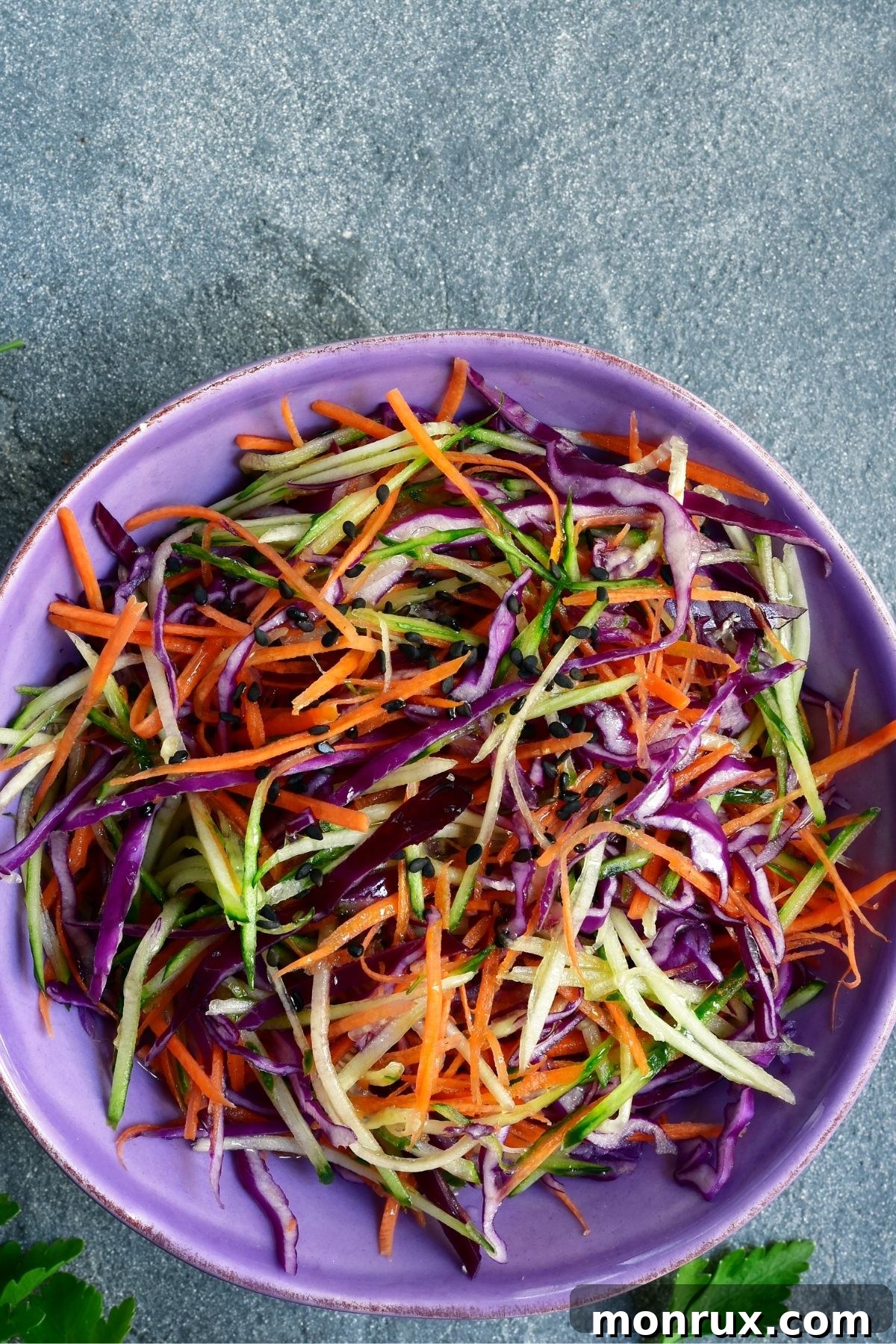
Also known as red cabbage, purple cabbage is a visually stunning member of the cruciferous vegetable family, offering a mild, slightly peppery flavor and a satisfying crunch. This deeply colored veggie is a nutritional powerhouse, rich in Vitamin C, Vitamin K, and, of course, a high concentration of anthocyanins. It’s incredibly versatile: excellent when sautéed in stir-fries, fermented into sauerkraut, or enjoyed raw for its crisp texture in slaws and salads. Its firm texture holds up well, making it a favorite for adding bulk and nutrients to various meals. Try incorporating it into a micro-chopped salad or roasting it for a sweeter, tender outcome. Purple cabbage is in season from October to December, but often available year-round.
4. Purple Cauliflower
Purple cauliflower is a delightful twist on its white counterpart, offering a slight sweetness and a gorgeous pop of color to any plate. Unlike purple asparagus, this cruciferous gem largely retains its vibrant hue even after cooking, making it an attractive choice for visual appeal. It’s delicious when roasted with olive oil, a pinch of sea salt, and a dash of garlic powder, serving as an eye-catching and healthy side dish. It can also be steamed, mashed, or added to curries. Rich in Vitamin C and K, as well as fiber, purple cauliflower is a fantastic way to diversify your vegetable intake. While sometimes available year-round, its peak season typically falls in autumn.
5. Purple Asparagus
Offering a slightly sweeter and more tender profile than green asparagus, purple asparagus is a gourmet delight packed with antioxidants and anti-inflammatory compounds. Interestingly, its beautiful purple pigment tends to fade and turn green when cooked, so if you wish to preserve its vibrant purple on your plate, it’s best enjoyed raw. Try it shaved thinly into salads for a delicate crunch and a unique flavor. For those who prefer it cooked, steaming or lightly roasting it will still yield a delicious, tender spear, even if the color changes. This seasonal treat is a wonderful way to enjoy the early spring harvest and its myriad health benefits.
6. Purple Carrots
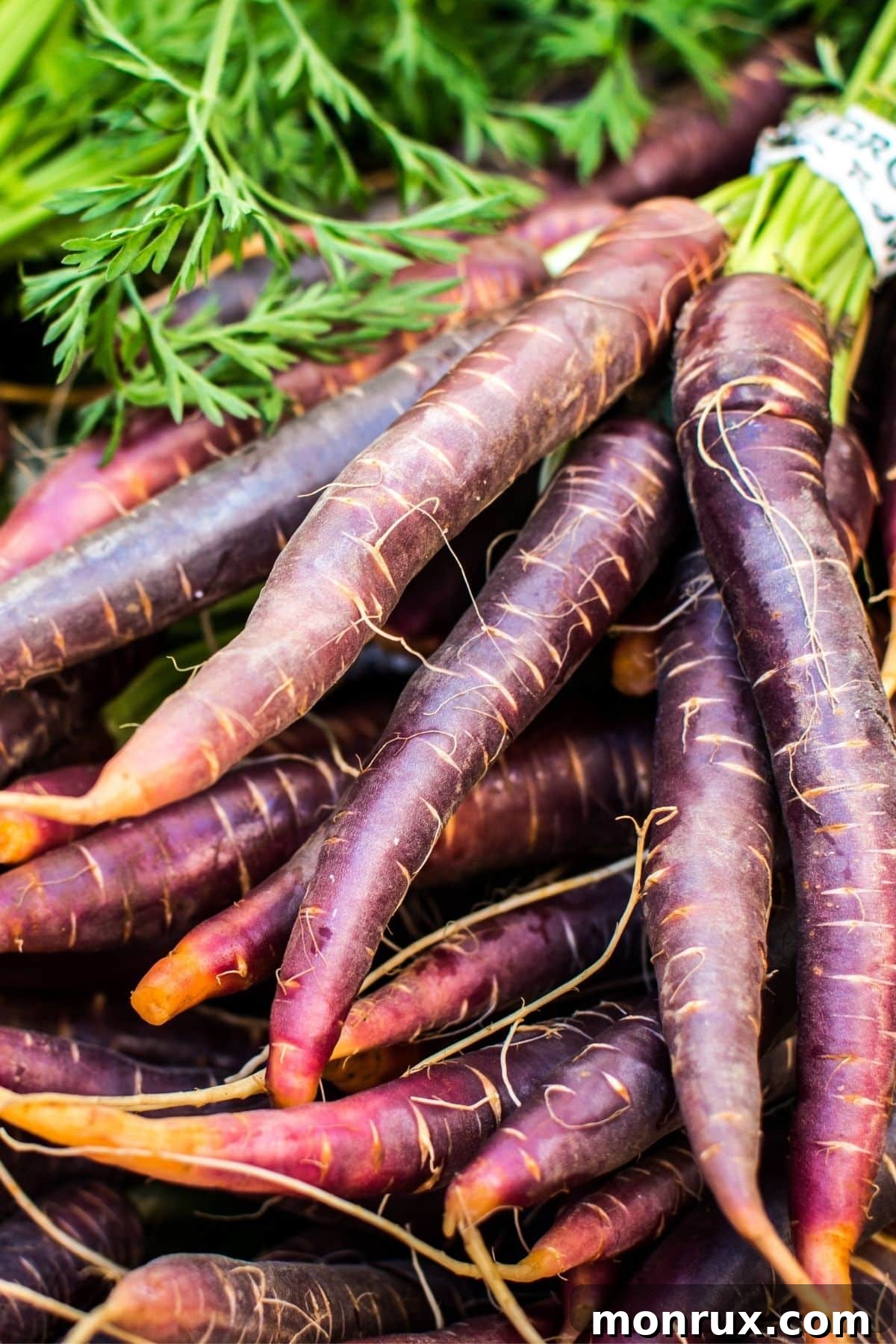
Purple carrots, with their striking appearance, are generally quite easy to find and offer a unique culinary experience. They tend to be lower in sugar than orange carrots, presenting a more earthy and sometimes subtly peppery flavor. These ancient varieties are rich in beta-carotene (which contributes to their orange core, if present) and, of course, anthocyanins. Roast them alongside orange and white carrots for a visually stunning and nutritionally diverse seasonal side dish. They can also be eaten raw in salads or as crunchy snacks, maintaining their maximum nutrient content. Recipes like raw carrot salad bring out their distinctive flavor. Purple varieties of carrots are typically in season during the spring and fall.
7. Purple Corn
Originating from the Andes, this special type of purple corn boasts all the natural sweetness of its yellow counterpart, but with a significantly higher concentration of antioxidants. While nutritionally it can be considered a grain, its culinary applications often align with vegetables. Traditionally, purple corn is celebrated in Peru as the key ingredient in chicha morada, a refreshing and nutrient-rich drink made from the entire ear of corn, spices, and fruit. While whole purple corn ears are primarily found in Peru, purple corn powder is widely available in specialty grocery stores and online year-round. It’s an excellent additive for smoothies, desserts, or even baked goods, imparting both color and a powerful antioxidant boost.
8. Purple Peppers
Like other bell peppers, purple peppers develop their deep, rich color from specific harvesting times. They typically start green and gradually turn purple, eventually ripening to red. Purple peppers offer a crisp texture and a sweet, slightly fruity flavor, making them a fantastic addition to various dishes. They can be used just like other bell peppers: sliced thinly into stir-fries, chopped for vibrant salads, incorporated into Latin American cuisine, or even stuffed and baked. Growing your own purple peppers is a rewarding experience, with plants yielding fruit from July through December. Ensure you harvest them within 65-70 days of planting to enjoy their best flavor and color. Freezing them is also an excellent way to preserve their freshness for year-round enjoyment.
9. Purple Kohlrabi
Purple kohlrabi is a fascinating root vegetable that resembles a cabbage-like bulb with leafy stems. It offers a distinct, crisp texture and a mild, slightly sweet flavor often described as a cross between cabbage and a mild radish, with a hint of apple. The purple bulb is best enjoyed raw, thinly sliced or grated into salads and slaws, where its crunch and subtle sweetness can truly shine. It can also be lightly steamed or roasted for a more tender texture. Don’t discard the greens; they are also edible and highly nutritious, similar to kale or collard greens, and can be sautéed or added to soups. This unique veggie is typically in season from fall to spring.
10. Purple Artichokes
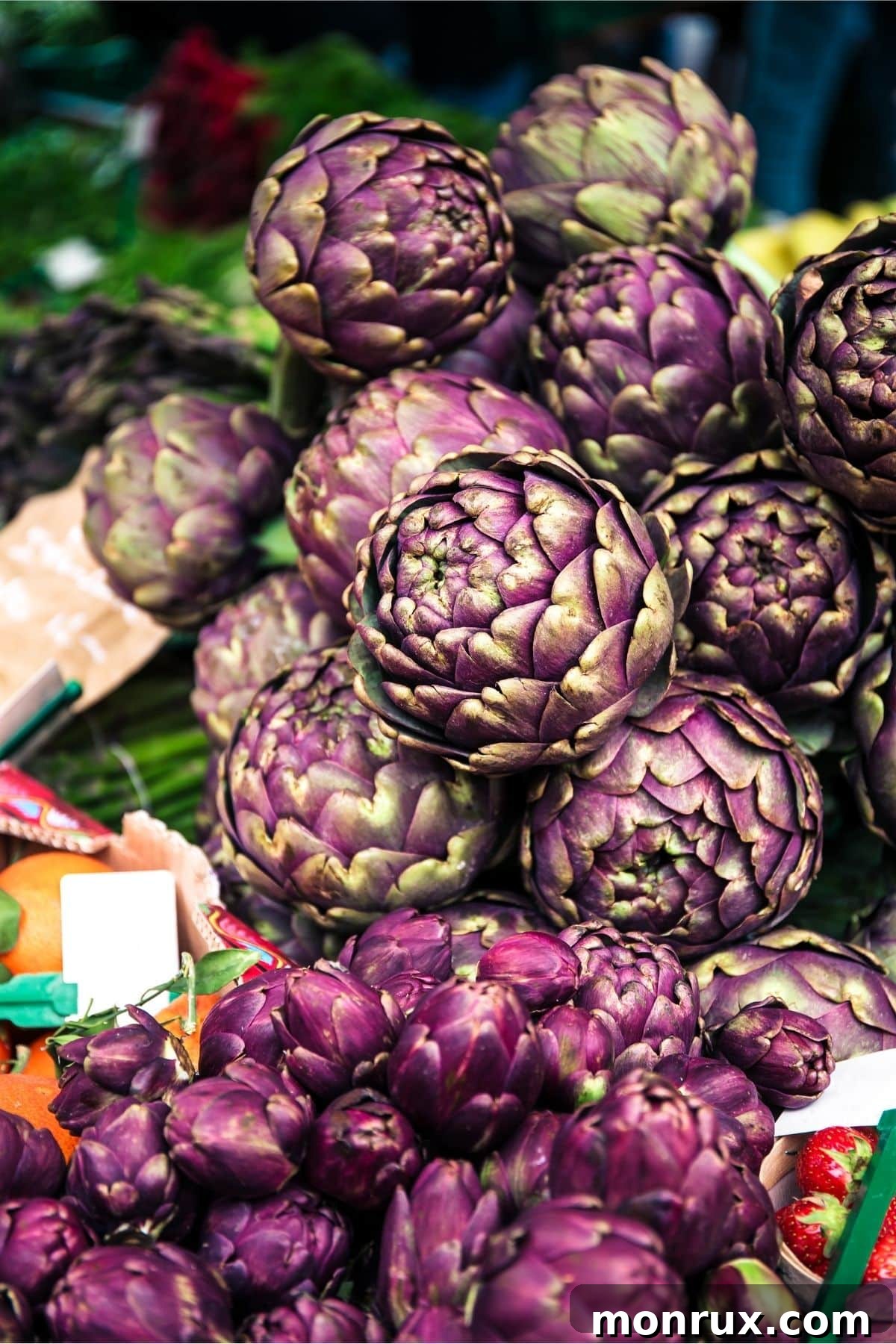
Purple artichokes are essentially a colorful variation of the familiar green globe artichoke, distinguished by their beautiful reddish-purple outer leaves and often a slightly nuttier, sweeter flavor. They offer the same tender, succulent heart and meaty petals that make artichokes a culinary favorite. Purple artichokes are incredibly versatile and can be prepared in numerous ways to bring out their natural sweetness. Roasting, grilling, or braising them in white wine with herbs are excellent methods. For a quick and easy preparation, pressure cooking them yields perfectly tender results. Artichokes are typically in season from March through May, offering a delightful spring delicacy.
11. Purple Okra
Purple okra is a visually striking variety of okra that shares the same mild, grassy flavor as its green counterpart but is often said to have slightly less mucilage, which might make it more appealing to those sensitive to okra’s characteristic sliminess. Its deep purple pods are a beautiful addition to any dish. It can be used traditionally in gumbo, pickled for a tangy snack, or simply roasted lightly with onion powder and salt for a quick and flavorful side. While it may lose some of its vibrant purple color during cooking, its unique shape and subtle flavor remain. Okra, including the purple variety, can typically be found from summer through early fall, thriving in warm climates.
12. Purple Basil
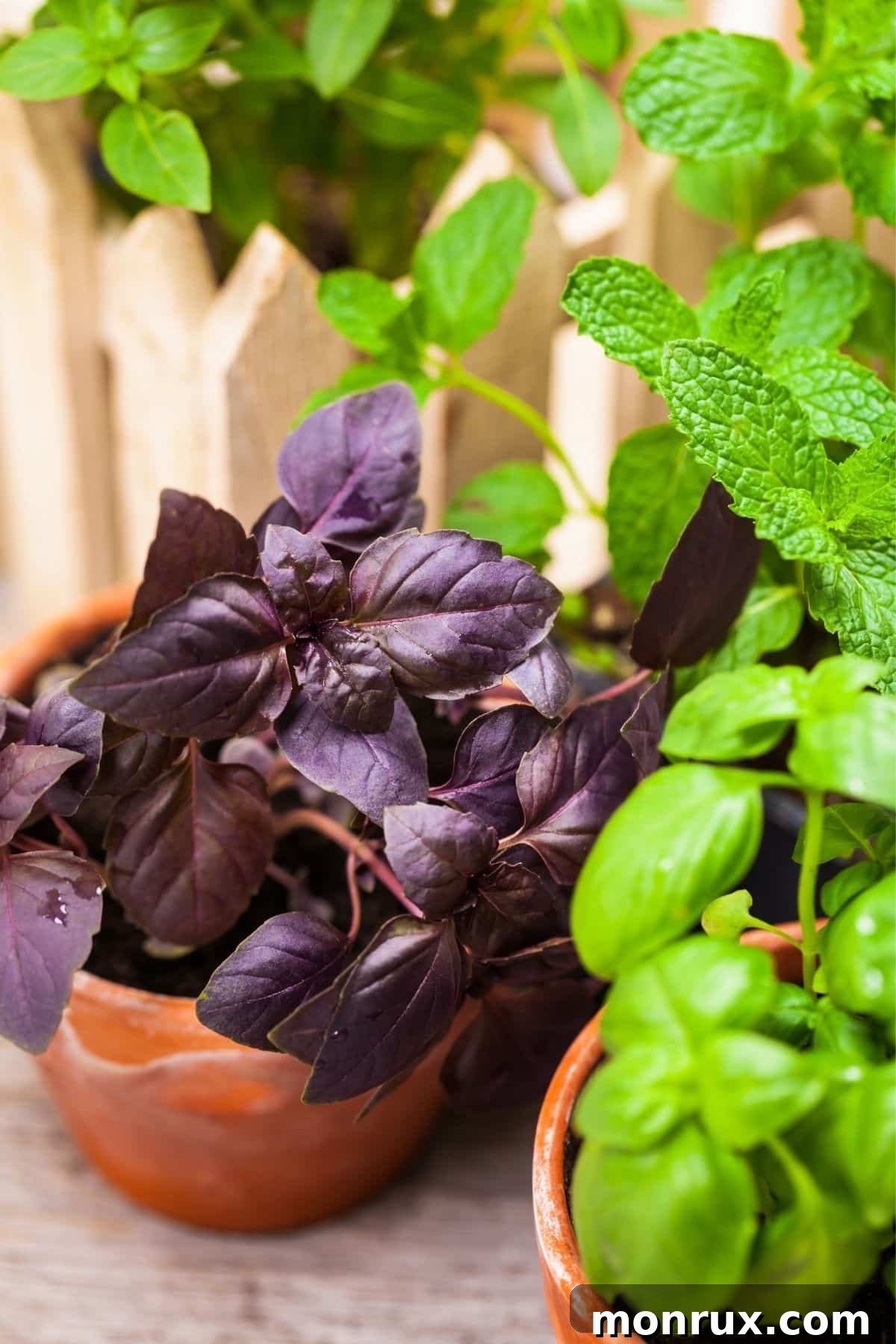
Purple basil offers a delightful twist on classic green basil, featuring a slightly spicier, sometimes peppery, and subtly clove-like flavor profile in addition to its sweet, aromatic notes. Its deep, dusky purple leaves make it a stunning garnish and ingredient. Purple basil is best enjoyed raw to preserve its beautiful color and delicate flavor. It’s fantastic torn over fresh salads, sprinkled atop pizza or pasta dishes after cooking, or even blended into a unique pesto (perhaps a vegan pesto without cheese for a lighter touch). This aromatic herb thrives in warm weather, making it a perfect summer garden addition for fresh culinary use.
13. Purple Kale
Purple kale, with its attractive ruffled leaves and varying shades of deep green and purple, is a hearty member of the cruciferous vegetable family. It offers a slightly milder, sweeter flavor than some green kales, often with a hint of cabbage-like earthiness. Purple kale is an excellent choice for boosting your intake of “greens,” providing a rich source of vitamins, minerals, and powerful antioxidants, including those cancer-fighting compounds common to cruciferous vegetables. It’s incredibly versatile: enjoy it raw in salads (massaged with a little olive oil to tenderize), sautéed as a flavorful side dish, or even baked into crispy kale chips for a healthy and satisfying snack. Purple kale can be found year-round, but it is particularly abundant and flavorful during the colder winter months.
14. Purple Radish
Purple radish is a vibrant root vegetable that can range in flavor from pleasantly mild to distinctly spicy, largely depending on the variety, growing conditions, and harvest time. Its crisp texture and peppery bite add a refreshing kick to many dishes. Purple radishes are wonderful consumed raw, thinly sliced into salads or sandwiches, or used as a crunchy garnish. Their vibrant color also makes them visually appealing. If you prefer a milder flavor, roasting them will temper some of their spiciness and bring out a subtle sweetness. Juicing radishes is another popular way to enjoy their unique properties. Purple radishes are generally available year-round, with peak seasons typically in winter and spring.
15. Purple Yam (Ube)
Also globally recognized as ube, the purple yam is a dense, sweet, and starchy root vegetable native to Southeast Asia. Its striking deep purple flesh makes it a culinary star, particularly in Filipino cuisine, where it’s a beloved ingredient in desserts. Purple yam is remarkably versatile; its natural sweetness lends itself beautifully to roasting, baking (delicious topped with almond butter for a healthy treat!), mashing, or incorporating into a wide array of sweet dishes. Ube ice cream and ube cakes are popular treats that showcase its unique flavor and color. Beyond desserts, it can also be used in savory preparations. Purple yam is available year-round and is a wonderful way to introduce diverse flavors and nutrients to your diet.
16. Purple Broccoli
Also known as violet sprouting broccoli or purple sprouting broccoli, purple broccoli is a delightful cruciferous vegetable that offers a slightly sweeter, nuttier flavor than its green counterpart, along with a tender yet crisp texture. Its beautiful purple florets are not only aesthetically pleasing but also packed with the same health benefits as other purple produce, including high levels of anthocyanins. It’s an excellent choice for stir-fries, vibrant salads, or as a colorful and nutritious side dish. Purple broccoli can be steamed, roasted, or sautéed, but it’s often best when briefly blanched. This quick cooking method helps preserve both its vivid color and its delicate nutrients, ensuring a delicious and healthy outcome. Purple broccoli is typically in season from February to April, though certain varieties may be found year-round in some regions.
Beyond the Garden: A Delightful List of Purple Fruits
While this article focuses primarily on vegetables, the world of purple extends wonderfully into fruits, offering even more ways to enjoy the benefits of anthocyanins. Here are 10 fantastic fruits that naturally boast a beautiful purple hue:
- Purple Grapes: Sweet and juicy, perfect for snacking or making juice.
- Plums: Tart yet sweet, excellent fresh or in desserts.
- Passion Fruit: Exotic and aromatic, with a unique sweet-tart pulp.
- Figs: Soft, sweet, and chewy, great fresh or dried.
- Blackberries: Deeply colored with a sweet and tangy flavor, often having a purple tinge.
- Pomegranates: Bursting with jewel-like arils, known for their sweet-tart juice.
- Black Currants: Small, intensely flavored berries, high in Vitamin C.
- Purple Dragon Fruit: A stunning tropical fruit with vibrant flesh and tiny edible seeds.
- Acai: A superfruit known for its earthy berry flavor, often found in smoothie bowls.
- Elderberry: Tiny, dark berries renowned for their immune-boosting properties.
Frequently Asked Questions About Purple Produce
The vibrant purple, blue, and red colors found in many vegetables and fruits are due to natural pigments called anthocyanins. These powerful antioxidants are part of the flavonoid family and offer significant health benefits beyond just providing beautiful color.
Purple vegetables often boast a higher concentration of antioxidants, specifically anthocyanins, compared to their green or white relatives. While they share many core nutrients and similar nutritional value, the added antioxidant properties of the purple varieties can make them a particularly nutritious choice for boosting overall health and combating oxidative stress.
To best maintain the vibrant color of purple vegetables, cooking methods such as steaming, roasting, or lightly sautéing are recommended. Boiling can cause the pigments to leach into the water, resulting in a loss of color and some nutrients. Adding a splash of acidic ingredients like vinegar or lemon juice to the cooking water or during preparation can also help preserve their striking hue.
Absolutely! Get creative by adding purple vegetables to various dishes. Consider using purple cabbage in slaws, roasting purple potatoes or carrots as a side, blending berries or beets into smoothies, or adding purple bell peppers to stir-fries. Experimenting with different recipes and cooking methods is a great way to enjoy the diverse flavors and extensive health benefits they offer.
Yes, children can greatly benefit from eating purple vegetables! Their vibrant color can make meals more visually appealing and exciting, which might encourage picky eaters to try new foods. Purple vegetables provide essential vitamins, minerals, and antioxidants crucial for growth and development. Engaging kids by growing your own purple veggies in a home garden can also pique their interest.
The availability of purple vegetables varies by type. Some, like purple cabbage, carrots, and yams, are often available year-round in most grocery stores. Others, such as purple asparagus, certain eggplant varieties, or specific types of purple broccoli, may be more seasonal. Visiting your local farmer’s market is an excellent way to discover what purple produce is in season in your area.
Yes, the anthocyanins found abundantly in purple vegetables possess strong anti-inflammatory properties. These compounds help to reduce inflammation throughout the body, which is beneficial for overall health and can help manage symptoms associated with chronic inflammatory conditions. Regularly consuming purple produce can be a delicious part of an anti-inflammatory diet.
Explore More Colorful & Healthy Food Guides
- Best Asian Fruits
- Best Green Vegetables
- Best Red Fruits
- Best Vegetables for Picky Eaters
- Fruit That Starts with Z
- Vegetables That Start with M
Don’t Miss These Healthy Food Lists!
Concluding Thoughts: Add a Splash of Purple to Your Plate
Purple vegetables and fruits are far more than just a feast for the eyes; they are genuine powerhouses of nutrition, making them an incredibly worthy addition to your daily diet. Rich sources of antioxidants, particularly the anti-inflammatory anthocyanins, these vibrant foods play a vital role in supporting overall health, protecting against cellular damage, and enhancing your body’s natural defenses. From the earthy notes of purple potatoes to the subtle sweetness of purple cauliflower, there’s a purple produce item to suit every palate and culinary creation. The next time you visit the grocery store or farmer’s market, make a conscious effort to add at least one of these magnificent purple gems to your shopping cart. Your taste buds and your health will thank you!
Don’t forget to join my newsletter list to get exclusive clean eating recipes and tips. The newsletter is 100% free with no spam; you can unsubscribe anytime.
About the Author: Carrie Forrest has a master’s degree in public health with a specialty in nutrition and is a certified holistic nutritionist. She is a top wellness and food blogger with over 5 million annual visitors to her site. Carrie has an incredible story of recovery from chronic illness and is passionate about helping other women transform their health. Send her a message through her contact form.
Note: this post is for informational purposes only and is not intended as medical advice. Please consult your healthcare provider for recommendations related to your individual situation.