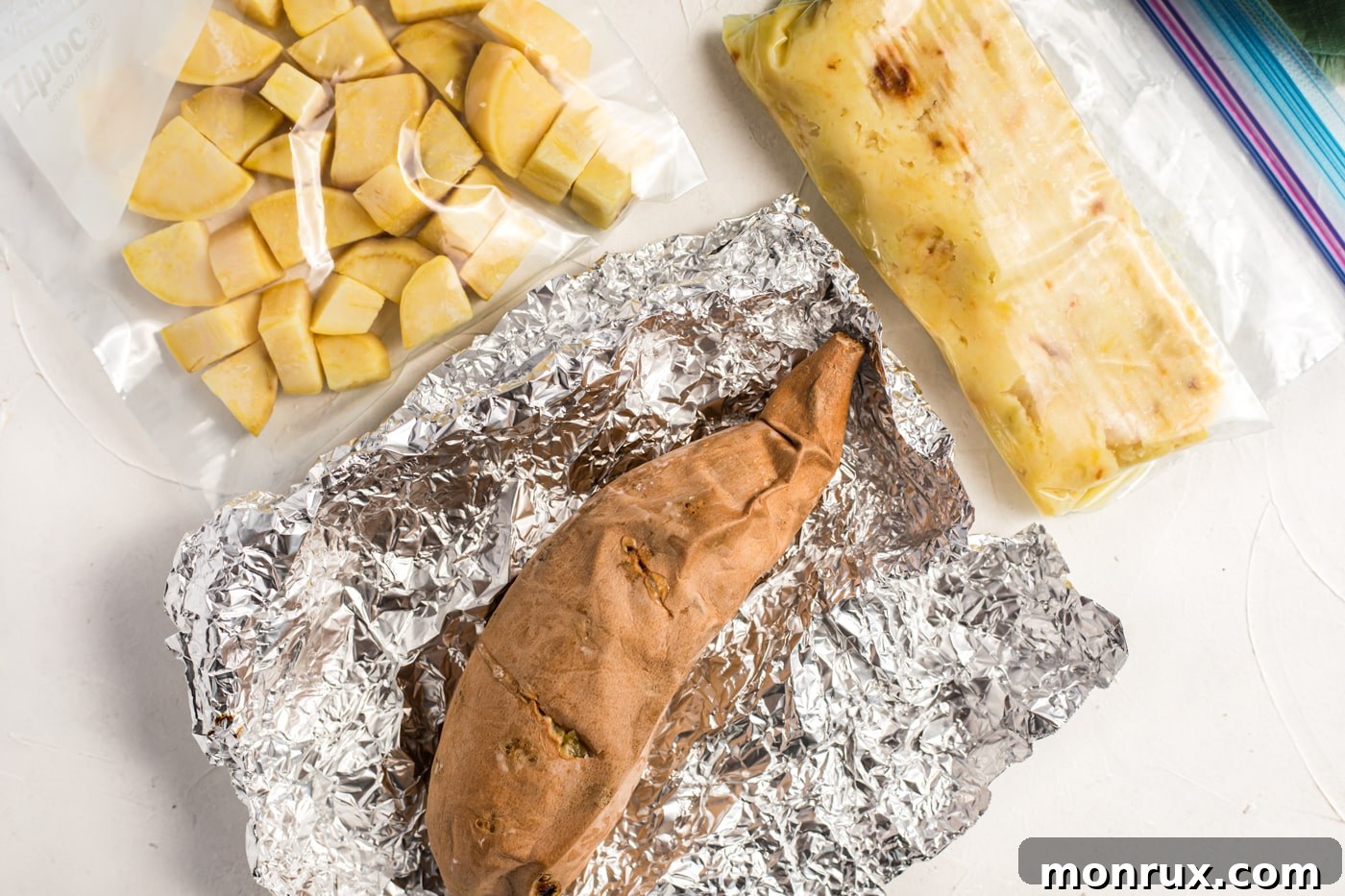
Are you a fan of sweet potatoes, stocking up on them whenever you hit the grocery store? These versatile root vegetables are not only incredibly nutritious and delicious but also surprisingly easy to preserve for longer. If you’ve ever wondered how to extend the life of your sweet potato haul, you’re in the right place! This comprehensive guide will walk you through the best methods for how to freeze sweet potatoes, whether you prefer them whole, mashed, or diced. With a few simple steps, you can enjoy the convenience of prepped sweet potatoes ready for any meal, anytime.
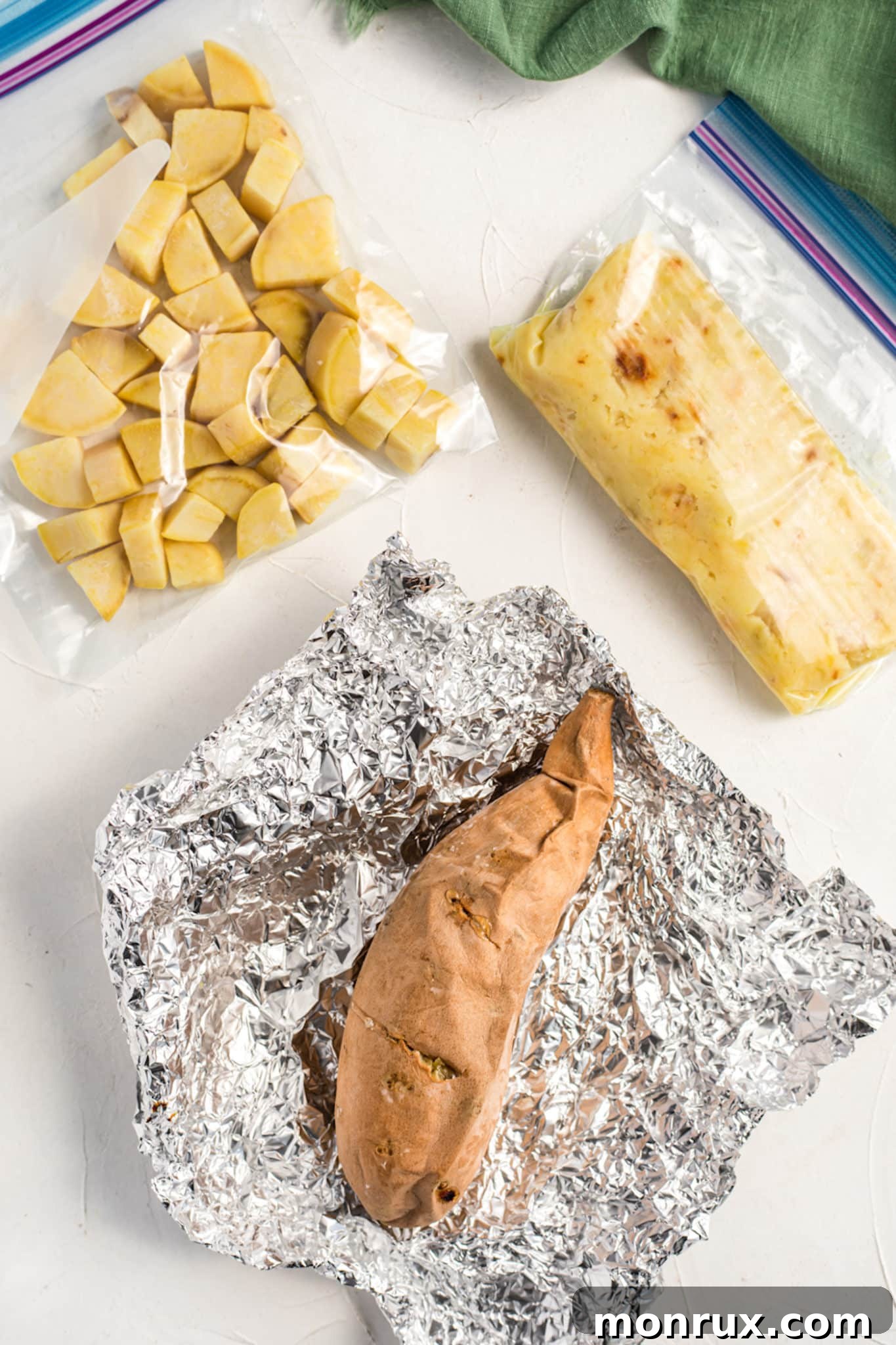
Freezing Sweet Potatoes: Raw vs. Cooked
Before diving into the freezing methods, it’s crucial to understand a fundamental rule: sweet potatoes, like most potatoes, have a high water content. If you attempt to freeze them raw, the water crystals formed during freezing can damage their cellular structure. This often results in a mushy, mealy, or unpleasantly gritty texture when thawed, and they are highly susceptible to freezer burn. For these reasons, it is not recommended to freeze raw sweet potatoes.
To preserve their delightful flavor and texture, sweet potatoes must be cooked or blanched before freezing. This pre-treatment helps to deactivate enzymes that cause spoilage and quality degradation, ensuring your frozen sweet potatoes maintain their integrity and taste great in your favorite recipes. So, whether you’re planning to freeze them whole, mashed, or diced, a little pre-cooking goes a long way in achieving the best possible results.
Table of Contents
Why Freeze Sweet Potatoes?
Freezing sweet potatoes is a fantastic way to maximize their potential and bring numerous benefits to your kitchen. Beyond their delightful taste, sweet potatoes are a nutritional powerhouse, packed with vitamins, minerals, and dietary fiber, making them an excellent complex carbohydrate source.
- Nutritional Powerhouse & Budget-Friendly: Sweet potatoes are rich in Vitamin A, Vitamin C, manganese, and potassium. They are naturally gluten-free and offer a fantastic source of complex carbohydrates, supporting sustained energy. Buying them in bulk when they’re in season or on sale can be incredibly budget-friendly, and freezing them ensures you can enjoy these benefits year-round without worrying about spoilage.
- Unmatched Convenience for Meal Prep: Pre-cooked and frozen sweet potatoes are a game-changer for meal prep. Instead of peeling, chopping, and cooking from scratch every time, you can simply grab a portion from the freezer and incorporate it into your meal. This drastically cuts down on cooking time for weeknight dinners, healthy lunches, or even quick breakfasts.
- Reduced Food Waste: Sweet potatoes, while relatively shelf-stable, do eventually go bad. Freezing is an excellent way to prevent food waste, allowing you to buy larger quantities and preserve them before they spoil. This not only saves money but also contributes to a more sustainable kitchen.
- Versatile for Various Recipes: From savory side dishes and hearty casseroles to sweet muffins and smoothies, sweet potatoes are incredibly versatile. Having them prepped and frozen in different forms (whole, mashed, diced) means you’re always ready to whip up a variety of delicious and healthy meals without extra effort.
- Natural Sweetness & Appeal: For those who might be hesitant about incorporating more vegetables into their diet, sweet potatoes are often a welcome exception. Their naturally sweet flavor makes them appealing to many, including children, offering a healthy and delicious alternative to less nutritious options.
Now that we’ve highlighted the compelling reasons to freeze sweet potatoes, let’s explore the best techniques for freezing them whole, mashed, or diced, ensuring you get the most out of every batch.
How to Freeze Whole Baked Sweet Potatoes
Yes, you absolutely can freeze whole sweet potatoes, but they need to be fully cooked first. Roasting them whole before freezing locks in their natural sweetness and creates a wonderfully tender texture, making them perfect for quick meals later. Here’s how to do it:
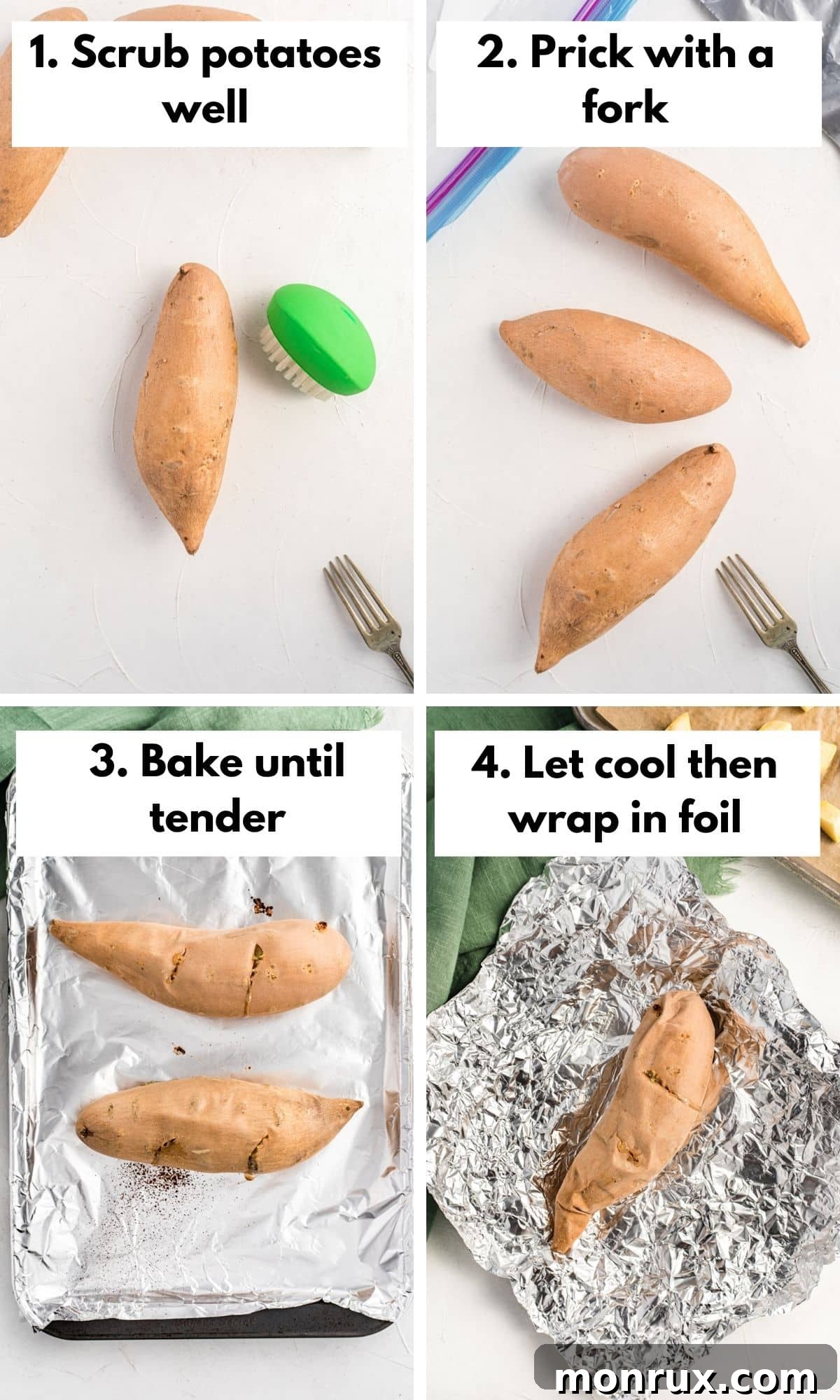
Step One: Prepare the Sweet Potatoes
Begin by thoroughly scrubbing your sweet potatoes under running water to remove any dirt. Pat them completely dry with a paper towel. Using a fork, prick each potato several times all over. This allows steam to escape during baking, preventing them from bursting. For easy cleanup, you can line your baking sheet with parchment paper.
Step Two: Bake Until Tender
Place the prepared sweet potatoes on the baking sheet and bake them in a preheated oven at 400°F (200°C) for approximately 60 to 75 minutes, or until they are very tender when easily pricked with a fork. Larger sweet potatoes may require a slightly longer cooking time. The goal is a fully cooked, soft interior.
Step Three: Cool Completely
Once baked, remove the sweet potatoes from the oven and allow them to cool completely to room temperature. This step is crucial; freezing warm potatoes can lead to ice crystal formation and freezer burn. At this point, you can decide whether to leave the skin on or gently remove it, depending on how you plan to use them later.
Step Four: Wrap and Store
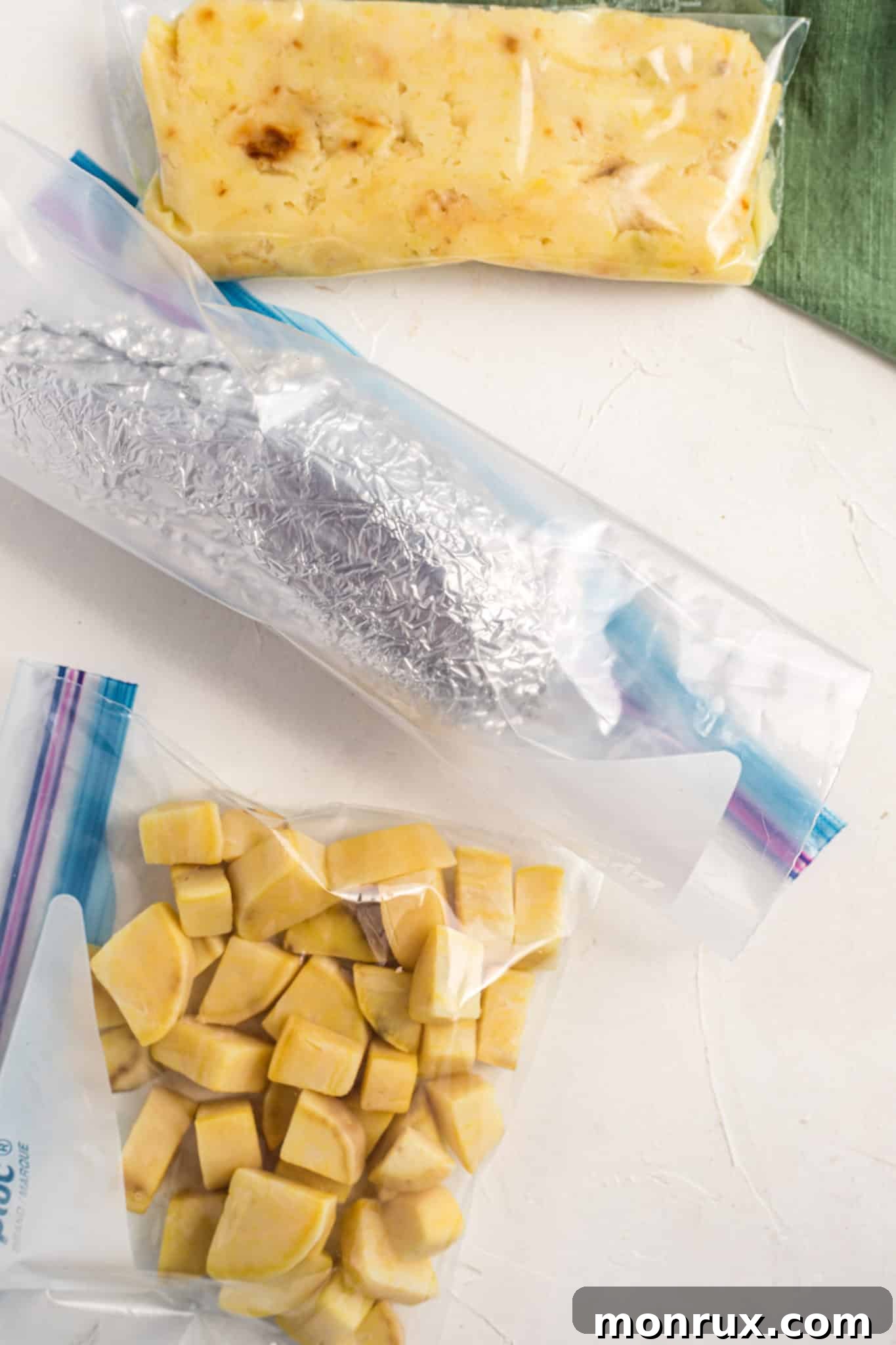
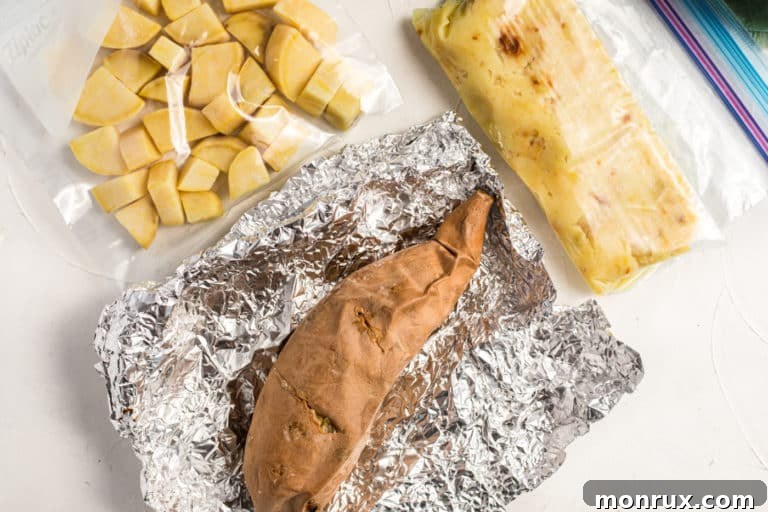
To prevent freezer burn and retain moisture, wrap each cooled baked sweet potato tightly in aluminum foil. Then, place the foil-wrapped potatoes into a labeled and dated zip-top freezer bag or a vacuum-sealed bag. Removing as much air as possible from the bag is key to long-term storage. Store in the freezer for up to 10-12 months.
When ready to use, thaw them in the refrigerator overnight or reheat directly from frozen in the oven or microwave, adjusting cooking time as needed since they are already cooked.
How to Freeze Mashed Sweet Potatoes
Freezing sweet potatoes as a mash is incredibly convenient for quick sides, baking, or adding to smoothies. This method is perfect for batch cooking and ensures you always have a healthy option on hand.
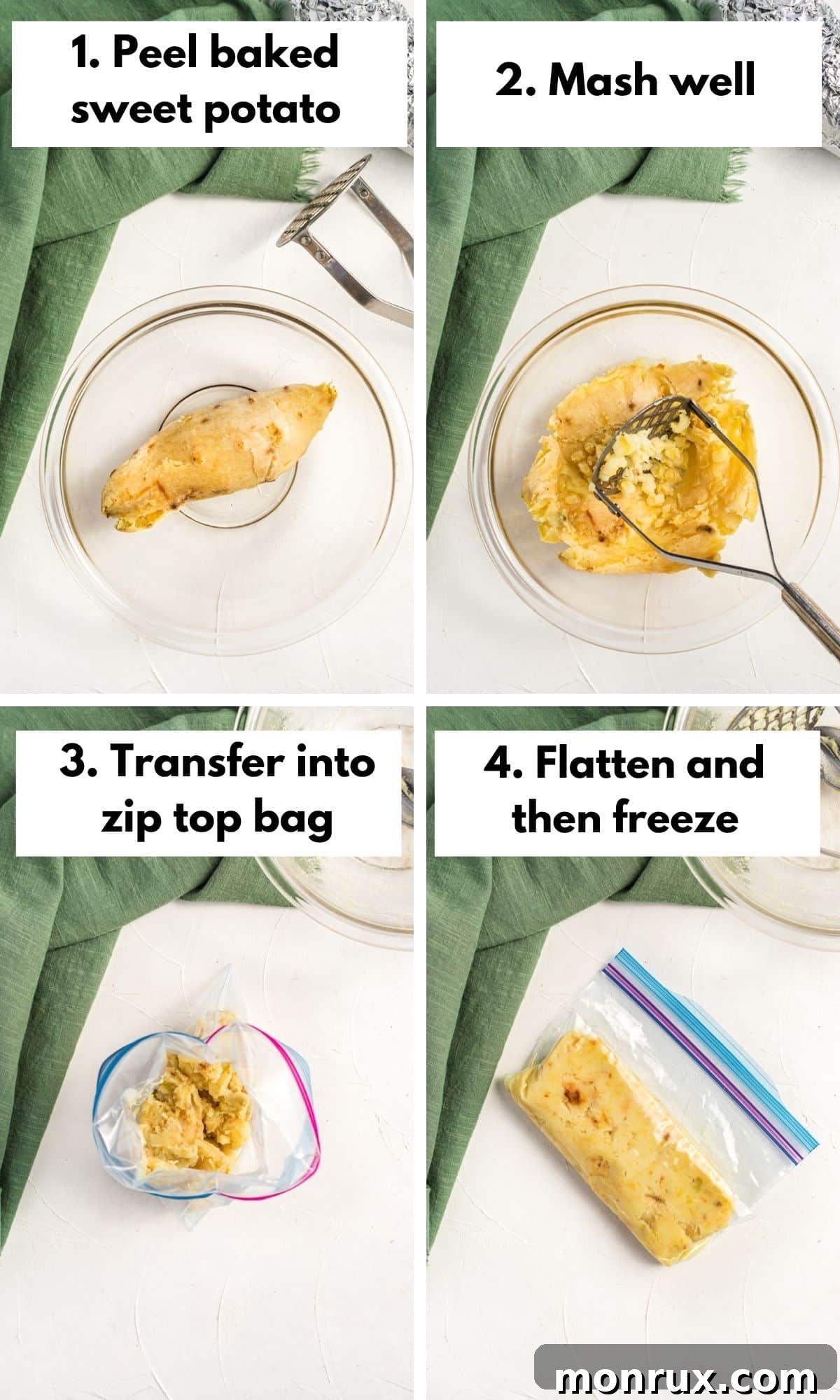
Step One: Cook and Peel
Start by cooking your sweet potatoes until they are very soft. Baking, boiling, or using an Instant Pot are all great options. Many find Instant Pot mashed sweet potatoes to be the easiest and fastest method. Once cooked, let the potatoes cool sufficiently so they are easy to handle, then remove the skins.
Step Two: Mash Without Seasoning
Place the baked and peeled sweet potatoes in a large bowl. Use a potato masher, fork, or even a hand mixer to mash them to your desired consistency. It’s important not to add any seasonings (salt, butter, spices, milk, etc.) at this stage. Seasonings can affect the texture and flavor of the mashed potatoes after freezing and thawing. Wait until you defrost and serve them to add any enhancements.
Step Three: Package for Freezing
For optimal results and efficient storage, transfer the sweet potato puree into quart-sized (or smaller, depending on your typical usage) resealable freezer bags. Press out as much air as possible from the bags before sealing them. Then, flatten the bags so the mash freezes into a thin, even layer. This allows for quicker thawing and easier stacking in your freezer.
Step Four: Freeze and Store
Place the flattened bags of mashed sweet potato in the freezer. They will last for several months, typically up to 10-12 months, if properly sealed. Remember to label each bag with the date and contents. Defrost the mashed sweet potatoes in the refrigerator overnight or by submerging the sealed bag in cold water before using. Once thawed, you can reheat and season them as desired, perfect for a sweet potato casserole, a topping for shepherd’s pie, or a base for creamy soups.
How to Freeze Diced or Sliced Sweet Potatoes
If your recipes often call for sweet potatoes in pieces, freezing them diced, sliced, or wedged is a fantastic time-saver. This method requires blanching rather than full cooking to preserve their texture and color.
Step One: Prepare and Blanch
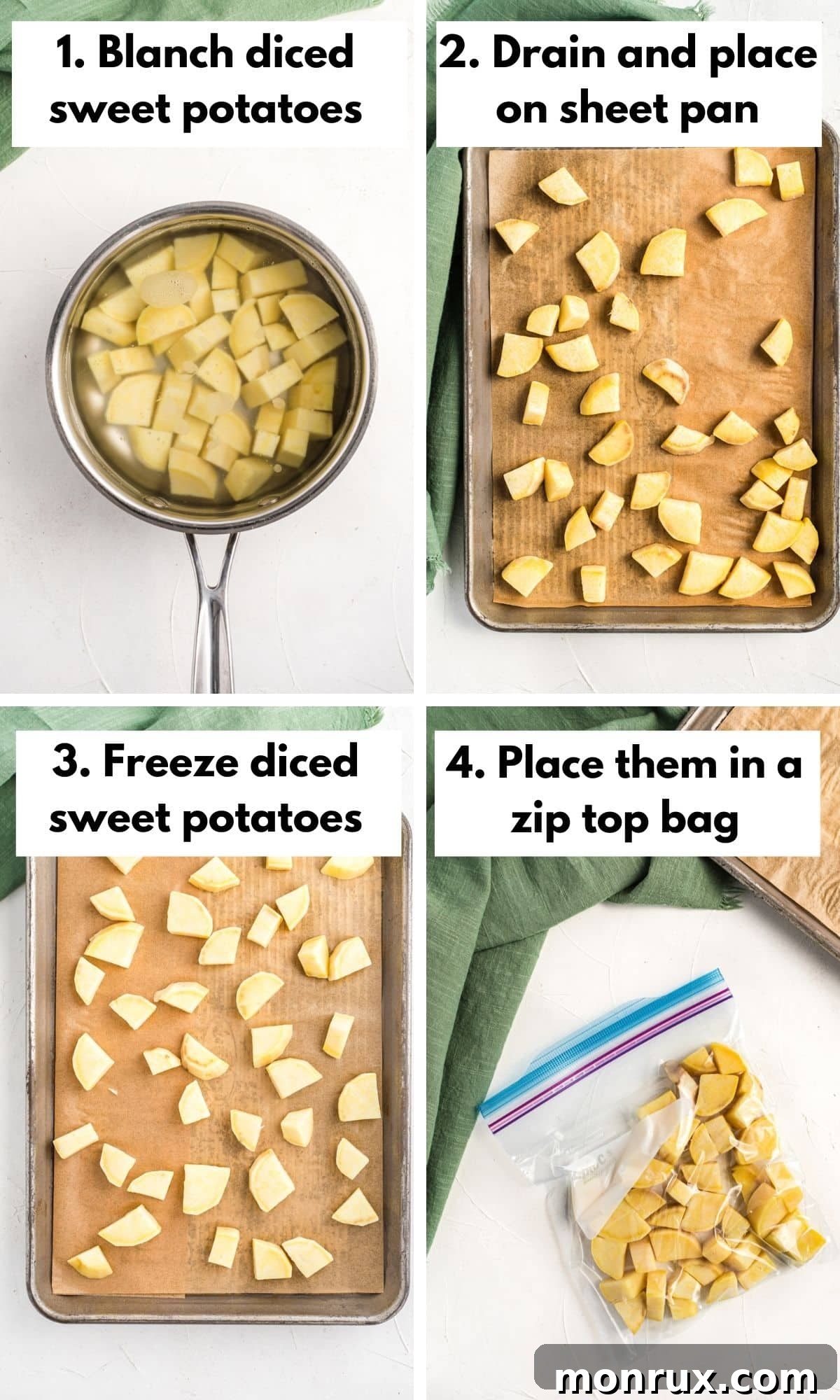
Peel your sweet potatoes and cut them into uniform dice, slices, or wedges, depending on your preferred future use. Bring a large pot of water to a rolling boil. Carefully add the sweet potato pieces to the boiling water and blanch them for approximately 5 minutes. Blanching means partially cooking them, just until they are slightly tender but still firm. This process stops enzyme action that can lead to discoloration and texture loss during freezing.
Step Two: Cool Rapidly and Dry
Immediately after blanching, drain the sweet potato pieces and transfer them to a large bowl of ice water. This “ice bath” rapidly cools them down, stopping the cooking process and preserving their texture and vibrant color. Once completely cooled, drain them again and spread them out on a clean kitchen towel or paper towels to dry thoroughly. Excess moisture can lead to ice crystals and freezer burn.
For best results and to prevent the pieces from sticking together, always flash freeze your blanched sweet potatoes. Lay them in a single layer on a parchment-lined baking sheet, ensuring none of the pieces are touching. This prevents them from clumping into a single frozen block.
Step Three: Flash Freeze
Place the baking sheet with the sweet potato pieces into the freezer for several hours, or until they are completely frozen solid. This individual quick freezing (IQF) method ensures that each piece freezes separately, making it easy to grab just the amount you need later.
Step Four: Package and Store
Once the sweet potato pieces are fully frozen, transfer them from the baking sheet into labeled and dated zip-top freezer bags or vacuum-sealed bags. Remove as much air as possible before sealing. Store them in the freezer for up to 10-12 months. Frozen diced sweet potatoes are perfect for adding directly to soups, stews, roasts, or baking as quick hash browns or oven fries. They can also be a healthy addition to a sweet potato smoothie!
Freezer Guide FAQs
Here are some frequently asked questions about freezing sweet potatoes to help you confidently preserve your bounty:
How long can you freeze sweet potatoes?
Properly prepared and packaged frozen sweet potatoes will maintain their quality for 10-12 months. For best results, always ensure you remove as much air as possible from your freezer bags or containers to prevent freezer burn.
How do you blanch sweet potatoes?
Blanching involves briefly cooking cut sweet potatoes in boiling water, typically for about 5 minutes, until they are just barely tender. After boiling, immediately plunge them into an ice bath to stop the cooking process. Then, drain and dry them completely before freezing to prevent ice crystal formation.
How do you thaw frozen sweet potatoes?
For best texture and moisture retention, it’s recommended to thaw frozen sweet potatoes in the refrigerator overnight. However, for many recipes, especially those involving cooking them further (like soups, stews, or roasting), you can often use them straight from frozen without thawing, simply adding a few extra minutes to your cooking time.
How do you reheat frozen sweet potatoes?
Reheat frozen sweet potatoes in your favorite recipes. For a crispy outer texture, especially with pre-cut pieces, the oven is your best bet. Toss diced pieces with a little olive oil, salt, and pepper, then roast until heated through and golden. Since they were par-cooked before freezing, they will require less cooking time than raw sweet potatoes. Whole baked sweet potatoes can be reheated in the oven or microwave.
Can you freeze raw sweet potatoes?
It is generally not a good idea to freeze raw sweet potatoes. Their high water content makes them prone to freezer burn, and they will likely become mushy, mealy, or grainy when thawed, making them undesirable for most culinary applications.
What’s the best way to freeze sweet potatoes?
The “best” way depends on how you plan to use them. For the most versatility, blanching and freezing diced sweet potatoes is often ideal, as they can be easily added to soups, stews, hashes, or roasted dishes. If you frequently enjoy whole baked sweet potatoes, freezing them whole after baking is incredibly convenient. Mashed sweet potatoes are perfect for baking projects or quick sides.
Does cooked sweet potato freeze well?
Yes, absolutely! Cooked sweet potato freezes exceptionally well. Whether whole, mashed, or diced, ensure it cools completely, is properly wrapped or packaged in an airtight container, and then frozen. This preserves its texture and flavor for many months.
What are the benefits of freezing sweet potatoes?
The benefits are numerous! Freezing sweet potatoes helps significantly reduce food waste by preserving them before spoilage. It also offers incredible convenience for future meal preparation, saving you time and effort in the kitchen. Having prepped sweet potatoes on hand makes it easier to incorporate healthy, nutritious meals into your daily routine.
Can I freeze different varieties of sweet potatoes?
Yes, you can freeze any type of sweet potato, including those with orange flesh (like Beauregard or Jewel), purple flesh (like Okinawan or Stokes Purple), or white flesh (like Hannah or Japanese). The freezing methods described in this guide are applicable to all varieties.
How to prevent freezer burn on sweet potatoes?
To prevent freezer burn, which occurs when food is exposed to air, ensure your sweet potatoes are completely cooled and dry before freezing. Wrap them tightly (e.g., in foil for whole potatoes) and then place them in airtight freezer bags or vacuum-seal them. Removing as much air as possible from the packaging is the most critical step.
We hope these tips help you master the art of freezing sweet potatoes! If you try any of these methods, please consider leaving a comment and a review below. Your feedback is valuable!
Stay connected and get more healthy eating tips by following us on social media! You can find us on Facebook, Pinterest, Instagram, and YouTube!
Print Recipe
How to Freeze Sweet Potatoes Recipe
5 Stars from 6 reviews
Learn the best ways to freeze sweet potatoes – whole, mashed, or diced – to save time and enjoy this nutritious vegetable all year round. Perfect for meal prep and reducing food waste!
-
Total Time:
90 minutes -
Yield:
4 servings
Ingredients
- 4 whole sweet potatoes (any variety)
Instructions
- For Whole Baked Sweet Potatoes: Wash and thoroughly dry your sweet potatoes. Prick each potato several times with a fork.
- Bake at 400°F (200°C) for 60-75 minutes, or until easily pierced with a fork. Let them cool completely.
- Once cool, wrap each sweet potato tightly in aluminum foil, then place them in a labeled, airtight zip-top freezer bag. Freeze for up to 10-12 months.
- For Mashed Sweet Potatoes: Cook sweet potatoes (bake, boil, or Instant Pot) until very tender. Peel and mash them without adding any seasonings.
- Let the mash cool completely. Transfer to labeled, airtight zip-top freezer bags, pressing flat to remove air. Freeze for up to 10-12 months.
- For Diced/Sliced Sweet Potatoes: Peel and cut sweet potatoes into uniform dice, slices, or wedges. Blanch in boiling water for 5 minutes until slightly tender.
- Immediately transfer to an ice bath to cool, then drain and dry completely. Spread in a single layer on a parchment-lined baking sheet and flash freeze for several hours until solid.
- Transfer the frozen pieces to labeled, airtight zip-top freezer bags. Freeze for up to 10-12 months.
Notes
- Always cook or blanch sweet potatoes before freezing; do not freeze them raw.
- Any type of sweet potato (orange, purple, white flesh) can be frozen using these methods.
- For best quality and to prevent freezer burn, ensure all air is removed from packaging, and label with the date. Sweet potatoes last 10-12 months in the freezer.
-
Author:
Carrie Forrest, MPH in Nutrition -
Prep Time:
10 minutes -
Cook Time:
60 minutes -
Category:
Side dish, Meal Prep -
Method:
Baking, Blanching -
Cuisine:
Healthy, American -
Diet:
Vegetarian, Gluten-Free, Vegan (if no butter added)
Nutrition
- Serving Size: 1 sweet potato
- Calories: 112
- Sugar: 5.4 g
- Sodium: 71.5 mg
- Fat: 0.1 g
- Saturated Fat: 0 g
- Carbohydrates: 26.2 g
- Fiber: 3.9 g
- Protein: 2 g
- Cholesterol: 0 mg
More Helpful Freezer Guides
If you love the convenience of freezing, explore our other guides for preserving fresh produce and prepared foods:
- How to Freeze Spinach and Kale
- How to Freeze Raw Beets
- How to Freeze Cauliflower
- How to Freeze Carrots
- How to Freeze Cucumbers
- How to Freeze Pulled Pork
- How to Freeze Avocados
Don’t Miss These Sweet Potato Recipes!
Now that you know how to perfectly freeze sweet potatoes, you’ll always have some on hand for these delicious recipes:
Don’t forget to join our newsletter list to get exclusive clean eating recipes and tips delivered straight to your inbox. It’s 100% free with no spam, and you can unsubscribe anytime.
About the Author: Carrie Forrest holds a master’s degree in public health with a specialization in nutrition and is a certified holistic nutritionist. She is a highly successful wellness and food blogger, attracting over 5 million visitors annually to her site. Carrie shares an inspiring story of recovery from chronic illness and is deeply passionate about empowering other women to transform their health journeys. Feel free to send her a message through her contact form.