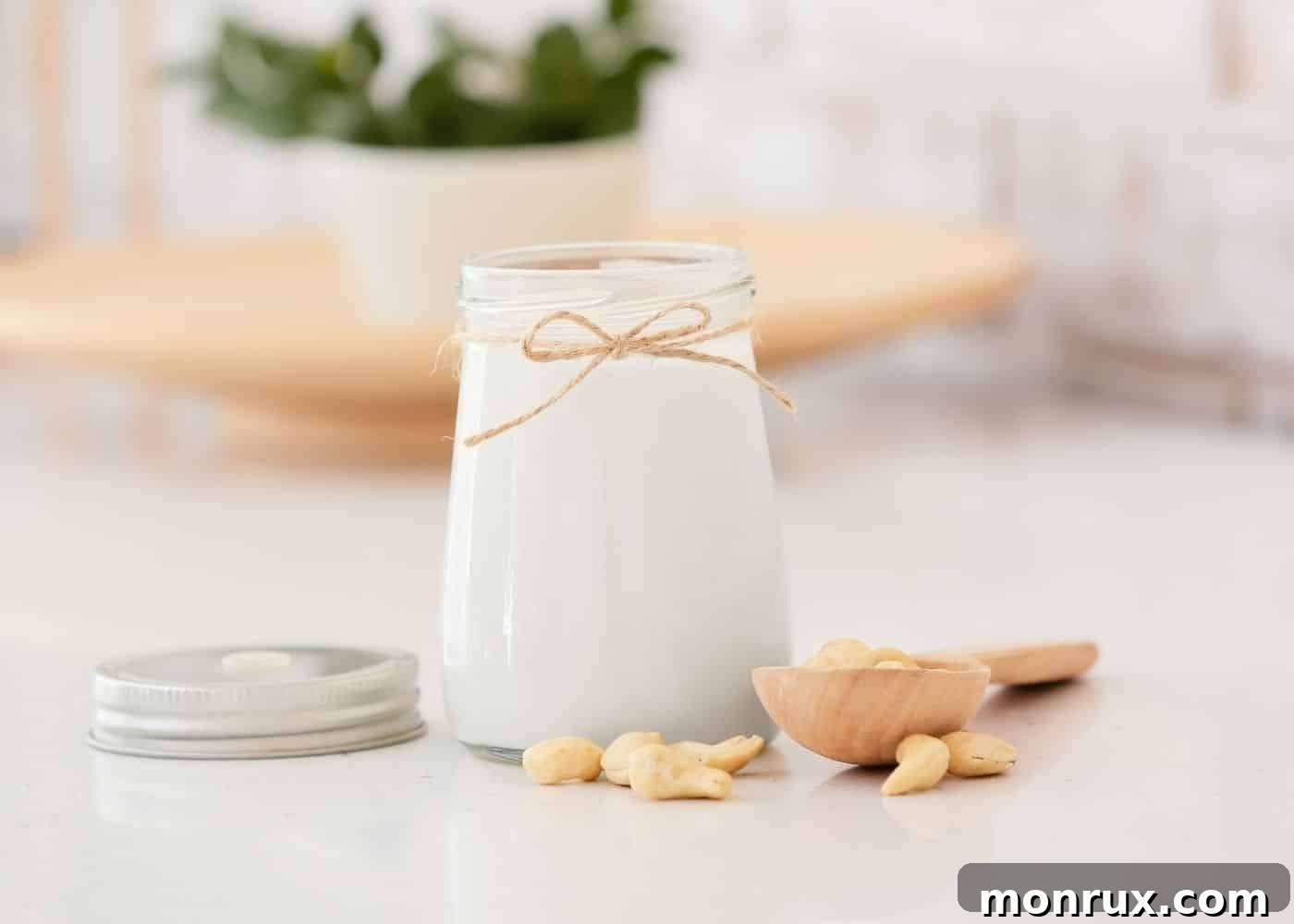
Welcome to the ultimate guide on how to make Cashew Milk, a silky-smooth, dairy-free delight perfect for all your plant-based needs. Forget the hassle of straining; this delicious vegan nut milk comes together with just a blend and a pour, making it one of the easiest homemade milk alternatives you can prepare. Embrace the rich, creamy texture and mild flavor that sets cashew milk apart.
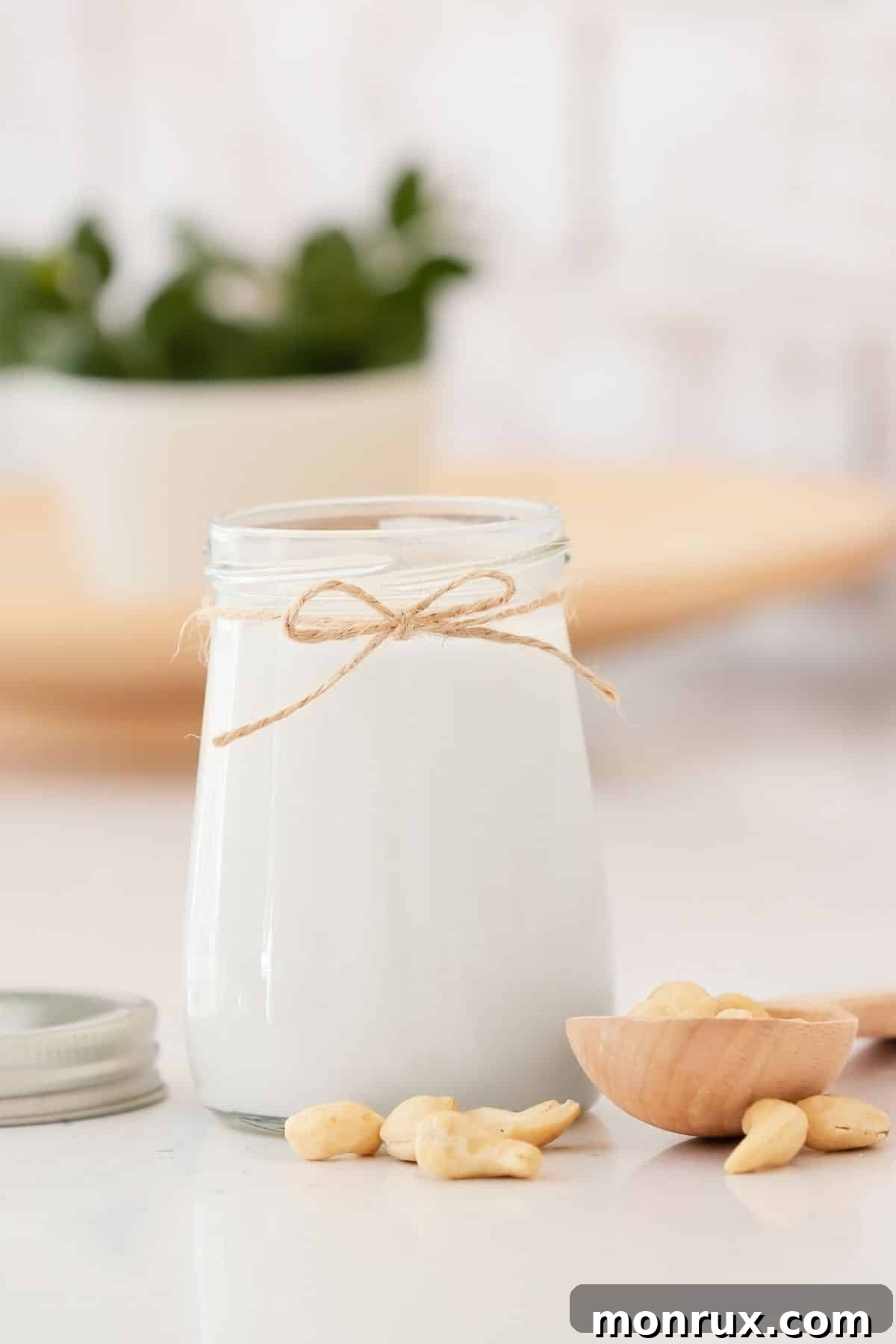
Cashew milk is a delightful non-dairy beverage crafted by blending raw cashew nuts with water. Its inherent creaminess and subtle flavor make it an outstanding alternative to traditional dairy milk, suitable for a vast array of culinary applications. Unlike many other nut milks, cashew milk rarely requires straining, thanks to the soft, finely blending nature of cashews. This means less mess and a quicker path to a fresh, wholesome beverage.
Whether you prefer your cashew milk unsweetened for savory dishes or lightly sweetened for a morning latte, its versatility knows no bounds. It integrates beautifully into sweet or savory recipes, holds up wonderfully when heated, and is an excellent choice for baking, adding moisture and a delicate richness without any dairy.
Why Choose Homemade Cashew Milk?
Opting for homemade cashew milk over store-bought varieties offers numerous advantages, from superior taste and control over ingredients to significant health benefits and cost savings. Here’s why this creamy plant-based milk should be a staple in your kitchen:
- **Unparalleled Creaminess Without Straining:** One of the most compelling reasons to choose cashew milk is its naturally smooth and creamy texture. Unlike almond milk, which often leaves behind a fibrous pulp requiring straining through a nut milk bag, cashews blend into a luxurious, grit-free liquid. This makes the preparation process incredibly fast, easy, and mess-free.
- **Quick Preparation Time:** Cashews are incredibly soft nuts, meaning they require minimal soaking time compared to other nuts like almonds. A quick 10-minute soak or even a flash soak with hot water is often sufficient, allowing you to whip up a fresh batch of milk in under 20 minutes. This convenience makes homemade cashew milk a perfect choice for busy lifestyles.
- **Customizable to Your Taste:** When you make cashew milk at home, you have complete control over the flavor profile. You can keep it unsweetened for savory recipes, add a touch of maple syrup or dates for sweetness, or infuse it with vanilla extract, cinnamon, or even cocoa powder for a flavored treat. This level of customization is rarely found in commercial products.
- **Freshness and Purity:** Homemade cashew milk contains no artificial thickeners, preservatives, or added sugars often found in store-bought versions. You know exactly what goes into your milk, ensuring a pure, wholesome beverage free from unwanted additives.
- **Nutritional Benefits:** Cashews are a good source of healthy fats, protein, and essential minerals like magnesium, zinc, and copper. When blended into milk, these nutrients are easily absorbed, contributing to bone health, immune function, and energy production. It’s a cholesterol-free, lactose-free, and naturally gluten-free option for those with dietary restrictions.
- **Versatility in the Kitchen:** From enriching your morning coffee and powering your smoothies to creating creamy sauces, delectable desserts, and savory soups, cashew milk is incredibly versatile. Its mild flavor doesn’t overpower other ingredients, allowing it to seamlessly integrate into almost any recipe that calls for milk.
Let me show you exactly how simple and rewarding it is to make your own cashew milk at home.
Essential Ingredients for Cashew Milk
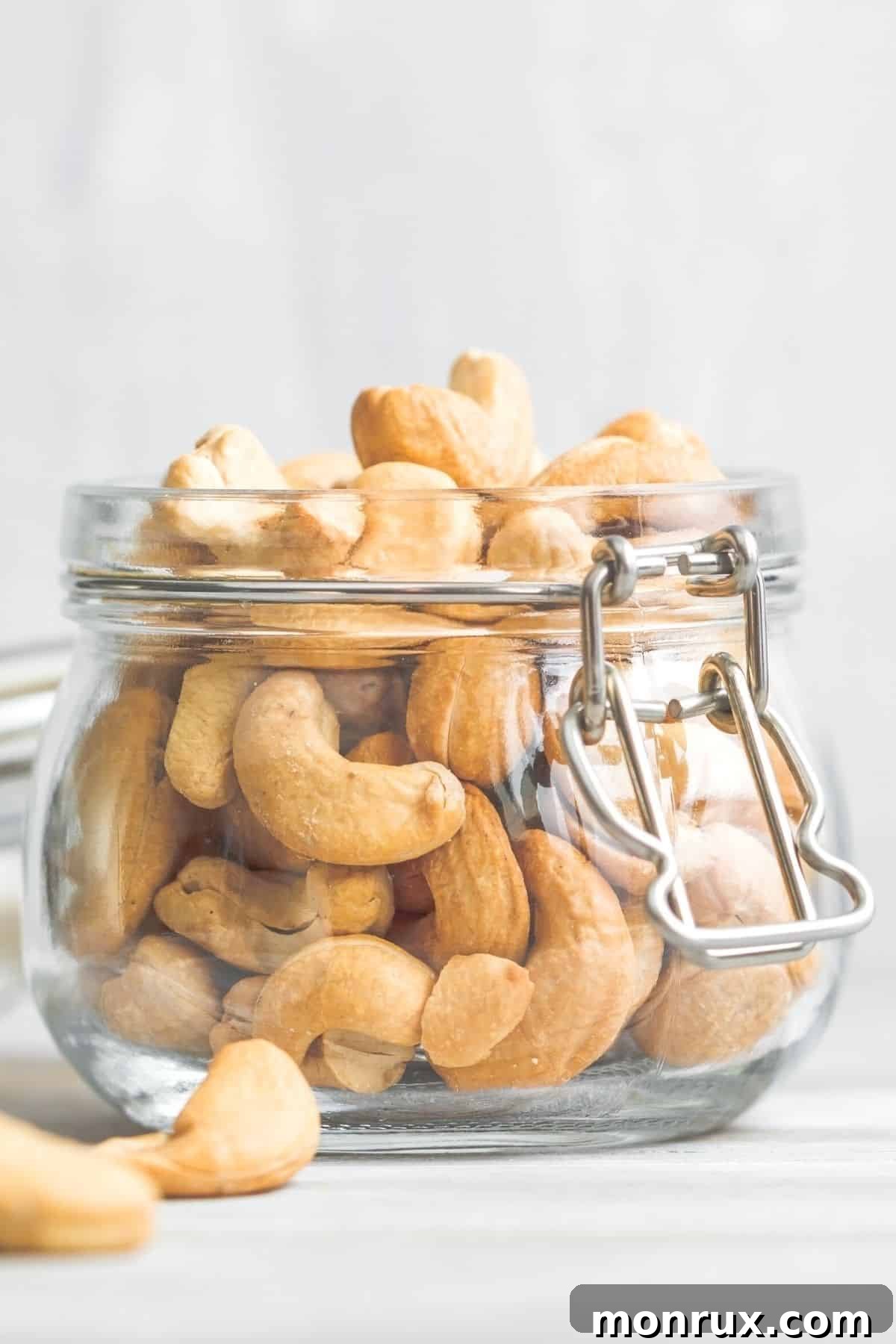
Crafting perfectly creamy cashew milk requires only two fundamental ingredients: **cashews and water**. However, the type of cashews and water you choose can significantly impact the final taste and texture of your homemade beverage.
I strongly recommend using **raw cashews** as opposed to roasted cashews. Raw cashews are softer and blend much more smoothly, yielding an incredibly creamy and luxurious texture. Roasted cashews, on the other hand, can produce a slightly grittier milk and may impart a roasted flavor that you might not desire for all uses. Opt for organic raw cashews whenever possible for the purest taste and to avoid any unwanted chemicals.
Furthermore, using **filtered water** is crucial. Tap water often contains chlorine and other minerals that can subtly alter the flavor of your homemade cashew milk, leaving an undesirable aftertaste. Filtered water ensures a clean, neutral base that allows the natural sweetness and creaminess of the cashews to shine through. The quality of your water directly correlates with the quality of your finished milk.
For those looking to enhance their cashew milk, consider adding a pinch of sea salt to bring out the cashew’s natural flavor, or a dash of pure vanilla extract for a hint of sweetness and aromatic depth. Natural sweeteners like maple syrup or pitted Medjool dates can also be added for a sweetened version, tailoring the milk precisely to your preference.
Please see the detailed recipe card at the end of this post for exact measurements and optional additions.
Step-by-Step Cashew Milk Recipe
Making cashew milk is refreshingly straightforward, especially compared to other nut milks. The secret lies in the cashews’ inherent softness, which means a drastically reduced soaking time. Unlike almonds, which typically demand an 8-12 hour soak, cashews are ready to blend after a brief soak, making this a quick and convenient dairy-free option.
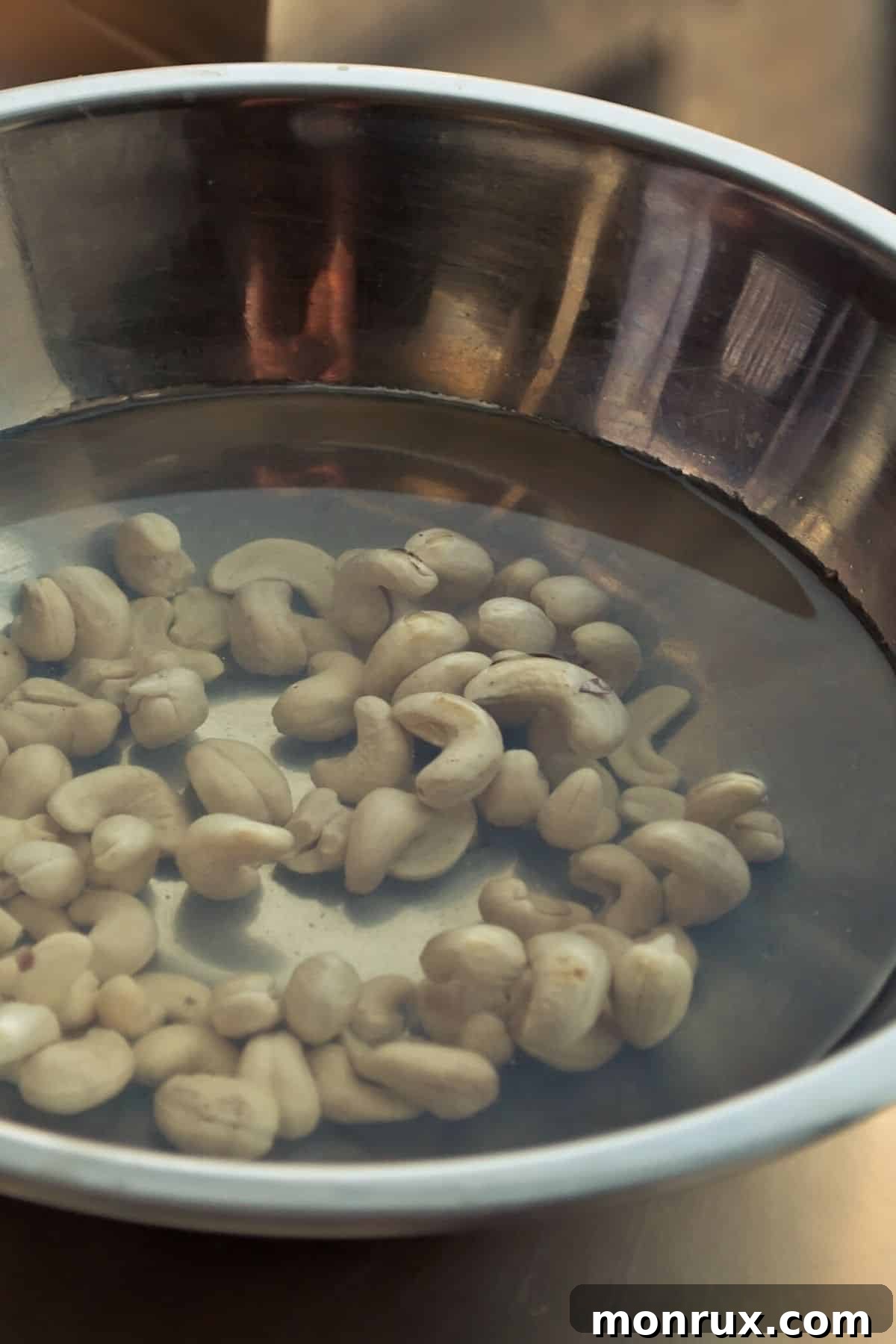
The minimal soaking requirement is precisely why this recipe is a favorite for many. In fact, even a mere 10-minute soak in a bowl of water is usually ample to prepare cashews for blending into a creamy consistency. You can find high-quality organic raw cashews online or at most grocery stores.
Step One: Soaking the Cashews for Optimal Creaminess
Begin by placing approximately one cup of raw whole cashews into a bowl. Cover them generously with filtered water. While a 10-30 minute soak is often enough, for an extra smooth and rich milk, you can soak them longer (up to 4 hours) or use a quick hot water method: simply cover the cashews with boiling water and let them sit for 15-20 minutes. Soaking helps to soften the cashews, making them easier to blend into a perfectly smooth liquid, and also aids in digestibility.
Step Two: Rinse and Blend for a Smooth Consistency
Once your cashews have softened, drain them thoroughly and give them a good rinse under cool running water. This removes any soaking water and ensures the freshest taste. Transfer the rinsed cashews into a high-speed blender. Add four cups of fresh filtered water. At this stage, you can also include any optional additions such as a pinch of sea salt, a teaspoon of vanilla extract, or your preferred sweetener like 1-2 Medjool dates (pitted) or 1-2 tablespoons of maple syrup.
For the absolute best results and a truly silky-smooth finish, I highly recommend using a high-powered blender such as a Blendtec or a Vitamix. These powerful machines break down the cashews so finely that no pulp remains, eliminating the need for straining.
As I previously mentioned, one of the greatest advantages of making homemade cashew milk is that you completely bypass the need for a nut milk bag. This saves you time and effort, making cashew milk an incredibly easy and accessible plant-based milk alternative.
Step Three: Blend Until Creamy and Store
With cashews and water (and any optional flavorings) in your high-speed blender, secure the lid and blend on high for approximately 45-60 seconds, or until the mixture is completely smooth and creamy. You should not see any visible cashew pieces or grittiness. The longer you blend, the creamier and smoother your milk will be. Pause and scrape down the sides if necessary to ensure all cashews are incorporated.
That’s it! In less than a minute of blending, you’ve created a rich, creamy homemade cashew milk that is often preferred over cow’s milk for many people due to dietary sensitivities or personal preferences. Pour your freshly made cashew milk into an airtight container, such as a glass bottle or jar, and store it in the refrigerator. It will stay fresh for up to 5-7 days.
I am confident you’ll adore this homemade cashew milk recipe as much as I do! Its delightful creaminess makes it perfect for countless applications. Use it to create a luxurious dairy-free latte, a comforting hot chocolate, or simply as a superb addition to your morning coffee or tea.
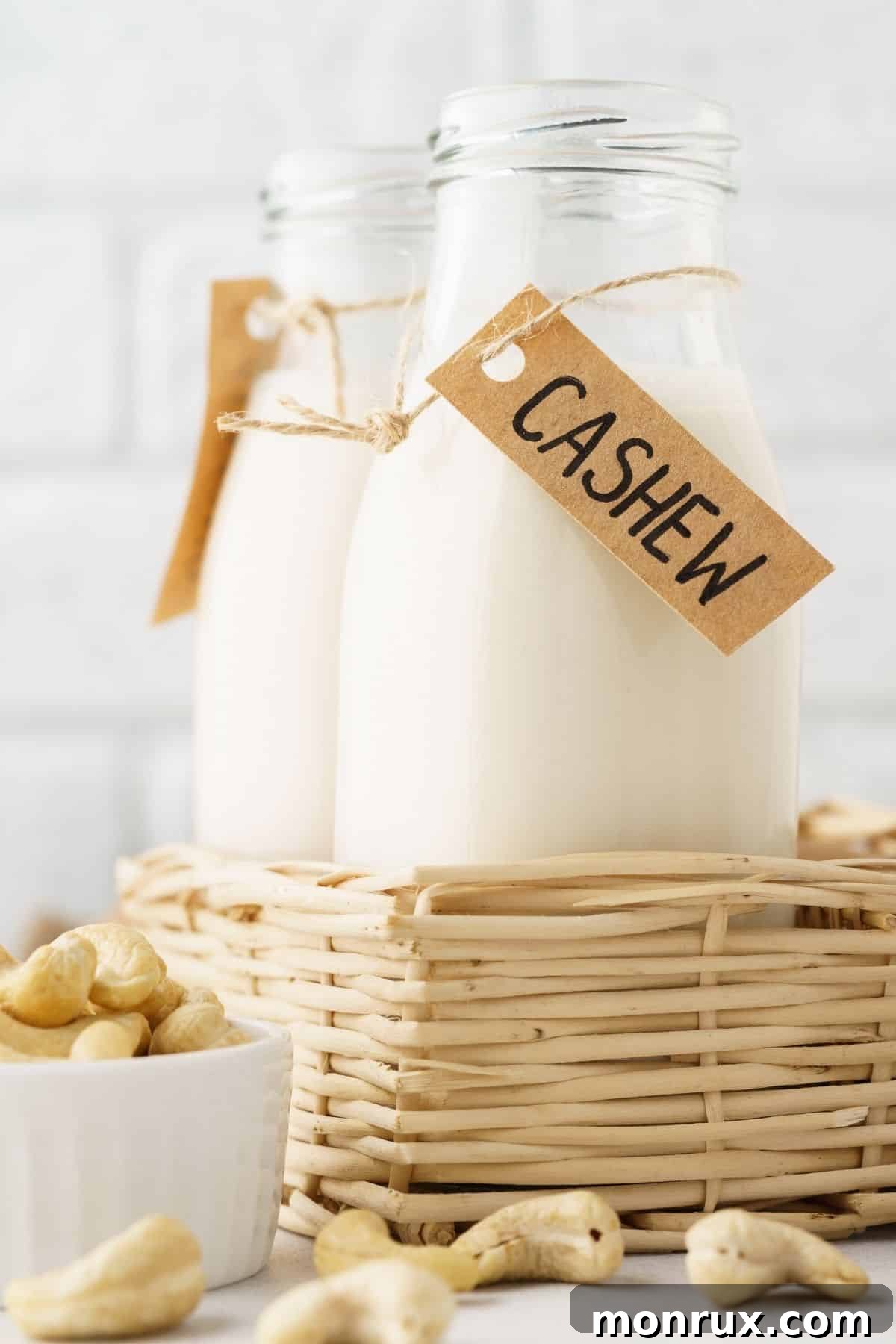
Expert Tips for Perfect Cashew Milk
Elevate your homemade cashew milk game with these simple yet effective tips:
- **Customize Your Sweetness and Flavor:** While delicious on its own, don’t hesitate to experiment. Add natural sweeteners like maple syrup, agave, pitted Medjool dates, or a few drops of stevia. For a classic twist, a teaspoon of pure vanilla extract adds wonderful depth. A pinch of sea salt can also surprisingly enhance the overall flavor.
- **Create Flavor Variations:**
- **Chocolate Cashew Milk:** For a rich chocolate treat, blend 1/2 cup organic cashews + 1/3 cup Brazil nuts + 1 tablespoon of raw cacao or cocoa powder, and 3 cups of filtered water (adjust water for desired thickness). This base is also fantastic for homemade fudgesicles.
- **Protein-Rich Cashew-Hemp Milk:** Boost the nutritional profile by blending 1/2 cup organic cashews + 1/4 cup hemp seeds + 3 cups filtered water. This creates a protein-packed milk, perfect for robust green smoothies (explore my list of smoothie recipes for inspiration).
- **Spiced Cashew Milk:** Add a dash of cinnamon, nutmeg, or cardamom for a warming, spiced milk, especially delightful in fall and winter beverages.
- **Always Use Raw Cashews:** As emphasized earlier, raw cashews are non-negotiable for the creamiest, smoothest results. Roasted cashews will yield a different texture and flavor that might not be suitable for all recipes.
- **Prioritize Filtered Water:** The purity of your water significantly impacts the final taste. Using filtered water prevents any chlorine or mineral tastes from tainting your fresh cashew milk.
- **Adjust Consistency:** For a thicker, more luscious cashew cream suitable for cooking or richer coffees, use less water (e.g., 3 cups per 1 cup cashews). For a thinner, more pourable milk, increase the water ratio slightly (e.g., 4.5-5 cups per 1 cup cashews).
- **Don’t Overlook Soaking:** Even for a quick recipe, soaking the cashews is key. It helps to soften them, ensuring they break down completely in the blender, and can also improve nutrient absorption.
- **Storage is Key:** Always store your homemade cashew milk in an airtight container in the refrigerator to maintain freshness and prevent it from absorbing other odors. Shake well before each use, as some natural separation may occur.
Creative Uses for Your Homemade Cashew Milk
The versatility of homemade cashew milk extends far beyond just a simple beverage. Its neutral flavor and rich, creamy texture make it an indispensable ingredient in both sweet and savory cooking. Here are just a few ideas to inspire you:
- **Morning Beverages:** Elevate your daily routine by adding cashew milk to your coffee, tea, or matcha latte. It froths beautifully, creating a luxurious and dairy-free foam.
- **Smoothies and Shakes:** As a base for smoothies, cashew milk adds a wonderful creaminess without overpowering the flavors of fruits and vegetables. It’s especially good in green smoothies, providing a smooth texture and a subtle richness.
- **Cereals and Oatmeal:** Pour it over your favorite cereal, granola, or use it to cook oatmeal for a hearty and nutritious breakfast.
- **Baking:** Replace dairy milk in most baking recipes with cashew milk. It works wonderfully in cakes, muffins, pancakes, waffles, and even custards, contributing moisture and a delicate, creamy undertone.
- **Creamy Soups and Sauces:** Cashew milk can be a game-changer for vegan and dairy-free cooking. Use it to thicken and enrich creamy tomato soups, mushroom bisques, or to create luscious pasta sauces like a dairy-free Alfredo.
- **Curries and Stews:** Its rich texture makes it an excellent addition to curries, providing body and a mild flavor that complements a wide range of spices.
- **Desserts:** Incorporate cashew milk into homemade ice creams, puddings, or mousses for a decadent, dairy-free dessert experience.
Cashew Milk vs. Other Dairy-Free Alternatives
While the market is flooded with various plant-based milk options, cashew milk holds a unique position. Understanding its differences from other popular alternatives can help you choose the best milk for your specific needs:
- **Cashew Milk vs. Almond Milk:** Cashew milk is generally creamier and less “nutty” in flavor than almond milk. The biggest advantage is that cashews break down completely, eliminating the need for straining, a step often required for smooth almond milk. Almond milk typically has fewer calories and fat, but cashew milk often feels more indulgent.
- **Cashew Milk vs. Oat Milk:** Oat milk is celebrated for its remarkable creaminess, often rivaling that of dairy milk, and is a great option for those with nut allergies. However, homemade oat milk can sometimes be slimy if over-blended, and it typically has a higher carbohydrate content than cashew milk. Cashew milk, while creamy, has a distinct mild nutty flavor that oat milk lacks.
- **Cashew Milk vs. Soy Milk:** Soy milk is often the highest in protein among plant-based milks and is a complete protein. However, some people avoid soy due to allergies or personal preferences. Cashew milk offers a milder flavor and a naturally thicker consistency without the distinct bean-like taste that some associate with soy milk.
- **Cashew Milk vs. Coconut Milk:** Coconut milk, especially the canned variety, is known for its rich, full-fat content and prominent coconut flavor. While delicious in specific dishes (like curries or desserts), its strong flavor isn’t always suitable for everyday use or in coffee. Cashew milk offers similar creaminess but with a neutral profile, making it more versatile.
Ultimately, the “best” dairy-free milk depends on your taste preferences, dietary requirements, and intended use. However, for an easy-to-make, creamy, and versatile option that requires no straining, homemade cashew milk is a clear winner.
Frequently Asked Questions (FAQs)
Cashew milk is not typically considered high in protein compared to dairy milk or soy milk. A 1/2 cup serving of my recipe provides about 2-3 grams of protein. While it contributes to your daily intake, it’s not a primary protein source. If you’re looking for a creamy plant-based milk with higher protein, soy milk or a blend with hemp seeds (as suggested in our tips) would be better choices.
“Better” is subjective and depends on individual dietary needs and preferences. Cashew milk is an excellent substitute for dairy milk, especially for those with lactose intolerance, dairy allergies, or who prefer a vegan lifestyle. It’s cholesterol-free and lower in saturated fat than whole dairy milk. However, dairy milk offers certain nutrients (like calcium and Vitamin D) that may need to be supplemented in a dairy-free diet. The best choice truly depends on whether you have sensitivities to dairy or nuts. Learn more about the reasons to go dairy-free.
Homemade cashew milk generally lasts for 5-7 days when stored properly in an airtight container in the refrigerator. You’ll know if it has gone bad if it develops a sour smell, an off-taste, or if the texture becomes noticeably thicker or chunky. While some natural separation is normal (just shake it up), any unusual changes indicate it’s time to discard it.
While technically possible, it is not recommended for the best results. Roasted cashews are harder and do not blend as smoothly as raw cashews, potentially leading to a grittier milk. They also impart a toasted flavor that might not be desirable for all uses. For optimal creaminess and a neutral flavor, always stick to raw cashews.
Yes, you can freeze homemade cashew milk! This is a great way to extend its shelf life. Pour it into ice cube trays for convenient individual portions, or larger freezer-safe containers, leaving some headspace for expansion. It can be stored in the freezer for up to 2-3 months. Thaw in the refrigerator and shake well before using, as the texture might change slightly after freezing and thawing.
More Dairy-Free Milk Recipes You Might Like
If you’re exploring the world of homemade plant-based milks, here are a few other fantastic recipes to try:
- Homemade Unsweetened Almond Milk
- Oat Milk Creamer
- Vanilla Coconut Milk Beverage
- Vanilla Hemp Milk
Don’t Miss These Dairy-Free Resources!
I sincerely hope you try this incredibly easy and delicious homemade cashew milk recipe! If you do, please leave a comment and a starred review below to share your experience. Your feedback helps others discover the joy of making their own plant-based milks.
And, consider following me on social media so we can stay connected. I’m always sharing new recipes and healthy living tips on Facebook, Pinterest, Instagram, and YouTube!
Print Recipe
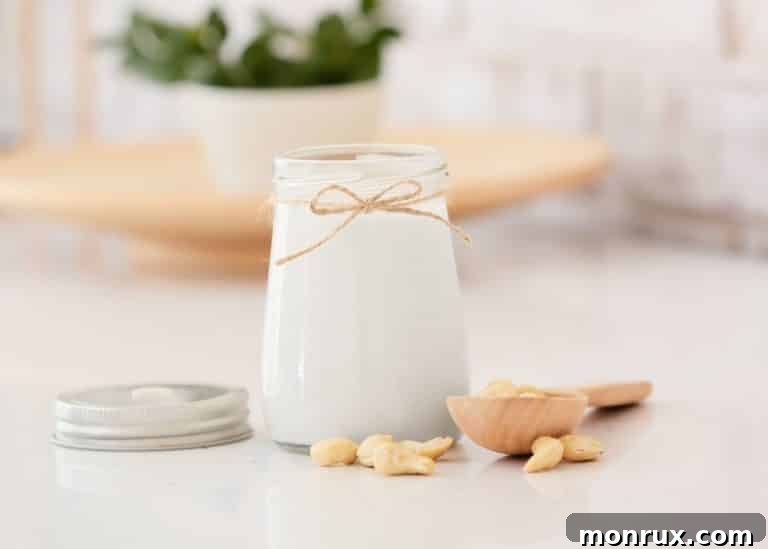
How to Make Creamy Homemade Cashew Milk
5 Stars
4 Stars
3 Stars
2 Stars
1 Star
5 from 7 reviews
Master the art of making delicious, homemade cashew milk for all your dairy-free adventures. This effortless vegan and plant-based milk recipe requires no straining with a nut milk bag – just a quick blend and it’s ready to pour and enjoy. Achieve a wonderfully creamy texture in minutes!
Total Time: 16 minutes
Yield: 4 cups (1x)
Ingredients
- 1 cup organic raw cashews, soaked for 10-30 minutes in filtered water (or 15-20 min in hot water), rinsed well and drained
- 4 cups filtered water, plus more for soaking
- (Optional) 1-2 Medjool dates, pitted, for sweetness
- (Optional) 1 teaspoon pure vanilla extract, for flavor
- (Optional) Pinch of sea salt, to enhance flavor
Instructions
- **Soak Cashews:** Place raw cashews in a bowl and cover with filtered water. Let them soak for 10-30 minutes at room temperature, or for a quicker method, cover with boiling water and let sit for 15-20 minutes. Drain and rinse the soaked cashews thoroughly.
- **Blend Ingredients:** Transfer the rinsed cashews to a high-speed blender. Add 4 cups of fresh filtered water. If desired, add pitted dates, vanilla extract, and a pinch of sea salt for extra flavor.
- **Process Until Smooth:** Blend on high for about 45-60 seconds, or until the mixture is completely smooth and creamy. There should be no visible pieces of cashew. Pause and scrape down the sides of the blender jar if necessary to ensure even blending.
- **Store:** Pour the freshly made cashew milk into an airtight glass jar or bottle. Store it in the refrigerator for up to 5-7 days. Shake well before each use as some natural separation may occur.
Notes
- **Flavor Variations:** Try blending 1/2 cup organic cashews + 1/3 cup Brazil nuts + 1 tablespoon of carob or cocoa powder for a rich Cashew-Brazil Chocolate Milk. This can also serve as the perfect base for homemade fudgesicles.
- **Protein Boost:** For a protein-rich smoothie base, combine 1/2 cup organic cashews + 1/4 cup hemp seeds + 3 cups filtered water. This Cashew-Hemp Milk is ideal for green smoothies (explore my list of smoothie recipes for ideas).
- **Cashew Type:** Always use raw cashews for the best creaminess and a neutral flavor profile. Roasted cashews will result in a grittier texture and an altered taste.
- **Water Quality:** Ensure you use filtered water to avoid any undesirable chlorine taste or mineral interference, guaranteeing a pure and fresh-ttasting milk.
- **Sweetening Options:** Feel free to sweeten your delicious cashew milk to taste. Maple syrup, pitted dates, or a touch of stevia are all excellent natural choices. A dash of pure vanilla extract also adds lovely depth.
- **Consistency Control:** For a thicker, more concentrated milk (or cashew cream), use less water (e.g., 3 cups per cup of cashews). For a thinner milk, you can add up to 5 cups of water.
- Author: Carrie Forrest, MBA, MPH in Nutrition
- Prep Time: 15 mins
- Cook Time: 1 min
- Category: Beverage, Dairy-Free, Vegan
- Method: Blending
- Cuisine: Healthy, Plant-Based
- Diet: Vegan, Gluten-Free, Dairy-Free
Nutrition Facts (per 1/2 cup serving)
- Calories: 65
- Sugar: 0.7 g
- Sodium: 4.6 mg
- Fat: 5.1 g
- Saturated Fat: 0.9 g
- Carbohydrates: 3.5 g
- Fiber: 0.4 g
- Protein: 2.1 g
- Cholesterol: 0 mg
Don’t forget to join my newsletter list to get exclusive clean eating recipes, health tips, and wellness insights directly to your inbox. The newsletter is 100% free with no spam; you can unsubscribe anytime.
About the Author: Carrie Forrest has a master’s degree in public health with a specialty in nutrition and is a certified holistic nutritionist. She is a top wellness and food blogger with over 5 million annual visitors to her site. Carrie has an incredible story of recovery from chronic illness and is passionate about helping other women transform their health through nourishing food and lifestyle choices. Connect with her or send a message through her contact form.