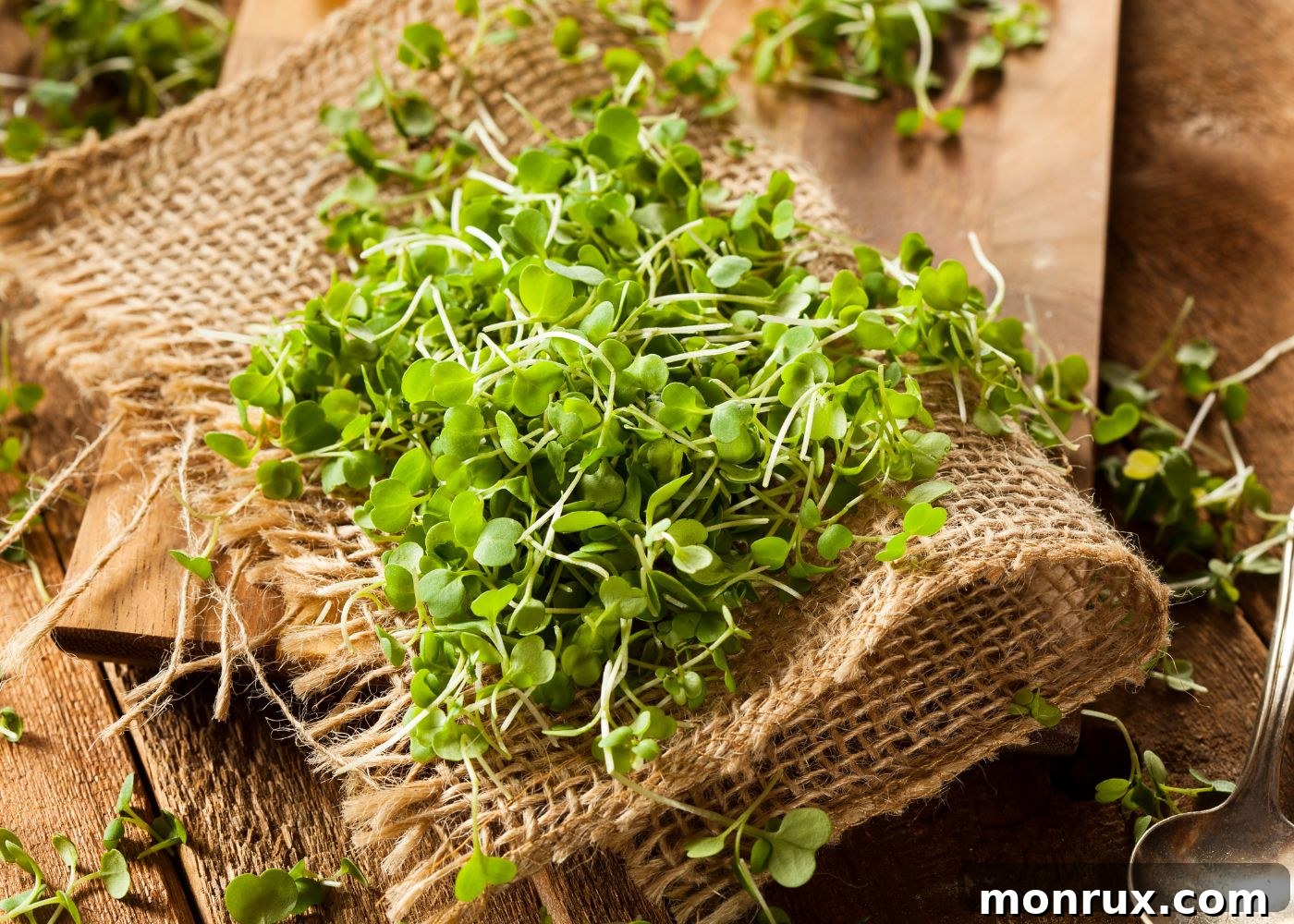
Dive into the vibrant world of arugula microgreens, an incredibly nutritious superfood that’s surprisingly easy to cultivate right in your own home. Packed with potent health benefits and a distinctive peppery flavor, these tiny greens offer a powerful punch to any meal. This comprehensive guide will equip you with everything you need to know about arugula microgreens, from their remarkable nutritional profile to a complete, step-by-step growing process, ensuring a fresh supply at your fingertips.
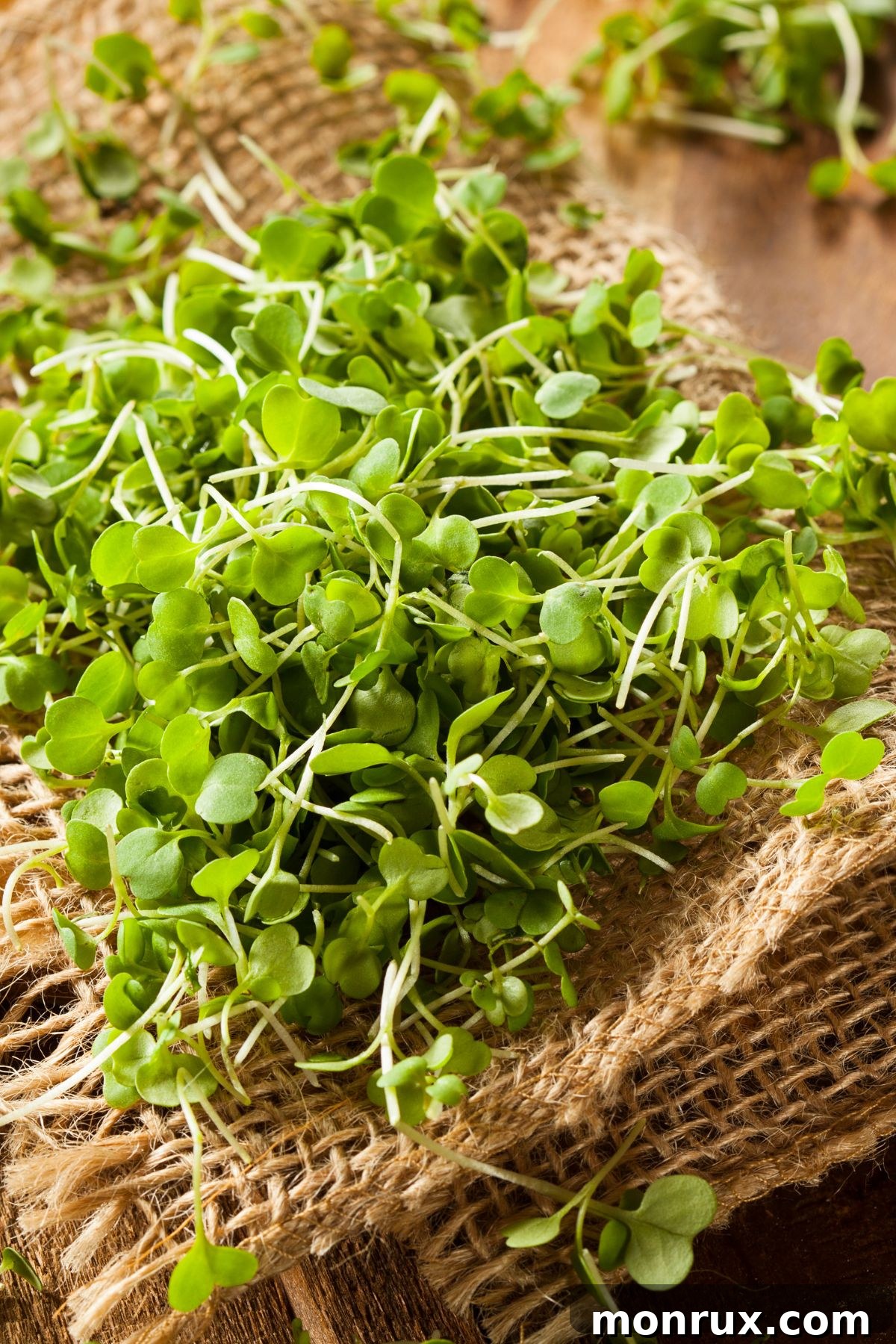
Arugula Microgreens Overview
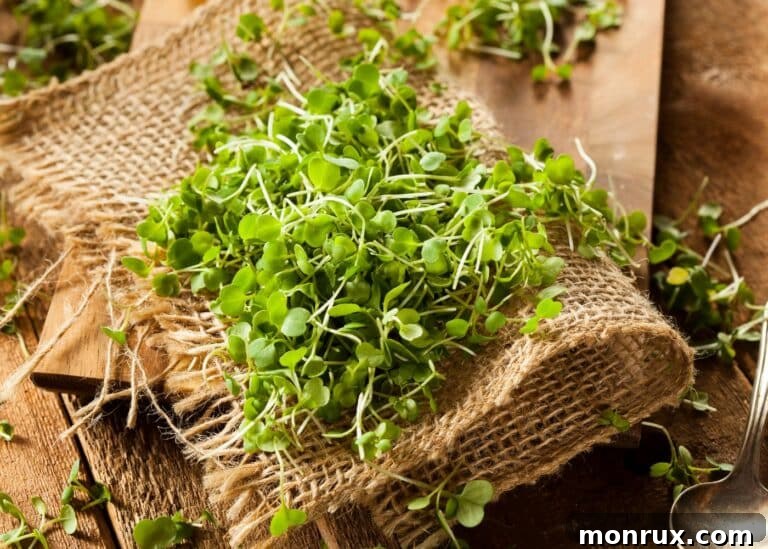
Arugula microgreens are essentially young arugula plants, harvested at an early stage, typically when they are just a few inches tall and have developed their first set of true leaves (cotyledons). Unlike their mature counterparts, these greens boast an intense flavor and an even denser nutritional profile. They offer a delightful, crisp texture that enhances any dish.
Belonging to the cruciferous family, arugula shares its lineage with other healthful vegetables like broccoli, kale, and radish. The beauty of microgreens lies in their consumption—mostly raw—allowing you to absorb their full spectrum of vitamins, minerals, and antioxidants without the degradation that cooking can cause. Globally, arugula is known by various names such as rucola, garden rocket, roquette, and colewort, reflecting its widespread appeal and use in diverse cuisines.
Arugula Microgreens vs. Arugula Sprouts: What’s the Difference?
While often confused, arugula microgreens and arugula sprouts are distinct. Sprouts are seeds that have just germinated, typically harvested within 2-7 days, and are eaten whole—seed, root, and nascent stem. They are grown in water or a moist environment without soil. Microgreens, on the other hand, are grown in a growing medium like soil or a grow mat, and are allowed to develop their first set of cotyledon leaves (and sometimes true leaves) before being harvested, usually by cutting just above the soil line. This longer growth period, although still brief, allows microgreens to develop more complex flavors and significantly higher nutrient concentrations than sprouts.
Nutrients and Flavor Intensity
When it comes to arugula microgreens, both their flavor and nutritional content are notably intensified compared to mature arugula. Expect a pungent, peppery, and slightly bitter taste—a more concentrated version of the full-grown leaf. This bold flavor makes them a fantastic accent in dishes, requiring only a small quantity to make a significant impact.
But beyond flavor, the true marvel of microgreens lies in their nutritional density. Studies consistently show that microgreens can contain anywhere from 4 to 40 times the nutrient levels of their mature vegetable counterparts. This early harvest stage captures a powerful burst of vital compounds, meaning a small serving of arugula microgreens can deliver the nutritional punch of a much larger portion of mature leaves. This makes them an invaluable addition for anyone striving to boost their daily intake of fresh vegetables and essential nutrients. They are incredibly versatile and easily integrated into sandwiches, salads, smoothies, and garnishes, making healthy eating both simple and delicious. Arugula microgreens are celebrated among the most flavorful and popular microgreens for their distinct taste and powerful health benefits.
Benefits of Growing Your Own Arugula Microgreens
The availability and freshness of arugula microgreens at grocery stores can be inconsistent. This is why cultivating them at home is an exceptionally rewarding option. Growing your own ensures a steady, reliable supply of the freshest possible microgreens, harvested exactly when you need them. The difference in taste and vibrancy between store-bought and homegrown is often remarkable.
Moreover, the process itself is surprisingly straightforward and remarkably quick. From the moment you sow the tiny seeds to the satisfying act of harvesting, the entire cycle can be completed in less than 10 days. This rapid turnaround makes it an ideal project for beginners, children, or anyone looking for instant gratification in their gardening endeavors. Beyond the personal benefits, growing microgreens at home significantly reduces your carbon footprint, cutting down on transportation and packaging waste, making it an environmentally conscious choice.
Unveiling the Health Benefits of Arugula Microgreens
Arugula microgreens are not just delicious; they are a nutritional powerhouse, delivering the concentrated benefits of cruciferous vegetables in a miniature package. As mentioned, extensive research has demonstrated that microgreens generally boast nutrient levels ranging from 4 to 40 times higher than their mature counterparts. This remarkable density makes them one of the most effective ways to supercharge your diet with essential vitamins, minerals, and protective plant compounds.
Rich in Essential Vitamins and Minerals
- Vitamin K: Crucial for blood clotting and plays a vital role in bone health, helping to regulate calcium levels.
- Vitamin C: A powerful antioxidant that supports immune function, skin health, and aids in iron absorption.
- Vitamin A (as Carotenoids): Essential for vision, immune function, and skin health. Arugula microgreens are particularly rich in carotenoids, which the body converts into Vitamin A.
- Folate: Important for cell growth and function, particularly critical during pregnancy.
- Calcium: Abundant in arugula microgreens, supporting strong bones, teeth, and muscle function.
- Iron: Essential for oxygen transport in the blood and preventing anemia.
- Potassium: Key for maintaining healthy blood pressure and fluid balance.
- Manganese: Plays a role in bone formation, blood clotting, and metabolism.
Antioxidants and Cancer Prevention
Beyond the standard vitamins and minerals, arugula microgreens are brimming with unique phytochemicals, particularly glucosinolates. These compounds are responsible for arugula’s pungent flavor and, when chewed or chopped, are converted into isothiocyanates. Isothiocyanates have been widely studied for their potent antioxidant and anti-inflammatory properties, playing a significant role in cancer prevention by supporting detoxification pathways and inhibiting the growth of cancer cells.
Lower Oxalate Content for Enhanced Nutrient Absorption
A significant advantage of arugula microgreens is their relatively lower content of oxalates compared to many other leafy greens like spinach or Swiss chard. Oxalates are natural compounds that can bind to minerals like calcium and iron, reducing their absorption in the body. The lower oxalate levels in arugula microgreens mean that your body can more efficiently absorb the rich array of minerals they offer, maximizing their health benefits. With such an impressive nutritional profile, it’s no surprise that nutrition experts widely consider microgreens to be true “superfoods”!
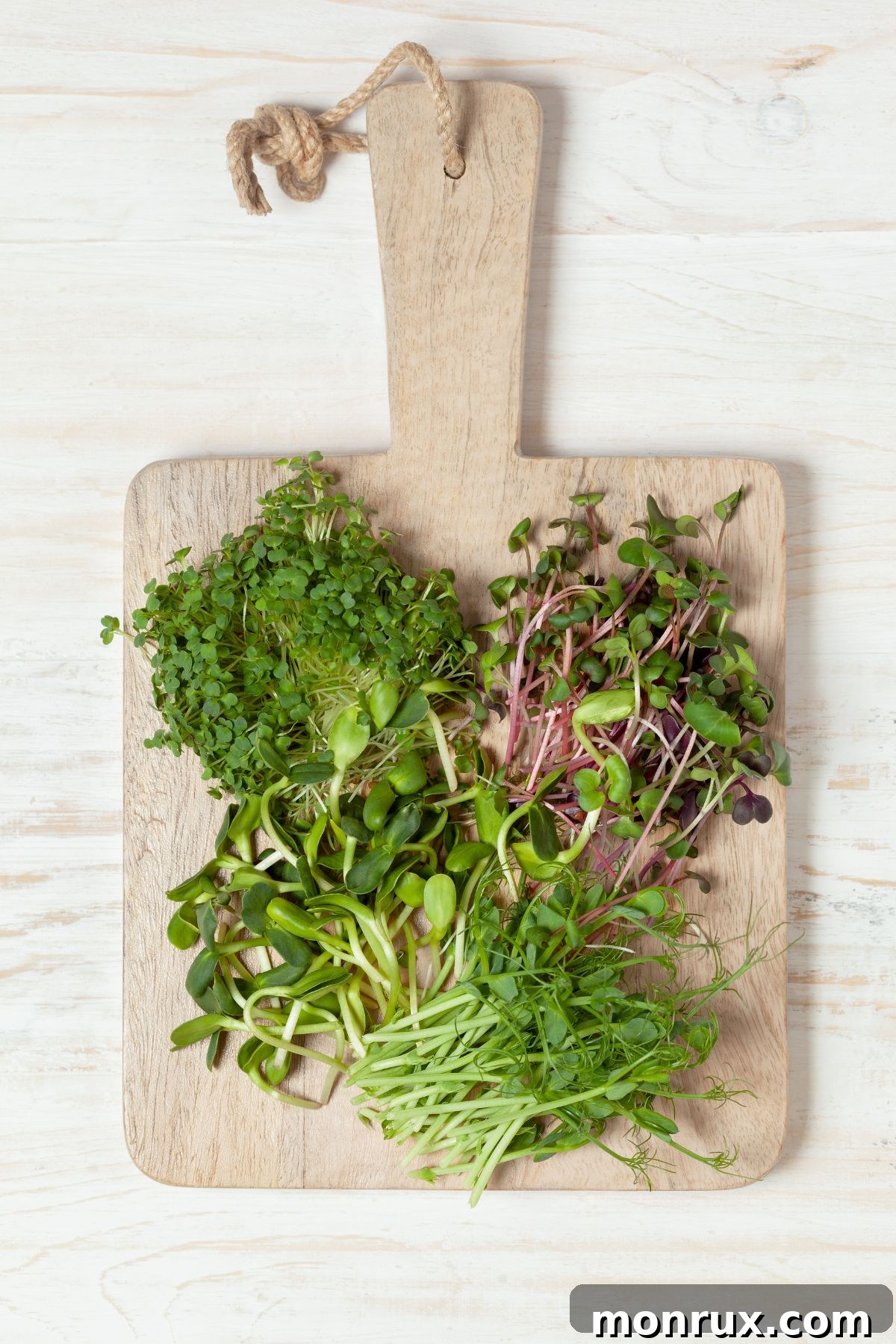
The Complete Guide to Growing Arugula Microgreens
Thinking that growing your own consistent supply of arugula microgreens at home requires extensive equipment or a green thumb? Think again! The beauty of cultivating these tiny powerhouses lies in their simplicity and minimal requirements. All you truly need are quality seeds, a few basic supplies, water, and light. You don’t even need a large garden space; a sunny windowsill is often ample room to yield a plentiful crop for your family’s needs. The entire process, from sowing to harvest, can take less than 10 days, making it an incredibly satisfying and quick gardening project suitable for all ages and experience levels.
Essential Supplies You’ll Need
Gathering the right tools is the first step to a successful arugula microgreen harvest. Here’s a breakdown of what you’ll need:
Arugula Seeds
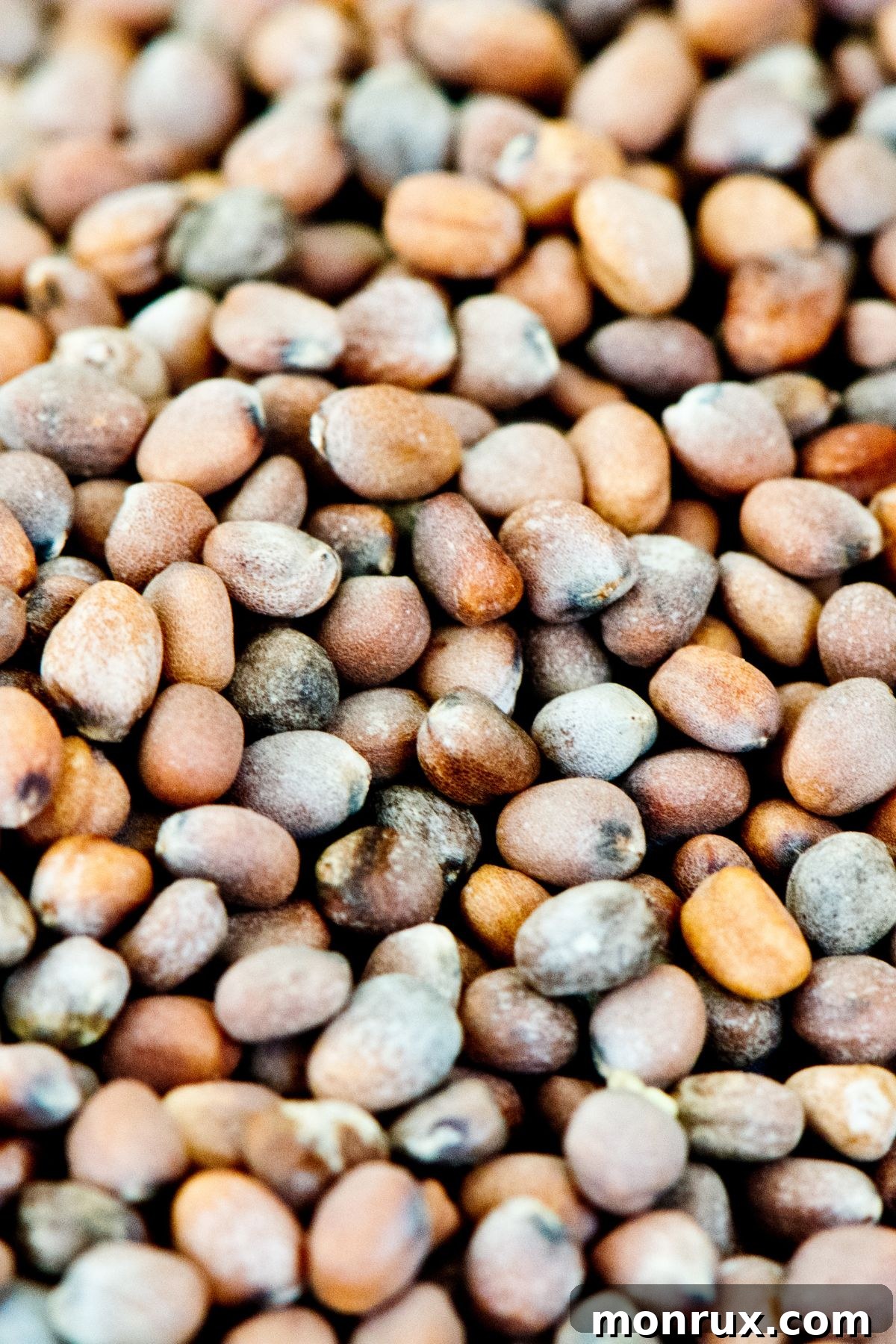
While most arugula varieties can be grown as microgreens, the “roquette arugula” type is generally recommended for its robust growth and excellent flavor. It’s best to avoid varieties labeled “wild arugula” for microgreen purposes, as they tend to grow closer to the soil, making harvesting more challenging. Crucially, always opt for organic seeds. This ensures your microgreens are free from harmful pesticides, fungicides, and other unwanted chemical treatments, providing you with the purest, healthiest crop. Purchase specifically labeled microgreen seeds for the best germination rates and yields.
Recommended: Organic Arugula Microgreen Seeds.
Growing Medium
The choice of growing medium is vital for healthy microgreen development. Soil is a common and excellent choice; a high-quality seed-starting mix is ideal. Its lightweight, fine-grained texture provides an optimal environment for fragile root hairs to establish quickly and firmly. If you prefer a less-messy, soil-free alternative, several options are available:
- Coconut Coir: A popular, sustainable, and sterile option derived from coconut husks. It retains moisture well and provides a good structure for roots.
- Hemp Mats: Natural, biodegradable mats that provide an excellent anchor for roots and simplify the harvesting process.
- Paper Towels: A simple, inexpensive option for beginners, though they may require more frequent watering.
- Vermiculite: Often used as a soil additive to improve aeration and moisture retention, it can also be used alone as a sterile medium, potentially boosting the mineral content of your microgreens.
Each medium has its advantages, but the key is to ensure it is sterile to prevent fungal issues and provides good drainage while retaining adequate moisture.
Containers
Shallow trays, typically 1 to 2 inches deep, are perfect for growing microgreens. Their depth is sufficient for the short root systems of microgreens without wasting growing medium. For beginners, repurposed fruit containers or pie plates can serve as eco-friendly starting trays, but for a consistent supply, investing in dedicated growing trays is advisable.
Your primary growing tray must have drainage holes at the bottom. These holes are critical for preventing waterlogging, which can lead to mold growth and root rot—common pitfalls for new growers. Additionally, you will need a second, slightly larger tray without drainage holes. This bottom tray will act as a reservoir, allowing you to water your microgreens from beneath. This “bottom watering” method keeps the leaves and stems dry, significantly reducing the risk of mold and fungal diseases.
Spray Bottle
A spray bottle equipped with a fine mist setting is indispensable for the initial watering of your seeds. Arugula seeds are tiny and can easily be displaced or overwatered by a strong stream. A gentle mist ensures even hydration without disturbing the seeds.
Light Source
For your arugula microgreens to develop their vibrant green color and maximize nutrient production through photosynthesis, a sufficient light source is essential. A sunny windowsill that receives at least 4-6 hours of direct sunlight daily is often adequate. However, for more consistent growth, especially during shorter winter days or in areas with limited natural light, a dedicated grow light is highly recommended. Grow lights ensure uniform illumination across all seeds, leading to more even growth and higher quality greens.
How to Sow Your Arugula Microgreen Seeds
With your supplies ready, it’s time to sow the seeds:
- Prepare the Growing Medium: Fill your chosen growing tray with your preferred medium (seed soil, coconut coir, etc.) until it’s just below the rim. Gently level the surface with your hand. If using soil, lightly pat it down to create a uniform, firm bed. Avoid compacting coconut coir too much.
- Moisten the Medium: Using your spray bottle, thoroughly mist the surface of the medium until it is uniformly damp but not saturated. Allow the water to absorb, then mist again lightly. This creates the perfect moist bed for the seeds.
- Sow the Seeds: Unlike some other microgreens, arugula seeds are small and thin-hulled, so they do not require pre-soaking. Spread the seeds evenly in a single, dense layer across the entire surface of the moist growing medium. Aim for about an ounce of seeds per 10×20 inch tray. Many growers find a shaker bottle helpful for achieving an even distribution.
- Even Distribution: Carefully use your fingertips to gently spread out any clumps of seeds. Overlapping or clumping seeds can lead to mold and uneven growth, as they compete for space and moisture.
How to Germinate the Seeds: The Blackout Period
Effective germination is a critical first step. Arugula microgreens benefit greatly from a “blackout period”:
- Initial Misting (No Covering with Soil): After sowing, give the seeds another light misting with the spray bottle. Be gentle to avoid displacing the tiny seeds. Do NOT cover arugula seeds with an additional layer of soil.
- Cover and Weight: To create an optimal germination environment, cover the growing tray. You can use the second, larger tray (without drainage holes) flipped upside down as a cover. To enhance root development and moisture retention, place a heavy object (around 5 pounds) on top of this cover. This gentle pressure encourages the roots to grow deeper into the medium, anchoring the plants and making them more robust. The cover also traps humidity and blocks out light, mimicking the conditions seeds experience when buried in soil.
- Germination Period: Place the covered, weighted tray in a warm spot, ideally between 68-75°F (20-24°C). Leave the seeds undisturbed for 2-3 days. During this time, you typically won’t need to water, as the weighted cover effectively retains moisture.
- Check for Sprouting: After 2 days, carefully lift the cover to inspect your seeds. You should see nearly all of them germinated, with tiny, often yellow or pale green sprouts emerging. If not all have sprouted, mist them lightly again and replace the cover for up to an additional 1-2 days.
The blackout period is essential for encouraging strong, vigorous root development before the plants focus on stem and leaf growth.
Expose the Arugula Microgreens to Light and Watch Them Grow!
Once the seeds have largely sprouted and show nascent leaves, it’s time to introduce them to light:
- Remove Cover & Provide Light: Take off the cover and immediately expose your microgreens to as much natural light as possible. A bright, south-facing windowsill is ideal. If using a grow light, place the tray directly underneath it for 4-8 hours daily. Consistent light is key for them to develop their vibrant green color and maximize nutritional content.
- Initial Bottom Watering: Place the growing tray (with drainage holes) into the second, larger tray (without holes). Pour water into the bottom tray. The growing medium will absorb water from beneath through capillary action. Water generously until the top surface of the medium appears moist. Once moist, remove any excess water from the bottom tray to prevent overwatering.
- Ongoing Bottom Watering: From this point forward, continue to water using the bottom watering method. Check the moisture level of your growing medium daily; it should always feel consistently moist but never soggy. The frequency will depend on your environment’s temperature and humidity.
- Distinguishing Root Hairs from Mold: In the early stages of growth, you might notice fuzzy white fibers emerging from the base of the stems. This is perfectly normal and indicates healthy root hairs, which are vital for water and nutrient absorption. Do not confuse these with mold! Mold typically appears as patchy, grayish, or slimy growth. By consistently bottom watering and ensuring good air circulation, you should minimize any mold issues. The root hairs will often become less visible once the microgreens fully establish themselves under light.
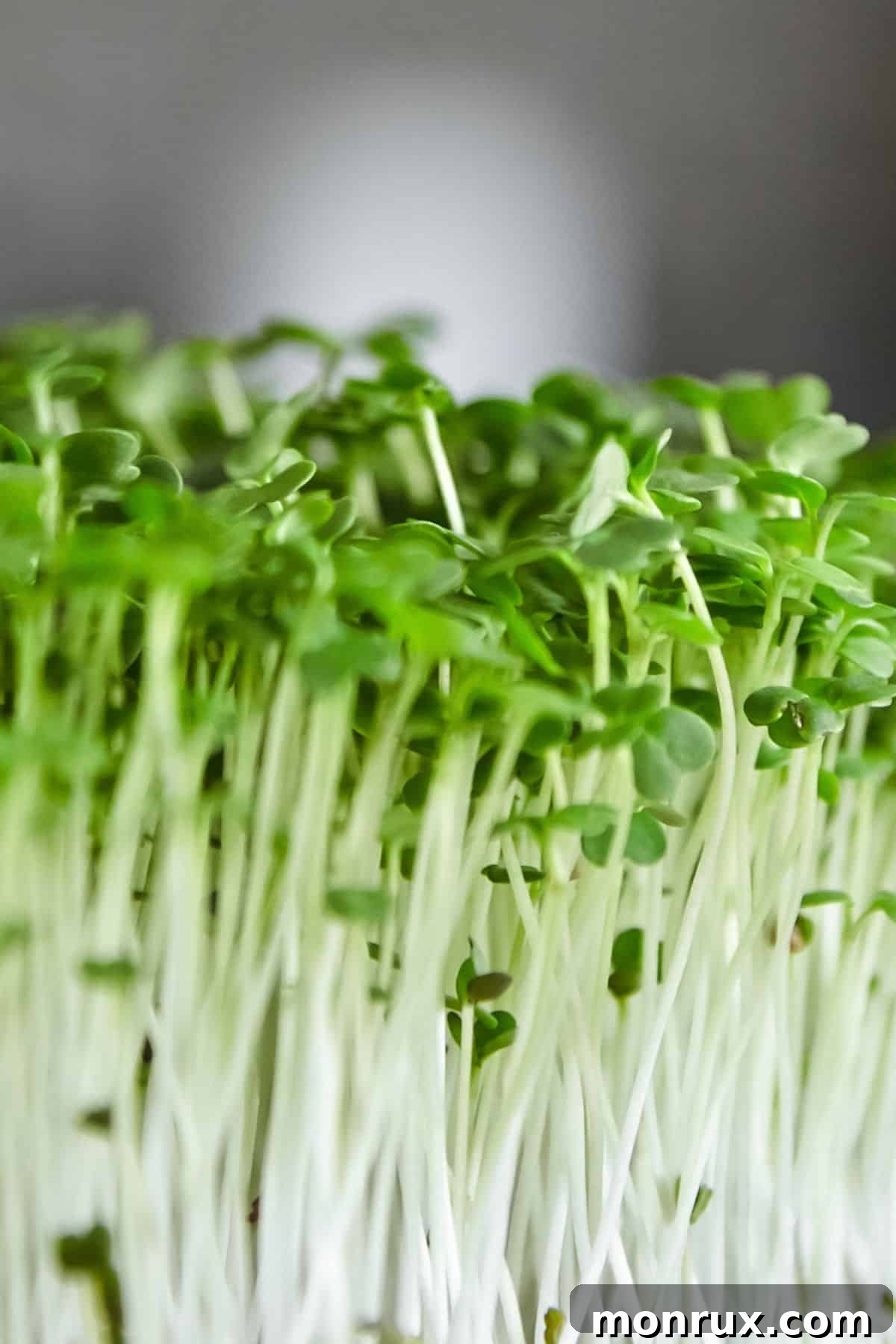
- Color Development: Arugula microgreens might appear pale or yellowish initially after the blackout period. Don’t be concerned; this is normal. As they absorb light, they will rapidly begin to turn green. It’s worth noting that arugula microgreens can sometimes take a day or two longer than other varieties to achieve their rich green hue, typically by day 4 or 5 after light exposure. If they remain pale, increase their light exposure or use a stronger grow light. Pale microgreens will be less flavorful and less nutritious.
- Optimal Environment: Maintain a consistent room temperature of around 70°F (21°C) for ideal growth. Good air circulation is also crucial to prevent fungal issues; a small fan can be beneficial. Aim for a humidity level of approximately 50%.
Harvesting Your Arugula Microgreens
The exciting moment arrives quickly! Your arugula microgreens will typically be ready for harvest in as little as 7-10 days from sowing, though some batches may take up to 14 days depending on environmental conditions.
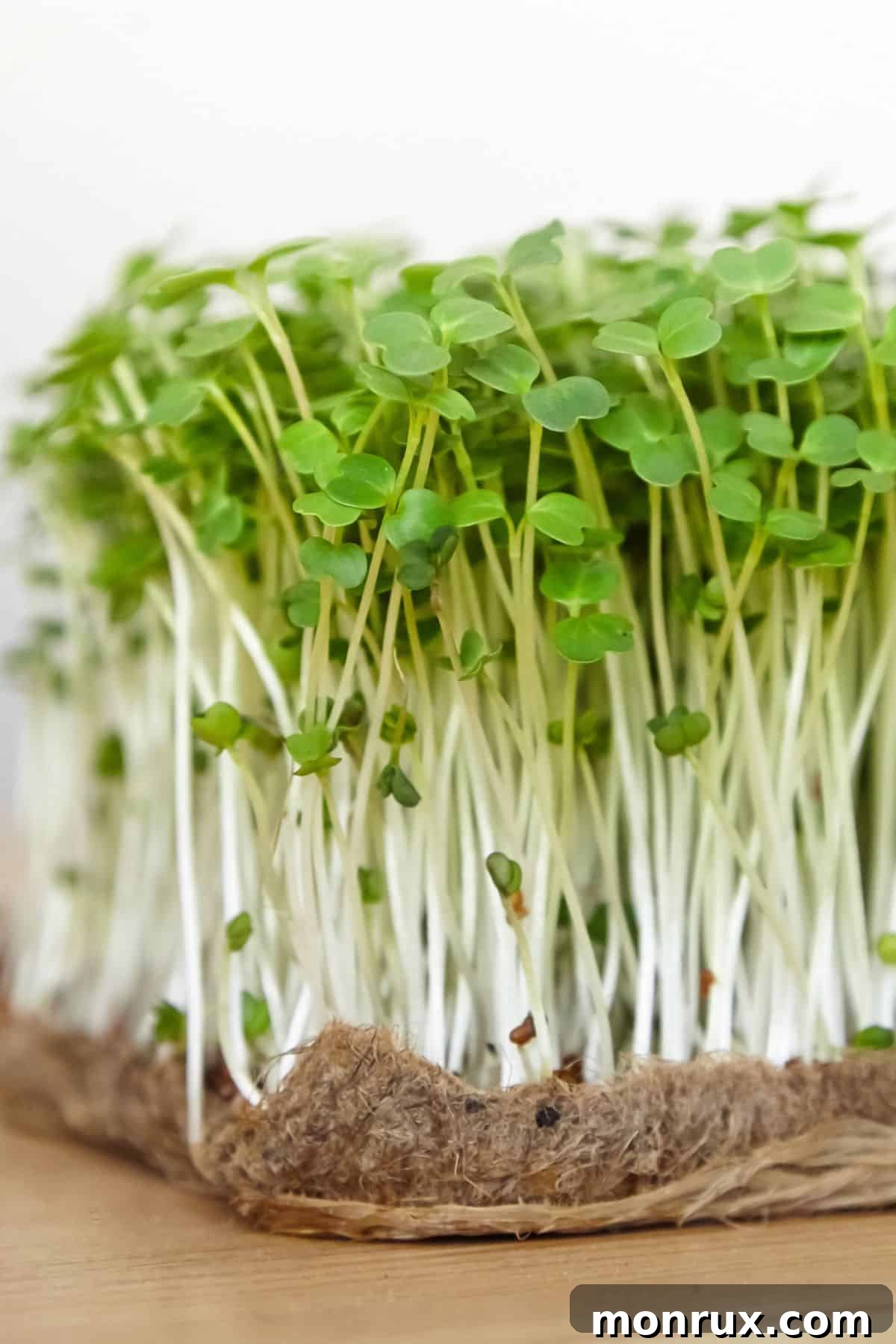
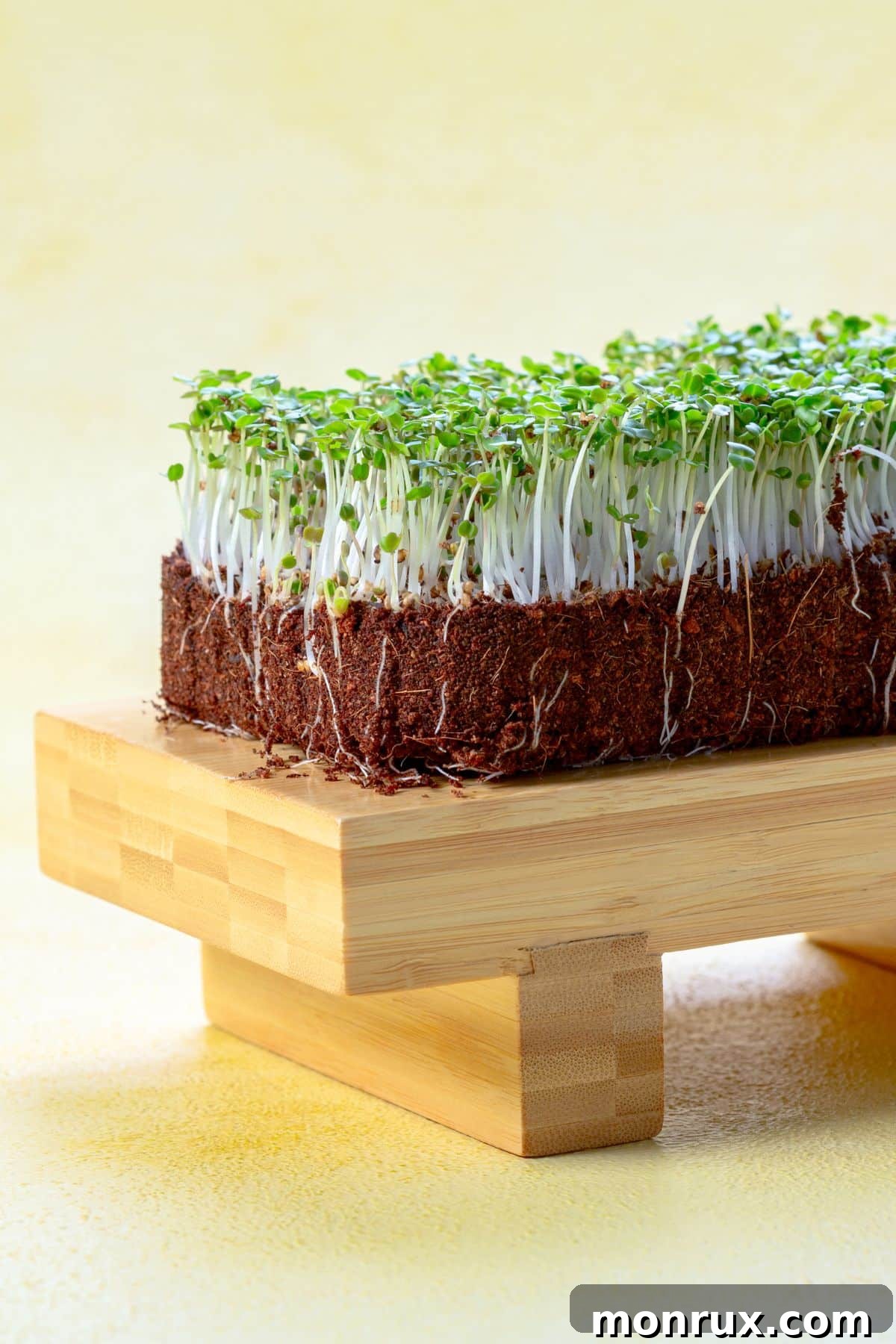
- Readiness Check: Look for microgreens that are 2 to 3 inches tall, possess a rich, bright green color, and have developed their first set of cotyledon leaves. It is crucial to harvest them before the “true leaves” (the next set of leaves that look like miniature versions of mature arugula leaves) fully emerge, as true leaves can sometimes introduce a slightly bitter taste and tougher texture.
- Pre-Harvest Drying: Approximately 12 hours before you plan to harvest, stop watering your microgreens. This allows them to dry out slightly, which significantly improves their shelf life after cutting and makes them easier to store.
- Harvesting Technique: Using a clean, sharp pair of scissors or a very sharp knife, snip the microgreens in bunches. Cut them just above the surface of the growing medium, being careful not to include any soil or spent seed hulls.
- Batch or Partial Harvest: You have the flexibility to harvest the entire tray at once or snip off smaller portions as needed for your meals. However, ensure that you harvest the entire crop within a reasonable timeframe (before true leaves develop too much) to enjoy them at their peak flavor and nutritional value.
- No Regrowth: Unfortunately, microgreens do not regrow after harvesting. Once cut, the plant’s life cycle for that crop is complete. To ensure a continuous supply, plan to sow a new batch of seeds every 7-10 days. This staggered planting approach guarantees a fresh harvest on a rotational basis.
Storing Your Arugula Microgreens
Arugula microgreens are at their most flavorful and nutrient-rich immediately after harvesting. However, if you’ve harvested more than you can use in one go, proper storage can extend their freshness for several days:
- Ensure Dryness: As mentioned, cease watering 12 hours before harvest to ensure the greens are dry. Any residual moisture can accelerate spoilage.
- Wrap in Paper Towel: Gently wrap the harvested microgreens in a dry paper towel. This absorbs any remaining surface moisture and prevents them from becoming soggy.
- Airtight Container: Place the paper towel-wrapped microgreens into a plastic bag or a sealed, airtight container. This protects them from air exposure, which causes wilting.
- Refrigeration: Store the container in the crisper drawer of your refrigerator. Stored correctly, arugula microgreens can maintain their freshness for approximately 3-5 days. While they may lose a bit of their crispness over time, their flavor and nutritional value will largely remain intact.
Arugula Microgreens Growing Steps: A Quick Guide
Step One: Prepare Your Tray
Fill a shallow growing container (1-2 inches deep, with drainage holes) with your chosen sterile growing medium such as seed soil, potting soil, coconut coir, or a grow mat. Level the surface gently.
Step Two: Moisten the Medium
Lightly mist the growing medium with water using a fine spray bottle. Allow the water to absorb, then mist the surface again to ensure it’s adequately damp.
Step Three: Sow the Seeds
Evenly sprinkle organic arugula seeds over the entire surface of the moist medium, aiming for a dense single layer. Approximately one ounce of seeds is ideal for a 10×20 inch tray.
Step Four: Germination (Blackout Period)
Give the seeds another gentle mist. Cover the tray with a second, inverted tray (or a lid) and place a weight of about 5 lbs on top to encourage strong root growth. Keep in a warm, dark spot for 2-4 days until most seeds have sprouted.
Step Five: Provide Light and Water
Remove the cover and expose the sprouted seeds to ample natural sunlight or a grow light (4-8 hours daily). Begin watering from the bottom by pouring water into a tray placed underneath the growing tray, keeping the medium consistently moist.
Step Six: Harvest
Harvest your arugula microgreens when they are 2-3 inches tall, bright green, and have developed two cotyledon leaves, typically within 7-14 days of planting. Snip them just above the soil line with sharp scissors.
Frequently Asked Questions About Microgreens
How long does it take to grow arugula microgreens?
Arugula microgreens are one of the fastest-growing varieties! You can often be ready to harvest and enjoy your fresh greens in as little as 7-10 days after sowing the seeds. The optimal time for harvest is shortly after germination, once they have fully developed their cotyledon leaves (the first leaves to emerge) but before their true leaves (the second set) have significantly grown. Harvesting at this stage ensures the best flavor and nutritional density.
How can I eat arugula microgreens?
Arugula microgreens offer an intensified version of their mature counterpart’s flavor – pungent, peppery, and slightly bitter, similar to broccoli microgreens but with a distinct zest. They add a fresh, crunchy texture and a powerful nutrient boost to a wide array of dishes. Their bold taste means a little goes a long way. Here are some versatile ideas for incorporating them into your diet:
- Sandwiches & Wraps: Replace traditional lettuce with a generous handful of arugula microgreens for an added peppery kick and nutritional upgrade in sandwiches, burgers, tacos, and wraps.
- Salads: Elevate any salad by stirring in arugula microgreens. They pair beautifully with light vinaigrettes, goat cheese, berries, and nuts.
- Garnish: Use them as a vibrant and flavorful garnish for egg dishes (omelets, scrambled eggs), grilled meats, fish, pasta, or pizza.
- Smoothies & Juices: Blend a small handful into your green smoothies or fresh juices for a hidden boost of vitamins and minerals. The strong flavor mellows considerably when mixed with other ingredients.
- Soups & Stews: Stir them into warm soups, stews, or stir-fries just before serving. This retains their delicate texture and ensures maximum nutrient preservation, as excessive cooking can diminish their benefits.
- Pestos & Sauces: Experiment by blending them into homemade pestos or fresh sauces for a unique flavor profile.
- Avocado Toast: Top your avocado toast with a generous sprinkle of arugula microgreens for a quick, healthy, and flavorful breakfast or snack.
Expert Growing Tips for Arugula Microgreens
- Always use organic arugula microgreen seeds for the healthiest, chemical-free crop. The roquette arugula variety is particularly recommended for its excellent flavor and growth habits.
- Opt for shallow growing containers, no more than 1 to 2 inches deep. This prevents wasted growing medium and encourages optimal root development for microgreens.
- Consider alternative growing mediums like grow mats, coconut coir, or even paper towels if you prefer a soil-free, less-messy option.
- After germination, consistently water your seeds from the bottom. Place the growing tray inside a larger tray filled with water, allowing the medium to absorb moisture. This method prevents mold and keeps the delicate leaves dry.
- Ensure your arugula microgreens receive abundant natural light as they grow, preferably from a sunny windowsill. If natural light is insufficient, use a dedicated grow lamp for at least 4 to 8 hours daily to prevent legginess and encourage deep green color.
- For the best results, maintain a room temperature of approximately 70℉ (21℃), with a humidity level around 50%, and ensure adequate air circulation to prevent fungal issues.
- Harvest your microgreens promptly when they reach 2 to 3 inches in height and have fully developed their two cotyledon leaves, but before true leaves emerge, for optimal flavor and texture.
- Store any unused harvested microgreens in the refrigerator for up to 3-5 days. Wrap them gently in a paper towel and place them in a plastic bag or airtight container to maintain freshness.
Explore More Microgreens Resources
Recipe: How to Grow Arugula Microgreens
Arugula microgreens are a nutrient-dense superfood that you can easily grow in your kitchen. They are packed with health benefits and have a fantastic peppery taste. Follow this simple guide to cultivate your own fresh supply!
- Total Time: 168 hours 30 minutes (Approx. 7 days 30 minutes)
- Prep Time: 30 minutes
- Grow Time: 7 days (up to 14 days)
- Yield: Approximately 32 servings (based on 1x scale)
- Category: Microgreens
- Method: Gardening
- Cuisine: Healthy
- Diet: Vegetarian
Ingredients
- 2 tablespoons organic arugula microgreen seeds
- Seed soil or potting mix (or other preferred growing medium like coconut coir, hemp mat)
- Shallow growing tray with drainage holes (1-2 inches deep)
- Second, slightly larger tray without drainage holes (for bottom watering)
- Spray bottle with fine mist setting
- Heavy object (approx. 5 lbs) for weighting during germination
- Light source (sunny windowsill or grow light)
- Clean, sharp scissors or knife for harvesting
Instructions
- Prepare the Tray: Fill your growing container with the seed soil (or chosen medium) until it reaches just below the rim. Gently pat down the surface to ensure it’s level, but avoid over-compacting.
- Moisten the Soil: Use your spray bottle to lightly mist the soil surface with water. Allow the water to soak in, then mist again to ensure consistent dampness.
- Sow the Seeds: Evenly sprinkle the organic arugula seeds over the entire surface of the moist soil in a single, dense layer. For a 10×20 inch tray, about an ounce of seeds is ideal. Gently spread out any clumps with your fingertips.
- Germination (Blackout Period): Lightly mist the sown seeds with water. Cover the growing tray with the second, inverted tray (or a lid) and place a heavy object (around 5 lbs) on top. This creates darkness and encourages strong root growth. Leave to germinate in a warm spot for 2-4 days until nearly all seeds have sprouted.
- Expose to Light: Remove the cover and expose the sprouted seeds to plenty of natural sunlight (e.g., a sunny windowsill) or place them under a grow lamp for 4-8 hours daily.
- Bottom Water: Place the growing tray into the second, larger tray. Pour water into the bottom tray, allowing the soil to absorb moisture from beneath. Water regularly as needed to keep the soil consistently moist, but avoid overwatering or leaving the tray sitting in standing water for extended periods.
- Harvest: Your microgreens are ready when they are a rich green color, 2 to 3 inches tall, and have their two cotyledon leaves. This usually occurs between 7 to 14 days after sowing. Use sharp scissors to snip them just above the soil line.
Notes
- Always use organic arugula seeds, ideally the roquette arugula variety, for best results.
- Ensure your growing container is shallow (1-2 inches deep) for easy harvesting.
- Consider grow mats, coconut coir, or paper towels as alternatives to soil.
- After germination, always water from the bottom using a secondary tray to prevent mold and keep leaves dry.
- Provide ample natural light or use a grow lamp for 4-8 hours daily. Pale microgreens are less nutritious.
- Maintain a room temperature of around 70℉ (21℃), with 50% humidity and good ventilation.
- Harvest when microgreens are 2-3 inches tall with two cotyledon leaves, before true leaves fully develop, for peak flavor.
- Store unused harvested microgreens wrapped in a paper towel in an airtight container in the refrigerator for up to 4 days.
Nutrition (per 1 tablespoon serving, approximate)
- Serving Size: 1 tablespoon
- Calories: 1
- Carbohydrates: 0.1 g
- Fiber: 0.1 g
- Protein: 0.1 g
- (Note: Detailed nutritional values for microgreens can vary greatly depending on growing conditions and precise serving size. This is an approximation for general informational purposes.)
Author: Carrie Forrest, MPH in Nutrition
Don’t forget to join my newsletter list to get exclusive clean eating recipes and tips. The newsletter is 100% free with no spam; unsubscribe anytime.
About the Author: Carrie Forrest holds a master’s degree in public health with a specialty in nutrition and is a certified holistic nutritionist. She is a prominent wellness and food blogger, attracting over 5 million annual visitors to her platform. Carrie shares an inspiring story of recovery from chronic illness and is deeply passionate about empowering other women to transform their health journeys. You can reach her through her contact form.
Note: This post is intended for informational purposes only and should not be considered medical advice. Always consult your healthcare provider for personalized recommendations regarding your individual health situation.