
In today’s health-conscious world, understanding the food we consume is more critical than ever, especially when it comes to sugar. For many, cutting back on sugar is a primary dietary goal, yet distinguishing between different types of sugar can be confusing. This comprehensive guide will illuminate the crucial differences between natural sugars and added sugars, helping you make informed choices for a healthier lifestyle. We’ll delve into how to identify sugars on food labels, explore their unique health impacts, and provide practical advice for managing your sugar intake effectively.
What Are Natural Sugars?
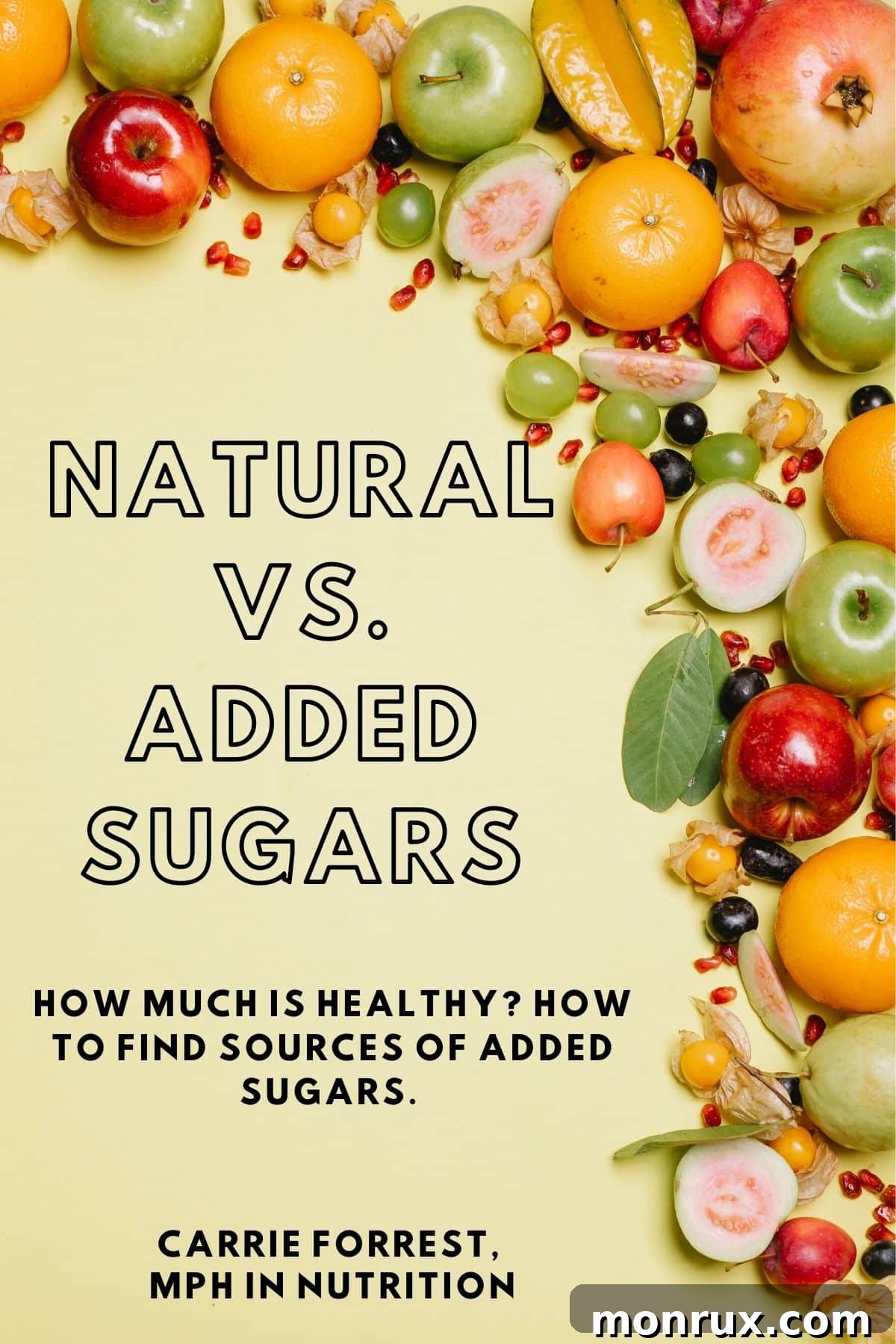
Natural sugars are carbohydrates that are an inherent component of whole, unprocessed foods. These sugars are typically found in their natural matrix, alongside a wealth of essential nutrients that contribute to overall health. Primarily, you’ll encounter natural sugars in:
- Fruits: Apples, bananas, oranges, berries, grapes – all contain fructose, a type of natural sugar. However, fruits also boast high levels of fiber, vitamins (like Vitamin C, B vitamins), minerals (potassium, magnesium), and powerful antioxidants.
- Vegetables: Carrots, sweet potatoes, beets, and corn naturally contain various sugars, including glucose and sucrose, along with dietary fiber, vitamins, and minerals.
- Dairy Products: Milk, yogurt, and cheese naturally contain lactose, a sugar composed of glucose and galactose. Dairy also provides vital protein, calcium, and Vitamin D.
- Some Legumes and Grains: While often considered complex carbohydrates, foods like lentils, beans, and whole grains (oats, brown rice) contain small amounts of naturally occurring sugars in addition to their rich fiber content.
The beauty of natural sugars is that they are packaged with a complete nutritional profile. The fiber in fruits and vegetables, for example, slows down the absorption of sugar into the bloodstream, preventing rapid spikes in blood glucose levels. This gradual release of energy is beneficial for sustained energy, blood sugar stability, and promoting a feeling of fullness. Moreover, the vitamins, minerals, and antioxidants found in these whole foods support numerous bodily functions, from immune health to cellular repair, making them an indispensable part of a balanced diet.
What Are Added Sugars?
In stark contrast to their natural counterparts, added sugars are caloric sweeteners that are intentionally introduced to foods and beverages during processing, preparation, or at the table. The U.S. Department of Agriculture (USDA) defines them as “caloric sweeteners that are added to foods as ingredients during food preparation, at the table, or during food processing.” This means they are not naturally present in the food; rather, they are included to enhance flavor, texture, color, or shelf life.
Added sugars come under many guises, making them notoriously tricky to spot on food labels. While common names like “cane sugar,” “brown sugar,” and “corn syrup” are relatively straightforward, food manufacturers often use a myriad of other names to disguise sugar content. Be vigilant for terms such as:
- High-fructose corn syrup
- Dextrose, maltose, sucrose, fructose (especially if isolated)
- Glucose syrup
- Agave nectar
- Honey, maple syrup (while natural in origin, they are considered added sugars when incorporated into processed foods)
- Molasses
- Fruit juice concentrate
- Turbinado sugar, raw sugar
- Evaporated cane juice
- Caramel, malt sugar
The ubiquity of added sugars is alarming. They are found in an astonishing array of processed foods, many of which you might not suspect. Beyond obvious culprits like candies, sodas, and baked goods, added sugars lurk in:
- Condiments (ketchup, barbecue sauce, salad dressings)
- Packaged meals (frozen dinners, instant oatmeal)
- “Healthy” snacks (granola bars, protein bars, flavored yogurts, cereals)
- Breads and crackers
- Canned soups and sauces
- Many organic and “natural” products
These sugars provide “empty calories”—calories devoid of any significant nutritional value. They can contribute to weight gain without offering the satiety or essential nutrients that whole foods provide, often leading to overconsumption and a range of adverse health effects.
How Much Sugar Is Too Much?
The alarming prevalence of added sugars makes it exceptionally easy to exceed recommended daily limits, often without realizing it. Health organizations worldwide advocate for significantly reducing added sugar intake due to its proven links to various chronic diseases.
The Dietary Guidelines for Americans 2020–2025 suggest that added sugars should constitute no more than 10 percent of your total daily caloric intake. For a 2,000-calorie diet, this equates to roughly 50 grams of added sugar, or about 12 teaspoons.
The American Heart Association (AHA) offers even stricter recommendations, advising women to consume no more than 6 teaspoons (25 grams) of added sugar daily, and men no more than 9 teaspoons (38 grams). To put this into perspective, a single can of regular soda can contain upwards of 10 teaspoons of sugar, immediately pushing you over the recommended daily limit.
Consider a typical breakfast: a flavored yogurt, a bowl of sweetened cereal, and a glass of orange juice. These items alone can easily accumulate 8-10 teaspoons of added sugar, bringing you dangerously close to or even surpassing your daily allowance before noon. This illustrates why diligently checking the ingredient list and “Nutrition Facts” panel of every packaged food is not just a recommendation but a necessity for managing sugar intake and maintaining optimal health.
Key Differences Between Natural and Added Sugars
While chemically both natural and added sugars are carbohydrates, their context within food makes all the difference in how they impact our bodies.
1. Nutrient Density vs. Empty Calories
The most fundamental distinction lies in their nutritional companions. Natural sugars are intrinsically linked with a host of beneficial nutrients. When you eat an apple, you consume fructose, but also several grams of fiber, Vitamin C, potassium, and antioxidants. This “package” is crucial because these nutrients work synergistically. Fiber, for instance, helps regulate the absorption of sugar, making it a slow and steady process. Added sugars, conversely, are typically separated from their natural sources and stripped of any accompanying nutrients, delivering only calories without nutritional value. Your body still processes these calories for energy, but it doesn’t receive the vital vitamins and minerals needed to support metabolic functions efficiently.
2. Impact on Blood Sugar Levels and “Sugar Crashes”
The way your body metabolizes sugar varies significantly depending on its source. Added sugars, particularly in liquid form (like soda) or refined foods (like white bread), are rapidly absorbed into the bloodstream. This causes a swift surge in blood glucose, prompting the pancreas to release a large amount of insulin. While insulin helps transport glucose into cells for energy, an excessive and sudden release can lead to a subsequent rapid drop in blood sugar—the dreaded “sugar crash.” Symptoms include irritability, fatigue, difficulty concentrating, and often, an intensified craving for more sugar to regain energy. Natural sugars, especially those from whole fruits and vegetables, are absorbed much more slowly due to the fiber content. This results in a gradual, sustained rise in blood glucose and a more moderate insulin response, leading to stable energy levels and avoiding the roller-coaster effect of sugar crashes.
3. Satiety and Appetite Control
Foods containing natural sugars, particularly fruits, vegetables, and whole grains, are rich in dietary fiber and often water, which contribute significantly to satiety. Fiber adds bulk to your diet, helping you feel full and satisfied for longer periods. Protein, found in dairy products alongside lactose, also plays a crucial role in suppressing appetite. This means you’re less likely to overeat or snack unnecessarily after consuming whole foods with natural sugars. In contrast, foods high in added sugars are typically low in fiber and protein. They digest quickly, offer little to no satiety, and can paradoxically leave you feeling hungry soon after consumption, perpetuating a cycle of overeating and sugar cravings.
4. Long-Term Health Risks
Perhaps the most critical difference is the profound impact on long-term health. Excessive consumption of added sugars is strongly linked to a myriad of serious health problems. Research consistently shows a correlation between high added sugar intake and:
- Obesity: Added sugars, especially fructose, can contribute to increased fat storage, particularly around the abdomen.
- Type 2 Diabetes: Chronic high sugar intake can lead to insulin resistance, a precursor to type 2 diabetes, where the body’s cells no longer respond effectively to insulin.
- Heart Disease: Diets high in added sugars are associated with increased risk factors for heart disease, including elevated triglycerides, high blood pressure, and inflammation.
- Non-Alcoholic Fatty Liver Disease (NAFLD): Excess fructose is primarily metabolized by the liver, and high intake can overwhelm the liver, leading to fat accumulation and NAFLD.
- Dental Caries: Sugars provide fuel for bacteria in the mouth, leading to tooth decay.
- Inflammation: Chronic high sugar intake can promote systemic inflammation, contributing to various chronic diseases.
Conversely, consuming natural sugars as part of a balanced diet rich in whole foods is associated with improved health outcomes, lower disease risk, and better weight management. Prioritizing natural sugars over their added counterparts is a foundational step towards a healthier, more vibrant life.
Similarities Between Natural and Added Sugars
Despite their stark differences in health impact, natural and added sugars share some fundamental chemical and metabolic similarities:
- Carbohydrate Composition: Both types of sugar are fundamentally carbohydrates. They are composed of the same basic building blocks: carbon, hydrogen, and oxygen.
- Metabolic Breakdown: Regardless of their source, all digestible carbohydrates, including sugars, are broken down in the digestive tract into simple sugars called monosaccharides (primarily glucose, fructose, and galactose). These monosaccharides are then absorbed into the bloodstream.
- Caloric Value: Gram for gram, both natural and added sugars provide approximately 4 calories. This caloric density is consistent across all forms of digestible carbohydrates.
The critical distinction, however, remains the nutritional context. While a gram of sugar from a candy bar and a gram of sugar from an apple both yield 4 calories and eventually become monosaccharides in your system, the apple delivers fiber, vitamins, minerals, and antioxidants that are completely absent in the candy bar. It’s this nutritional “package” that dictates the overall health effect, making one a beneficial energy source and the other primarily a source of empty calories and potential health risks.
Frequently Asked Questions About Sugar
Is it healthy to eat fruit?
This is a common question, and the answer, for most individuals, is a resounding yes! While fruit contains natural sugar (fructose), it is far from being unhealthy. Here’s why:
- Nutrient Powerhouse: Fruits are packed with dietary fiber, a wide array of vitamins (like Vitamin C, folate, B vitamins), essential minerals (potassium, magnesium), and powerful antioxidants. These components are vital for immune function, cell protection, and overall physiological health.
- Fiber’s Role: The fiber in whole fruit significantly slows down the absorption of fructose, leading to a more gradual rise in blood sugar levels compared to consuming isolated sugars. This prevents sharp spikes and subsequent crashes, contributing to stable energy.
- Satiety: The fiber and water content in fruit promote satiety, helping you feel full and satisfied, which can aid in weight management and prevent overeating.
- Difficulty in Overconsumption: It is remarkably difficult to consume excessive amounts of fructose solely from whole fruits because of their high fiber and water content, which naturally limits intake.
Important Considerations:
- Fresh, Frozen, and Canned: Fresh fruit is ideal, but frozen and canned fruits can be equally healthy, provided they contain no added sugars. Always check labels for “packed in its own juices,” “unsweetened,” or “no added sugar.”
- Fruit Juice: Pure fruit juice, even 100% juice, should be consumed with caution. Juicing removes most of the beneficial fiber, meaning the natural sugars are absorbed much more quickly, mimicking the effect of added sugars. It’s also very easy to drink large quantities of juice rapidly, leading to high sugar intake. Limit juice consumption to small portions, ideally no more than one small glass per day, and prioritize whole fruit instead.
- Dried Fruit: Dried fruits are a concentrated source of natural sugars. While they retain some fiber and nutrients, their sugar content per serving is significantly higher than fresh fruit, and it’s easy to overconsume. Enjoy dried fruit in moderation, preferably as a small snack or mixed with nuts and seeds to help slow sugar absorption.
Always consult with your healthcare provider or a registered dietitian to determine the best approach to fruit consumption based on your individual health needs, especially if you have specific dietary concerns.
Can people with diabetes eat fruit?
Yes, absolutely. For individuals managing diabetes, fruit is a healthy and recommended part of a balanced diet. The key considerations for diabetes management are maintaining a healthy weight, stabilizing long-term blood glucose levels (HbA1c), and managing blood pressure. Regular consumption of whole fruit actively supports these goals.
Contrary to a common misconception, most fruits are considered low to medium on the glycemic index (GI), meaning they cause a slower and more moderate rise in blood glucose compared to many other carbohydrate-rich foods like refined grains. The fiber in whole fruit helps regulate this sugar absorption, making it beneficial for blood sugar control.
The recommendation for adults and children to eat 5 servings of fruits and vegetables each day still holds true for most people with diabetes, as highlighted by organizations like the American Diabetes Association. However, as with everyone, careful consideration is needed:
- Prioritize Whole Fruit: Opt for whole fruits over fruit juices or dried fruits. The absence of fiber in juice leads to rapid sugar absorption and blood glucose spikes, while dried fruits have concentrated sugar levels.
- Portion Control: Be mindful of portion sizes, especially for fruits with a slightly higher glycemic index like ripe bananas, mangoes, pineapples, and watermelons. These can still be enjoyed in moderation.
- Pairing: Pairing fruit with protein or healthy fats (e.g., an apple with a handful of almonds, or berries with plain yogurt) can further slow sugar absorption and enhance satiety.
It is crucial for individuals with diabetes or pre-diabetes to work closely with their healthcare provider or a registered dietitian to tailor dietary recommendations that align with their specific health profile and medication regimen. They can help create a personalized meal plan that includes appropriate fruit choices.
What is the glycemic index?
The glycemic index (GI) is a numerical ranking system that measures how quickly a carbohydrate-containing food raises blood glucose levels after consumption. Foods are ranked on a scale of 0 to 100, with pure glucose serving as the reference point (GI of 100).
- High GI Foods (70 or more): These foods cause a rapid and significant spike in blood sugar. Examples include white bread, white rice, sugary cereals, and potatoes. They are digested quickly, leading to fast absorption of glucose.
- Medium GI Foods (56-69): These foods cause a moderate rise in blood sugar. Examples include whole wheat bread, brown rice, and some tropical fruits like mangoes and pineapples.
- Low GI Foods (55 or less): These foods lead to a slower, more gradual increase in blood sugar. Examples include most vegetables, legumes, whole oats, and many fruits like apples, berries, and oranges. They are digested slowly, releasing glucose steadily into the bloodstream.
Why is the GI useful?
- Blood Sugar Management: For individuals managing diabetes, choosing low GI foods can help keep blood glucose levels more stable, reducing the risk of complications.
- Satiety: Low GI foods, due to their slower digestion, tend to keep you feeling full for longer, which can be beneficial for weight management and preventing overeating. Conversely, high GI foods can lead to quicker hunger pangs and sugar cravings.
- Energy Levels: A steady release of glucose from low GI foods provides sustained energy, avoiding the peaks and valleys often associated with high GI foods.
While the GI is a helpful tool, it’s important to consider other factors like nutrient content, fiber, and how foods are prepared. Eating a balanced diet rich in whole, unprocessed foods is generally the best strategy for managing blood sugar and overall health.
How do I find added sugars?
Navigating food labels to spot hidden added sugars requires a keen eye and a bit of knowledge. Food manufacturers are adept at disguising sugar content, so a thorough check is essential:
- Check the “Nutrition Facts” Label: The most crucial step is to examine the “Nutrition Facts” panel on packaged foods.
- Total Sugars vs. Added Sugars: The updated nutrition labels now distinguish between “Total Sugars” (which includes both natural and added sugars) and “Added Sugars.” Focus specifically on the “Added Sugars” line item, which is listed in grams and as a percentage of the Daily Value (%DV). Aim to keep your %DV for added sugars low.
- Scrutinize the Ingredient List: This is where added sugars often hide in plain sight under various names. Ingredients are listed in descending order by weight, so if any form of sugar appears near the top, the product likely contains a significant amount. Look for:
- Words ending in “-ose” (dextrose, fructose, glucose, lactose, maltose, sucrose).
- Syrups (corn syrup, high-fructose corn syrup, rice syrup, maple syrup, agave nectar).
- Nectars (agave nectar, peach nectar).
- Sugar variants (cane sugar, brown sugar, raw sugar, turbinado sugar, confectioners’ sugar, evaporated cane juice).
- Honey, molasses, fruit juice concentrate.
- Any ingredient you don’t recognize as a whole food.
Be aware that manufacturers may use multiple types of added sugar in smaller quantities to avoid having “sugar” listed as the first ingredient. For example, a product might list corn syrup, then brown sugar, then molasses—each individually might be lower on the list, but combined, they make sugar a primary component.
- Look for Claims: Phrases like “sugar-free,” “no added sugar,” or “unsweetened” can be helpful indicators, but always double-check the ingredient list, especially for “sugar-free,” as artificial sweeteners might be used instead.
By diligently checking both the “Nutrition Facts” panel for “Added Sugars” and the ingredient list for various sugar names, you can empower yourself to make healthier food choices and significantly reduce your intake of unnecessary sweeteners.
More Helpful Sugar-Free Diet Resources
Embarking on a sugar-free journey can be transformative for your health. To support you in this endeavor, explore these valuable articles:
- Best No Sugar Foods to Stock Your Pantry
- How To Do a Sugar Detox: Practical Tips for Success
- 8 Essential Tips to Successfully Go Sugar-Free
- No Sugar Diet Meal Plan: A Beginner’s Guide
- The Surprising Benefits of a Sugar-Free Diet
For more intensive support and community, consider joining my Sugar Free Challenge!
Don’t Miss These Helpful Articles
Conclusion: Making Healthier Sugar Choices
The distinction between natural and added sugars is paramount for anyone committed to a healthier diet and lifestyle. While both are forms of carbohydrates, their impact on your body and long-term health couldn’t be more different. Natural sugars, found in whole foods like fruits, vegetables, and dairy, are packaged with essential fiber, vitamins, minerals, and antioxidants, promoting stable blood sugar, sustained energy, and satiety. They are integral to a nutrient-dense diet and support overall well-being.
Added sugars, conversely, are empty calories that contribute to rapid blood sugar spikes, energy crashes, and a higher risk of serious health issues, including obesity, type 2 diabetes, and heart disease. Their ubiquitous presence in processed foods makes vigilant label-reading an indispensable skill.
By consciously eliminating added sugars from your diet and opting for the wholesome goodness of naturally sweetened foods, you’re not just cutting calories; you’re investing in your health. This simple yet profound dietary shift can lead to better weight management, more stable blood glucose levels, improved energy, and a significantly reduced risk of chronic diseases. Embrace natural sweetness, and you will not only look but also feel healthier and more vibrant.
Don’t forget to join my newsletter list to get exclusive clean eating recipes and tips directly to your inbox. The newsletter is 100% free with no spam; you can unsubscribe anytime.
About the Author: Carrie Forrest holds a master’s degree in public health with a specialty in nutrition and is a certified holistic nutritionist. As a top wellness and food blogger, her site receives over 5 million annual visitors. Carrie shares an inspiring story of recovery from chronic illness and is deeply passionate about empowering other women to transform their health. You can reach her through her contact form.
Note: this post is for informational purposes only and is not intended as medical advice. Please consult your healthcare provider for personalized recommendations related to your individual situation.