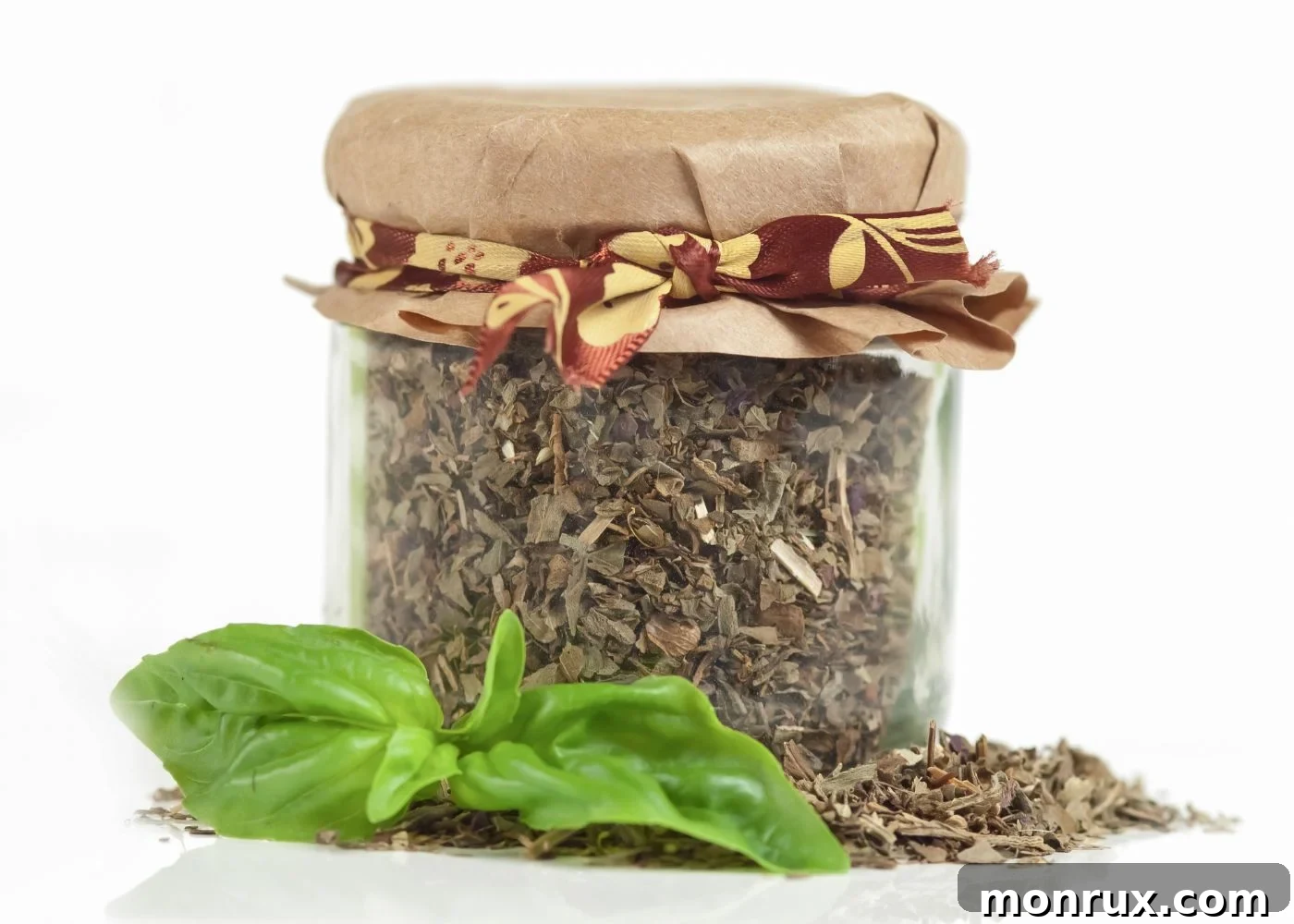
Basil flourishes in abundance during the warm embrace of summer, often presenting home gardeners and culinary enthusiasts with a delightful dilemma: how to savor its vibrant flavor all year long. Fortunately, preserving this aromatic herb is both simple and highly rewarding. Instead of letting your glorious harvest go to waste, you can easily transform it into dried basil, ready to infuse your dishes with its distinctive taste, no matter the season. This comprehensive guide will walk you through the most effective and straightforward methods for drying basil, ensuring you capture its essence for future culinary adventures.
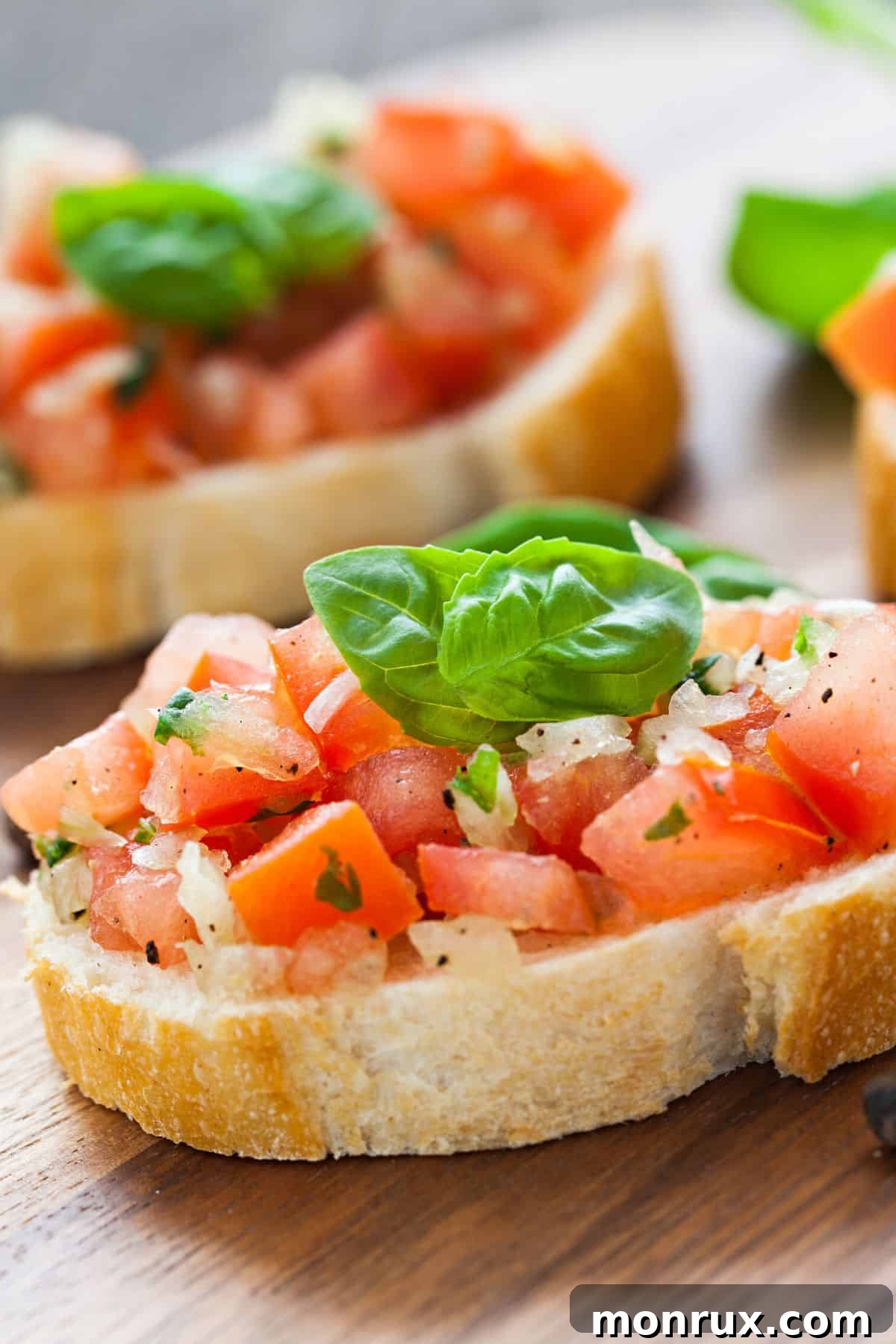
If you’ve ever found yourself wondering how to dry basil at home, look no further! Basil stands as a quintessential herb, cherished by food lovers across the globe. Its irresistible aroma and unique peppery-sweet flavor make it an indispensable ingredient, not just in Italian cuisine, but in a vast array of culinary traditions from the Mediterranean to Southeast Asia. The mere scent of fresh basil evokes vibrant landscapes, from sun-drenched Italian gardens to the bustling markets of Indonesia.
It’s easy to fall in love with basil, and often, you can’t get enough of it. However, the true challenge arises when your basil plant produces a generous bounty, or you find an incredible deal on fresh bunches at your local grocery store. What happens when you have more fresh basil than you can possibly use before it starts to wilt? Unlike some sturdier herbs, basil has a relatively short shelf life once harvested, making prompt preservation crucial to prevent waste. Learning how to dry basil is a fantastic skill that ensures you’ll always have this versatile herb on hand, regardless of whether your garden is thriving or the grocery store shelves are bare.
Why You Need This Guide to Drying Basil
- Minimize Food Waste & Maximize Flavor: Drying your own basil leaves is the ultimate way to prevent waste from an abundant harvest and ensure you utilize every fragrant leaf. It’s a sustainable practice that keeps your kitchen stocked with homegrown goodness.
- Extend Basil’s Shelf Life: Fresh basil wilts much faster than many other herbs. If you don’t have an immediate use for a large quantity, drying it is the most effective method for long-term preservation. For shorter-term storage of fresh basil, explore other tips on how to store fresh basil.
- Year-Round Culinary Convenience: Imagine having your favorite herb readily available in your pantry whenever inspiration strikes. Drying basil means you won’t need to make a special trip to the store when your garden isn’t producing. This guide will teach you how to achieve this using common kitchen appliances like a food dehydrator or your oven set to its lowest temperature.
- Superior Quality and Control: When you dry basil yourself, you control the entire process, from selecting the freshest leaves to ensuring no artificial additives or preservatives are used. The result is a premium, potent dried herb that often surpasses store-bought varieties in flavor and aroma.
Preparing Basil for Drying: The Blanching Process
When it comes to preserving herbs like basil, the secret to retaining their vibrant color, potent flavor, and essential nutrients lies in proper preparation, especially the blanching process. While it might seem like an extra step, blanching is crucial for creating perfectly preserved dried basil that maintains its quality over time.
Blanching involves briefly submerging the fresh basil leaves in boiling water, then immediately transferring them to an ice bath. This quick thermal shock serves several vital purposes:
- Deactivates Enzymes: Fresh basil contains enzymes that, left unchecked, can cause discoloration, flavor degradation, and nutrient loss during the drying and storage process. Blanching effectively deactivates these enzymes, locking in the herb’s natural qualities.
- Preserves Color: The rapid heating and cooling help to set the basil’s beautiful green color, preventing it from turning dull or brownish once dried.
- Cleanses Thoroughly: The boiling water helps to further clean the leaves, removing any residual dirt or microorganisms that might be present after washing.
Every successful batch of perfectly preserved basil should begin with this simple yet impactful blanching step. It ensures that your dried basil will not only taste incredible but also look appealing on your spice rack.
Step One: Clean and Prepare
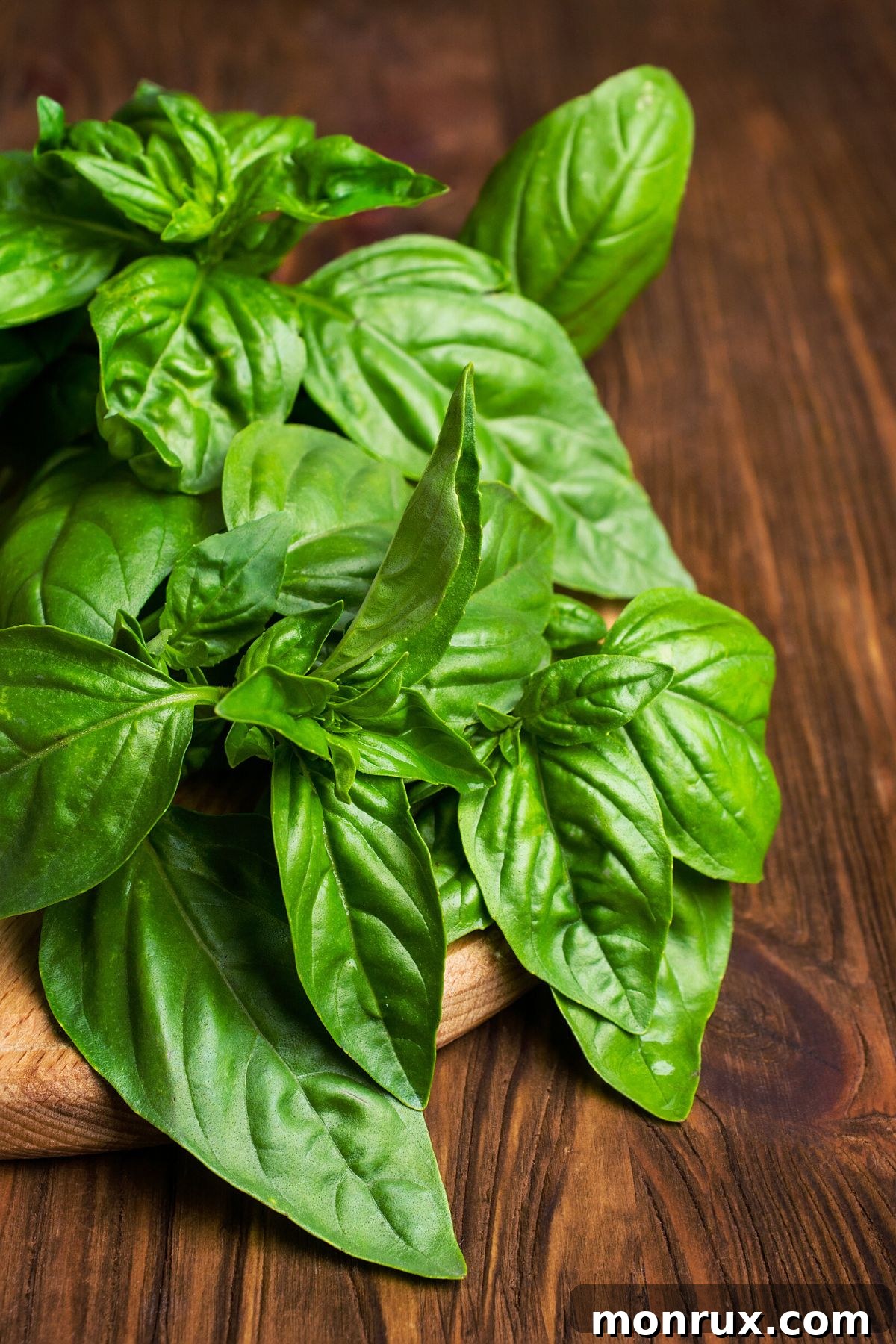
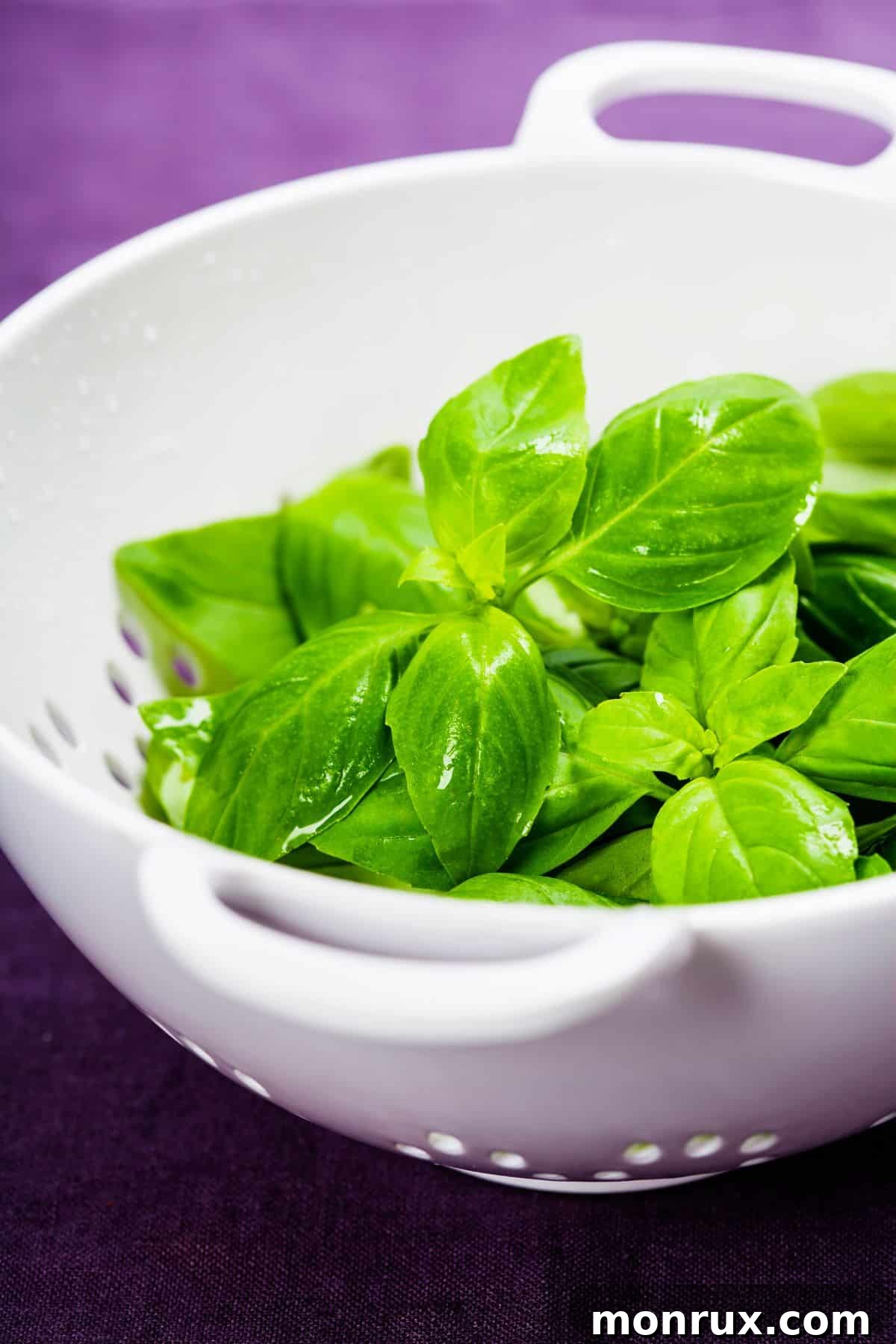
Begin by carefully washing your basil leaves under cold or cool running water. Gently rub them to remove any soil, dust, or potential insects. At this stage, you can also remove the stems, as dried stems can be woody and less flavorful. Shake off excess water.
Next, prepare a large pot of water and bring it to a rolling boil. Add a teaspoon of kosher salt to the boiling water; this helps maintain the basil’s vibrant green color and enhances flavor during blanching.
Step Two: Ice Bath Ready & Blanch
While your water is coming to a boil, fill a large mixing bowl with a generous amount of ice and cold water, creating an “ice bath.” Set this aside, as it will be used immediately after blanching.
Once the water is boiling rapidly, use a slotted spoon or tongs to gently lower a handful of fresh basil leaves into the hot water. Allow the basil to blanch for precisely 2 seconds. This brief exposure is enough to deactivate enzymes without cooking the leaves.
Step Three: Shock and Dry
Immediately after the 2 seconds are up, turn off the heat and quickly transfer the blanched basil leaves from the boiling water directly into the prepared ice bath using your slotted spoon. This rapid cooling halts the cooking process, preserving the basil’s bright color and firm texture.
Allow the basil to sit in the ice bath for about 30 seconds to a minute, ensuring it cools completely. Remove the leaves from the ice bath and gently spin them in a salad spinner to remove as much excess water as possible. Alternatively, pat them thoroughly dry with clean kitchen towels or paper towels. Ensuring the leaves are as dry as possible at this stage is crucial for efficient and successful drying. Your perfectly blanched fresh basil is now ready to be dried in either an oven or a dehydrator, as detailed in the next section.
Efficient Home Drying Methods: Oven or Dehydrator
With your basil expertly blanched to lock in its flavor and color, it’s now time for the main event: drying! Whether you prefer the specialized control of a food dehydrator or the accessible convenience of your kitchen oven, both methods are highly effective for transforming fresh basil into a shelf-stable, aromatic herb. Each approach has its nuances, and understanding them will help you achieve the best results.
A food dehydrator provides a consistent, low-heat environment that is ideal for drying herbs, offering precise temperature control and good air circulation. The oven method, while perhaps less precise, is readily available to almost everyone and can yield excellent results when managed carefully. The key to both methods is low, consistent heat and good airflow to prevent the basil from cooking instead of drying, and to avoid mold development.
Step One: Prepare Your Blanched Basil
Ensure your basil has been blanched and thoroughly dried according to the instructions provided in the previous section. This critical preparation step sets the foundation for perfectly dried basil, full of flavor and vibrant green color.
Step Two: Set Up Your Drying Equipment
For Oven Drying: Preheat your oven to its lowest possible temperature, ideally around 95°F (35°C). If your oven does not go this low, set it to the lowest temperature it can manage (e.g., 150-170°F or 65-75°C) and be prepared to monitor the basil more closely. Prepare a large baking tray, cookie sheet, or cooling rack. You might want to line it with parchment paper to prevent sticking and aid in easy cleanup.
For Dehydrator Drying: Refer to your food dehydrator’s user manual for specific instructions on drying herbs. Generally, you’ll want to set the temperature to around 95-105°F (35-40°C). Arrange your dehydrator trays as instructed.
Step Three: Arrange and Dry the Basil
Carefully lay your blanched and dried basil leaves onto the prepared baking sheet or dehydrator trays in a single, even layer. Avoid overcrowding the trays, as this can hinder air circulation and lead to uneven drying or even mold growth. Ensure there is adequate space between the leaves for air to circulate freely.
Place the sheet(s) into the preheated oven or assembled dehydrator. The drying time will vary depending on your chosen method, the humidity in your environment, and the exact temperature setting. As a general guideline, drying can take approximately 6 hours, but it’s crucial to check regularly:
- Oven Drying: If using an oven at a higher temperature, the basil may dry much faster, potentially in 2-4 hours. To prevent the basil leaves from cooking or burning, it is often beneficial to prop the oven door slightly ajar with a wooden spoon. This allows moisture to escape and helps to keep the internal temperature lower and more consistent. Check the basil every hour or so, gently turning the leaves if needed to ensure even drying.
- Dehydrator Drying: Dehydrators typically offer more consistent and gentle drying. Check the basil after about 4-5 hours and then periodically until fully dry.
The basil is fully dried when the leaves are brittle and crumble easily between your fingers. They should not feel pliable or soft. If they do, continue drying. Be diligent about not over-drying or burning the basil, as this can diminish its flavor and aroma.
Step Four: Cool Down
Once the basil leaves are completely dry and brittle, remove them from the oven or dehydrator. Allow them to cool completely to room temperature before handling or storing. This cooling period is important, as any residual warmth can create condensation inside storage containers, which can lead to spoilage. Once cool, your homemade dried basil is ready for storage.
Proper Storage for Dried Basil Leaves
Congratulations! You’ve successfully preserved your abundant basil harvest, ensuring not a single fragrant leaf goes to waste. Now, the final and equally crucial step is proper storage. The way you store your dried basil will significantly impact its longevity, potency, and vibrant flavor. Without correct storage, even perfectly dried leaves can quickly lose their aromatic qualities and become flavorless crisps. To maintain your basil’s peak freshness and flavor, adhere to these three golden rules of herb storage:
1. Choose the Right Containers for Optimal Freshness
While it might seem convenient to store your entire dried basil harvest in one large bag or container, this isn’t ideal for long-term freshness, especially if you access it frequently. Each time you open a large container, you expose the entire batch to air and moisture, which accelerate flavor degradation.
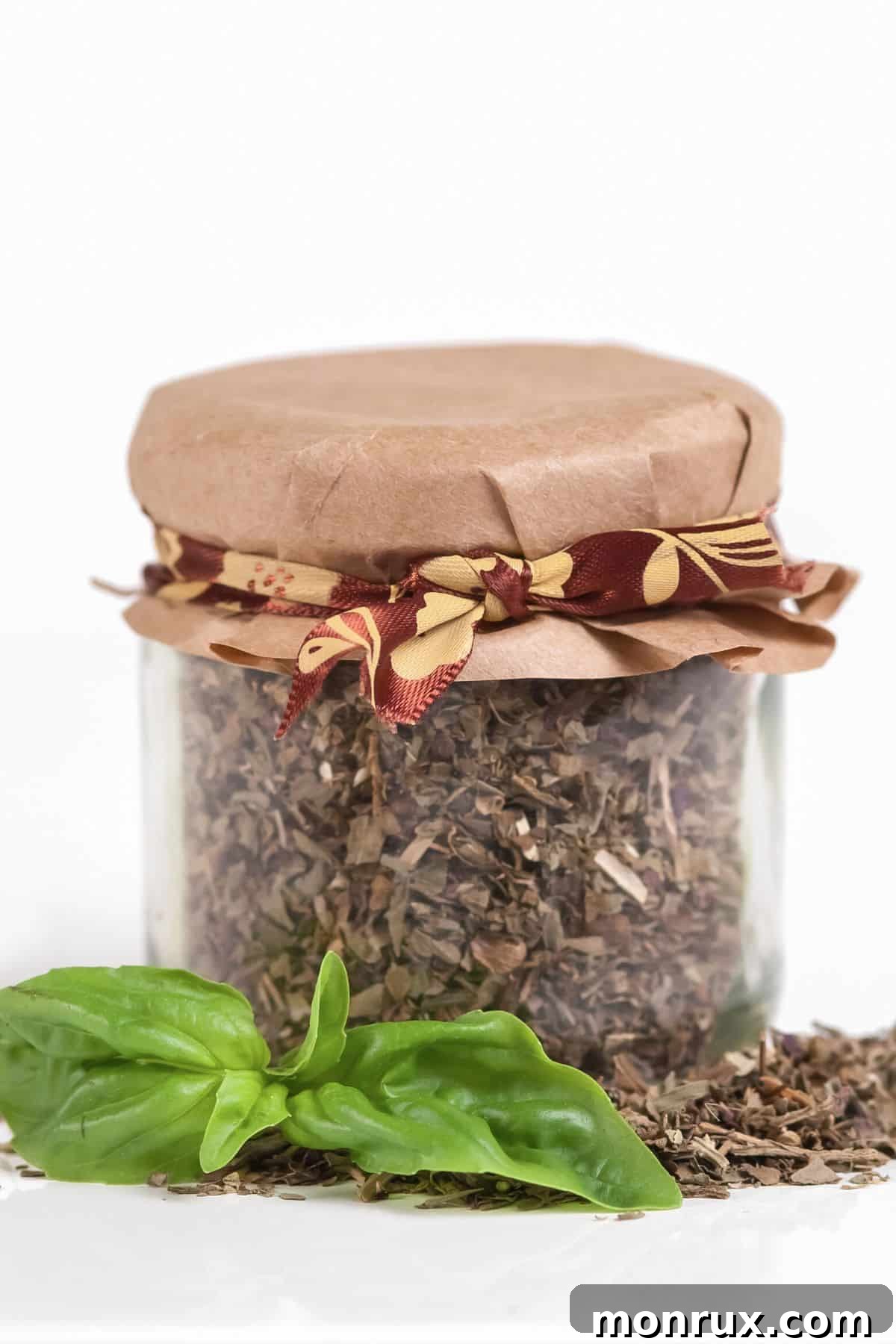
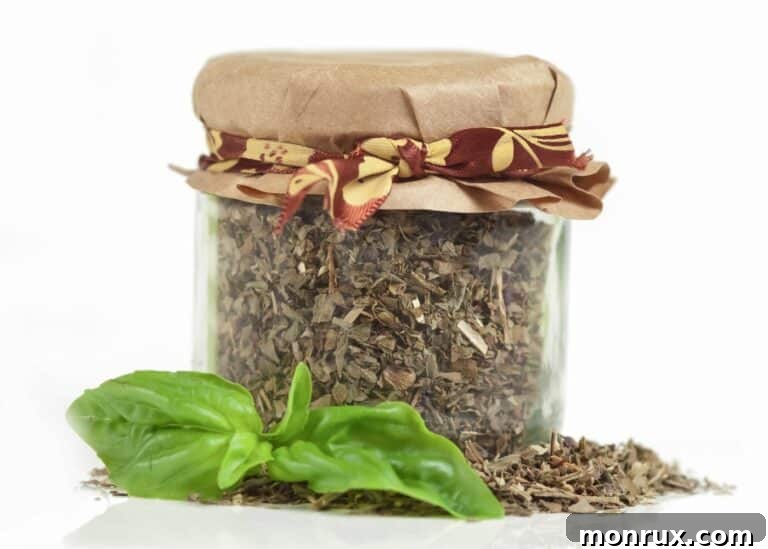
For the ultimate freshness, consider storing your dried basil in smaller, individual airtight containers such as small glass jars, dark amber jars, or vacuum-sealable bags. Ideally, portion your dried basil into amounts that can easily refill your everyday spice jars. This way, you only expose a small quantity to air during daily use, keeping the bulk of your supply protected.
Vacuum packing is an excellent option for large batches, as it removes nearly all air, significantly extending shelf life. Store these smaller containers or vacuum-packed bags within a larger, airtight and dark container to provide an additional layer of protection against light and air, the primary enemies of dried herbs.
2. Crumbled or Whole Leaves?
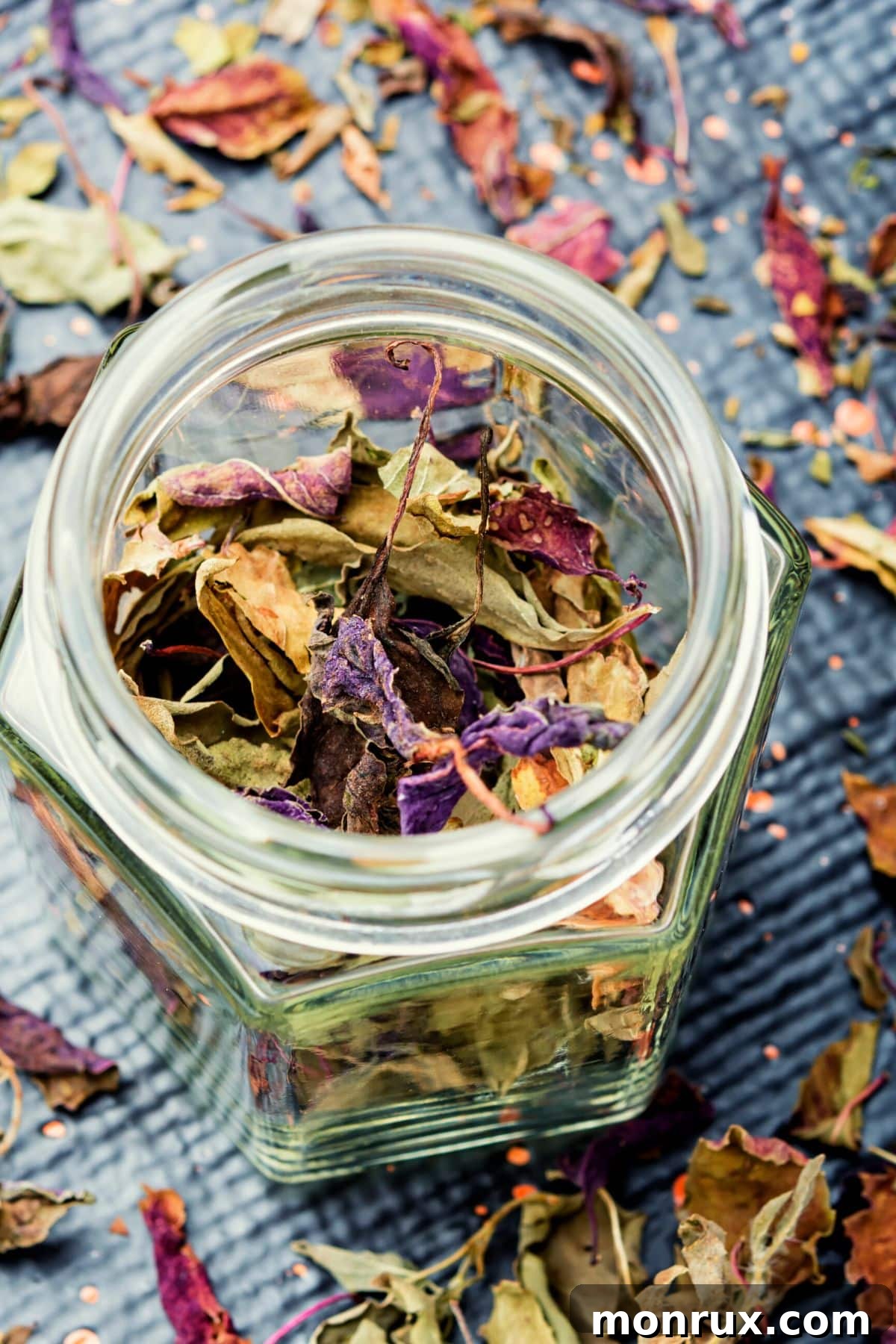
After drying, if you preserved your basil with stems or any remaining flowers, it’s best to remove them now. You have a choice for how to store the leaves themselves: you can either gently crumble your leaves by hand into smaller pieces, or use a spice grinder to turn them into a fine powder.
Alternatively, you can keep the dried basil leaves whole for bulk and easier long-term storage. Whole leaves tend to retain their essential oils and, therefore, their flavor for a longer period. You can then simply crumble them into your recipes as needed. We recommend storing a mixture of both whole and crushed leaves: keep the majority of your harvest as whole dried leaves for maximum longevity and flavor, and have a smaller jar of crumbled basil ready for daily use. Whole dried leaves offer a slightly more complex and full-bodied flavor, making them perfect for dishes where basil is a star ingredient.
3. The Ideal Environment for Daily Use and Long-Term Storage
For the small portion of dried basil you plan to use daily in your meals, keep it in a small, easily accessible airtight container. This container should preferably be made of dark glass or opaque material to block light, or stored within a larger, dark cupboard.
For all dried herbs, whether for daily use or long-term storage, the ideal environment is a dry, cool, and dark place. Direct sunlight, exposure to air, and heat are the three main culprits that quickly leach flavor, aroma, and even color from dried basil leaves. A pantry, a spice cabinet away from the stove or oven, or a dark cupboard are all excellent choices. Avoid storing dried herbs near windows, above heat-generating appliances, or in refrigerators (which can introduce moisture). By following these simple storage principles, your homemade dried basil will remain potent and delicious, ready to elevate your cooking for many months to come.
Frequently Asked Questions About Drying Basil
When properly dried and stored in an airtight container away from light and heat, homemade dried basil can retain its potency and flavor for at least a year. While it won’t spoil after that, its flavor will gradually diminish over time.
Yes, dried basil does have a different flavor profile compared to fresh basil. While fresh basil is bright, peppery, and slightly sweet, dried basil develops a more concentrated, earthy, and sometimes slightly minty flavor. It’s essential to note that dried basil is significantly less potent than fresh basil, so you will generally need to use about three times more dried basil than fresh basil in a recipe to achieve a comparable flavor.
Technically, no, you don’t *have* to blanch basil before drying. You can simply wash your basil leaves in cold water to remove dirt or insects and then proceed to dry them. However, for the absolute best results in terms of retaining vibrant color, flavor, and nutrients, I highly recommend adding the few extra minutes to your preservation routine for blanching. It deactivates enzymes that cause degradation, ensuring a superior end product.
Drying basil, as discussed in this guide, is an excellent method for long-term storage. However, there are several other effective ways to preserve basil, depending on your needs. You can learn about five different methods for how to store fresh basil, including freezing and making pesto.
While air drying by hanging bunches of basil is a traditional method, it is generally not the most efficient or reliable way, especially in humid environments. Air drying can take several weeks, during which time your basil may attract insects, or develop mold or bacteria if there isn’t sufficient airflow or if humidity is high. For a quicker, more controlled, and safer drying process, consider using the oven or dehydrator methods outlined in this guide.
Absolutely! These drying methods are versatile and effective for nearly all varieties of fresh basil, whether you’re working with sweet basil, Genovese basil, Thai basil, lemon basil, or any other type. The principles of blanching and low-heat drying remain consistent across varieties, allowing you to preserve the unique characteristics of each.
Explore More Dehydrator Guides
- Dehydrated Watermelon
- Healthy Seed Crackers
- How to Dehydrate Green Beans
- Carrot Juice Pulp Crackers
- Homemade Beet Powder
- How to Dehydrate Carrots
Delicious Recipes Featuring Dried Basil
I sincerely hope you try this recipe and enjoy the fruits of your basil harvest! If you do, please leave a comment and a starred review below to share your experience. Your feedback is truly appreciated.
Additionally, consider connecting with me on social media to stay updated with more clean eating recipes and tips. You can find me on Facebook, Pinterest, Instagram, and YouTube!
Print
How to Dry Basil
5 Stars
4 Stars
3 Stars
2 Stars
1 Star
5 from 2 reviews
Basil is incredibly abundant in the summertime, making it a prime candidate for preservation. This guide offers efficient and straightforward methods to dry basil, ensuring none of your precious harvest goes to waste. Follow these easy steps to learn the best ways to dry basil for year-round enjoyment.
-
Total Time:
6 hours 5 minutes -
Yield:
4 servings
Ingredients
- 1 large bunch of fresh basil
Instructions
- Wash and gently dry your destemmed basil leaves under cool water, ensuring all soil and any possible insects are thoroughly removed.
- Blanch your basil following the detailed notes provided below to preserve color and flavor.
- Preheat your oven to its lowest setting (ideally 95°F/35°C, or lowest possible). Prepare a baking sheet, or if using a dehydrator, set it up according to the user manual.
- Carefully arrange your blanched and patted dry basil leaves onto the sheet or dehydrator trays in a single, even layer, ensuring no overlapping.
- Place the sheet into the oven or the dehydrator and dry for approximately 6 hours. Drying time may vary; check for crispness.
- Allow the dried basil to cool completely to room temperature before storing.
Notes
- To blanch basil, immerse the leaves in rapidly boiling water for just 2 seconds. Immediately transfer the blanched basil leaves into an ice bath to stop the cooking, then pat them thoroughly dry. This step is crucial for preserving color and flavor.
- For dehydrator users, always follow your appliance’s specific instructions for drying herbs for the best and safest results.
- To store dried basil, place it either whole or gently crumbled into an airtight container. Keep the container in a cool, dark, and dry place. Properly stored dried basil can maintain its quality for several months, up to a year.
- If your oven does not reach a temperature as low as 95°F (35°C), set it to the absolute lowest temperature available. To prevent the basil from cooking or burning, it is highly recommended to prop the oven door open slightly (e.g., with a wooden spoon) to allow moisture to escape and help regulate the internal temperature, keeping it as low as possible.
-
Author:
Carrie Forrest, MPH in Nutrition -
Prep Time:
5 minutes -
Cook Time:
6 hours -
Category:
Preserving -
Method:
Oven, Dehydrator -
Cuisine:
Healthy -
Diet:
Vegetarian
Nutrition
- Serving Size: 1
- Calories: 1
- Sugar: 0 g
- Sodium: 0.1 mg
- Fat: 0 g
- Saturated Fat: 0 g
- Carbohydrates: 0.1 g
- Fiber: 0 g
- Protein: 0.1 g
- Cholesterol: 0 mg
Don’t forget to join my newsletter list to get exclusive clean eating recipes and tips delivered straight to your inbox. The newsletter is 100% free with no spam; you can unsubscribe anytime.