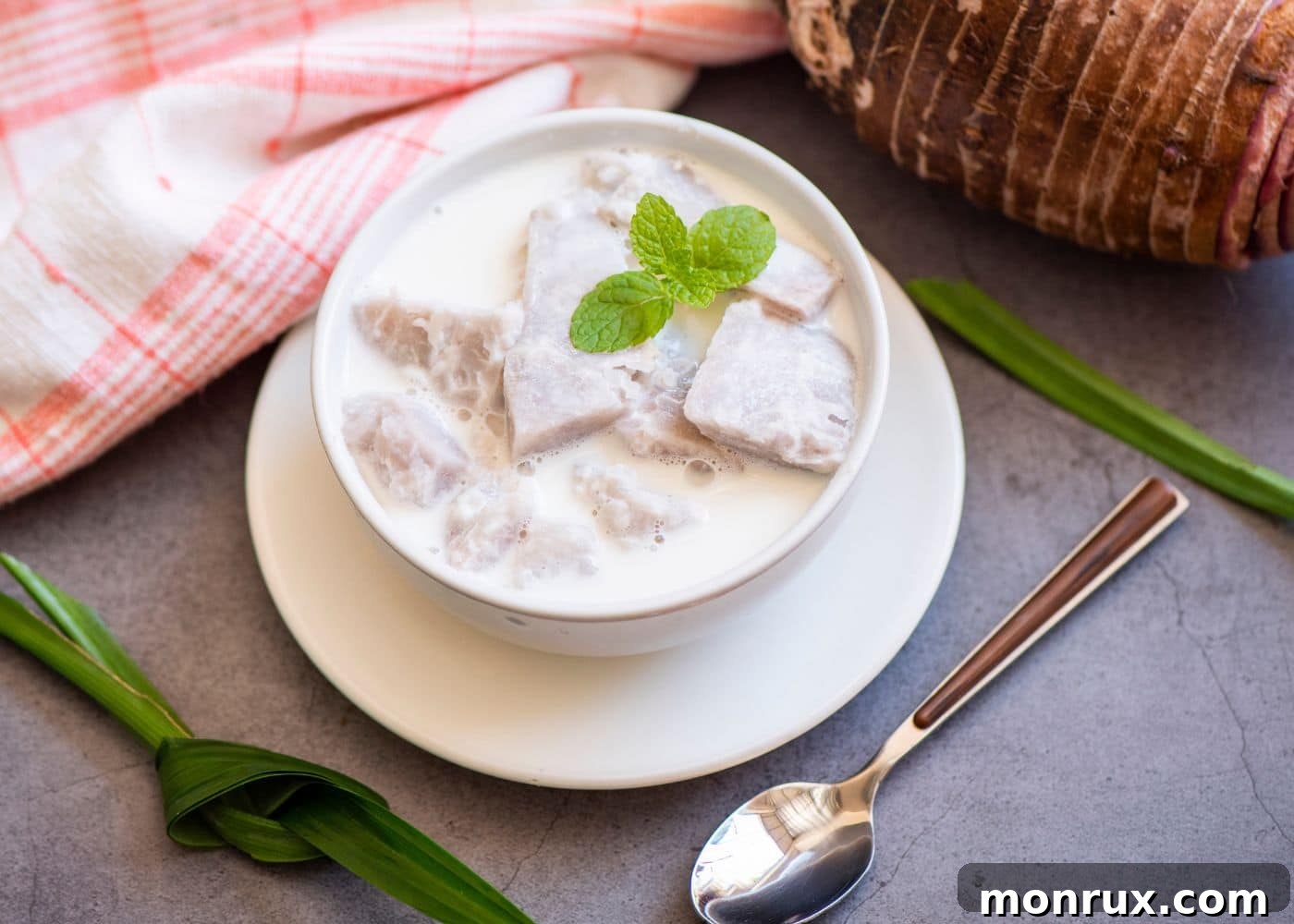
Taro Milk Tea, a vibrant and delicious beverage, has long been a staple in Asian cultures and is rapidly gaining immense popularity across Western countries, including the United States. Its unique flavor and appealing purple hue make it a favorite for many. But beyond its captivating taste and appearance, a common question arises: Is taro milk tea a healthy choice? This comprehensive article delves into the nutritional aspects of taro milk tea, explores its health implications, and provides a simple, healthy recipe for you to enjoy at home.
What is Taro Milk Tea? A Culinary Exploration
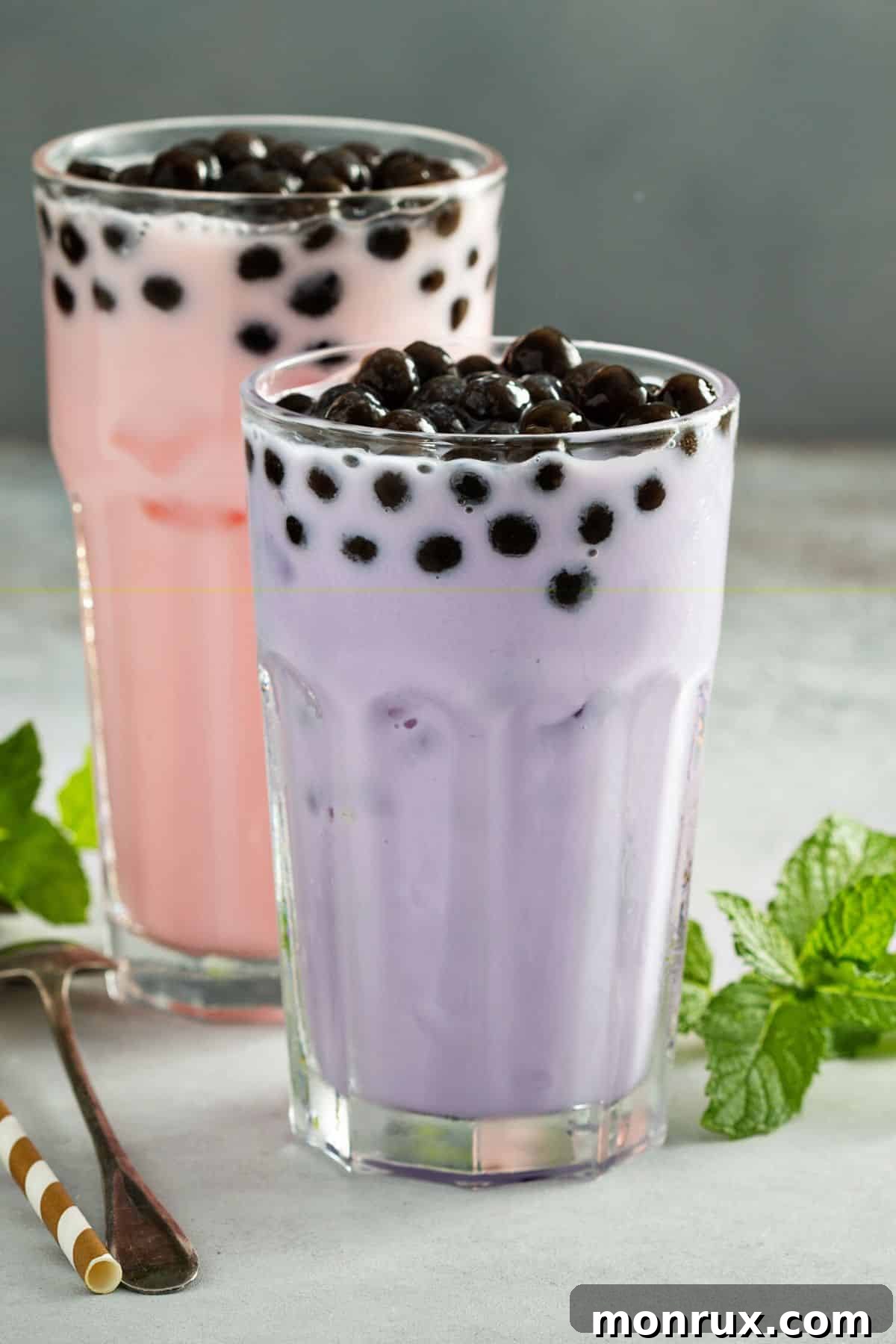
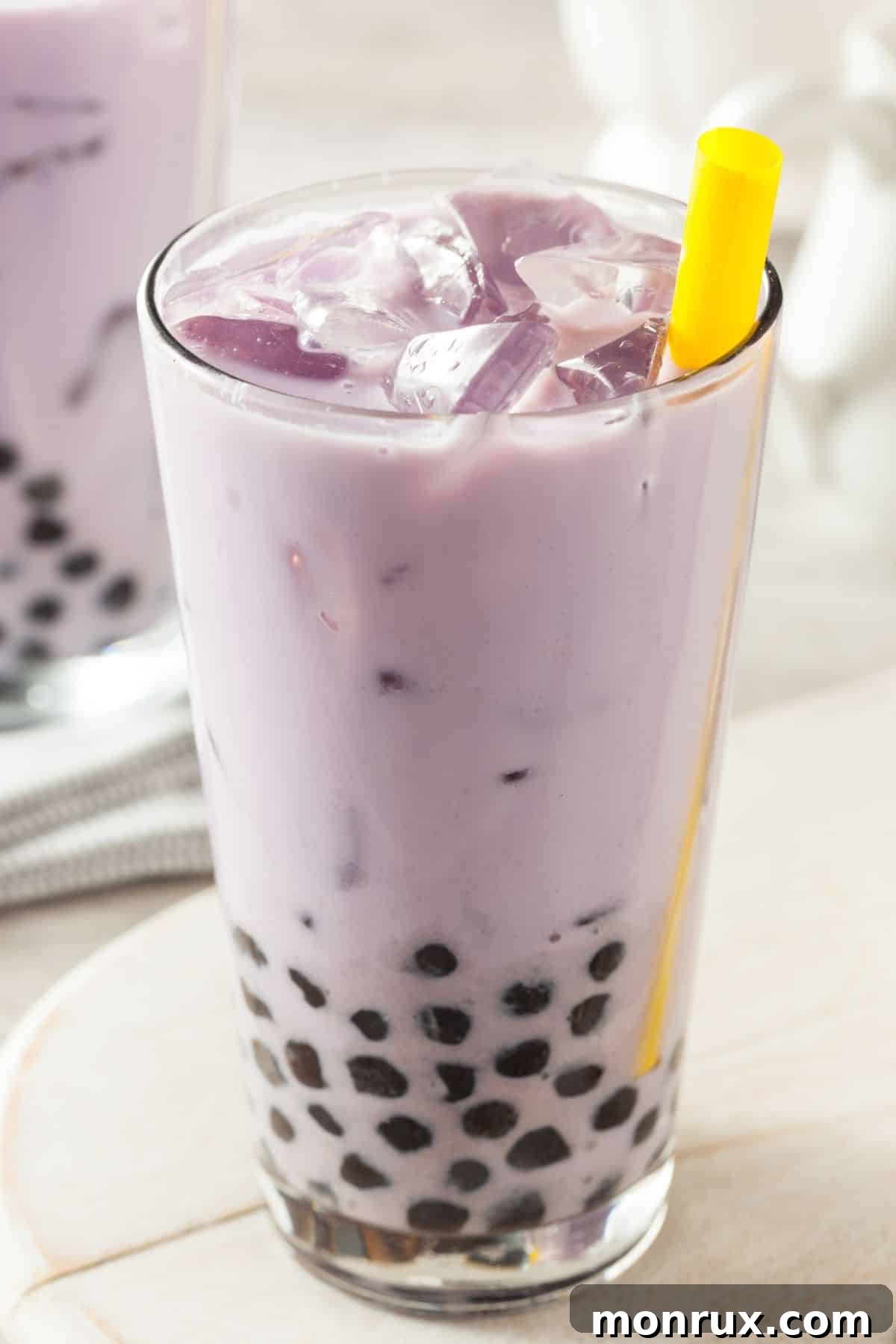
Taro Milk Tea is a flavored tea beverage crafted from a delightful blend of taro root, milk, and tea. Often served with chewy tapioca pearls, known as boba, it’s widely recognized as Taro Bubble Tea in many parts of the world. While traditionally sweetened to enhance its earthy, vanilla-like flavor, variations exist, including those made with fresh taro paste, taro powder, or a combination of both.
This beverage is deeply rooted in Asian culinary traditions, where taro root has been a significant food source for centuries. Its rich, starchy texture and subtly sweet taste lend themselves perfectly to both savory dishes and sweet treats. The advent of bubble tea culture further propelled taro milk tea into the spotlight, making it a beloved drink found in countless bubble tea shops (or boba shops) across Asia and, increasingly, in cafes worldwide. It’s typically served cold or over ice, offering a refreshing experience, especially in warmer climates.
The Alluring Taro Root: History and Nutritional Profile
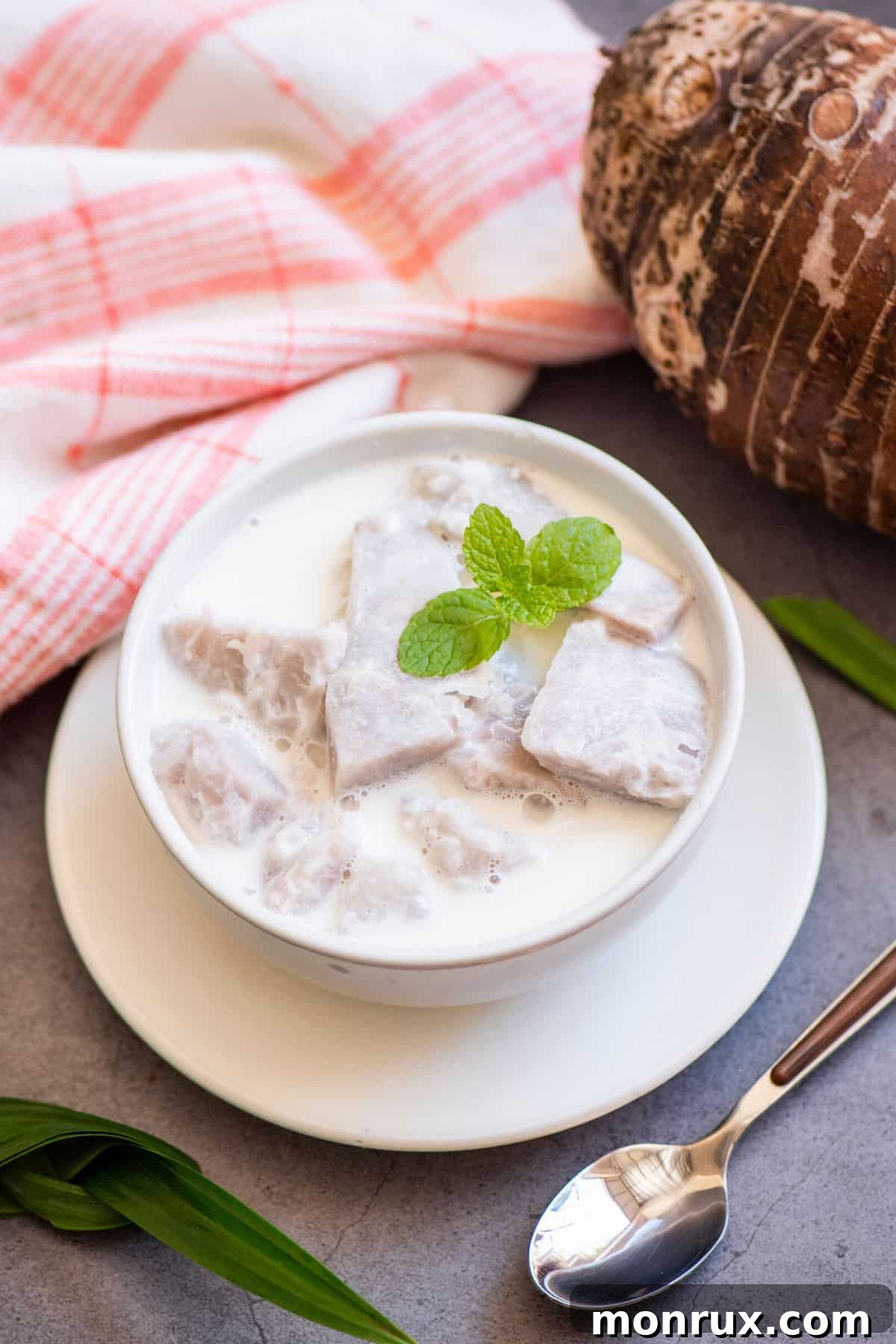
Taro root, scientifically known as Colocasia esculenta, is a starchy root vegetable native to Southeast Asia and parts of India. It’s a staple food in many tropical regions around the globe, from the Pacific Islands to parts of Africa and the Caribbean. Visually, taro root is distinctive, typically featuring a purple-gray or brown skin and flesh that can range from white to pale pink or even vibrant purple, depending on the variety.
Often compared to other root vegetables like purple yams or sweet potatoes, taro root offers a unique flavor profile that is subtly sweet, nutty, and earthy. When cooked, its texture becomes soft and slightly sticky, making it ideal for thickening dishes or blending into creamy beverages like taro milk tea. Historically, taro has been cultivated for thousands of years, revered not just for its caloric value but also for its nutritional contributions.
Beyond its culinary versatility, plain taro root boasts an impressive nutritional profile. It is primarily composed of complex carbohydrates, providing a sustained energy source. While naturally low in protein and fat, it’s a good source of dietary fiber, especially when consumed in its whole form. This fiber content is crucial for digestive health, aiding in satiety and promoting regular bowel movements. Moreover, taro root is rich in essential vitamins and minerals, including a significant amount of Vitamin C, which is vital for immune function and skin health, as well as potassium, important for blood pressure regulation, and manganese, an antioxidant that supports bone health and metabolism.
When used in Taro Milk Tea, especially if fresh taro root is incorporated, these natural nutrients are transferred to the drink. This highlights why choosing fresh ingredients can significantly impact the overall nutritional value of your beverage.
Unpacking Taro Milk Tea Nutrition: A Closer Look
While plain taro root offers a wealth of nutrients, the nutritional landscape of Taro Milk Tea can be quite different due to the additional ingredients involved. A standard serving of taro milk tea, particularly those found in commercial bubble tea shops, often contains significant amounts of sugar and calories. Understanding these components is key to determining if it fits into a healthy lifestyle.
The core ingredients of taro milk tea are taro, milk, and tea. The type of milk used can vary from whole dairy milk to various plant-based alternatives like almond, soy, or oat milk, each contributing different levels of fat, protein, and calcium. The tea base, often black or green tea, adds antioxidants and can provide a caffeine boost, similar to a cup of coffee, depending on the brewing strength and quantity used. Some versions might even use decaffeinated tea for those sensitive to caffeine.
However, the primary concern for health-conscious individuals often revolves around the sweeteners and additional elements like boba. Taro milk tea is frequently sweetened with high amounts of sugar, flavored syrups, or condensed milk, which can dramatically increase its caloric content and contribute to a high intake of added sugars. For instance, a typical 16-ounce serving can range from 200 to 400 calories or more, with much of that coming from sugar. High sugar intake is linked to various health issues, including weight gain, increased risk of type 2 diabetes, and cardiovascular problems.
Boba pearls, the chewy tapioca balls often found in these drinks, are primarily made from tapioca starch and brown sugar. While they add a delightful texture, they also contribute additional carbohydrates and calories with minimal nutritional value. Some commercial taro milk teas may also use taro powder, which can contain artificial flavors, colors, and added sugars, rather than fresh taro root, further diminishing the natural health benefits.
Health Benefits and Considerations for Taro Milk Tea
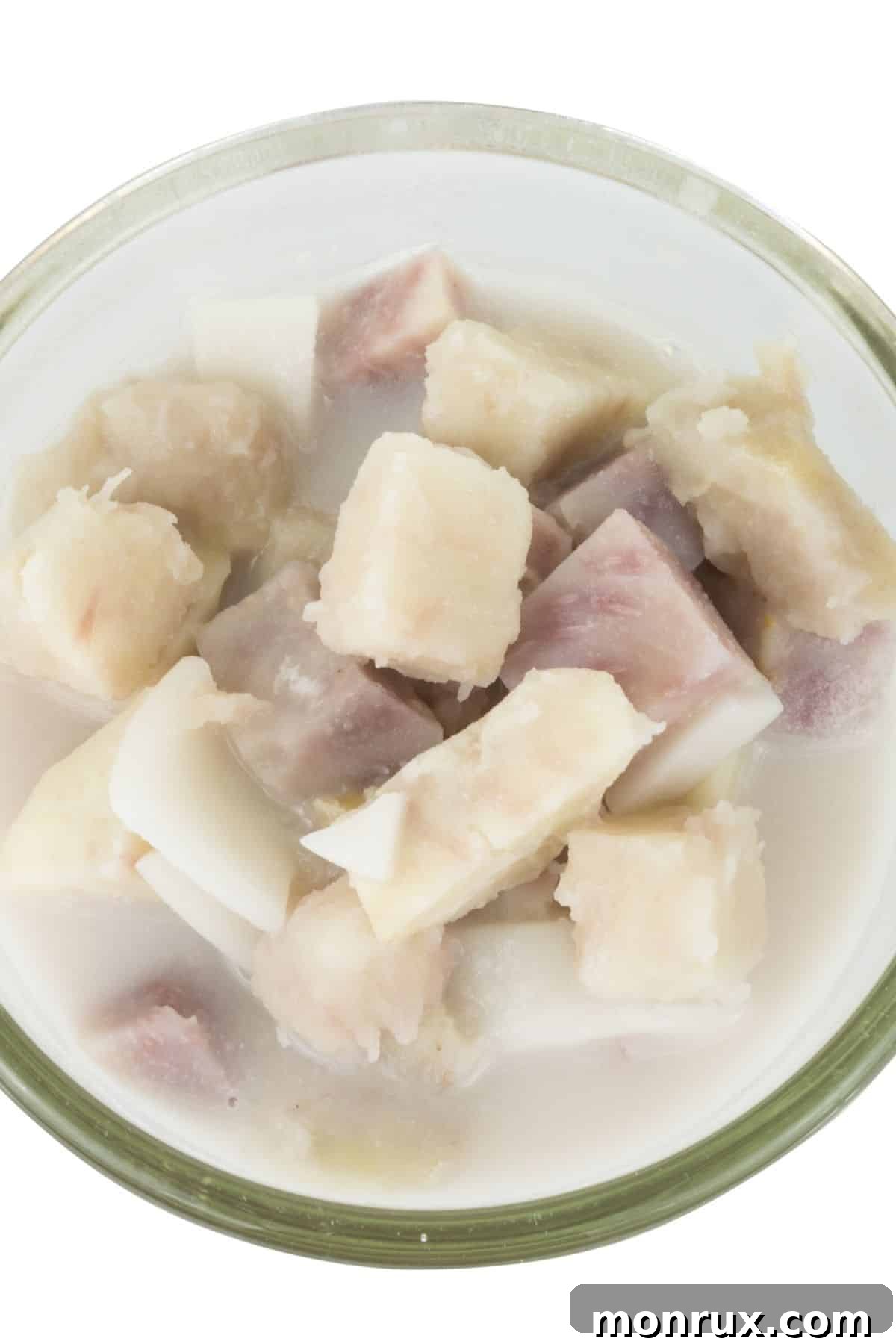
When consumed thoughtfully, taro milk tea can offer some advantages, primarily stemming from its natural ingredients. As discussed, fresh taro root is a valuable source of dietary fiber, complex carbohydrates, and essential micronutrients like Vitamin C, potassium, and manganese. Incorporating real taro into your diet can support digestive health, provide sustained energy, and contribute to overall nutrient intake. Milk, whether dairy or plant-based, adds protein and calcium, both crucial for bone health and muscle function.
However, it is crucial to approach taro milk tea with moderation, particularly concerning its high calorie and sugar content. Regular or excessive consumption of commercial taro milk tea, laden with added sugars and syrups, can lead to several health concerns. These include:
- Weight Gain: The high caloric density, often from empty calories in sugar, can easily contribute to exceeding daily caloric needs.
- Increased Risk of Chronic Diseases: A diet high in added sugars is a known risk factor for developing type 2 diabetes, heart disease, and fatty liver disease.
- Dental Health Issues: Frequent exposure to sugar can contribute to tooth decay and cavities.
- Caffeine Intake: For those sensitive to stimulants, the caffeine content from the tea base, which can be comparable to a cup of coffee, might be a consideration, especially if consumed late in the day.
To enjoy taro milk tea as a healthier treat, consider these modifications:
- Choose Fresh Taro: Opt for recipes or shops that use fresh taro root or a high-quality, unsweetened taro paste instead of artificial powders, which often contain excessive sugar and additives.
- Control Sweetness: Request or use less sugar. Many shops offer customizable sweetness levels, allowing you to reduce the amount by half or even zero. For homemade versions, experiment with natural sweeteners in moderation or opt for sugar substitutes.
- Mind the Milk: Select unsweetened plant-based milks like almond or oat milk for a lower-calorie and dairy-free option.
- Limit Boba: While delicious, boba pearls add significant calories and sugar. Consider skipping them or reducing the serving size.
- Portion Control: Treat taro milk tea as an occasional indulgence rather than a daily beverage. Smaller sizes can help manage calorie and sugar intake.
Frequently Asked Questions About Taro Milk Tea
Absolutely! Making taro milk tea dairy-free is quite simple. Instead of traditional cow’s milk, you can use a wide variety of plant-based milk alternatives. Popular choices include almond milk, soy milk, oat milk, and coconut milk, all of which lend a creamy texture to the beverage without dairy. Many boba shops now offer these options, and they are readily available for homemade recipes. Just ensure your chosen plant milk is unsweetened to control added sugars.
While taro milk tea can be a refreshing and enjoyable drink, it is not inherently a “healthy” beverage, primarily due to its typically high calorie and sugar content, especially in commercial preparations. Fresh taro root itself offers good nutrients like fiber, vitamins, and minerals, and milk provides protein and calcium. However, the addition of significant amounts of sugar, syrups, and boba pearls can turn it into a high-sugar, high-calorie treat. It can also contain a fair amount of caffeine from the tea base, which might be a consideration. As with many indulgent drinks, moderation is key. Opting for homemade versions with less sugar and fresh taro, or requesting less sugar at a shop, can make it a healthier choice to be enjoyed as part of a balanced diet.
Yes, most traditional taro milk tea recipes use a black or green tea base, which naturally contains caffeine. The amount of caffeine can vary depending on the type of tea used, the strength of the brew, and the size of the serving. Some taro milk teas can have a caffeine content comparable to a standard cup of coffee. If you are sensitive to caffeine or prefer a decaffeinated option, you can request or use decaffeinated black or green tea in your homemade recipe.
Absolutely! Our recipe below demonstrates how to make a delicious taro milk tea at home with common kitchen tools. You’ll need a saucepan to cook the taro, a blender or food processor to achieve a smooth taro paste, and basic brewing equipment for your tea. While specialty boba equipment isn’t required for the boba-free version, adding boba would require additional steps like cooking tapioca pearls.
Craft Your Own: Homemade Taro Milk Tea Recipe (Without Boba)
Homemade Taro Milk Tea Recipe (Without Boba)
5 Stars from 1 review
This homemade version of Taro Milk Tea is both healthy and satisfying. Crafted without boba or tapioca pearls, it focuses on the natural flavor of taro root for a truly authentic experience.
- Total Time: 50 minutes
- Yield: 2 servings
Ingredients
- 1 cup taro root, peeled and chopped
- 1 cup unsweetened almond milk (or your preferred milk)
- 2–3 black tea bags or 1 teaspoon loose leaf black tea
- 2–3 tablespoons sweetener (such as sugar, honey, maple syrup, or a sugar substitute), to taste
Instructions
- In a medium saucepan, combine the peeled and chopped taro root with enough water to completely cover it. Bring the water to a simmer, then reduce the heat, cover with a lid, and boil until the taro root is tender, typically about 15-20 minutes. Once tender, drain the water thoroughly and transfer the cooked taro root to a blender or food processor.
- Add 1/2 cup of unsweetened almond milk to the cooked taro root in the blender. Blend until the mixture is completely smooth and creamy. You may need to add a little more milk, one tablespoon at a time, to achieve your desired consistency.
- While the taro root is cooking, prepare your tea. If using tea bags, steep them in hot water for 3-5 minutes according to package instructions, then remove the bags. If using loose leaf tea, steep 1 teaspoon in hot water for 3-5 minutes, then strain out the leaves.
- Pour the freshly brewed tea into the blender with the taro root mixture. Blend again briefly until all ingredients are well combined and smooth.
- Add 2-3 tablespoons of your chosen sweetener to the taro milk tea mixture. Stir well to dissolve the sweetener and taste. Adjust the amount of sweetener as needed to suit your personal preferences.
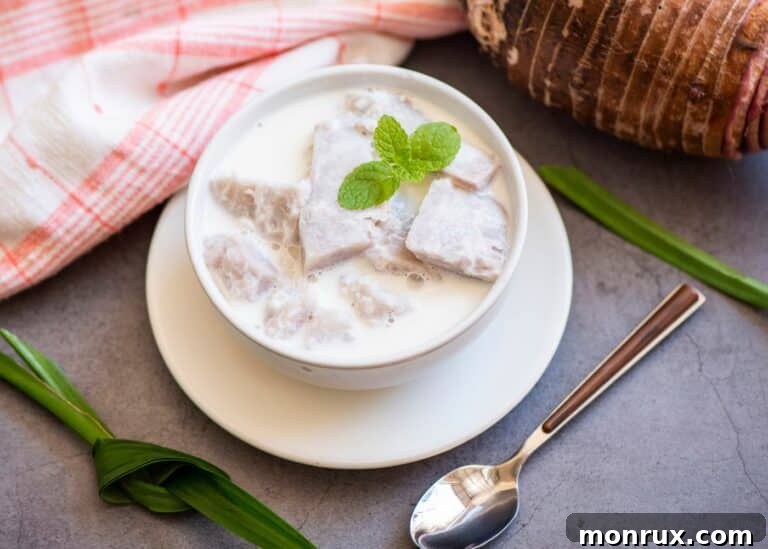
- Serve the homemade taro milk tea immediately over ice or chill it in the refrigerator for a cooler refreshment. For an elegant touch, garnish with a fresh sprig of mint, if desired.
Notes
- If you do not follow a dairy-free diet, feel free to use regular cow’s milk in this recipe for a richer flavor.
- For a decaffeinated version, simply use decaffeinated black tea bags or loose leaf tea.
- For a richer taro flavor, you can roast the taro root after boiling for 10-15 minutes until lightly browned before blending.
- Author: Carrie Forrest, MPH in Nutrition
- Prep Time: 10 minutes
- Cook Time: 40 minutes
- Category: Beverage
- Method: Stovetop
- Cuisine: Asian-inspired
- Diet: Gluten Free
Nutrition (per serving, approximate)
- Serving Size: 1/2 of recipe
- Calories: 143
- Sugar: 14.3 g
- Sodium: 102.2 mg
- Fat: 1.6 g
- Saturated Fat: 0 g
- Carbohydrates: 30.6 g
- Fiber: 2.2 g
- Protein: 1.6 g
- Cholesterol: 0 mg
(Nutritional information is an estimate and may vary based on ingredients and preparation.)
Explore More Homemade Tea Delights!
If you’ve enjoyed making your own taro milk tea, you might be interested in exploring other delicious and wholesome homemade tea recipes. Brewing your own teas allows for full control over ingredients and sweetness, ensuring a beverage that perfectly suits your taste and health goals. Discover more refreshing and healthful tea options from our collection:
We hope you enjoyed this recipe and found our guide to taro milk tea insightful! If you make this recipe, please leave a comment and a starred review below. Your feedback is greatly appreciated!
Stay connected and get more healthy eating tips and recipes by following us on social media. You can find us on Facebook, Pinterest, Instagram, and YouTube!
Don’t forget to join our newsletter list to receive exclusive clean eating recipes and wellness tips directly in your inbox. Our newsletter is 100% free with no spam; you can unsubscribe anytime.
About the Author: Carrie Forrest holds a master’s degree in public health with a specialty in nutrition and is a certified holistic nutritionist. She is a prominent wellness and food blogger, attracting over 5 million visitors annually to her site. Carrie shares an inspiring story of recovery from chronic illness and is deeply passionate about empowering other women to transform their health journeys. You can reach her through her contact form.