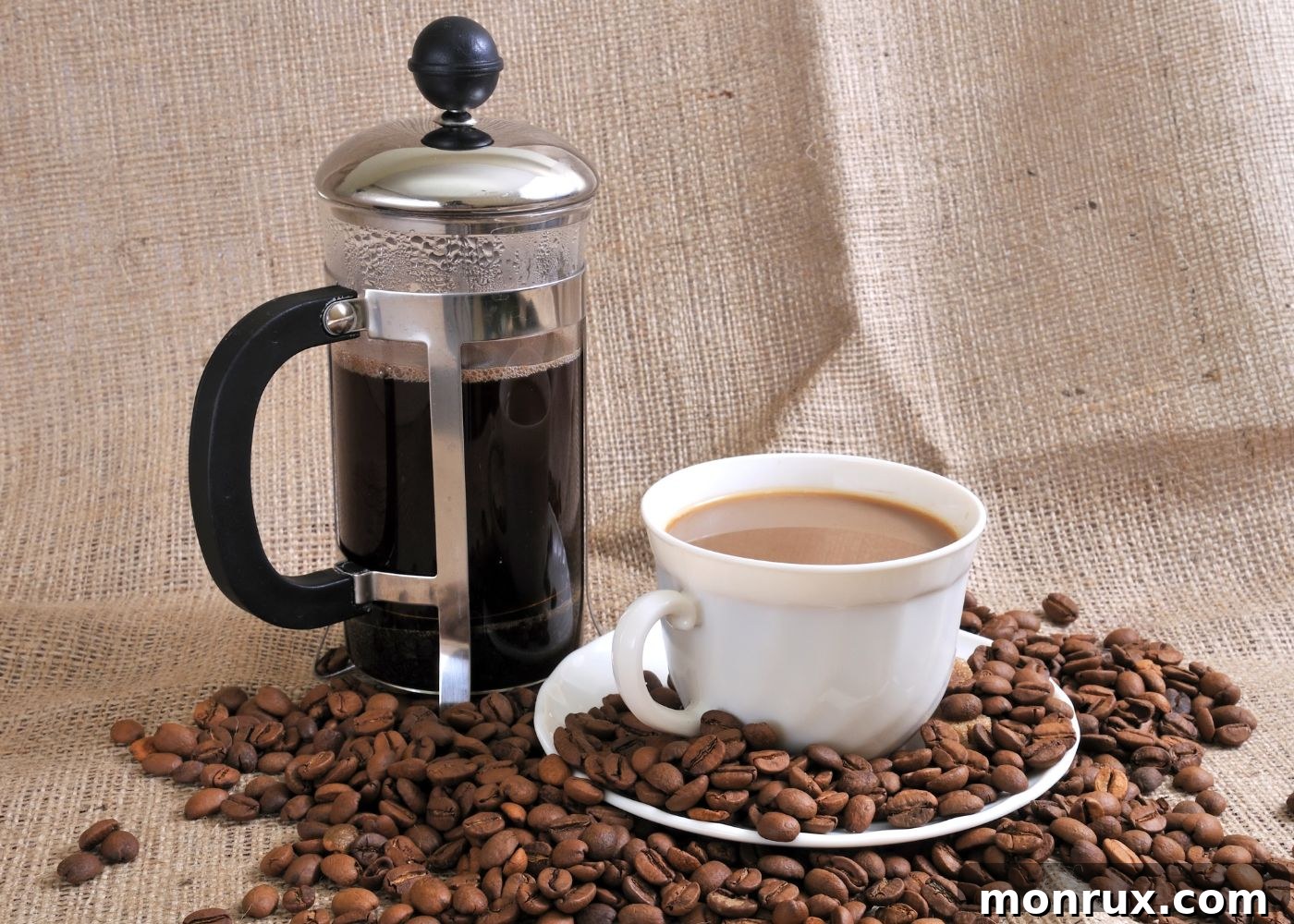
Welcome to the world of French press coffee, a delightful and incredibly rewarding brewing method that consistently produces a rich, full-bodied cup. For many coffee enthusiasts, the French press represents one of life’s true simple pleasures. This comprehensive guide will equip you with all the knowledge needed to master this timeless technique, from selecting the best roast type and ideal grind size to understanding the perfect brewing process. We’ll dive deep into what makes French press coffee unique, explore optimal bean choices, and provide a simple, step-by-step recipe to ensure you brew an impeccable cup every time.
Understanding the French Press Brewing Method
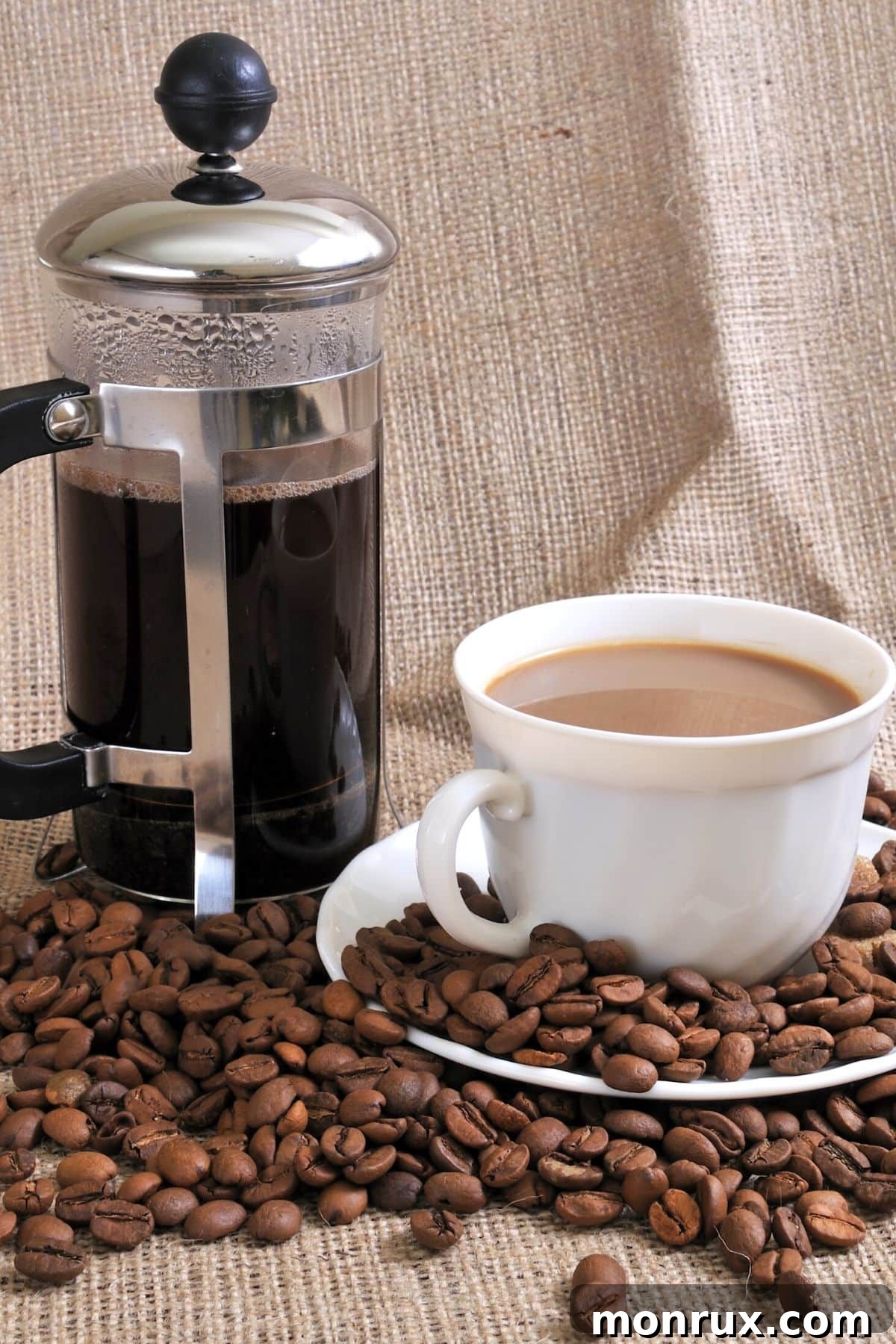
The French press, also known as a cafetière, coffee press, or coffee plunger, is a deceptively simple yet incredibly effective coffee maker. Its history dates back to the mid-19th century in France, with various patents improving its design over time. At its core, a French press is a filterless coffee pot, typically consisting of a cylindrical carafe (often glass or stainless steel), a lid, and a plunger with a built-in mesh filter screen.
Unlike drip coffee makers that rely on gravity and paper filters, the French press employs a full immersion brewing technique. Ground coffee is steeped directly in hot water, allowing for maximum flavor extraction. After a set brewing time, a plunger is pressed down, separating the spent coffee grounds from the liquid coffee. This unique process ensures that all the natural essential oils, fine sediment, and dissolved solids from the coffee bean flow into your cup, resulting in a cup of coffee that is remarkably full-bodied, rich in flavor, and possesses a silky, luxurious texture.
The beauty of French press coffee lies in its simplicity and the control it offers. You don’t need electricity or complex machinery, just a few basic tools: your French press coffee maker, hot water, quality coffee grounds, a timer, and your favorite mug. This method allows you to truly appreciate the nuanced flavors of your chosen coffee beans, making it a favorite among purists and casual drinkers alike. The filterless design means there are no paper filters to buy, which is not only economical but also environmentally friendly.
The Heart of Your Brew: Coffee Beans and Grind
The journey to the perfect French press coffee begins long before the water hits the grounds. It starts with selecting the right coffee beans and ensuring they are ground to the ideal consistency. These two factors are paramount in influencing the final taste and texture of your brew.
Choosing the Right Roast
When it comes to French press, virtually any roast level can produce an excellent cup, as personal preference plays a significant role. However, the French press method tends to amplify the characteristics of the beans, making roast choice particularly impactful:
- Light Roasts: These coffees retain more of their original fruity, floral, and acidic notes. The French press can bring out a surprising clarity and complexity in light roasts, showcasing their delicate flavors that might be muted by other brewing methods.
- Medium Roasts: Often considered the sweet spot, medium roasts offer a balance of acidity, sweetness, and a pleasant body. They present a wide range of flavors, from nutty and chocolatey to caramel and citrus. The French press excels at highlighting the balanced profile of medium roasts, making them a consistently popular choice.
- Dark Roasts: Known for their bold, smoky, and bittersweet characteristics, dark roasts truly shine in a French press. The full immersion method enhances their inherent richness and heavy body, delivering a robust and intense cup that dark roast lovers adore. If you prefer a less intense flavor, a light-to-medium roast coffee bean will yield a milder taste.
Ultimately, the “best” roast is the one that pleases your palate. Don’t hesitate to experiment with different roasts to discover what you enjoy most. Many prefer single-origin beans to truly appreciate the distinct characteristics of coffee from a specific region, while others enjoy the complexity of a well-crafted blend.
The All-Important Grind Size
This is arguably the most critical factor for French press success. The French press requires a coarse, uniform grind. Think of a consistency similar to sea salt or coarse breadcrumbs. Here’s why it matters so much:
- Too Fine: A fine grind (like espresso or drip coffee) will lead to over-extraction. This results in a bitter, astringent taste and a muddy cup filled with excessive sediment because the fine particles easily pass through the mesh filter. It can also make the plunger very difficult to press, creating dangerous pressure.
- Too Coarse: While preferable to too fine, an excessively coarse grind might lead to under-extraction. Your coffee will taste weak, watery, and lack flavor and body, as the water can’t effectively extract enough soluble compounds from the large particles during the brewing time. It might also make plunging too easy, which means you’re not getting enough resistance for proper filtration.
The ideal coarse grind allows for proper water flow during steeping and ensures the mesh filter can efficiently separate the grounds, leaving you with a clean, rich cup. If you’re unsure, aim for a grind that feels rough to the touch and looks distinctly granular.
Freshness and Grinding
For the freshest and most flavorful coffee, it is highly recommended to use freshly ground coffee. Coffee begins to lose its aromatic compounds and flavor almost immediately after being ground. Therefore, buying whole beans and grinding them just before brewing will significantly elevate your French press experience.
If you don’t have a coffee grinder at home, using pre-ground coffee is acceptable, but try to buy it in smaller quantities and store it in an airtight container to preserve freshness. Alternatively, many specialty coffee shops will happily grind whole bean coffee for you in-house to your specified coarse setting. A burr grinder is preferred over a blade grinder for superior consistency in grind size, which is crucial for even extraction in a French press.
Frequently Asked Questions About French Press
The French press is designed to be a filterless coffee pot, relying on its built-in mesh screen to separate grounds. Therefore, no paper or additional mesh filter is typically needed. Using a paper filter can actually inhibit the passage of the natural oils that give French press coffee its characteristic rich body and flavor. If you find too much sediment in your cup, it’s usually an indication that your grind is too fine, rather than a need for an extra filter. Focus on achieving that perfect coarse grind for optimal results!
A commonly recommended starting point is a ratio of 1:15 or 1:12 coffee to water. For a single serving (roughly a standard mug), this typically translates to one heaping tablespoon (about 7-8 grams) of medium-coarse ground coffee per 6-7 ounces (approximately 200 ml) of hot water. Keep in mind that many modern mugs hold more than 8 ounces, so you may need to adjust both your coffee and water amounts proportionally to fill your cup and achieve your desired strength. Feel free to experiment with this ratio to find your ideal strength.
While you technically *can* use the same beans, the grind size is crucial. Coffee designated for a French press is ground much coarser than for a drip coffee maker. Using a coarse grind in a drip machine will result in a weak, under-extracted cup because the water passes through too quickly. Conversely, using a fine drip-grind in a French press will lead to over-extraction and a muddy, bitter brew. Always match your grind size to your brewing method for the best results.
The ideal water temperature is just off the boil, typically between 195°F and 205°F (90°C to 96°C). Water that is too hot (boiling) can “burn” the coffee grounds, leading to a harsh, bitter taste. Water that is too cool will result in under-extraction and a weak, sour flavor. If you don’t have a thermometer, simply bring your water to a boil and then let it sit for about 30-60 seconds before pouring.
The optimal steeping time for French press coffee is usually between 3 to 5 minutes. A shorter steep might lead to a weaker, more acidic cup, while a longer steep (especially with too fine a grind) can cause over-extraction and bitterness. Factors like roast level and personal preference can influence this timing. Lighter roasts might benefit from slightly longer steeping, while darker roasts can be fine with a shorter time. Experiment within this range to find your perfect balance.
Mastering the Brew: A French Press Coffee Recipe
If you’re new to French press brewing, this recipe will serve as your perfect starting point. Following these guidelines for coffee-to-water ratio and technique will consistently yield an exceptional cup of coffee, allowing you to fully appreciate the rich, nuanced flavors this method offers.
We encourage you to try this recipe! If you do, please consider leaving a comment and a starred review below to share your experience. Your feedback helps us and other coffee lovers!
And, don’t forget to connect with us on social media for more delicious recipes and tips. You can find us on Facebook, Pinterest, Instagram, and YouTube!
Print
Basic French Press Coffee Recipe
5 out of 5 stars from 1 review
Here’s a basic and simple recipe for making the perfect French press coffee! This guide focuses on a single serving, but it can easily be scaled up.
-
Total Time:
5 minutes -
Yield:
1 serving
Ingredients
- 1 heaping tablespoon (approx. 7-8 grams) medium-coarse ground coffee
- 7 ounces (approx. 200 ml) hot water (just off the boil, 195-205°F / 90-96°C)
Instructions
- Preheat Your Press: Briefly rinse your French press carafe with hot water. This helps maintain the water temperature during brewing and prevents the coffee from cooling too quickly. Discard the hot water.
- Add Coffee Grounds: Remove the plunger from your French press. Add your measured medium-coarse ground coffee to the bottom of the pot. For a single serving, this would be one heaping tablespoon (7-8 grams) per 7 oz (about 200 ml) of water. Scale up proportionally for more servings.
- Pour Hot Water: Pour the hot (but not boiling) water over the coffee grounds. Ensure all grounds are saturated.
- Bloom (Optional but Recommended): Give the coffee a gentle stir to ensure all grounds are fully immersed. Allow the coffee to “bloom” for about 30 seconds. This is where the coffee grounds release trapped gases, contributing to better flavor extraction.
- Steep: Place the plunger on top of the pot, resting it just above the water level and coffee grounds. Do not press it down yet. Let the coffee steep for 3-4 minutes.
- Slow Plunge: After the steeping time, slowly and gently press the plunger down, applying steady, even pressure. This should take about 20-30 seconds. Avoid pushing too quickly, as this can disturb the grounds and force fine particles into your cup, resulting in a muddy brew.
- Serve and Enjoy: Immediately pour the freshly brewed coffee into your favorite mug. Do not leave the coffee in the French press with the grounds, as it will continue to extract and become bitter over time. Enjoy your perfectly crafted cup!
Notes
- For optimal results, always use hot water that is just off the boil, ideally between 195°F and 205°F (90°C to 96°C). Boiling water can scald the coffee.
- This recipe is easily scalable. Simply maintain the coffee-to-water ratio (1 heaping tablespoon per 7 oz water) and ensure your French press coffee maker is large enough to accommodate the increased volume.
- French press coffee is renowned for its richness. It pairs wonderfully with a splash of your favorite milk (dairy or non-dairy) or a touch of sweetener. In my opinion, this full-bodied brew is best served hot to fully appreciate its depth of flavor.
- To maintain cleanliness and prolong the life of your French press, always empty and wash it with mild dish detergent and warm water between each use. Allow it to air dry thoroughly.
-
Author:
Carrie Forrest, MPH in Nutrition -
Prep Time:
2 minutes -
Cook Time:
3 minutes -
Category:
Beverage -
Method:
French press -
Cuisine:
French -
Diet:
Vegetarian
Nutrition Information (per serving)
- Serving Size: 1 cup
- Calories: 2
- Sugar: 0 g
- Sodium: 4 mg
- Fat: 0 g
- Saturated Fat: 0 g
- Carbohydrates: 0 g
- Fiber: 0 g
- Protein: 0.2 g
- Cholesterol: 0 mg
Advanced Tips for French Press Mastery
Once you’ve mastered the basic French press recipe, you can explore several advanced techniques to further refine your brew and tailor it to your exact preferences:
- The Bloom: As mentioned in the recipe, the “bloom” is a critical step. Pouring just a small amount of hot water (enough to saturate the grounds) and letting it sit for 30 seconds allows the coffee to degas. This process releases carbon dioxide, which can otherwise create carbonic acid and lead to a sour taste. A good bloom ensures more even extraction and a cleaner flavor profile.
- Water Quality: The quality of your water significantly impacts the taste of your coffee. Filtered water is always recommended, as tap water can contain chlorine or minerals that impart off-flavors. Avoid distilled water, as it lacks the minerals necessary for proper extraction, resulting in a flat-tasting coffee.
- Ratio Experimentation: The 1:15 or 1:12 coffee-to-water ratio is a great starting point, but don’t be afraid to adjust. If you prefer a stronger, bolder cup, try a 1:10 ratio. For a lighter, more mellow brew, lean towards 1:16 or 1:17. Keep track of your ratios to replicate your favorite results.
- Pre-warming Your Mug: Just as you pre-warm the French press, pre-warming your mug with hot water before pouring your coffee will keep your brew hotter for longer, allowing you to savor it at its optimal temperature.
- Serve Immediately: As soon as the plunger is pressed, decant all the coffee into mugs or a separate thermal carafe. Leaving the coffee in the French press with the grounds will continue the extraction process, leading to over-extraction and a progressively bitter taste over time.
- Cleaning is Key: Regular and thorough cleaning of your French press is essential. Coffee oils can build up over time, becoming rancid and imparting unpleasant flavors to subsequent brews. Disassemble the plunger and clean the mesh filter thoroughly with a brush and mild soap to remove any lingering residue.
Why Choose the French Press?
In a world of complex coffee gadgets and automated machines, the French press stands out for its elegant simplicity and the exceptional quality of coffee it produces. Here’s why so many coffee lovers remain devoted to this classic brewing method:
- Unparalleled Flavor and Body: The full immersion brewing process and lack of a paper filter mean that all the aromatic oils and fine coffee particles (which contribute to body) make it into your cup. This results in a coffee that is rich, full-bodied, and bursting with the true essence of the bean, unlike the cleaner, lighter body of filtered coffee.
- Complete Control: The French press offers a high degree of control over the brewing variables – grind size, water temperature, steeping time, and coffee-to-water ratio. This allows you to fine-tune your brew to your exact preferences, making it a truly personalized coffee experience.
- Simplicity and Portability: There are no complex electronics or moving parts to break down. A French press is remarkably simple to use and clean, and many models are portable, making them perfect for camping, travel, or anywhere you want a great cup of coffee without electricity.
- Environmentally Friendly: With no disposable paper filters or plastic pods, the French press is an eco-conscious choice. It minimizes waste, aligning with sustainable living practices.
- A Rewarding Ritual: For many, the act of brewing with a French press is a cherished morning ritual. The hands-on process, the waiting, and the slow plunge create a moment of mindfulness and anticipation, culminating in a deeply satisfying cup that feels earned.
Don’t Miss These Helpful Coffee Resources!
Conclusion: Your Journey to French Press Excellence
The French press truly offers a simple yet profound way to enjoy coffee. It stands as a testament to the idea that sometimes, the most basic methods yield the most extraordinary results. While it may require a slightly more hands-on approach and a little more time than an automatic drip machine, the investment in time and attention is consistently rewarded with a deep, rich, and intensely flavored cup of coffee that coffee connoisseurs adore.
By understanding the critical elements – from selecting the right roast and ensuring a coarse, consistent grind to mastering water temperature and steeping time – you are now equipped to brew French press coffee like a seasoned barista. Experiment with different beans, adjust your ratios, and discover the subtle nuances that make each cup unique. Add your preferred milk or sweetener to taste, and savor the experience. Enjoy your morning (or afternoon!) with a perfectly freshly brewed coffee in hand, a testament to your newfound French press mastery.
Don’t forget to join our newsletter list to receive exclusive clean eating recipes, wellness tips, and coffee insights directly to your inbox. It’s 100% free, no spam, and you can unsubscribe at any time.
About the Author: Carrie Forrest holds a master’s degree in public health with a specialization in nutrition and is a certified holistic nutritionist. She is a highly respected wellness and food blogger, attracting over 5 million annual visitors to her site. Carrie shares an inspiring story of recovery from chronic illness and is deeply passionate about empowering other women to transform their health. Feel free to send her a message through her contact form.
Note: This post is intended for informational purposes only and should not be considered medical advice. Please consult your healthcare provider for personalized recommendations concerning your individual health situation.