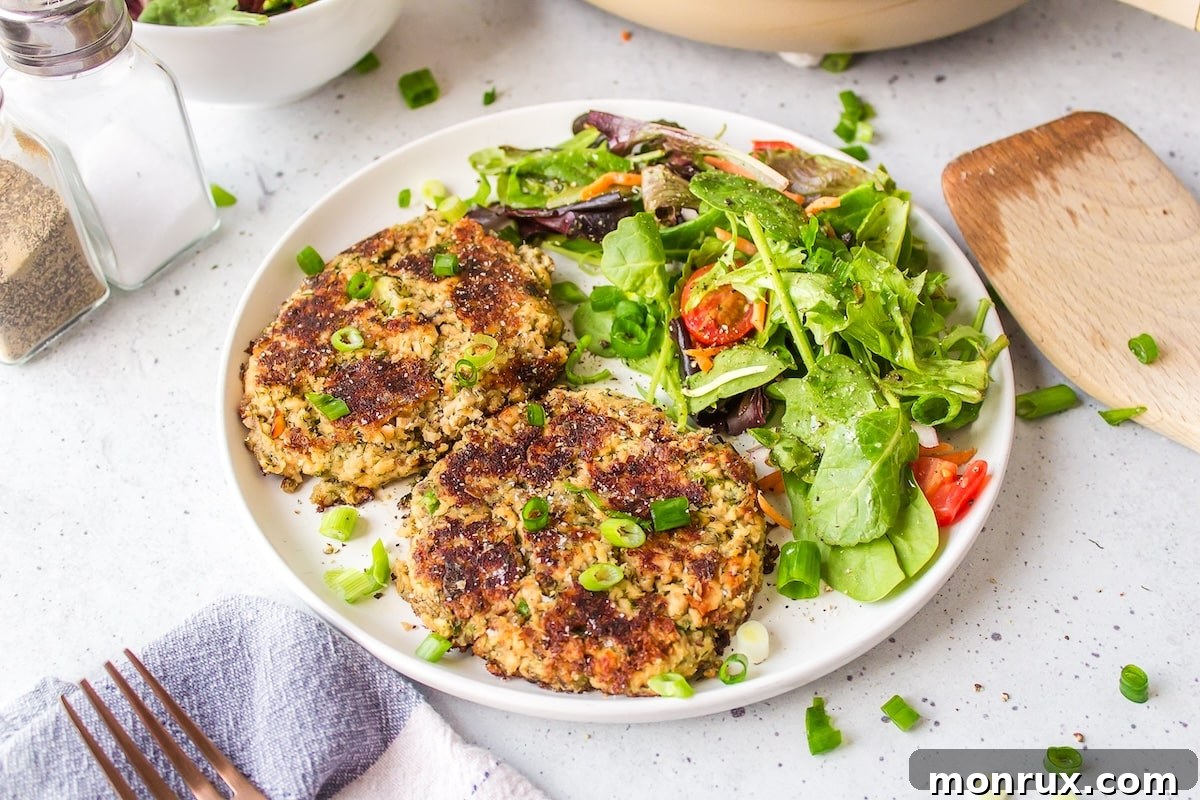
Transform your meal times with this incredibly easy and delectable recipe for Gluten-Free Salmon Cakes, featuring the convenience of canned salmon. Forget complicated cooking – simply open a few cans, combine with a handful of fresh ingredients, and pan-fry to achieve a perfectly golden, crispy crust. These savory patties are not just delicious; they’re a healthy and versatile alternative to traditional burgers, making them an ideal choice for a quick weeknight dinner or a special, lighter lunch. Serve them alongside a vibrant salad or your favorite roasted vegetables for a complete meal that will impress without the fuss.
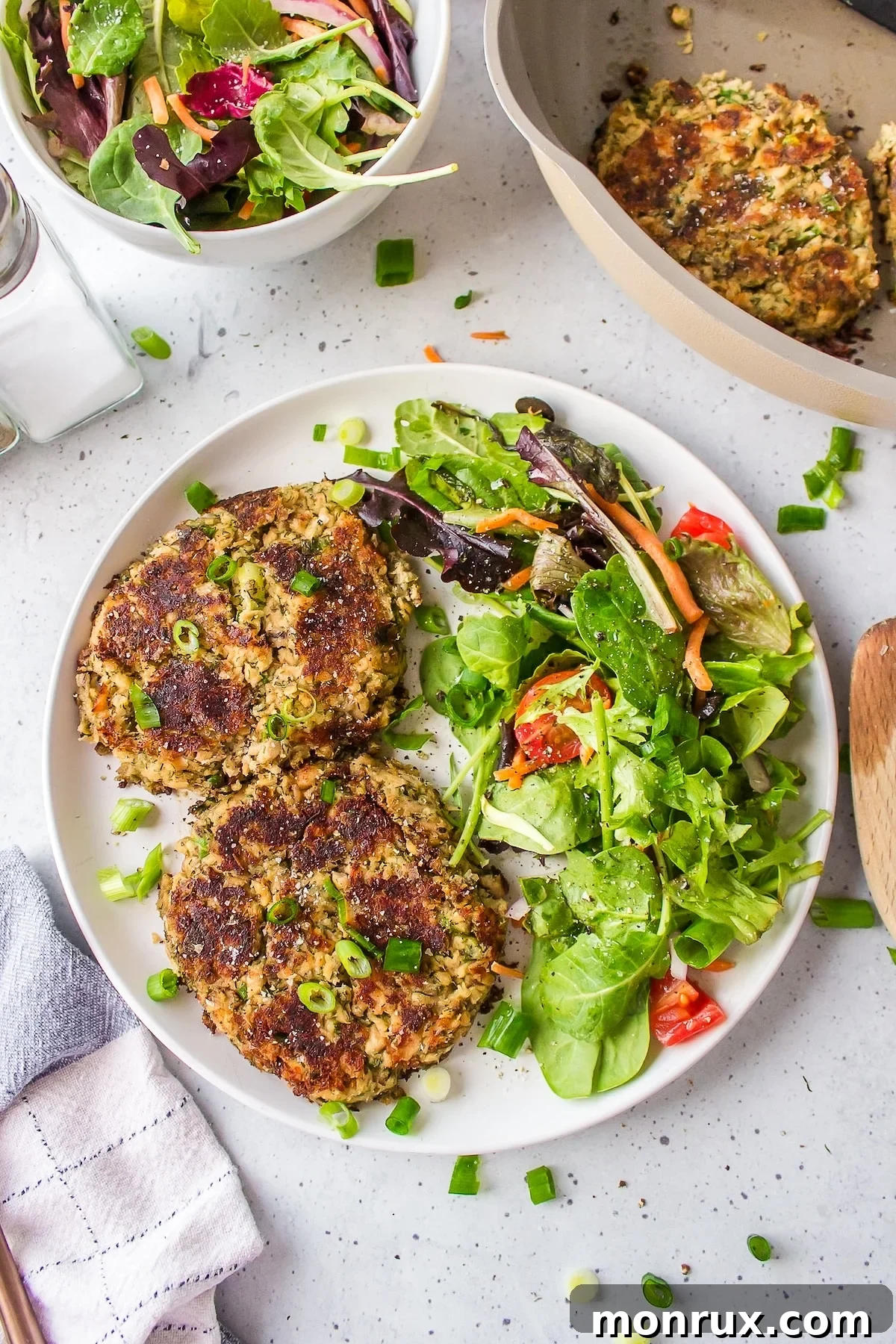
This recipe sets itself apart by being naturally egg-free and grain-free, utilizing nutrient-rich almond flour as a binder instead of conventional breadcrumbs. This thoughtful substitution not only caters to various dietary needs but also enhances the texture and flavor of the salmon cakes. Salmon itself is renowned as an exceptionally healthy food, brimming with essential omega-3 fatty acids, which are crucial for heart health and cognitive function. By opting for this homemade version, you ensure a meal that is both wholesome and incredibly satisfying.
So, the next time you’re searching for an easy salmon recipe that relies on simple, readily available ingredients, these delightful salmon patties are your answer. Their straightforward preparation means less time in the kitchen and more time enjoying a flavorful, home-cooked meal. Whether you pair them with a light salad, a medley of roasted seasonal vegetables, or even tuck them into a gluten-free bun, these salmon cakes are guaranteed to be a hit at any table.
Why You Need This Recipe: Effortless, Healthy & Delicious
- Gourmet Taste, Home-Cooked Price: These Salmon Cakes offer the elegance and flavor of a restaurant-quality meal without the hefty price tag. Utilizing readily available canned salmon, you can create a sophisticated dish right in your own kitchen, saving money while indulging in premium taste. The bonus? You’ll enjoy a healthier, homemade version crafted with only the finest ingredients, giving you complete control over what goes into your body.
- Diet-Friendly and Inclusive: This recipe is thoughtfully designed to be both dairy-free and gluten-free, making it an excellent main course that accommodates a wide array of dietary needs and lifestyles. Whether you’re managing allergies, following a specific eating plan, or simply seeking wholesome options, these salmon cakes fit the bill. For another equally delightful and convenient salmon dish, you might also enjoy my Crockpot Salmon recipe.
- The Perfect Weeknight Solution: Juggling a busy schedule doesn’t mean sacrificing delicious, special meals. This recipe is specifically tailored for those hectic evenings when you still want to serve something impressive and nutritious. By leveraging canned salmon, your total preparation and cooking time is significantly reduced, often to under an hour. This efficiency makes it an ideal choice for a satisfying and quick weeknight dinner that doesn’t compromise on flavor or health benefits.
The Abundant Health Benefits of Salmon
Beyond its incredible taste and versatility, salmon is a nutritional powerhouse that offers a wealth of health benefits, making these salmon cakes a smart choice for your diet:
- Rich in Omega-3 Fatty Acids: Salmon is one of the best sources of long-chain omega-3 fatty acids, EPA and DHA, which are crucial for brain function, reducing inflammation, and supporting heart health. These essential fats can lower blood pressure, reduce triglycerides, and decrease the risk of heart disease.
- Excellent Source of Protein: Each serving provides a substantial amount of high-quality protein, essential for muscle repair, growth, and overall body function. Protein also helps you feel full and satisfied, aiding in weight management.
- Packed with Vitamins and Minerals: Salmon is a fantastic source of B vitamins (B3, B5, B6, B9, B12), which play vital roles in energy production and nervous system function. It also contains significant amounts of potassium, selenium, and vitamin D, all crucial for bone health, immune function, and thyroid regulation.
- Antioxidant Properties: The vibrant pink hue of salmon comes from astaxanthin, a powerful antioxidant that has been linked to reducing the risk of heart disease, improving skin elasticity, and protecting against oxidative stress.
- Supports Bone Health: With a good supply of Vitamin D and calcium (especially when consuming canned salmon with bones, which can be easily mashed and incorporated), salmon contributes to strong bones and teeth.
Incorporating salmon into your diet through simple and tasty recipes like these gluten-free salmon cakes is a delicious way to boost your overall health and well-being.
Essential Ingredients for Perfect Salmon Cakes
Crafting these delicious salmon cakes requires just a few key ingredients, each playing a vital role in achieving that perfect flavor and texture. Here’s a closer look at what you’ll need:
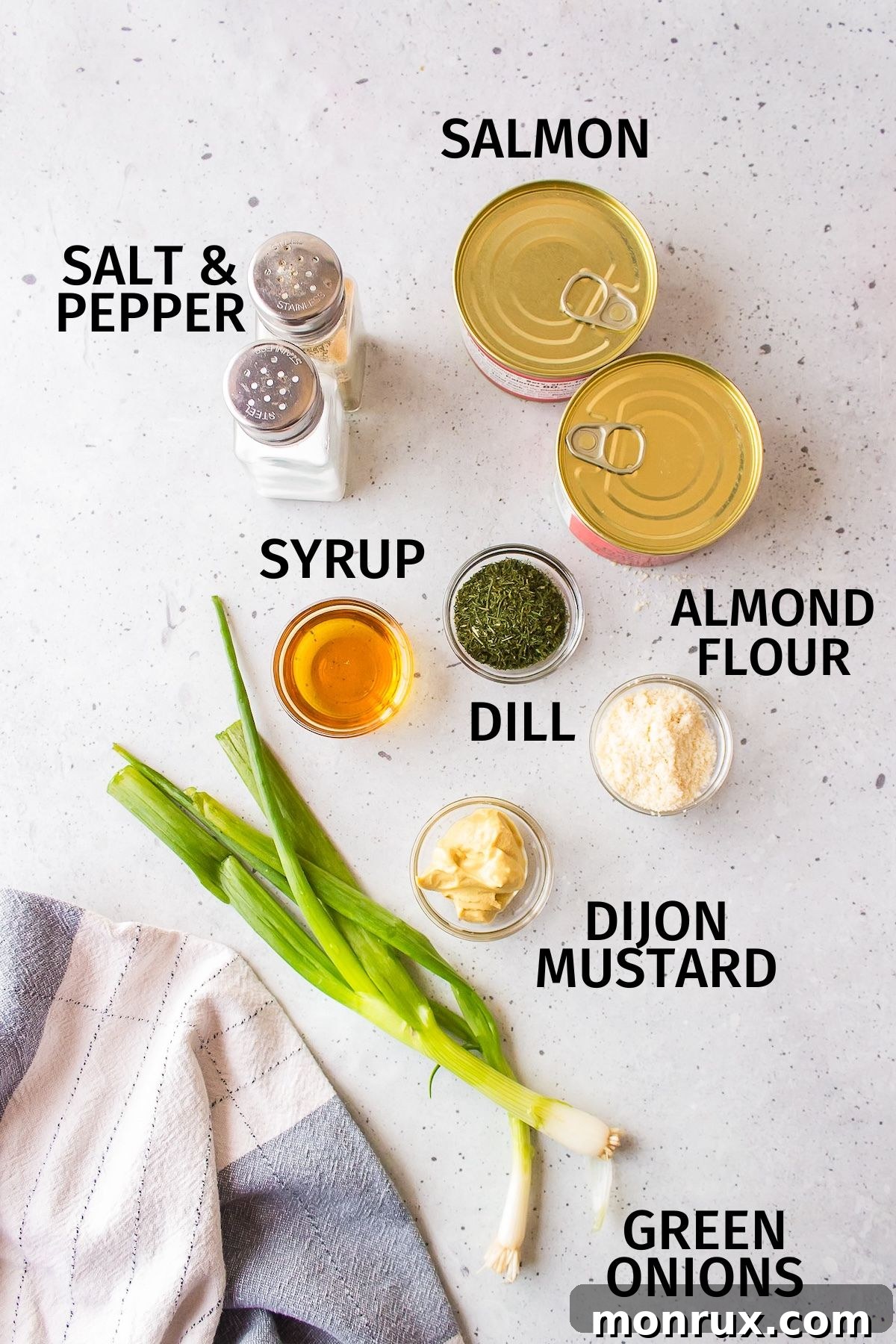
- Canned Salmon: This is the hero ingredient that dramatically reduces prep time. Canned salmon comes pre-cooked and flaked, ready to be incorporated into your mixture. Don’t worry, despite its convenience, this recipe yields a flavor profile so rich, your guests will think you spent hours in the kitchen! For the best quality and environmental responsibility, I highly recommend using a sustainable brand like Wild Planet. Opt for boneless and skinless varieties if preferred, or mash in the soft bones for an extra calcium boost.
- Almond Flour: Serving as the essential binding agent, almond flour ensures that your savory seasonings and hearty salmon hold together beautifully during cooking. It’s a fantastic gluten-free and grain-free alternative to traditional breadcrumbs, making these cakes suitable for various dietary restrictions while adding a subtle nutty flavor and tender texture. Ensure you use blanched, fine almond flour for the best results.
- Maple Syrup: A touch of pure maple syrup introduces a delightful, subtle sweetness that perfectly balances the savory notes of the green onions and the piquant kick of Dijon mustard. While optional for those strictly following sugar-free or Whole30 diets, it truly elevates the overall flavor profile.
- Fresh or Dried Dill: Dill provides a signature savory and fresh flavor with delicate sweet and earthy undertones. It’s a classic pairing with salmon, enhancing its natural taste. Fresh dill will offer a more vibrant aroma and flavor, but dried dill works perfectly well for convenience.
- Dijon Mustard: This ingredient adds a tangy, sharp, and slightly spicy note that beautifully complements the sweetness of the maple syrup and the freshness of the dill. It also contributes to the overall moisture and binding of the patties.
- Green Onions (Scallions): Finely sliced green onions provide a mild onion flavor and a fresh, crisp texture that brightens the salmon cakes without being overpowering. They also add a pop of color.
- Sea Salt: Essential for enhancing all the other flavors, sea salt brings out the best in the salmon and seasonings. Adjust to your personal preference.
- Coconut Oil (for frying): Used to pan-fry the salmon cakes, coconut oil offers a high smoke point and imparts a faint, pleasant tropical aroma. You can also use avocado oil or olive oil if preferred.
For precise measurements of each ingredient, please refer to the comprehensive recipe card located at the very end of this post.
Versatile Recipe Substitutions and Customization Ideas
One of the beauties of these salmon cakes is their adaptability. Feel free to experiment with these substitutions to suit your taste preferences or dietary needs:
- Flour Alternatives: If you prefer to use coconut flour instead of almond flour, proceed with caution as coconut flour is highly absorbent. Start with just one tablespoon, mixing it thoroughly. Then, add up to another teaspoon gradually until you achieve the desired consistency for forming your salmon patties. It’s crucial not to add too much, or your patties might become dry. For a deeper dive into flour alternatives, see my article on the best substitutes for almond flour.
- Binder Alternatives: If you don’t have almond flour, gluten-free breadcrumbs (ensure they are grain-free if needed) can also be used as a binder. For an egg-free option, a “flax egg” (1 tablespoon ground flaxseed mixed with 3 tablespoons water, allowed to sit for 5 minutes) can sometimes work, though the almond flour in this recipe already acts as a great binder.
- Sauce Pairings: While delicious on their own, these paleo salmon cakes are wonderfully complemented by a variety of sauces. Tartar sauce is a classic accompaniment; just be sure to check the label on any store-bought versions to ensure the ingredients align with your dietary requirements. A squeeze of fresh lemon juice is always a refreshing addition, brightening the flavors. Other great options include a simple garlic aioli, a creamy avocado sauce, or a quick homemade lemon-dill yogurt sauce (if dairy is allowed).
- Seasoning Variations: The seasoning profile can be easily adapted to your liking. Don’t hesitate to include a pinch of black pepper, a dash of garlic powder, onion powder, a sprinkle of smoked paprika for depth, or even a tiny pinch of cayenne pepper for a subtle kick. Fresh parsley or chives can also be added for extra herbaceous notes.
- Herb Swaps: Not a fan of dill? Try fresh parsley, chives, or even a mix of herbs like cilantro and a squeeze of lime for a different flavor profile.
- Vegetable Add-ins: For added nutrients and texture, finely diced bell peppers, grated zucchini (ensure it’s well-squeezed to remove excess moisture), or finely chopped celery can be folded into the mixture.
Step-by-Step Guide to Making Perfect Gluten-Free Salmon Cakes
Creating these delicious gluten-free salmon cakes is straightforward and rewarding. Follow these simple steps for a perfect meal every time:
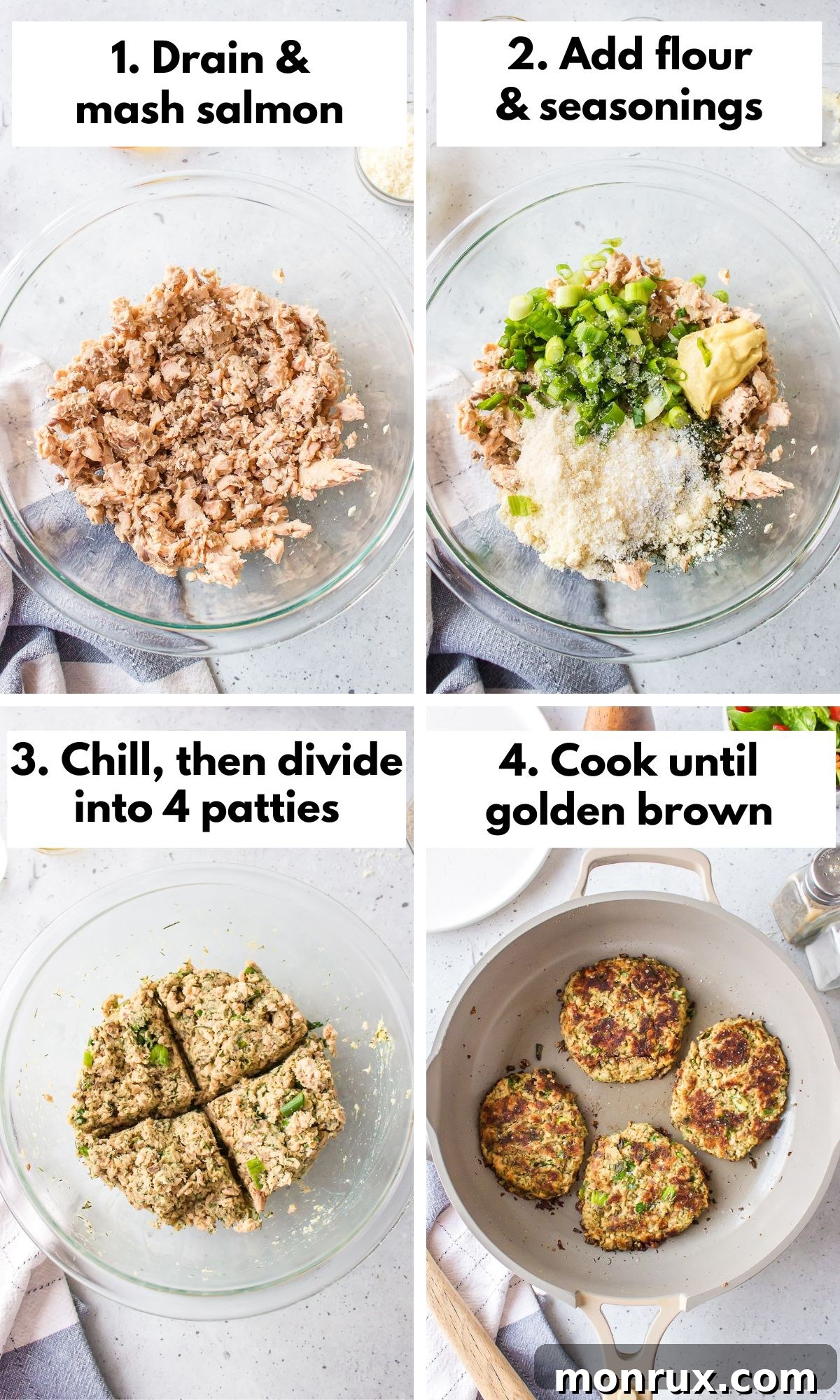
Step One: Prepare the Salmon Base
Begin by carefully opening the cans of salmon. It’s crucial to drain the salmon thoroughly to remove any excess liquid, which can lead to mushy patties. Once drained, transfer the salmon meat into a large mixing bowl. Use a fork to gently mash and break up the salmon into smaller, consistent flakes. This ensures an even texture throughout your patties. Removing any skin or bones is optional; if using salmon with soft bones, they can be easily mashed in for added calcium.
Please see the full recipe card at the end of this post for exact ingredients and measurements to ensure the best results.
Step Two: Mix and Chill the Patty Mixture
Into the bowl with the flaked salmon, add the remaining ingredients: maple syrup, dried dill, thinly sliced green onion, Dijon mustard, almond flour, and sea salt. Using your hands or a sturdy spoon, mix all the ingredients together thoroughly until everything is well combined and forms a cohesive mixture. Don’t overmix, but ensure all ingredients are evenly distributed. Once mixed, form the entire mixture into a ball, cover the bowl with plastic wrap or a lid, and place it in the refrigerator to chill for at least 30 minutes. This chilling step is vital as it allows the almond flour to absorb moisture and helps the patties hold their shape better during cooking, preventing them from falling apart.
Step Three: Form Patties and Heat Skillet
While the salmon mixture is chilling, prepare your cooking station. Heat one tablespoon of coconut oil (or your preferred frying oil like avocado or olive oil) in a large skillet over medium heat. You want the oil to be shimmering but not smoking. A medium heat setting ensures the patties cook evenly, developing a beautiful golden-brown crust without burning. Once the salmon mixture has chilled, remove it from the refrigerator. Divide the mixture into four equal portions. Using your hands, gently shape each portion into a flat, round patty, about 1/2 to 3/4 inch thick. Don’t press too firmly; just enough to make them compact.
Step Four: Pan-Fry to Golden Perfection
Carefully place each salmon patty into the heated skillet, ensuring not to overcrowd the pan. Cook the salmon patties for approximately 5-6 minutes on each side. You’re looking for a beautiful golden-brown crust to form, indicating they are crispy on the outside and heated through on the inside. Only flip them once to maintain their shape. Once both sides are golden and the patties are cooked through, remove them from the skillet and place them on a plate lined with a paper towel to absorb any excess oil. Serve them hot and enjoy immediately!
I am confident you’ll agree that this easy recipe is the perfect solution for an effortless, yet incredibly satisfying, weeknight dinner that the whole family will love.
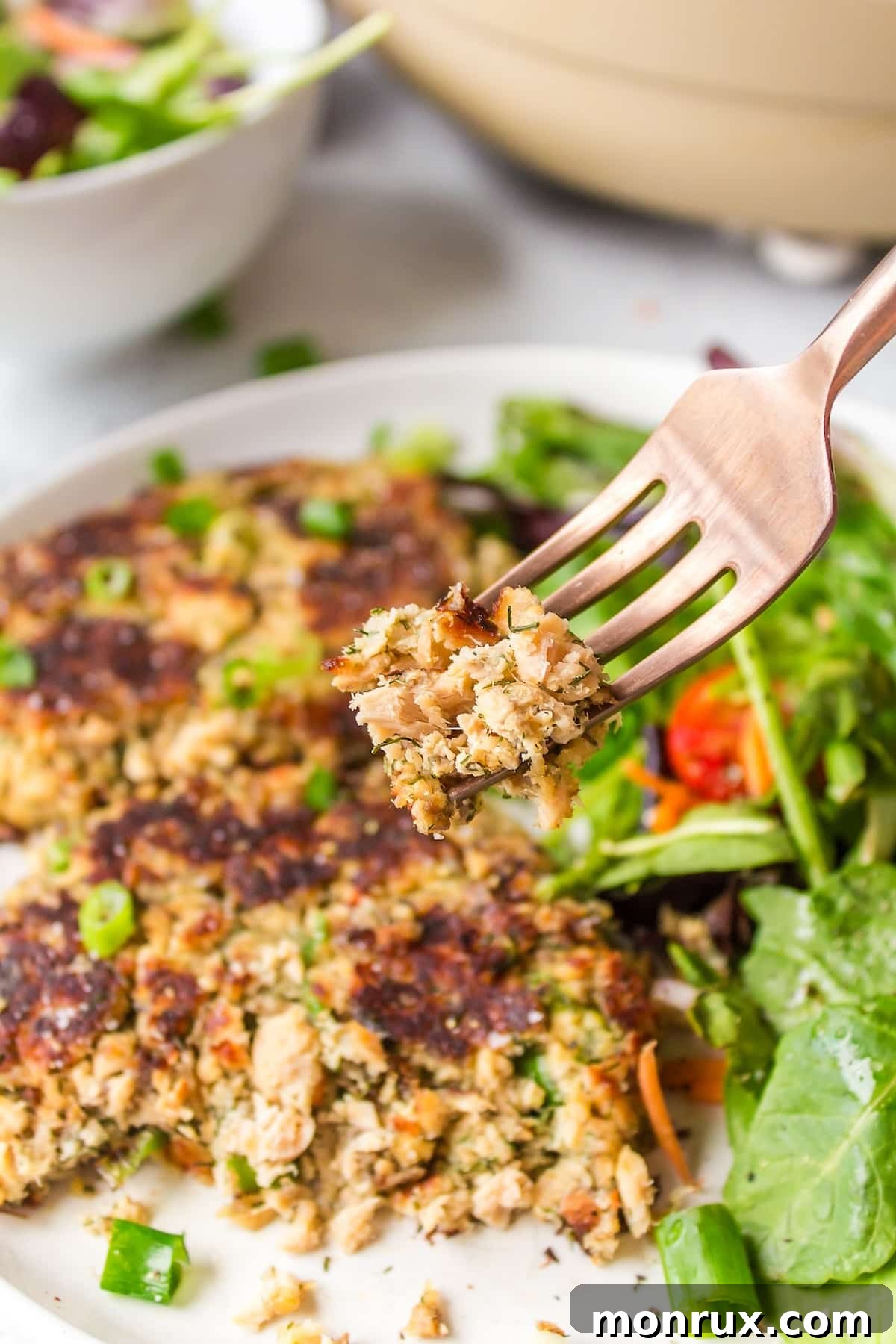
Expert Tips for Salmon Cake Success
To ensure your gluten-free salmon cakes turn out perfectly every time, keep these valuable tips in mind:
- Batch Cooking & Doubling the Recipe: This recipe is easily doubled or tripled if you’re cooking for a larger crowd or planning for meal prep. However, to achieve the best results and ensure proper browning, you may need to cook the patties in two or more batches. Overcrowding the skillet can lower the oil temperature, leading to steamed rather than crispy patties.
- Optimal Storage for Leftovers: Any leftover salmon cakes should be stored promptly in an airtight container in the refrigerator. They will remain fresh and delicious for up to 4 days. When ready to serve again, you can reheat them gently in a skillet, in the oven, or even in an air fryer until warmed through. They are also quite tasty served at room temperature, making them excellent for packed lunches.
- Choosing the Best Canned Salmon: For superior flavor and texture, I always recommend using wild salmon, particularly sockeye salmon, if you can find it. Wild-caught varieties tend to have a richer flavor and firmer texture compared to farmed salmon. Look for canned versions that specify “wild-caught” at your local grocery store or order them online. While boneless and skinless options are convenient, don’t shy away from cans that include bones – they are soft and easily mashable, providing an excellent source of calcium and other minerals.
- Freezing for Future Meals: These salmon cakes freeze beautifully! You can freeze them raw or cooked.
- To freeze raw patties: Form the patties, then arrange them in a single layer on a parchment-lined baking sheet. Freeze until solid, then transfer them to a freezer-safe bag or container, separating layers with parchment paper. Thaw in the refrigerator before cooking.
- To freeze cooked patties: Allow the cooked patties to cool completely. Wrap each patty individually in plastic wrap, then place them in a freezer-safe bag or container. They can be frozen for up to 2-3 months. Reheat from frozen in a preheated oven or air fryer until hot and crispy.
- Don’t Skimp on Chilling Time: The 30 minutes of chilling time for the mixture in the refrigerator is not optional. It’s a crucial step that allows the almond flour to fully absorb moisture, which in turn helps the patties bind together and prevents them from crumbling during frying. If you skip this step, you risk your patties falling apart in the skillet.
- Achieving the Perfect Crust: Ensure your skillet is adequately heated and the oil is shimmering before adding the patties. Don’t overcrowd the pan, as this can drop the temperature and prevent a good sear. Once placed in the pan, resist the urge to move them until it’s time to flip. This allows a golden, crispy crust to form uninterrupted.
Frequently Asked Questions (FAQs)
Absolutely, you can use fresh salmon, though this specific recipe was developed and tested using the convenience of canned salmon. If you opt for fresh salmon, you’ll need to cook it first. Lightly coat your salmon fillets in a bit of oil, season them, and then bake at 425°F (220°C) for 10-14 minutes, or until cooked through and easily flaked. Alternatively, you can pan-sear or grill the fresh salmon. Be sure to allow the cooked salmon to cool completely before flaking it into small pieces and proceeding with the recipe. Using leftover cooked salmon is also a fantastic way to utilize it in this recipe.
To ensure your salmon patties hold their shape beautifully and don’t fall apart, a good binding agent is key. In this recipe, almond flour serves that purpose perfectly. Other effective binders include gluten-free breadcrumbs or, if your diet allows, a beaten egg. Additionally, a crucial step often overlooked is chilling the mixture. Refrigerating the formed patties for at least 30 minutes before cooking allows the binder to hydrate and the fats to firm up, significantly helping them maintain their structure during frying.
Mushy salmon patties are typically a result of too much moisture in the mixture or an insufficient amount of binder. To prevent this, ensure you thoroughly drain your canned salmon, pressing out any excess liquid before adding it to the bowl. If using fresh salmon, ensure it’s not overcooked, which can release more moisture. Secondly, make sure you add enough binding agent, like almond flour or gluten-free breadcrumbs, to absorb moisture and create a firm, workable mixture. Chilling the patties also helps to set them, preventing mushiness and ensuring they cook with a crisp exterior.
Yes, absolutely! While pan-frying gives a wonderful crispy crust, these salmon cakes can also be baked or air-fried for a slightly different texture and less oil.
- Air Fryer: Preheat your air fryer to 375°F (190°C). Lightly spray the patties with cooking oil. Cook for 10-14 minutes, flipping halfway through, until golden brown and cooked through.
- Oven: Preheat your oven to 400°F (200°C). Arrange the patties on a parchment-lined baking sheet. Bake for 15-20 minutes, flipping halfway, until golden and firm.
These versatile salmon cakes pair wonderfully with a variety of sides. Beyond a simple green salad, consider serving them with roasted asparagus, steamed broccoli, a quinoa pilaf, or even sweet potato fries. For a refreshing touch, a dollop of homemade avocado crema or a vibrant mango salsa can elevate the flavors. They can also be enjoyed as a “burger” in a gluten-free bun with your favorite toppings.
More Delicious Seafood Recipes You Might Like
If you’re a fan of healthy and flavorful seafood, be sure to explore these other fantastic recipes:
- Creamy Coconut Shrimp: An exotic and rich dish that comes together quickly.
- Air Fryer Baked Salmon: Perfect for perfectly cooked salmon with minimal effort.
- Salmon Stir-Fry with Vegetables: A colorful and nutritious one-pan meal.
- Air Fryer Mahi Mahi with Mango Salsa: A light and tropical dish that’s bursting with flavor.
I truly hope you give this recipe a try! If you do, please leave a comment and a starred review below to let me know how you enjoyed it. Your feedback is greatly appreciated.
And, to stay connected and never miss out on new clean eating recipes and wellness tips, consider following me on social media. You can find me on Facebook, Pinterest, Instagram, and YouTube! Let’s build a community of healthy eaters together.
Print Recipe
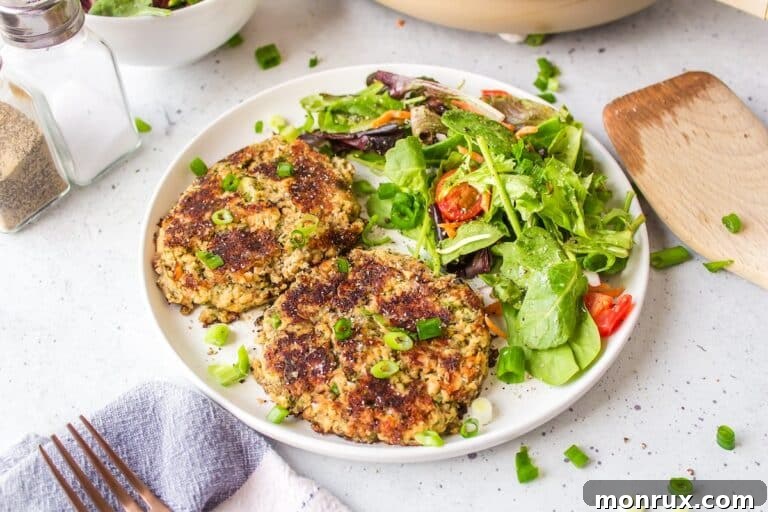
Gluten-Free Salmon Cakes Recipe
★
★
★
★
★
5 from 2 reviews
Meal time just got easier with this recipe for Gluten-Free Salmon Cakes using canned salmon. Simply open the cans of salmon, mix with a few ingredients, and pan-fry to create a golden-brown crust. Serve with a salad and enjoy!
- Total Time: 65 Minutes
- Yield: 4 Servings
Ingredients
- 2 five–ounce cans of wild-caught salmon (I like the skinless and boneless varieties)
- 1 teaspoon dried dill (feel free to use up to 1 tablespoon of fresh dill if you have it)
- 2 green onions, sliced thinly
- 1 teaspoon Dijon mustard
- 2 tablespoons almond flour
- 1/4 teaspoon sea salt
- 1 teaspoon maple syrup (feel free to leave out for sugar-free and Whole30 diets; I think it adds a nice flavor)
- 1 tablespoon coconut oil, for frying
Instructions
- Open the cans of salmon and drain thoroughly. Use a fork to put the drained salmon into a medium bowl. Use the fork to help mash and break up the salmon.
- Next, add the dill, green onion, mustard, almond flour, salt, and maple syrup to the salmon.
- Use your hands to form the mixture into a cohesive ball. Cover the bowl and place it in the refrigerator to chill for 30 minutes.
- After the mixture has set, heat 1 tablespoon of coconut oil in a medium skillet set over medium heat.
- Divide the salmon patty mixture into 4 equal portions and use your hands to shape them into uniform patties.
- Carefully place each patty into the heated skillet and cook for 5-6 minutes per side, flipping only once, until each side turns golden brown and crispy.
- Serve hot and enjoy immediately with your favorite sides.
Notes
- This recipe can be doubled to make more servings. You may need to cook the patties in two batches though to prevent overcrowding in the skillet and ensure even browning.
- Store any leftovers in an airtight container in the refrigerator for up to 4 days. Serve reheated gently in a skillet, oven, or air fryer, or at room temperature.
- Author: Carrie Forrest, MPH in Nutrition
- Prep Time: 20 Minutes
- Cook Time: 15 Minutes
- Category: Seafood
- Method: Stovetop
- Cuisine: Homemade
- Diet: Gluten Free, Dairy Free, Grain Free, Egg Free, Paleo
Nutrition
- Serving Size: 1 patty
- Calories: 157
- Sugar: 1.9 g
- Sodium: 484.6 mg
- Fat: 7.9 g
- Saturated Fat: 3.8 g
- Carbohydrates: 4 g
- Fiber: 1.4 g
- Cholesterol: 44.3 mg
Protein: 16.3 g
Don’t Miss These Other Fantastic Salmon Recipes!
Don’t forget to join my exclusive newsletter list to receive delicious clean eating recipes and invaluable wellness tips directly in your inbox. It’s 100% free, no spam ever, and you can easily unsubscribe anytime you wish. Stay updated on all the latest content to help you on your healthy eating journey!
About the Author: Carrie Forrest holds a master’s degree in public health with a specialization in nutrition and is a certified holistic nutritionist. She is the inspiring voice behind a top wellness and food blog, attracting over 5 million annual visitors. Carrie shares an incredible and personal story of recovery from chronic illness, a journey that fuels her passion for empowering other women to transform their health through wholesome eating. Feel free to send her a message through her dedicated contact form with any questions or comments.