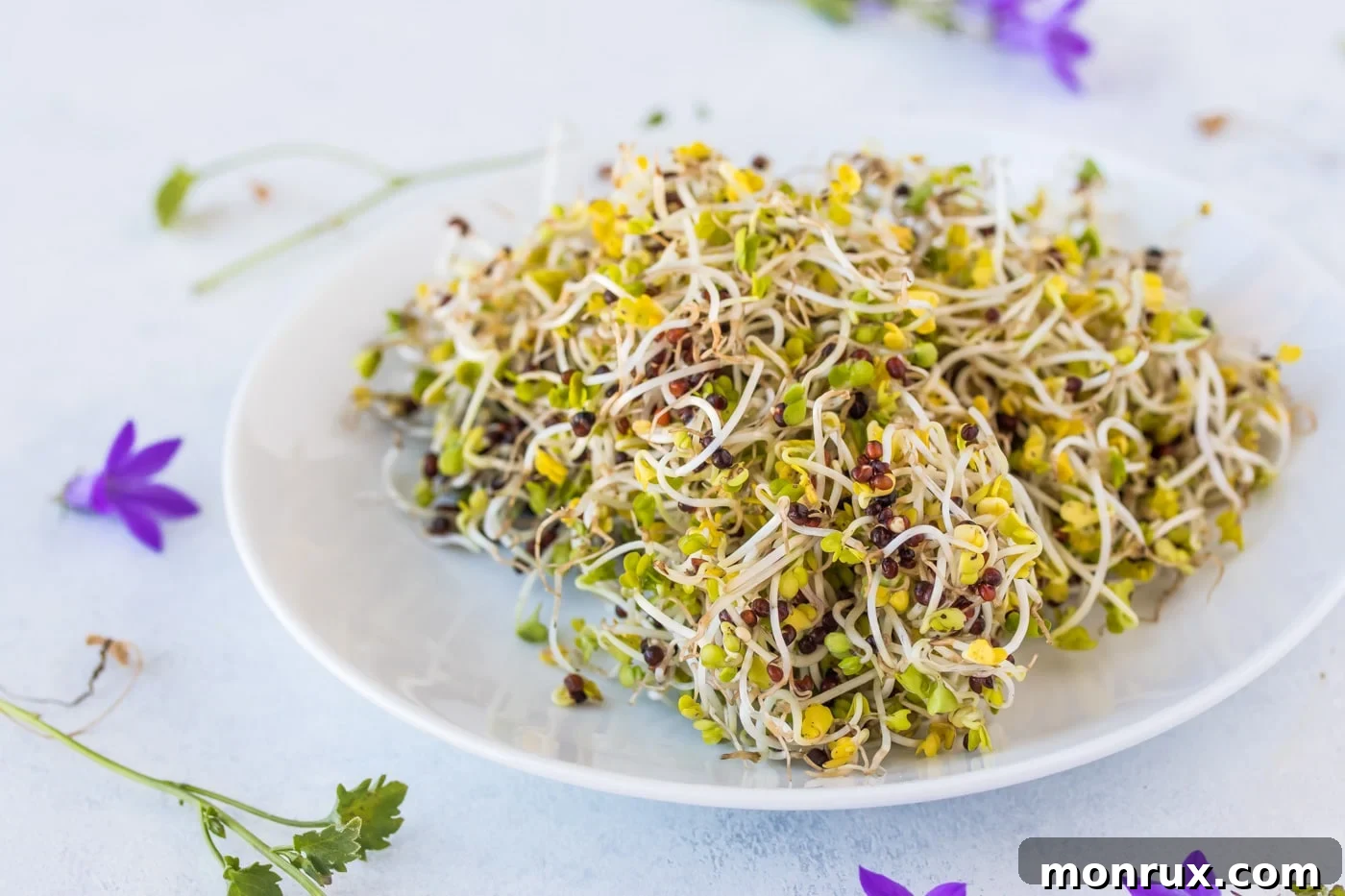
How to Grow Broccoli Sprouts: Your Ultimate Guide to DIY Superfood at Home
Unlock a world of nutrition and vibrant flavor by learning how to grow broccoli sprouts right in your own kitchen! This easy-to-follow, step-by-step guide will transform tiny seeds into a powerful superfood in just a few days, without needing any soil or gardening experience. Discover the simple process of cultivating fresh, crunchy sprouts in a jar on your kitchen countertop, providing you with a constant supply of one of nature’s most beneficial foods.
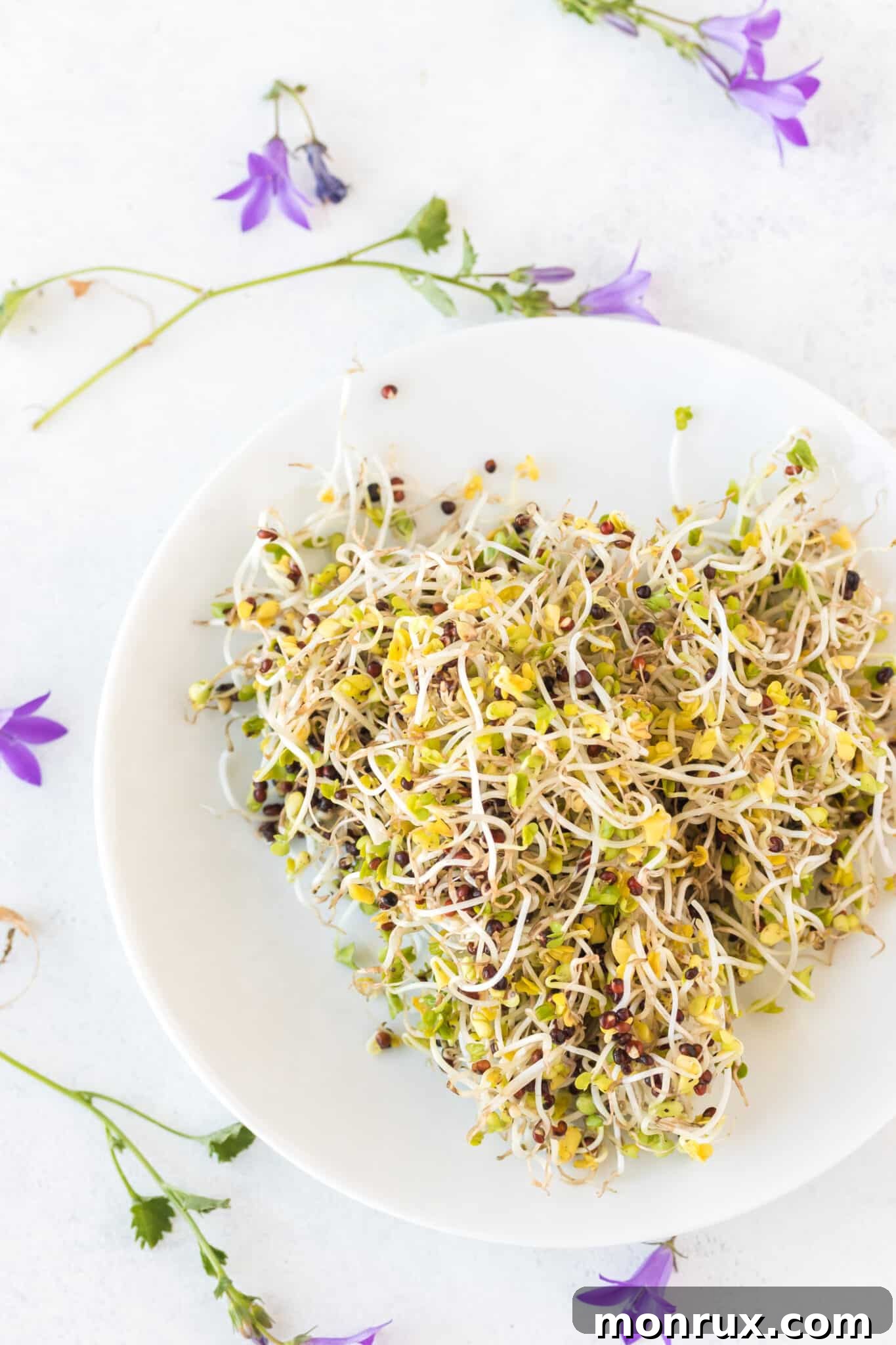
Even if you consider yourself to have anything but a green thumb, you can easily learn how to grow broccoli sprouts from broccoli seeds. It’s important to note that these nutrient-dense greens don’t come from a mature head of broccoli, but rather are sprouted directly from specialized broccoli seeds. Having personally cultivated broccoli sprouts for over a decade, I’m excited to share all my exclusive tips and a detailed guide to help you grow this incredibly healthy food effortlessly at home.
Why Grow Your Own Broccoli Sprouts? Unlocking Remarkable Health Benefits
Before we dive into the practical steps, let’s explore why homegrown broccoli sprouts are an indispensable addition to a healthy diet. Often celebrated as a “superfood,” these miniature greens are an exceptional source of powerful nutrients. They are particularly renowned for their high concentration of sulforaphane, a potent sulfur-rich compound found in cruciferous vegetables.
Compared to mature broccoli, young broccoli sprouts contain significantly higher levels of glucoraphanin, the precursor to sulforaphane. When chewed or chopped, glucoraphanin interacts with an enzyme called myrosinase to form sulforaphane, which then provides a wide array of health-promoting effects:
- Potent Antioxidant Activity: Sulforaphane acts as a powerful antioxidant, actively fighting against oxidative stress and protecting your cells from damage caused by free radicals. This can contribute to a reduced risk of chronic diseases.
- Enhanced Detoxification Pathways: Broccoli sprouts are celebrated for their ability to support the body’s natural detoxification systems. Sulforaphane stimulates enzymes that help neutralize and eliminate harmful toxins and carcinogens from the body.
- Anti-Inflammatory Properties: Research suggests that the compounds in broccoli sprouts can help modulate inflammatory responses, potentially offering relief and protection against inflammation-related conditions.
- Rich in Essential Vitamins and Minerals: Despite their small size, sprouts are packed with vital nutrients including vitamins C, K, and A, as well as an array of B vitamins, calcium, iron, and potassium.
- Supports Gut Health: The fiber content in broccoli sprouts contributes to healthy digestion and can promote a balanced gut microbiome, which is crucial for overall wellness.
- Budget-Friendly Nutrition: Once you invest in a bag of sprouting seeds, the cost per serving of homemade sprouts is dramatically lower than purchasing pre-grown sprouts from specialty health food stores.
- Unmatched Freshness and Purity: Growing your own ensures you have access to the freshest possible produce, harvested at its peak nutritional value. You also control the growing environment, opting for organic seeds and avoiding unwanted chemicals.
By cultivating your own broccoli sprouts, you’re not just saving money; you’re taking an active step towards a healthier lifestyle, enjoying a truly remarkable food with unparalleled freshness and potency.
Essential Equipment You’ll Need for Successful Sprouting
Embarking on your home sprouting journey is surprisingly simple and requires minimal investment. You can easily bypass the often-expensive sprouts found at farmer’s markets or health food stores by learning to grow your own. This will save you money and ensure a consistent supply of fresh, edible broccoli sprouts always at your fingertips. Here’s a breakdown of the simple equipment you’ll need to get started:
1. The Ideal Sprouting Vessel
The method you choose for sprouting largely dictates the type of vessel you’ll use. For broccoli sprouts, a glass jar system is by far the most popular and beginner-friendly:
- Mason Jar with a Strainer Lid: This is the most straightforward and widely recommended approach for home sprouters. A standard wide-mouth Mason jar combined with a specialized sprouting lid (typically a mesh screen) provides excellent drainage and airflow, which are crucial for preventing mold and promoting healthy growth. These lids are durable, reusable, and simplify the rinsing process.
- Cheesecloth as an Alternative: If you’re looking for a budget-friendly or immediate solution, a piece of clean cheesecloth secured over the top of your Mason jar with a rubber band works effectively. Ensure the weave of the cheesecloth is tight enough to retain the small seeds but still allows for sufficient water drainage and air circulation.
- Dedicated Glass Sprouting Jar: Another excellent option is an all-in-one glass sprouting jar with an integrated draining lid and often a stand. These are designed for optimal drainage angles and consistent airflow, making the process even more convenient. Glass is preferred for its non-reactive properties and ease of sterilization.
- Sprouting Trays (for larger batches): While more commonly used for microgreens, some multi-tiered sprouting trays can also be adapted for broccoli sprouts, especially if you plan to grow very large quantities. However, for most home users, a jar method is more manageable and sufficient.
2. High-Quality Broccoli Sprouting Seeds
The foundation of successful sprouting lies in selecting the right seeds. You’ll need to purchase seeds specifically intended for sprouting, available online or at most reputable health food stores and gardening centers.
- “For Sprouting” Label is Key: Always ensure the seeds are explicitly labeled “for sprouting” or “sprouting seeds.” These seeds are specifically grown and processed for human consumption as sprouts and are typically tested for pathogens like E. coli and Salmonella. Avoid using regular garden seeds, as they may be treated with fungicides or other chemicals unsuitable for consumption.
- Organic Preference: My strong recommendation is to purchase organic broccoli seeds. This guarantees that your sprouts are free from pesticides, herbicides, and are non-GMO, aligning with a clean eating philosophy.
- Non-Organic, GMO-Free Options: If organic seeds are outside your budget, ensure you choose non-organic seeds that are certified GMO-free and explicitly safe for sprouting.
- Recommended Quantity: For a typical batch, approximately 1 to 2 tablespoons of dry broccoli seeds will yield a generous amount, usually about one cup of fresh, fully grown sprouts. It’s advisable to start with a smaller quantity for your first attempt to familiarize yourself with the process.
Step-by-Step Guide: Effortlessly Grow Nutrient-Dense Broccoli Sprouts
Cultivating your own broccoli sprouts is both incredibly easy and remarkably cost-effective. By following these clear, concise steps, you’ll soon have a thriving batch of superfood greens ready for your healthy recipes.
Step One: Prepare and Soak Your Broccoli Seeds
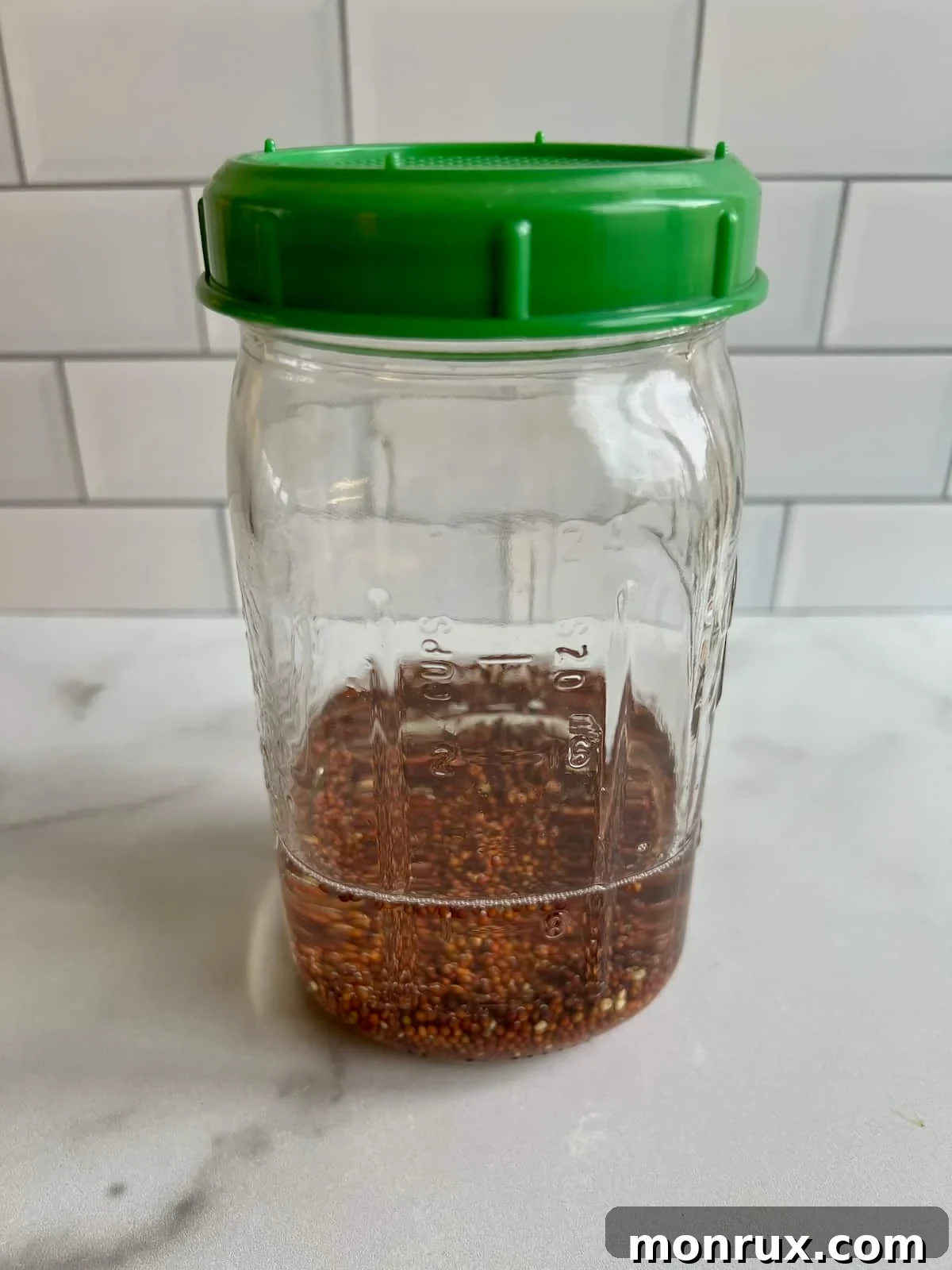
The initial phase involves hydrating your seeds, which signals to them that it’s time to emerge from dormancy and begin the germination process. This also helps to soften the seed coat, allowing the tiny sprout to break through more easily.
- Measure Seeds: Place 1-2 tablespoons of your chosen broccoli sprouting seeds into your clean Mason jar or dedicated sprouting vessel.
- Add Water: Fill the jar with cool, filtered water, ensuring all the seeds are completely submerged. Leave plenty of space in the jar, as the seeds will swell slightly.
- Soak Time: Allow the seeds to soak for 6 to 12 hours. Soaking them overnight is often the most convenient schedule. Avoid soaking for much longer than 12 hours, as prolonged submersion can lead to anaerobic conditions and hinder proper germination.
Step Two: Rinse, Drain Thoroughly, and Initiate Sprouting
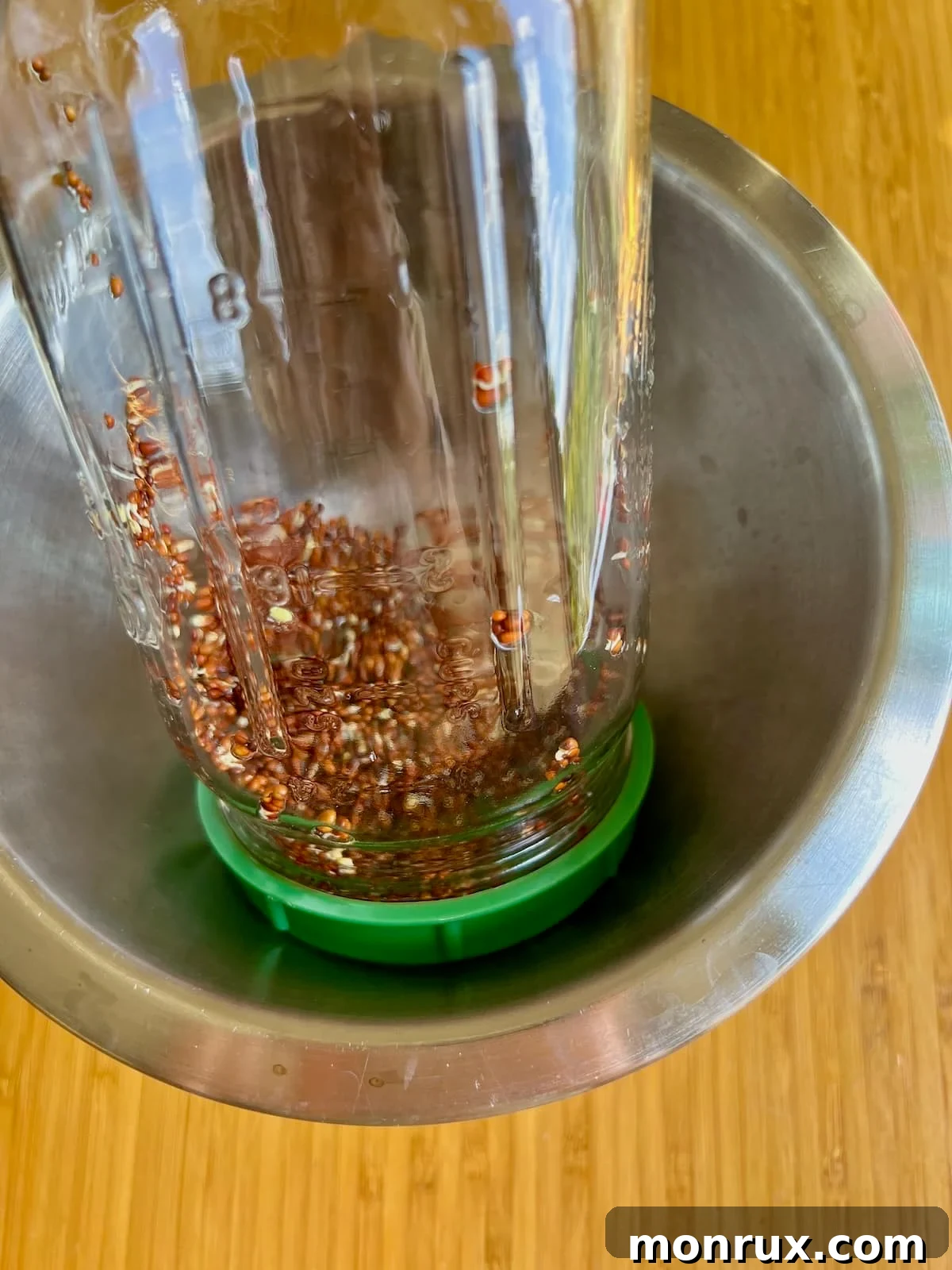
After their initial soak, the seeds are ready to begin actively sprouting. This phase focuses on maintaining optimal moisture levels without over-saturating, and providing the necessary environment for initial growth.
- Initial Drain: After the soaking period, drain all the water from the jar through your sprouting lid or cheesecloth.
- First Rinse: Rinse the seeds thoroughly with cool, fresh water. Gently swirl the jar to ensure all seeds are washed and any mucilage (gel-like substance) is removed.
- Crucial Drainage: This step is vital. Drain the water completely from the jar. Excess moisture is the primary cause of mold and spoilage. Shake the jar vigorously to dislodge as much residual water as possible.
- Inverted Storage: Invert the sprouting vessel and place it at an angle. You can prop it in a large bowl, a dish drying rack, or a specialized stand. This ensures any remaining water can continuously drain away and promotes excellent air circulation.
- Dark Environment: Store the inverted jar in a cool, dark place for the next 24 to 48 hours. A pantry, a closed kitchen cabinet, or a drawer works perfectly. Darkness encourages the initial root development and prevents premature greening.
Step Three: Consistent Rinsing, Draining, and Light Exposure
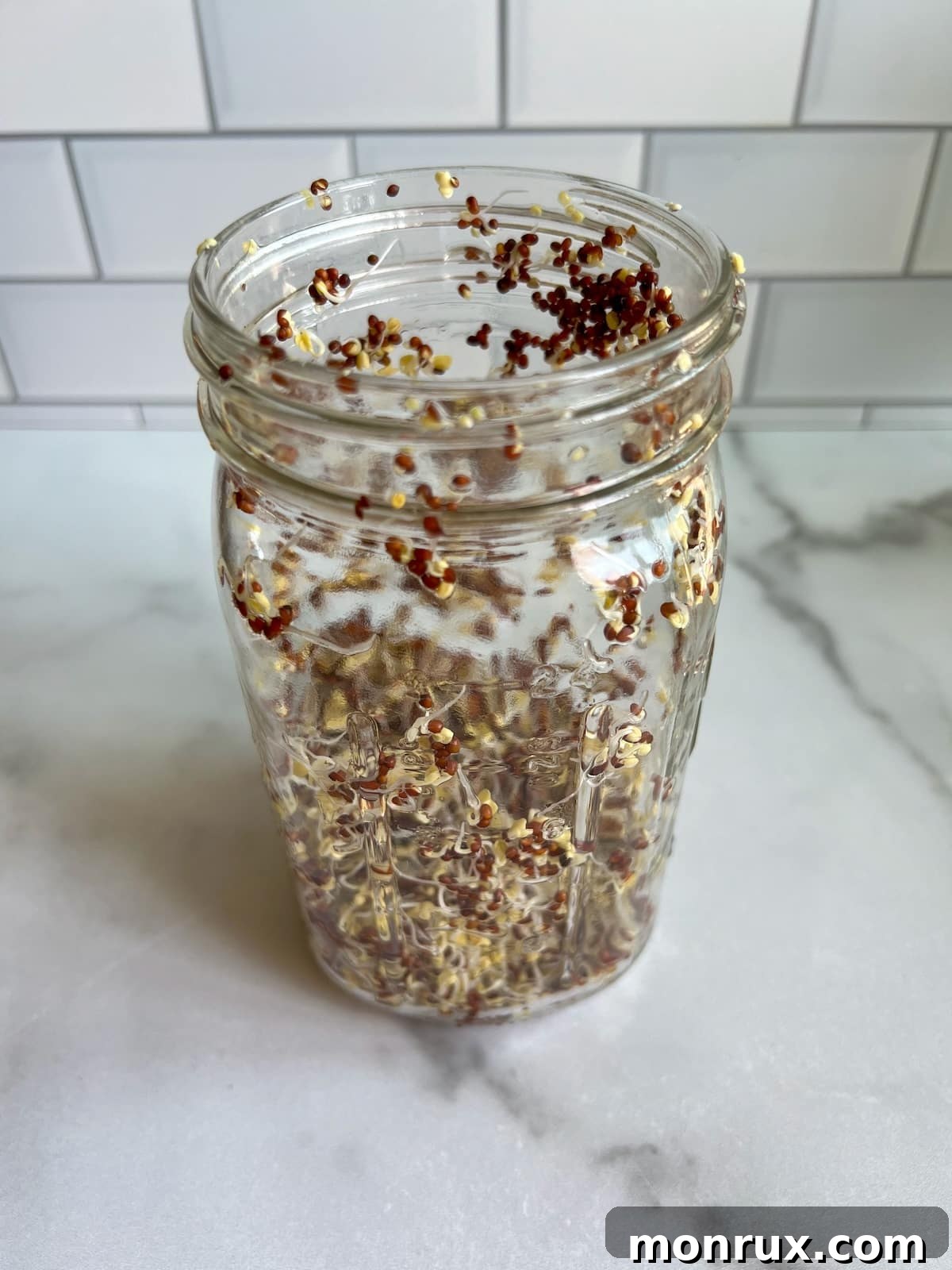
This is the most active and crucial phase for successful sprout development. Regular rinsing not only provides necessary hydration but also cleanses the sprouts, preventing bacterial growth, while controlled light exposure helps them develop their vibrant color and nutritional potency.
- Daily Rinsing Schedule: For the next 2 to 4 days (until harvest), you must rinse your sprouts at least 2 to 3 times a day with fresh, cool water. Morning, midday, and evening rinses are highly recommended. Skipping this step can lead to dehydration or, more commonly, bacterial growth and spoilage.
- Thorough Draining: After each rinse, drain the water meticulously and return the jar to its inverted, angled position. Consistency in drainage and airflow is key to preventing problems.
- Introducing Light (Day 4 or 5): Around Day 4 or 5, when your sprouts have grown to about a half-inch to a full-inch in length and you can see tiny green leaves beginning to emerge, it’s time to introduce them to indirect sunlight.
- Indirect Sunlight Exposure: Move the sprouting vessel out of its dark storage and place it in an area with bright, indirect light for approximately 12 to 24 hours. Avoid direct, harsh sunlight, which can overheat and dry out the delicate sprouts. This exposure to light is essential for the sprouts to develop chlorophyll, giving them their desirable vibrant green color and further boosting their nutritional value, especially their antioxidant content.
Step Four: Harvest, Proper Storage, and Enjoyment
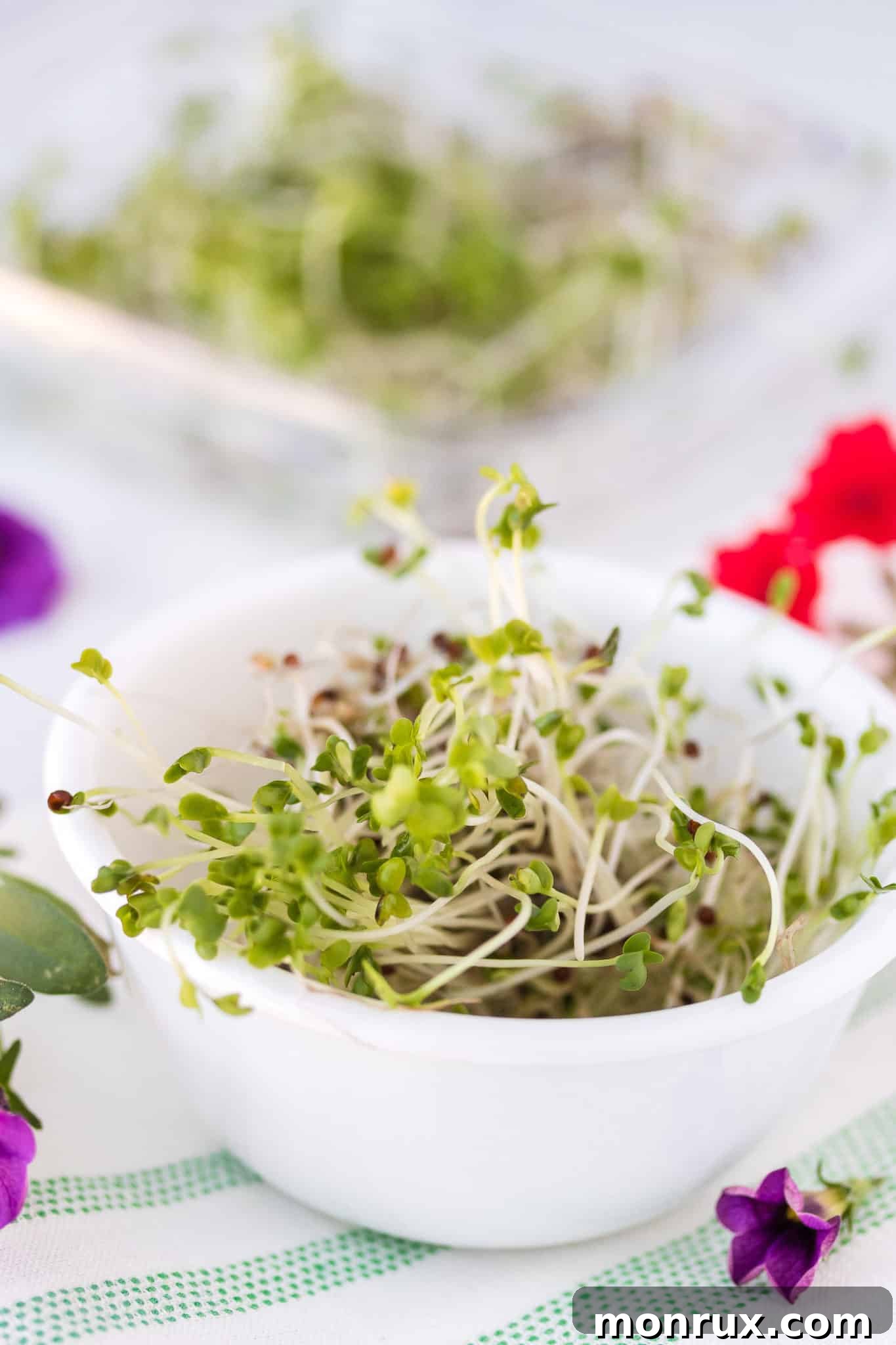
Your patience and care have paid off! Your nutritious superfood sprouts are now fully grown and ready to be enjoyed. The final steps focus on harvesting and proper storage to maximize their freshness and shelf life.
- Harvest Readiness (Day 5-6): By Day 5, or sometimes Day 6, your broccoli sprouts should be fully grown, displaying a vibrant green color, and emitting a fresh, slightly peppery aroma. They should have developed small cotyledon leaves.
- Final Rinse & Drain: Give your sprouts one final, thorough rinse with cool water. This is crucial for cleansing any lingering seed hulls or potential residues.
- Ensure Dryness: After the final rinse, drain the sprouts exceptionally well. Ensuring they are as dry as possible before storage is critical for preventing premature spoilage. You can use a salad spinner to gently dry them or spread them out on clean paper towels and pat them dry.
- Storage: Transfer the thoroughly dried sprouts into a clean airtight container, such as a glass bowl with a lid or a reusable food storage bag.
- Refrigeration: Store your fresh, homegrown broccoli sprouts in the refrigerator. They will typically remain fresh and crisp for up to 5 to 7 days.
- Yield: Remember that 1 to 2 tablespoons of dry broccoli seeds will typically yield approximately one cup of fresh, edible sprouts – a significant return for minimal effort!
Sprouting FAQs: Addressing Your Common Concerns
As you embark on your sprouting adventure, you might encounter a few questions or observations. Here are answers to some of the most frequently asked questions to ensure your sprouting journey is smooth and successful:
This is one of the most common concerns for new sprouters, and thankfully, it’s usually a good sign! The little white fuzzy parts you see are typically not mold, but rather tiny root hairs, also known as “fibrils.” These delicate hairs grow from the root of the sprout and help increase its surface area for efficient water absorption. They are a perfectly normal indication of healthy, actively growing sprouts.
True mold, on the other hand, usually appears as a darker, slimy, or cobweb-like patch, often accompanied by a distinct sour, musty, or unpleasant odor. Always trust your senses: if your sprouts smell anything other than fresh and slightly peppery, it’s best to discard them. While rare with proper rinsing and drainage, mold can occur, especially in overly humid environments or if drainage is insufficient. If in doubt, err on the side of caution.
Important Health Note: Consuming raw sprouts carries a small inherent risk of foodborne illness. Individuals with compromised immune systems, pregnant women, young children, and the elderly should exercise caution or avoid raw sprouts altogether. It is always advisable to consult with your healthcare provider if you have any concerns about whether consuming sprouts is safe for your individual health situation.
From the initial soaking of the seeds to the point of harvest, the entire process for growing broccoli sprouts typically takes about 3.5 to 5 days. This timeframe includes the initial 6-12 hour soaking period, followed by approximately 3-4 days of active sprouting with consistent rinsing. Factors such as ambient room temperature can influence the growth rate; sprouts generally grow faster in warmer climates, though this also means you’ll need to be even more diligent with your rinsing to prevent any unwanted bacterial growth.
Once your broccoli sprouts are fully grown and harvested, their freshness can be extended with proper storage. After thoroughly drying them (which is key!), transfer them to an airtight container and store them in the refrigerator. Under these conditions, your fresh sprouts will typically remain good for about 5 to 7 days. Any residual moisture can significantly shorten their shelf life, so ensure they are as dry as possible before refrigeration.
Broccoli sprouts boast a distinctly fresh, crisp, and slightly peppery flavor. Many describe their taste as a milder, less bitter version of mature broccoli, often with a pleasant, zesty kick. Their delicate crunch and unique taste make them a delightful and versatile addition to a wide range of dishes. If you’re looking for creative ways to incorporate them into your meals, explore my detailed guide on 6 Delicious Ways to Eat Broccoli Sprouts.
Delicious Ways to Incorporate Broccoli Sprouts into Your Daily Diet
Now that you’ve successfully cultivated a fresh batch of nutrient-rich broccoli sprouts, the fun part begins: enjoying them! Their mild, peppery flavor and satisfying crunch make them incredibly versatile for enhancing a variety of dishes. Here are some popular and delicious ways to integrate your homegrown superfood into your meals:
- Elevate Salads and Sandwiches: Sprinkle a generous handful of sprouts over any salad for added texture and a nutrient boost. Layer them into your favorite sandwiches, wraps, or pitas to instantly upgrade their nutritional profile and add a fresh, zesty flavor.
- Boost Your Smoothies: Blend broccoli sprouts into your morning fruit or vegetable smoothies. Their flavor is subtle enough that they won’t overpower other ingredients, yet you’ll benefit from all their health-promoting compounds, especially sulforaphane.
- Garnish for Soups and Stews: Add a fresh garnish of sprouts to hot soups, hearty stews, or chili just before serving. The heat will lightly soften them, and they’ll provide a lovely fresh contrast and a pop of color.
- Topping for Tacos and Bowls: Use them as a vibrant topping for tacos, nachos, Buddha bowls, grain bowls, or even stir-fries once they’ve been removed from the heat.
- Enhance Avocado Toast: Take your classic avocado toast to the next level by piling on a generous layer of fresh, crisp broccoli sprouts for an extra layer of flavor and unparalleled nutrition.
- Fold into Eggs: Gently fold sprouts into scrambled eggs or use them as a fresh topping for omelets, frittatas, or breakfast burritos.
- Fresh Juices: Incorporate them into your homemade vegetable juices for a concentrated dose of their unique health benefits.
Experiment with these suggestions and find your favorite ways to enjoy your delicious, homegrown superfood!
Print Recipe
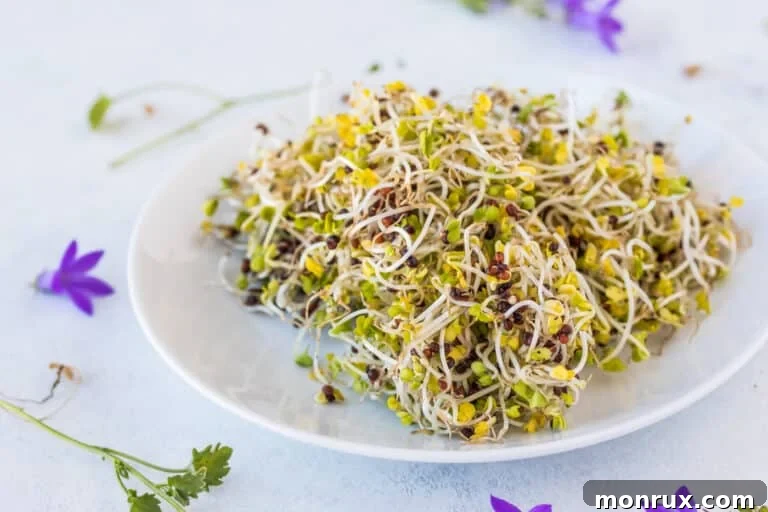
How to Grow Broccoli Sprouts Recipe
This comprehensive guide offers an easy, step-by-step method for growing nutrient-packed broccoli sprouts from seeds right at home. Enjoy your own supply of this powerful superfood!
- Total Time: 120 hours 5 minutes (Approx. 5 days)
- Yield: Approx. 1 cup of sprouts
Ingredients
- 2 tablespoons organic broccoli sprouting seeds
- Filtered water (for soaking and daily rinsing)
Instructions
- Soak Seeds: Place 2 tablespoons of broccoli seeds in a clean Mason jar. Cover with cool, filtered water and let soak for 6-12 hours (e.g., overnight).
- Rinse & Drain (Initial): After soaking, drain the water thoroughly. Rinse the seeds with fresh water, then drain completely again. Store the jar upside down at an angle (in a bowl or dish rack) in a dark, cool place (pantry or cabinet) for 24-48 hours.
- Daily Rinsing & Dark Storage: For the next 2-4 days, rinse the sprouts 2-3 times daily with cool water. After each rinse, drain thoroughly and return the jar to its upside-down, angled position in the dark.
- Introduce Light: Once sprouts are 1/2-1 inch long and show tiny green leaves (around day 4 or 5), move the jar to a spot with bright, indirect sunlight for 12-24 hours to develop vibrant green color.
- Harvest: When sprouts are fully green and reach desired length (typically by day 5), give them one final thorough rinse and drain exceptionally well.
- Dry & Store: Dry harvested sprouts using a salad spinner or by gently patting with paper towels. Transfer to an airtight container and store in the refrigerator for up to 5-7 days.
Notes
- Allow for approximately 3.5 to 5 days total for growing and harvesting your broccoli sprouts, including soaking time.
- Always ensure complete drainage after rinsing to prevent mold and bacterial growth. Storing the jar upside down and angled is crucial for this.
- It is essential to buy seeds specifically labeled “for sprouting” to ensure they are safe for consumption and have a high germination rate.
- If your sprouts develop a sour smell or show visible signs of dark, slimy mold, it is always best to discard them. Your nose is your best guide.
- Pregnant individuals, young children, the elderly, and anyone with a compromised immune system should consult their healthcare provider before consuming raw sprouts due to potential foodborne illness risks.
- Author: Carrie Forrest, MPH in Nutrition
- Prep Time: 5 minutes
- Grow Time: 5 days
- Category: Healthy Side Dish
- Method: Sprouting Jar
- Cuisine: Healthy, Vegan
- Diet: Vegetarian, Vegan, Gluten-Free
Nutrition
- Serving Size: 1 tablespoon
- Calories: 1
- Carbohydrates: 0.1 g
- Fiber: 0.1 g
- Protein: 0.1 g
- Note: Nutritional values are approximate and can vary.
Don’t Miss These Helpful Sprouting & Healthy Eating Resources!
Eager to explore more about microgreens, sprouts, or how to integrate them into a healthy lifestyle? Dive into these valuable resources from our site:
Don’t forget to join my newsletter list to receive exclusive clean eating recipes and valuable health tips directly to your inbox. It’s 100% free, spam-free, and you can unsubscribe at any time!
About the Author
Carrie Forrest, MPH in Nutrition, is a highly respected certified holistic nutritionist and a prominent wellness and food blogger, with her site attracting over 5 million annual visitors. Carrie shares an inspiring personal narrative of recovery from chronic illness and is fervently dedicated to guiding other women on their journey to transform their health. You are welcome to connect with her through her contact form.
Disclaimer: This content is provided for informational purposes only and is not intended to be a substitute for professional medical advice, diagnosis, or treatment. Always seek the advice of your physician or other qualified health provider with any questions you may have regarding a medical condition.