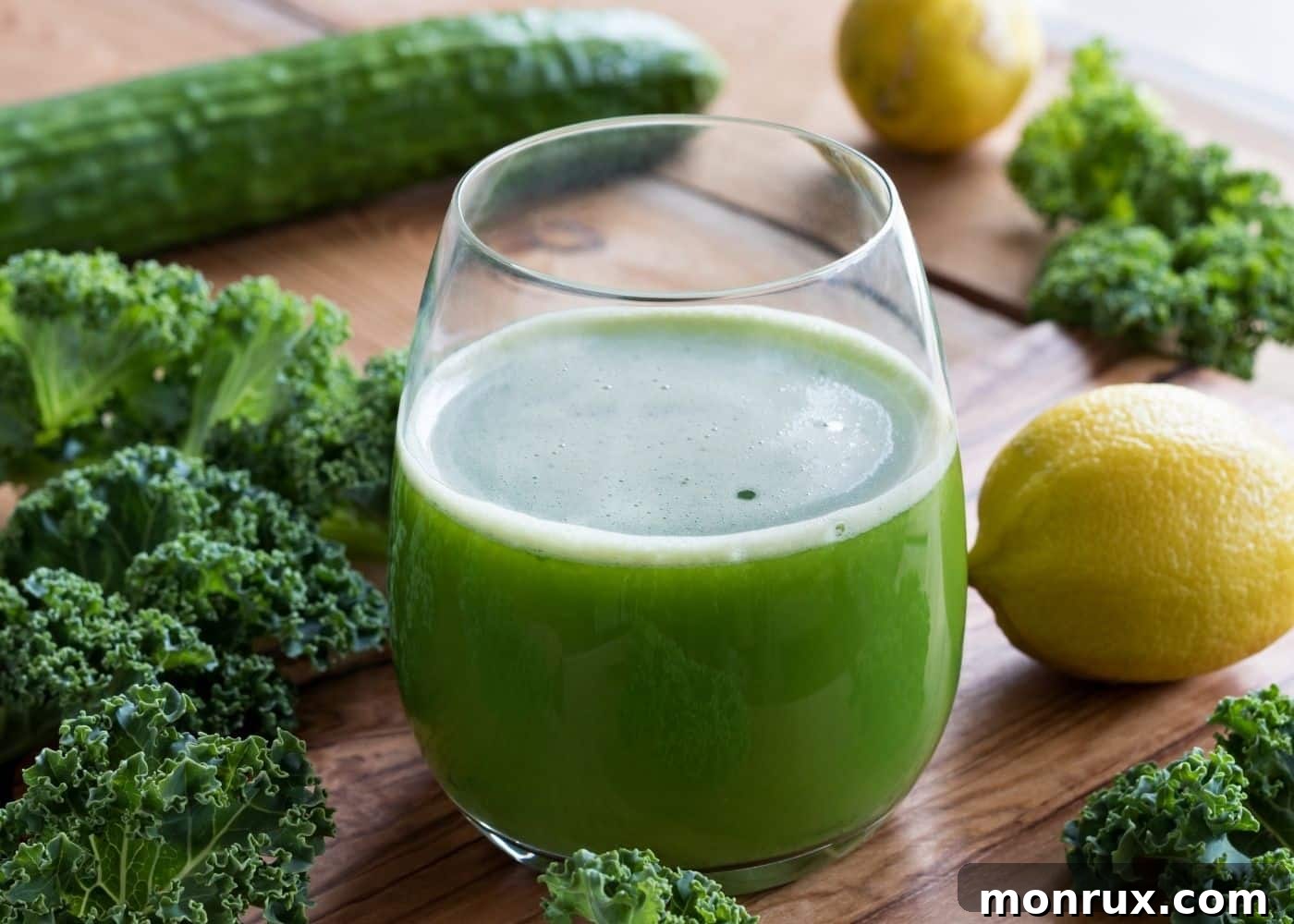
The Ultimate Healthy Kale Juice Recipe: Sweet, Fresh, and Nutrient-Packed
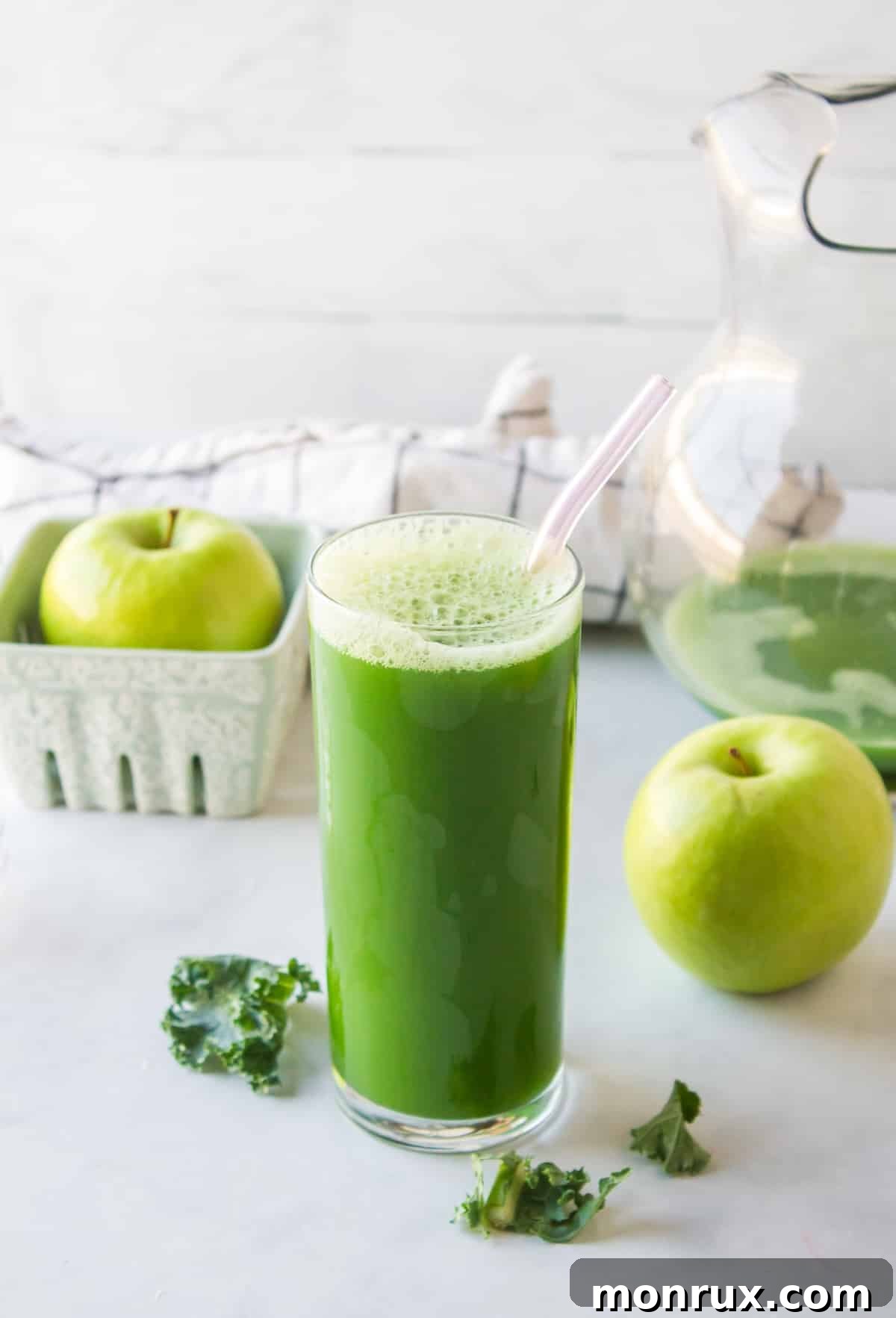
Discover the best kale juice recipe you’ll ever make! This incredibly fresh and invigorating green juice is expertly crafted to be subtly sweet, thanks to crisp apples, and brightened by the zesty notes of lemon and a hint of spicy ginger. It’s designed to be effortlessly delicious, masking any bitterness often associated with leafy greens. Whether you have a dedicated juicer or a powerful blender, this recipe provides clear instructions to create a vibrant, nutrient-dense drink that will become a staple in your healthy routine.
Kale, often celebrated as a superfood, holds a reputation for its robust, sometimes strong flavor, especially when consumed raw. However, when juiced, its natural essence mellows out considerably, becoming surprisingly mild and palatable. This carefully balanced recipe ensures that any potential bitterness from the kale leaves is skillfully blended away, harmonizing perfectly with the refreshing crispness of cucumber, the bright acidity of lemon, the warm spice of ginger, and the natural sweetness of apple. The result is a delightfully smooth, incredibly drinkable green juice that doesn’t compromise on flavor or nutritional value.
Drawing on over a decade of juicing experience, and backed by my qualifications as a certified holistic nutritionist with a master’s degree in public health, I consider this to be one of the finest nutrient-packed juice recipes available. It stands out among the many green juice recipes I’ve developed, specifically tailored to offer maximum benefits without the common “grassy” taste. This recipe is meticulously developed to make kale juice not just healthy, but genuinely bright, palatable, and incredibly drinkable. Let’s dive into how you can easily prepare this amazing beverage using either a juicer or a blender, transforming your approach to healthy hydration.
Key Ingredients for the Perfect Kale Juice
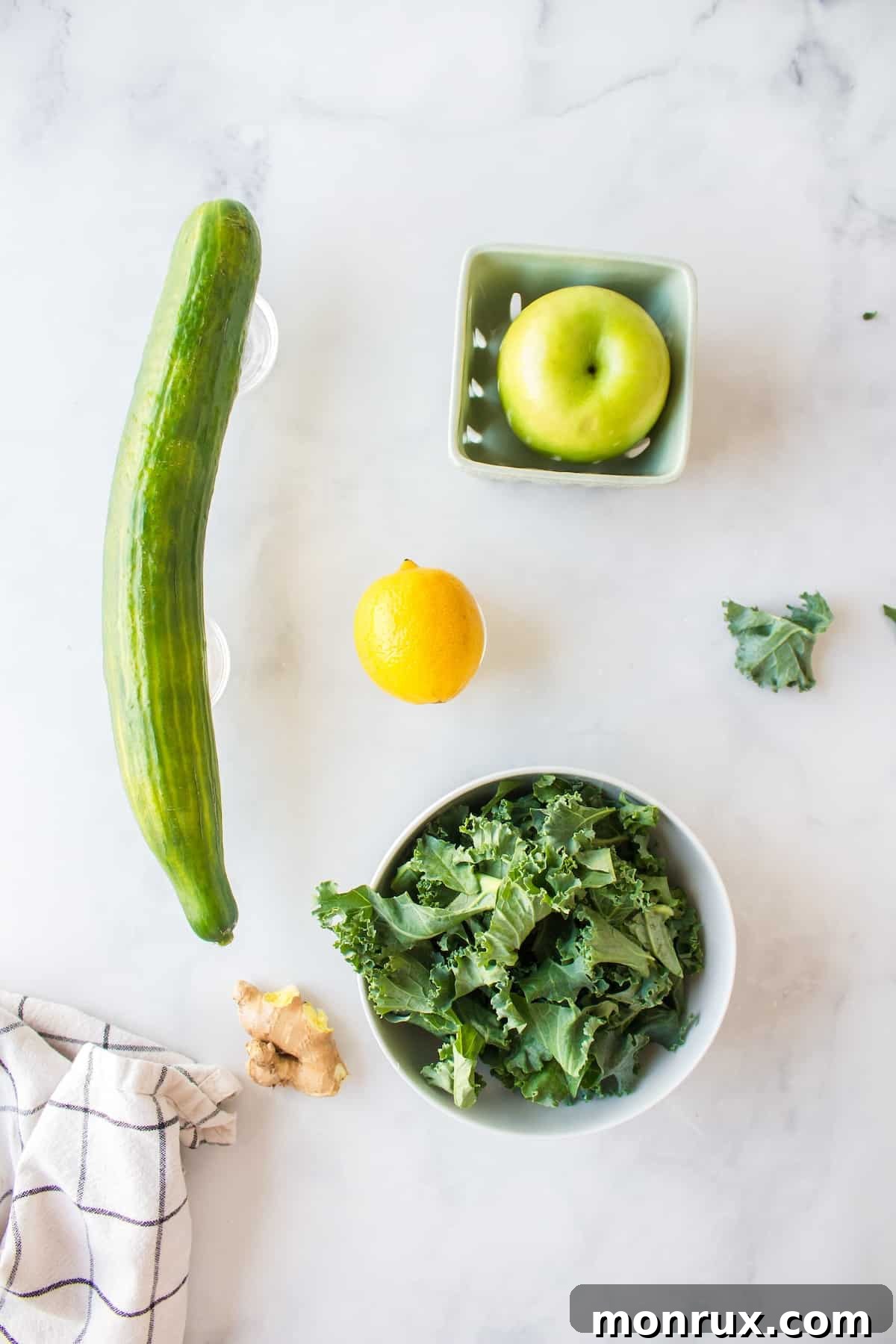
Crafting a kale juice that is both incredibly nutritious and deliciously palatable hinges on selecting the right combination of fresh ingredients. This recipe focuses on balancing the robust flavor of kale with elements that add sweetness, brightness, and hydration. Here are the recommended ingredients that ensure your kale juice isn’t overly “green” in flavor, but rather a delightful treat:
- Fresh Kale Leaves: The star of our show, fresh kale is abundant in vitamins K, A, and C, as well as important antioxidants. Its slightly earthy flavor is essential for a true green juice, and it’s on my list of the best vegetables to juice for its incredible health benefits. Aim for organic varieties whenever possible to minimize pesticide exposure.
- Cucumber: With its exceptionally high water content, cucumber is a fantastic addition to any juice. It significantly boosts the liquid volume of the juice, helping to dilute any strong or bitter notes from the kale. Beyond hydration, cucumbers provide essential electrolytes and a subtle, refreshing taste that truly brightens the overall profile.
- Lemon or Lime: Citrus fruits are vital for cutting through the richness of greens. Lemon or lime introduces a wonderful zing, adding a refreshing brightness and a generous dose of immune-boosting vitamin C. The acidity also plays a crucial role in balancing the flavors and enhancing the drinkability of the juice.
- Green Apple: To naturally sweeten the juice and counteract any lingering bitterness, a green apple is indispensable. Varieties like Granny Smith offer a perfect balance of tartness and sweetness, contributing natural sugars and additional vitamins while making the juice more appealing to a wider palate.
- Fresh Ginger: A small piece of fresh ginger adds a lively, spicy kick and a subtle warmth that elevates the flavor profile. Beyond its taste, ginger is well-known for its anti-inflammatory and digestive benefits, making it a powerful addition to this healthy elixir.
For the precise quantities and measurements of these incredible ingredients, please refer to the comprehensive recipe card located at the end of this post.
Step-by-Step Guide: Making Your Kale Juice
Creating your own fresh kale juice is a straightforward process, whether you opt for a juicer or a blender. Follow these simple steps to ensure you extract the maximum flavor and nutrients from your ingredients. Proper preparation is key to a delicious and smooth juice.
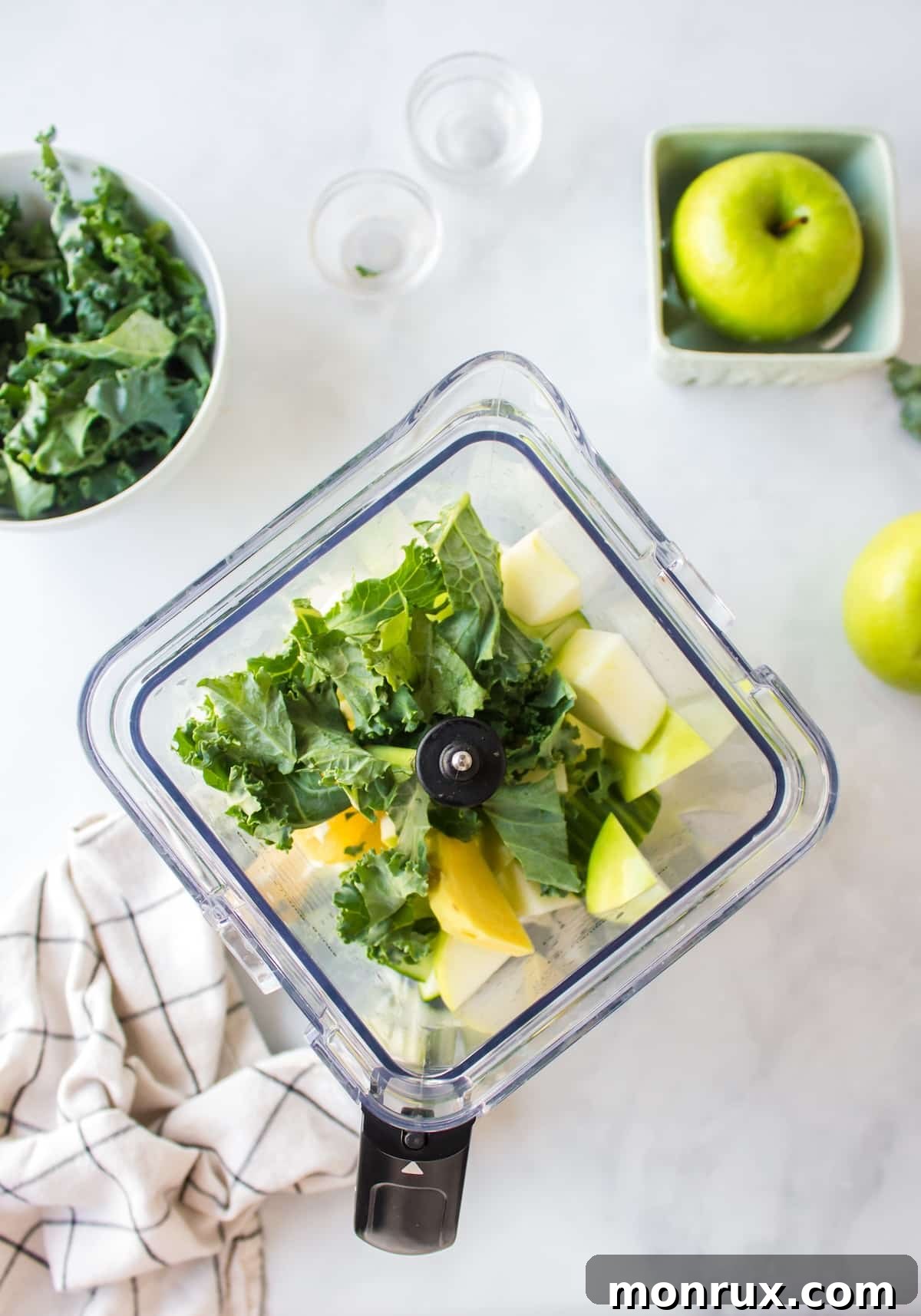
Step One: Prepare Your Produce. Begin by thoroughly washing all your fresh produce under cold running water. This ensures you remove any dirt or residues. Once clean, cut the cucumber and apple into pieces that are small enough to easily fit through the feeding tube of your juicer. If you plan to use a blender, simply chop the ingredients into manageable chunks, peel the lemon (to avoid excess bitterness from the pith), and roughly chop the ginger. Add all these prepared ingredients into the pitcher of your high-speed blender.
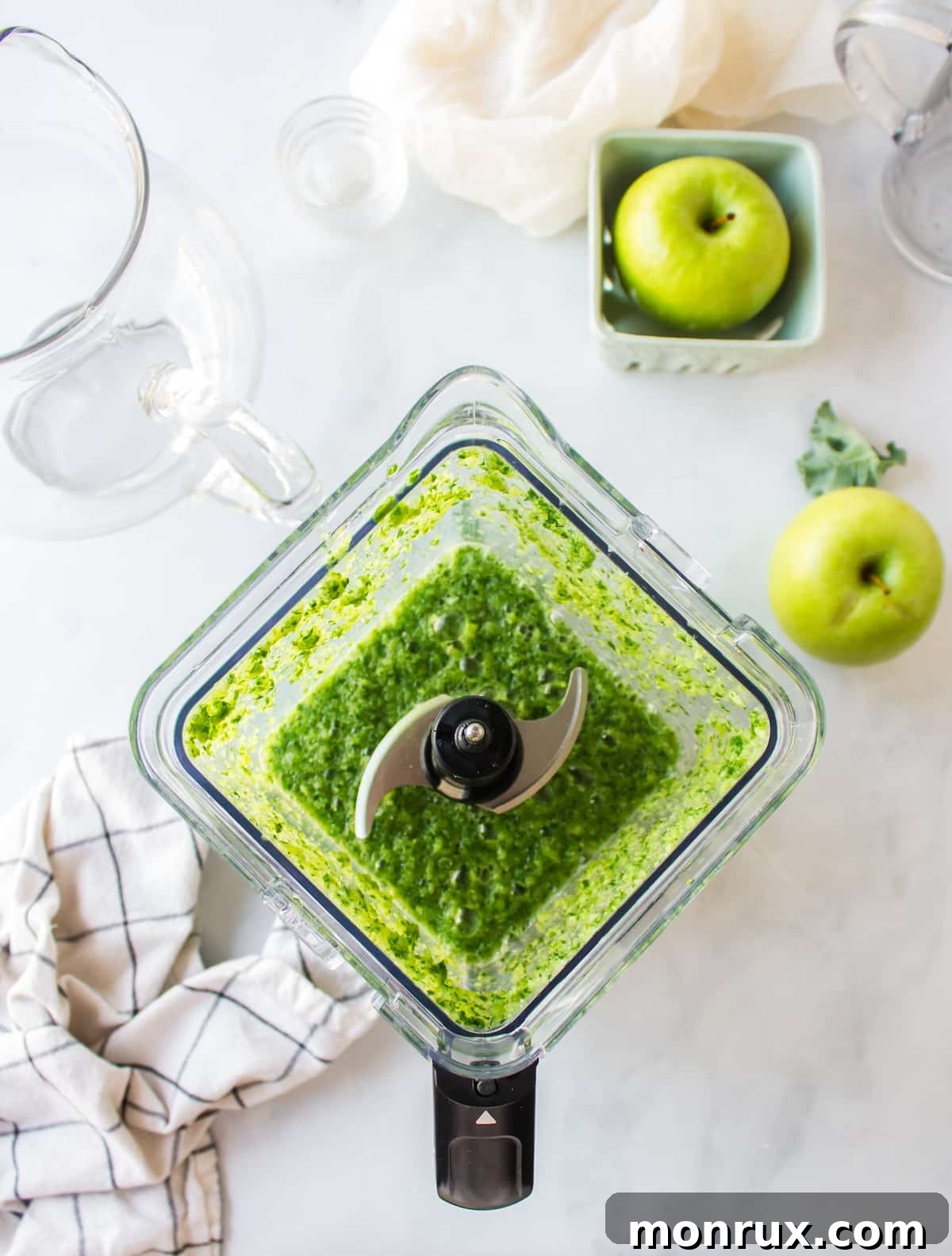
Step Two: Juice or Blend. If using a juicer, turn it on and begin feeding the prepared slices into the chute. To maximize juice extraction and prevent clogging, alternate between harder ingredients (like apple and ginger) and softer, leafy ones (like kale and cucumber). This helps the juicer process everything more efficiently. If using a blender, add approximately 1/2 to 1 cup of filtered water (or coconut water for extra electrolytes) to the pitcher. Secure the lid and blend on high speed until the mixture is completely smooth and liquid, often taking 1-2 minutes.
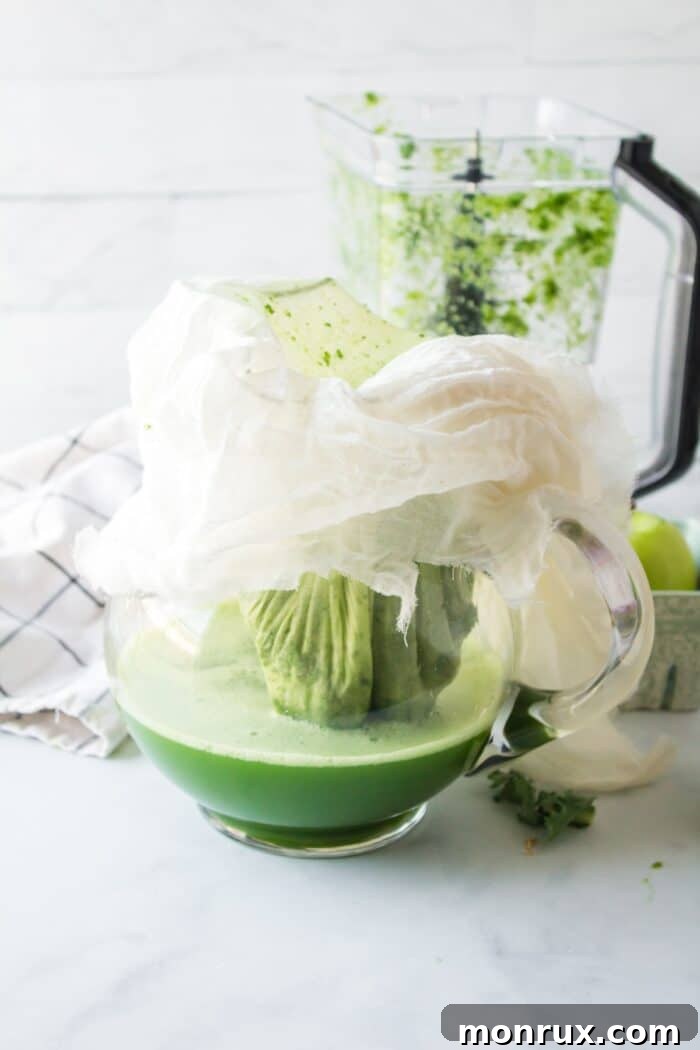
Step Three: Strain (Blender Method Only). If you used a blender, the next crucial step is straining the juice from the pulp. Place a fine-mesh strainer or a clean nut milk bag over a large bowl or pitcher. Pour the blended mixture through the strainer/bag, gently squeezing to extract all the liquid. This separates the smooth juice from the fibrous pulp. You can either discard the leftover pulp or get creative by using it to make delicious and healthy recipes like green juice pulp crackers, minimizing food waste.
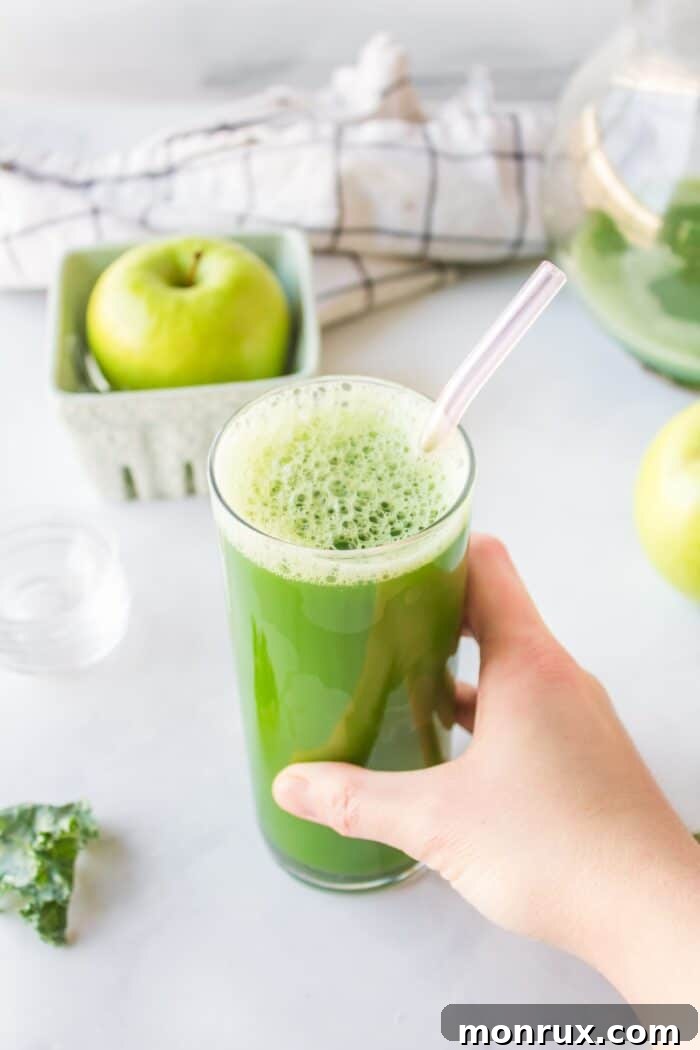
Step Four: Serve and Enjoy. Once all the juice has been extracted (from the juicer) or strained (from the blender), pour the vibrant green liquid from the juice collector or pitcher into a glass. For the best flavor and nutritional impact, serve your fresh kale juice immediately. You can add a few ice cubes for an extra refreshing kick. I truly hope you’ll agree that this fresh juice, made from leafy greens and balanced with sweet and tart elements, is the best kale juice recipe you’ve ever had. It’s truly a good stuff and one of my favorite juice recipes for a healthy boost!
Juicer vs. Blender: Which Is Better for Kale Juice?
The choice between using a juicer or a blender is a common one for anyone venturing into homemade beverages, and both methods offer distinct advantages and disadvantages when it comes to making kale juice. Understanding these differences can help you decide which is best for your preferences and lifestyle.
Using a Juicer for Kale Juice
A juicer is specifically designed to extract liquid from fruits and vegetables, separating it from the fibrous pulp. This process results in a very smooth, vibrant juice with a light and clean texture. This is often considered the traditional method for most green juice recipes, offering a highly concentrated dose of vitamins, minerals, and enzymes. Because the fiber is removed, the nutrients are absorbed more quickly into the bloodstream.
Pros:
- High Nutrient Concentration: By removing pulp, juicers deliver a potent dose of micronutrients without the bulk.
- Smooth Texture: Produces a consistently smooth, pulp-free juice that many find more palatable.
- Rapid Absorption: Nutrients are absorbed quickly as the digestive system doesn’t need to break down fiber.
- Less Volume: You can consume more nutrients with less overall liquid volume compared to smoothies.
Cons:
- Loss of Fiber: The primary downside is the removal of beneficial dietary fiber, which is important for digestion and blood sugar regulation.
- Higher Cost: Quality juicers can be a significant investment compared to blenders.
- More Cleanup: Juicers often have multiple parts that require thorough cleaning immediately after use.
- Less Yield: You often need more produce to create the same amount of liquid compared to blending and straining.
Using a Blender for Kale Juice
A blender, on the other hand, pulverizes all the ingredients together, keeping all the dietary fiber from the fruits and vegetables intact. While this initially creates a thicker, smoothie-like consistency, you can achieve a juice-like beverage by straining the mixture. A high-speed blender like a Vitamix works perfectly well for this recipe, breaking down the tough kale leaves effectively.
Pros:
- Retains All Fiber: You get the full nutritional benefit, including the fiber, which aids digestion, promotes satiety, and helps regulate blood sugar.
- More Economical: Blenders are often more versatile and may already be a kitchen staple, making them a more budget-friendly option if you don’t want to buy a separate juicer.
- Less Food Waste: By retaining the pulp (or straining it and repurposing), there’s less waste compared to a juicer.
- Thicker Consistency: If you choose not to strain, you get a more filling, nutrient-dense smoothie.
Cons:
- Requires Straining: To achieve a “juice” consistency, an extra step of straining through a nut milk bag or fine-mesh strainer is necessary.
- Thicker if Unstrained: If you prefer a thinner drink, the high fiber content might be too thick without straining.
- Potential for Bitterness: The presence of all the fiber and plant material can sometimes intensify the “green” or bitter flavor if not properly balanced.
Ultimately, both methods can produce a delicious and healthy kale juice. If quick nutrient absorption and a crystal-clear texture are your priorities, a juicer is ideal. If fiber retention, versatility, and minimal equipment are more important, a blender with a good straining method will serve you well. Choose the method that best aligns with your health goals and kitchen setup.
Choosing the Best Kale for Juicing
While all varieties of kale offer incredible nutritional benefits, some are better suited for juicing due to their flavor profile and texture. You can successfully make kale juice with several different types, but here’s a breakdown to help you choose the best one for your palate and preferences:
Curly Kale
This is arguably the most common type of kale you’ll find readily available at most grocery stores. Characterized by its ruffled, dark green leaves, curly kale has a slightly stronger, more peppery flavor compared to other varieties. While its robust taste can be prominent in juice, it works exceptionally well when balanced with naturally sweet fruits like apple, as in this recipe. Its sturdy texture yields a good amount of juice, making it a reliable choice for juicing enthusiasts.
Lacinato Kale (Dinosaur Kale or Tuscan Kale)
Also known as Dinosaur Kale or Tuscan Kale, Lacinato kale features long, narrow, dark blue-green leaves with a bumpy texture reminiscent of a dinosaur’s skin. This variety typically has a slightly milder and sweeter flavor than curly kale, making it one of the best and most popular options for juicing. Its tenderness also contributes to a smoother juice without as much fibrous residue.
Baby Kale
Baby kale leaves are harvested when young and tender, offering a much milder, less bitter flavor profile compared to their mature counterparts. They are delicate and can be a great option if you are new to green juices or prefer a smoother, less intense tasting juice. While they might yield slightly less juice per volume due to their smaller size and higher water content, their gentle flavor is often a trade-off many appreciate.
All of these varieties work wonderfully in this specific recipe, especially when combined with the balancing flavors of apple, lemon, ginger, and cucumber. So, feel free to use whichever type of kale you have available or can easily source. Don’t let the specific type deter you from making this incredibly healthy beverage!
Quick Fixes for Common Kale Juice Issues
Even with the best recipes, sometimes a batch of juice might not turn out exactly as expected. Here are some quick and easy troubleshooting tips to adjust your kale juice to perfection:
- Too thin? If your juice feels too watery or lacks body, consider making it in a blender instead of a juicer next time, as blenders retain all the fiber. Alternatively, if you’re using a juicer, you can try straining it less rigorously, allowing a small amount of fine pulp to remain for a richer texture. Adding a banana (if using a blender) can also create a thicker, creamier consistency.
- Too bitter? Bitterness in green juice often comes from the tough stems of kale or an imbalance of flavors. Next time, be sure to remove the tough stems from the kale leaves before juicing or blending. For an immediate fix, add more hydrating cucumber or a little extra sweet apple to the mix. A touch more lemon or lime can also surprisingly cut through bitterness with its bright acidity.
- Too sour? If your juice has too much tang, it’s likely due to an excess of lemon or lime. For your next batch, reduce the amount of citrus. For a quick adjustment to an already made juice, add a few extra slices of green apple or a date (if blending) to mellow out the sour notes and introduce more natural sweetness.
- Too “green” or intense? Sometimes the powerful flavor of leafy greens can be overwhelming. The intensity often stands out more when the juice is warm or at room temperature. Dilute your juice with cold water or ice and drink it colder. You can also add more mild ingredients like cucumber or even a ripe pear to soften the overall “green” taste.
Don’t have kale on hand or looking to diversify your green juice repertoire? No problem! Try these other fantastic recipes for Spinach Juice, Collard Green Juice, or Broccoli Juice instead. Each offers unique flavors and benefits for your daily dose of greens!
How Much Kale Juice Should You Drink Per Day?
While kale juice is undoubtedly a healthy powerhouse, packed with vitamins, minerals, and antioxidants, it’s important to consume it mindfully and in moderation. Integrating it as part of a balanced diet, rather than relying on it exclusively, is key to maximizing its benefits without potential downsides.
For most individuals, one small glass, typically about 8–10 ounces, per day is considered a sufficient and beneficial amount. This provides a concentrated dose of nutrients without overdoing it on specific compounds. Think of kale juice as a powerful supplement or a nutritional boost to complement an overall healthy eating pattern that includes a wide variety of whole fruits and vegetables, rather than a meal replacement.
Drinking excessively large amounts of green juice every day may not be necessary and, in some specific cases, could lead to concerns. Kale, for instance, is exceptionally high in vitamin K. While vital for blood clotting and bone health, very high daily intakes of vitamin K can potentially interact with certain medications, particularly blood thinners like warfarin. It can also be high in oxalates, which can be a concern for individuals prone to kidney stones if consumed in very large quantities.
Therefore, if you have any pre-existing health conditions, are taking medications (especially those that interact with vitamin K), or have any concerns about nutrient intake, it is always a prudent step to check with your healthcare provider or a registered dietitian before incorporating kale juice into your regular diet. They can offer personalized recommendations based on your individual health profile and needs, ensuring you enjoy the benefits safely and effectively.
Kale Juice Recipe FAQs
Absolutely, yes! You can feed the entire kale leaf into your juicer, including the stems. While the stems are tougher and have a slightly more bitter taste than the leaves, they are also full of nutrients and fiber. Just ensure you wash the kale leaves thoroughly before juicing to remove any dirt or debris. If you’re using a blender and want a smoother result, you might consider removing the toughest parts of the stems as they can be quite fibrous.
While technically possible to juice kale on its own, it’s generally not recommended for taste. Kale by itself has a very strong, often bitter, and intensely “green” flavor that most people find unpalatable. The beauty of this recipe lies in balancing the kale with other ingredients like apple, cucumber, lemon, and ginger, which mellow out its intensity, add sweetness, and enhance the overall flavor profile. For an enjoyable and drinkable juice, combining kale with these complementary ingredients is crucial.
Fresh kale juice is always best served immediately after preparation to enjoy its peak freshness, flavor, and nutrient content. However, if you have leftovers, it can be stored in an airtight, covered container in the refrigerator for up to 2-3 days. Make sure the container is filled to the top to minimize air exposure, which can degrade nutrients. Give it a good shake before serving if any separation occurs. While you can freeze kale juice, be aware that the thawing process may affect the texture and potentially diminish some of the delicate flavors, though it will still retain many of its nutrients.
Fresh vegetable juices, including kale juice, can certainly be a beneficial component of a comprehensive weight loss program. They are typically low in calories and high in nutrients, and consuming them can help you feel more energized and nourished. They are especially helpful if they replace higher-calorie, sugary beverages. However, it’s vital to consume juices in moderation, even those made with vegetables, as they are concentrated and can still contribute to overall calorie intake if overdone. For personalized advice on whether juices are appropriate for your specific weight loss goals and health status, especially if you have sensitivities or medical conditions, consulting your healthcare provider or a registered dietitian is highly recommended.
Yes, frozen kale can be successfully used if fresh kale isn’t readily available, particularly when using a blender. To ensure a smooth blend, allow the frozen kale to thaw slightly before adding it to your blender with the other ingredients and water. This helps prevent your blender from struggling and ensures a more consistent texture. While fresh kale is often preferred for juicers, frozen kale can work in masticating (slow) juicers if it’s mostly thawed, but it generally performs best in high-speed blenders.
Kale juice is a powerhouse of nutrition! It’s rich in vitamins A, C, and K, providing significant antioxidant and anti-inflammatory benefits. It supports immune health, aids in detoxification, promotes healthy skin and eyes, and contributes to strong bones. The concentrated nutrients can boost energy levels and support overall wellness, making it a fantastic addition to a healthy diet.
I hope you make this incredible recipe! If you do, please leave a comment and a starred review below to let me know how you liked it. Your feedback is greatly appreciated!
And, consider following me on social media so we can stay connected. I’m on Facebook, Pinterest, Instagram, and YouTube! Stay updated with my latest healthy recipes and wellness tips.
Print
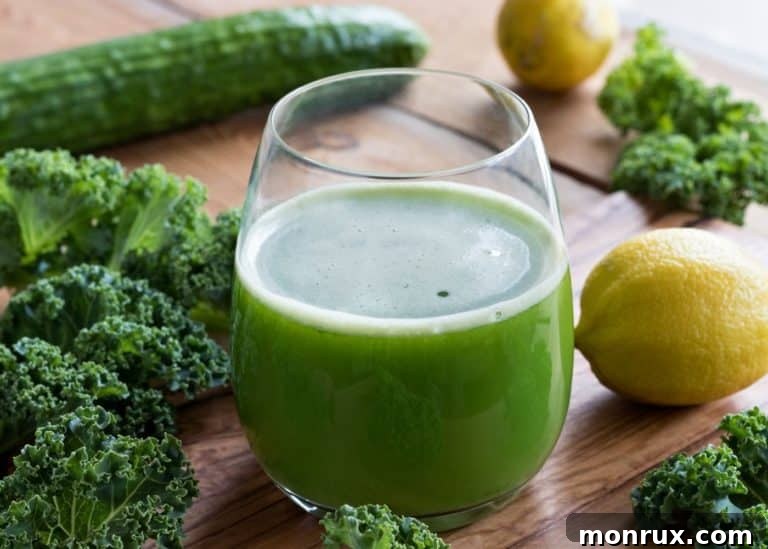
Sweet & Refreshing Kale Juice Recipe
5 Stars
4 Stars
3 Stars
2 Stars
1 Star
4.8 from 5 reviews
This is my signature Kale Juice recipe, expertly balanced to be subtly sweet and incredibly fresh-tasting. With the natural sweetness of apple, the vibrant zing of lemon, and a warm hint of ginger, this healthy juicing recipe is a must-try. Easy to make with either a juicer or a blender!
Total Time: 20 minutes
Yield: 2 1x
Ingredients
Scale
- 1 bunch kale (curly or lacinato), washed
- 1 lemon, peeled (remove white pith for less bitterness)
- 1 large cucumber, washed and chopped
- 1 green apple, washed and chopped (Granny Smith recommended)
- 1 1-inch piece of fresh ginger, peeled
- Optional for blender: 1/2 to 1 cup filtered water
Instructions
- Prepare Kale: Wash and thoroughly pat dry your kale leaves. While you can juice the stems, for a less bitter taste, you may remove the toughest parts.
- Chop Produce: Cut the cucumber, apple, peeled lemon, and ginger into pieces small enough to easily fit through your juicer’s feeding tube. If using a blender, chop them into 1-2 inch chunks.
- Juice or Blend:
- For Juicers: Turn on your juicer. Feed the ingredients into the juicer, alternating between hard items (apple, ginger) and soft, leafy greens (kale, cucumber, lemon). This helps the juicer run most efficiently and extract maximum juice.
- For Blenders: Place all chopped ingredients into a high-speed blender. Add 1/2 to 1 cup of filtered water. Blend on high until completely smooth, typically 1-2 minutes.
- Strain (Blender Only): If using a blender, pour the blended mixture through a fine-mesh strainer or nut milk bag set over a large bowl. Squeeze firmly to extract all the liquid, separating the juice from the pulp.
- Serve Immediately: Turn off the juicer (if applicable) and pour the fresh juice from the collector into a glass. Serve your refreshing kale juice immediately for the best taste and nutrient absorption. Add ice if desired.
Notes
- BLENDER INSTRUCTIONS DETAIL: If you don’t have a juicer, a high-speed blender like a Vitamix can make excellent juice. Combine all ingredients with 1/2 to 1 cup of water (adjust for desired consistency) in the blender base. Blend on high until completely smooth. Then, strain the mixture through a nut milk bag or fine-mesh sieve to separate the juice from the pulp.
- Storage: Green juice is best served immediately for optimal freshness and nutrient content. However, any leftover juice can be stored in an airtight, covered container in the refrigerator for up to 2-3 days. Make sure to shake the container well before drinking, as natural separation may occur.
- Apple Choice: You can use either green or red apples for this recipe, depending on your preference for sweetness and tartness. Green apples (like Granny Smith) offer a nice tart balance, while red apples will yield a sweeter juice.
- Cucumber Variety: Any type of cucumber works well for this recipe, including English cucumbers or Persian cucumbers. I typically do not peel them first, as the skin contains additional nutrients, but you can if preferred.
- Kale Variety: This recipe is versatile and works perfectly with curly kale, dinosaur kale (Lacinato), or even baby kale. Choose based on availability and your preference for flavor intensity.
- Author: Carrie Forrest, MPH in Nutrition
- Prep Time: 15 minutes
- Cook Time: 5 minutes
- Category: Juice, Drinks
- Method: Juicer or Blender
- Cuisine: Healthy, American, Homemade
- Diet: Vegan, Gluten-Free, Dairy-Free, Whole30 Friendly
Nutrition
- Serving Size: 1/2 of recipe
- Calories: 35
- Sugar: 6.1 g
- Sodium: 17 mg
- Fat: 0 g
- Saturated Fat: 0 g
- Carbohydrates: 9.2 g
- Fiber: 1.4 g
- Protein: 0.6 g
- Cholesterol: 0 mg
*Nutrition information is an estimate and will vary based on specific ingredients and preparation.
Explore More Healthy Vegetable Juice Recipes You Might Like
Once you’ve mastered this delicious kale juice, you might be inspired to explore the vast world of fresh vegetable juices! Expanding your juicing repertoire is an excellent way to introduce a wider array of nutrients and exciting flavors into your diet. Here are some of my other favorite vegetable juice recipes that are equally nutritious and invigorating:
- Cabbage Juice: Excellent for digestive health and anti-inflammatory properties.
- Beet Juice: A vibrant, earthy juice known for boosting athletic performance and liver support.
- Cucumber Juice: Incredibly hydrating and refreshing, perfect for a detox.
- Fennel Juice: Offers unique licorice notes and digestive benefits.
- Parsley Juice: A potent green juice packed with antioxidants and a fresh, herbaceous flavor.
- Lemon & Ginger Green Juice: A zesty and warming blend, ideal for immune support and digestion.
- Carrot Juice Recipe: Sweet and earthy, rich in beta-carotene for eye health and skin glow.
I also have a dedicated recipe post specifically for How to Make Celery Juice, which has gained immense popularity for its health benefits.
For even more inspiration, check out my comprehensive round-ups of best juice recipes for beginners, diverse vegetable juicing recipes, or delve deeper into my article on why green juices are so healthy to understand the science behind their incredible power.
Don’t Miss These Essential Juicing Resources!
To further empower your juicing journey and help you maximize the benefits of fresh, homemade juices, I’ve compiled a selection of invaluable resources. These articles cover everything from ingredient selection to equipment guides, ensuring you have all the knowledge you need to succeed:
Don’t forget to join my newsletter list to get exclusive clean eating recipes, wellness tips, and special updates directly in your inbox. The newsletter is 100% free with no spam, and you can unsubscribe anytime.
About the Author: Carrie Forrest holds a master’s degree in public health with a specialty in nutrition and is a certified holistic nutritionist. She is the passionate voice behind Clean Eating Kitchen, a leading wellness and food blog attracting over 5 million annual visitors. Carrie shares an incredible personal story of recovery from chronic illness and is deeply committed to empowering other women to transform their health through nourishing foods and sustainable lifestyle changes. Feel free to send her a message through her contact form with any questions or comments.
Note: This post is provided for informational purposes only and is not intended as medical advice. Always consult your healthcare provider or a qualified health professional for personalized recommendations related to your individual health situation and before making any significant dietary changes.