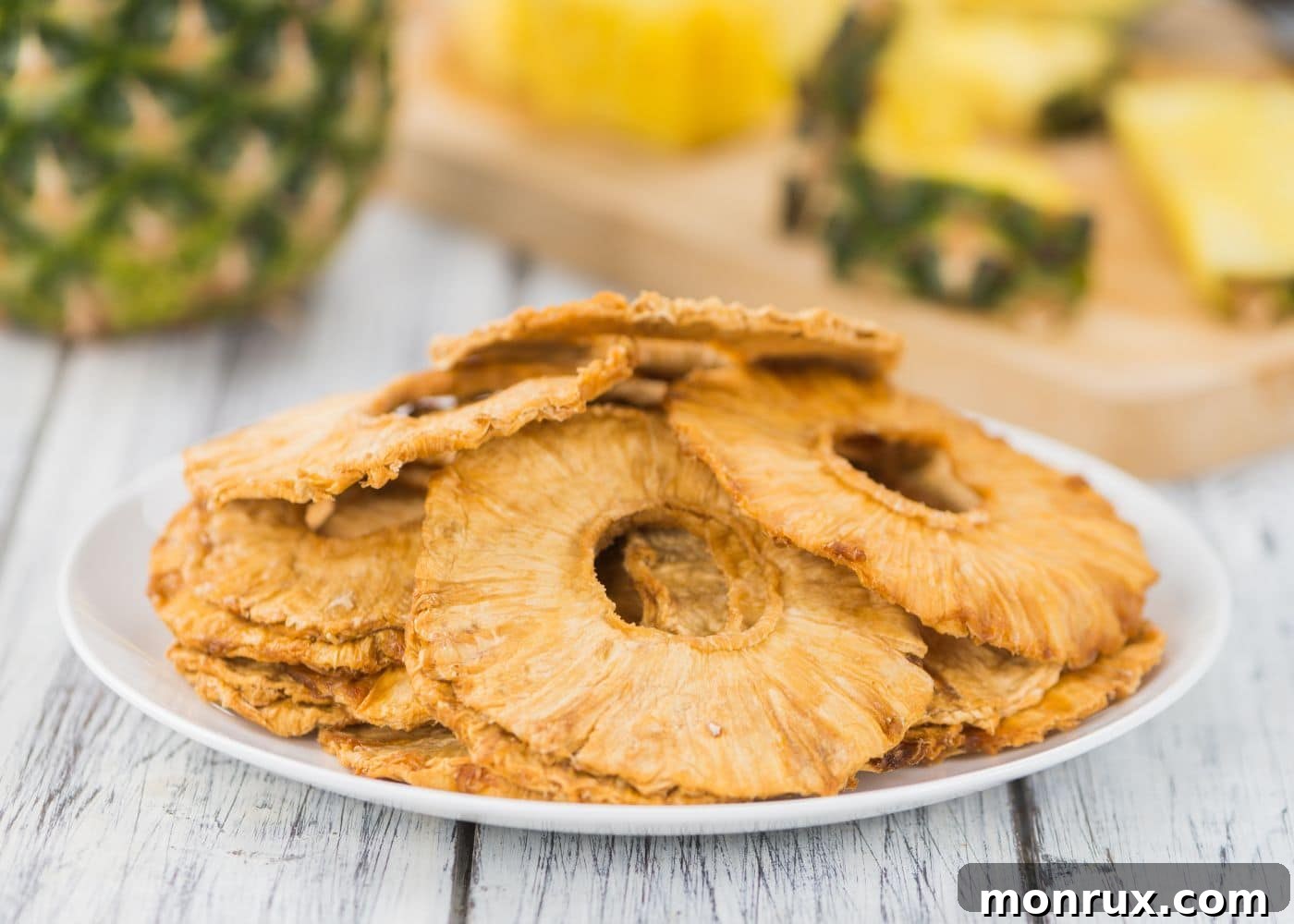
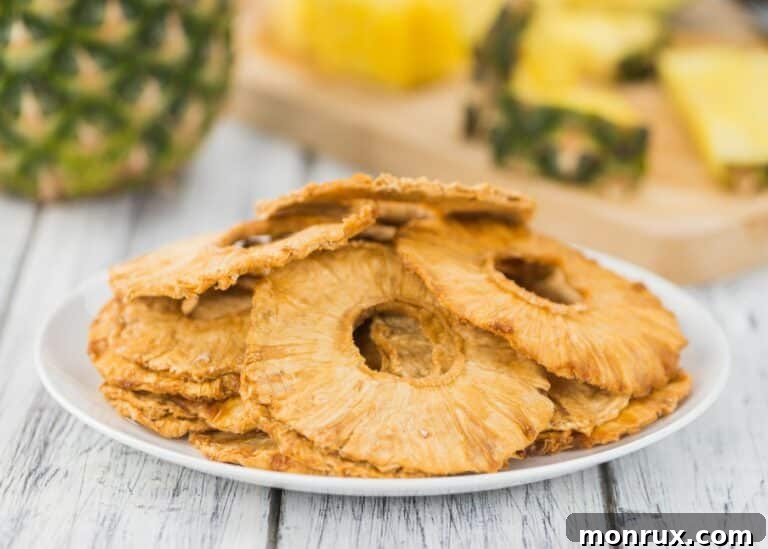
Dehydrating pineapple is an excellent method to extend its shelf life, minimize food waste, and create a delectable, wholesome snack for any time of year. This process transforms fresh or canned pineapple into naturally sweet, chewy, and intensely flavorful “candy” without the need for added sugars or artificial ingredients. Dive into this comprehensive guide to master how to dehydrate pineapple using either a dedicated food dehydrator or your standard kitchen oven.
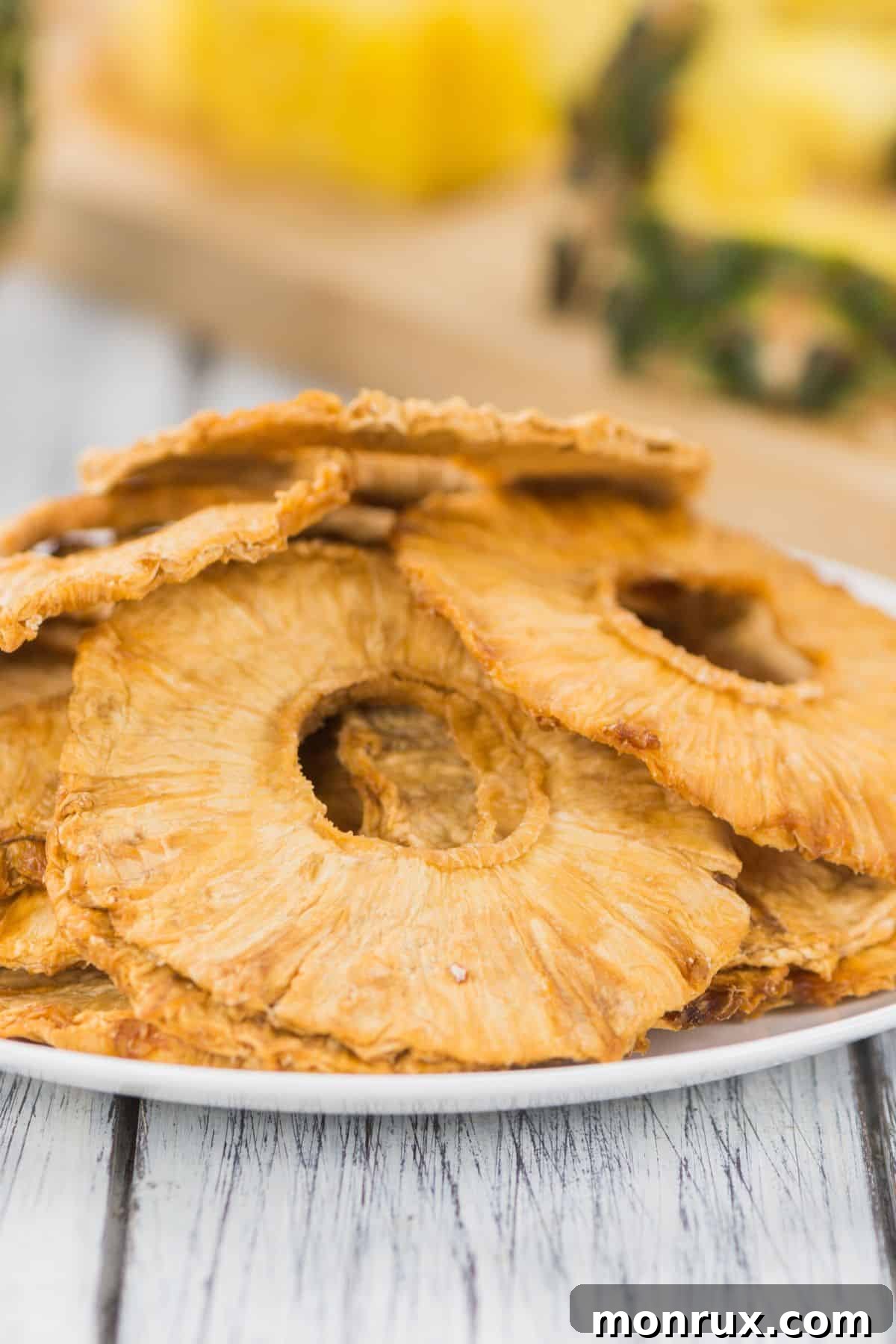
Once you discover the simplicity of dehydrating pineapple at home, you’ll gain access to an endless supply of this delightful treat. These chewy, tangy, and naturally sweet pineapple pieces are a truly natural candy, perfect for satisfying sweet cravings guilt-free. The versatility of dried pineapple is immense; you can enjoy it simply as is, savoring its concentrated tropical flavor, or incorporate it into a myriad of dishes to add a burst of sweetness and texture.
Imagine transforming your routine breakfast by adding dehydrated pineapple to your morning oatmeal or yogurt, instantly creating a tropical escape. It’s also an exceptional ingredient for homemade trail mixes, granolas, and baked goods such as breads, muffins, or even cookies. For those who enjoy a touch of elegance, dried pineapple rings make a stunning and flavorful garnish for fancy cocktails or dessert plates.
Indeed, this tangy dried fruit has even earned its place in secret family recipes. A little bird once whispered that the secret ingredient behind my neighbor’s ribbon-winning carrot cake was, in fact, finely diced dried pineapple! Its ability to enhance flavor and moisture in baked goods is truly remarkable. While that recipe might remain a secret for now, the joy of dried pineapple is one I’m eager to share.
Beyond culinary applications, dried pineapple excels as a standalone snack. Its convenient, mess-free nature makes it an ideal companion for busy days, providing a quick and natural energy boost. It contains just the right balance of natural sugars and fiber to keep you feeling satisfied and energized throughout your day, whether you’re at work, school, or hitting the gym.
No matter how you choose to enjoy your homemade dehydrated pineapple, it’s a sweet, healthy, and incredibly rewarding treat to make. This article will guide you through two straightforward methods, ensuring you can easily dehydrate pineapple in the comfort of your own kitchen.
Why You Need This Recipe: The Irresistible Benefits of Dehydrated Pineapple
Dehydrating pineapple isn’t just a kitchen hack; it’s a smart way to enjoy a delicious, healthy snack with numerous advantages. Here’s why this recipe should be a staple in your culinary repertoire:
- A Healthy, Shelf-Stable Treat for Everyone: In an age where processed snacks dominate, homemade dehydrated pineapple stands out as a beacon of wholesome goodness. It’s naturally sweet, rich in vitamins (especially Vitamin C and Manganese), and packed with dietary fiber, making it a fantastic snack for the entire family. Unlike many store-bought dried fruits, your homemade version contains no added sugars, preservatives, or artificial colors, ensuring a truly clean eating experience. This healthy sweet snack is also naturally gluten-free and dairy-free, catering to various dietary needs and preferences.
- Economical and Sustainable Food Preservation: Pineapples can be quite pricey, especially when they’re out of season or imported. Dehydrating pineapples allows you to buy them in bulk when they’re at their peak ripeness and lowest price, then preserve them for year-round enjoyment. This method is a significant cost-saver and an excellent way to reduce food waste, giving new life to fruit that might otherwise go bad. You can savor the vibrant, tangy taste of summer pineapple even in the depths of winter.
- The Ultimate Grab-and-Go Snack: Say goodbye to sticky fingers and crumbly messes! Dried pineapple is the perfect mess-free snack for any occasion. Its compact nature and delightful chewiness make it ideal for lunchboxes, hiking trails, road trips, or simply a quick energy boost between meetings. It’s a natural pick-me-up that provides sustained energy without the jitters associated with sugary drinks or artificial stimulants. Pack it for your kids’ school snacks, take it to the office, or munch on it post-workout – it’s always a convenient and satisfying choice.
- Enhanced Flavor and Versatility: The dehydration process concentrates pineapple’s natural sugars and flavors, resulting in an even sweeter and more intensely tropical taste than fresh pineapple. This makes it an incredibly versatile ingredient. Beyond snacking, incorporate it into baked goods like muffins, bread, or even fruitcakes for a chewy, flavorful addition. Chop it up for homemade granola, trail mix, or add it to your morning oatmeal and yogurt. For a surprising twist, finely dice it and add to savory dishes or salads for a touch of sweet acidity.
What You’ll Need to Make This Recipe: Essential Equipment
Dehydrating pineapple is incredibly straightforward, requiring minimal specialized equipment. With just a ripe pineapple (or canned equivalent) and either a dehydrator or an oven, you’re all set to create this delightful treat. Here’s a closer look at the tools you’ll need:
1. A Dehydrator or Oven: Your Drying Machine
If you’re an enthusiast of dehydrated foods, a dedicated food dehydrator is a worthwhile investment. These appliances are designed to efficiently remove moisture at low, consistent temperatures, ensuring even drying and preserving nutrients. When choosing a dehydrator, consider models with medium to large capacities to maximize the number of trays and process more food at once. Look for features like adjustable temperature controls and timers for optimal results.
However, if you don’t own a dehydrator, don’t worry! Your conventional oven can serve as an excellent alternative. The key is to have an oven that can maintain a very low temperature, ideally below 200°F (93°C), for an extended period. Some ovens have a “warm” or “proof” setting that works perfectly. If your oven’s lowest setting is higher, you might need to prop the door open slightly with a wooden spoon to allow moisture to escape and prevent the pineapple from cooking instead of drying.
2. A Serrated Knife and Cutting Board: For Safe & Easy Slicing
A good quality serrated knife is indispensable for preparing fresh pineapple. Its saw-like edge makes it much easier and safer to slice through the tough outer skin and firm flesh of the fruit. Always exercise caution when handling sharp knives, especially with a challenging fruit like pineapple. Use a sturdy cutting board to provide a stable surface and protect your countertops. For those who frequently prepare pineapples, a specialized pineapple corer can also be a helpful tool, though some find them a bit cumbersome to use.
3. Storage Containers or Bags: For Long-Term Freshness
Proper storage is crucial for maintaining the quality and extending the shelf life of your dehydrated pineapple. Once completely cooled, store your dried pineapple in airtight containers or heavy-duty Ziploc bags. Kept in cool, dry conditions away from direct sunlight, your homemade dried pineapple can remain fresh for several weeks, or even months if stored optimally. Glass jars with tight-fitting lids are an excellent choice for pantry storage.
For ultimate convenience, consider dividing the dehydrated pineapple into snack-sized portions before storing. This makes it easy to grab a healthy, delicious treat on your way to work, school, or the gym. For long-term storage, especially if you’re making a large batch, a food saver device that vacuum-seals bags can be incredibly beneficial. This method removes air and any residual moisture, significantly extending the fruit’s freshness and preventing spoilage.
Ingredients and Substitutes: Simplicity at Its Best
One of the most appealing aspects of dehydrating pineapple is its incredible simplicity. You won’t need an extensive list of ingredients or any exotic additions. This recipe celebrates the natural flavor of pineapple, requiring only one star ingredient: pineapple itself!
Pineapple: Fresh or Canned, Your Choice
Both fresh and canned pineapple are perfectly suitable for dehydrating, each offering its own advantages:
- Fresh Pineapple: Using a whole fresh pineapple provides the purest, most intense flavor. However, it requires a bit more effort in preparation. You’ll need to carefully cut off the tough outer skin, remove the fibrous core, and then slice the fruit into rings or pieces. The benefit is superior taste and texture, especially when the pineapple is perfectly ripe.
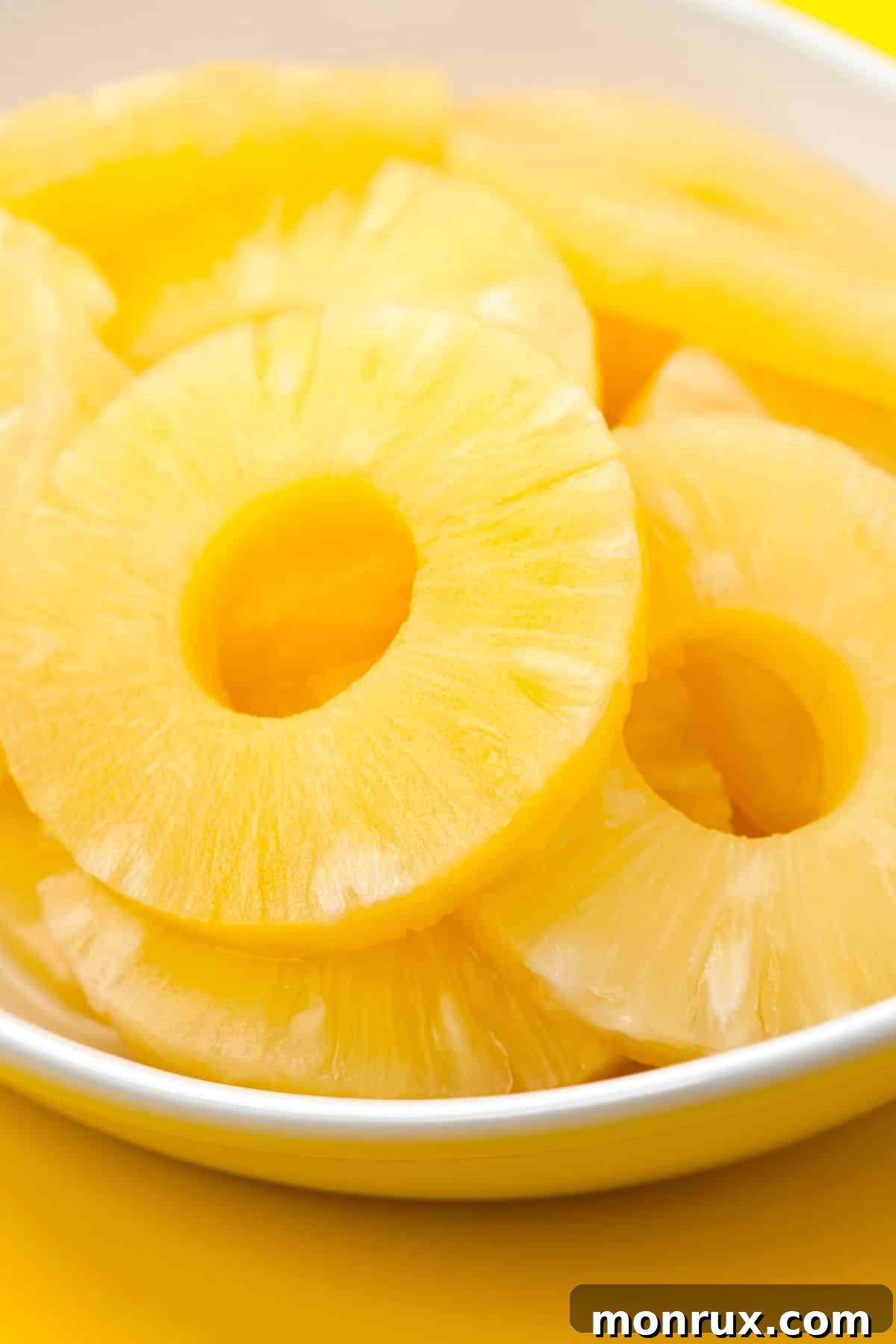
- Canned Pineapple: Canned pineapple is a fantastic shortcut. It comes pre-peeled and cored, significantly reducing prep time. Simply open the can, drain the liquid thoroughly, pat the slices dry, and you’re ready to go. Canned pineapples are also consistently ripe. The main drawback is that their flavor can sometimes be less vibrant than fresh pineapple, and they may contain added sugars in the syrup, so opt for varieties canned in natural juice or water if possible.
Choosing a Fresh, Ripe Pineapple: To ensure the best flavor for your dehydrated treats, selecting a ripe fresh pineapple is key. Look for a pineapple with a yellowish-brown skin, indicating ripeness. Avoid any fruit with green patches or signs of mold. The leaves should appear glossy, fresh, and green, not wilted or brown. The most reliable indicator of ripeness is its aroma: smell the base of the pineapple. A sweet, fruity, and distinct pineapple scent signifies it’s perfectly ripe and ready to be enjoyed. If it has no scent, it’s likely unripe; if it smells fermented, it’s overripe.
Preparation Tips for Perfect Dehydrated Pineapple
- Slicing Consistency: Uniform slices are crucial for even drying. Aim for a thickness of about ¼ to ½-inch (0.6 to 1.2 cm). Thinner slices will result in crispier dried pineapple and a shorter drying time, while thicker slices will yield a chewier texture but require significantly longer drying, potentially up to 14 hours or more.
- No Added Sweetener Needed: Pineapples naturally become sweeter as they dehydrate because the water content is removed, concentrating the sugars. Resist the temptation to add any additional sweeteners like sugar, honey, or syrup – it’s simply not necessary and detracts from the natural goodness.
- Pre-Treatments (Optional): While pineapple doesn’t typically require pre-treatment to prevent browning (unlike some other fruits), a light squeeze of lemon juice over the slices before drying can help retain a brighter yellow color. This is purely for aesthetic purposes, as pineapple naturally browns slightly during dehydration due to oxidation.
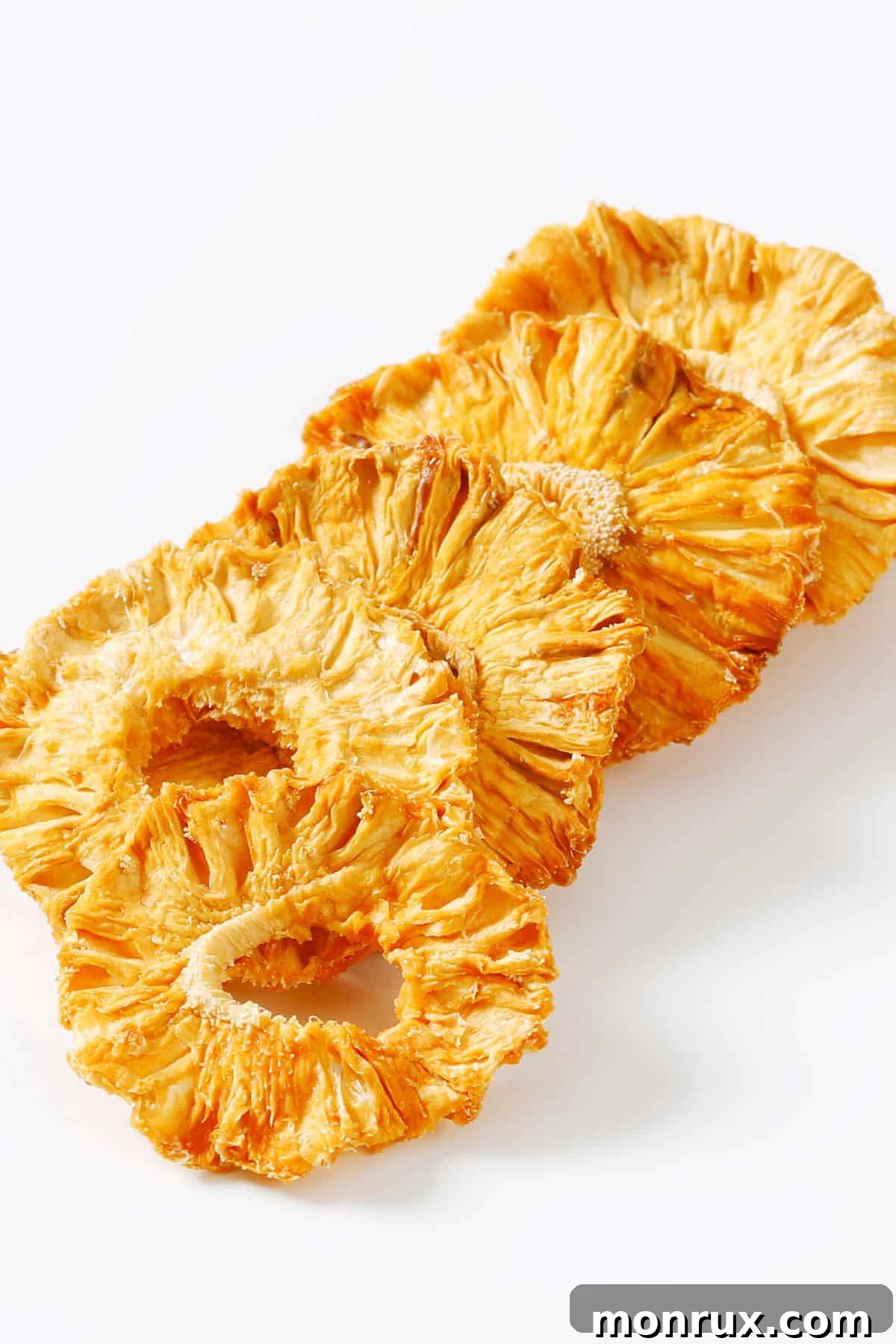
- Doneness Test: Properly dried pineapple should be pliable and leathery, but not sticky or moist to the touch. If you bend a piece, it should crack or break cleanly if very thin and crispy, or simply bend without any moisture squeezing out if thicker and chewy. There should be no visible moisture pockets.
- Conditioning: After drying, allow your pineapple to cool completely. Then, transfer the dried fruit into airtight containers, filling them only about two-thirds full. Shake the containers daily for 5-7 days. This “conditioning” process distributes any residual moisture evenly throughout the fruit, preventing mold and ensuring consistent dryness. If you notice any condensation, put the pineapple back in the dehydrator or oven for more drying time.
Recipe FAQs: Your Dehydrating Pineapple Questions Answered
When stored correctly, homemade dried pineapple has an impressive shelf life. In an airtight container kept in a cool, dark pantry, it can last for approximately 2 to 4 weeks. If you store it in the refrigerator, its freshness can extend even longer, potentially up to 2-3 months. For extended preservation, consider using vacuum-seal bags or a food saver device, which can keep your dried pineapple fresh for 6 months to a year or more by eliminating oxygen and moisture. Always ensure the pineapple is completely dry and conditioned before storage to prevent mold.
Yes, in moderation, dehydrated pineapple is a very healthy snack. It retains most of the vitamins and minerals found in fresh pineapple, such as Vitamin C, manganese, and bromelain, an enzyme known for its anti-inflammatory properties. The dehydration process also concentrates its natural dietary fiber, which aids digestion. While it contains natural sugars, these are unprocessed and come with the benefits of the whole fruit. Compared to conventional snack foods loaded with refined sugars and artificial ingredients, homemade dehydrated pineapple is a significantly healthier choice. Just be mindful of portion sizes due to the concentrated natural sugar content.
No, you absolutely do not need to blanch pineapple before dehydrating it! Pineapple is one of the easiest fruits to dehydrate because it naturally retains its flavor and texture well without pre-treatment. Some fruits benefit from blanching to prevent discoloration or enzyme activity during drying, but pineapple typically does not require this step. While it may lose a little of its vibrant yellow color and turn slightly golden-brown, this is a natural process and does not affect its taste or quality.
It’s natural for dehydrated pineapple to develop a slightly darker, golden-brown hue due to oxidation and the concentration of sugars. Commercial dried fruits often use preservatives like sulfur dioxide to maintain a bright yellow color, but these can have health implications. For a natural approach, you can try tossing your pineapple slices with a small amount of lemon juice (about a tablespoon per large pineapple) before arranging them on trays. The ascorbic acid in lemon juice acts as a natural antioxidant and can help minimize browning. However, a slight color change is normal and expected for preservative-free homemade dried pineapple.
Yes, you can certainly dehydrate pineapple chunks, but be aware that they will take considerably longer to dry than thin slices or rings due to their increased volume. To expedite the drying process and ensure even dehydration, it’s highly recommended to cut larger chunks in half or even into quarters, creating smaller, flatter pieces. The goal is to maximize the surface area exposed to the air and minimize the thickness, which allows moisture to escape more efficiently. Keep a close eye on them during the drying process, as drying times will vary significantly based on size and thickness.
Yes, you can dehydrate frozen pineapple! First, allow the frozen pineapple to thaw completely. It will release a significant amount of liquid during thawing, so make sure to drain it thoroughly and pat the pieces very dry with paper towels. While frozen pineapple can be dehydrated successfully, its texture might be slightly softer or mushier compared to fresh pineapple after thawing, and it might take a little longer to dry due to the initial higher moisture content from freezing. Ensure the pieces are spread in a single layer with good air circulation.
More Dehydrator Recipes You Might Like
If you enjoy the process and delicious results of dehydrating pineapple, you’ll love exploring other fruits and vegetables that can be preserved using the same methods. Expanding your dehydrating skills opens up a world of healthy, shelf-stable snacks and ingredients. Here are some other popular dehydrator recipes worth trying:
- Dehydrated Watermelon: A surprisingly sweet and crunchy treat.
- Healthy Seed Crackers: A versatile and nutritious snack base.
- How to Dehydrate Green Beans: Perfect for emergency food storage or adding to soups.
- Carrot Juice Pulp Crackers: A great way to use up leftover juice pulp and reduce waste.
- Homemade Beet Powder: A natural food coloring and nutritious supplement.
- How to Dehydrate Carrots: Excellent for adding to stews, casseroles, or as a crunchy snack.
- How to Dry Beets: Creates sweet, earthy chips or powder.
Don’t Miss These Other Delightful Pineapple Recipes
Beyond dehydrating, pineapple is a remarkably versatile fruit that shines in a variety of culinary creations. If you’re a fan of its tropical flavor, explore these other fantastic recipes that celebrate the goodness of pineapple:
We hope you enjoyed learning how to dehydrate pineapple! If you try this recipe, please consider leaving a comment and a starred review below to share your experience. Your feedback helps other readers discover delicious and healthy recipes.
For more clean eating recipes, tips, and inspiration, connect with us on social media! Find us on Facebook, Pinterest, Instagram, and YouTube!
Print Recipe
How to Dehydrate Pineapple
5 Stars
5 from 2 reviews
Dehydrating pineapple is a smart way to reduce waste and store it for later. It’s a naturally sweet, delicious snack with no added sugar, tasting just like candy. Learn how to dehydrate pineapple effectively in your dehydrator or oven with this easy-to-follow guide.
- Total Time: 8 hours
- Yield: 6 servings
Ingredients
- 1 ripe pineapple (fresh or canned)
Instructions
- If using fresh pineapple, carefully remove the skin and core. If using canned pineapple, drain it thoroughly and pat dry with paper towels.
- Slice the pineapple into uniform ¼ to ½-inch (0.6 to 1.2 cm) thick rings or pieces. Thinner slices will be crispier, while thicker slices will be chewier.
- Arrange the pineapple slices in a single layer on your dehydrator trays or on a parchment paper-lined baking sheet for oven drying. Ensure there is enough space between each piece for even air circulation.
- If using a dehydrator, set the temperature to 135°F (57°C) and dehydrate for 6 to 8 hours. If using an oven, preheat to its lowest setting (ideally 150-175°F or 65-79°C). Prop the oven door open slightly with a wooden spoon to allow moisture to escape and bake for 6 to 8 hours.
- Begin checking the pineapple for doneness after 6 hours. Depending on thickness and humidity, drying time can extend up to 14 hours. The pineapple should be pliable but no longer sticky or moist.
- Once fully dehydrated, turn off the dehydrator or oven and allow the pineapple to cool completely on the trays. This step is crucial for achieving the proper texture and preventing condensation during storage.
- Store your homemade dried pineapple in a cool, dark environment in an airtight container or vacuum-sealed bags. Properly stored, it will last for several weeks to months.
Notes
- Always refer to your specific food dehydrator manual for the best results, as temperatures and drying times can vary slightly between models. Thicker slices (over ½-inch) may require up to 14 hours or more to dry completely. Continue checking the slices until they are pliable but not sticky or excessively moist.
- OVEN instructions: Preheat your oven to its lowest setting, ideally around 150-175°F (65-79°C). Slice the pineapple into ¼ to ½-inch thick rings or pieces. Arrange them in a single, even layer on a baking sheet lined with parchment paper. Place the baking sheet into the oven for 6 to 8 hours, leaving the oven door slightly ajar with a wooden spoon to allow moisture to escape.
- As pineapple dehydrates, its natural sugars become concentrated, making it taste even sweeter than fresh pineapple. There’s no need to add any additional sweeteners.
- The thickness of your pineapple slices will directly impact the drying time and final texture. Thicker slices will take longer to dry but will be chewier. Thinner slices will dry faster and result in a crispier texture.
- Properly dried pineapple should feel dry and flexible, often described as leathery or pliable. It should not feel tacky, sticky, or have any discernible moisture. Very thinly sliced pineapple can become quite crispy.
- Author: Carrie Forrest, MPH in Nutrition
- Prep Time: 10 minutes
- Cook Time: 8 hours
- Category: Snack
- Method: Dehydrator, Oven
- Cuisine: Healthy
- Diet: Vegan, Gluten-Free
Nutrition
- Serving Size: Approx. ¼ cup dried (based on 6 servings from 1 pineapple)
- Calories: 75
- Sugar: 14.9 g
- Sodium: 1.5 mg
- Fat: 0.2 g
- Saturated Fat: 0 g
- Carbohydrates: 19.8 g
- Fiber: 2.1 g
- Protein: 0.8 g
- Cholesterol: 0 mg
Don’t forget to join our newsletter list to get exclusive clean eating recipes, tips, and updates delivered straight to your inbox. The newsletter is 100% free with no spam; you can unsubscribe at any time.