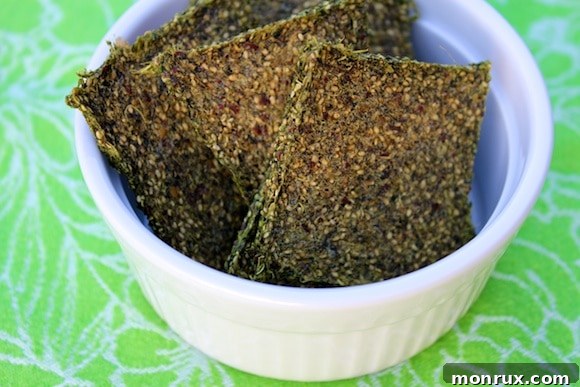
Green Juice Pulp Crackers: Delicious, Healthy & Waste-Free Snacking
In a world striving for less waste and more mindful eating, discovering innovative ways to utilize every part of our food is becoming increasingly popular. If you’re an avid juicer, you know the struggle: what to do with all that leftover vegetable pulp? Instead of tossing out this fiber-rich goodness, we’re sharing an incredible recipe to transform it into crisp, savory, and incredibly tasty Green Juice Pulp Crackers. This recipe is not only simple to make but also aligns perfectly with a healthy lifestyle, being gluten-free, vegan, and completely oil-free. It’s a smart way to ensure no nutrients go to waste and to enjoy a wholesome, homemade snack.
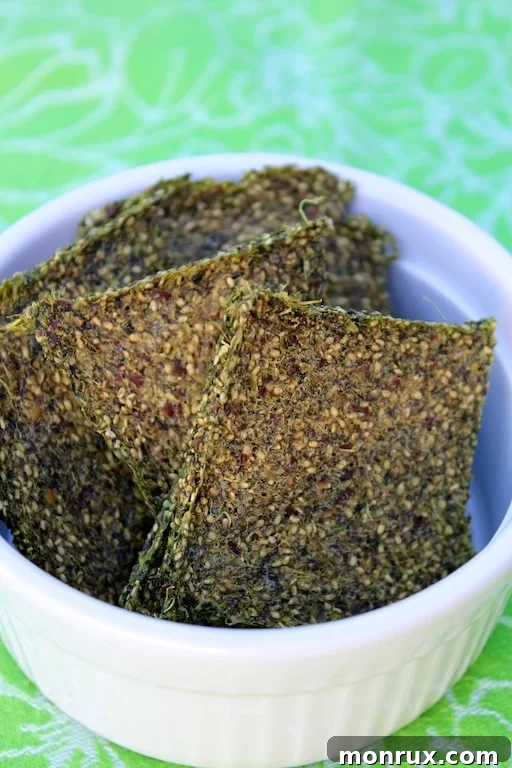
Don’t let your valuable juice pulp end up in the bin! This often-discarded byproduct is a treasure trove of dietary fiber, essential for digestive health and satiety. It also adds wonderful bulk and texture to a variety of recipes, from wholesome muffins and rustic breads to, as you’ll discover here, incredibly satisfying crackers. Our recipe for Green Juice Pulp Crackers emphasizes using simple, wholesome, and nutritious ingredients that come together to create a delightful treat.
What makes this recipe truly special is its adaptability. While we provide a fantastic base, feel free to experiment with your favorite herbs and spices to customize the flavor profile. We particularly love the combination of nutritional yeast for a cheesy umami flavor, coconut aminos for a touch of savory depth, and a blend of flax and chia seeds for an irresistible crunch and added nutritional benefits. Get ready to elevate your snacking game with these ingenious and delicious homemade crackers!
The Power of Pulp: Why Use Leftover Juice Pulp?
When you juice fresh vegetables, you extract their liquid vitamins, minerals, and enzymes, leaving behind a fibrous pulp. Many people discard this pulp, unaware of its immense nutritional value. This “waste” product is actually packed with insoluble fiber, which is crucial for a healthy digestive system, aiding in regularity and promoting gut health. Incorporating this fiber into your diet through recipes like these crackers can help you feel fuller for longer, stabilize blood sugar levels, and support overall well-being. By repurposing juice pulp, you not only reduce food waste but also boost the fiber content of your snacks, making them more satisfying and beneficial.
Beyond the pulp, our Green Juice Pulp Crackers recipe features several other superstar ingredients:
- Nutritional Yeast: A vegan’s secret weapon, nutritional yeast provides a savory, cheesy flavor without any dairy. It’s also an excellent source of B vitamins, including B12, which is often challenging to obtain on a plant-based diet.
- Flax Seeds: These tiny seeds are powerhouse ingredients, rich in omega-3 fatty acids, fiber, and lignans. When ground, flax seeds create a gelatinous binder, helping the crackers hold together beautifully while adding a nutty flavor and impressive nutritional punch.
- Chia Seeds: Similar to flax, chia seeds are highly nutritious, offering omega-3s, fiber, protein, and various micronutrients. They also absorb liquid, contributing to the crackers’ binding and crisp texture.
- Coconut Aminos: A soy-free alternative to soy sauce, coconut aminos add a delicious umami and slightly sweet flavor. It’s lower in sodium and a great option for those avoiding soy or gluten.
Combining these ingredients with your vegetable juice pulp creates not just a cracker, but a nutrient-dense snack that supports various aspects of your health, all while being incredibly delicious and environmentally conscious.
Simple Steps to Homemade Green Juice Pulp Crackers
Crafting these crisp and flavorful juice pulp crackers is a rewarding process that transforms what might otherwise be discarded into a delightful snack. It took a few attempts to perfect a recipe that holds together well and tastes fantastic, and we’re confident you’ll love the results. This recipe is intentionally designed to be gluten-free, vegan, and made without any added oils, making it a wholesome choice for everyone. Let’s walk through the steps!
Step One: Prepare Your Green Juice Pulp
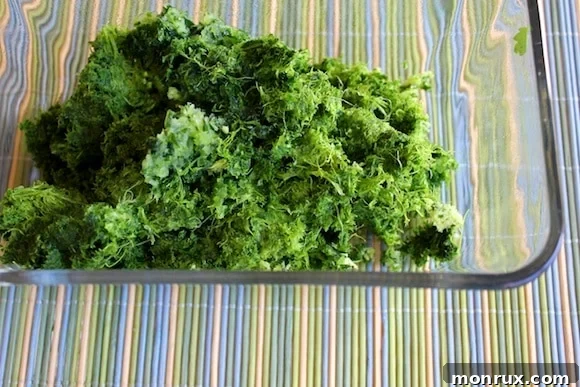
The first and most crucial step, of course, is to make your favorite green juice. For these savory crackers, it’s essential that you only use pulp from vegetables, not from fruits. Fruit pulp, especially from sweeter varieties, can significantly alter the flavor profile of your crackers, making them sweet rather than savory, and may also affect their crispness. To ensure separation, juice all your greens first and reserve the pulp. If you also plan to juice fruits, do so separately and then mix the fruit juice with your vegetable juice for consumption. This method keeps your vegetable pulp pure for the crackers.
Step Two: Blend Your Cracker Ingredients
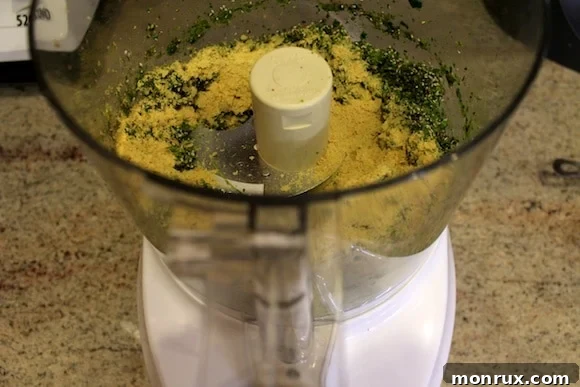
Next, it’s time to bring all the cracker elements together. In a food processor, combine your vegetable pulp with the other key ingredients: nutritional yeast, coconut aminos, ground flax seeds (or flax meal), and chia seeds. Add a tablespoon or two of water as needed to help the mixture blend smoothly. Pulse on high until a cohesive, slightly soft dough forms. The consistency should be pliable enough to spread but not overly wet or sticky. The flax and chia seeds will absorb moisture and act as a natural binder, ensuring your crackers hold their shape beautifully.
Step Three: Spread and Score the Dough
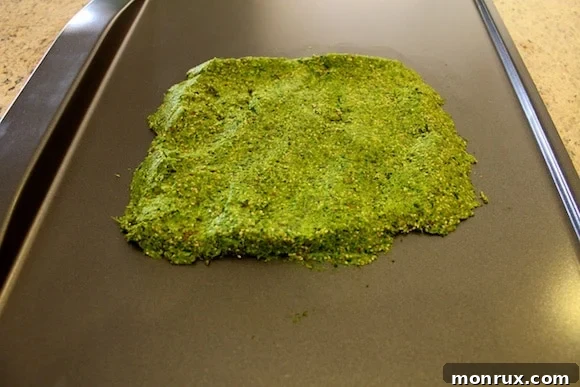
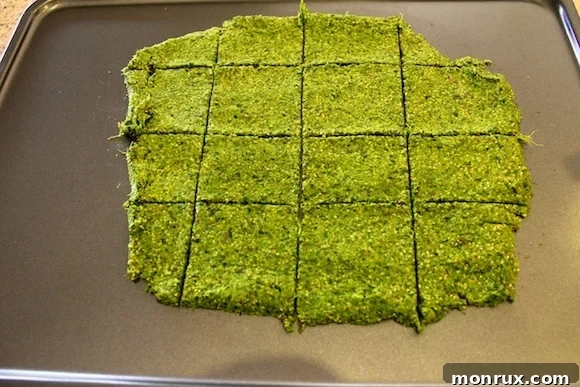
Once your dough is ready, transfer the mixture onto a dehydrator sheet lined with a non-stick liner, or a baking sheet covered with parchment paper. Use a spatula or a rolling pin to flatten the dough into an even, thin layer, aiming for about 1/4-inch thickness or less. Thinner crackers will result in a crispier texture. After spreading, use a knife or a pizza cutter to gently score the cracker mixture into your desired cracker shapes and sizes. This scoring makes it easy to break apart the individual crackers once they are dehydrated or baked.
Step Four: Dehydrate or Bake to Perfection
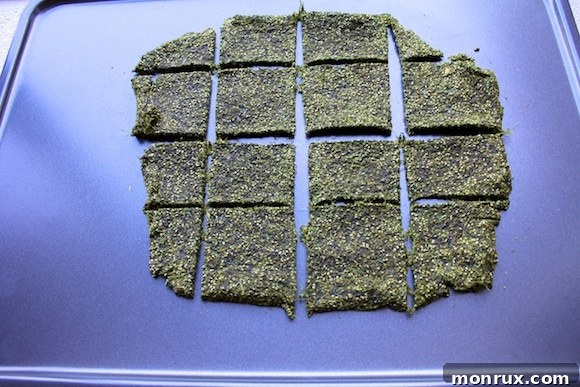
The final stage is to dry your crackers until they are perfectly crisp. If using a dehydrator, set it to 120 degrees Fahrenheit. After approximately 12 hours, carefully flip the crackers over. Continue dehydrating for another 12 hours (totaling about 24 hours), or until they are completely dry and snap cleanly. For oven users, set your oven to its lowest temperature, ideally around 135 degrees Fahrenheit, and utilize the convection fan if available. Keep a close eye on them, as oven times vary significantly; it might take anywhere from 30 to 90 minutes. Flip midway through baking. The goal is to achieve a fully dry, crunchy cracker without burning.
Essential Recipe Tips for Perfect Crackers
- Dehydrator vs. Oven: A dehydrator is ideal for achieving a truly “raw” cracker and offers more consistent, low-temperature drying over a longer period. If using an oven, use the absolute lowest temperature setting possible, ideally with a convection fan to circulate air and promote even drying. Monitor closely to prevent burning; oven drying can range from 30 to 90 minutes, depending on your oven and cracker thickness. Some modern ovens even have a dedicated dehydrator setting, which works perfectly.
- Storage: Once completely cooled and crisp, store your Green Juice Pulp Crackers in an airtight container or bag at room temperature. They should remain fresh and crunchy for up to 5 days. For longer storage, you can freeze them for several weeks, thawing at room temperature before serving.
- Pulp Choice: For the best savory flavor, stick to vegetable pulp only. Kale, parsley, celery, spinach, and cucumber pulp work exceptionally well. Avoid fruit pulp, as its sweetness can clash with the savory profile and higher sugar content can affect texture.
- Thickness Matters: Aim for a thin, even layer of dough (about 1/4 inch or less). Thicker crackers will take significantly longer to dry and may not achieve the desired crispness.
Customizing Your Pulp Crackers
This green juice pulp cracker recipe serves as an excellent foundation, but don’t hesitate to make it your own! Here are some ideas for customization:
- Spice It Up: Enhance the savory notes with a pinch of garlic powder, onion powder, a dash of black pepper, or a hint of smoked paprika for a smoky depth. A touch of cayenne pepper or red chili flakes can add a nice kick.
- Herbal Infusion: Incorporate finely chopped fresh herbs like rosemary, thyme, or oregano into the dough for an aromatic boost. Dried herbs also work beautifully.
- Seed Variations: While flax and chia seeds are key for binding, you can add other seeds for texture and nutrition. Try sunflower seeds, pumpkin seeds, or sesame seeds (toasted for extra flavor) for added crunch and healthy fats. Simply blend them in with the other ingredients.
- Flavor Boosters: A squeeze of fresh lemon juice can brighten the flavors, or a spoonful of tamari (gluten-free soy sauce) can deepen the umami profile if you prefer it over coconut aminos.
Serving Suggestions:
These versatile crackers are perfect on their own, but they also make an excellent vehicle for various toppings:
- Pair them with your favorite hummus, guacamole, or a creamy cashew cheese spread.
- Enjoy them with a fresh salsa or a healthy vegetable dip.
- Crumble them over salads for an extra crunch and fiber boost.
- Serve alongside a comforting bowl of soup.
Frequently Asked Questions About Pulp Crackers
While a food dehydrator is recommended for the best “raw” quality and consistent results, it’s not strictly necessary. You can absolutely use a conventional oven set to its absolute lowest temperature (e.g., 135-170°F or your oven’s lowest setting). Using a convection fan setting, if available, will help circulate air and speed up the drying process. Place the cracker mixture on parchment paper or a non-stick sheet on a cookie sheet. Keep a close watch, as oven drying can be much faster, typically ranging from 30 to 90 minutes.
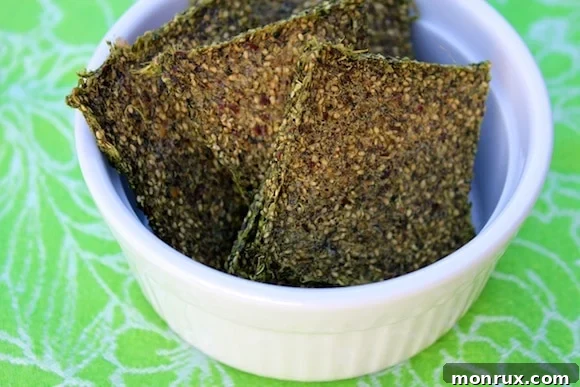
You’ll be pleasantly surprised! These crackers are truly delicious and you’d never guess they’re made from vegetable pulp. They boast a wonderfully savory and slightly salty flavor profile, enhanced by the umami notes of nutritional yeast and coconut aminos. The seeds add a delightful nutty undertone and a satisfying crunch that makes them incredibly addictive and fulfilling.
Yes, you can! If you’re not ready to make crackers immediately after juicing, you can store your vegetable pulp in an airtight container in the refrigerator for up to 2-3 days. For longer storage, the pulp freezes very well. Simply place it in a freezer-safe bag or container and it will keep for up to a month. Thaw it in the refrigerator before using in your cracker recipe.
We truly hope you enjoy making these unique and healthy crackers! If you do, please consider leaving a comment and a starred review below to share your experience. Your feedback helps our community of clean eaters grow and discover new favorite recipes.
And, don’t forget to connect with us on social media! Find us on Facebook, Pinterest, Instagram, and YouTube for daily inspiration, tips, and new recipes!
Green Juice Pulp Crackers Recipe
★★★★★
5 from 5 reviews
These crisp and incredibly tasty green juice pulp crackers are the perfect way to make the most of your leftover pulp from juicing vegetables. Made with simple, wholesome ingredients, they are naturally vegan, gluten-free, and oil-free, making them a fantastic healthy snack option!
- Total Time: 12 hours 15 minutes
- Yield: 12 crackers (1x)
Ingredients
- Pulp from 1 bunch of juiced kale leaves and stems and 1 bunch of parsley, or your favorite blend of green vegetables (you will need about 1 1/2 cups of pulp total)
- 1/4 cup ground flax seeds (flax meal)
- 1/4 cup chia seeds
- 1/4 cup coconut aminos
- 1/4 cup nutritional yeast
- 1–2 tablespoons of water, if needed
Instructions
- Combine the juice pulp, ground flax seeds, chia seeds, coconut aminos, and nutritional yeast in a food processor. Pulse on high until all ingredients are well combined and a cohesive dough forms, typically about 45 seconds. The dough should be soft enough to spread easily but not excessively wet or sticky. If the mixture appears too dry, gradually add 1-2 tablespoons of water until the desired consistency is achieved.
- Transfer the prepared dough onto a dehydrator sheet lined with a non-stick sheet, or onto a baking sheet covered with parchment paper. Using a spatula or rolling pin, flatten the mixture out as much as possible, aiming for an even thickness of approximately 1/4-inch or thinner. Thinner crackers will yield a crisper end product. Once spread, use a knife or pizza cutter to gently score the dough into individual cracker sizes.
- If using a dehydrator, set it to 120 degrees Fahrenheit. Dehydrate the crackers for 12 hours. After this initial period, carefully flip each cracker over to ensure even drying. Continue dehydrating for another 12 hours (totaling 24 hours), or until the crackers are completely dry, firm, and snap crisply when broken.
- If using an oven, preheat it to its lowest possible setting, typically around 135-170 degrees Fahrenheit, and turn on the convection fan if available. Bake the crackers for 30-45 minutes, then gently flip them. Continue baking for an additional 30-45 minutes, or until they are fully crisp and dry. Keep a very close eye on them to prevent burning, as oven temperatures can fluctuate and dry faster than a dehydrator.
Notes
- When using an oven instead of a dehydrator, always opt for the lowest temperature setting with the convection fan engaged (if available). This helps dry the crackers evenly without cooking them too quickly. Monitor closely to prevent burning; drying times can vary from 30 to 90 minutes.
- For optimal freshness and crispness, store the completely cooled crackers in an airtight container or bag at room temperature for up to 5 days.
- This recipe is highly adaptable. Feel free to incorporate your favorite dried herbs (like oregano or rosemary), spices (garlic powder, onion powder, smoked paprika), or other seeds (sunflower, pumpkin) for varied flavor and texture.
- Author: Carrie Forrest, MPH in Nutrition
- Prep Time: 15 mins
- Cook Time: 12 hours
- Category: Side dishes, Snacks
- Method: Raw food, Dehydrating, Baking
- Cuisine: Homemade, Plant-based
- Diet: Gluten Free, Vegan, Oil Free
Nutrition
- Serving Size: 2 crackers
- Calories: 67
- Sugar: 0.1 g
- Sodium: 199.7 mg
- Fat: 1.5 g
- Saturated Fat: 0.2 g
- Carbohydrates: 6.3 g
- Fiber: 3.6 g
- Protein: 3.2 g
- Cholesterol: 0 mg
Don’t miss out on more exclusive clean eating recipes, health tips, and wellness insights! Join my newsletter list today. It’s 100% free, no spam, and you can unsubscribe at any time. Stay connected for your daily dose of healthy living!
Explore More Juicing Resources!
Enhance your juicing journey and maximize the benefits of fresh produce with these helpful guides and recipes. From choosing the right equipment to discovering new juice blends, we’ve got you covered!
About the Author: Carrie Forrest holds a Master’s degree in Public Health with a specialization in Nutrition and is a certified holistic nutritionist. As a prominent wellness and food blogger, her site welcomes over 5 million visitors annually. Carrie’s inspiring journey of recovery from chronic illness fuels her passion for empowering other women to transform their health. Feel free to reach out to her through her contact form for any inquiries or support.