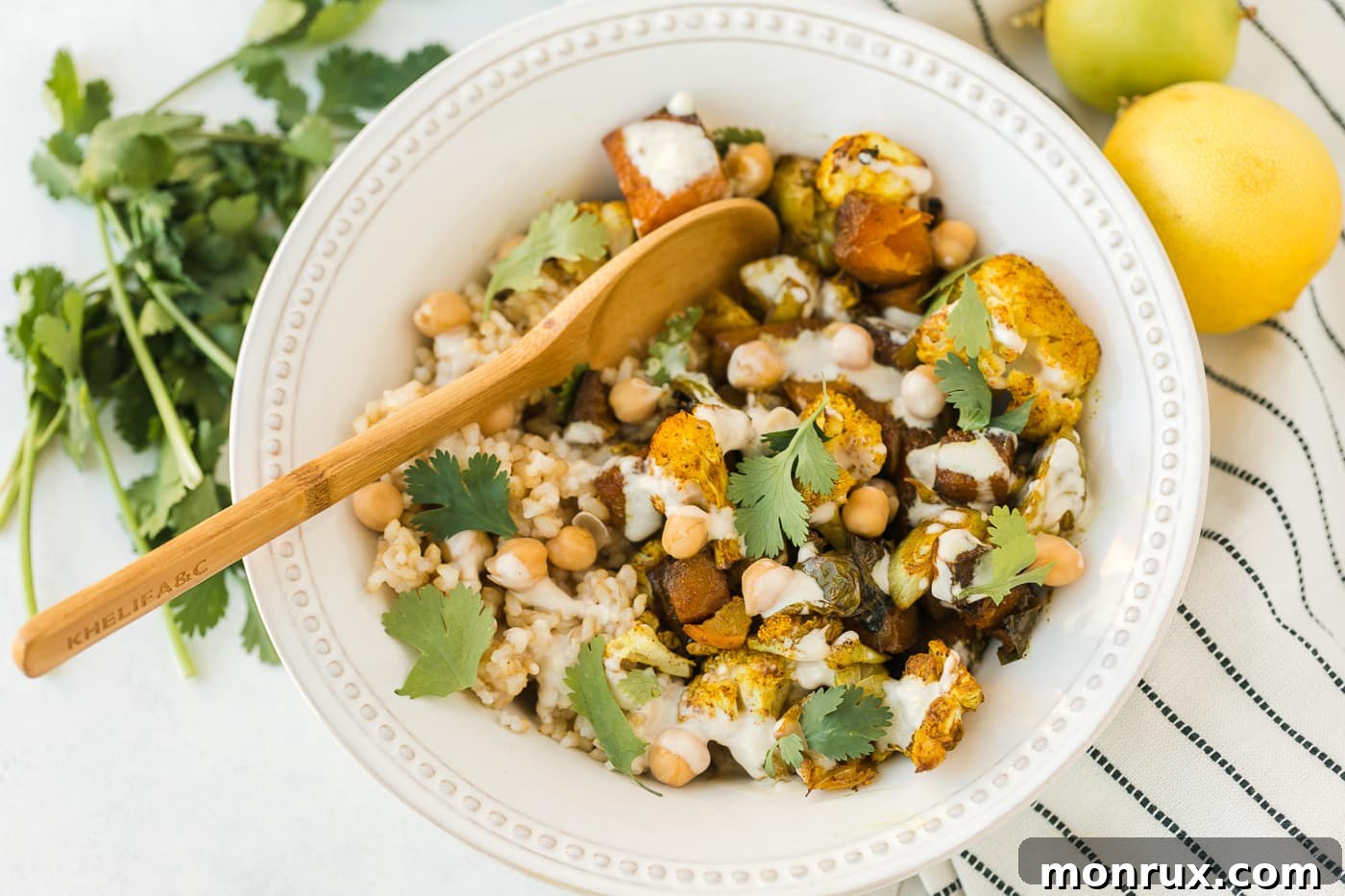
In a world increasingly focused on wholesome, nourishing meals, the Anti-Inflammatory Veggie Bowl with Lemon Tahini Sauce stands out as a vibrant, incredibly satisfying, and health-boosting option. This delightful recipe isn’t just a meal; it’s a testament to the power of plant-based ingredients, meticulously crafted to offer both delicious flavors and profound wellness benefits. Perfectly suited for busy lifestyles, it serves as an ideal meal prep solution for lunches and dinners throughout the week. Each bite of this vegan and gluten-free bowl delivers a harmonious blend of tender, flavorful roasted vegetables, hearty brown rice, protein-packed chickpeas, and a luscious, zesty lemon tahini drizzle that ties everything together beautifully.
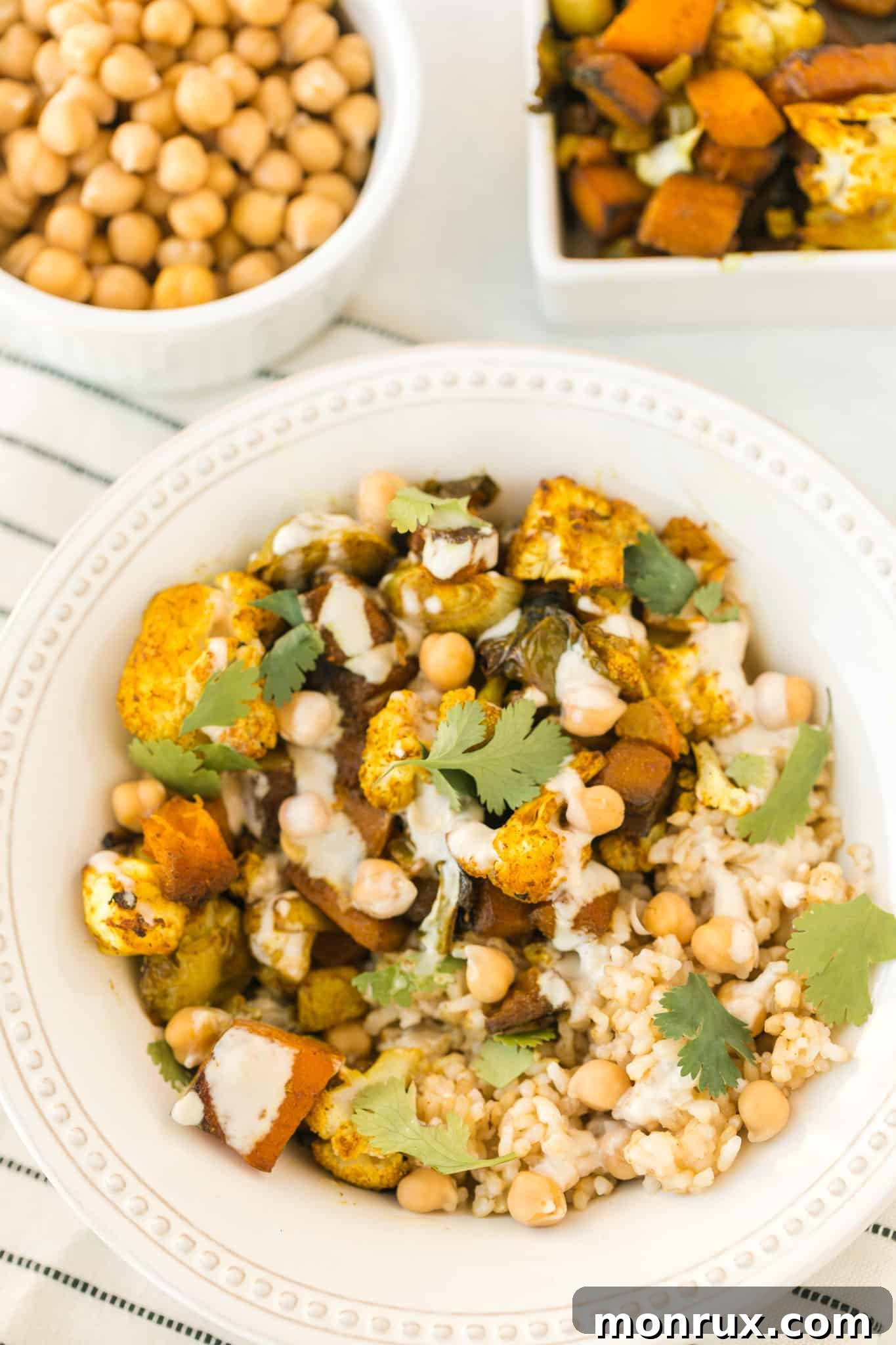
Whether you’re deeply craving an abundance of nutrient-rich vegetables or seeking a fulfilling vegan meal that doesn’t compromise on taste or health, this veggie bowl infused with anti-inflammatory spices is an absolute must-try. The magic begins with a carefully selected array of seasonal vegetables – think creamy butternut squash, crisp cauliflower, sweet onion, and earthy Brussels sprouts – all roasted to perfection with a homemade spice blend that includes warming cinnamon, aromatic cumin, sweet paprika, and potent turmeric. These spices don’t just add incredible depth of flavor; they also contribute significantly to the dish’s anti-inflammatory properties.
The foundation of this nourishing bowl is then built with wholesome brown rice and tender chickpeas, providing a balanced profile of complex carbohydrates and plant-based protein. Finally, a silky, bright lemon tahini sauce is generously drizzled over the top, adding a creamy texture and a tangy kick that elevates the entire dish. This recipe is designed to be both detoxifying and supremely flavorful, proving that healthy eating can be both easy and extraordinarily delicious. Join us as we walk through the simple steps to create this incredibly beneficial and tasty meal.
Why Embrace Anti-Inflammatory Eating?
Chronic inflammation, often referred to as a silent killer, plays a significant role in the development of numerous health issues, ranging from heart disease and diabetes to autoimmune disorders and certain cancers. While acute inflammation is a natural and necessary response to injury or infection, persistent low-grade inflammation can silently damage your body’s cells and tissues over time. Adopting an anti-inflammatory diet is a powerful strategy to combat this, focusing on foods that actively reduce inflammation markers in the body while avoiding those that exacerbate it.
This approach emphasizes whole, unprocessed foods like fruits, vegetables, whole grains, legumes, nuts, and healthy fats, which are rich in antioxidants, vitamins, minerals, and phytonutrients. These compounds work synergistically to protect cells, support immune function, and bring the body back into balance. By integrating meals like this Anti-Inflammatory Veggie Bowl into your routine, you’re not just enjoying a tasty dish; you’re making a conscious choice to fuel your body with ingredients known for their healing and protective qualities, paving the way for improved energy levels, better digestion, clearer skin, and overall enhanced well-being.
The Power of This Veggie Bowl
This particular veggie bowl isn’t just another recipe; it’s a powerhouse of nutrition and flavor, designed with your health and convenience in mind. Its thoughtful composition makes it an outstanding choice for anyone looking to incorporate more wholesome, plant-based meals into their diet.
Nutrient-Dense & Flavorful
Every ingredient in this bowl is chosen for its nutritional prowess and its contribution to a rich flavor profile. The vibrant medley of roasted vegetables—butternut squash, cauliflower, onions, radishes, and Brussels sprouts—are packed with essential vitamins, minerals, and dietary fiber. Roasting these vegetables brings out their natural sweetness and creates a wonderfully caramelized texture, making them incredibly appealing even to those who might be hesitant about eating their greens. The addition of a unique spice blend, featuring turmeric, cinnamon, cumin, and paprika, not only infuses the dish with exotic aromas but also delivers a potent dose of anti-inflammatory compounds, turning a simple meal into a therapeutic experience.
Perfect for Meal Prep
One of the standout features of this Anti-Inflammatory Veggie Bowl is its exceptional suitability for meal prepping. With a recipe yielding eight servings, it’s perfect for feeding a family or preparing healthy, ready-to-eat meals for an entire week. Imagine having nutritious, satisfying lunches or dinners simply waiting for you in the refrigerator, eliminating the stress of last-minute cooking and reducing the temptation of unhealthy takeout. The roasted vegetables hold up beautifully, and the components can be stored separately and assembled just before eating, ensuring optimal freshness and flavor. This makes healthy eating effortless, even on your busiest days.
Highly Customizable
Flexibility is key in sustainable healthy eating, and this recipe offers immense versatility. While the suggested vegetable combination is delicious and highly beneficial, feel free to adapt it to your preferences, what’s in season, or what you have on hand. Sweet potatoes, parsnips, carrots, or fennel would all make excellent additions or substitutions for the roasted vegetables. Similarly, the base can be swapped from brown rice to quinoa for a different texture and nutritional boost. You can also experiment with different beans or add leafy greens for extra nutrients. This adaptability ensures that the bowl never gets boring and can cater to diverse tastes and dietary needs.
Vegan & Gluten-Free Goodness
Catering to a wide range of dietary preferences and needs, this veggie bowl is inherently vegan and gluten-free. This makes it an inclusive option for those with allergies, sensitivities, or simply choosing a plant-based lifestyle. By focusing on whole, unprocessed plant ingredients, we ensure that the meal is naturally free from common allergens and inflammatory triggers often found in animal products or gluten-containing grains. It’s a clean-eating dream, offering peace of mind along with incredible taste and health benefits.
Crafting Your Anti-Inflammatory Veggie Bowl
The journey to creating this nourishing bowl is surprisingly straightforward, relying on simple techniques to bring out the best in each ingredient. Let’s delve into the core components that make this recipe truly special.
Choosing Your Vegetables
The heart of any good veggie bowl lies in its produce. For this anti-inflammatory variant, we recommend a mix that roasts well and offers a spectrum of nutrients. Butternut squash, with its rich beta-carotene content, and cauliflower, a cruciferous powerhouse, are excellent choices. Onions add a foundational savory note, while Brussels sprouts contribute a slightly bitter, earthy flavor and an abundance of vitamins K and C. Radishes, often overlooked for roasting, become sweet and tender when cooked, adding a delightful peppery undertone. Don’t hesitate to include other sturdy vegetables like sweet potatoes, parsnips, carrots, or even bell peppers for added color and flavor. Aim for similar-sized pieces to ensure even cooking.
The Magic Spice Blend
What truly sets this bowl apart is its signature anti-inflammatory spice blend. Each spice is a hero in its own right:
- Cinnamon: Known for its powerful antioxidant properties and ability to help regulate blood sugar.
- Cumin: Rich in antioxidants and has been shown to aid digestion and reduce inflammation.
- Paprika: Contains capsaicinoids that exhibit anti-inflammatory and antioxidant effects.
- Turmeric: The superstar of anti-inflammatory spices, thanks to its active compound curcumin.
- Ginger: A potent anti-inflammatory and antioxidant, excellent for digestive health.
- Coriander: Offers antioxidant and anti-inflammatory properties, also supports digestion.
This blend not only imparts a warm, earthy, and slightly sweet flavor but also transforms your meal into a potent anti-inflammatory remedy.
The Creamy Lemon Tahini Sauce
No bowl is complete without a stellar sauce, and our lemon tahini dressing is simply sublime. Tahini, a paste made from ground sesame seeds, is a fantastic source of healthy fats, protein, and minerals like calcium and magnesium. Its rich, nutty flavor provides an excellent base. Fresh lemon juice cuts through the richness, adding a bright, zesty tang that invigorates the palate. A touch of maple syrup balances the flavors with a subtle sweetness, while a pinch of sea salt enhances all the components. The addition of a little water allows you to achieve the perfect creamy, drizzle-able consistency, ensuring every forkful is coated in deliciousness.
Step-by-Step Guide to a Nourishing Meal
Creating this anti-inflammatory veggie bowl is a straightforward process, making it accessible for cooks of all skill levels. Follow these steps to prepare your wholesome and delicious meal.
Step 1: Prep Your Produce
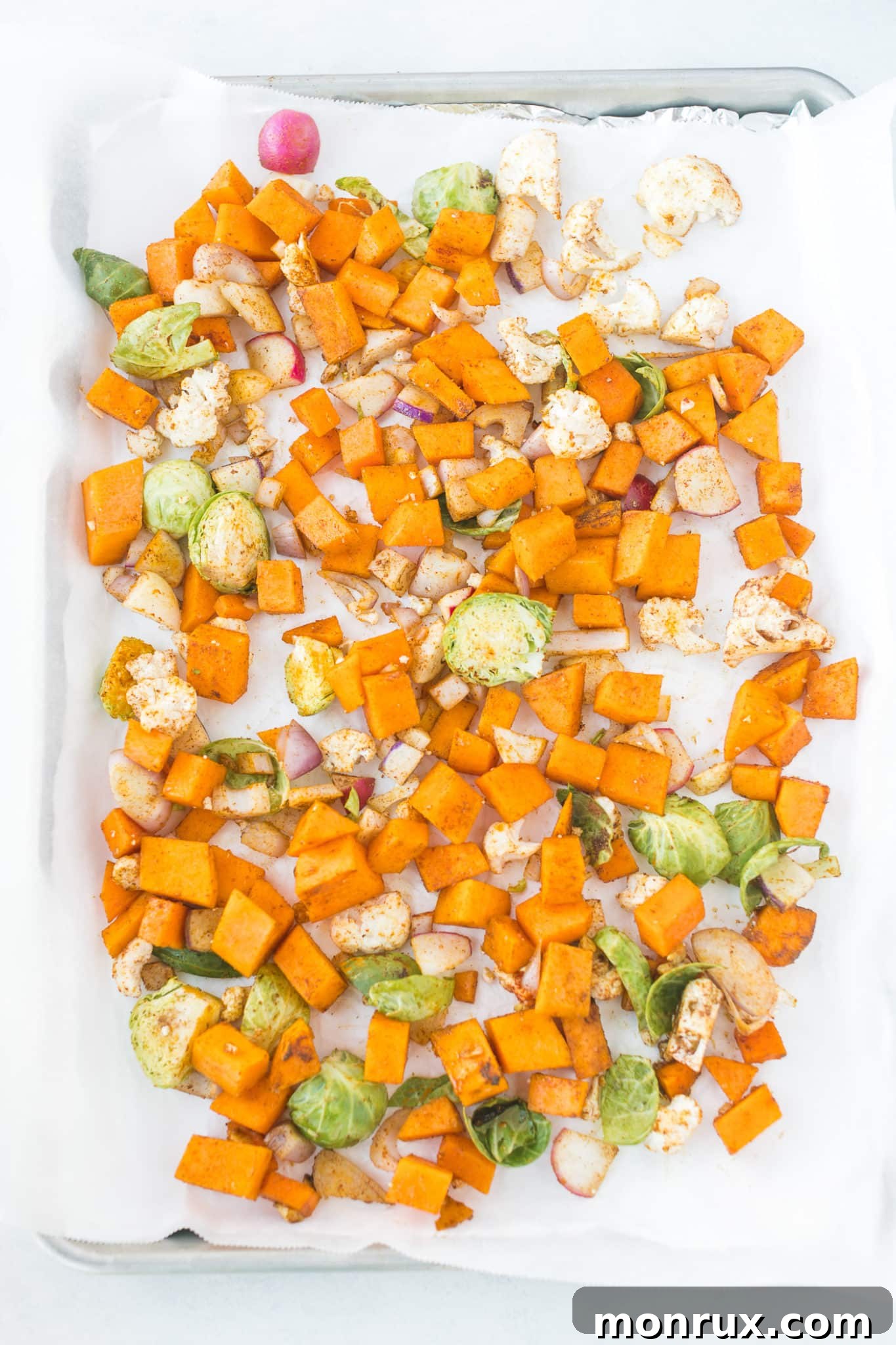
Begin by preheating your oven to 375 degrees F (190 degrees C). The most time-consuming part of this recipe is often the vegetable preparation. Wash all your chosen vegetables thoroughly. Then, chop them into roughly similar-sized pieces to ensure they cook evenly. For example, break the cauliflower into florets, dice the butternut squash, slice the onion, halve the Brussels sprouts, and chop the radishes. Mince your garlic cloves. If you have access to pre-chopped vegetables, this can significantly reduce your prep time. Place all the chopped vegetables into a large mixing bowl.
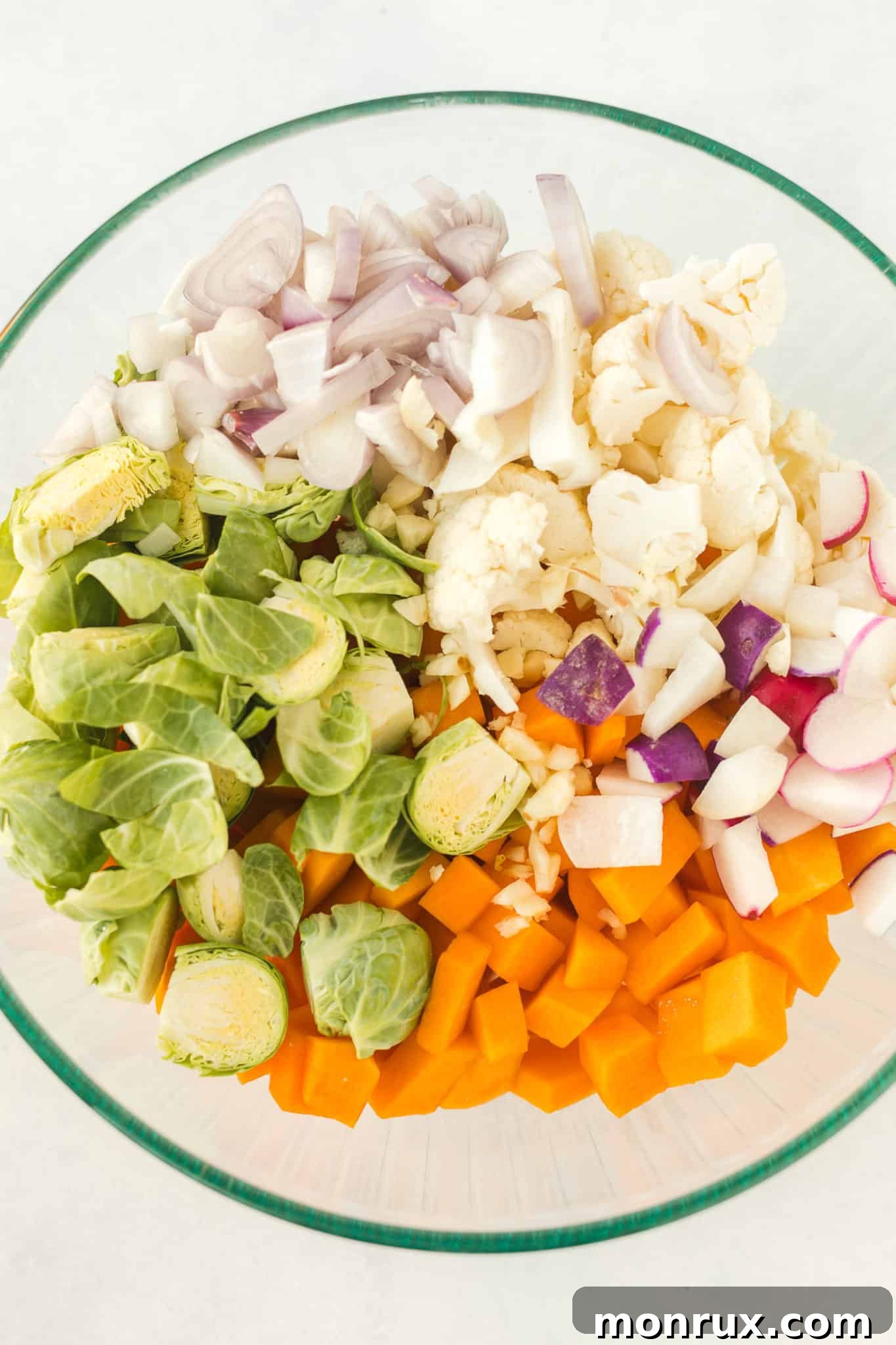
For precise measurements, refer to the printable recipe card at the end of this post.
Step 2: Season & Coat
Pour your chosen cooking oil, such as avocado oil or olive oil, over the chopped vegetables in the mixing bowl. These healthy oils not only help the spices adhere but also contribute beneficial fats. In a separate small bowl, combine your anti-inflammatory spice blend: ground cinnamon, ginger, cumin, turmeric, coriander, smoked paprika, sea salt, and ground black pepper. Add this fragrant spice mixture to the vegetables and oil. Using your hands or a large spoon, toss everything together until all the vegetables are thoroughly coated in the oil and spices. Ensure an even distribution for maximum flavor.
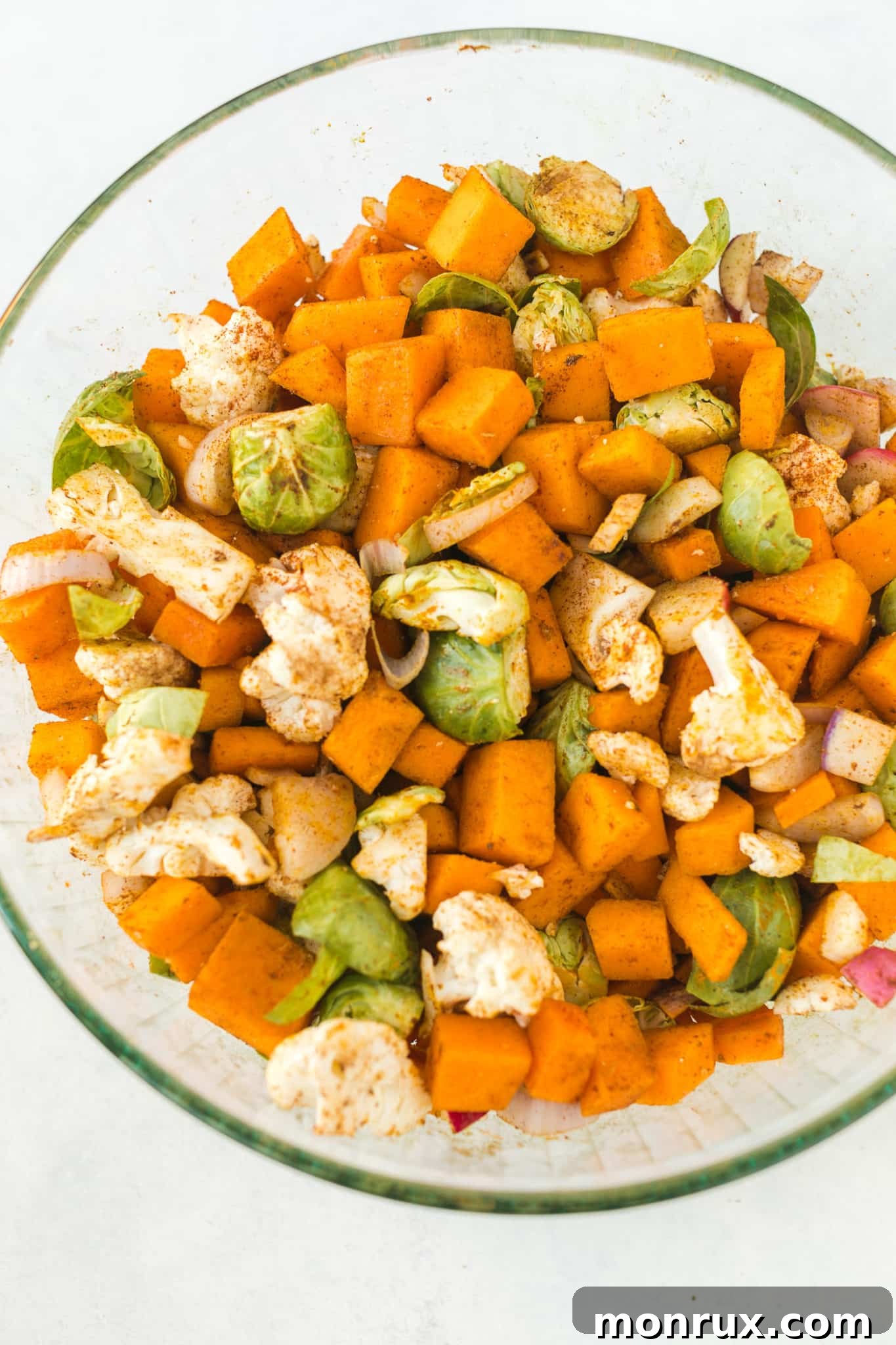
Step 3: Roast to Perfection
Line two large baking sheets with parchment paper. Parchment paper prevents sticking and makes cleanup much easier. Spread the seasoned vegetables evenly across both baking sheets, ensuring they are in a single layer without overcrowding. This allows them to roast rather than steam, leading to deliciously caramelized edges. Place the baking sheets in your preheated oven and roast for approximately 45 minutes. Halfway through the cooking time (around the 20-25 minute mark), give the vegetables a good toss with a spatula to ensure even cooking and browning on all sides.
Step 4: Prepare Your Base
While your vibrant vegetables are roasting, it’s the perfect time to prepare your grain. Cook your chosen base, whether it’s brown rice or quinoa, according to package directions. Brown rice is an excellent choice for this veggie bowl due to its delightful chewy texture and nutty flavor, which complements the roasted vegetables beautifully. You can easily cook brown rice on the stovetop, in a rice cooker, or even in an Instant Pot for added convenience. If opting for quinoa, remember it cooks faster and offers a complete protein source.
Step 5: Whisk Up the Sauce
In a medium bowl, combine all the ingredients for your creamy lemon tahini sauce: tahini, freshly squeezed lemon juice, maple syrup, and sea salt. Start by whisking these together until relatively smooth. Then, gradually add the water, one tablespoon at a time, continuing to whisk until the sauce reaches your desired consistency – smooth, creamy, and easily drizzle-able. Taste and adjust seasonings if necessary, adding more lemon for tang or maple syrup for sweetness, according to your preference.
Step 6: Assemble & Enjoy
Once your vegetables are beautifully roasted and tender, remove them from the oven. Now comes the exciting part: assembling your bowls! If you’re preparing this for meal prep, allow all components to cool completely before dividing them into airtight storage containers. They can be refrigerated for up to 4 days, ready for quick and healthy meals.
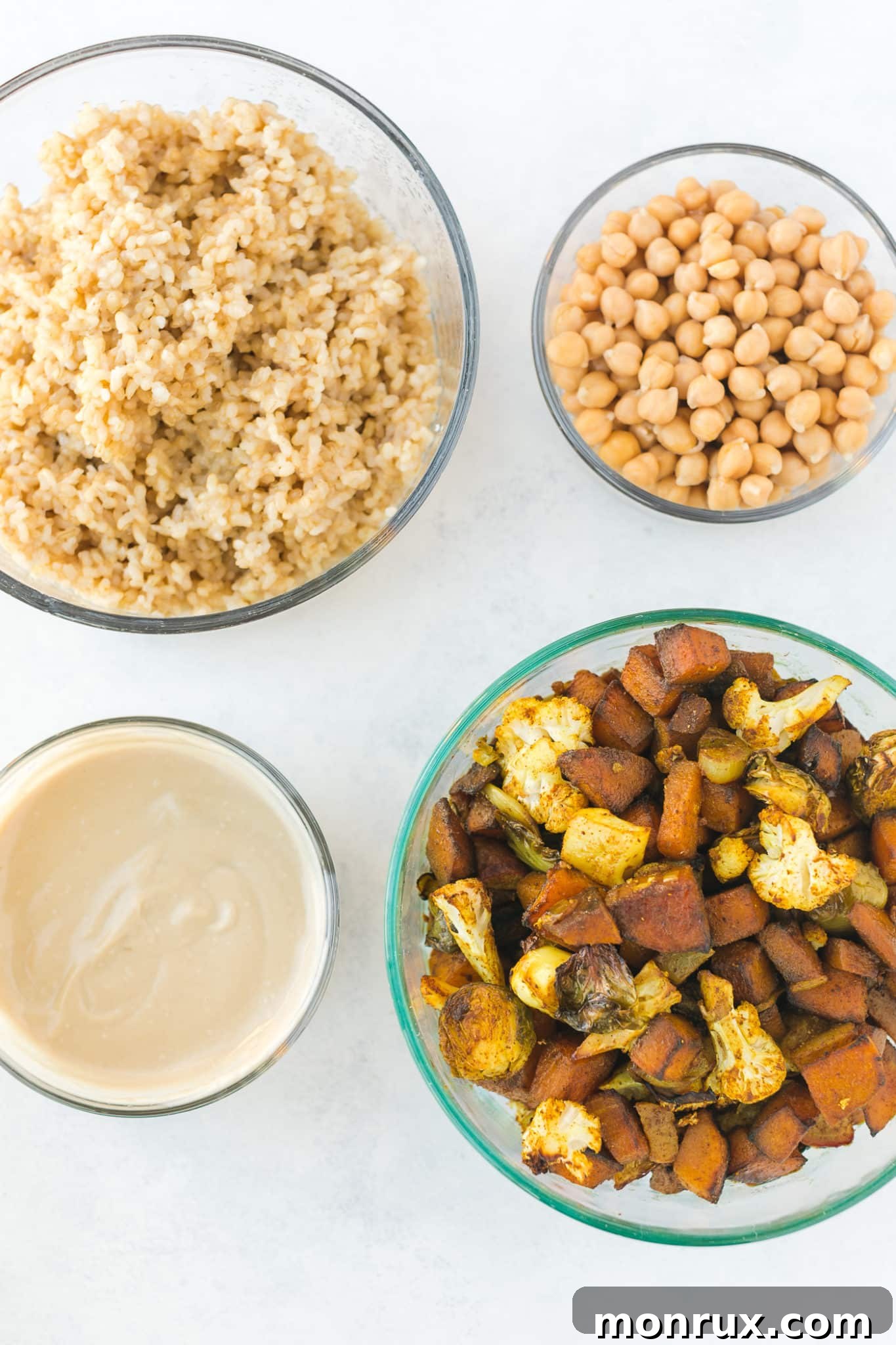
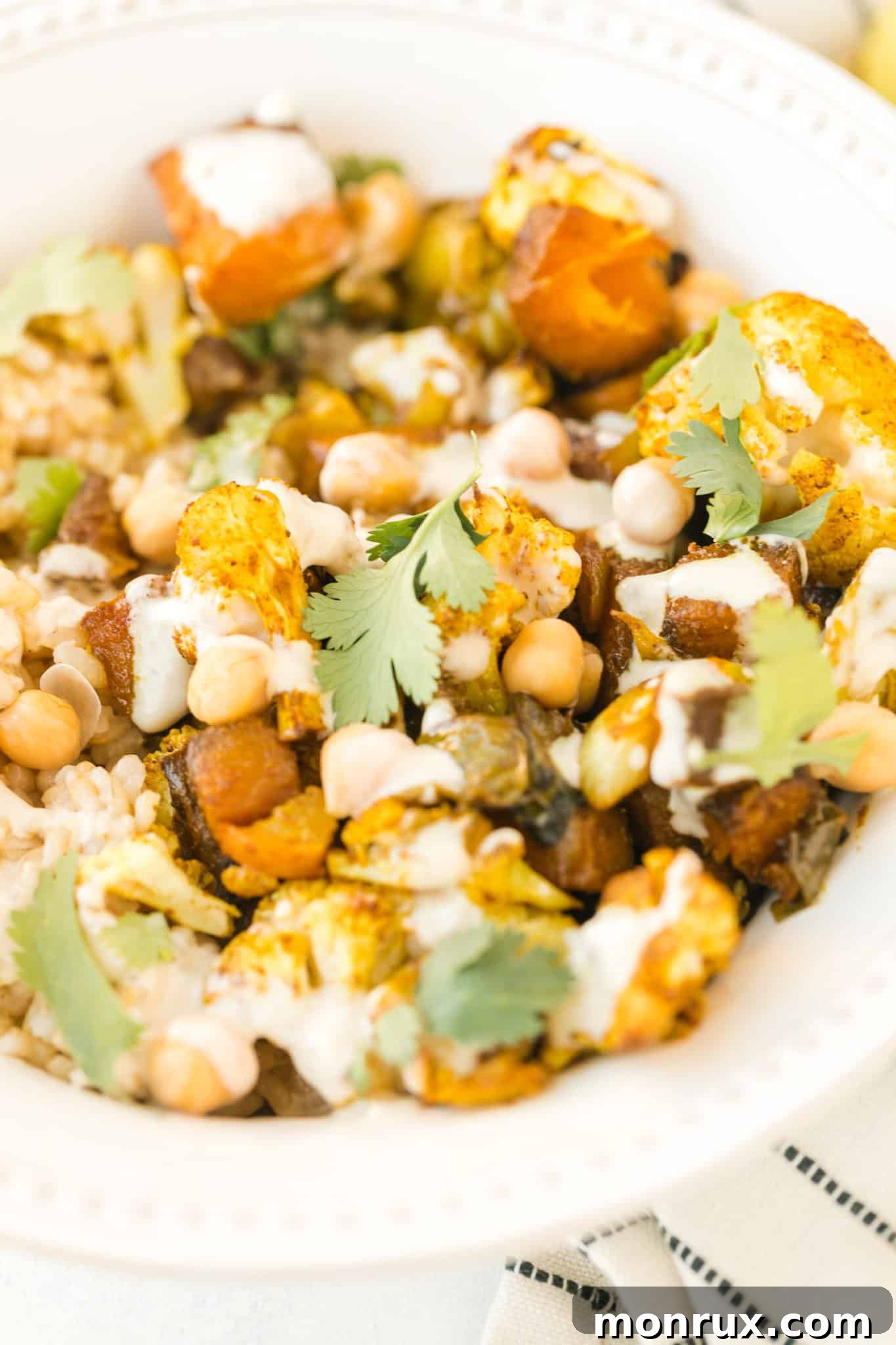
For immediate enjoyment, spoon a generous portion of cooked brown rice or quinoa into the bottom of each serving bowl. Top with a hearty scoop of the warm, roasted anti-inflammatory vegetables and a handful of rinsed and drained chickpeas. Finally, drizzle liberally with the creamy lemon tahini sauce. Serve immediately and savor the incredible flavors and nourishing goodness.
Expert Tips for Your Best Bowl Yet
Elevate your Anti-Inflammatory Veggie Bowl experience with these helpful tips and tricks, ensuring every batch is as perfect as the last.
- Vegetable Variety is Key: Don’t limit yourself to the suggested vegetables. Explore seasonal produce! Sweet potatoes, parsnips, carrots, fennel, zucchini, bell peppers, and even mushrooms can be fantastic additions. The key is to cut harder vegetables into smaller pieces and softer ones into larger pieces to ensure even roasting.
- Spice Blend Flexibility: The beauty of this anti-inflammatory spice blend is its forgiving nature. If you’re missing one or two spices, don’t fret! The remaining spices will still create a wonderful flavor profile. You can also adjust the quantities to your taste—add more turmeric for a bolder anti-inflammatory punch or more paprika for a smokier note.
- Optimal Storage for Meal Prep: For best results when meal prepping, store the roasted vegetables, cooked rice/quinoa, and chickpeas in separate airtight containers in the refrigerator. Store the tahini sauce in a small sealed jar. This prevents the components from becoming soggy and allows for optimal reheating and assembly. Enjoy within 4 days. Reheat the vegetables and grain gently before serving.
- Serving Suggestions: While delicious on its own, consider adding a sprinkle of fresh herbs like parsley or cilantro for a burst of freshness. Toasted sesame seeds or chopped nuts can add an extra layer of crunch and healthy fats. A squeeze of fresh lime juice can also brighten the flavors even further.
- Batch Cooking Efficiency: Double or even triple the recipe for larger meal prep sessions. Roasting all the vegetables at once saves significant time during the week. Just ensure you don’t overcrowd the baking sheets; use more sheets if needed to allow vegetables to caramelize properly.
Frequently Asked Questions
Here are answers to some common questions about making and enjoying this Anti-Inflammatory Veggie Bowl.
Absolutely! While chickpeas are a fantastic source of protein and fiber that complement this bowl beautifully, you can easily substitute them with other beans. Black beans, cannellini beans, or even lentils would work wonderfully. Feel free to use whatever type of bean you prefer or have on hand. If you’re not a fan of beans, you can also omit them entirely or substitute with roasted tofu or tempeh for added protein.
The spice blend for this recipe is very forgiving. If you’re missing one or two of the suggested spices, don’t worry about it! Just use what you have. The combination of the remaining spices will still yield a flavorful and aromatic result. However, we highly recommend including turmeric if possible, as it’s a star player in the anti-inflammatory aspect of this dish.
For optimal freshness and to prevent sogginess, it’s best to store the roasted vegetables, cooked grain (rice or quinoa), and chickpeas in separate airtight containers in the refrigerator. The lemon tahini sauce should also be stored separately in a sealed jar. When ready to eat, simply reheat the vegetables and grain, then assemble your bowl and drizzle with the sauce. All components will keep well in the refrigerator for up to 4 days.
Yes, this veggie bowl is excellent for entertaining! You can roast the vegetables, cook the grain, and prepare the tahini sauce a day or two in advance. Store each component separately as described above. On the day of your gathering, gently reheat the vegetables and grain, then set up a “bowl bar” where guests can assemble their own, adding chickpeas and a generous drizzle of the sauce. It makes for a vibrant and interactive dining experience.
More Wholesome Vegan Recipes You Might Like
If you’ve enjoyed the nourishing goodness of this Anti-Inflammatory Veggie Bowl, you’ll surely love exploring more of our healthy and delicious vegan recipes. Expand your plant-based culinary repertoire with these fantastic options, perfect for any meal of the day.
- Coconut Lentil Curry
- Lentil & Wild Rice Salad
- Quinoa & Chickpea Salad
- Vegan Potato Leek Soup
- Instant Pot Vegan Stew with Chickpeas
- Mexican Buddha Bowls
Essential Meal Prep Resources
Mastering the art of meal prep can revolutionize your healthy eating journey, making it easier, more consistent, and incredibly rewarding. Dive into our curated collection of helpful resources designed to guide you through efficient and effective meal planning.
We truly hope you enjoy making this nourishing Anti-Inflammatory Veggie Bowl! If you prepare this recipe, we would be delighted if you could leave a comment and a starred review below to share your experience. Your feedback helps our community of healthy eaters.
To stay connected and receive more delicious, clean eating recipes and wellness tips directly, consider following us on social media. You can find us spreading healthy inspiration on Facebook, Pinterest, Instagram, and YouTube!
Print Recipe
Anti-Inflammatory Veggie Bowl with Tahini Sauce
5 from 1 review
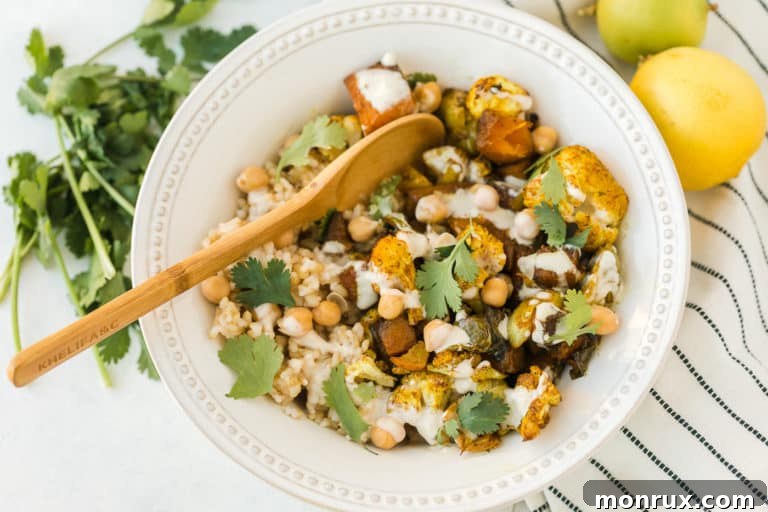
This delicious Anti-Inflammatory Veggie Bowl with Lemon Tahini Sauce is the perfect meal prep lunch or dinner recipe. Serve the flavorful roasted vegetables with brown rice, chickpeas, and a lemon tahini drizzle. Vegan and gluten-free.
- Total Time: 1 hour
- Yield: 8 servings
Ingredients
- For the veggies:
- 1 pound chopped butternut squash (about 2 cups)
- 1 head of cauliflower, broken into florets
- 1 onion, chopped
- 5 small red radishes, chopped
- 1/2 pound Brussels sprouts, halved
- 3 garlic cloves, minced
- 4 tablespoons cooking oil (e.g., avocado oil or olive oil)
- 1 teaspoon ground cinnamon
- 1/2 teaspoon ground ginger
- 1/2 teaspoon ground cumin
- 1 teaspoon turmeric
- 1/2 teaspoon ground coriander
- 1/2 teaspoon smoked paprika
- 1 teaspoon sea salt
- 1/2 teaspoon ground black pepper
- For the sauce:
- 1/2 cup tahini
- 2 lemons, juiced
- 1 tablespoon maple syrup
- 1 teaspoon sea salt
- 2 tablespoons water
- For the bowls:
- 2 cups cooked brown rice
- 1 (15-ounce) can chickpeas, rinsed and drained
Instructions
- Preheat your oven to 375 degrees F (190 degrees C).
- Place the chopped butternut squash, cauliflower florets, onion, radishes, Brussels sprouts, and minced garlic into a large mixing bowl.
- Add the cooking oil, cinnamon, ginger, cumin, turmeric, coriander, paprika, salt, and pepper to the bowl. Toss thoroughly to combine, ensuring all vegetables are well coated.
- Line two baking sheets with parchment paper to prevent sticking. Evenly spread the seasoned vegetables onto the baking sheets, ensuring they are in a single layer to roast properly.
- Place the baking sheets in the preheated oven for 45 minutes. Halfway through the cooking process (around 20-25 minutes), toss the vegetables with a spatula to promote even cooking and browning.
- While the vegetables are roasting, prepare your grain. Cook 2 cups of brown rice (or quinoa) according to package directions. Brown rice is preferred for its texture and flavor, and can be cooked on the stovetop or in an Instant Pot.
- Prepare the tahini sauce: In a medium bowl, combine the tahini, fresh lemon juice, maple syrup, and sea salt. Stir well, then gradually add the 2 tablespoons of water, whisking until the sauce is smooth and reaches a creamy, drizzle-able consistency.
- Once the vegetables are done roasting, remove them from the oven. If meal prepping, allow all components to cool completely before transferring to airtight storage containers.
- To assemble your anti-inflammatory veggie bowls, place a scoop of cooked brown rice or quinoa at the bottom of each bowl. Top with a generous scoop of the roasted vegetables and a portion of rinsed chickpeas. Drizzle liberally with the lemon tahini sauce and serve warm.
Notes
- Feel free to use a variety of other vegetables you have on hand, such as sweet potatoes, parsnips, carrots, or fennel, adapting to seasonal availability and personal preference.
- The spice blend is quite adaptable. If you are missing one or two spices, simply omit them. The dish will still be delicious, though we recommend including turmeric for its potent anti-inflammatory benefits.
- Store any cooked roasted vegetables, cooked grain, and chickpeas in separate tightly-sealed containers in the refrigerator for up to 4 days. Store the tahini sauce in its own sealed container. Reheat vegetables and grain gently before assembling and serving.
- Author: Carrie Forrest, MPH in Nutrition
- Prep Time: 15 minutes
- Cook Time: 45 minutes
- Category: Main dish
- Method: Oven
- Cuisine: Healthy
- Diet: Vegan
Nutrition
- Serving Size: 1/8 of recipe
- Calories: 327
- Sugar: 5.8 g
- Sodium: 505 mg
- Fat: 17 g
- Saturated Fat: 2.5 g
- Carbohydrates: 38.9 g
- Fiber: 8.4 g
- Protein: 10.3 g
- Cholesterol: 0 mg
About the Author: Carrie Forrest holds a master’s degree in public health with a specialization in nutrition and is a certified holistic nutritionist. She is a prominent wellness and food blogger, attracting over 5 million visitors to her site annually. Carrie shares an inspiring story of recovery from chronic illness and is deeply passionate about empowering other women to transform their health journeys. You can reach her through her contact form for inquiries or collaboration.
Don’t miss out on exclusive clean eating recipes and invaluable health tips! Join our newsletter list today. It’s 100% free, spam-free, and you can unsubscribe anytime.