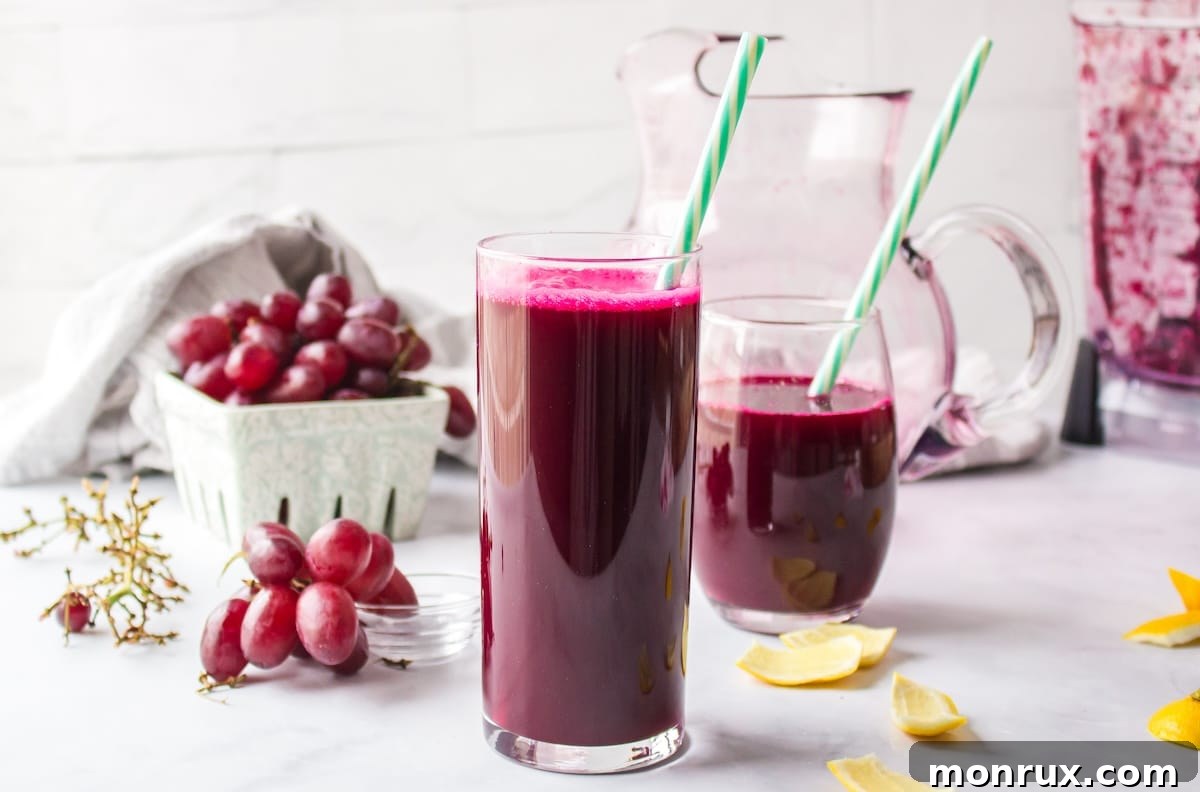
Welcome to the ultimate guide for creating a vibrant and exceptionally nutritious Purple Juice recipe. This isn’t just a drink; it’s a powerful elixir, brimming with essential vitamins, potent antioxidants, and natural energy boosters. Perfect for kickstarting your day with a refreshing burst or as a revitalizing afternoon pick-me-up, this homemade juice promises a delightful, naturally sweet, and incredibly delicious experience. Its stunning hue, primarily derived from beets and purple grapes, makes it as appealing to the eye as it is beneficial for your body. Imagine a drink that not only tastes incredible but also supports your overall well-being, from boosting circulation to enhancing your immune system. This detailed guide will walk you through every step, ensuring you can easily craft this amazing purple juice, whether you own a sophisticated juicer or simply have a reliable blender at hand.
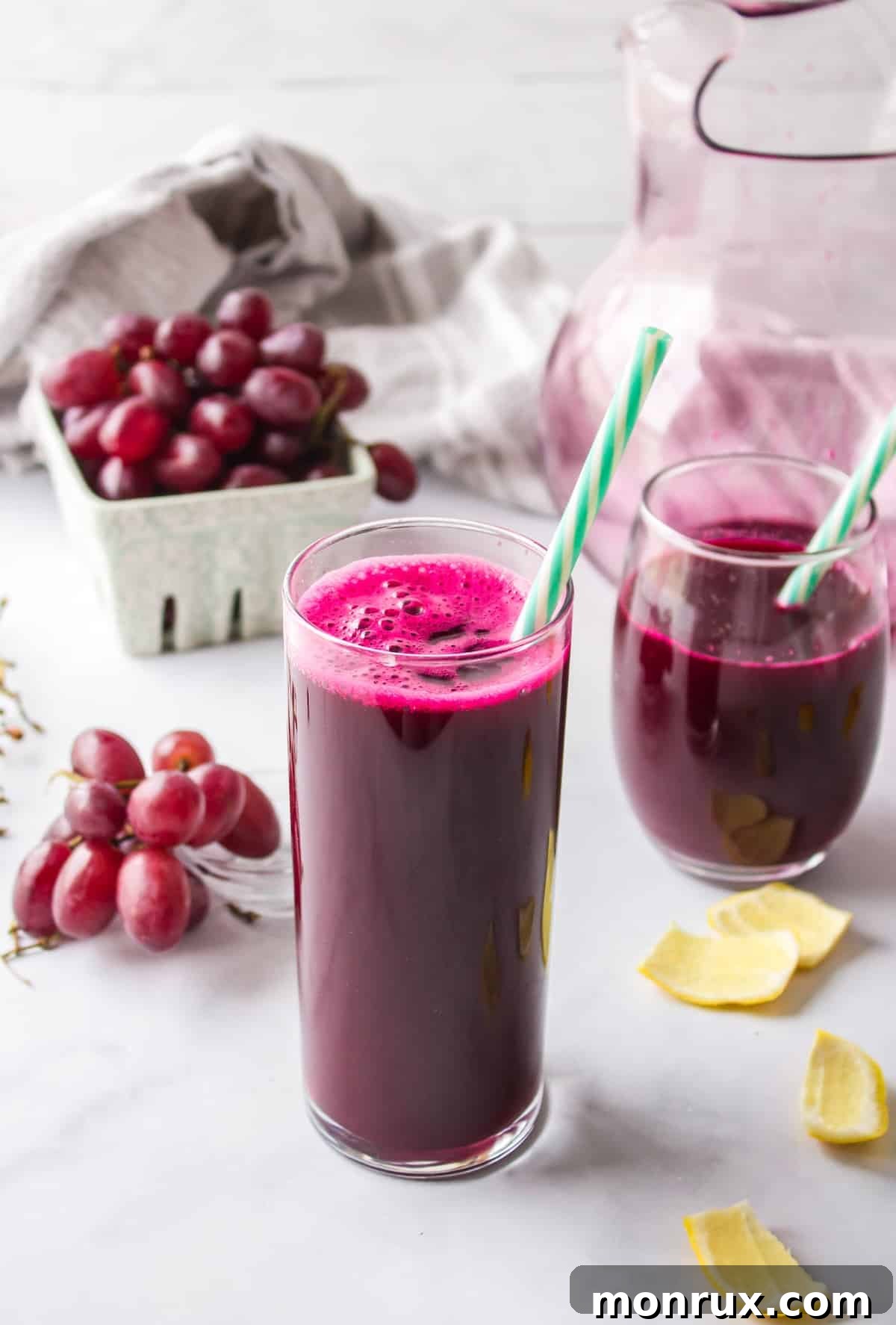
The visual appeal of this purple juice is truly captivating, a rich, deep amethyst shade that makes it a feast for the eyes even before the first sip. Beets are the magic behind this gorgeous color, imparting a beautiful, earthy sweetness, while purple grapes amplify both the natural sweetness and the vivid hue. This combination doesn’t just create a visually stunning drink; it also forms a powerful synergy of nutrients that work wonders for your health.
What’s even better is that you don’t need specialized, expensive equipment to enjoy this incredible beverage. Many believe that juicing requires a dedicated juicer, but I’m here to show you that a regular blender works just as effectively, making this healthy concoction accessible to everyone. We will delve into both methods, providing clear, easy-to-follow instructions so you can confidently prepare this wholesome drink in your own kitchen.
Why Choose Purple Juice for Your Daily Routine?
Incorporating purple juice into your diet offers a myriad of health benefits that go beyond its attractive color. Purple fruits and vegetables are typically rich in anthocyanins, powerful antioxidants responsible for their distinctive pigmentation. These compounds are known for their anti-inflammatory properties and their ability to protect cells from oxidative stress, which contributes to aging and various chronic diseases. This particular purple juice, featuring beets and purple grapes, stands out as a nutritional powerhouse. It’s an excellent way to boost your energy levels naturally, support cardiovascular health, and even aid in detoxification processes. By choosing to make your own juice, you control the ingredients, avoiding artificial additives, excessive sugars, and preservatives often found in store-bought options, ensuring you get the purest form of nutrition.
Key Ingredients for a Perfect Purple Juice
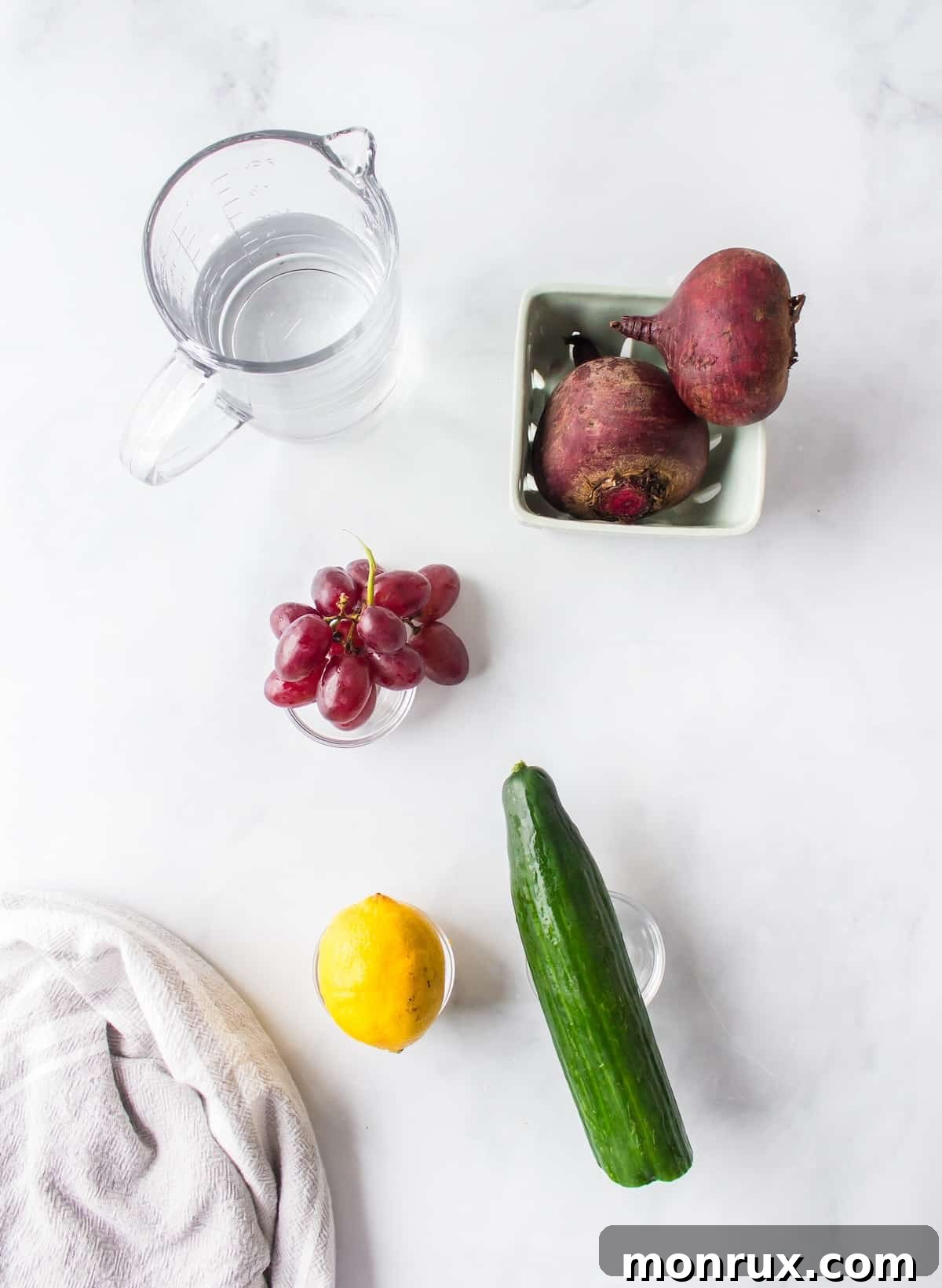
To craft this delightful and potent Purple Beet Juice recipe, selecting high-quality, fresh ingredients is paramount. Each component plays a crucial role, not only in flavor and color but also in delivering distinct health benefits. Here’s a closer look at the star ingredients you’ll need:
- Beets: These root vegetables are the heart of our purple juice, renowned for their incredible deep red-purple pigment. Beyond their stunning color, beets offer a natural sweetness and are incredibly rich in nitrates. These dietary nitrates are converted into nitric oxide in the body, a compound known to support healthy blood pressure, improve circulation, and enhance athletic performance and energy levels. They also provide essential vitamins and minerals like folate, manganese, potassium, and vitamin C.
- Purple Grapes: Adding another layer of natural sweetness and an even richer purple hue, purple grapes are a fantastic source of antioxidants, most notably resveratrol. Resveratrol is a powerful polyphenol that has been extensively studied for its potential benefits in supporting heart health, reducing inflammation, and offering protective effects against certain chronic diseases. Grapes also contribute vitamins K and C, and a good amount of dietary fiber (though much of it is removed during juicing, some beneficial compounds remain).
- Cucumber: This refreshing vegetable is crucial for balancing the intensity of the beets and grapes. Cucumber adds a crisp, hydrating element that helps keep the juice light, incredibly refreshing, and easy to drink. Composed of over 95% water, cucumbers are excellent for hydration, and they also contain beneficial nutrients such as vitamin K, potassium, and magnesium, all contributing to overall bodily functions and detoxification.
- Lemon: A squeeze of fresh lemon brings a bright, tangy flavor that cuts through the sweetness of the other ingredients, creating a perfectly balanced profile. More than just flavor, lemon is a powerhouse of vitamin C, a vital antioxidant for immune system support and skin health. It also aids in digestion and enhances the absorption of iron from other plant-based foods in the juice.
For the precise quantities and measurements, along with detailed instructions, make sure to refer to the comprehensive recipe card located at the conclusion of this article. Always choose organic produce whenever possible to minimize pesticide exposure and maximize nutrient content.
Benefits of Purple Juice Ingredients
Each ingredient in this vibrant purple juice is a nutritional star in its own right, contributing to a symphony of health benefits:
- Beets for Heart Health and Stamina: Beyond the nitrates mentioned earlier, beets are excellent for liver support, helping the body’s natural detoxification processes. Their rich iron content can aid in preventing anemia, and the fiber (though largely removed in juicing, some remains and the cellular structure contributes) is beneficial for gut health.
- Purple Grapes for Antioxidant Power: The high concentration of antioxidants, particularly resveratrol, in purple grapes makes this juice a fantastic ally against free radical damage. These compounds can help improve memory, protect against age-related cognitive decline, and support overall cellular health.
- Cucumber for Hydration and Detox: The high water content of cucumbers makes this juice incredibly hydrating, helping to flush toxins from the body and maintain proper kidney function. They also contain anti-inflammatory compounds that can soothe the digestive tract.
- Lemon for Immunity and Alkalinity: Lemon is not only a great source of Vitamin C but also acts as an alkalizing agent in the body, helping to balance pH levels. Its natural acids can also aid in digestion and stimulate metabolism.
Combined, these ingredients create a juice that is not just delicious but also a potent tool for enhancing energy, improving circulation, boosting immunity, and promoting overall wellness. It’s a holistic approach to nourishing your body with natural, unprocessed goodness.
Juicer vs. Blender: Making Your Purple Juice
Whether you’re a juicing enthusiast with a dedicated machine or prefer the simplicity of a blender, this purple juice recipe is adaptable for both. Each method has its unique advantages:
Using a Juicer:
A dedicated juicer extracts pure liquid, separating the pulp from the juice, resulting in a smooth, concentrated beverage. This method is ideal for those who prefer pulp-free juice and want to maximize nutrient absorption, as the digestive system doesn’t need to break down fiber. Juicers are particularly efficient at extracting juice from harder vegetables like beets. However, they can be more expensive and require specific cleaning.
Using a Blender:
Making juice with a blender is a more accessible and often preferred method for many home cooks. A blender processes the entire fruit and vegetable, including the fiber, which means you’re technically making a smoothie-like consistency. To achieve a juice-like consistency, you’ll simply blend with water and then strain the mixture through a fine-mesh sieve or a nut milk bag. This method ensures you retain all the dietary fiber, which is excellent for digestive health and satiety. While it requires an extra straining step, it’s cost-effective and uses equipment most kitchens already have.
Both methods will yield a delicious and nutritious purple juice. Choose the method that best suits your equipment, time, and preference for pulp content.
Step-By-Step Instructions for Your Purple Juice
Crafting your own vibrant purple juice is a straightforward process, regardless of whether you’re using a juicer or a blender. Follow these detailed steps to ensure a perfect, delicious, and nutritious drink every time.
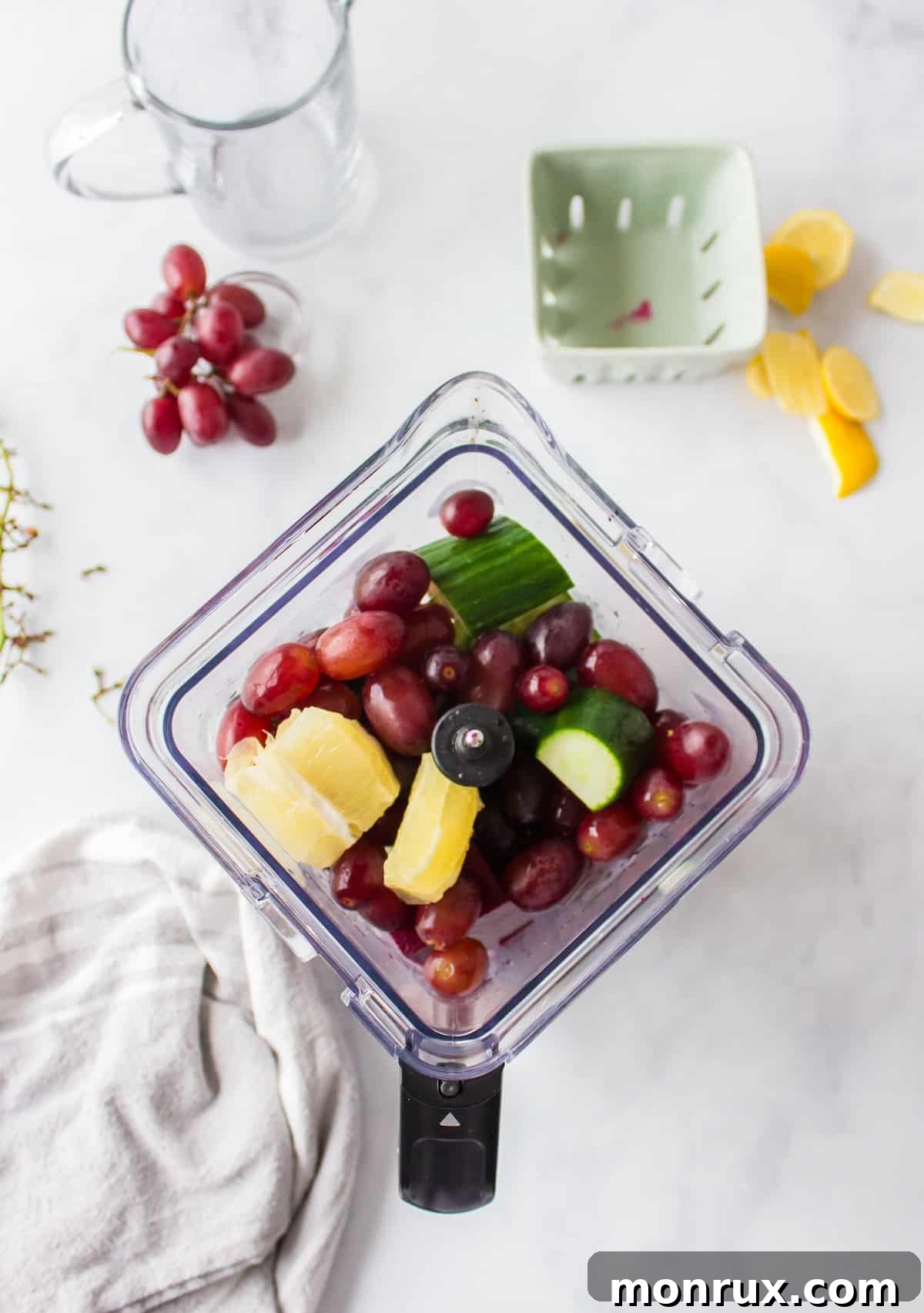
Step One: Prepare Your Produce. Begin by thoroughly washing all your fruits and vegetables. For beets, scrub them well to remove any dirt; you can peel them if desired, but leaving the skin on provides more nutrients (ensure they are organic if leaving the skin). Remove the tops and ends of the beets. For purple grapes, simply rinse them. Peel the lemon, as the rind can add a bitter taste to juice. Slice the cucumber. If you are using a juicer, cut the produce into pieces small enough to fit into its feeding chute. If you plan to use a blender, cut the ingredients into smaller, more uniform pieces to facilitate smoother blending. If blending, place all the prepped produce into your blender pitcher, adding about one cup of water to aid the blending process.
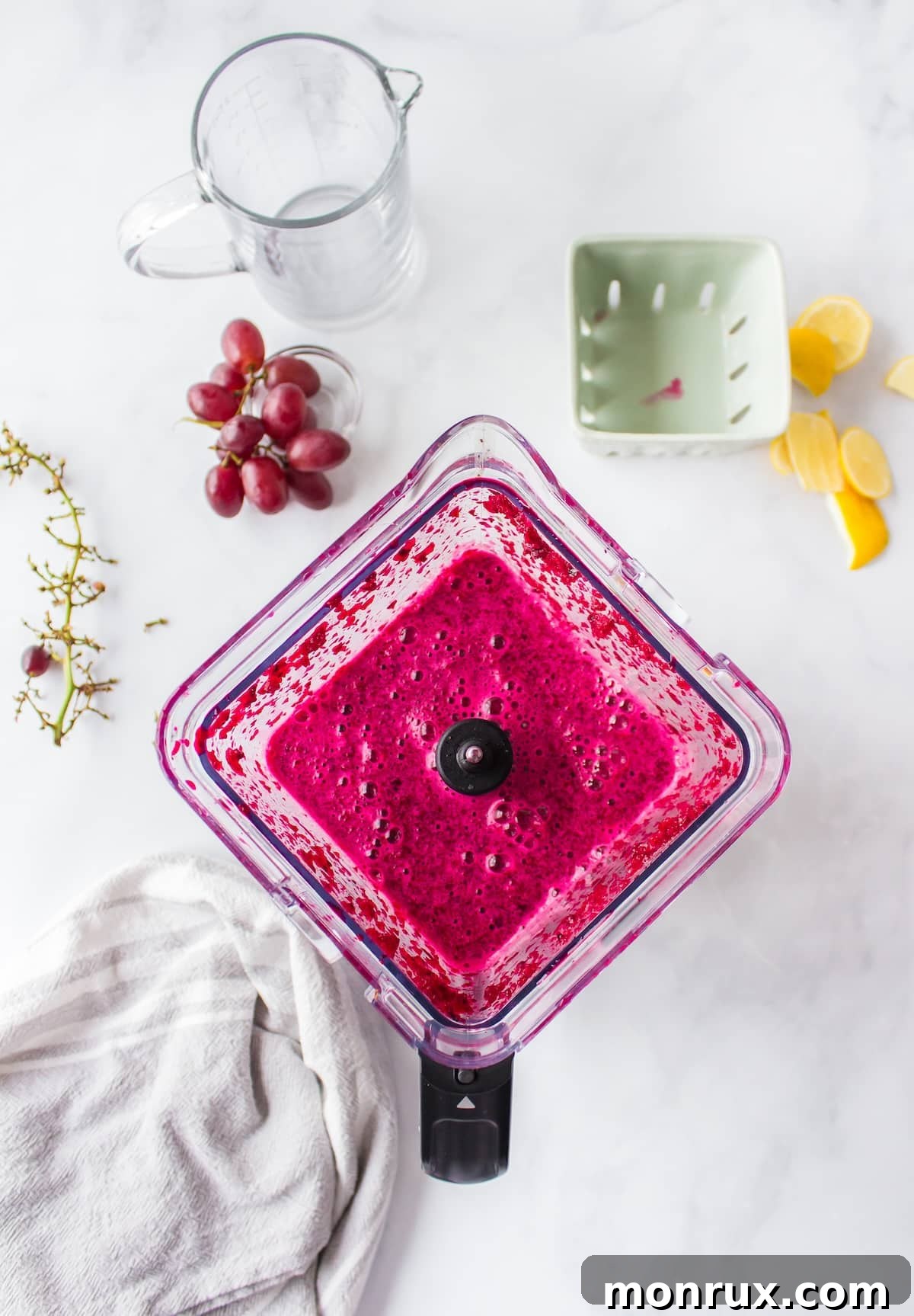
Step Two: Juice or Blend the Ingredients. If you’re using a juicer, feed the prepped produce through the juicer’s chute, alternating between softer ingredients (like grapes and cucumber) and harder ones (like beets) to ensure efficient extraction. Collect the vibrant juice in a pitcher or a large glass. If you’re using a blender, secure the lid on your blender pitcher and blend on high speed for 30-60 seconds, or until the mixture is completely smooth and liquified. You may need to add a splash more water if the mixture is too thick for your blender to process efficiently.
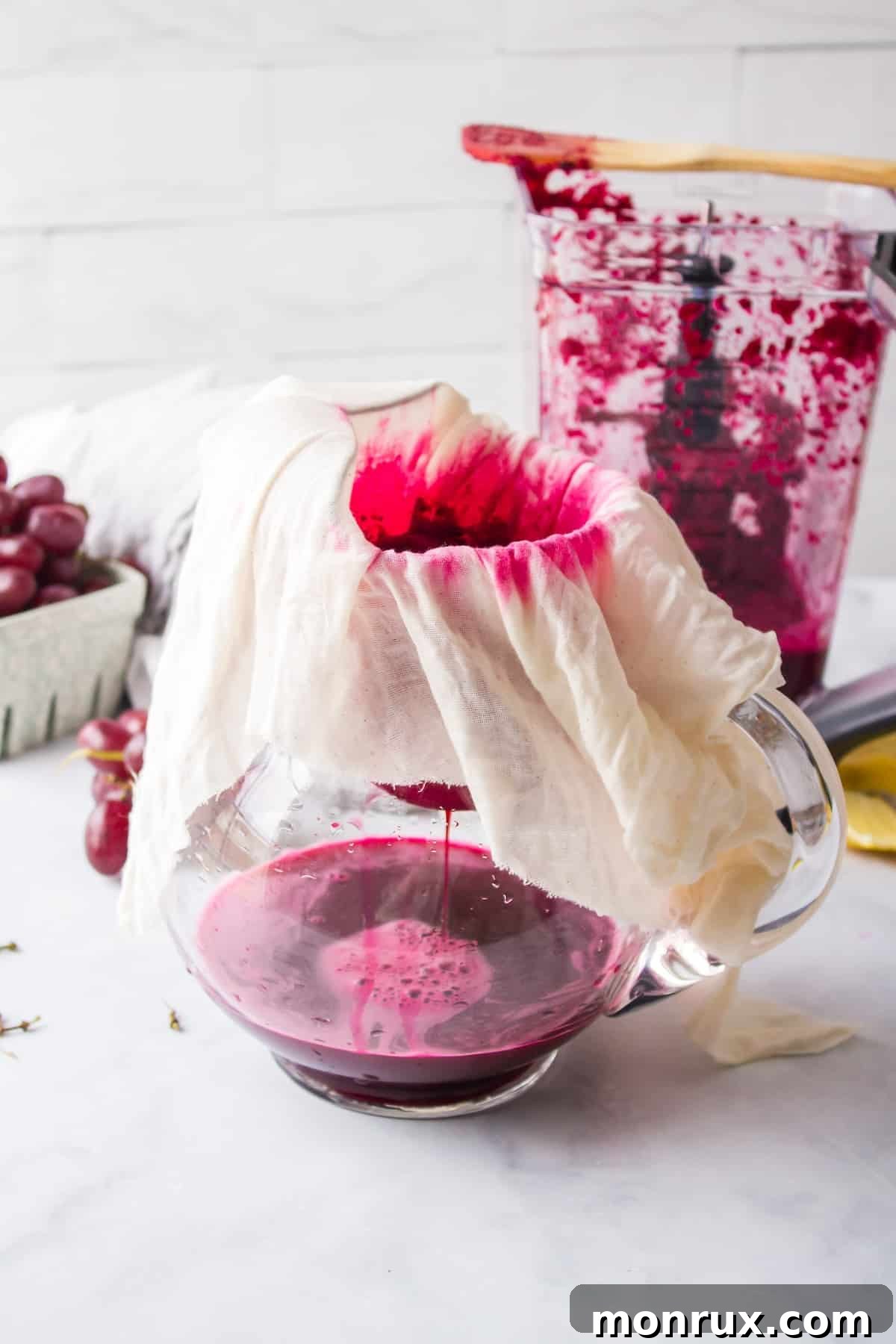
Step Three: Strain the Juice (if blending). This step is essential if you used a blender to achieve a smooth, pulp-free juice similar to what a juicer produces. Place a nut milk bag or a fine-mesh sieve over a large bowl or pitcher. Pour the blended mixture into the bag or sieve. Gently squeeze the nut milk bag from the top down to extract all the liquid, or press the pulp in the sieve with a spoon to release the juice. The collected pulp can be saved for other uses (it’s fantastic for composting, adding to baked goods, or making veggie burgers) or discarded. If you used a juicer, you can skip this step, as the juicer already separates the pulp for you.
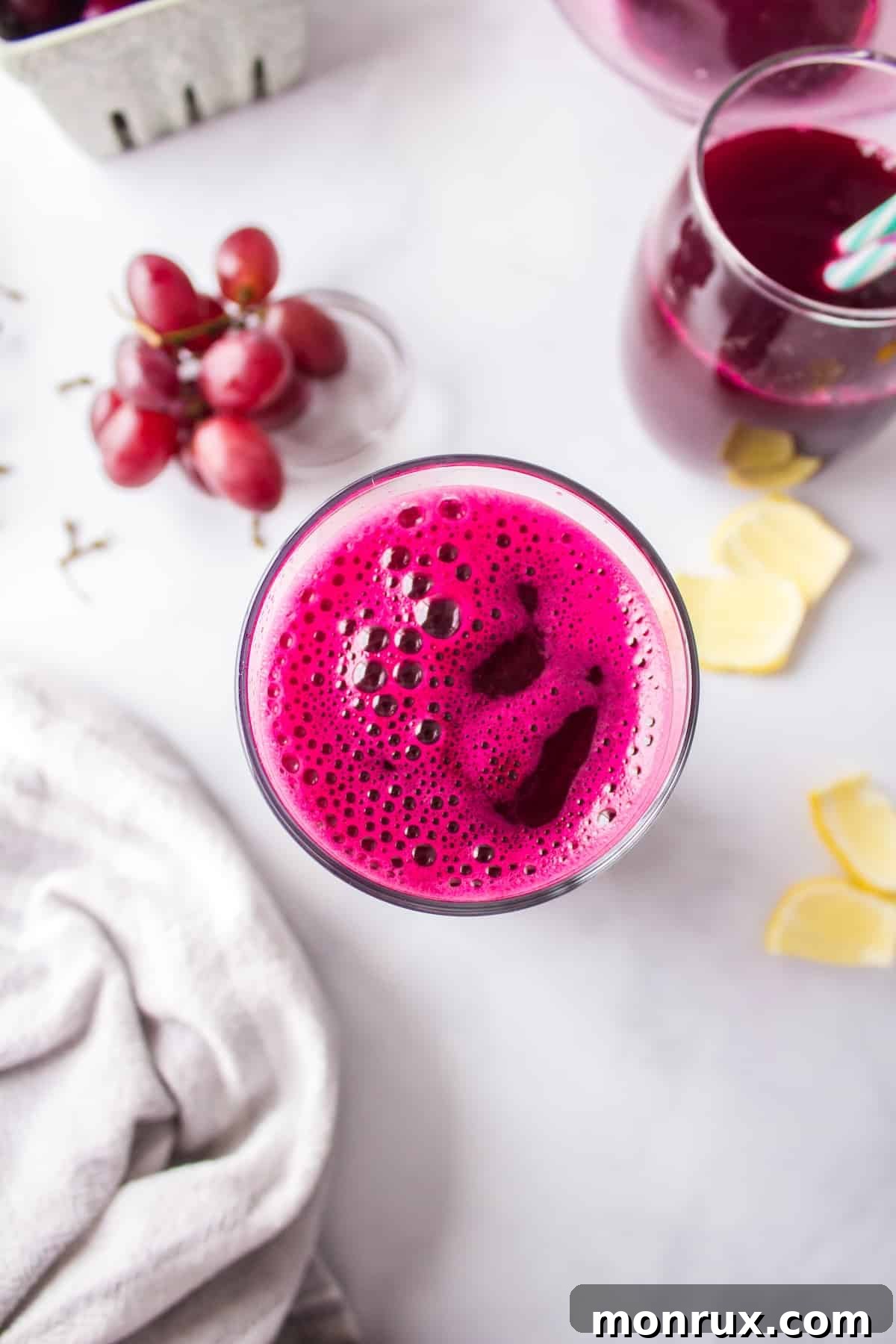
Step Four: Serve and Store Your Purple Juice. Once your beautiful purple juice is ready, serve it immediately over ice for the most refreshing experience. Freshly made juice offers the maximum nutritional benefits and the most vibrant flavor. If you have any leftover juice, transfer it to an airtight container, such as a mason jar with a tight-fitting lid, and store it in the refrigerator. For optimal freshness and nutrient retention, consume the juice within 24-48 hours. It can be stored for up to 4 days, but some nutrient degradation may occur over time. Enjoy this revitalizing drink anytime you need a boost of energy and wellness!
Purple Juice Recipe Variations for Every Palate
While the classic purple juice recipe is fantastic on its own, it’s also wonderfully versatile. Feel free to experiment with these variations to customize the flavor, boost specific nutrients, or simply try something new:
- Add Blueberries: For an extra layer of sweetness, an even deeper purple hue, and a significant boost of antioxidants, add a handful of fresh or frozen blueberries. They blend seamlessly and enhance the berry flavor profile.
- Include Ginger for a Zesty Kick: A small piece (about 1/2 to 1 inch) of fresh ginger root, peeled and added to the mix, will introduce a warming, subtle spicy kick that can also aid digestion and possesses anti-inflammatory properties.
- Boost Earthiness with Celery or Red Cabbage: If you prefer a more savory or earthy balance, consider adding one or two stalks of celery. Celery is excellent for hydration and provides a range of vitamins. For an even more intense color and an extra antioxidant punch, a small wedge of red cabbage can be a surprising and beneficial addition.
- Enhance Purple Tones with Purple Carrots: Swap out regular carrots (if you usually add them to other juices) for purple carrots. They offer the same benefits as orange carrots but intensify the beautiful purple color of the juice, along with a slightly sweeter, earthier flavor.
- Mix in Mint Leaves for Cooling Freshness: A few fresh mint leaves will impart a wonderful cooling sensation and a refreshing finish to your juice. Mint is also known for its digestive benefits and ability to soothe an upset stomach.
- Introduce a Green Element: For an even greater nutritional boost, consider adding a handful of spinach or a small amount of kale. These leafy greens are packed with vitamins and minerals and their flavor can be easily masked by the stronger notes of beets and grapes.
- Spice it Up with Turmeric: A small knob of fresh turmeric root, peeled, can add powerful anti-inflammatory benefits and a subtle, earthy flavor. Be mindful that turmeric can slightly alter the purple hue towards a warmer tone.
Don’t be afraid to get creative! Juicing is all about finding combinations that you love and that benefit your body. Adjust quantities to your taste preferences and enjoy the journey of discovering your perfect purple juice.
I truly hope this recipe inspires you to create and enjoy this fantastic purple juice! If you do give it a try, please take a moment to leave a comment and a starred review below. Your feedback is invaluable and helps others discover healthy, delicious recipes.
Let’s stay connected! You can find me on social media where I share more clean eating tips and recipes. Follow me on Facebook, Pinterest, Instagram, and YouTube!
Print Recipe
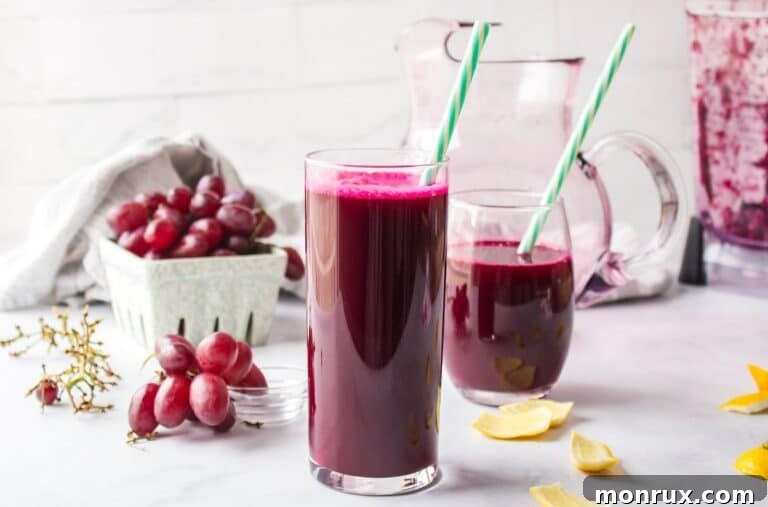
Purple Juice Recipe (Juicer or Blender)
5 Stars
4 Stars
3 Stars
2 Stars
1 Star
5 from 1 review
Discover the vibrant goodness of this Purple Juice recipe. It’s an energizing, nutrient-dense drink, brimming with vitamins and antioxidants, perfect for boosting your vitality and adding a splash of beautiful color to your daily routine. Enjoy this wholesome veggie juice as a refreshing morning invigorator or a revitalizing afternoon pick-me-up. Its naturally sweet and delicious profile makes it an irresistible healthy choice!
Total Time: 15 minutes
Yield: 2 servings
Ingredients
- 2 raw red or purple beets, scrubbed well with tops and ends removed (organic preferred, peeled if not)
- 1 cup purple grapes, thoroughly rinsed
- 1 medium cucumber, washed and sliced
- 1/2 lemon, peeled (remove all white pith for best flavor)
- 1 cup water (only if using a blender to achieve juice consistency)
Instructions
- Prepare Your Produce: Thoroughly wash all fruits and vegetables. For the beets, scrub them clean and trim the tops and bottoms. You can peel them if you wish, though the skin contains beneficial nutrients (ensure they are organic if leaving the skin on). Rinse the purple grapes. Wash and slice the cucumber. Peel the lemon, ensuring to remove all the white pith to prevent any bitterness in your juice.
- Cutting for Juicer or Blender: If using a juicer, cut your produce into pieces that are small enough to easily fit through your juicer’s feeding chute. If you are using a blender, cut the fruits and vegetables into smaller, more uniform pieces (e.g., 1-inch chunks) to facilitate smooth blending.
- Juicing Method (Using a Juicer): If you have a juicer, feed the prepared vegetable and fruit pieces through the juicer. Alternate between hard items like beets and softer items like grapes and cucumber to ensure optimal juice extraction. Collect the freshly extracted juice in a pitcher.
- Blending Method (Using a Blender): If you are using a blender, place the prepped beets, purple grapes, cucumber, and peeled lemon into the blender pitcher. Add 1 cup of water. Blend on high speed for 30-60 seconds, or until the mixture is completely smooth and liquified. If the mixture is too thick, add a little more water, one tablespoon at a time, until it blends easily.
- Strain for Blender Juice: For a smooth, pulp-free juice (similar to juicer output), pour the blended mixture through a nut milk bag or a fine-mesh sieve placed over a large bowl or pitcher. Squeeze the nut milk bag firmly from the top down to extract all the liquid, or press the pulp with a spoon in the sieve. This step is only necessary if you used a blender and prefer a smoother juice.
- Serve Immediately: Pour your beautiful purple juice into glasses. For the best taste and nutrient benefits, serve it immediately, optionally over ice. Enjoy the refreshing and healthful qualities of your homemade juice.
- Storage: If you have any leftover juice, store it in an airtight container, such as a glass jar with a tight lid, in the refrigerator for up to 2-3 days. While fresh is best, proper storage can help maintain its quality for a short period.
Notes
- Handling Beets: Raw beets can stain your hands and cutting surfaces due to their intense pigment. You may wish to wear disposable gloves when handling them and use a cutting board that won’t show stains, or clean surfaces immediately after use.
- Ginger Variation: For a zingy, slightly spicy flavor, try adding up to a 1-inch piece of fresh ginger root (peeled) to your recipe. This adds a wonderful depth and additional health benefits.
- Scaling the Recipe: This recipe is easily scalable. You can effortlessly double or triple the ingredients to make more servings for family, friends, or to store for a few days.
- Optimal Freshness: Freshly made juice is always superior in terms of flavor and nutrient content. While it can be stored, the sooner you consume it after making, the better its quality will be.
- Pulp Uses: Don’t discard the pulp! If you used a juicer or strained your blender juice, the leftover pulp is a valuable resource. It can be added to compost, used in baking (e.g., muffins, veggie burgers), or even stirred into soups for added fiber and nutrients.
- Author: Carrie Forrest, MBA, MPH, CHN
- Prep Time: 10 minutes
- Cook Time: 5 minutes
- Category: Beverages, Healthy Drinks, Juices
- Method: Juicer or blender
- Cuisine: Homemade, American
- Diet: Vegan, Gluten-Free, Plant-Based
Nutrition
(Nutritional values are estimates and may vary based on ingredient quality and preparation methods.)
- Serving Size: 1/2 of recipe
- Calories: 42
- Sugar: 7.2 g
- Sodium: 20.2 mg
- Fat: 0.1 g
- Saturated Fat: 0 g
- Carbohydrates: 10.9 g
- Fiber: 1.6 g
- Protein: 0.7 g
- Cholesterol: 0 mg
FAQ About Purple Juice
Q: Can I use frozen fruits and vegetables?
A: While fresh produce is generally recommended for juicing to maximize nutrient content and flavor, you can use frozen grapes. If using frozen beets or cucumber, thaw them partially before juicing or blending, as hard frozen pieces can strain your equipment. Keep in mind that frozen ingredients might slightly alter the texture and flavor, potentially making the juice thicker.
Q: How long does homemade purple juice last?
A: For optimal freshness, taste, and nutrient retention, homemade juice is best consumed immediately. However, you can store it in an airtight container in the refrigerator for up to 2-3 days. The longer it sits, the more some nutrients might degrade, and the flavor might change slightly. Glass jars with tight seals are ideal for storage.
Q: What are the best times to drink purple juice?
A: Purple juice makes an excellent morning pick-me-up, providing sustained energy without the jitters of caffeine. It can also be enjoyed as a refreshing afternoon snack to combat the midday slump, or even pre- or post-workout to support performance and recovery. Avoid drinking large quantities right before bed due to its energizing properties.
Q: Can I add other ingredients to this juice?
A: Absolutely! This recipe is highly adaptable. Consider adding a small piece of green apple for extra sweetness and tartness, a handful of spinach or kale for a hidden boost of greens, or even a dash of cinnamon for a unique flavor profile. Always experiment to find what you enjoy most!
Q: What can I do with the leftover beet and grape pulp?
A: Don’t let your pulp go to waste! Beet and grape pulp can be incredibly versatile. You can add it to compost, incorporate it into baked goods like muffins or bread for added fiber and moisture, mix it into veggie burger patties, or even use it in savory dishes like soups and stews for extra nutrients. It’s a great way to minimize food waste and maximize the value of your ingredients.
More Colorful Juice Recipes You Might Like
If you’ve enjoyed the vibrant taste and health benefits of this purple juice, you’re in for a treat! The world of homemade juices is vast and colorful, offering endless opportunities to nourish your body with delicious, fresh ingredients. Explore these other fantastic juice recipes to expand your repertoire and discover new favorites:
- Yellow Juice: Bright and zesty, often featuring pineapple, ginger, and turmeric for a sunny boost.
- Watermelon Kale Juice: A surprisingly refreshing blend that combines the sweetness of watermelon with the power of greens.
- Spinach Juice: A powerful green elixir, perfect for detoxification and a concentrated dose of vitamins.
- Plum Juice: A delightful, naturally sweet juice with a unique flavor, rich in antioxidants.
- Mango Juice: Tropical and sweet, a wonderfully hydrating and vitamin-rich option for a taste of sunshine.
Each of these recipes brings its own unique set of flavors and health benefits, making your juicing journey both exciting and incredibly rewarding.
Don’t Miss These Juicing Recipes!
Ready to dive deeper into the world of juicing? These recipes are some of our most popular and highly recommended choices for anyone looking to embrace a healthier lifestyle through fresh, vibrant juices. Whether you’re new to juicing or a seasoned pro, you’ll find inspiration and delicious options here.
Don’t forget to join my newsletter list to get exclusive clean eating recipes, wellness tips, and updates directly to your inbox. The newsletter is 100% free with no spam; you can unsubscribe anytime. Stay inspired on your journey to vibrant health!
About the Author: Carrie Forrest, MBA, MPH, CHN, is a highly respected authority in public health and nutrition. With a master’s degree in public health specializing in nutrition and as a certified holistic nutritionist, Carrie brings a wealth of knowledge and personal experience to her work. She is recognized as a top wellness and food blogger, attracting over 5 million visitors to her site annually. Carrie shares an inspiring story of recovery from chronic illness, which fuels her passion for empowering other women to transform their health through clean eating and holistic practices. Connect with Carrie by sending her a message through her contact form to learn more or share your own wellness journey.