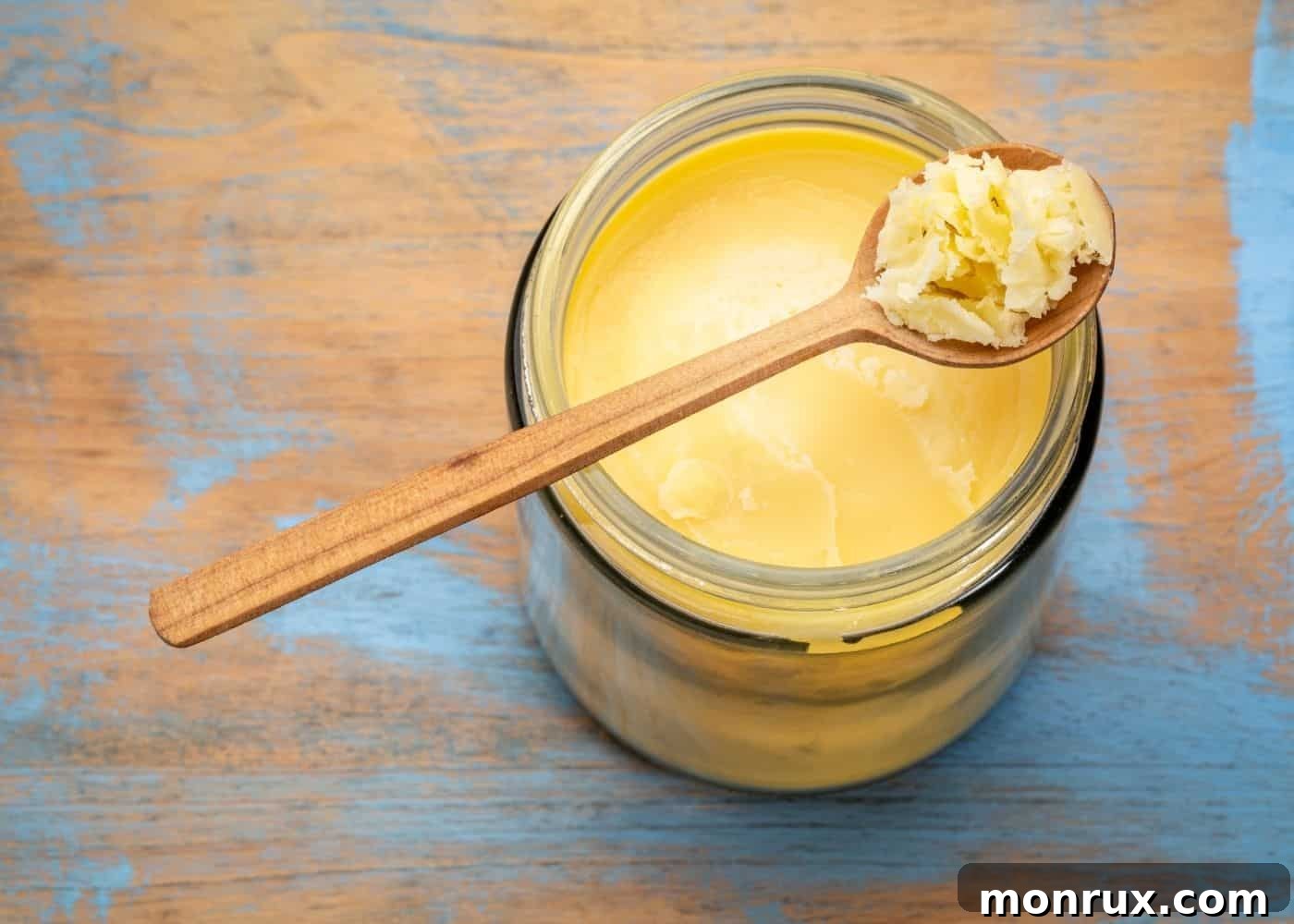
Ghee, a traditional staple in Indian and Middle Eastern cooking, is celebrated for its distinctive nutty flavor, aromatic richness, and high smoke point. However, its cost, specific dietary considerations like dairy content, or simply its availability can prompt home cooks and professional chefs alike to seek suitable alternatives. If you’re on the hunt for a reliable ghee substitute that delivers similar performance and flavor in your recipes, you’ve come to the right place. This comprehensive guide explores seven excellent alternatives, covering both vegan and non-vegan options, ensuring you’ll always have a perfect stand-in for ghee, no matter your culinary needs.
Understanding Ghee: The Golden Elixir of the Kitchen
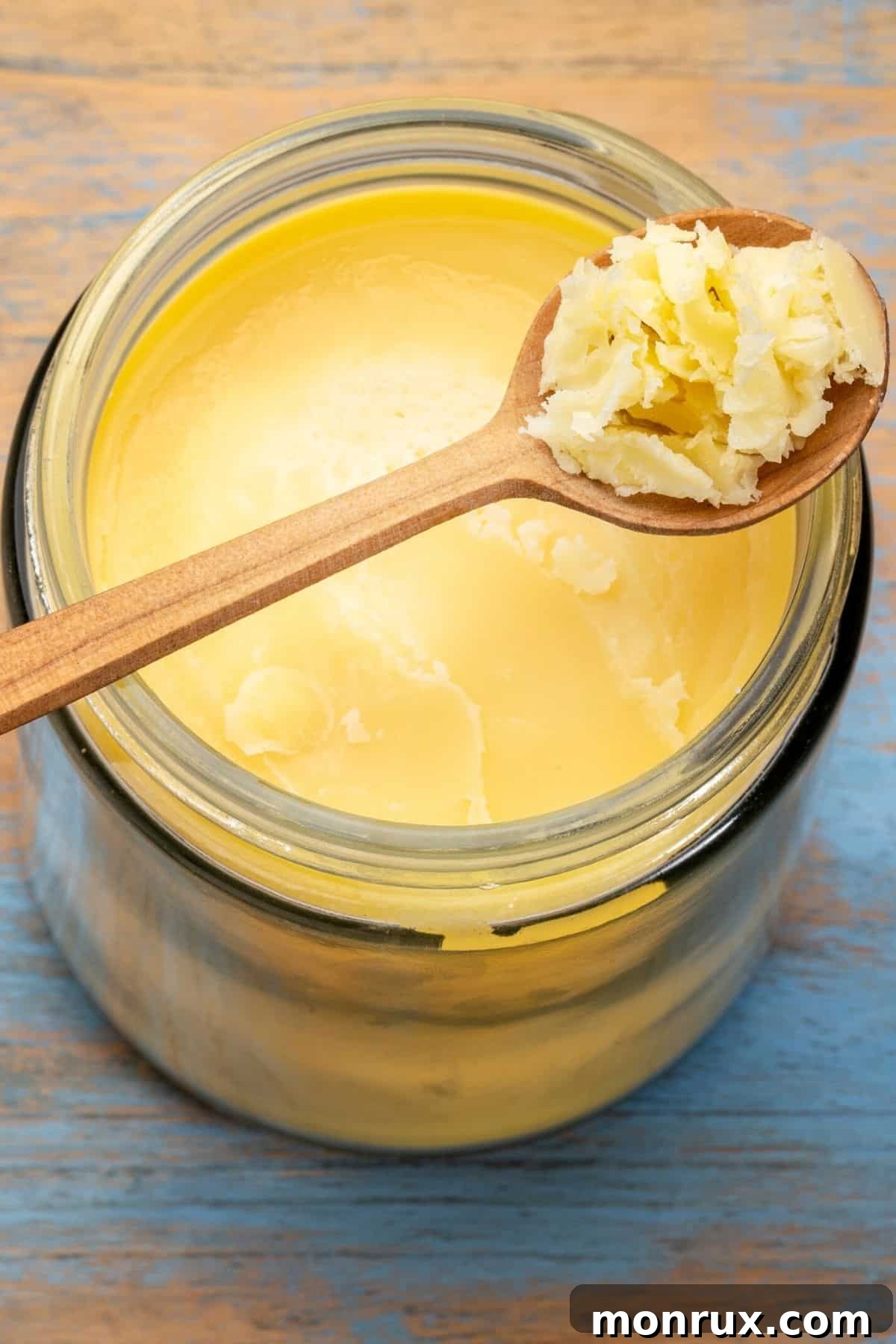
At its heart, ghee is a highly clarified butter derived from cow’s milk, meticulously prepared using an ancient Indian technique. The very word “ghee” itself, originating from Hindi, simply means “fat,” underscoring its foundational role in traditional cooking.
The initial stage of ghee production mirrors the French method of making clarified butter: separating milk solids and water from the butterfat. This process involves gently simmering butter, allowing the water to evaporate and the milk solids to coagulate and sink to the bottom. However, the Indian technique elevates this process by simmering the milk solids for an extended period, allowing them to subtly caramelize. This crucial extra step imparts ghee with its signature rich, nutty aroma and flavor, along with a beautiful golden-amber hue that distinguishes it from plain clarified butter.
Beyond its delightful taste, ghee offers several culinary advantages. Without the presence of water, it boasts an impressively high smoke point of approximately 485º F (252º C), significantly surpassing regular butter’s 350º F (177º C). A high smoke point is invaluable in cooking, as it allows fats and oils to be heated to higher temperatures before they start to break down and burn, preventing undesirable burnt flavors and the potential formation of harmful carcinogens. This makes ghee an ideal fat for high-heat cooking methods such as sautéing, frying, and deep-frying.
Furthermore, the clarification process renders ghee shelf-stable, meaning it can be stored at room temperature without refrigeration for extended periods. It also naturally reduces the lactose content, making it a potentially more digestible option for individuals with mild lactose sensitivities, although it’s important to note that it is not entirely lactose-free.
Why Seek Alternatives to Ghee?
Despite its many virtues, there are several reasons why one might need a ghee substitute:
- Cost: Ghee can be more expensive than other cooking fats due to its specialized production process.
- Availability: While becoming more common, ghee might still be hard to find in some grocery stores.
- Dietary Restrictions: As a dairy product, traditional ghee is unsuitable for vegans or those with severe lactose intolerance or dairy allergies.
- Flavor Preference: The distinctive nutty flavor of ghee might not complement every dish, and a more neutral fat may be desired.
Regardless of your reason, the good news is that numerous excellent and readily available alternatives can step in to ensure your recipes remain delicious and perfectly executed.
7 Excellent Substitutes for Ghee
Whether you’re looking for a vegan alternative, a more affordable option, or simply don’t have ghee on hand, these seven substitutes are likely already in your pantry or easily accessible at any grocery store.
1. Avocado Oil
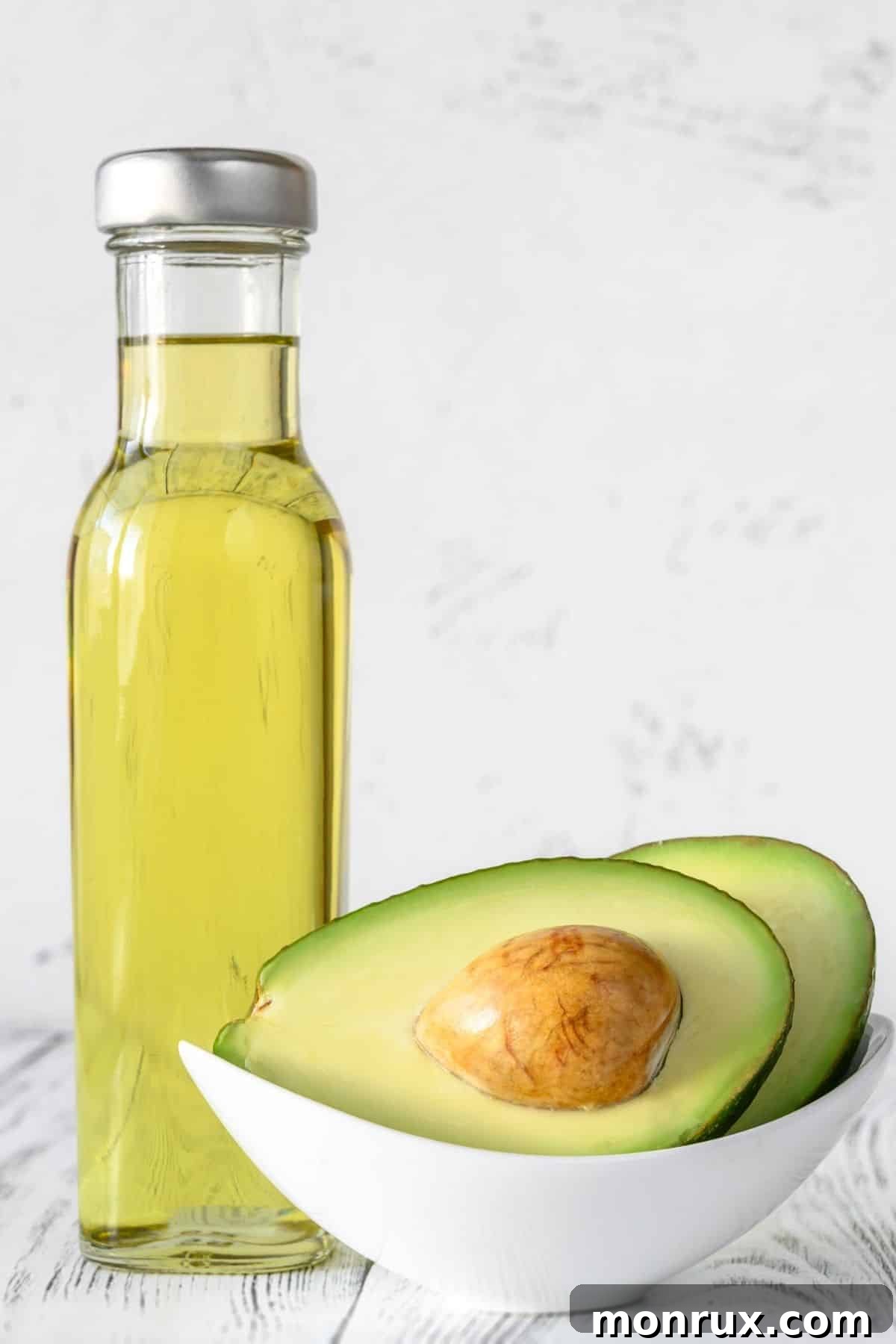
Avocado oil stands out as an excellent and widely available ghee substitute, particularly for high-heat cooking. Its neutral flavor profile is a significant advantage, as it won’t overpower the delicate notes of your dish. With a smoke point comparable to ghee (around 520º F or 271º C for refined avocado oil), it’s perfectly suited for sautéing, stir-frying, roasting, and even deep-frying without breaking down or producing undesirable flavors.
While its neutral taste is often a plus, if your recipe relies on ghee’s specific nutty and rich flavor, you might find avocado oil lacking in depth. In such cases, for non-vegan recipes, consider mixing a small amount of regular butter with avocado oil to replicate some of that buttery essence. For vegan dishes requiring a richer flavor, a touch of vegan butter combined with avocado oil can work wonders. However, avocado oil typically isn’t the best choice for baked goods, as it can sometimes lead to a denser texture compared to butter or ghee.
Substitution Ratio: For every 1 cup of ghee, use 3/4 cup of avocado oil.
2. Olive Oil
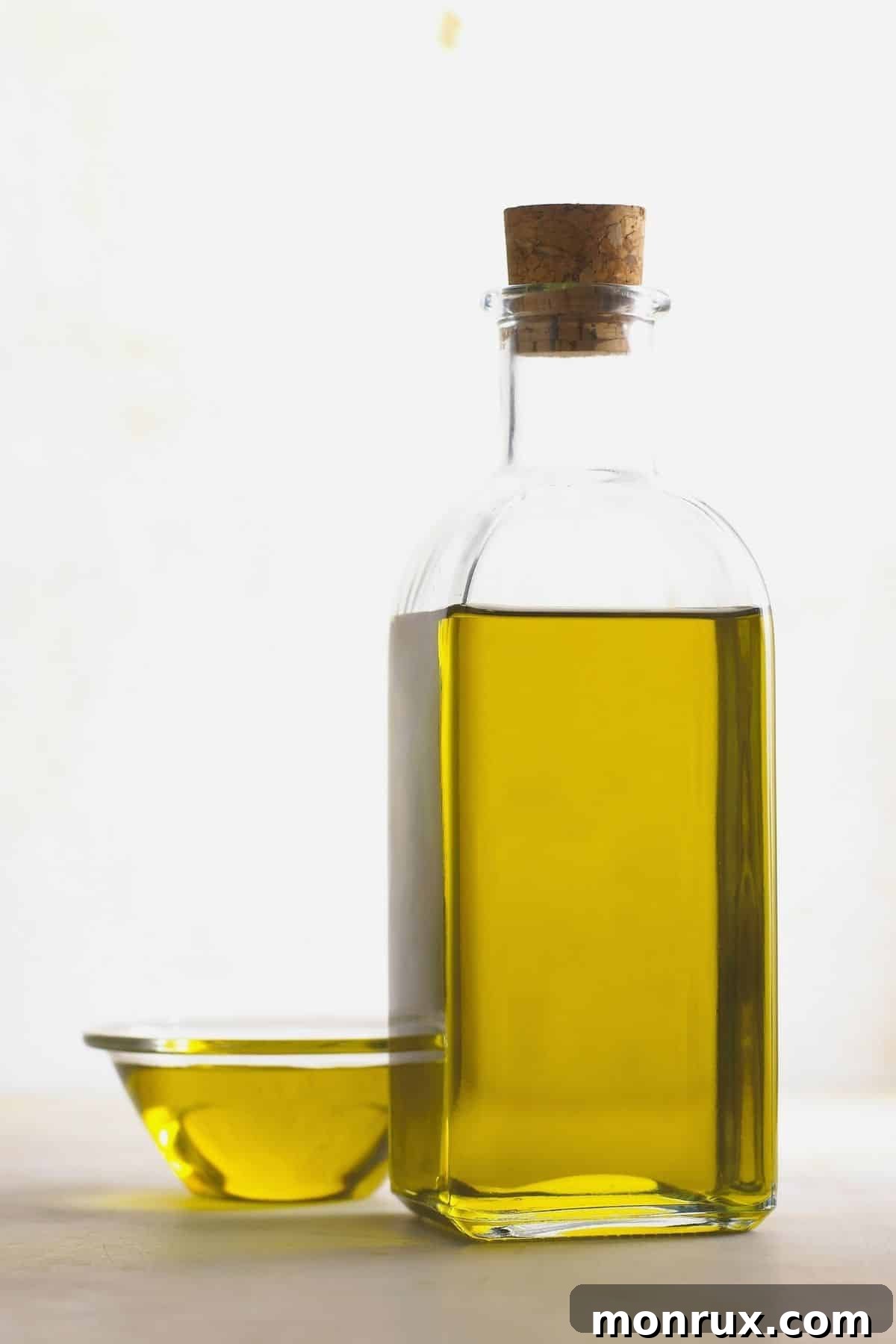
Olive oil offers a distinct yet effective alternative to ghee, especially in savory dishes where its robust, often peppery or fruity notes can complement the overall flavor profile. Extra virgin olive oil, with its darker hue and pronounced aroma, can lend a rich character similar to ghee, especially in Mediterranean or Middle Eastern-inspired cuisine. Beyond its flavor, olive oil is celebrated as one of the healthiest cooking oils, rich in monounsaturated fats and antioxidants.
It performs well in salad dressings, pan-frying, and stir-frying. When using olive oil for cooking, particularly extra virgin varieties, be mindful of its smoke point, which is typically around 375º F (190º C). While suitable for moderate-heat cooking, it’s lower than ghee’s and may not be ideal for very high-temperature applications. You can also experiment with olive oil in certain baked goods like cookies or brownies, where its flavor can add an interesting depth. However, it’s generally not recommended for delicate cakes, as it can impart a heavier texture and a strong flavor that might not be desired.
Substitution Ratio: For every 1 cup of ghee, use 3/4 cup of olive oil.
3. Coconut Oil
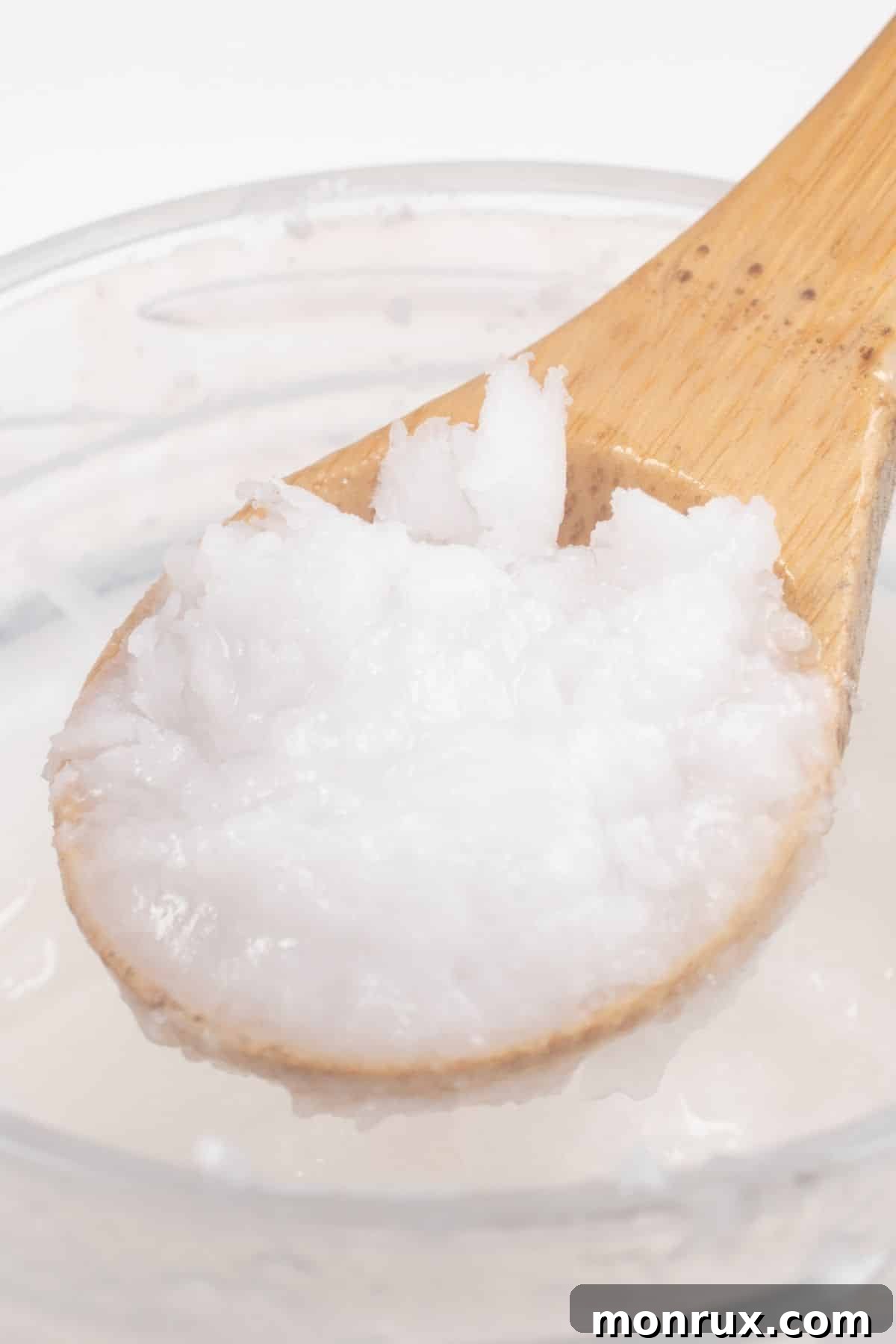
For those seeking a vegan or dairy-free alternative, coconut oil is arguably one of the best ghee substitutes due to its similar texture and behavior. It comes in two primary varieties: refined and unrefined (virgin).
Unrefined coconut oil boasts a distinct, sweet coconut aroma and flavor, making it a fantastic choice for baked goods, desserts, and dishes where a tropical hint is welcomed. It adds a delightful complexity to sweets and can be a wonderful ingredient in many Asian or Indian-inspired recipes. Its smoke point is around 350º F (177º C).
Refined coconut oil, on the other hand, undergoes a process that removes most of its coconut flavor and raises its smoke point to around 400º F (204º C). This neutral version is more versatile for frying, sautéing, and high-temperature cooking where you want to avoid the coconut flavor. Both types solidify at room temperature, mimicking ghee’s consistency and making them excellent for achieving similar textures in cooking and baking.
Substitution Ratio: For every 1 cup of ghee, use 1 cup of coconut oil.
4. Sesame Oil
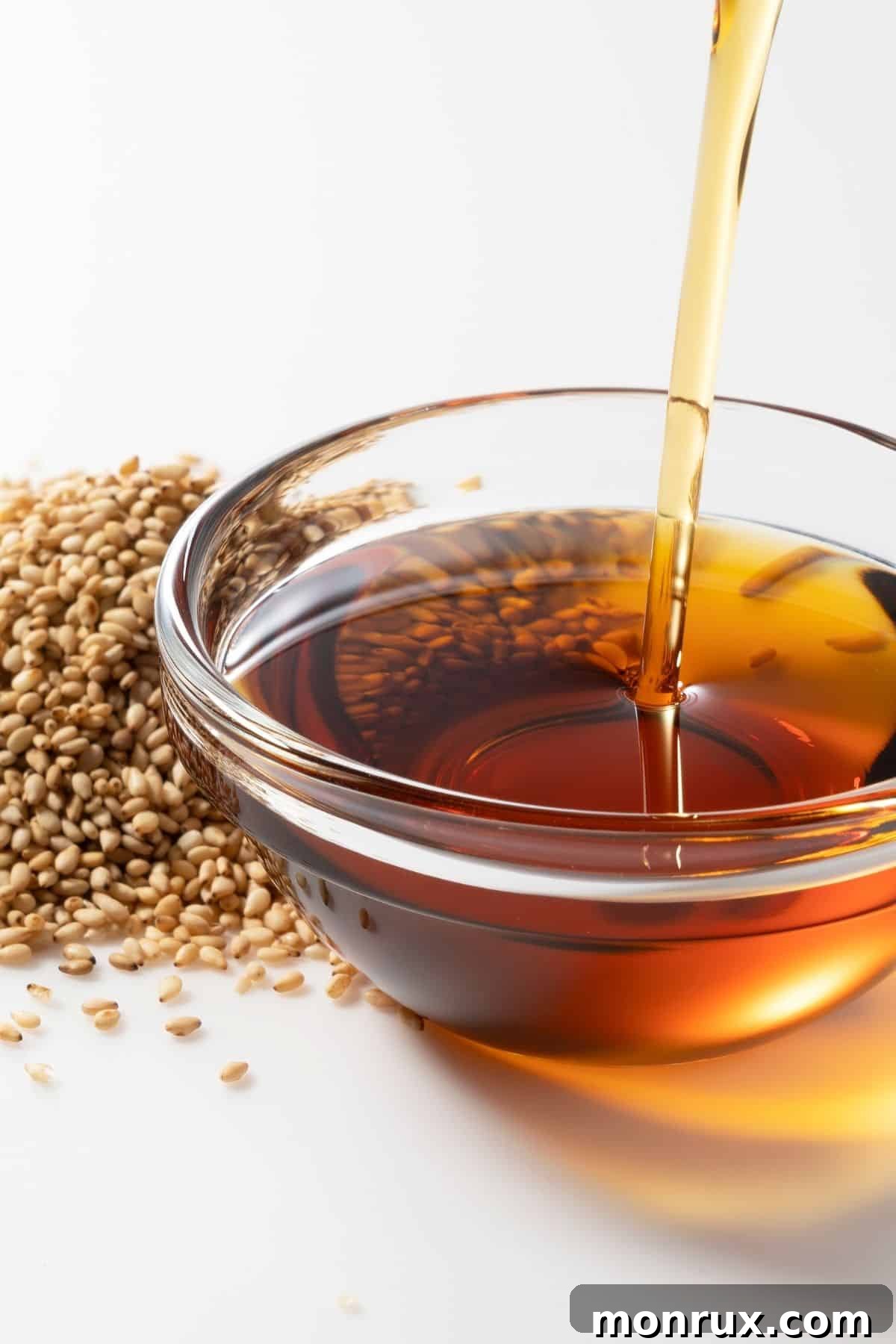
Sesame oil offers a deeply aromatic and flavorsome experience, making it a wonderful ghee alternative for dishes where a rich, nutty profile is desired. It’s not just about flavor; sesame oil is also celebrated for its health benefits, being rich in antioxidants and demonstrating anti-inflammatory properties. Furthermore, it’s a good source of omega-6 fatty acids.
You’ll find various types of sesame oil, including cold-pressed, light, and toasted. Toasted sesame oil, with its intense, distinctive nutty flavor, is particularly effective when you want to emulate ghee’s rich essence. It’s often used as a finishing oil due to its potent taste, but it also has a relatively high smoke point (around 410º F or 210º C for light sesame oil, lower for toasted), making it suitable for sautéing, stir-frying, and roasting. Its unique flavor makes it an excellent addition to noodles, rice dishes, salads, and especially many Indian and East Asian cuisines.
Substitution Ratio: For every 1 cup of ghee, use 3/4 cup of sesame oil.
5. Butter
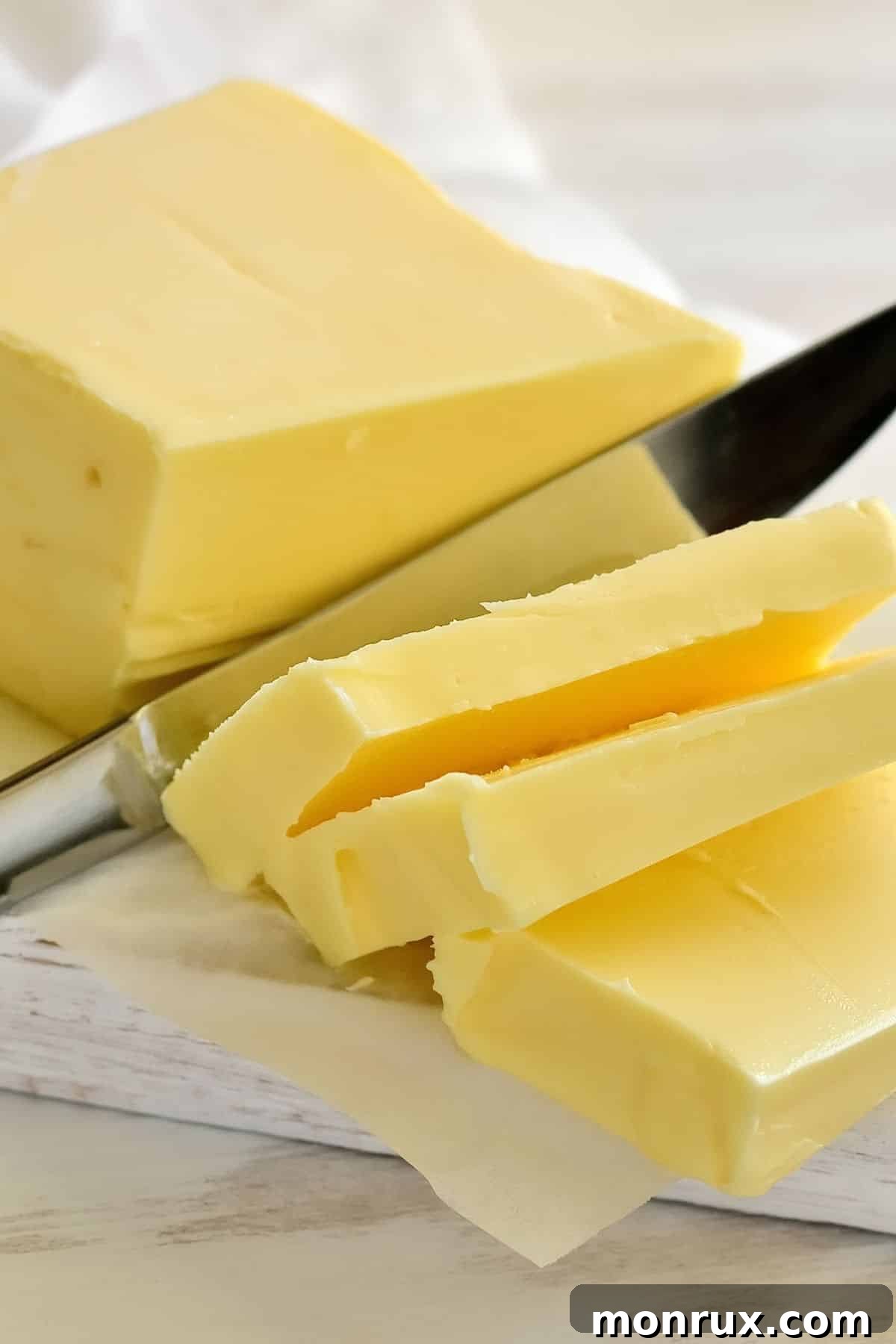
Given that ghee is essentially clarified butter, regular butter is a very natural and readily available alternative, especially when dairy is not a concern. It shares a similar creamy texture and rich flavor, making it particularly effective in baked goods where ghee’s flavor profile can be desirable. Butter also contributes moisture and tenderness, crucial for many recipes.
The primary difference and consideration when using butter as a ghee substitute is its significantly lower smoke point (around 350º F or 177º C). This is due to the presence of water and milk solids, which burn quickly at high temperatures. If you’re using butter for high-heat cooking like sautéing or frying, it’s crucial to cook at a lower temperature to prevent burning. A useful trick is to mix butter with a high smoke point oil like olive oil or avocado oil. This combination can help raise the overall smoke point of the cooking fat while still preserving the rich, buttery flavor.
Substitution Ratio: For every 1 cup of ghee, use 1 cup of butter.
6. Sunflower Oil
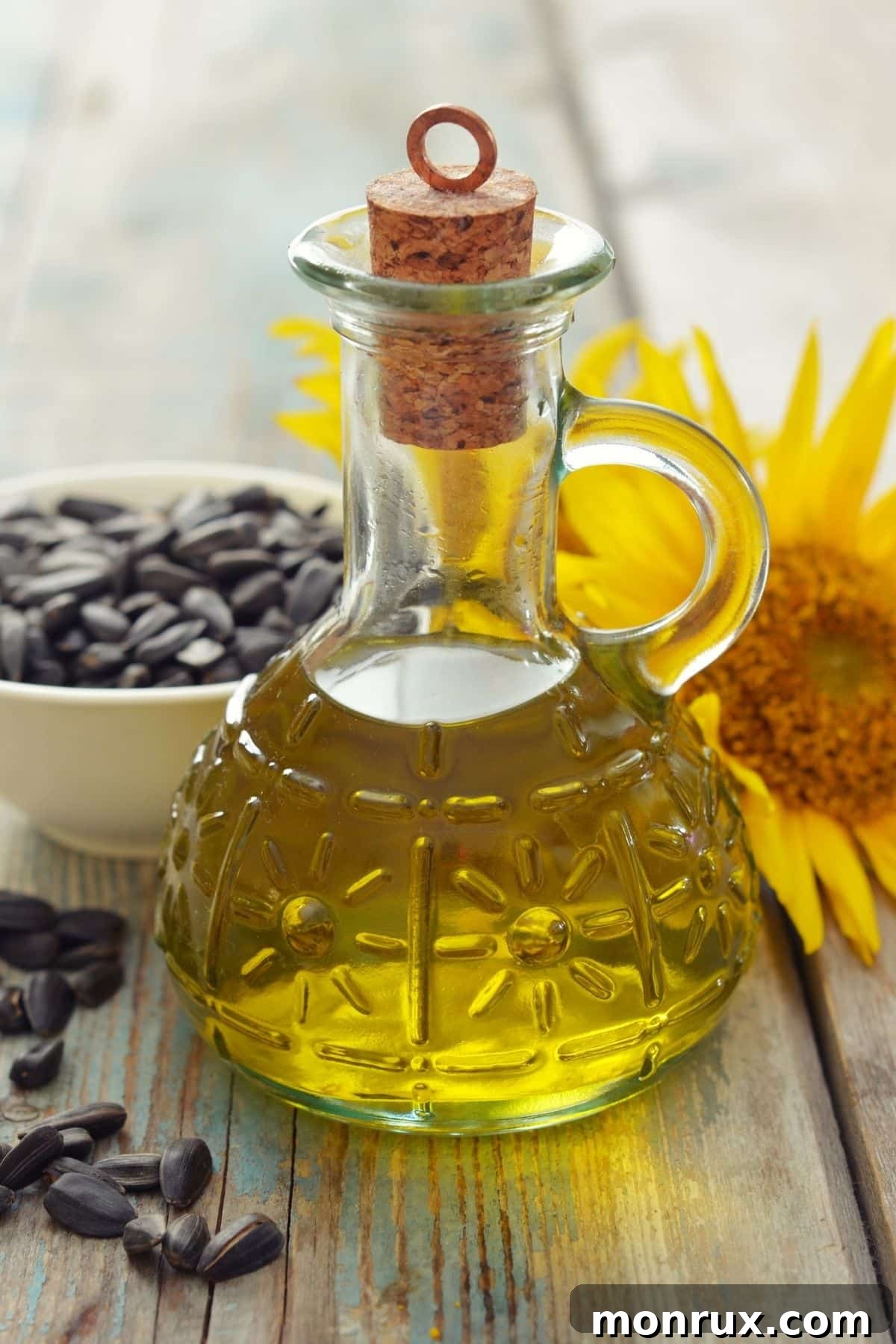
Sunflower oil is another excellent plant-based option, especially when a high smoke point is a priority. Refined sunflower oil boasts an impressive smoke point of approximately 450º F (232º C), making it a reliable choice for deep-frying, pan-frying, and stir-fries. It generally has a neutral flavor, ensuring it won’t interfere with the intended taste of your dish. However, some varieties can offer a subtle, slightly nutty aroma that can be a pleasant addition to dressings or light sautéing.
While often neutral, some individuals may choose to limit sunflower oil for dietary reasons due to its omega-6 fatty acid profile. When selecting a sunflower oil, look for high-oleic varieties, which are higher in monounsaturated fats, making them more stable for cooking. Compared to other neutral oils like canola, many prefer sunflower oil due to the potential health concerns associated with canola oil. Its versatility and high heat tolerance make it a practical and accessible ghee substitute for a wide array of cooking applications.
Substitution Ratio: For every 1 cup of ghee, use 3/4 cup of sunflower oil.
7. Clarified Butter
For those who desire the closest possible non-vegan alternative to ghee without the extended caramelization process, clarified butter is your ideal choice. Clarified butter is essentially butter from which the milk solids and water have been removed, leaving behind pure butterfat. This process is the first step in making ghee, but without the extra simmering that develops ghee’s distinct nutty flavor and deeper color.
Like ghee, clarified butter has a significantly higher smoke point than regular butter (around 450º F or 232º C), making it excellent for high-heat cooking such as sautéing, frying, and basting. It retains a clean, rich butter flavor without the risk of burning the milk solids. It’s also suitable for individuals with mild lactose sensitivity, as the lactose-containing milk solids are removed. If your recipe calls for ghee primarily for its high smoke point and pure butterfat, and you don’t mind a slightly less pronounced nutty flavor, clarified butter is an almost identical functional substitute.
Substitution Ratio: For every 1 cup of ghee, use 1 cup of clarified butter.
Pros and Cons of Ghee Alternatives
To help you make an informed decision, here’s a quick summary highlighting the advantages and disadvantages of each ghee substitute for your culinary needs.
| Substitute | Pros | Cons |
|---|---|---|
| Avocado Oil | Very high smoke point, neutral flavor, ideal for high-heat cooking and those seeking a subtle taste. | Lacks ghee’s rich, nutty flavor; can produce denser results in some baked goods. |
| Olive Oil | Rich and aromatic, healthy fat, good for dressings, pan-frying, and adding depth of flavor. | Distinct flavor may not suit all dishes; lower smoke point than ghee; can make cakes heavy. |
| Coconut Oil | Similar texture to ghee, excellent for baking (unrefined), versatile for dairy-free diets. | Unrefined type has a strong coconut flavor, which may not be desired in all savory dishes. |
| Sesame Oil | Rich in antioxidants, distinctive nutty flavor (especially toasted), high smoke point for sautéing, great as a finishing oil. | Intense flavor can overpower mild dishes if not used judiciously. |
| Butter | Natural alternative, excellent for flavor and texture in baked goods, readily available. | Significantly lower smoke point than ghee, prone to burning at high temperatures due to milk solids and water. |
| Sunflower Oil | High smoke point, generally neutral flavor, good for various cooking methods, especially frying. | Some varieties may have a very subtle nutty flavor; dietary concerns for some regarding omega-6 profile. |
| Clarified Butter | Nearly identical functional properties to ghee (high smoke point, pure butterfat), rich butter flavor. | Lacks the distinct caramelized, nutty flavor of ghee; still a dairy product, not suitable for vegans. |
Is Ghee Healthier than Butter?
The perception that ghee is a universally “healthier” alternative to butter is common, but it’s important to understand the nuances. From a purely nutritional standpoint, both ghee and butter share very similar profiles in terms of fat content and calories. They are both rich in saturated fats and contain comparable amounts of vitamins and minerals. Crucially, both are naturally free of trans fats, which are the unhealthy hydrogenated oils often found in highly processed foods.
The primary health advantages of ghee over butter stem from its production process. The higher smoke point of ghee means it’s more stable at high temperatures, reducing the formation of potentially harmful compounds during cooking. Additionally, the clarification process removes most of the milk solids, significantly reducing its lactose content. This reduction can make ghee a more tolerable option for individuals who experience mild digestive discomfort or sensitivity to dairy, though it is not completely lactose-free and may still be problematic for those with severe dairy allergies.
Ultimately, both ghee and butter can be part of a balanced diet. The “healthier” choice often depends on your specific cooking application and individual dietary needs.
Versatile Uses for Ghee
Ghee’s rich flavor and high smoke point make it incredibly versatile in the kitchen. It can be used wherever you would typically use cooking oil, butter, or even vegetable shortening, especially in high-heat applications. Its aromatic qualities also make it a superb finishing oil.
Here are some fantastic ways to incorporate ghee into your cooking:
- High-Heat Cooking: Ideal for sautéing vegetables, frying eggs, searing meats, or making stir-fries without burning.
- Roasting: Drizzle over vegetables before roasting for a golden, caramelized finish and a delicious nutty flavor, such as these ghee-roasted vegetables.
- Baking: A flavorful alternative to coconut oil or vegetable oil in various baked goods, adding richness and moisture.
- Flavor Enhancer: Pour melted ghee over popcorn, stir into mashed potatoes, or spread it on a piece of warm toast for an elevated flavor.
- Indian and Middle Eastern Cuisine: Essential for traditional dishes like curries, dals, biryani, and various flatbreads.
- Bulletproof Coffee: A popular addition to coffee for sustained energy and a creamy texture.
Homemade Ghee: A Cost-Effective Solution
If you find yourself frequently reaching for ghee and want a more economical option, making your own at home is surprisingly simple and deeply rewarding. It also allows you to control the quality of the ingredients, starting with high-quality butter.
To make homemade ghee, begin by gently simmering a block of unsalted butter (preferably from grass-fed cows for the best flavor and nutritional profile) in a heavy-bottomed saucepan over low heat. As the butter melts, it will begin to separate into three layers: foam on top, clear butterfat in the middle, and milk solids at the bottom. Continue to cook very gently, skimming off the foam as it rises. The key is to allow the milk solids to gently cook until they turn a beautiful golden-brown color at the bottom of the pan. This caramelization is what gives ghee its distinctive nutty aroma and flavor. For a pound of butter, this entire process can take between 30 to 45 minutes, requiring your attention to ensure the solids don’t burn.
Once the milk solids are golden, carefully remove the saucepan from the heat. Allow it to cool slightly, then strain the golden liquid through a fine-mesh strainer lined with cheesecloth into a clean, airtight jar. You’ll be left with pure, golden ghee, ready to use. Stored properly in an airtight container, homemade ghee can last for several weeks at room temperature or even longer in the refrigerator. You can use your homemade ghee in the same ratio as store-bought ghee in all your cooking and baking adventures.
More Ingredient Substitute Articles
- Substitutes for Bay Leaves
- Substitutes for Butter in Cookies
- Substitutes for Olive Oil
- Substitutes for Coconut Aminos
- Substitutes for Garam Masala
- Substitutes for Lemongrass
- Substitutes for Apple Cider Vinegar in Baking
- Vegan Egg Wash Substitutes
Conclusions
Ghee is undoubtedly a remarkable cooking fat, cherished for its unique flavor and impressive culinary properties. However, as this guide demonstrates, there’s a wealth of equally excellent and versatile ingredients ready to step in as a ghee substitute. Whether you need a dairy-free option, a more affordable choice, or simply something you already have on hand, avocado oil, olive oil, coconut oil, sesame oil, butter, sunflower oil, and clarified butter all offer distinct advantages and can help you achieve delicious results in your cooking and baking.
Embrace the flexibility these alternatives provide, and don’t hesitate to experiment with the subtle differences they bring to your finished dishes. Happy cooking!
About the Author: Carrie Forrest has a master’s degree in public health with a specialty in nutrition and is a certified holistic nutritionist. She is a top wellness and food blogger with over 5 million annual visitors to her site. Carrie has an incredible story of recovery from chronic illness and is passionate about helping other women transform their health. Send her a message through her contact form.
Note: this post is for informational purposes only and is not intended as medical advice. Please consult your healthcare provider for recommendations related to your individual situation.