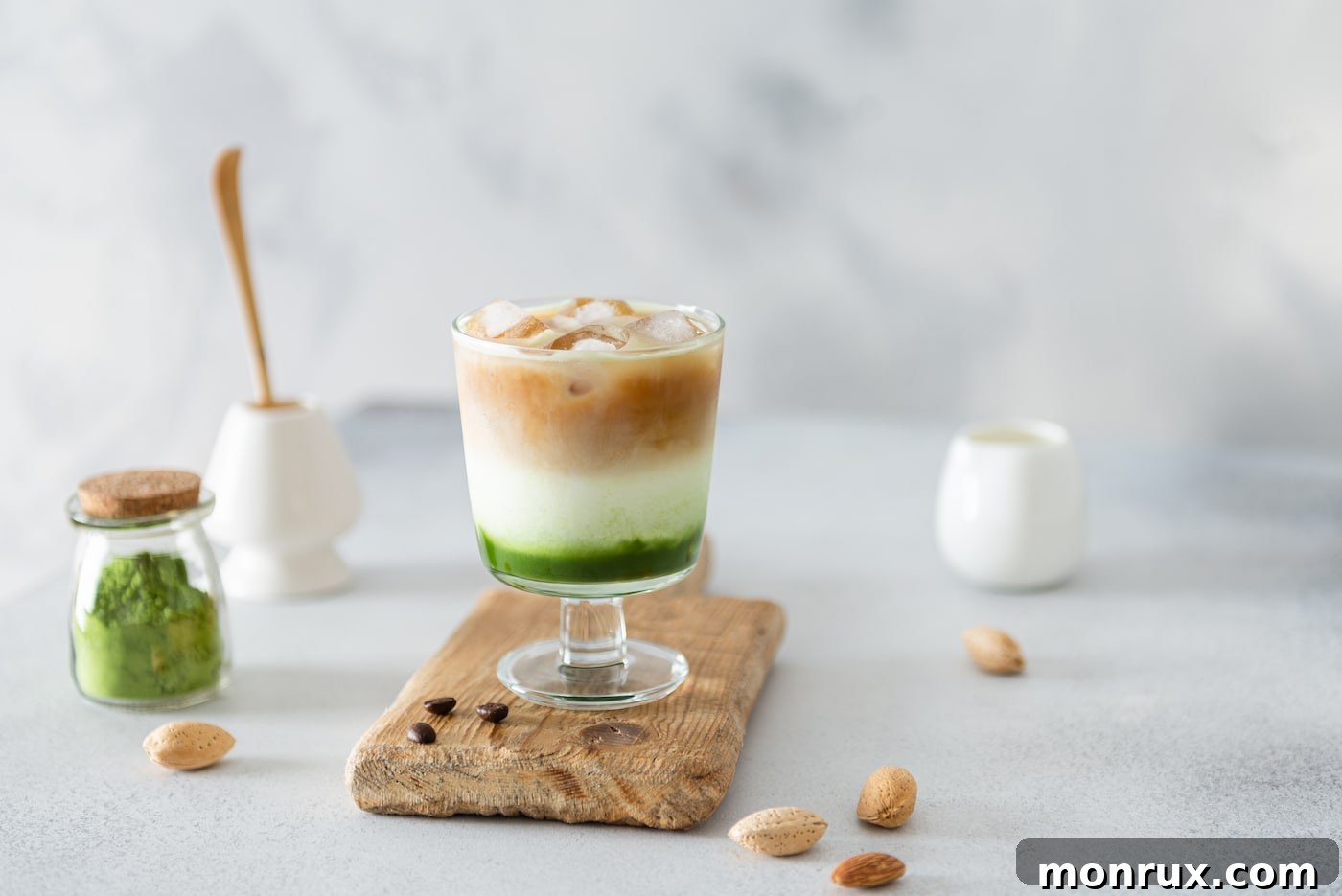
Imagine a beverage that’s not only delightfully cool and creamy but also boasts a harmonious blend of sweet and earthy flavors, all while delivering a powerful boost of health benefits. Welcome to the world of Matcha Coffee – a revolutionary drink designed for those who cherish a good latte but refuse to compromise on health or taste. If you’re seeking a sophisticated, nourishing, and utterly delicious alternative to your everyday coffee, this dairy-free and refined-sugar-free Matcha Coffee recipe is your ultimate guide to a better brew.
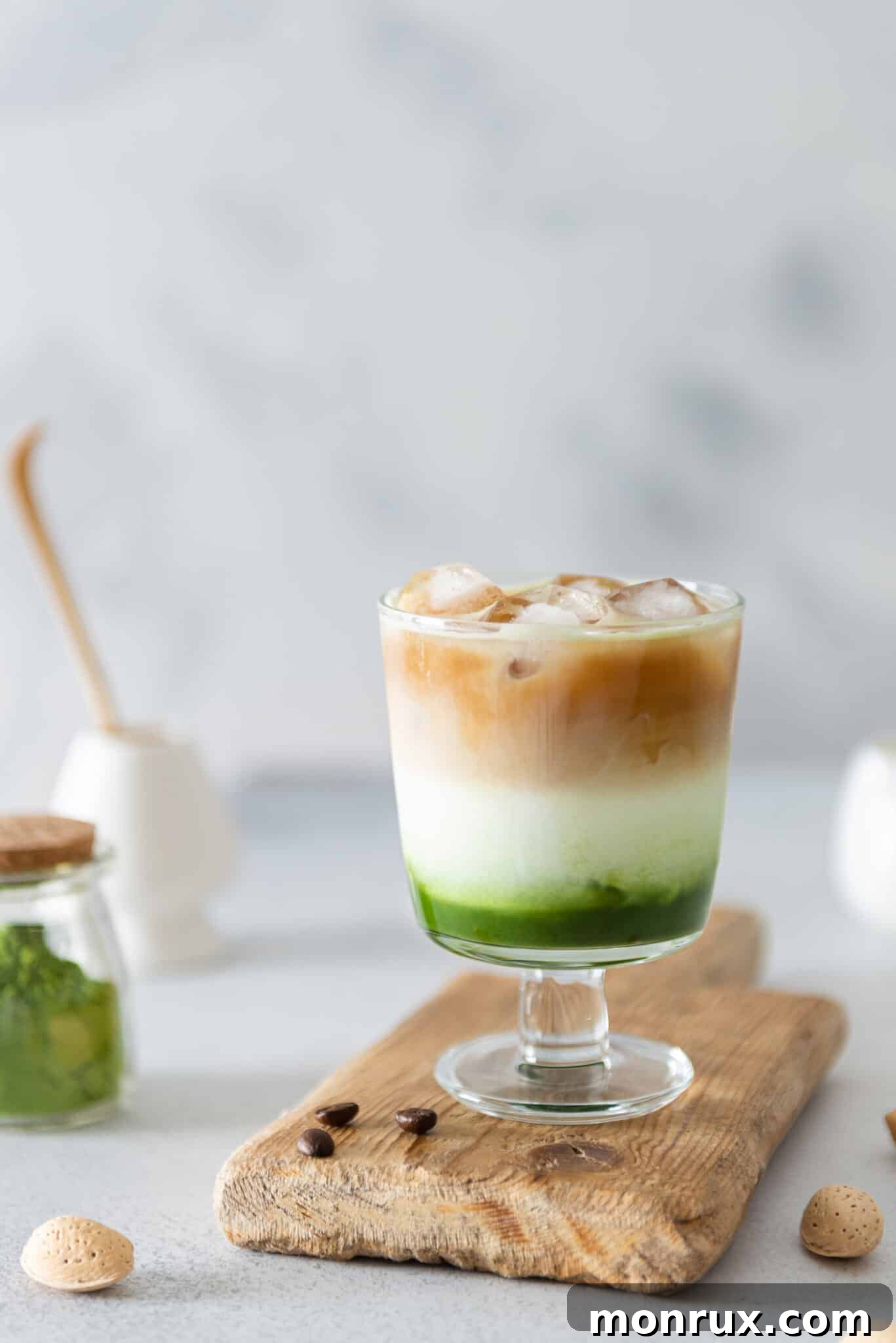
This exquisite layered matcha coffee is thoughtfully crafted to be dairy-free and naturally sweetened, offering a guilt-free indulgence. With the flexibility to add one or two shots of espresso, you have complete control over the caffeine kick in your daily ritual. Beyond its impressive health credentials, the visual appeal of this drink is simply captivating. Once you master the art of slowly layering the ingredients, it transforms into a stunning spectacle in a tall, transparent latte mug, with the serene green matcha nestled at the bottom. This isn’t just a drink; it’s an experience, poised to become your new favorite for leisurely weekend brunches with friends or as a special pick-me-up during a busy week. And let’s be honest, its photogenic nature makes it perfectly shareable on social media!
More than just a delicious treat, this matcha coffee recipe offers a powerful two-in-one solution: a refreshing beverage that revitalizes your senses and provides a sustained energy lift, helping you stay focused and vibrant throughout your day.
Why This Matcha Coffee Recipe Is a Must-Try
In a world constantly seeking healthier and more effective ways to fuel our bodies and minds, this Matcha Coffee recipe stands out as a true game-changer. It intelligently combines two of the most potent beverages on the planet, offering a synergistic blend of benefits that go far beyond a simple energy boost. Here’s why this recipe deserves a permanent spot in your daily routine:
- Sustained Energy & Enhanced Focus: Unlike the abrupt jitters often associated with coffee, matcha provides a unique form of sustained energy, thanks to its high concentration of L-Theanine. This amino acid works in harmony with caffeine to promote a state of calm alertness, boosting concentration and mental clarity without the typical crash. Combining it with coffee means you get the best of both worlds – an immediate lift and prolonged focus.
- A Powerful Antioxidant Powerhouse: Both matcha and coffee are renowned for their incredible antioxidant profiles. Matcha is particularly rich in catechins, especially epigallocatechin gallate (EGCG), a potent antioxidant linked to numerous health benefits. Coffee contributes its own array of antioxidants, including chlorogenic acids. Together, they form a formidable defense against oxidative stress, supporting cellular health and overall well-being.
- Balanced Flavor Profile: This recipe masterfully balances the distinct earthy notes of matcha with the robust bitterness of espresso, all softened by the creamy texture of plant-based milk and a touch of natural sweetness. The result is a complex, rich, and utterly comforting drink that satisfies the palate without being overly sweet or overpowering.
- Customizable to Your Taste: Whether you’re dairy-free, prefer a specific plant milk, or like to experiment with different natural sweeteners, this recipe is incredibly adaptable. You can adjust the espresso strength, vary the sweetness level, and even introduce additional flavor enhancers to perfectly match your preferences. It’s also simple to make it with regular dairy milk if you choose.
- Visually Stunning: The layered presentation makes this drink an aesthetic delight. It’s not just a beverage; it’s a small work of art, perfect for impressing guests or simply elevating your own daily enjoyment.
Diving Deeper into Matcha: The Green Elixir
Matcha isn’t just any green tea; it’s a finely ground powder made from specially cultivated green tea leaves. The process begins weeks before harvest, when tea plants are shaded from direct sunlight. This shading increases chlorophyll production, resulting in the vibrant green color and boosting the amino acid L-Theanine, which contributes to matcha’s unique flavor profile and calming effects. Once harvested, the leaves are destemmed, deveined, and stone-ground into a delicate powder.
There are different grades of matcha, each suited for various applications:
- Ceremonial Grade: This is the highest quality matcha, made from the youngest tea leaves. It boasts a brilliant green color, a smooth, delicate flavor, and is typically enjoyed on its own with hot water, particularly in traditional Japanese tea ceremonies. Its premium price reflects its superior quality.
- Premium Grade: A step below ceremonial, premium grade matcha is still excellent for daily consumption, especially in lattes and mixed drinks. It offers a good balance of vibrant color, fresh aroma, and a slightly more robust flavor than ceremonial grade, making it a popular choice for those seeking quality without the highest price tag.
- Culinary Grade: As the name suggests, culinary grade matcha is designed for cooking and baking. It has a bolder, more astringent flavor that holds up well when combined with other ingredients. While more affordable, its flavor might be too strong for a delicate drink like matcha coffee, though it can still be used if preferred.
For this recipe, premium grade matcha is often the ideal choice, offering great flavor and color without breaking the bank. Look for matcha with a deep, vibrant green color; this indicates freshness and good quality. My personal favorites include the Republic of Tea Organic Japanese Matcha Green Tea Full-Leaf Powder and the Jade Leaf Organic Matcha Green Tea Powder. These brands consistently deliver a smooth, earthy taste that elevates any matcha beverage.
Beyond its taste, matcha is celebrated for its impressive health benefits. It’s known to enhance brain function, boost metabolism, support heart health, and contribute to overall vitality. The presence of L-Theanine not only promotes relaxation but also acts as a counter to the caffeine, preventing jitters and fostering a state of focused calm.
Unlocking the Layers: Equipment You’ll Need
Creating this beautiful layered matcha coffee is simpler than you might think, and you likely already have most of the necessary tools in your kitchen. Here’s a detailed look at the equipment and some handy alternatives:
1. Transparent Latte Mugs or Tall Glasses
The visual appeal of this layered drink is undeniable, and a tall, transparent latte mug is perfect for showcasing the vibrant green matcha, creamy milk, and rich espresso layers. The clear glass allows you to appreciate the artistry of your creation, making each sip an experience. If you don’t have specific latte mugs, any tall, clear glass will work wonderfully. Since this is an iced drink, heat-proof mugs aren’t strictly necessary. Consider using a stylish parfait glass or even a trifle bowl for an extra elegant presentation.
2. Coffee Brewing Method: Moka Pot, French Press, or Espresso Machine
The foundation of a great matcha coffee is excellent espresso. Your preferred coffee-making method will dictate the flavor and strength of your coffee layer. For a rich, concentrated espresso shot:
- Moka Pot: If you appreciate coffee with a robust and complex flavor profile, a Moka pot is an excellent choice. This stovetop brewer quickly produces strong, espresso-like coffee with a velvety crema.
- French Press: A French press offers full-bodied coffee with minimal fuss. While not true espresso, it produces a strong concentrate perfect for lattes. Ensure you use coarse-ground coffee for the best results. You can find recommendations for the best coffee for a French press here.
- Pour-Over or Drip Coffee Machine: For a simpler approach, a standard drip coffee machine or a pour-over setup (requiring only a cone and filter papers) can brew strong regular coffee as a substitute for espresso.
- Instant Coffee: In a pinch, even high-quality instant coffee can be dissolved to create a strong coffee base, offering convenience without sacrificing too much flavor.
3. Whisk (Traditional or Modern Alternatives)
Matcha powder is incredibly fine, and whisking is crucial to prevent clumps and achieve a smooth, frothy consistency. A traditional bamboo matcha whisk (chasen) is ideal for creating the perfect texture, but several alternatives work just as well:
- Milk Frother: An electric milk frother, designed for lattes, can quickly whisk matcha into a smooth paste.
- Blender: For a super smooth and frothy matcha base, blend the powder with warm water in a small blender or with an immersion stick blender.
- Fork or Small Whisk: In a pinch, even a regular kitchen fork or a small wire whisk can be used, though it might require more effort to achieve a completely lump-free consistency.
For the best results, always sift your matcha powder into the warm water before whisking. This simple step further reduces the chance of clumps and ensures a silky-smooth matcha layer.
Crafting Your Perfect Matcha Coffee: Ingredients & Substitutions
The beauty of this matcha coffee recipe lies in its simplicity and the quality of its core ingredients. While fantastic on its own, it also provides a versatile canvas for culinary creativity. Here’s a breakdown of the key components and how you can customize them:
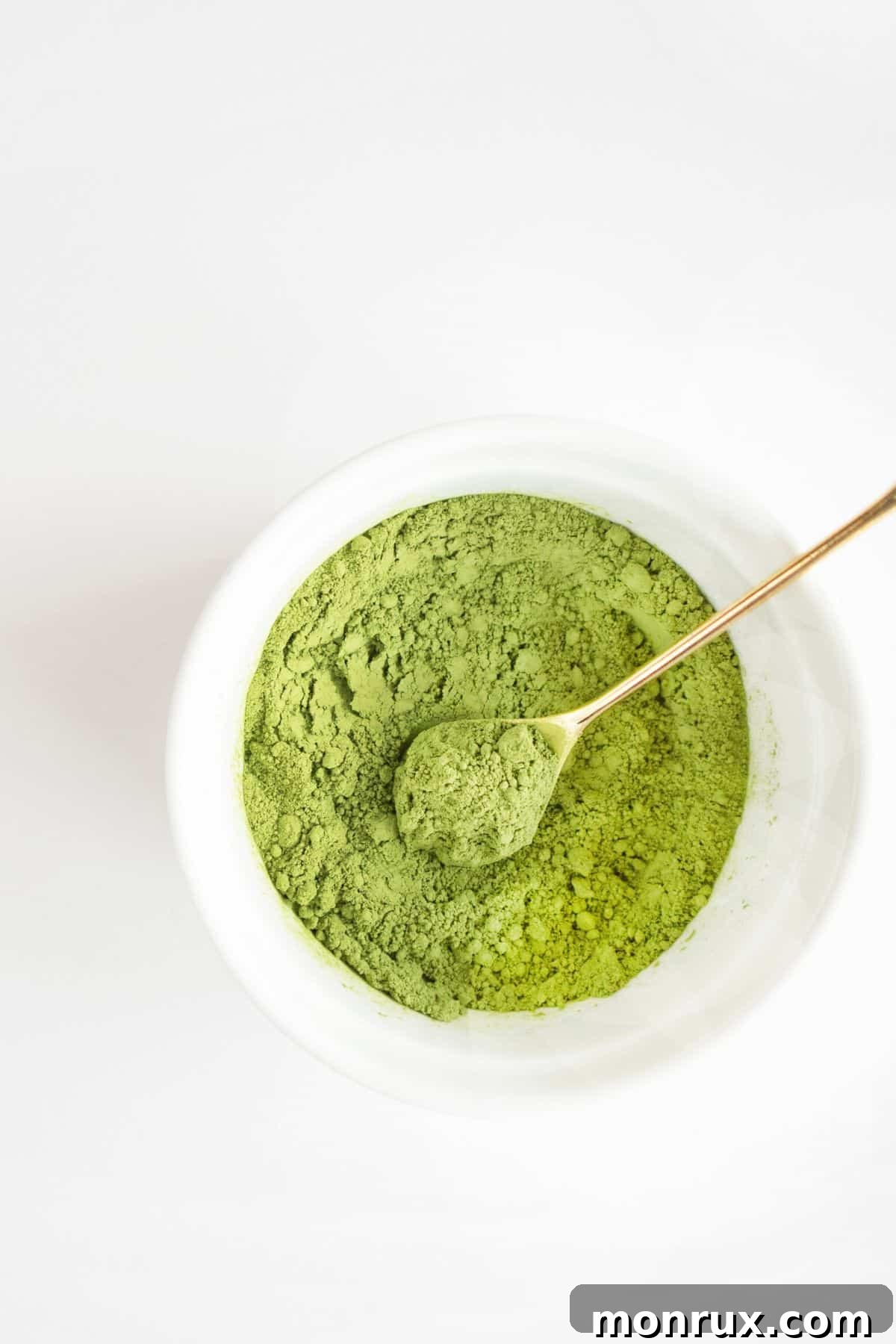
Matcha Powder: The Star Ingredient
As discussed, the quality of your matcha significantly impacts the final taste and appearance of your drink. Always opt for pure matcha powder without any added sweeteners, fillers, or artificial ingredients. The different grades of matcha offer varying flavor profiles and intensities:
- Ceremonial Grade: While premium in cost, it offers the smoothest, most umami-rich flavor, perfect if you desire a truly refined taste experience in your latte.
- Premium Grade: This is generally the sweet spot for lattes – excellent quality, vibrant color, and a balanced flavor that pairs wonderfully with milk and coffee without being overly bitter.
- Culinary Grade: If you’re on a budget, a good quality culinary matcha can still work, but be mindful that its stronger, more astringent notes might require more sweetener or a different milk choice to balance.
You can typically find good quality matcha online, at specialty coffee shops, or in Asian markets. Don’t be afraid to explore different brands to find your personal favorite. Remember, a brighter green color usually indicates higher quality and freshness.
Coffee: Your Energy Foundation
The coffee component is all about personal preference. Whether you’re a connoisseur who meticulously grinds their beans for a Moka pot, a fan of the bold taste from a French press, or prefer the convenience of an automatic coffee machine, use an espresso or strong brewed coffee you genuinely enjoy. The specific brewing method is less important than the quality and flavor of your chosen coffee.
For those seeking high-quality options, you might explore the best organic coffee brands. It’s important to remember that both matcha and coffee contain caffeine, providing a double dose of stimulating energy. If you love the flavor but prefer a milder caffeine intake, consider using decaffeinated coffee or espresso. You’ll still benefit from the rich antioxidant content of both beverages, offering significant health advantages without excessive caffeine.
The combination of coffee and matcha creates an antioxidant powerhouse. These powerful compounds, found abundantly in both drinks, play a vital role in protecting our bodies from harmful free radicals, which contribute to various chronic diseases such as cancer, diabetes, and heart disease. Enjoying this beverage isn’t just a treat for your taste buds; it’s an investment in your long-term health. If you’re a true coffee enthusiast, you might also enjoy exploring other coffee-infused treats like these Coffee Donuts!
Plant Milk: The Creamy Canvas
To keep this recipe dairy-free and enhance specific flavor notes, selecting the right plant milk is key. Always opt for unsweetened varieties to avoid unwanted sugars and allow you to control the sweetness level yourself. Each type of plant milk offers a unique contribution:
- Almond Milk: My personal choice for this recipe, unsweetened almond milk subtly deepens the earthy flavors of matcha, creating a rich, nutty backdrop.
- Oat Milk: For a creamier, naturally sweeter, and smoother texture, oat milk (especially barista blends) is an excellent choice. It adds a luxurious mouthfeel that complements both matcha and coffee beautifully.
- Soy Milk: If you want the matcha flavor to truly shine, soy milk provides a neutral canvas, allowing the green tea’s distinct taste to come forward.
- Light Coconut Milk: For a tropical twist and a rich texture, light coconut milk can be an interesting alternative, though its distinct flavor will be noticeable.
- Cashew Milk or Other Nut Milks: Feel free to experiment with any plant milk you prefer. Most will integrate well into this recipe.
And for those who aren’t adhering to a dairy-free diet, regular dairy milk—whether whole milk for richness, low-fat for a lighter option, or even half-and-half or heavy cream for ultimate decadence—can be used interchangeably.
Maple Syrup: The Touch of Natural Sweetness
Maple syrup, particularly amber grade, adds a delightful smokiness that perfectly complements the creamy milk, the slight bitterness of coffee, and the earthy undertones of matcha. Its complex flavor is often preferred over simple sugar.
Start with a small amount, especially if your chosen plant milk has a natural sweetness. You can always add more to taste. If maple syrup isn’t available or you prefer other natural sweeteners, honey, agave nectar, or even a few blended dates can be excellent substitutes. Many enthusiasts also enjoy the profound, satisfying taste of matcha coffee entirely unsweetened, allowing the natural flavors to take center stage. I personally find a tiny hint of maple syrup enhances the overall flavor profile without making it overly sweet.
Note on layering: Achieving distinct layers can be more challenging without a sweetener, as sugar adds density. If going unsweetened, pour your layers even more slowly and gently. Practice makes perfect!

Step-by-Step Guide: How to Make Layered Matcha Coffee
Creating this visually stunning and delicious layered matcha coffee is a simple process. Follow these steps carefully to achieve beautiful, distinct layers and a perfectly balanced drink.
Step One: Prepare Your Espresso
Brew one or two shots of your favorite espresso using your preferred method (Moka pot, French press, or espresso machine). Allow the espresso to cool completely to room temperature. This is crucial for maintaining distinct layers in an iced drink.
Step Two: Whisk the Matcha Mixture
In a small bowl, combine the matcha powder and your chosen sweetener (maple syrup or honey) with the warm water. Whisk vigorously until the matcha is fully dissolved and there are no visible clumps. Aim for a smooth, slightly frothy consistency. Sifting the matcha powder beforehand can aid in achieving a lump-free mixture.
Step Three: Build the Matcha Base
Pour the whisked matcha mixture into the bottom of your tall, transparent serving glass. If you’re making an iced matcha coffee, add your ice cubes carefully over the matcha layer. For a hot version, omit the ice.
Step Four: Gently Add the Milk Layer
This is where the layering technique comes in. Slowly pour your plant milk (or dairy milk) over the back of a spoon, holding the spoon just above the ice or the matcha layer. This method helps to slow the flow of the milk, allowing it to gently settle on top of the matcha without mixing. Watch as a beautiful, creamy layer forms.
Step Five: Introduce the Espresso Layer
Repeat the spoon-pouring technique for the espresso. Again, hold a spoon just above the milk layer and slowly pour the cooled espresso over its back. The rich brown espresso will create a striking third layer, completing your masterpiece.
Serve immediately, admire your creation, and savor every sip! You’ll soon agree that this is one of your new favorite matcha drinks, offering a delightful fusion that elevates both coffee and matcha into a truly unique and satisfying beverage.
Frequently Asked Questions About Matcha Coffee
Got questions about this unique beverage? We’ve got answers to help you master your matcha coffee creation.
What exactly is matcha?
Matcha is a powdered form of young green tea leaves, specifically grown and processed to maximize flavor and nutrients. Originating from Japan, the tea plants are shade-grown for several weeks before harvest, which boosts chlorophyll and L-Theanine content. The leaves are then carefully picked, steamed, dried, and stone-ground into a vibrant, fine powder. This unique preparation means you consume the entire tea leaf, providing a higher concentration of antioxidants and other beneficial compounds compared to traditional steeped green tea. Matcha boasts tremendous health benefits, from enhancing heart health and cognitive function to potentially aiding in weight management and offering cancer-preventative properties.
Does matcha contain caffeine?
Yes, matcha does contain caffeine. A typical teaspoon (about 2 grams) of matcha powder contains approximately 68 milligrams of caffeine. For comparison, a standard cup of brewed coffee usually contains around 95-100 milligrams of caffeine. The caffeine in matcha, however, is often experienced differently due to the presence of L-Theanine, which creates a more sustained energy boost and focused alertness without the common jitters or sudden crash.
Can children safely consume matcha coffee?
While matcha in moderation is generally considered suitable for children, this recipe combines caffeine from both matcha and coffee, making the overall caffeine content potentially too high for younger individuals. If you wish to make a kid-friendly version, consider substituting the coffee with decaffeinated coffee or caffeine-free alternatives like chicory or carob coffee. Alternatively, you could use a smaller amount of matcha, or omit the coffee altogether to create a delicious matcha latte. Always consult a healthcare provider if you have specific concerns about serving caffeine to children, as individual tolerance varies. Generally, a ten-year-old might tolerate one serving of matcha coffee daily (with regular coffee substituted), while younger children should have no more than half a cup.
Is it possible to make a hot version of this matcha coffee?
Absolutely! You can certainly enjoy a hot matcha coffee, though achieving distinct layers will be more challenging, and you may end up with a beautifully blended matcha espresso fusion. To prepare a hot version, use hot water to whisk the matcha powder. Do not allow the espresso to cool; instead, use it freshly brewed and hot. You can also gently warm your milk before pouring. While the layers might not be as defined as the iced version, the flavors will still be wonderfully combined and comforting.
What are some recommended matcha brands?
For consistent quality and flavor, I highly recommend the Republic of Tea Organic Japanese Matcha Green Tea Full-Leaf Powder or the Jade Leaf Organic Matcha Green Tea Powder. Both are excellent, reasonably priced options that deliver a vibrant color and smooth taste. Exploring different brands can also be fun to find your personal favorite. You might also find inspiration from this list of the best matcha drinks at Starbucks.
Expert Tips for the Best Matcha Coffee
Elevate your matcha coffee experience with these helpful tips and tricks:
- Kid-Friendly Alternatives: For a caffeine-free version suitable for younger ones, replace the coffee with chicory root beverage or carob powder dissolved in water. Always offer in moderation and consult a healthcare professional regarding caffeine consumption for children.
- Dairy Option: If you’re not following a dairy-free diet, feel free to use regular dairy milk – whole, low-fat, or even half-and-half – for a rich and creamy texture.
- Reduce Caffeine: To lower the overall caffeine content while keeping the coffee flavor, simply use decaffeinated espresso or coffee. You’ll still enjoy the health benefits of matcha’s antioxidants.
- Adjust Sweetness: For a lower-sugar option, reduce or omit the maple syrup, or substitute it with other natural sweeteners like stevia, erythritol, or monk fruit. Explore these best natural sugar substitutes.
- Hot Version: To make a hot matcha coffee, use hot water for whisking the matcha and freshly brewed hot espresso. The layers may blend, but the warm, comforting flavors will be just as delightful.
- Boost Protein: For an added nutritional punch, stir in a scoop of unflavored collagen powder or your favorite protein powder into the milk layer. This turns your drink into a functional protein coffee, similar to this Protein Coffee recipe.
- Flavor Variations: Experiment with a dash of vanilla extract, a pinch of cinnamon, or even a drizzle of sugar-free chocolate syrup for different flavor profiles.
- Chilled Glasses: For the coldest iced coffee, chill your serving glasses in the freezer for 10-15 minutes before assembling.
Don’t Miss These Energizing Recipes
We truly hope you enjoy creating and savoring this unique matcha coffee recipe! If you do, please consider leaving a comment and a starred review below to share your experience. Your feedback is invaluable.
And to stay connected with our latest clean eating recipes, health tips, and wellness insights, don’t forget to follow us on social media. Find us on Facebook, Pinterest, Instagram, and YouTube!
Print Recipe
Matcha Coffee Recipe (Dairy-Free)
5 from 1 review
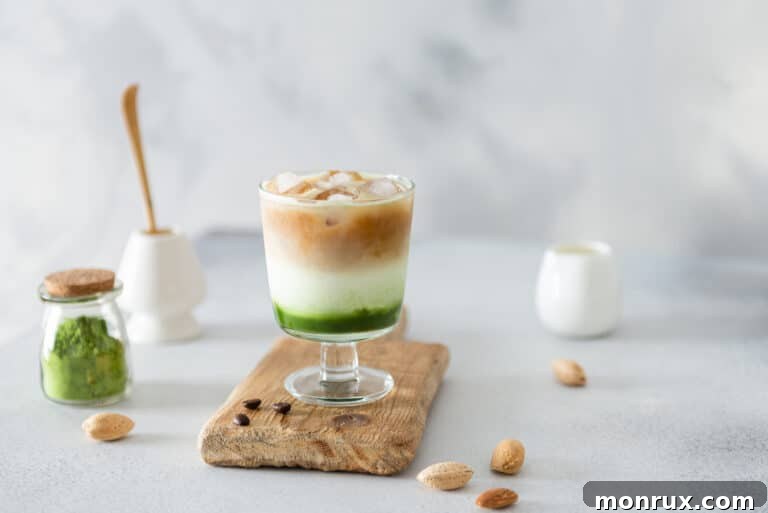
Experience the perfect fusion of cool, creamy, sweet, and earthy with this powerfully healthy Matcha Coffee. If you adore lattes but prioritize health without sacrificing flavor, this dairy-free Matcha Coffee recipe is crafted just for you.
- Total Time: 20 minutes
- Yield: 1 serving
Ingredients
- 1 shot of espresso
- 1 teaspoon matcha powder
- 1 teaspoon maple syrup or honey
- 1/3 cup warm water
- 1 cup of ice
- 1/3 cup of unsweetened almond milk (or other plant milk)
Instructions
- Brew the espresso and let it cool completely to room temperature.
- Add the matcha powder and sweetener to the warm water and whisk thoroughly until no clumps remain.
- Pour the matcha mixture into the bottom of your serving cup, then add the ice cubes.
- Slowly pour the milk over the matcha layer. For best results, gently pour the milk over the back of a spoon.
- Next, slowly pour the cooled espresso over the milk layer, again using the back of a spoon to create a distinct layer.
- Serve immediately and enjoy your beautiful layered matcha coffee!
Notes
- If you want to make a kid-friendly version, consider substituting the coffee for chicory or carob. Remember to serve in moderation; one serving with substituted coffee may be suitable for a ten-year-old, while younger children should have about half a cup. Consult a healthcare provider for specific advice on caffeine and children.
- Regular dairy milk can be used if you are not on a dairy-free diet.
- To reduce overall caffeine, use decaffeinated espresso or coffee.
- Adjust or omit maple syrup for a lower sugar content, or use a natural sugar substitute.
- For a hot version, use hot water to mix matcha and do not cool the espresso before combining.
- Author: Carrie Forrest, MPH in Nutrition
- Prep Time: 10 minutes
- Cook Time: 10 minutes
- Category: Drink
- Method: Stovetop
- Cuisine: Healthy
- Diet: Vegan
Nutrition
- Serving Size: 1 drink
- Calories: 171
- Sugar: 4 g
- Sodium: 76 mg
- Fat: 5 g
- Saturated Fat: 0 g
- Carbohydrates: 5 g
- Fiber: 0 g
- Protein: 4.6 g
- Cholesterol: 25 mg
Don’t forget to join my newsletter list to receive exclusive clean eating recipes, expert nutrition tips, and wellness insights directly to your inbox. It’s 100% free, spam-free, and you can unsubscribe anytime.
About the Author: Carrie Forrest holds a master’s degree in public health with a specialization in nutrition and is a certified holistic nutritionist. As a prominent wellness and food blogger, her site attracts over 5 million annual visitors. Carrie shares an inspiring story of recovery from chronic illness and is deeply passionate about empowering other women to transform their health journeys. You can reach out to her directly through her contact form.