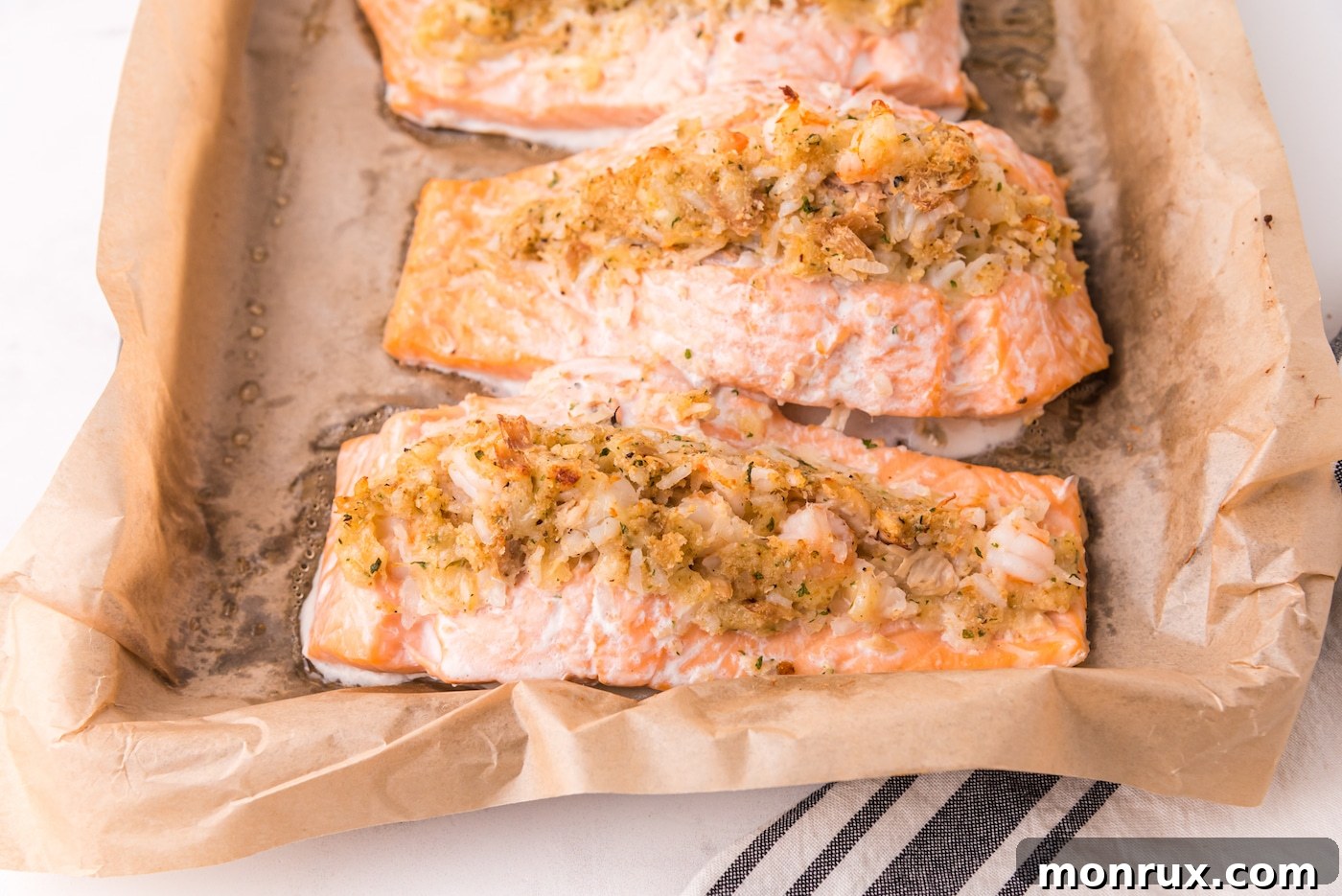
Craving the succulent, flavorful experience of Costco’s Stuffed Salmon but prefer to craft it in your own kitchen? You’ve come to the right place! This ultimate copycat recipe offers a healthy, straightforward, and incredibly satisfying way to enjoy tender salmon fillets brimming with a rich, savory seafood stuffing. Imagine perfectly baked salmon, flaky and moist, generously filled with a delectable mixture of crab meat, plump shrimp, fluffy rice, and a medley of carefully selected seasonings. It’s a dish that promises to impress, whether it’s a quick weeknight meal or a special occasion dinner, delivering all the gourmet taste without the premium price tag or hidden ingredients.
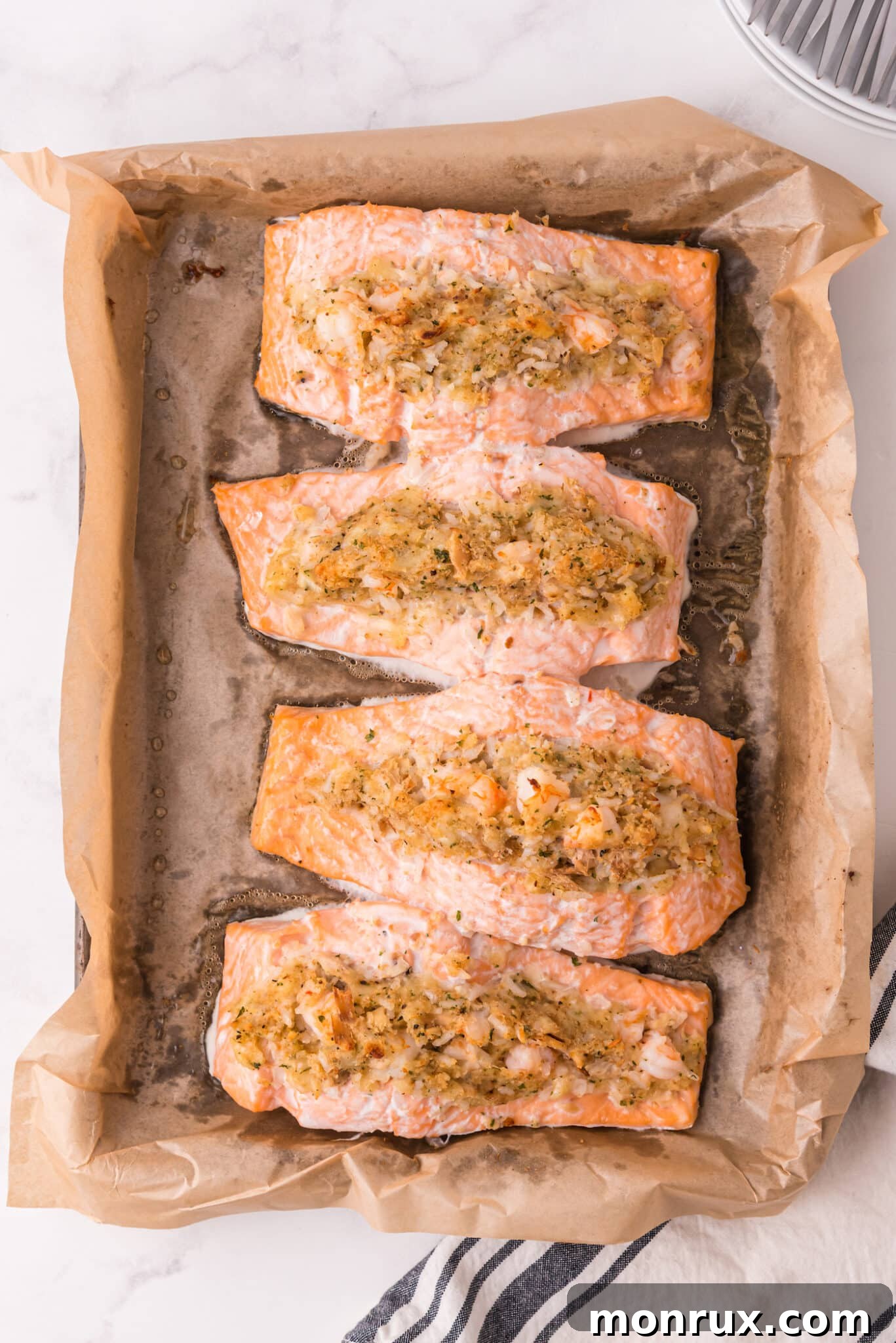
If you’re among the many who have fallen in love with the pre-made Costco stuffed salmon from their deli case, you understand its undeniable appeal. The combination of perfectly cooked salmon, a decadent seafood stuffing, and that irresistible cheesy crust that crisps beautifully at the edges is pure culinary magic. However, recreating this magic at home offers unparalleled benefits.
This meticulously developed copycat version aims to capture that exact same delightful blend: a luscious, creamy crab-and-shrimp filling paired with perfectly baked, flaky salmon. What sets our homemade recipe apart is the ability to control every aspect – from the quality of ingredients to the seasoning levels. Say goodbye to overly salty dishes and hello to a gourmet meal tailored to your taste buds. Plus, with precise bake times optimized for a standard home oven, you’ll achieve perfection every time.
The process is surprisingly simple: you’ll carefully slice a pocket into each salmon portion, generously pack it with our easy-to-make seafood stuffing, then bake until the salmon is wonderfully flaky and the top is golden brown. It’s an elegant dish that looks sophisticated enough for a dinner party but is genuinely simple enough for any busy weeknight. Beyond the convenience, making it yourself means you can opt for higher-quality, sustainably sourced ingredients and easily omit anything you prefer to leave out, ensuring a truly personalized and healthy dining experience. You might also enjoy our fresh take on the Costco Cilantro Lime Shrimp recipe for another delightful copycat!
Why Make Your Own Costco Stuffed Salmon?
While the convenience of store-bought options is tempting, creating your own stuffed salmon provides numerous advantages. First and foremost, you gain complete control over the ingredients. This means choosing fresh, high-quality seafood, opting for organic and non-GMO components, and adjusting seasonings to your precise preference. For those with dietary restrictions, it allows for easy customization, such as using gluten-free breadcrumbs or dairy-free cheese alternatives. Moreover, homemade dishes often boast a fresher flavor profile, are typically less expensive per serving, and offer the satisfaction of preparing a wholesome, delicious meal from scratch. It’s an investment in both your health and your culinary skills!
Essential Ingredients for the Perfect Stuffing
Crafting the perfect seafood stuffing starts with selecting the right components. Each ingredient plays a crucial role in achieving the rich flavor and ideal texture that makes this dish so irresistible.
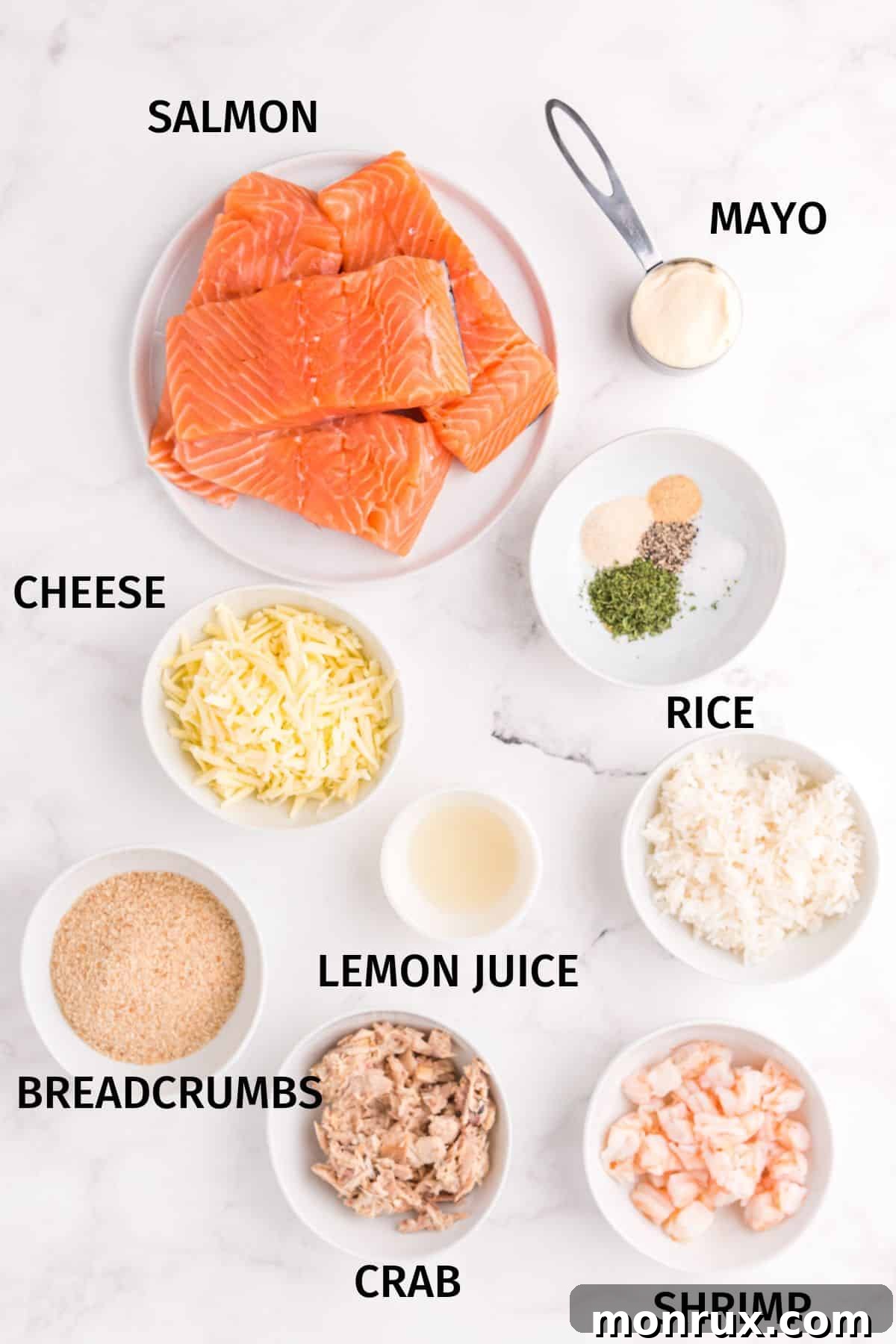
- High-Quality Salmon Fillets: The star of the show, salmon is not only delicious but also a powerhouse of nutrition, packed with healthy omega-3 fatty acids, lean protein, and essential vitamins. For the best flavor and health benefits, always look for wild-caught salmon if possible. Avoid farmed Atlantic salmon, which can sometimes contain fewer nutrients and more contaminants. Aim for fillets that are at least 2 inches thick to allow for a generous stuffing pocket.
- Succulent Crab and Shrimp: These two seafood staples are key to the stuffing’s luxurious flavor and texture. They add a delightful sweetness and depth that complements the salmon beautifully. You can use fresh or frozen (thawed) cooked crab meat and shrimp. If using canned crab, ensure it’s well-drained. For an even more budget-friendly option, consider using good quality canned tuna (drained) as a substitute for some or all of the crab.
- Binding Breadcrumbs: Breadcrumbs are essential for giving the stuffing structure and ensuring it holds together beautifully within the salmon pocket. They absorb moisture and help create that creamy, scoopable consistency. If you follow a gluten-free diet, simply opt for your favorite gluten-free breadcrumbs – they work just as effectively.
- Creamy Mayonnaise: Mayonnaise is a classic seafood accompaniment for a reason! In this recipe, it acts as a rich binder, bringing all the stuffing ingredients together while adding a wonderful creaminess and subtle tang that enhances the overall flavor profile. For a lighter touch, you can use a high-quality avocado oil mayonnaise.
- Cooked Rice: A small amount of cooked rice adds body to the stuffing, making it more substantial and ensuring a satisfying bite. White rice is traditional, but you could experiment with brown rice for added fiber and nutrients. Make sure it’s cooled before mixing to prevent the stuffing from becoming too warm and loose.
- Monterey Jack Cheese: This cheese provides that signature melty, golden topping and a delicious savory note to the stuffing. It’s a mild, easily melted cheese that blends seamlessly with the other flavors. If you’re dairy-free, a good quality non-dairy cheese substitute can be used, or you can simply omit it for a lighter, dairy-free version.
- Aromatic Seasonings: Lemon juice, dried parsley, onion powder, garlic powder, sea salt, and black pepper are carefully balanced to enhance the natural flavors of the seafood without overpowering them. The lemon juice adds brightness, while the herbs and spices provide a comforting depth.
For a complete list of quantities and detailed instructions, please refer to the full recipe card below.
Step-by-Step Recipe Guide
Creating this stunning stuffed salmon dish is simpler than you might think. Follow these clear steps for a flawless result every time.
Step One: Preparing Your Salmon Fillets
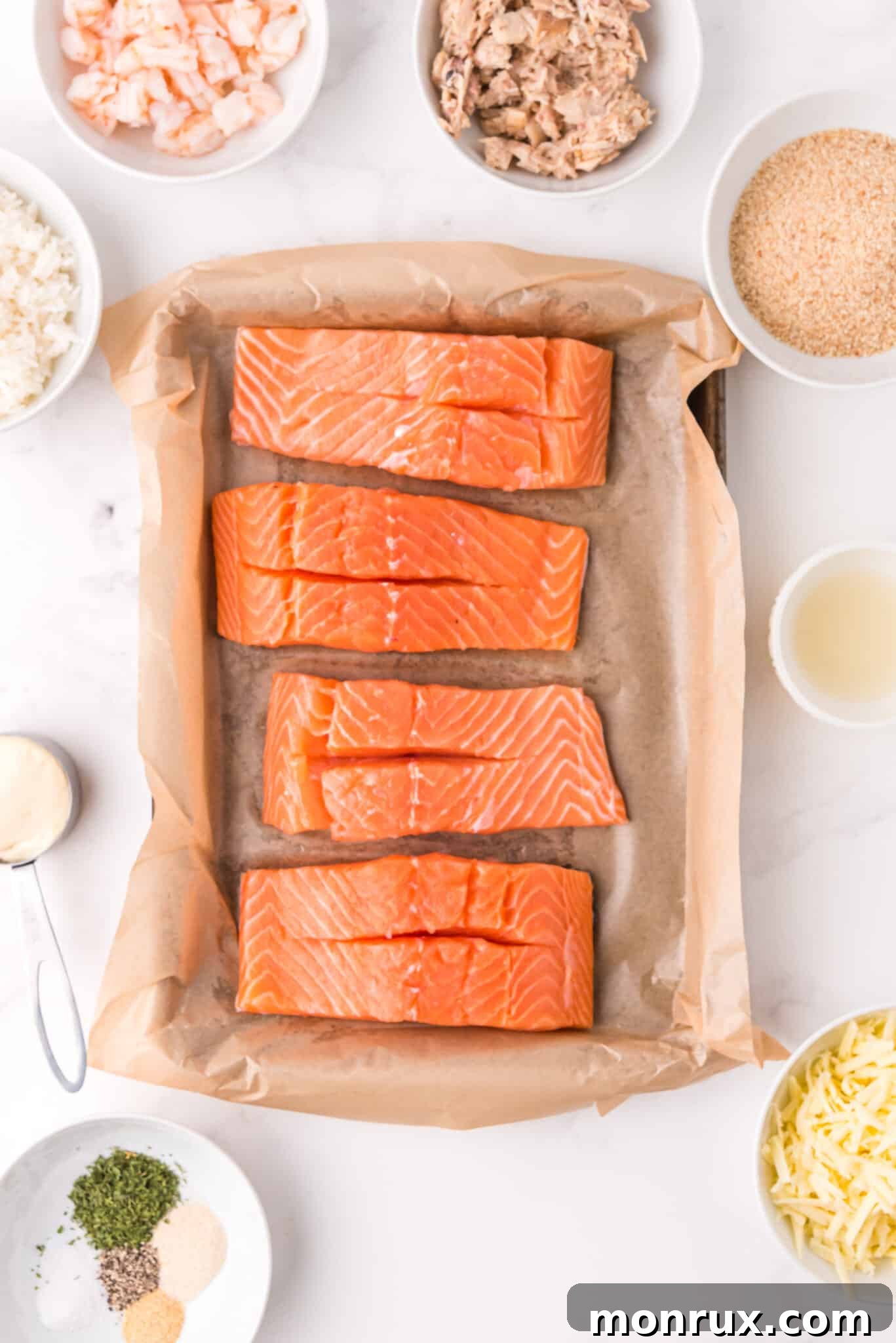
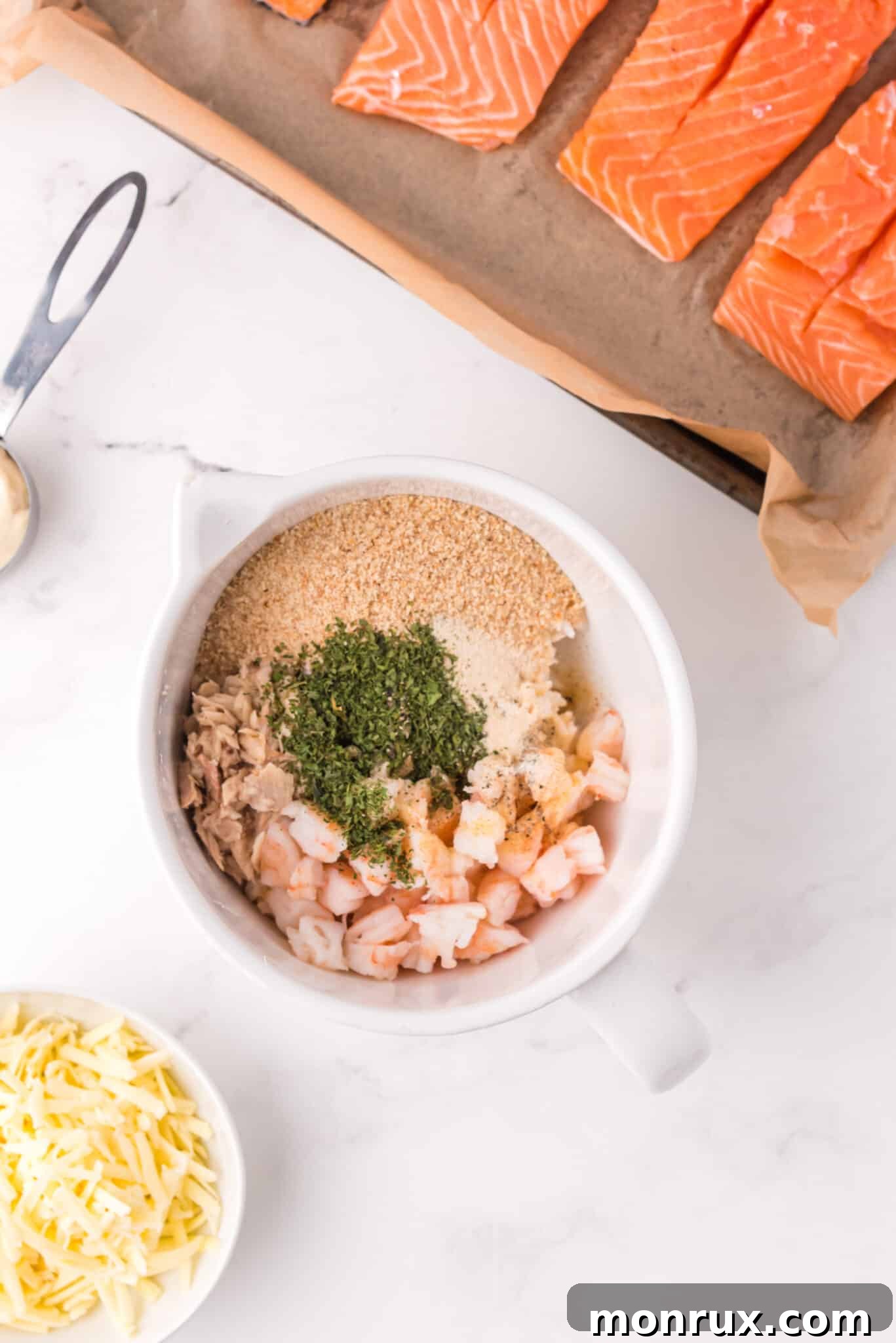
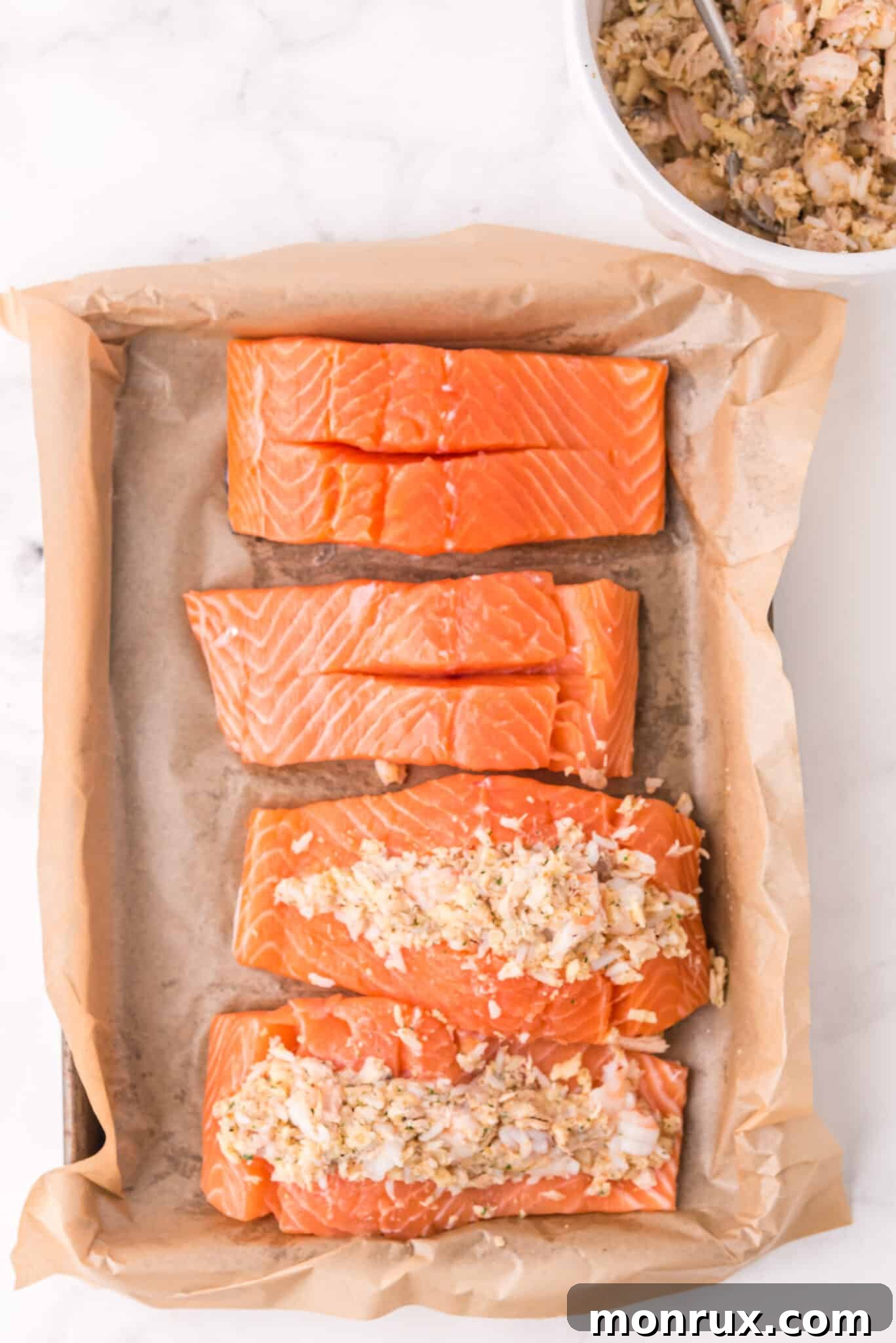
Begin by preheating your oven to 350°F (175°C) and lining a baking sheet with parchment paper for easy cleanup. Gently pat your salmon fillets dry with paper towels; this helps ensure a crispier skin and better texture. Using a sharp knife, carefully cut a deep pocket into the side of each fillet. The goal is to create a generous slit that runs almost the entire length of the fillet, but without cutting all the way through the bottom or ends. You want to leave a “hinge” of salmon intact to keep the delicious stuffing securely tucked inside during baking.
Step Two: Crafting the Perfect Seafood Stuffing
In a large mixing bowl, combine the cooked and cooled white rice, chopped cooked crab meat, chopped cooked shrimp, breadcrumbs, grated Monterey Jack cheese, mayonnaise, fresh lemon juice, dried parsley, onion powder, garlic powder, sea salt, and black pepper. Stir all the ingredients together until they are thoroughly combined and the mixture is thick and evenly textured. The consistency should be creamy and easily scoopable, not runny. If your mixture feels a bit too loose, add a tablespoon more of breadcrumbs at a time until it reaches the desired consistency. This binder is crucial for keeping the stuffing intact.
Step Three: Expertly Stuffing the Salmon
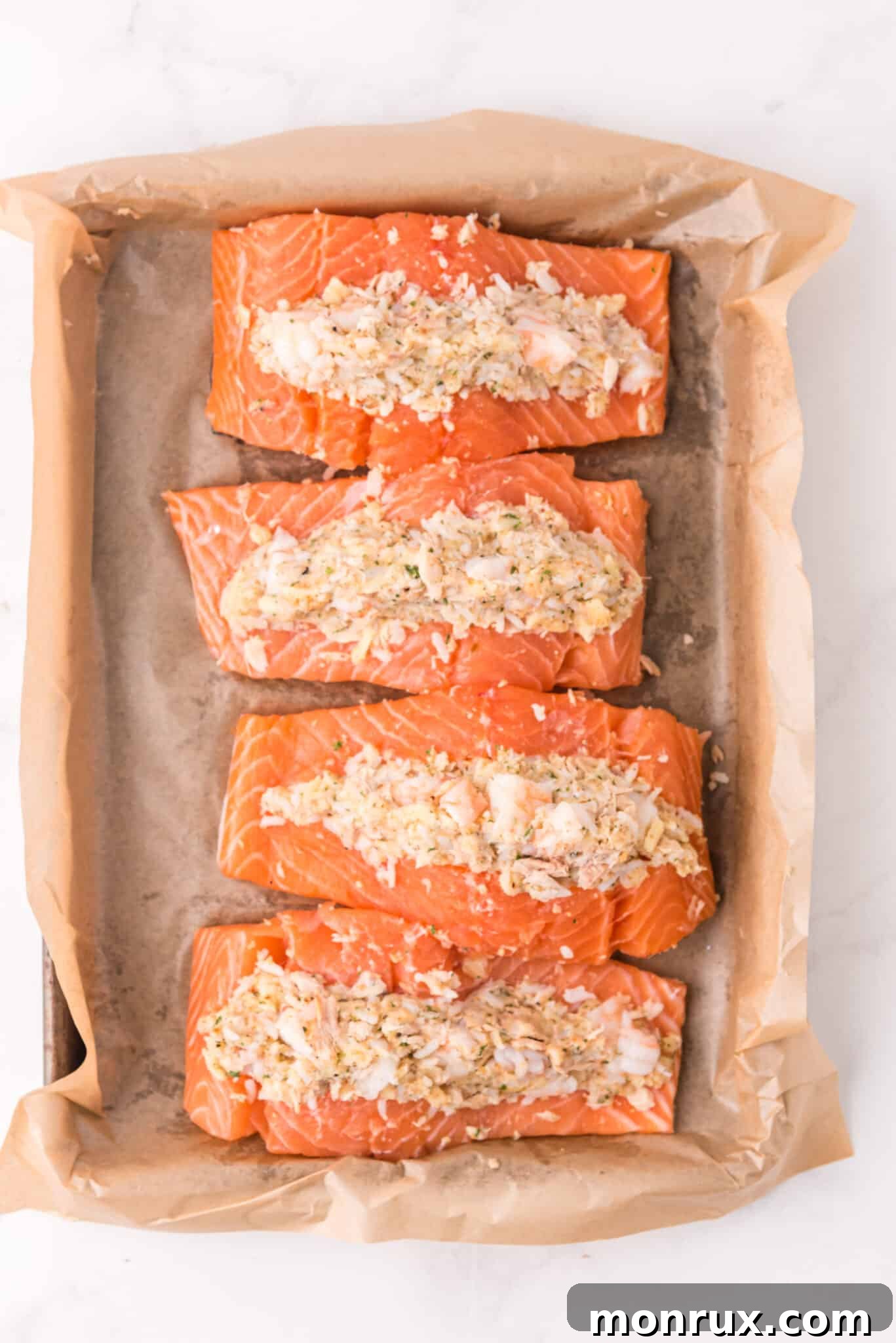
Now for the fun part! Take spoonfuls of your delicious seafood filling and gently press it into each pocket you created in the salmon fillets. Be sure to fill them snugly but avoid overstuffing. While it might be tempting to pile on extra filling, overly stuffed fillets tend to spill their contents as they bake. If you have a small amount of extra stuffing, you can mound a little on top, but prioritize keeping the bulk of the filling within the pocket. Lay the stuffed salmon fillets onto your prepared baking sheet.
Step Four: Baking to Flaky Perfection
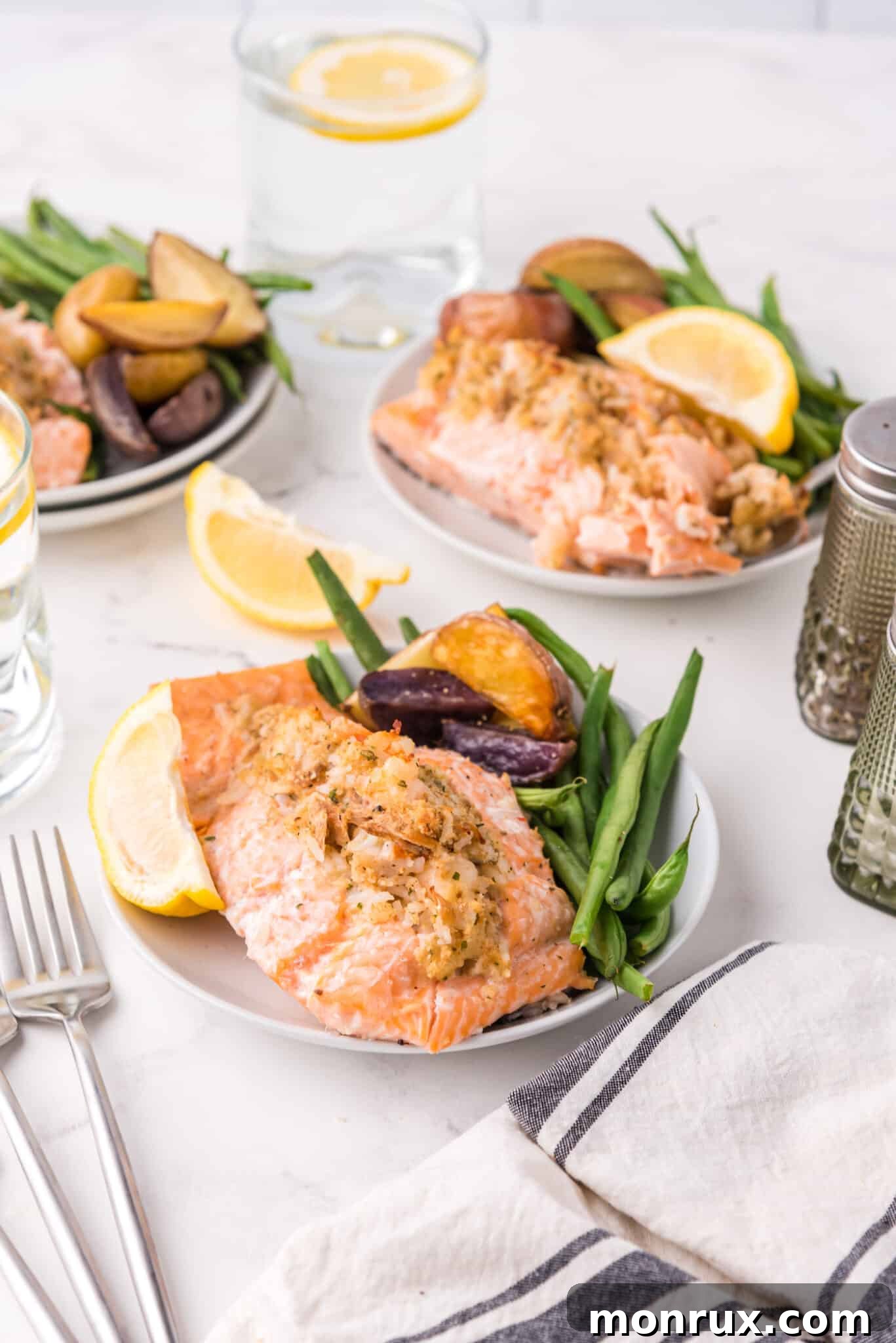
Transfer the baking sheet with the stuffed salmon to your preheated oven. Bake for approximately 25-30 minutes. The cooking time will vary slightly depending on the thickness of your salmon fillets. You’ll know it’s ready when the salmon is opaque throughout and flakes easily with a fork. The topping should also be lightly browned and bubbly. For the most accurate measure of doneness, use an instant-read thermometer and aim for an internal temperature of 145°F (63°C) in the thickest part of the salmon. Remember, thicker fillets will require a bit more time, while thinner ones will cook faster – always watch the salmon, not just the clock!
Once baked, allow the fish to cool for a few minutes before serving. This brief resting period helps the juices redistribute, ensuring a moist and tender result. Serve your magnificent stuffed salmon with a fresh lemon wedge on the side; a squeeze of fresh lemon brightens all the flavors beautifully.
Any leftovers can be stored in an airtight container in the refrigerator for up to 4 days. For the best taste and texture, gently reheat them before enjoying.
Expert Tips for Stuffed Salmon Perfection
Achieving restaurant-quality stuffed salmon at home is easy with a few insider tips:
- Avoid Overbaking at All Costs: This is arguably the most crucial tip for any salmon recipe. While the seafood filling is quite forgiving, salmon can quickly become dry and tough if overcooked. Keep a close eye on it and remove it from the oven as soon as it flakes easily and appears opaque at its thickest point. A food thermometer is your best friend here, aiming for 145°F (63°C).
- Ensure Your Stuffing Holds its Shape: If your seafood mixture feels too loose or won’t stay securely inside the salmon pocket, it needs more binder. Simply add extra breadcrumbs, one tablespoon at a time, mixing well after each addition, until the stuffing achieves a thick, moundable consistency. This prevents spillage during baking.
- Mimic the Deli Case Look with a Cheesy Top: For that truly authentic Costco deli case appearance, consider sprinkling a little extra shredded Monterey Jack cheese over the top of the stuffed salmon during the last 5-10 minutes of baking. This allows the cheese to melt into a beautiful, golden-brown crust with deliciously crispy edges.
- Make-Ahead Convenience: Save time on a busy day by preparing the stuffing up to 24 hours in advance. Store the prepared filling in an airtight container in the refrigerator. Stuff the salmon fillets just before baking for the freshest and best texture. This is a great meal prep hack!
- Optimal Reheating Method: Leftovers are delicious, and for the best results, reheat them gently. The ideal method is to warm them in the oven at 325°F (160°C) until heated through, typically about 15-20 minutes. While the microwave works in a pinch, it can sometimes dry out the salmon, so use it with caution and short bursts.
- Customize for Dietary Needs & Budget: This recipe is incredibly adaptable! Feel free to customize the stuffing ingredients to fit various dietary preferences. For a dairy-free version, omit the cheese or use a plant-based alternative. For gluten-free, use gluten-free breadcrumbs. If crab meat is a splurge, canned tuna (drained well) or additional shrimp can be excellent, more budget-friendly substitutions. For more ways to prepare this versatile fish, check out my guide on how to cook salmon in the slow cooker.
- Choose the Right Fillets: Opt for skin-on salmon fillets if possible, as the skin helps retain moisture and flavor during baking. If you prefer skinless, that works too, just keep an even closer eye on cooking times to prevent drying out.
Frequently Asked Questions About Stuffed Salmon
Absolutely! The beauty of this recipe is its versatility. While crab and shrimp are classic, you can certainly experiment with other cooked seafood like flaked white fish (cod, haddock), scallops, or even lobster meat for a truly decadent twist. The other filling ingredients are designed to bind about 1.5 cups of added seafood, so simply adhere to that ratio, no matter your chosen variety.
While stuffed salmon is undeniably best enjoyed fresh out of the oven, it makes for delicious leftovers. They will keep well in an airtight container in the refrigerator for up to 4 days. Always gently reheat them in the oven to maintain moisture and flavor, as described in our tips section.
Yes, imitation crab can be used as a more budget-friendly alternative. However, be mindful of the ingredients list, as some imitation crab products contain unwanted additives or artificial flavors. Choose a brand with simple, recognizable ingredients if possible.
Certainly! If you’re using frozen salmon fillets, the most important step is to ensure they are completely thawed before you begin preparing them. Thaw them overnight in the refrigerator or using the cold water method. Pat them very dry before cutting the pockets and stuffing to remove any excess moisture.
While some stuffed seafood recipes use cream cheese for creaminess, the traditional Costco recipe, and our copycat, utilizes Monterey Jack cheese for its specific melt and flavor. If you prefer the tang and texture of cream cheese, you could certainly experiment by adding a small amount to your stuffing mixture, perhaps reducing the mayonnaise slightly to maintain the correct consistency.
Stuffed salmon pairs beautifully with a variety of side dishes. Consider roasted asparagus, steamed green beans, a simple garden salad with a light vinaigrette, lemon herb roasted potatoes, or fluffy quinoa. For a heartier meal, a pilaf or wild rice blend would also be excellent choices.
We hope you’re inspired to create this incredible dish! If you do try this recipe, please leave a comment and a starred review below to share your experience. Your feedback is invaluable!
And, don’t forget to follow us on social media to stay connected and discover more delicious, healthy recipes. Find us on Facebook, Pinterest, Instagram, and YouTube!
Print Recipe
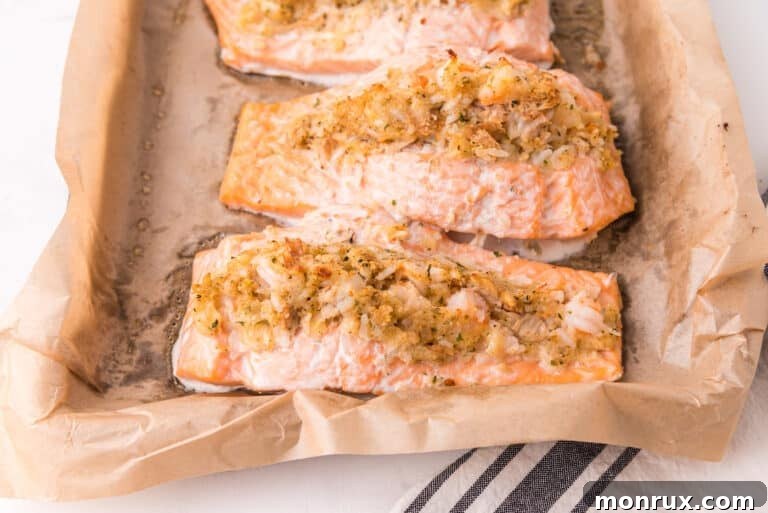
The Ultimate Costco Stuffed Salmon Copycat Recipe
5 Stars
4 Stars
3 Stars
2 Stars
1 Star
5 from 3 reviews
This ultimate copycat recipe for Costco’s Stuffed Salmon offers a healthy and easy way to prepare tender, flaky salmon. Each fillet is generously stuffed with a savory and creamy mixture of crab meat, shrimp, rice, and delicious seasonings, then baked until golden and perfectly cooked. Serve this impressive dish with your favorite healthy sides for a nutritious and memorable meal that your entire family will absolutely adore!
- Total Time: 55 minutes
- Yield: 4 servings
Ingredients
- 4 salmon fillets, at least 2-inches thick
- 1/2 cup cooked and cooled white rice
- 1/2 cup cooked crab meat (see notes for substitution options)
- 1 cup cooked shrimp, chopped
- 1/2 cup breadcrumbs (use gluten-free breadcrumbs if on a gluten-free diet)
- 1/2 cup grated Monterey Jack cheese (leave out for dairy-free diets or replace with a non-dairy cheese substitute)
- 1/4 cup mayonnaise
- 1 tablespoon lemon juice
- 1 teaspoon dried parsley
- 1/2 teaspoon dried onion powder
- 1/4 teaspoon garlic powder
- 1/2 teaspoon sea salt
- 1/4 teaspoon ground black pepper
- Fresh lemon wedges (optional, for serving)
Instructions
- Preheat your oven to 350°F (175°C). Line a baking sheet with parchment paper and set aside.
- Prepare the salmon by cutting a deep slit down the center of each fillet from nearly end to end, being careful to leave the ends and bottom intact so the salmon fillet forms a pocket and doesn’t fall apart.
- In a large mixing bowl, combine the cooked rice, crab meat (or tuna if substituting), chopped shrimp, breadcrumbs, grated Monterey Jack cheese, mayonnaise, lemon juice, dried parsley, onion powder, garlic powder, sea salt, and black pepper. Stir all ingredients thoroughly until well combined.
- Use your hands to gently press the mixture into 4 equal sections. Then, carefully stuff each section into the slit of each salmon fillet, ensuring it’s snug but not overpacked.
- Lay the stuffed salmon fillets on the prepared baking sheet. Bake for 25-30 minutes, or until the salmon fillets are opaque throughout and flake easily with a fork. The topping should be lightly browned.
- Allow the fish to cool for a few minutes before serving. Serve immediately with a wedge of fresh lemon, if desired, for an extra burst of flavor.
Notes
- If you opt to use canned tuna in this recipe as a substitute for crab meat, ensure you drain the tuna very well. You’ll need about half of a standard 5-ounce can.
- Approximately 8 ounces of raw shrimp will yield one cup of cooked, chopped shrimp with the tails removed, suitable for this recipe.
- Store any leftover stuffed salmon in a tightly sealed container in the refrigerator for up to 4 days. For best results, reheat gently in the oven rather than the microwave.
- Author: Carrie Forrest, MPH in Nutrition
- Prep Time: 25 minutes
- Cook Time: 30 minutes
- Category: Main Course
- Method: Oven
- Cuisine: American
- Diet: Gluten Free
Nutrition
- Serving Size: 1/4 of recipe
- Calories: 450
- Sugar: 1.1 g
- Sodium: 650.8 mg
- Fat: 21.7 g
- Saturated Fat: 5.9 g
- Carbohydrates: 17.4 g
- Fiber: 0.7 g
- Protein: 45.9 g
- Cholesterol: 179.3 mg
More Delicious Salmon Recipes to Explore
If you’re a fan of salmon, you’ll love these other fantastic ways to prepare this versatile and healthy fish:
- Fluffy Salmon Salad with Mayo
- Effortless Air Fryer Baked Salmon
- Quick Instant Pot Salmon and Rice
- Convenient Air Fryer Frozen Salmon
Don’t Miss These Incredible Copycat Recipes
Love recreating your restaurant favorites at home? Explore more of our popular copycat recipes that deliver authentic flavors with a homemade touch:
Don’t forget to join my newsletter list to get exclusive clean eating recipes and tips delivered straight to your inbox. The newsletter is 100% free with no spam; you can easily unsubscribe anytime.
About the Author: Carrie Forrest holds a master’s degree in public health with a specialization in nutrition and is a certified holistic nutritionist. She is a highly successful wellness and food blogger, attracting over 5 million visitors annually to her website. Carrie shares an inspiring story of recovery from chronic illness and is deeply passionate about empowering other women to transform their health. Feel free to send her a message through her contact form if you have any questions or comments.