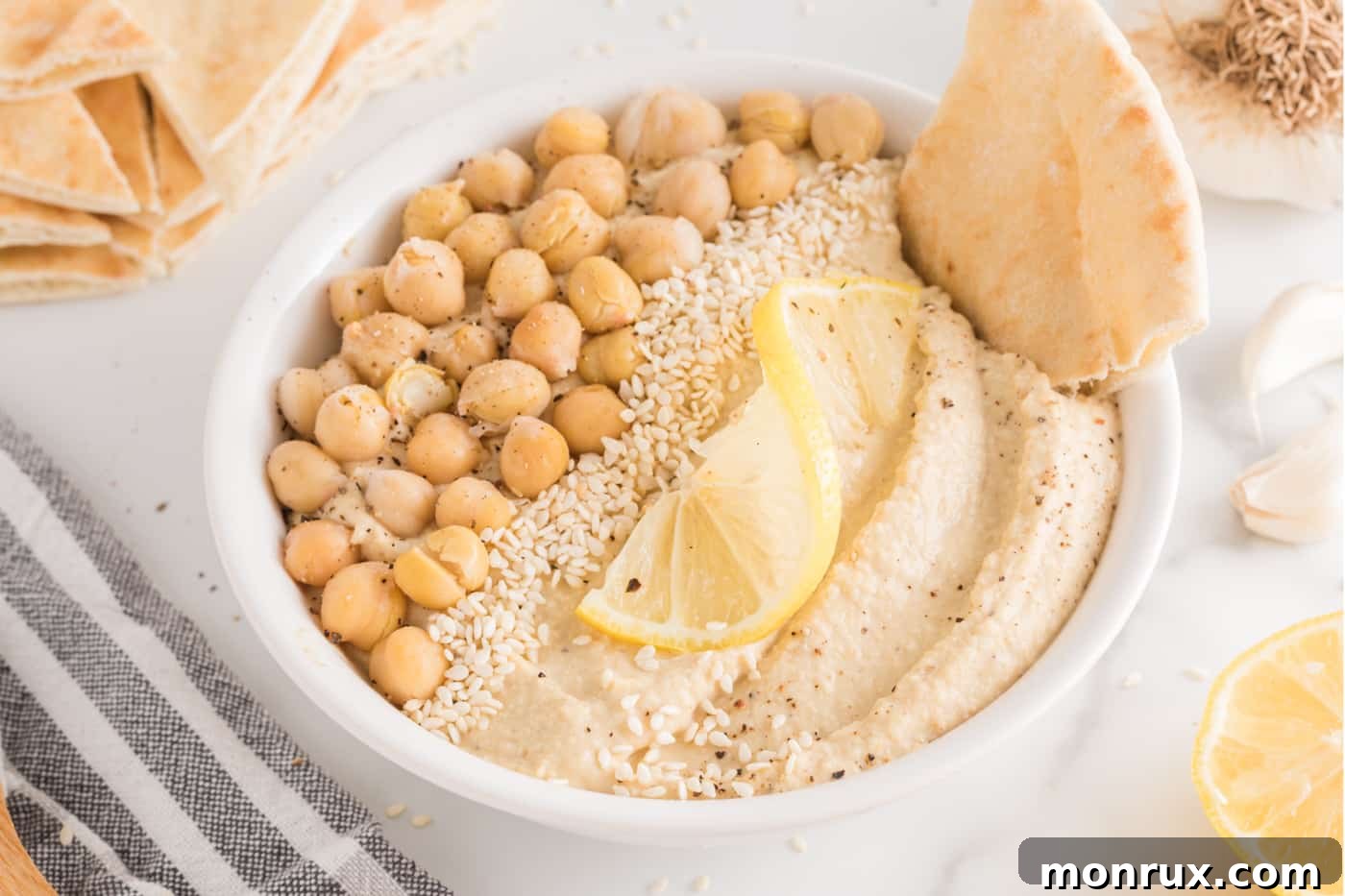
Prepare to revolutionize your snack game with this incredibly creamy and delicious Oil-Free Hummus recipe! Crafted with traditional tahini and bright lemon juice, this spread offers a luxurious texture and vibrant flavor that’s perfect with fresh veggies, sturdy crackers, or as a versatile addition to countless meals. Forget bland, store-bought options – with just a few simple, wholesome ingredients, you can create a truly exceptional vegan and gluten-free dip right in your own kitchen.
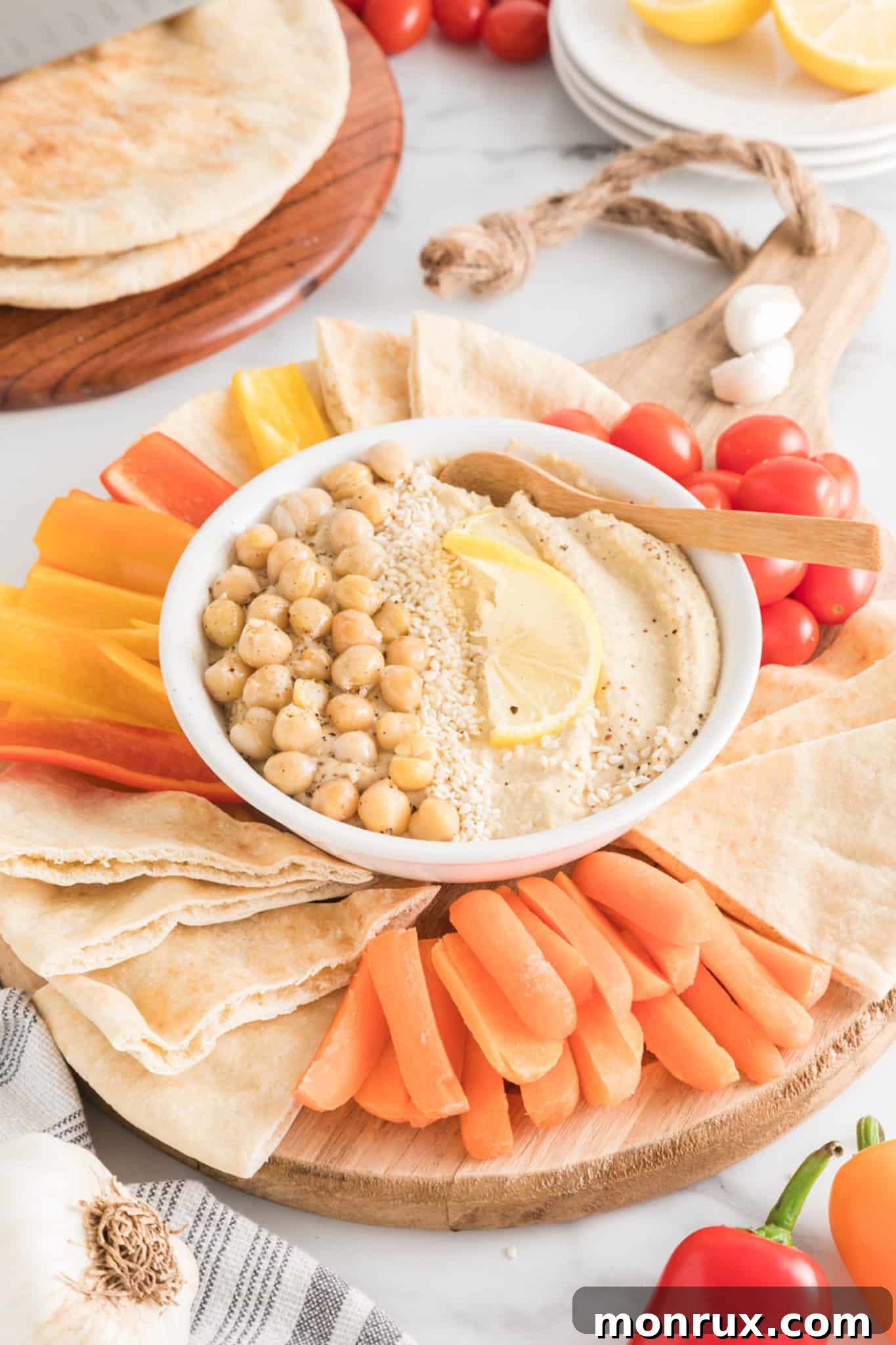
Hummus stands out as one of those wonderfully easy and incredibly satisfying recipes that’s always a good idea to have on hand. It’s not just a dip; it’s a protein-rich, fiber-packed, and completely plant-based snack that fuels your body and delights your taste buds. Whether you’re serving it at a party, packing it in a lunchbox, or simply enjoying a quiet moment with a healthy snack, homemade hummus is an absolute winner. It pairs perfectly with crisp carrot sticks, refreshing cucumber slices, crunchy celery, or your favorite whole-grain crackers.
Chickpeas, also widely known as garbanzo beans, are truly one of nature’s culinary gifts. A cornerstone of Mediterranean cooking, these humble legumes boast an impressive array of health benefits, from supporting digestive health to providing sustained energy. Their creamy texture makes them ideal for blending into a velvety smooth hummus, offering a nutritious alternative to heavier, less wholesome spreads. By making your own traditional hummus using natural sesame paste (tahini), you can easily bypass store-bought versions that often contain unnecessary oils, preservatives, and questionable additives.
Beyond its delicious taste, homemade hummus is an excellent choice for a variety of dietary preferences and needs. It’s naturally suitable for both vegan and gluten-free diets, making it an inclusive option for almost everyone. (For more insights, check out our detailed post answering the question: Is All Hummus Gluten-Free?).
Why You’ll Love This Oil-Free Hummus Recipe
This oil-free hummus recipe isn’t just another dip; it’s a testament to how incredible healthy eating can be without sacrificing flavor or texture. Traditional hummus recipes often call for generous amounts of olive oil, which, while beneficial in moderation, can add significant calories and fat. Our recipe cleverly sidesteps this by leveraging fresh lemon juice and rich, creamy tahini to achieve that perfect consistency, along with the optional secret ingredient: aquafaba. Aquafaba, the liquid from a can of chickpeas, works wonders as a natural emulsifier, helping to create an unbelievably smooth and airy texture without a drop of added oil.
- Naturally Oil-Free: We achieve incredible creaminess using fresh lemon juice, tahini, and the optional addition of aquafaba (chickpea liquid), bypassing the need for added oils entirely. This makes it a fantastic choice for whole-food plant-based diets and anyone looking to reduce their fat intake.
- Diet-Friendly & Nutritious: This recipe is 100% oil-free, gluten-free, vegan, and vegetarian. Furthermore, it’s packed with fiber and plant-based protein, offering a guilt-free snack or meal component that supports your overall well-being.
- Lightning Fast Prep: You’ll be amazed at how quickly this hummus comes together. In just five minutes, you can go from basic ingredients to a gourmet dip ready for immediate enjoyment. It’s also an excellent choice for weekly meal prep, ensuring you always have a healthy snack on hand.
- Superior Flavor & Texture: Many find our oil-free version to be among the best hummus recipes they’ve ever tried, rivaling and often surpassing store-bought varieties in both taste and texture. The fresh ingredients truly make a difference!
- Economical & Simple: Making hummus from scratch is significantly more cost-effective than buying it pre-made, and it requires only a handful of readily available ingredients.
Unlocking the Secret to Creamy, Oil-Free Hummus: Key Ingredients Explained
The magic of this oil-free hummus lies in its simplicity and the quality of its core ingredients. Each component plays a crucial role in delivering that authentic, rich, and tangy flavor we all love. Here’s a closer look at what you’ll need:
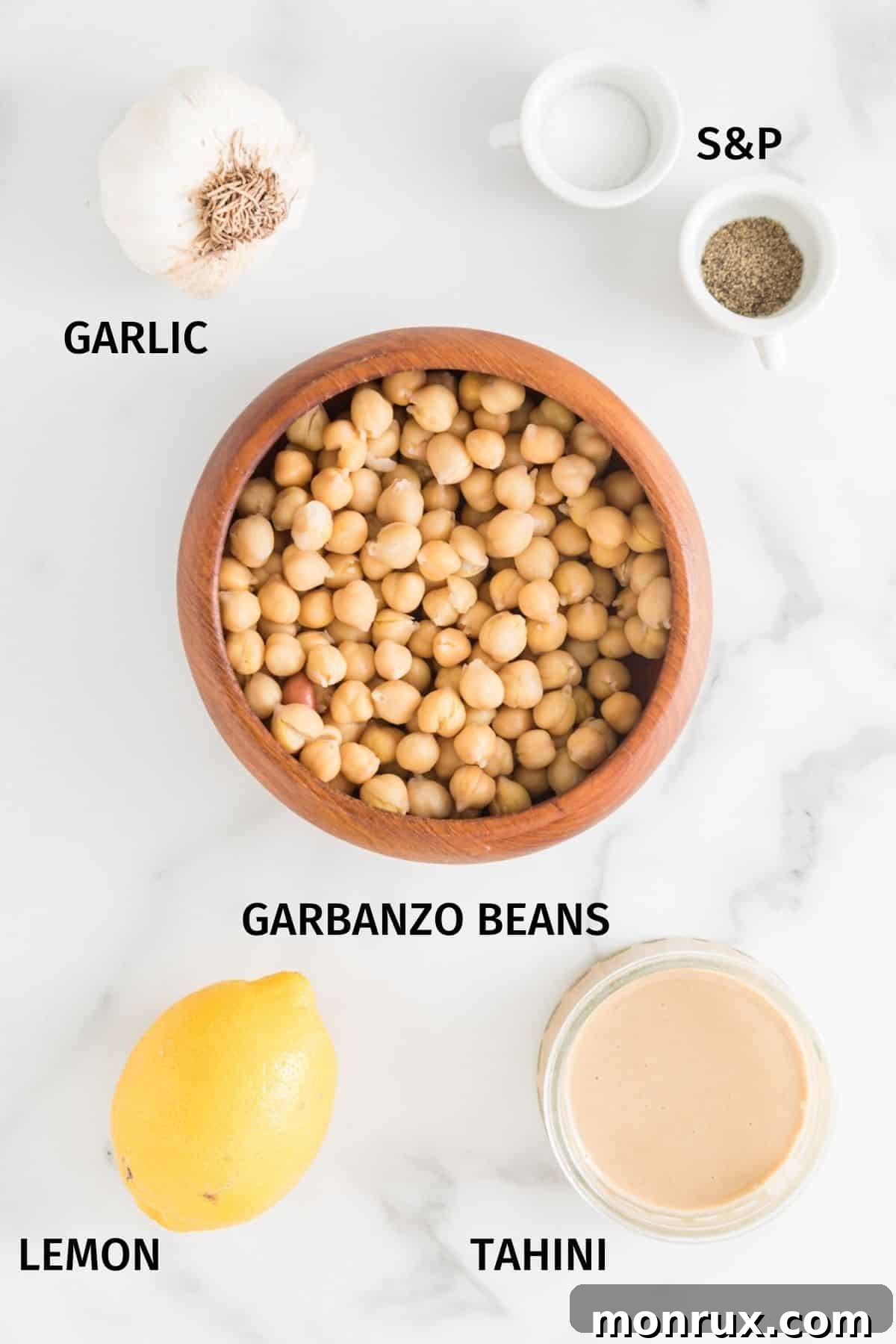
- Chickpeas (Garbanzo Beans): The foundation of any great hummus! These versatile legumes are not only affordable and widely available but also incredibly nutritious, providing plant-based protein, dietary fiber, and essential minerals. While canned chickpeas are convenient and perfect for this recipe, you can also cook them from scratch using dried beans for an even fresher taste. Remember to reserve some of the canning liquid, known as aquafaba, as it’s key to our oil-free creaminess.
- Tahini: This rich paste made from ground sesame seeds is non-negotiable for authentic hummus. Tahini contributes a distinctive nutty flavor and is vital for achieving the signature creamy texture. It also adds healthy fats and essential nutrients like calcium and iron. Look for a smooth, pourable tahini for the best results.
- Fresh Garlic: A single clove of garlic (or more, if you’re a garlic enthusiast!) elevates the flavor profile of the hummus, adding a pungent, aromatic depth that balances the other ingredients beautifully. Using fresh garlic is highly recommended for the most vibrant taste.
- Fresh Lemon Juice: Bright, zesty, and essential! Freshly squeezed lemon juice not only provides a refreshing tang that cuts through the richness of the tahini but also acts as a natural thinning agent, helping the mixture blend into a smooth consistency without needing oil. It’s also packed with Vitamin C!
- Cold Water (or Aquafaba): This is our secret weapon for achieving the perfect oil-free texture. A little cold water or the reserved aquafaba helps the ingredients emulsify and blend into a wonderfully rich and flavorful spread. Adding it gradually allows you to control the thickness of your hummus.
- Sea Salt & Ground Black Pepper: Simple seasonings that are crucial for enhancing all the other flavors and bringing the hummus to life. Adjust to your personal preference.
For the exact measurements and detailed quantities, please refer to the comprehensive recipe card located at the end of this post.
Step-by-Step Guide: How to Make the Best Oil-Free Hummus
You’re just minutes away from enjoying homemade oil-free hummus that rivals any gourmet version! The process is incredibly simple, requiring only a high-speed blender or a food processor. Let’s walk through it together:
Step One: Prepare Your Chickpeas
Begin by thoroughly rinsing one 15-ounce can of chickpeas under cold running water. Drain them well, but don’t discard all the liquid! Reserve about 1/4 to 1/2 cup of the canning liquid (aquafaba) – this magical liquid is what will help us achieve that unbelievably creamy, oil-free texture. If you prefer a very thick hummus, like I do, you might not need much, if any, of the aquafaba in the final blend. Transfer the rinsed and drained chickpeas to the bowl of your food processor or high-speed blender.
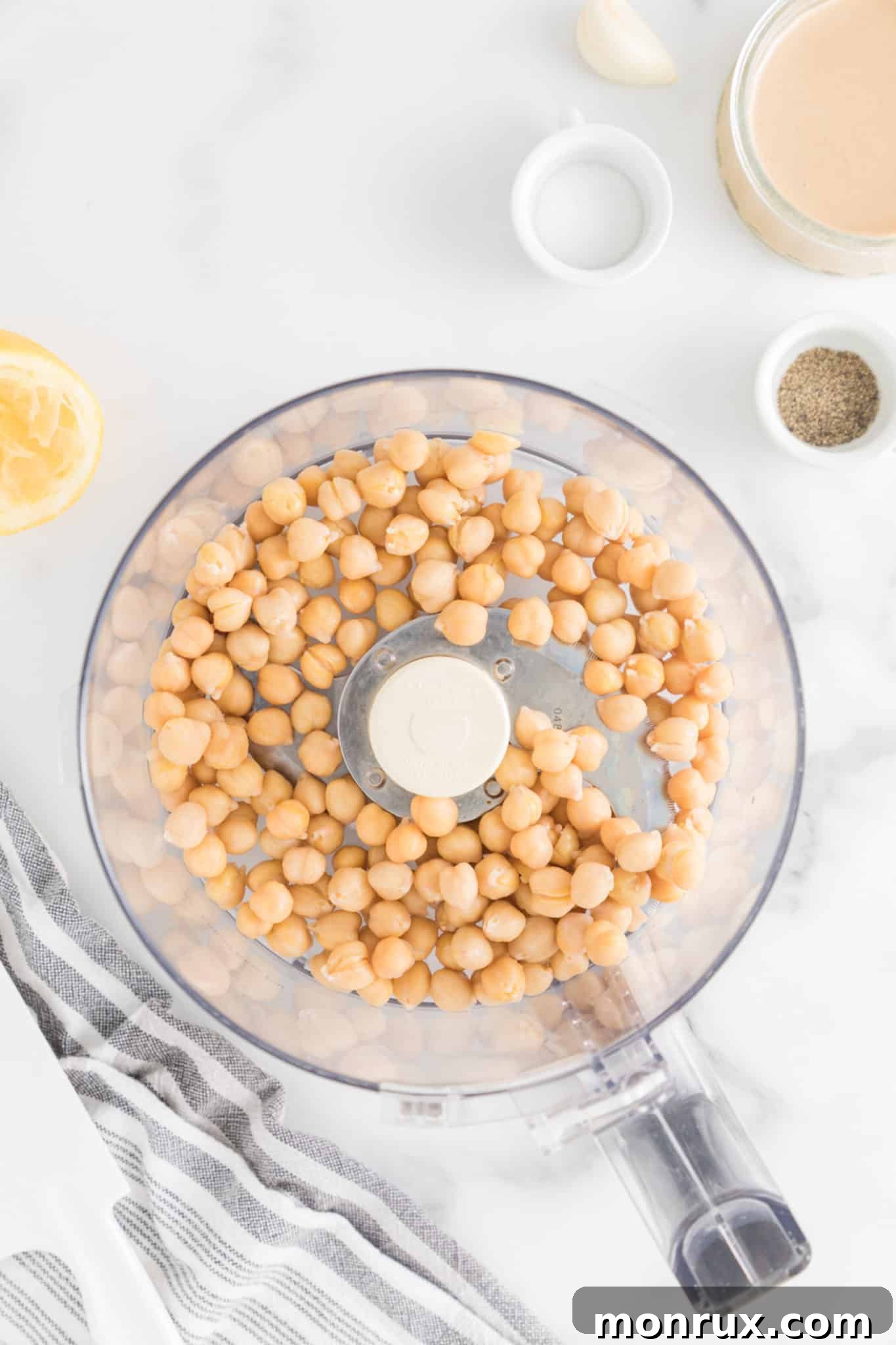
Step Two: Combine All Ingredients for Flavor Burst
Now it’s time to infuse your hummus with incredible flavor! To the chickpeas in your food processor, add the freshly squeezed lemon juice, your peeled garlic clove (or two, if you adore garlic!), the smooth tahini, sea salt, and ground black pepper. These ingredients are the heart of the hummus’s distinctive taste, so ensure they are all present and accounted for.
As a reminder, all precise ingredient amounts can be found in the detailed recipe card at the conclusion of this article.
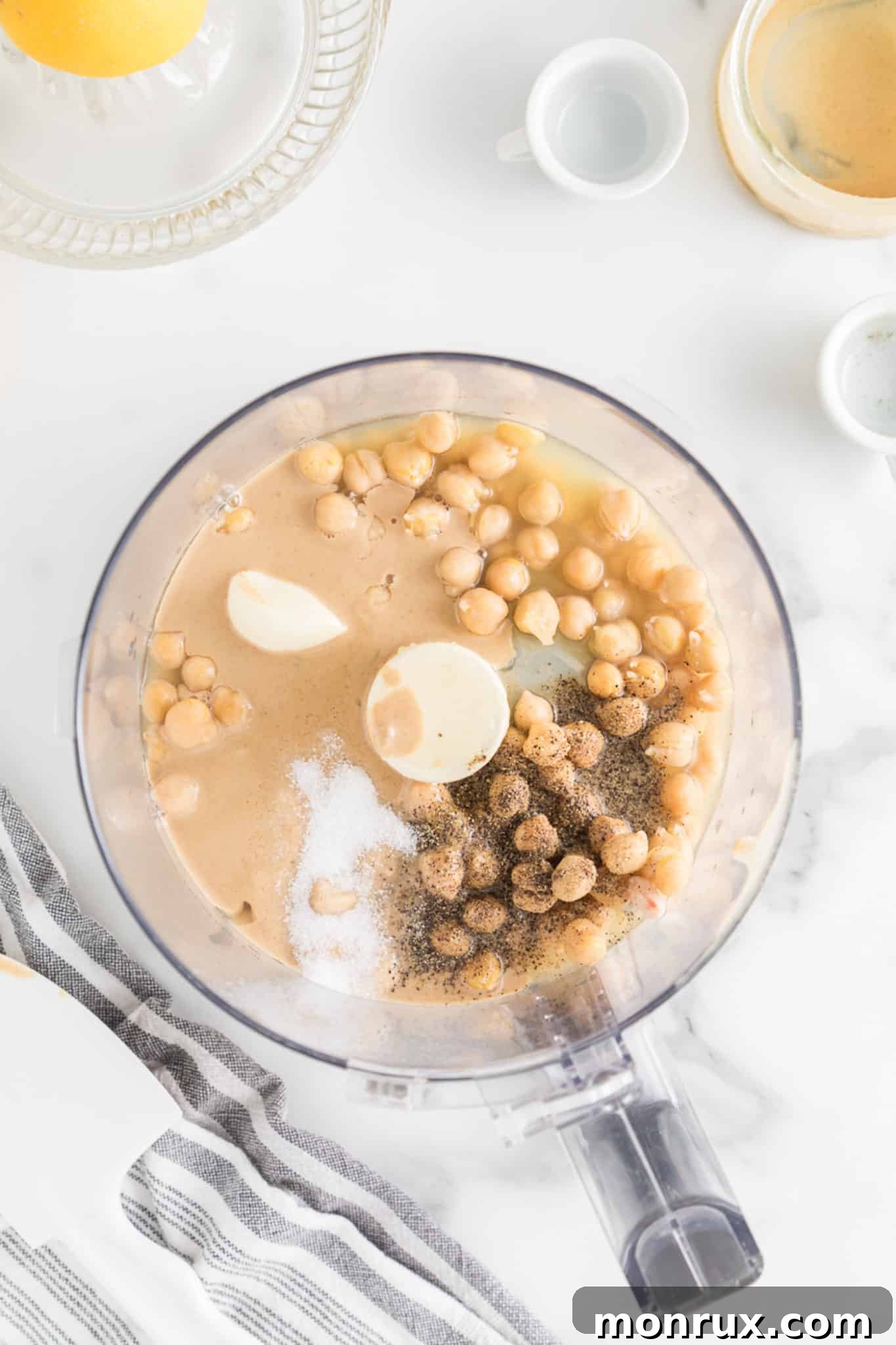
Step Three: Blend to Silky Perfection
Secure the lid on your food processor or blender and process on high for about 45 seconds to a minute. Keep blending until all the ingredients are thoroughly combined and have transformed into a wonderfully creamy, uniform spread. You might need to pause and scrape down the sides of the bowl once or twice to ensure everything is incorporated evenly.
If you find your mixture struggling to blend, or if you prefer a thinner, silkier texture, gradually add 1-2 tablespoons of cold water or your reserved aquafaba. Add one tablespoon at a time, blend, and assess the consistency before adding more. This allows you to achieve your desired level of creaminess without over-thinning. For an extra smooth finish, some chefs even recommend peeling the chickpeas, though it’s certainly not necessary for a delicious result!
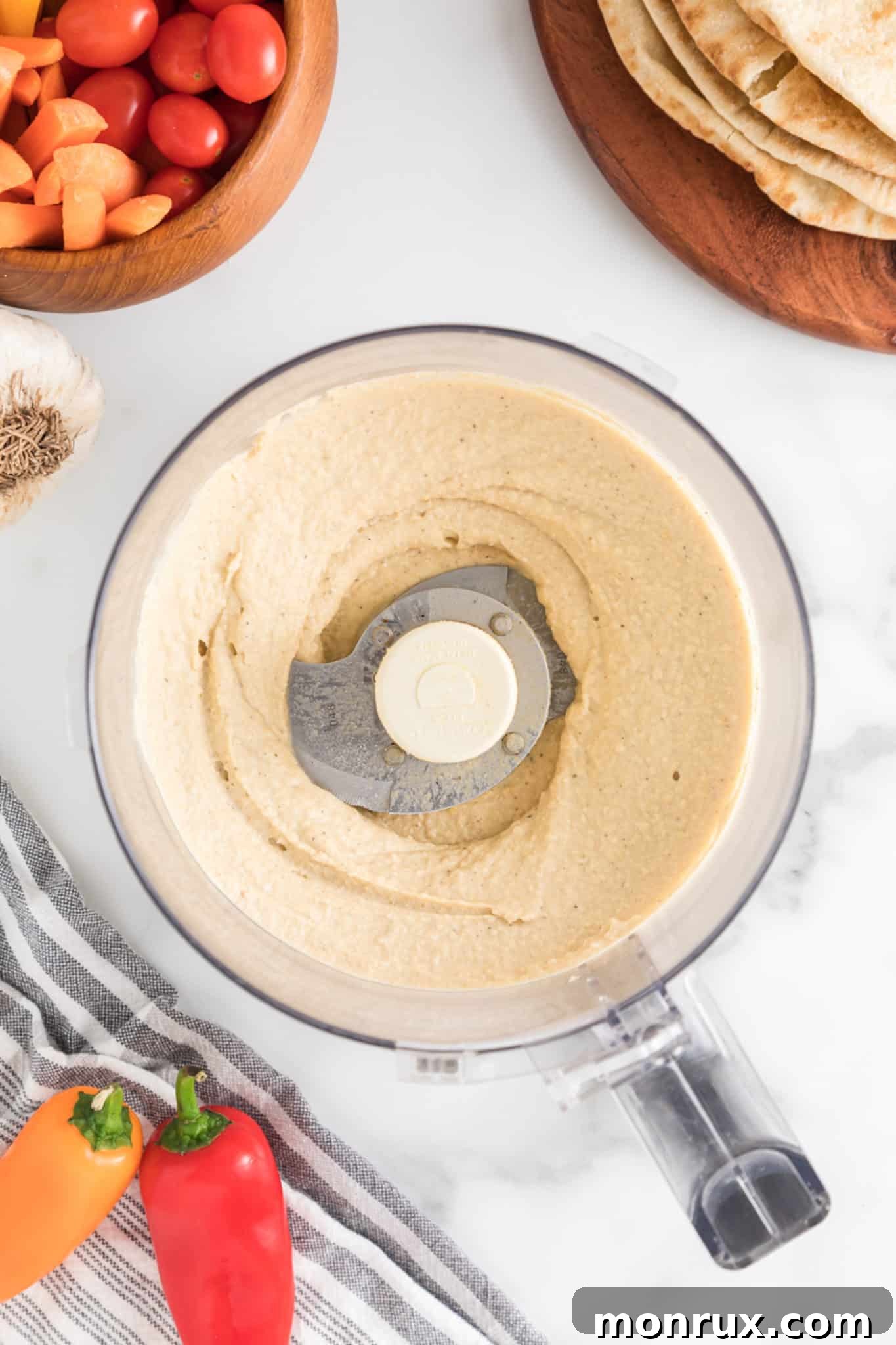
Step Four: Serve and Enjoy!
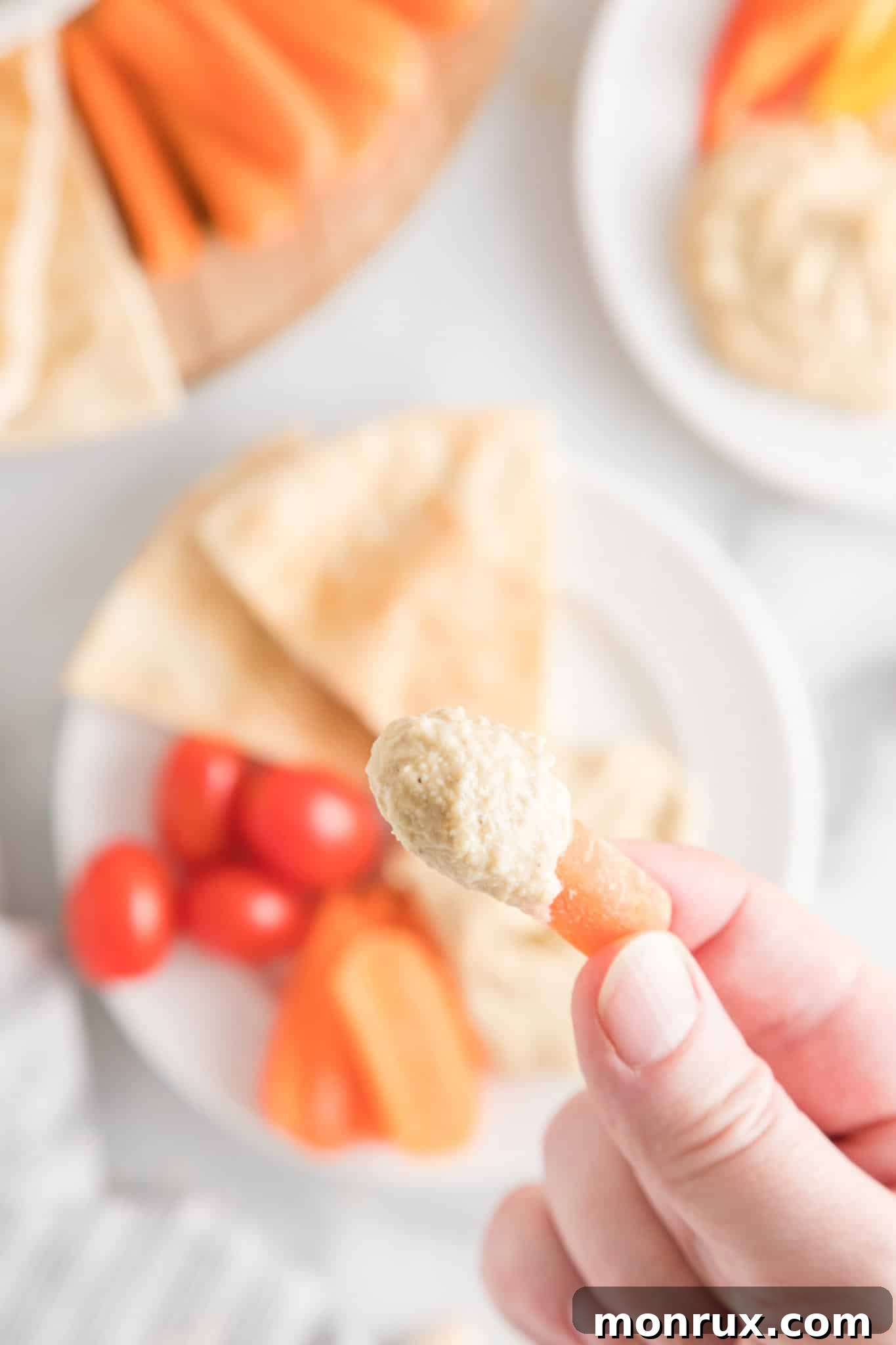
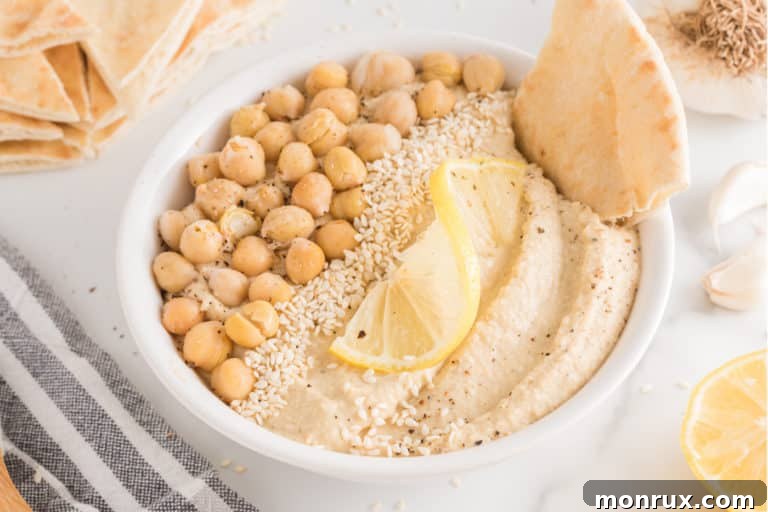
Once your oil-free hummus reaches its perfect creamy consistency, it’s ready to be enjoyed! You can serve it immediately at room temperature for maximum flavor, or transfer it to an airtight container and chill it in the refrigerator until you’re ready to serve. Before serving, consider a simple garnish such as a sprinkle of paprika, a few whole chickpeas, or a dash of fresh chopped parsley for an appealing presentation. I particularly love to pair this hummus with crisp carrot sticks, cool cucumber slices, crunchy celery sticks, warm pita bread, or these amazing homemade Seed Crackers. For more inspiration, explore my extensive list of gluten-free and dairy-free snacks or my full guide on what to eat with hummus.
Expert Tips & Creative Variations for Your Homemade Hummus
Making homemade hummus is a rewarding experience, and with a few insider tips and creative variations, you can elevate your dip to new heights. Here’s how to ensure perfect results every time and customize it to your liking:
- Achieving Ultimate Creaminess: For the silkiest hummus imaginable, consider removing the skins from the chickpeas. While optional and time-consuming, this step significantly improves texture. Simply rub cooked or canned chickpeas between your palms under running water, or boil them briefly with a pinch of baking soda, then rinse well.
- Blender vs. Food Processor: Both high-speed blenders (like a Vitamix) and food processors work well. If using a high-speed blender, you might need to add a few extra tablespoons of water or aquafaba to get the mixture moving and prevent the motor from seizing. A food processor often requires more scraping down the sides.
- Garlic Alternatives: If fresh garlic is too strong, or you’re not a fan, you have options! Omit it entirely, or replace it with 1/2 teaspoon of ground cumin for an earthy flavor, or a pinch of garlic powder. For a milder, sweeter garlic note, try blending in a clove of roasted garlic.
- Flavor Customization: Hummus is incredibly versatile!
- Roasted Red Pepper Hummus: Blend in 1-2 roasted red peppers (jarred or freshly roasted) for a smoky, sweet twist.
- Spicy Hummus: Add a pinch of cayenne pepper, a dash of hot sauce, or a roasted jalapeño.
- Herbaceous Hummus: Incorporate fresh herbs like parsley, cilantro, basil, or dill for a vibrant, fresh flavor.
- Sun-Dried Tomato Hummus: Add a few oil-packed (drained) sun-dried tomatoes for an intense, savory depth.
- Beet Hummus: For a stunning pink hue and earthy sweetness, blend in a cooked beet.
- Storage and Longevity: Store any leftover oil-free hummus in a tightly-sealed airtight container in the refrigerator for up to 5 days. A thin layer of water or a drizzle of (optional) olive oil on top can help prevent it from drying out and oxidizing.
- Troubleshooting Texture:
- Too Thick: Gradually add more aquafaba or cold water, 1 tablespoon at a time, until desired consistency is reached.
- Too Thin: Add a few more chickpeas (if you have them) or a tablespoon of tahini to thicken.
- Gritty Texture: This usually means it hasn’t been blended long enough. Keep blending, scraping down the sides as needed, until smooth.
- Bean-Free Alternatives: If you have a bean intolerance or allergy, don’t despair! You can still enjoy a creamy, dip-like spread. Try my delicious recipe for Cashew Hummus instead, which offers a similar satisfying texture.
Frequently Asked Questions About Oil-Free Hummus
Absolutely nothing! Chickpeas and garbanzo beans are simply two different names for the exact same delicious and nutritious legume. So, whether your can says “chickpeas” or “garbanzo beans,” you’ve got the right ingredient!
Tahini is a paste made from finely ground sesame seeds. It has a rich, nutty flavor and a smooth, creamy texture that is fundamental to authentic hummus. You can typically find it in the international foods aisle, the nut butter section, or sometimes even with specialty baking ingredients at your local grocery store.
While this recipe is specifically designed to be oil-free to cater to whole-food plant-based preferences and those looking to reduce added fats, you certainly can add olive oil if you wish! If you prefer a more traditional hummus with oil, start by adding 1-2 tablespoons of high-quality extra virgin olive oil to the food processor. If you do this, you might need to slightly reduce the amount of water or aquafaba to achieve your desired consistency.
Hummus has a distinctive, wonderfully mild, and pleasant flavor profile. It’s savory and earthy from the chickpeas and tahini, bright and zesty from the lemon, and has a subtle warmth from the garlic. Its texture is famously smooth and creamy, making it incredibly satisfying.
When stored in an airtight container in the refrigerator, your homemade oil-free hummus will stay fresh and delicious for up to 5 days. For best results, give it a good stir before serving, especially if it has been sitting for a while.
Yes, absolutely! Our oil-free hummus is an excellent choice for weight management. It’s high in protein and fiber from the chickpeas, which helps you feel full and satisfied for longer, reducing the urge to snack on less healthy options. It’s also low in calories per serving and packed with nutrients, making it a smart and delicious addition to a balanced diet.
The Nutritional Powerhouse: Health Benefits of Homemade Hummus
Beyond its incredible taste and versatility, homemade oil-free hummus is a true nutritional champion. Each ingredient contributes a wealth of health benefits, making this dip an excellent addition to a health-conscious diet:
- Chickpeas (Garbanzo Beans): These legumes are nutritional powerhouses. They are an outstanding source of plant-based protein, essential for muscle repair and growth, and packed with dietary fiber, which aids digestion, promotes gut health, and helps regulate blood sugar levels. Chickpeas also provide vital minerals like iron, folate, phosphorus, and manganese.
- Tahini: Made from sesame seeds, tahini offers healthy monounsaturated and polyunsaturated fats, which are beneficial for heart health. It’s also a good source of calcium, magnesium, iron, and zinc. Its rich fat content helps with the absorption of fat-soluble vitamins.
- Fresh Lemon Juice: A natural source of Vitamin C, lemon juice boosts immunity, acts as an antioxidant, and helps with iron absorption from the chickpeas. Its acidity is also fantastic for digestion.
- Garlic: Beyond its robust flavor, garlic is renowned for its medicinal properties. It contains compounds that have been linked to immune-boosting effects, anti-inflammatory benefits, and cardiovascular support.
This combination makes oil-free hummus an ideal food for those following plant-based, vegan, gluten-free, or whole-food diets, contributing to satiety, energy, and overall well-being without any unnecessary additives.
Creative Ways to Enjoy Your Oil-Free Hummus
While often enjoyed as a simple dip, your homemade oil-free hummus is incredibly versatile and can elevate a wide range of dishes. Don’t limit yourself to just pita and veggies!
- Spread: Use it as a healthier spread in sandwiches, wraps, or pita pockets instead of mayonnaise or cream cheese. It adds moisture, flavor, and a protein boost.
- Salad Dressing Base: Thin out your hummus with a little extra lemon juice or water to create a creamy, flavorful salad dressing.
- Pasta Sauce: Stir a dollop of hummus into warm pasta for a quick and creamy, plant-based sauce. Add some roasted vegetables for a complete meal.
- Savory Breakfast Bowl: Swirl a generous spoonful into a savory oatmeal bowl or serve alongside scrambled tofu and vegetables.
- Stuffed Vegetables: Use it as a filling for bell peppers, mushrooms, or zucchini boats before baking or grilling.
- Pizza Base: Spread a thin layer of hummus on flatbread or pizza dough instead of tomato sauce, then top with your favorite veggies and bake.
- As a Burger Topping: Spread it on your veggie burgers or falafel for an extra layer of flavor and creaminess.
- With Grains: Serve alongside warm quinoa, couscous, or rice bowls for added protein and moisture.
More Plant-Based & Chickpea Recipes You’ll Love
Can’t get enough of chickpeas? Neither can we! Their versatility truly shines in both sweet and savory applications. If you’re looking for more ways to incorporate these incredible legumes into your diet, try these fantastic recipes:
- Chocolate Chip Chickpea Cookie Dough: A surprisingly delicious and healthy dessert or snack.
- Air Fryer Ranch Roasted Chickpeas: Crispy, savory, and perfect for snacking.
- Vegan Chickpea Tuna Salad: A flaky, flavorful plant-based alternative to classic tuna salad.
- Chickpea and Lentil Curry with Coconut Milk: A hearty and aromatic one-pot meal.
- Instant Pot Vegan Stew with Chickpeas: Comfort food made easy and nutritious.
We truly hope you enjoy making and savoring this incredible oil-free hummus recipe! If you do give it a try, please take a moment to leave a comment and a starred review below. Your feedback means the world to us and helps other home cooks discover delicious, healthy recipes.
And, to stay connected with our latest clean eating recipes, tips, and wellness insights, consider following us on social media. You can find us on Facebook, Pinterest, Instagram, and YouTube! We love seeing your culinary creations!
Print Recipe
Recipe: Creamy Oil-Free Hummus
★★★★★
5 from 3 reviews
This Oil-Free Hummus recipe, featuring rich tahini and zesty lemon juice, creates an incredibly creamy and utterly delicious spread. It’s perfect for serving with fresh vegetables or crunchy crackers, requiring only a few simple ingredients for this wholesome vegan dip made from garbanzo beans.
- Total Time: 12 minutes
- Yield: 12 servings (approx. 1.5 cups)
Ingredients
- 1 (15-ounce) can garbanzo beans (chickpeas), rinsed and drained (reserve 1/4 to 1/2 cup of the canning liquid, aquafaba)
- 1/4 cup fresh lemon juice (from about 1-2 medium lemons)
- 1 large garlic clove, peeled
- 1/3 cup unsalted tahini
- 1/2 teaspoon sea salt (or to taste)
- 1/4 teaspoon ground black pepper (or to taste)
- Optional: 1-4 tablespoons cold water or reserved aquafaba, for desired consistency
Instructions
- In the bowl of a food processor or high-speed blender, combine the rinsed and drained garbanzo beans, fresh lemon juice, peeled garlic clove, tahini, sea salt, and ground black pepper.
- Process on high for 45 seconds to 1 minute, or until all ingredients are well combined and the mixture becomes smooth and creamy. Stop occasionally to scrape down the sides of the bowl.
- If the mixture is too thick or needs help blending, gradually add 1-2 tablespoons of cold water or the reserved aquafaba. Continue blending until you reach your desired creamy consistency. Add more liquid, 1 tablespoon at a time, if a thinner texture is preferred.
- Taste and adjust seasoning if necessary, adding more salt, pepper, or lemon juice to your preference.
- Serve immediately at room temperature, garnished with a sprinkle of paprika, a few whole chickpeas, or fresh herbs if desired. Alternatively, transfer to an airtight container and refrigerate until chilled.
Notes
- For an extra smooth hummus, remove the skins from the chickpeas before blending. This is optional but can improve the texture.
- If using a high-speed blender, you may need slightly more liquid (water or aquafaba) to help the mixture circulate.
- Not a fan of garlic? You can omit it or replace it with 1/2 teaspoon of ground cumin for an earthy flavor, or even a roasted garlic clove for a sweeter, milder taste.
- Get creative with variations! Blend in roasted red peppers, sun-dried tomatoes, fresh herbs, or a pinch of cayenne for different flavor profiles.
- Store any leftover hummus in a tightly-sealed airtight container in the refrigerator for up to 5 days. A thin layer of water on top can help keep it fresh.
- If you have a bean intolerance, explore our Cashew Hummus recipe for a delicious alternative.
- Author: Carrie Forrest, MPH in Nutrition
- Prep Time: 10 minutes
- Cook Time: 2 minutes
- Category: Side dish, Snack, Dip
- Method: Food processor, Blending
- Cuisine: Mediterranean, Middle Eastern, Oil-Free, Vegan
- Diet: Vegan, Gluten-Free, Plant-Based, Whole30 Compliant (verify ingredients for strict compliance)
Nutrition
(Nutritional information is approximate and based on 12 servings without optional ingredients. Actual values may vary.)
- Serving Size: 1/12 of recipe (approx. 2 tablespoons)
- Calories: 70 kcal
- Sugar: 1 g
- Sodium: 149.5 mg
- Fat: 4.1 g
- Saturated Fat: 0.5 g
- Carbohydrates: 6.7 g
- Fiber: 2 g
- Protein: 2.7 g
- Cholesterol: 0 mg
Don’t Miss These Healthy Snack Resources!
Don’t forget to join our exclusive newsletter list to receive delicious clean eating recipes, valuable health tips, and wellness insights delivered directly to your inbox. Our newsletter is 100% free, spam-free, and you can unsubscribe anytime. We’re committed to helping you on your healthy eating journey!
About the Author: Carrie Forrest holds a master’s degree in public health with a specialty in nutrition and is a certified holistic nutritionist. She is the inspiring voice behind a top wellness and food blog, attracting over 5 million annual visitors with her accessible and health-focused content. Carrie shares an incredible personal story of recovery from chronic illness, a journey that deeply fuels her passion for empowering other women to transform their own health. For any questions or collaborations, feel free to send her a message through her dedicated contact form.