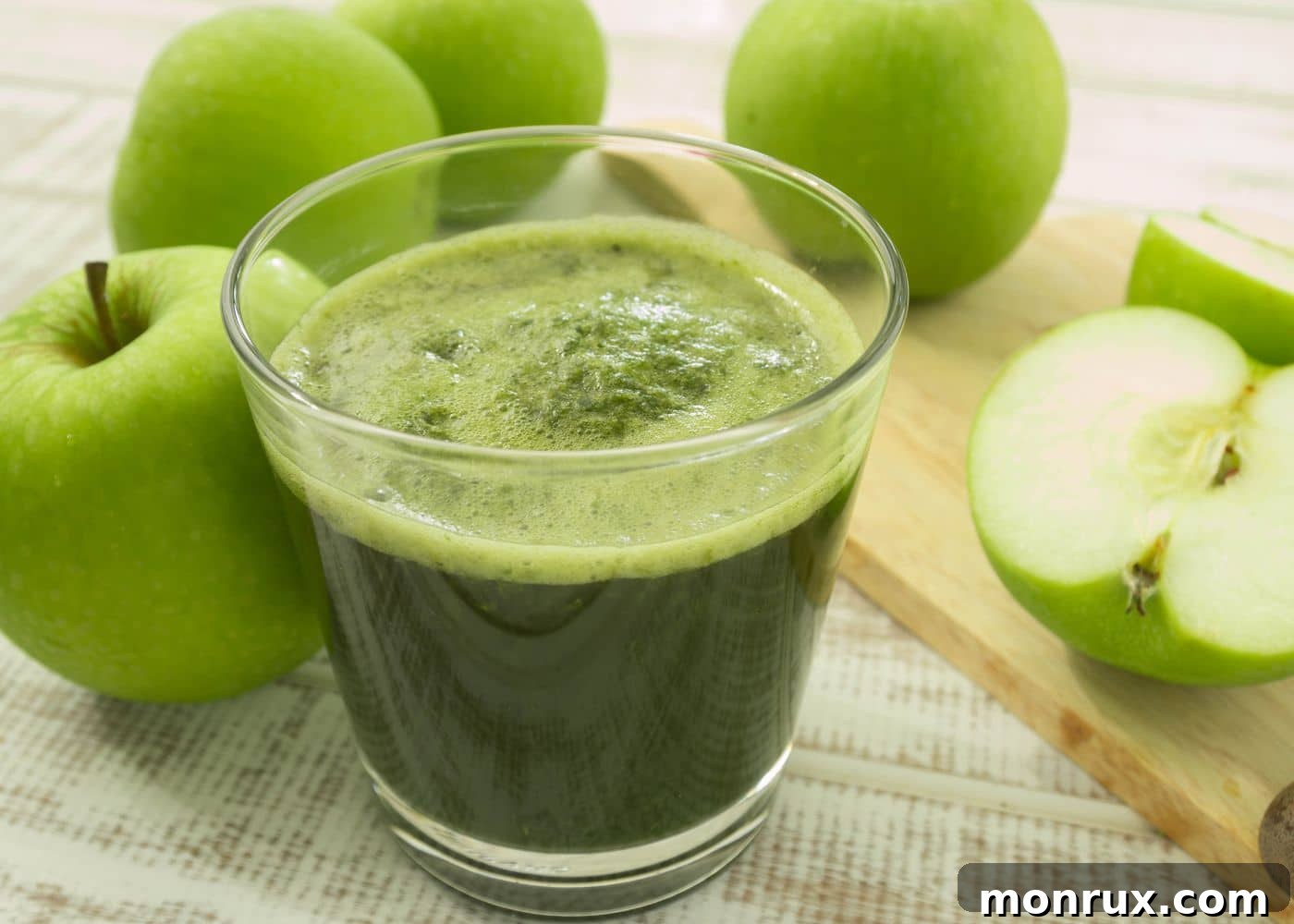
Craving a refreshing and nutrient-packed beverage that invigorates your senses? Look no further than this delightful Green Apple Juice recipe. This vibrant drink is not only incredibly hydrating but also a fantastic way to infuse your body with essential vitamins and minerals from fresh fruits and vegetables. Forget the tedious chewing; this juice delivers pure goodness in a smooth, easy-to-digest form. Whether you own a powerful juicer or a simple blender, preparing this healthy green apple juice at home is a breeze. It’s perfect for a quick morning boost, a midday pick-me-up, or a post-workout refuel, and you can conveniently store it in your fridge for a few days of sustained freshness.
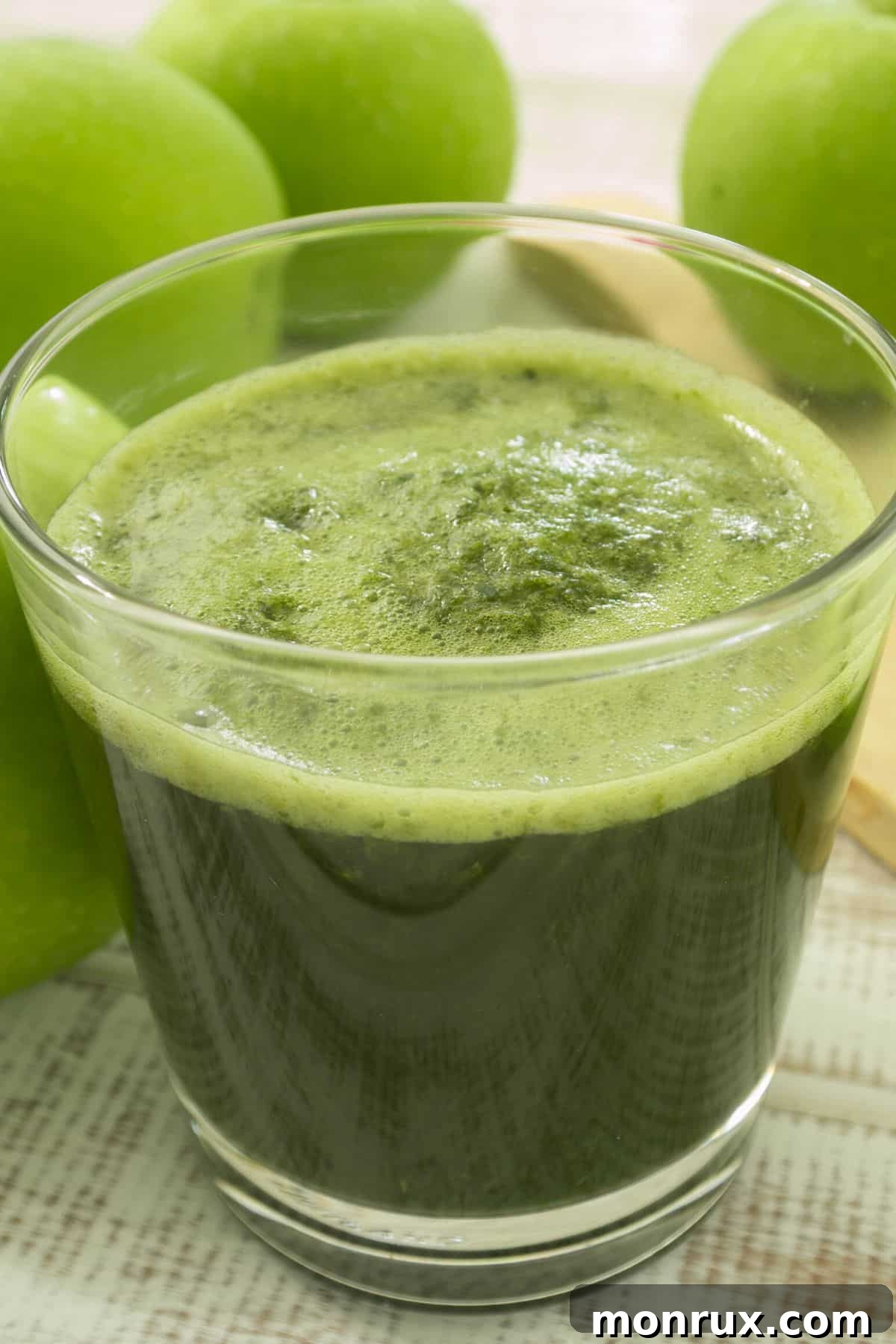
Green apples, known for their distinctive crispness, tartness, and a subtle underlying sweetness, are the star of this homemade green juice. Their unique flavor profile provides the perfect base, making them an ideal choice for juicing. Complementing the apples are tender baby spinach leaves, which impart an earthy yet remarkably smooth flavor, ensuring your juice is rich in micronutrients without any bitterness. To awaken your taste buds and add an invigorating kick, we incorporate fiery ginger and zesty lemon, creating a harmonious blend that is both delicious and incredibly beneficial.
One of the best aspects of this refreshing recipe is the accessibility of its ingredients. All components of this Green Apple Juice are readily available at most grocery stores and are relatively inexpensive, making daily juicing a sustainable and affordable habit for improved health.
Why Choose Green Apple Juice?
Incorporating fresh juices into your daily routine is an excellent way to boost your nutrient intake and support overall well-being. Green apple juice, in particular, stands out for its unique blend of tartness and subtle sweetness, making it a palatable option for even those new to juicing. Beyond its appealing taste, this juice offers a powerhouse of health benefits. It’s incredibly hydrating, helping to replenish fluids and electrolytes, especially on warm days or after physical activity. The combination of fruits and vegetables means you’re consuming a wide array of vitamins, minerals, and antioxidants that are crucial for immune function, digestion, and cellular health. Unlike eating whole fruits and vegetables, juicing allows for a concentrated dose of these nutrients, making them more readily available for your body to absorb. This means you can effortlessly consume larger quantities of beneficial produce than you might otherwise, all without the effort of chewing and breaking down fiber.
Moreover, homemade green apple juice gives you complete control over the ingredients, ensuring no artificial sugars, preservatives, or other additives commonly found in store-bought options. It’s a clean, pure, and natural way to nourish your body and kickstart a healthier lifestyle.
Key Ingredients for the Perfect Green Juice
The success of any great juice lies in the quality and freshness of its ingredients. For this healthy green apple juice, selecting the freshest produce ensures maximum nutrition and the most delicious flavor profile. Here’s a closer look at each star component:
Crisp Green Apples
Green apples are a fantastic choice for juicing due to their refreshing tartness, which balances the sweetness and earthiness of other ingredients. Varieties like Granny Smith apples, Pippin, and Crispin apples are popular and readily available. While each has a slightly different flavor nuance, any fresh green apple will work beautifully in this recipe. Opt for firm, blemish-free apples for the best results.
Did you know that green apples often contain less sugar and fewer carbohydrates than their red counterparts? They are also packed with beneficial compounds, including pectin. Pectin acts as a powerful prebiotic, feeding the good bacteria in your gut and promoting a healthy digestive system. This can lead to more efficient food breakdown and better nutrient absorption. A glass of green apple juice provides a refreshing burst of flavor and a significant nutritional boost, especially when paired with leafy greens.
For more insights into choosing the right apples, explore my comprehensive guide to the best apples for juicing.
Hydrating Cucumber
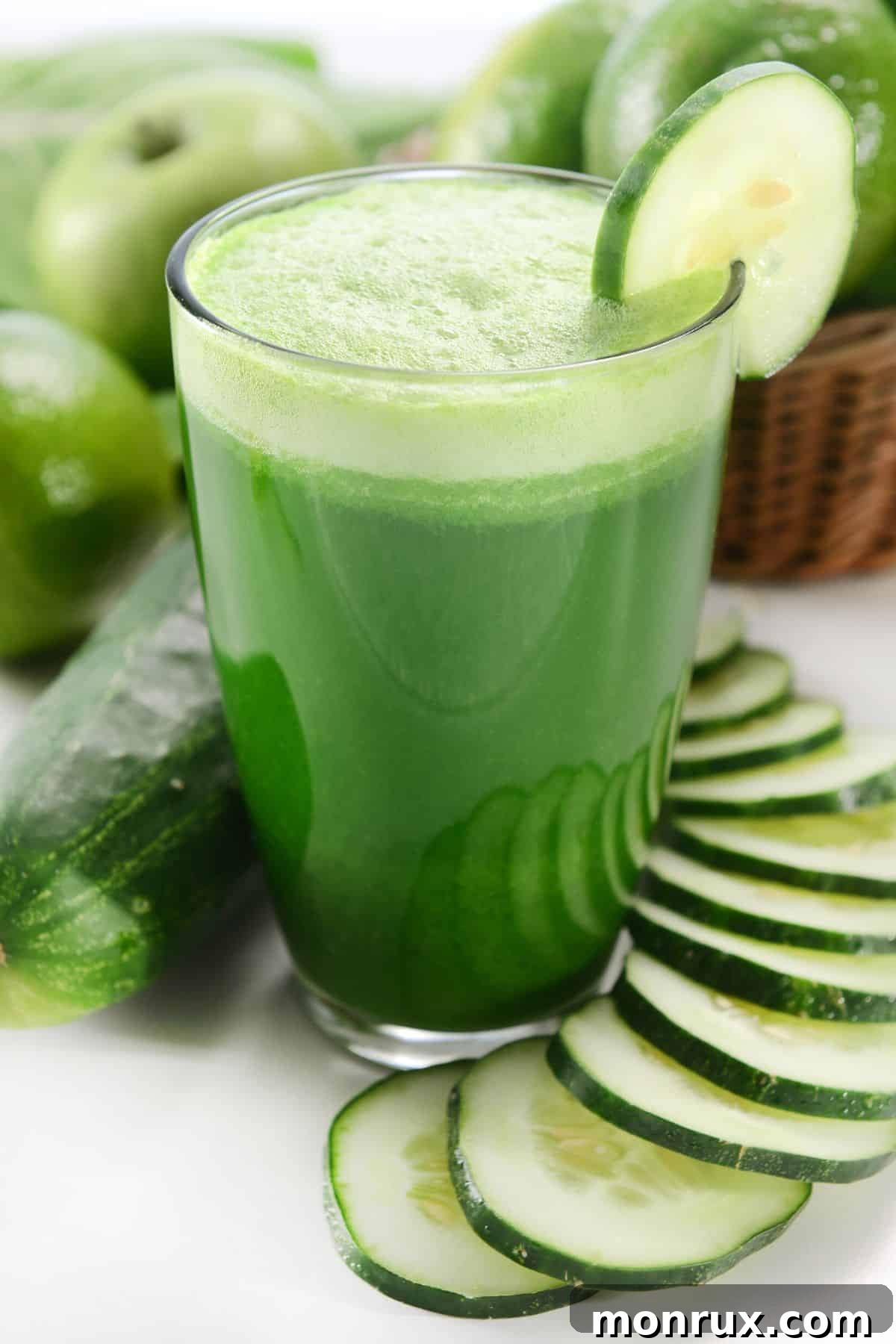
When selecting cucumbers for juicing, prioritize firm, dark green varieties free from yellow spots, soft areas, or blemishes. A crisp texture indicates peak freshness and optimal nutrient content. Cucumbers are exceptional for juicing primarily due to their high water content, which makes them incredibly hydrating and helps to dilute the intensity of other ingredients, resulting in a smoother, more palatable juice.
Beyond hydration, these refreshing fruits are a treasure trove of vital vitamins and minerals, including Vitamin K, Vitamin C, magnesium, and potassium. They are also rich in antioxidants, which combat oxidative stress and inflammation in the body. Regular consumption of cucumber-infused juice can contribute to lowering blood sugar levels, promoting digestive regularity, and may even support healthy weight management goals due to their low-calorie and high-water profile.
For a delicious alternative, you might also enjoy my Apple and Celery Juice recipe, which offers a slightly different, yet equally refreshing, flavor combination.
Nutrient-Dense Baby Spinach
Baby spinach is an excellent addition to green juices, offering a wealth of nutrients with a mild flavor that doesn’t overpower the other ingredients. When choosing baby spinach, look for bright green leaves without any signs of sliminess or dark spots, as it tends to spoil quickly. It’s always best to use it as soon as possible after purchase to maximize its freshness and nutritional value.
Harvested early in the plant’s growth cycle, typically between 15 to 35 days after planting, baby spinach boasts smaller, more tender leaves and a sweeter, less bitter taste compared to mature spinach. While many commonly use spinach in green smoothies, it truly shines in a healthy green juice recipe, providing essential vitamins like K, A, and C, as well as iron and folate, all crucial for bone health, vision, and energy production. Its gentle flavor integrates seamlessly, making it an ideal leafy green for those new to juicing.
Zesty Lemon for an Immune Boost
Lemons are celebrated for their incredible health benefits, and even their pulp is rich in compounds that stimulate your immune system. Just one lemon can provide approximately half of your recommended daily intake of Vitamin C, a powerful antioxidant vital for fighting off infections and maintaining healthy skin. While pure lemon juice is undeniably sour, its inclusion in this green apple juice recipe is perfectly balanced by the sweetness of the apples and the freshness of the cucumber. This thoughtful combination allows you to reap all the fantastic health benefits of lemons—including their alkalizing properties and digestive aid—without the intense puckering sensation.
Fiery Ginger for Digestive Health
Ginger adds a wonderfully warm, fiery depth of flavor to this Green Apple Juice, transforming it from a simple fruit and vegetable blend into a truly invigorating elixir. Much like lemons, ginger is a potent ingredient that needs careful balancing, but its health benefits are immense. Recognized for centuries in traditional medicine, ginger is a natural anti-inflammatory, helps fight germs, soothes sore muscles, and is a time-honored remedy for colds and flu. Moreover, it’s incredibly effective at relieving indigestion, easing nausea, and generally supporting stomach ailments, making it an excellent digestive aid.
All these remarkable properties solidify ginger’s reputation as one of the healthiest plants on Earth. I make it a point to incorporate fresh ginger into many of my healthy juice recipes to elevate both their flavor and their nutritional impact.
Essential Equipment: Juicer vs. Blender
One of the best things about this green apple juice recipe is its versatility when it comes to preparation. You don’t need specialized, expensive equipment to enjoy a homemade, nutrient-rich beverage. All you need is either a **juicer or a high-speed blender**, so you can use whatever you already have in your kitchen.
Using a Juicer: A dedicated juicer extracts the liquid from fruits and vegetables, separating it from the pulp. This method typically yields a smoother, pulp-free juice with a more concentrated flavor. If you prefer a very clear and crisp juice, a juicer is your ideal tool. While a cold-press (masticating) juicer retains more enzymes and nutrients due to less heat generation, a centrifugal juicer also works effectively and is generally more affordable and faster.
Using a Blender: If you don’t have a juicer, a high-speed blender is an excellent alternative. When using a blender, you’ll blend all the ingredients with a bit of water until completely smooth. The key difference here is that a blender retains all the fiber from the produce, creating a thicker consistency, more akin to a smoothie. To achieve a juice-like consistency, you’ll then need to strain the blended mixture through a fine-mesh sieve, cheesecloth, or a nut milk bag. This step removes the pulp, leaving you with a smooth, liquid juice, while still offering a good portion of the original nutrients.
Both methods will deliver a delicious and healthy green apple juice, so choose the one that best suits your equipment and preference for texture.
Frequently Asked Questions About Green Apple Juice
Absolutely! For most individuals, drinking this green apple juice daily can be a wonderful addition to a balanced diet. It’s an excellent way to boost your daily nutrition intake, providing concentrated vitamins, minerals, and antioxidants. However, it’s important to remember that fresh juice should supplement, not replace, whole foods and regular meals. Think of it as a nutritional enhancement to your overall healthy eating plan, ensuring you’re getting a rich spectrum of plant-based goodness every day.
Yes, you can certainly swap baby spinach for kale in this recipe. Both are incredibly nutrient-rich leafy greens, packed with antioxidant vitamins and minerals, and make excellent additions to green juices. Be aware, however, that the taste will differ. Kale typically has a stronger, more robust, and sometimes slightly bitter flavor compared to the milder, sweeter, and more tender baby spinach. If you’re a fan of kale’s distinct taste, it’s a fantastic alternative that will add its own unique health benefits and a deeper green hue to your juice.
I highly recommend trying the juice a few times as is before considering any added sweeteners. The green apples provide a surprising amount of natural sweetness that often balances the tartness of the lemon and the earthiness of the spinach perfectly. If you find it still too tart or desire a sweeter profile, you can certainly add a natural sweetener. Options include a small drizzle of honey, a few drops of liquid stevia, a teaspoon of agave nectar, or a dash of maple syrup. Start with a tiny amount, taste, and adjust to your preference to ensure you don’t overwhelm the fresh, natural flavors.
While you can enjoy green apple juice at any time of day, many people prefer it in the morning on an empty stomach to maximize nutrient absorption and kickstart their metabolism. It can also be a great mid-morning snack or a refreshing afternoon pick-me-up when you need a natural energy boost. Avoid drinking large quantities right before bed, especially if you’re sensitive to fruit sugars, which can sometimes impact sleep for some individuals.
Yes, you can use red apples, but expect a sweeter juice with less of the characteristic tartness that green apples provide. Red apples generally have a higher sugar content and a milder flavor. If you prefer a sweeter juice, or if green apples are unavailable, red apples like Fuji, Gala, or Honeycrisp can be good substitutes. Just be mindful that the overall flavor profile will shift, becoming less zesty and more mellow.
Don’t discard the pulp! While some find it easier to toss, the leftover pulp from juicing (especially from a juicer) is still rich in fiber and some nutrients. You can repurpose it in various ways: add it to compost, mix it into muffins, breads, or crackers for added fiber, or even use it as a base for vegetable broth. Some people even mix it into pet food for an extra nutritional boost for their furry friends. Getting creative with pulp can help reduce waste and maximize the goodness from your produce.
I sincerely hope you try this incredibly nourishing and delicious recipe! If you do, please leave a comment and a starred review below. Your feedback helps others discover and enjoy these healthy options.
For more clean eating inspiration and to stay connected, consider following me on social media. You can find me on Facebook, Pinterest, Instagram, and YouTube!
Print Recipe
Green Apple Juice Recipe: Easy & Delicious
5 Stars
4 Stars
3 Stars
2 Stars
1 Star
5 from 1 review
This invigorating Green Apple Juice is a hydrating and delicious elixir designed to nourish your body. It’s an excellent method to absorb essential nutrients from a vibrant blend of fruits and vegetables, all without the effort of chewing. Follow this simple and healthy Green Apple Juice recipe, whether you’re using a blender or a juicer. It’s incredibly easy to prepare, and once made, it can be stored for several days in the refrigerator, ready for your next healthy boost!
- Total Time: 15 minutes
- Yield: 2 servings
Ingredients
- 2 green apples, cored and sliced (Granny Smith recommended)
- 1 medium cucumber, washed
- 1 cup baby spinach (approximately 1 large handful)
- 1/2 lemon, peeled
- 1-inch piece of fresh ginger, peeled
- 1 cup of water (only if using a blender)
Instructions
- Prepare your produce: Core the green apples and cut them into large pieces suitable for your juicer’s feeding tube. If using a blender, chop all your produce into smaller, more manageable pieces to ensure thorough blending.
- If using a juicer: Systematically feed the prepared apple, cucumber, baby spinach, lemon, and ginger pieces through your juicer. Collect the freshly extracted juice in a pitcher or large glass. Serve immediately for optimal freshness and nutrient content.
- If using a blender or food processor: Place the chopped green apples, cucumber, baby spinach, peeled lemon, ginger, and the specified 1 cup of water into the base of your blender or food processor. Blend on the highest setting until the mixture achieves a perfectly smooth consistency, typically within 20-30 seconds.
- For a smooth juice (if blended): If you used a blender, pour the thoroughly blended mixture through a fine cheesecloth or a nut milk bag suspended over a pitcher or bowl. Gently squeeze from the top downwards to extract all the liquid, leaving the fibrous pulp behind. You can either discard the collected pulp or save it for other culinary uses (see FAQ for ideas).
- Serve your vibrant Green Apple Juice immediately. Enjoy the fresh flavors and nutritional benefits!
Notes
- This recipe is highly adaptable. Feel free to double or even triple the ingredients if you wish to prepare a larger batch for multiple servings or to share.
- For the best taste and maximum nutritional value, it’s ideal to serve Green Apple Juice immediately after preparation. However, you can store any leftovers in a tightly sealed, covered container in the refrigerator for up to 4 days.
- Peeling the green apples and cucumber is entirely optional. Their skins contain additional nutrients and fiber, so keeping them on is beneficial if you prefer. Just ensure they are thoroughly washed.
- If English cucumbers are not available, you can substitute with two smaller Persian cucumbers to achieve a similar hydration and flavor profile.
- Author: Carrie Forrest, MPH in Nutrition
- Prep Time: 10 minutes
- Cook Time: 5 minutes
- Category: Juice
- Method: Juicer or Blender
- Cuisine: Healthy
- Diet: Vegan, Gluten-Free
Nutrition
- Serving Size: 1/2 of recipe
- Calories: 53 kcal
- Sugar: 9.1 g
- Sodium: 25.5 mg
- Fat: 0.1 g
- Saturated Fat: 0 g
- Carbohydrates: 13.8 g
- Fiber: 2 g
- Protein: 0.8 g
- Cholesterol: 0 mg
Discover More Apple Recipes
If you love the versatility and flavor of apples, here are some other delicious and healthy recipes to try:
- Apple Banana Spinach Smoothie: A fantastic way to enjoy apples in a creamy, fiber-rich smoothie.
- Instant Pot Steel Cut Oats with Apple: Perfect for a warm, comforting breakfast.
- Best Substitutes for Apples in Baking: Helpful tips for your baking needs.
- Gluten-Free Apple Muffins: A delightful treat for any time of day.
Explore Other Healthy Juice Recipes!
Beyond green apple juice, the world of homemade juices offers endless possibilities for delicious and nutritious beverages. Expand your juicing repertoire with these fantastic recipes:
To ensure you never miss out on delicious and exclusive clean eating recipes, along with valuable health and wellness tips, be sure to join my newsletter list. It’s absolutely free, no spam, and you can unsubscribe at any time.
About the Author: Carrie Forrest holds a master’s degree in public health with a specialization in nutrition and is a certified holistic nutritionist. She is a highly regarded wellness and food blogger whose site attracts over 5 million annual visitors. Carrie shares an inspiring personal journey of recovery from chronic illness and is deeply passionate about empowering other women to transform their health. Feel free to reach out to her through her contact form for any inquiries or support.