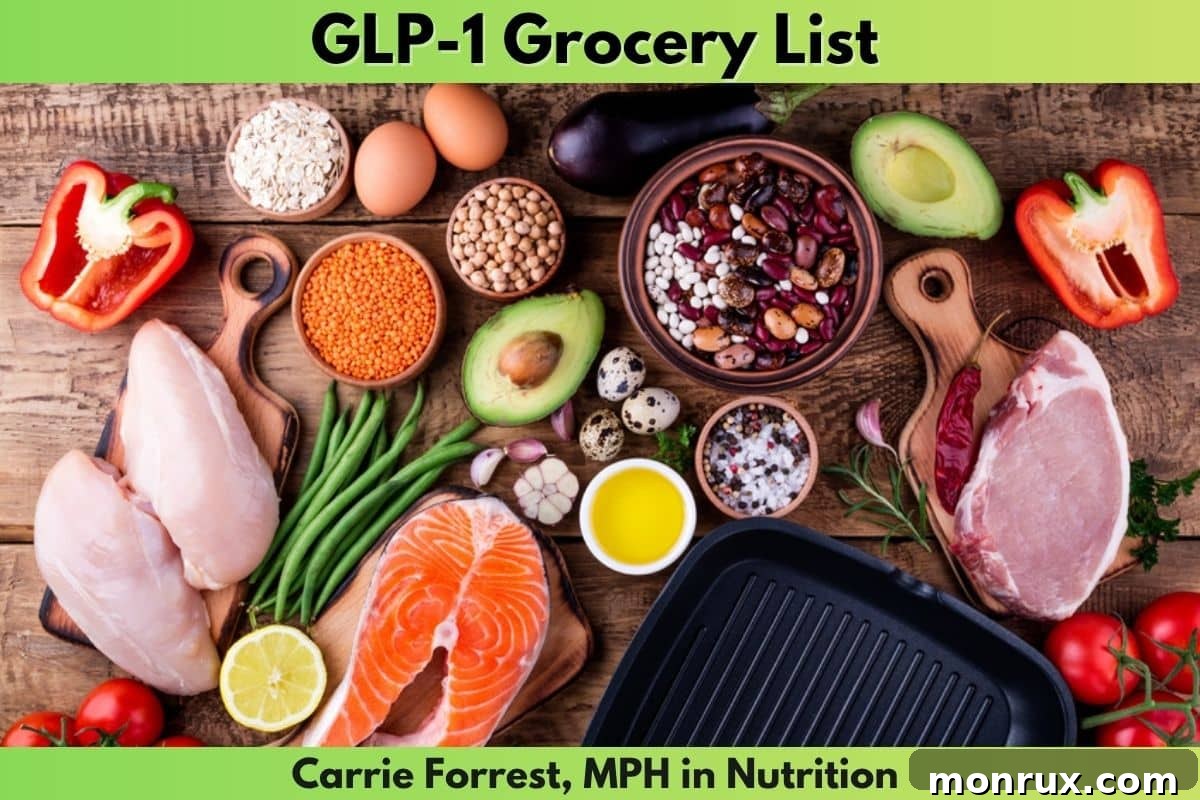
Here is a practical, grocery-ready list of what to eat while taking a GLP-1 weight-loss medication, emphasizing lean proteins, fiber-rich fruits and vegetables, gentle carbohydrates, and hydrating foods and drinks. Use this guide at the store to support your goals, manage side effects, and stay nourished.
If you’re on a GLP-1 medication and unsure what to eat, you’re not alone. Many people struggle with reduced appetite, early fullness, nausea, constipation, or other changes that make eating and getting enough nutrients challenging. This guide offers realistic food choices and meal strategies to help you meet your nutritional needs while minimizing side effects.
Rather than simply eating less, aim to eat in a way that preserves muscle, keeps you hydrated, and supplies vitamins, minerals, and fiber. If side effects prevent you from eating at all, contact your healthcare provider promptly.
Helpful food categories while on GLP-1 medications generally include:
- Protein-rich foods to preserve muscle and increase satiety
- Gentle complex carbohydrates that are easy to tolerate and provide energy
- Fruits and vegetables that add nutrients and hydration
- Hydrating foods and beverages to prevent dehydration
- Easy snacks and convenience options to make regular eating realistic
This list is a starting point and not personalized medical advice. Talk with your healthcare provider for recommendations tailored to your medical needs.
What Makes a Good GLP-1 Food List?
A useful GLP-1 food list focuses on nutrient-dense, easy-to-tolerate foods that protect muscle mass and are practical to prepare. Since appetite often decreases on GLP-1 medications, small portions should deliver protein, vitamins, minerals, fiber, and fluids. Choose foods that are less likely to worsen nausea or reflux (not overly greasy, spicy, or rich) and build a kitchen stocked with simple, repeatable options that fit your budget.
The Best Foods to Eat on a GLP-1
1. Protein-Rich Foods
Protein is a top priority to help preserve muscle and make small meals more satisfying. Eat protein first when possible. Include a mix of animal and plant proteins so you can adapt to preferences and tolerances.
- Chicken breast, thighs, turkey
- Lean ground turkey, beef, pork loin
- Salmon, tuna, cod, halibut, shrimp, scallops
- Canned sardines, canned salmon, canned tuna
- Eggs
- Greek yogurt, cottage cheese, kefir
- Milk, soy milk
- Tofu, tempeh, edamame
- Lentils, chickpeas, black beans, white beans, split peas
- Bone broth, protein powders, protein shakes or smoothies
Many of these are easy to eat in small portions (yogurt, eggs, smoothies, cottage cheese), which helps when a full plate is overwhelming.
2. Gentle Carbohydrates
Carbs are useful, especially when the stomach is sensitive. Gentle options are bland or cooked and easier to digest: toast, rice, oatmeal, crackers, and potatoes. Pair them with protein for balanced small meals or snacks.
- Oatmeal, brown rice, white rice, quinoa, farro, barley
- Whole-grain or sourdough bread, English muffins, tortillas
- Whole-grain crackers, rice cakes, pretzels, saltine crackers
- Whole-grain or legume-based pastas, couscous, sweet and white potatoes
- Cream of rice or cream of wheat, low-sugar cereal, plain granola
Keep plain toast, rice, crackers, oatmeal, bananas, or applesauce on hand for rough days.
3. Fruits That Add Hydration and Nutrients
Fruit is light, hydrating, and often easier to tolerate than heavier foods. Softer, low-acid fruits tend to work well when nausea is present.
- Bananas, apples, unsweetened applesauce, pears
- Peaches, nectarines, plums, grapes
- Blueberries, strawberries, raspberries, blackberries
- Oranges, mandarins, cantaloupe, honeydew, watermelon
- Pineapple, mango, kiwi, papaya, cherries
- Frozen berries or mango for smoothies
Combine fruit with protein—berries with yogurt, banana with nut butter, or fruit with cottage cheese—to make a more complete snack.
4. Vegetables That Feel More Doable
Cooked or blended vegetables tend to be easier to digest than large raw salads. Roasting, steaming, sautéing, mashing, or blending vegetables into soups and smoothies can make them more tolerable.
- Zucchini, yellow squash, carrots, green beans
- Spinach, kale, romaine, butter lettuce
- Cucumbers, bell peppers, tomatoes, mushrooms
- Cauliflower, broccoli, asparagus, Brussels sprouts, cabbage
- Bok choy, butternut and acorn squash, pumpkin
- Sweet potatoes, white potatoes, beets, celery, snap peas
- Frozen broccoli, spinach, green beans, mixed vegetables
When symptoms are strong, try roasted zucchini, steamed carrots, pureed vegetable soups, mashed sweet potatoes, or steamed spinach blended into a smoothie.
5. Dairy and Easy Protein Foods
Dairy and dairy alternatives often provide convenient, protein-rich options that feel light. These are good for breakfasts and snacks when chewing feels tiring.
- Greek or plain yogurt, cottage cheese, kefir
- String cheese, mozzarella, cheddar, parmesan
- Milk, lactose-free milk, soy milk, high-protein milk
- Drinkable yogurt or high-protein yogurt drinks
Yogurt with fruit, cottage cheese with peaches, or a protein smoothie can be full meals when appetite is low.
6. Healthy Fats in Small Amounts
Include modest amounts of healthy fats to support nutrient absorption without overloading the stomach. Aim for 1–2 tablespoons per meal.
- Avocado, olive oil, olives
- Nut butters (peanut, almond, cashew), tahini
- Nuts: almonds, walnuts, pistachios, cashews, pecans
- Seeds: chia, flax, hemp, pumpkin, sunflower
A little avocado on toast or nut butter with fruit can make a snack more satisfying than fried or greasy choices.
7. Hydration Foods and Drinks
Staying hydrated is essential, especially when eating and drinking less or when experiencing gastrointestinal side effects. Keep a variety of fluids available and sip throughout the day.
- Water and sparkling water
- Electrolyte packets or low-sugar electrolyte drinks
- Herbal teas, ginger or peppermint tea
- Broth and bone broth, soup
- Coconut water if tolerated
8. Easy Snacks for Days When Meals Feel Hard
Small, protein-rich snacks are often more manageable than full meals. Choose convenient options that combine protein or hydration.
- Greek yogurt or cottage cheese cups, protein shakes
- Hard-boiled eggs, cheese sticks, tuna packets
- Roasted edamame, hummus with crackers, nut butter packets
- Applesauce cups, bananas, frozen fruit for smoothies
- Trail mix, low-sugar granola bars, protein bars if tolerated
9. Pantry, Freezer, and Convenience Foods That Actually Help
Stock practical staples so you’ll eat when you need to: canned fish and chicken, low-sodium beans, lentils, shelf-stable milk, protein powder, oats, microwave rice or quinoa cups, frozen proteins and vegetables, smoothie packs, rotisserie chicken, pre-cut produce, and bagged salad kits. A functional kitchen keeps nutrition consistent when motivation is low.
Foods to Limit on a GLP-1 Medication
Limit foods that commonly worsen nausea, reflux, or fullness, such as fried and greasy foods, very large meals, heavy cream sauces, rich desserts, sugary drinks and juices, alcohol, very spicy meals, and highly processed snacks. These items can displace more nourishing choices and may increase symptoms.
Simple GLP-1 Meal Tips
- Eat protein first: prioritize the most important nutrient early in the meal.
- Smaller meals and snacks: frequent, smaller portions are often easier to tolerate than large meals.
- Keep bland options on hand: toast, rice, applesauce, bananas, broth, and crackers are helpful backups.
- Don’t let low appetite become chronic under-eating: aim for consistent nourishment to avoid nutrient deficiencies and muscle loss.
- Protect muscle: combine protein with regular movement or resistance training when possible.
- Be flexible: food preferences may change; adapt rather than forcing old habits.
- Aim for practical consistency: repeatable meal frameworks make planning and eating easier.
Sample Ways to Use This Food List
Examples of simple meals using the ingredients above:
Breakfast: Greek yogurt with berries and chia seeds; eggs with sourdough toast; oatmeal with protein powder; cottage cheese with peaches; protein shake with fruit.
Lunch: Rotisserie chicken with rice and cooked vegetables; turkey roll-ups with crackers and fruit; soup with shredded chicken; tuna with toast and cucumber; tofu bowl with rice and steamed zucchini.
Dinner: Salmon with mashed potatoes and green beans; ground turkey with rice and roasted carrots; shrimp with quinoa and cooked spinach; chicken with sweet potato and zucchini; lentil soup with toast and yogurt.
Snacks: String cheese and grapes; applesauce and a protein shake; hummus with crackers; hard-boiled eggs and fruit; banana with peanut butter.
FAQs
What should you eat first on a GLP-1?
Start with protein to ensure you get the most important nutrients before early fullness sets in.
What foods are easiest when side effects are bad?
Bland, gentle foods like toast, rice, oatmeal, bananas, applesauce, broth-based soups, yogurt, and protein shakes are often easiest to tolerate.
Do you have to avoid carbs on a GLP-1?
No. Complex carbohydrates such as sweet potatoes, rice, and white potatoes can be helpful, especially when paired with protein. If you have diabetes or other medical conditions, consult your healthcare provider about appropriate carbohydrate amounts.
Why is this list focused on easy foods?
Because when appetite is low, easy foods are more likely to be eaten consistently. Practical consistency beats perfection.
Conclusions
The best GLP-1 food list is the one that keeps you nourished, hydrated, and consistent as your appetite and digestion change. Prioritize protein, keep gentle carbs and hydrating foods available, choose fruits and vegetables you can tolerate, and stock easy, practical options so eating doesn’t become a daily struggle. Simple, repeatable meals usually work best.
Note: This information is for general purposes and not personal medical advice. Consult your healthcare provider for individualized recommendations.