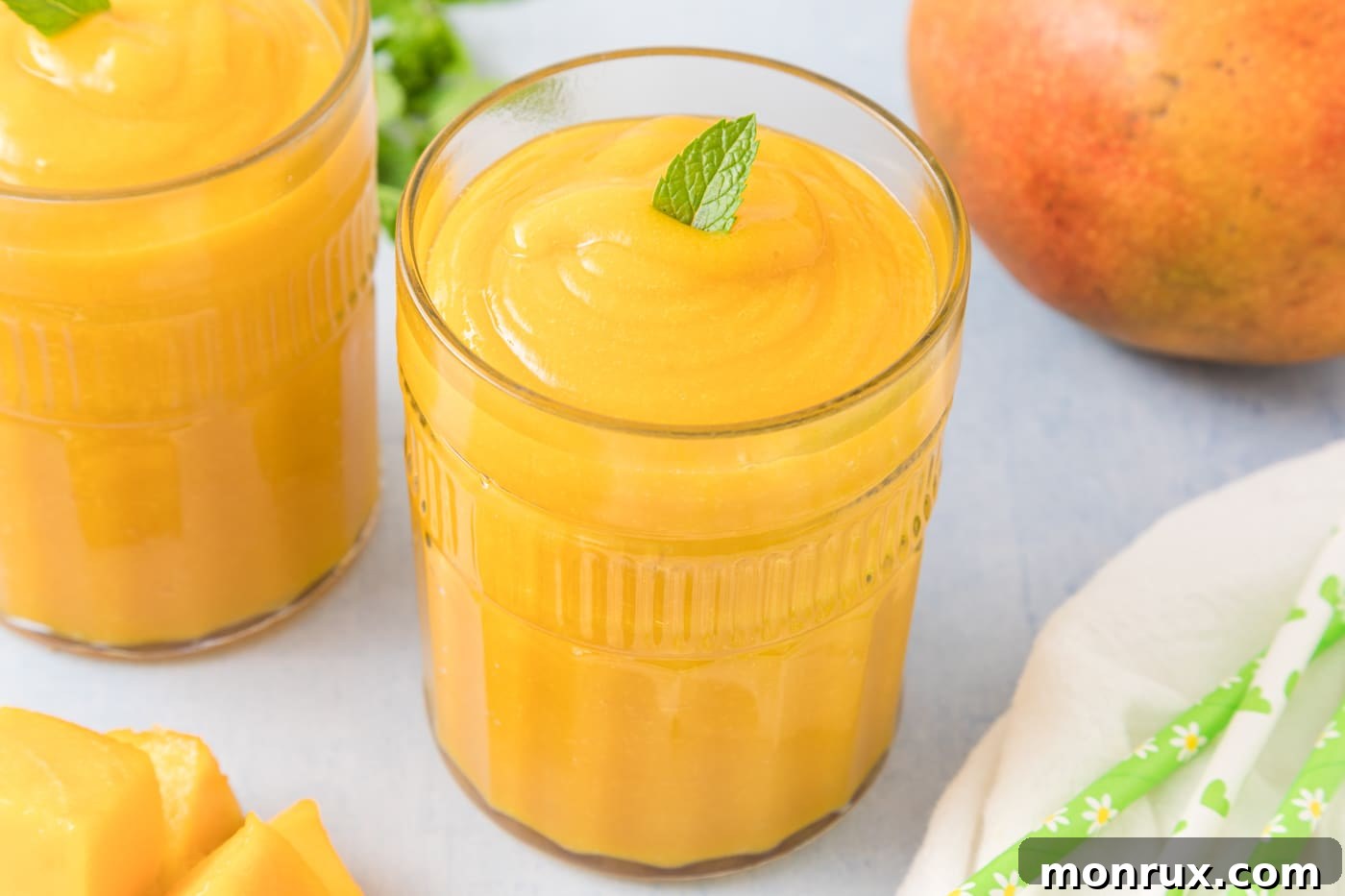
A vibrant, naturally sweet, and incredibly refreshing homemade mango juice is just a blend away! Bursting with the tropical flavor of ripe mangoes, this simple recipe delivers a glass full of Vitamin C and antioxidants. Ditch the store-bought versions laden with added sugars and artificial ingredients; making your own fresh mango juice at home is surprisingly easy and incredibly rewarding. Learn how to craft this delightful beverage with just one core ingredient, turning your kitchen into a tropical oasis of flavor and health.
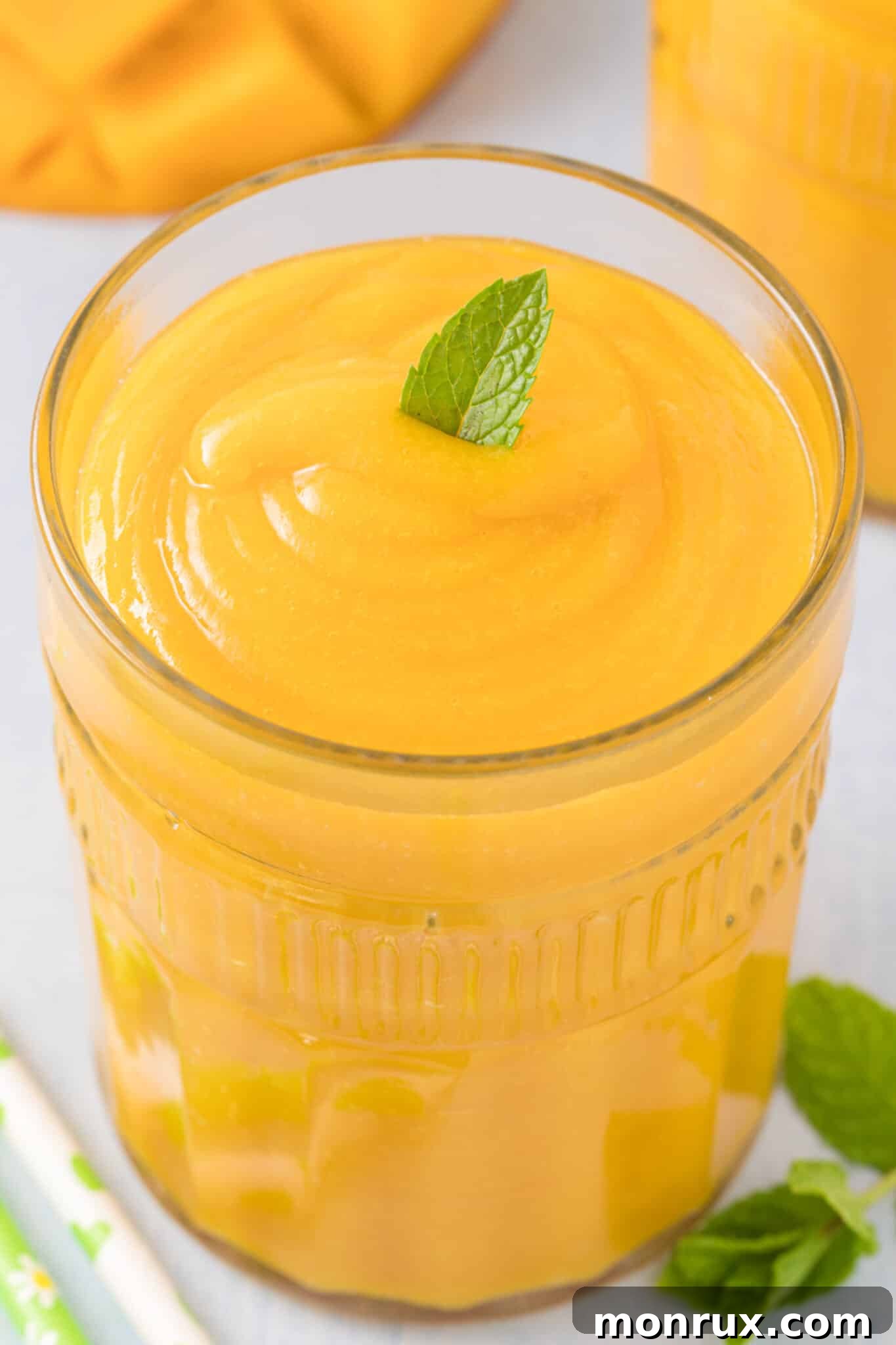
Embrace the peak of mango season or simply brighten any day with a delightful glass of this homemade mango juice. I’ve personally perfected this recipe over many years, finding it the ultimate way to utilize an abundance of fresh, ripe mangoes. Beyond its incredible taste, mangoes are an exceptional choice for juicing due to their rich soluble fiber content. This natural fiber contributes to the juice’s luscious, thick texture, making it feel more like a nourishing, light smoothie. Moreover, mangoes are packed with vital nutrients like Vitamin C, Vitamin A, and numerous antioxidants, offering a host of health benefits that make this beverage far more than just a sweet treat.
When you enjoy pure mango juice made from perfectly ripe fruits, you’re not just savoring a delicious drink; you’re consuming a concentrated dose of dietary fiber and essential vitamins. This truly homemade approach allows you to skip the often-overpriced and sugar-filled bottled mango nectars found in grocery stores. Our recipe guarantees a wholesome drink with no added sugar or artificial flavors, allowing the natural sweetness and vibrant taste of the mangoes to shine through without any unnecessary additives. It’s clean, simple, and irresistibly good.
Table of Contents
The Incredible Health Benefits of Homemade Mango Juice
Mangoes, often dubbed the “King of Fruits,” are not just a treat for your taste buds but also a powerhouse of nutrition. Transforming them into juice allows for an easy and delicious way to absorb these benefits. Here’s a closer look at what a glass of fresh, homemade mango juice can offer your body:
- Rich in Vitamin C: A single serving of mango juice provides a significant portion of your daily Vitamin C needs. This essential vitamin is crucial for a strong immune system, helping your body fight off infections and illnesses. It also plays a key role in collagen production, contributing to healthy skin and hair, and acts as a powerful antioxidant.
- Abundant in Antioxidants: Mangoes are loaded with various antioxidants, including mangiferin, catechins, anthocyanins, and gallotannins. These powerful compounds combat oxidative stress in the body, protecting cells from damage caused by free radicals and potentially reducing the risk of chronic diseases such as heart disease and certain cancers.
- Boosts Digestive Health: The soluble fiber present in mangoes aids digestion, promoting regular bowel movements and preventing constipation. This natural fiber content, even when partially strained in juice, contributes to a healthy gut microbiome and overall digestive wellness.
- Supports Eye Health: Mangoes are a fantastic source of Vitamin A and beta-carotene, which the body efficiently converts into Vitamin A. These nutrients are vital for maintaining good vision, protecting against age-related macular degeneration, and promoting overall eye health, especially in low light conditions.
- Promotes Skin and Hair Radiance: Thanks to the combined power of Vitamins C and A, mango juice can contribute significantly to a healthy complexion. Vitamin C aids in collagen synthesis for firm, youthful skin, while Vitamin A helps reduce oil production, supports cell repair, and promotes a healthy scalp.
- Natural Energy Booster: The natural sugars found in ripe mangoes provide a healthy and sustained energy boost, making mango juice an excellent pick-me-up any time of day. It’s a perfect post-workout drink to replenish glycogen stores without the need for artificial stimulants.
- Excellent Hydration: With its high water content, mango juice is a delicious and enjoyable way to stay adequately hydrated, especially during hot weather or after physical activity. It helps replenish fluids and electrolytes naturally.
- Anti-Inflammatory Properties: Some compounds in mangoes have been studied for their potential anti-inflammatory effects, which can be beneficial for reducing inflammation throughout the body.
Why Homemade Mango Juice is Superior to Store-Bought
While bottled mango juice is readily available on supermarket shelves, preparing your own at home offers unparalleled advantages that benefit both your health and your palate. Here’s why opting for homemade is always the superior choice:
- No Added Sugars or Artificial Sweeteners: Commercial mango juices frequently contain exorbitant amounts of added sugars, high-fructose corn syrup, or artificial sweeteners that significantly increase calorie content and negate many of the fruit’s natural health benefits. Homemade juice relies solely on the inherent, wholesome sweetness of ripe mangoes, making it a truly clean and wholesome beverage.
- Pure and Unadulterated Flavor: Experience the authentic, rich, and complex taste of fresh mangoes without any diluted flavors, artificial enhancements, or strange aftertastes. The vibrant, natural essence of the fruit shines through in every single sip, providing an unmatched sensory experience.
- Maximum Nutrient Retention: When you prepare juice fresh at home, you ensure maximum retention of heat-sensitive vitamins like Vitamin C and beneficial enzymes that might be diminished or destroyed during industrial processing, pasteurization, and prolonged storage of store-bought alternatives.
- Complete Control Over Ingredients: You have absolute control over what goes into your juice. You can choose organic mangoes, use filtered water, and add any desired natural flavorings like a hint of ginger or a squeeze of lime, ensuring a drink that is perfectly tailored to your preferences, dietary needs, and health goals.
- Cost-Effective and Economical: Buying fresh mangoes and making your own juice can often be more economical in the long run, especially when mangoes are in season and available at lower prices. You get more juice for your money compared to expensive pre-packaged options.
- Reduced Preservatives and Additives: Store-bought juices often rely on artificial preservatives to extend their shelf life, which many people prefer to avoid. Homemade juice is completely free from these synthetic chemicals, offering a cleaner and healthier drink option.
- Thicker, More Satisfying Texture: Unlike thin, watery processed juices, homemade mango juice retains some of its natural fiber and pectin, giving it a delightful, smooth, and satisfyingly thick consistency that’s almost like a light smoothie. This added body makes it more filling and enjoyable.
- Environmentally Friendly: By making your own juice, you reduce the consumption of single-use plastic bottles and packaging associated with commercial juices, contributing to a more sustainable lifestyle.
Choosing the Perfect Mangoes for Juicing
The secret to creating exceptional mango juice lies fundamentally in selecting the right mangoes. A truly ripe mango will yield the most flavorful, naturally sweet, and vibrant juice, often requiring no additional sweeteners whatsoever. Here’s how to pick the best ones from your local market:
- Feel for Softness: Gently squeeze the mango. A perfectly ripe mango will give slightly under gentle pressure, much like a ripe avocado or peach. Avoid mangoes that are rock-hard (these are underripe and won’t have much flavor) or those that feel mushy (these are overripe and may have an off-flavor).
- Smell the Aroma: A ripe mango will emit a distinctly sweet, fruity, and fragrant aroma, especially around the stem end. If there’s no scent, or if it smells sour, it’s likely not ripe enough or past its prime.
- Check the Color (with caution): While many ripe mangoes display vibrant yellow, orange, or red hues, color alone isn’t always the sole or best indicator of ripeness. Some varieties, like the Ataulfo (Honey) mango, remain predominantly yellow even when perfectly ripe, while others might show a red blush when still firm. Always combine color observation with the crucial feel and smell tests for accuracy. Look for a bright, even color that’s characteristic of the variety.
- Avoid Blemishes: Steer clear of mangoes with large bruises, shriveled skin, or excessive black spots, as these can indicate overripeness, internal damage, or spoilage. Small freckles are generally fine.
- Variety Matters: Any ripe mango variety can be successfully used for juice, but some are particularly outstanding. Alphonso mangoes, known for their intense sweetness, rich flavor, and non-fibrous flesh, are often considered ideal for juicing. Honey mangoes (Ataulfo) are also excellent choices for their creamy texture, high sugar content, and minimal fiber. Other popular varieties like Tommy Atkins or Haden are also great options when fully ripe.
- Ripening at Home: If your chosen mangoes aren’t quite ripe upon purchase, you can speed up the ripening process by placing them in a paper bag at room temperature for a day or two. The paper bag traps ethylene gas, which mangoes naturally produce, encouraging them to ripen faster. Check them daily until they reach the desired softness and aroma.
Essential Ingredients for Blender Mango Juice
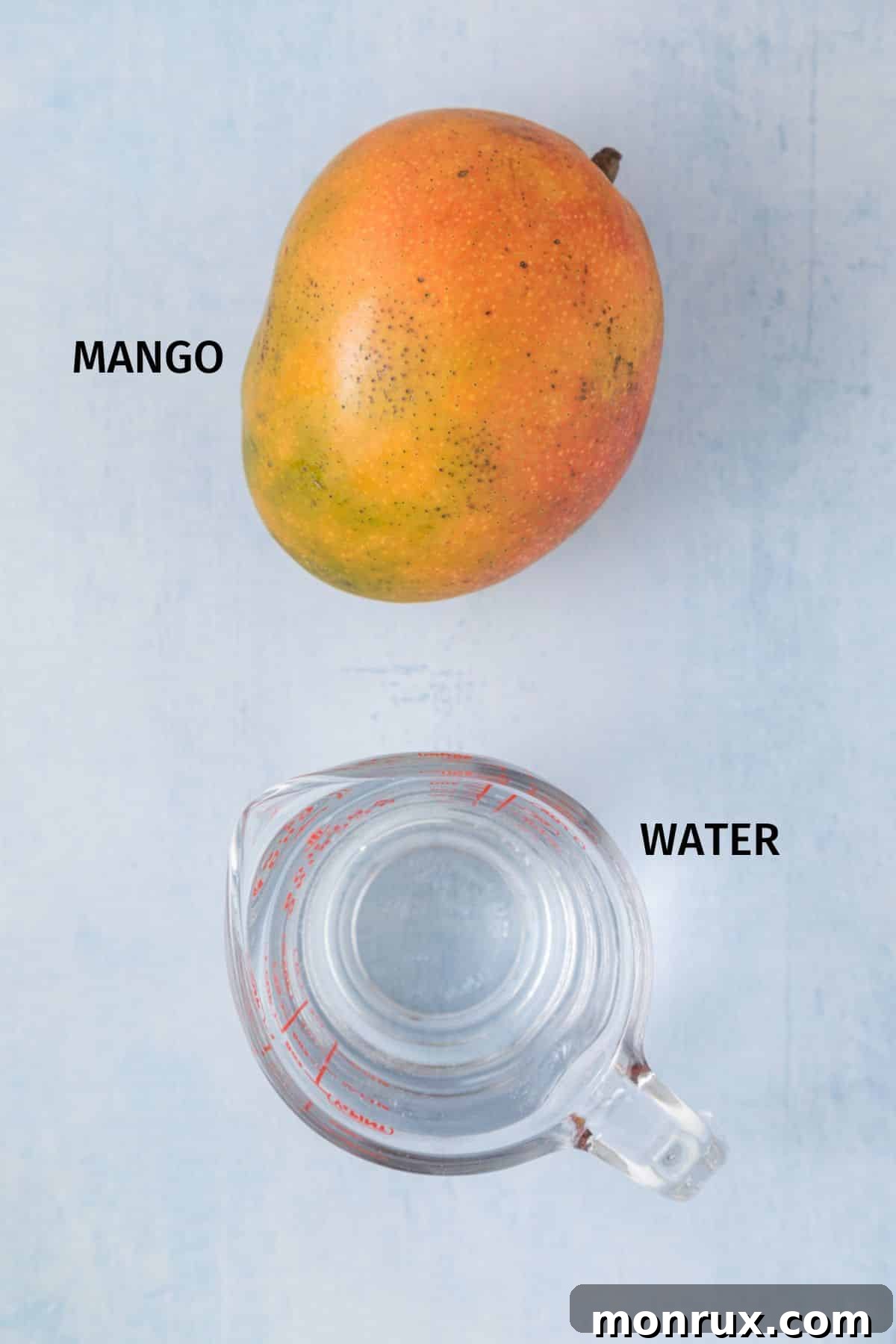
This simple mango juice recipe truly highlights the natural goodness of its core components, requiring minimal fuss for maximum flavor and health benefits. You’ll be amazed at how little is needed to create such a delicious beverage.
- Ripe Mangoes: As discussed, the quality of your mangoes directly impacts the flavor and sweetness of your juice. Aim for approximately 3 large, ripe mangoes. They are undeniably the star ingredient, providing not only their characteristic natural sweetness but also a wealth of essential vitamins (especially Vitamin C and A), and that irresistible tropical taste. Their bright, inviting color isn’t just appealing; it’s an indicator of their richness in beta-carotene, a powerful antioxidant and precursor to Vitamin A, which is exceptionally great for immune system support and overall well-being.
- Water: Approximately 1 cup of water is typically needed to help facilitate the blending process and to achieve your desired juice consistency. I highly recommend using filtered, cold water to ensure the purest taste and avoid any unwanted chlorine flavors often found in untreated tap water. Filtered water will remove any chemical tastes, allowing the natural mango flavor to shine. Alternatively, for an added boost of natural electrolytes, especially on a hot day or after a workout, you could use coconut water. Coconut water also complements the tropical flavor profile of mango beautifully and adds an extra layer of hydration. For an even more flavorful base and a Vitamin C boost, consider using a splash of fresh orange juice or pineapple juice instead of water, but be mindful of their own sugar content.
Step-by-Step Guide: How to Make Mango Juice in a Blender
Creating fresh, delicious mango juice at home is incredibly straightforward when using a blender. Follow these simple, easy-to-understand steps for a perfect glass of tropical goodness every single time:
Step One: Prepare the Mangoes
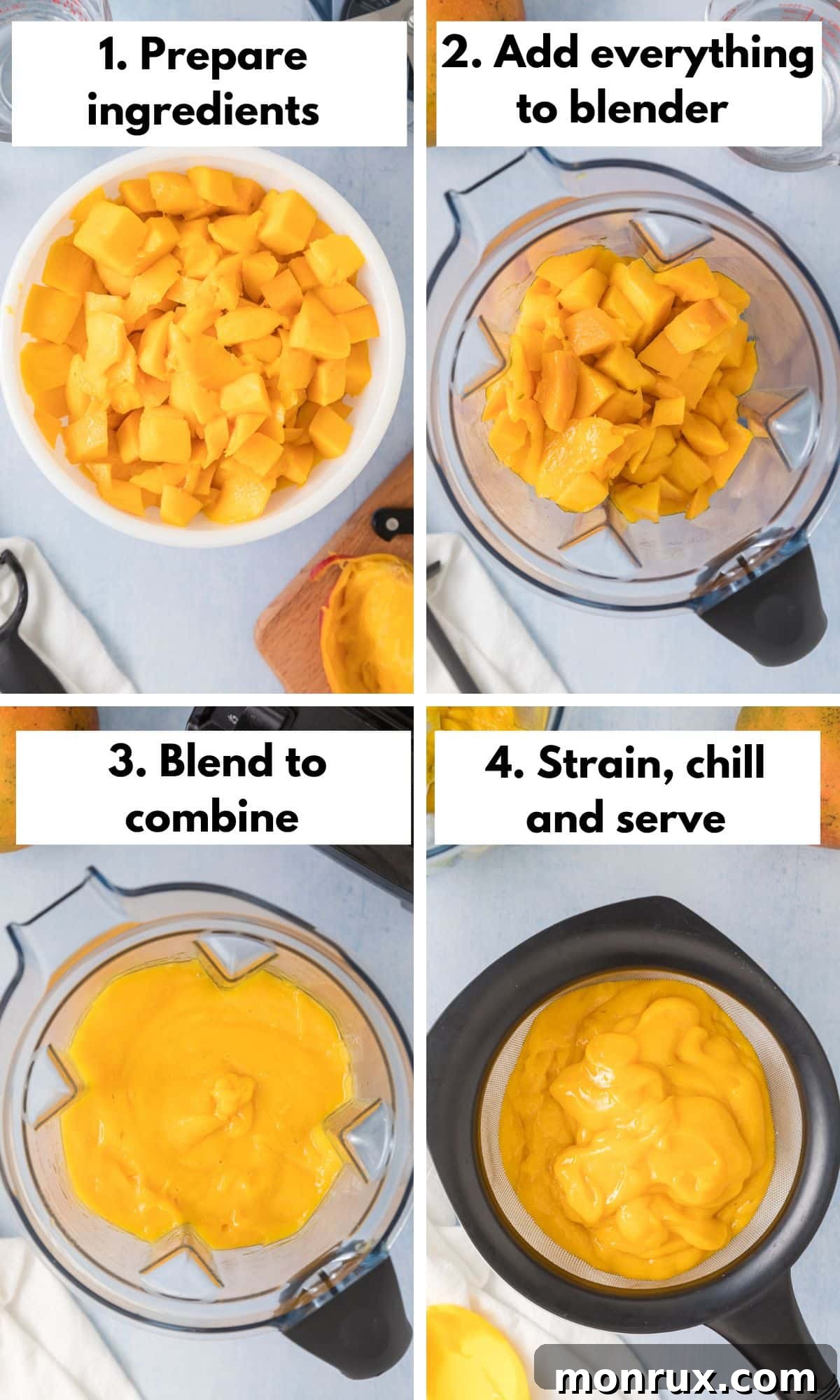
Carefully peel your chosen ripe mangoes. There are several effective methods for this: you can use a vegetable peeler or a sharp knife. A common technique involves slicing off the two “cheeks” around the flat central pit, then scoring the flesh of each cheek in a grid pattern (without cutting through the skin), and finally scooping out the cubes with a spoon. Once peeled and the flesh separated from the pit, cut the mango flesh into evenly sized chunks or smaller pieces. This ensures uniform blending and contributes to a smoother final product. The goal is to maximize the amount of juicy flesh removed from the large, fibrous pit.
Step Two: Combine Ingredients in the Blender
Transfer all the prepared mango chunks into the jar of a high-powered blender. Next, add approximately 1 cup of cold water. This liquid is crucial for helping the blender process the thick mango flesh smoothly. If you’ve chosen an alternative liquid base, such as coconut water or orange juice, add that now. Ensure the blender lid is securely fastened before proceeding to the next step to prevent any spills.
Step Three: Blend to Achieve Smooth Consistency
Begin blending on a low speed, gradually increasing to high speed. Process for approximately 20-30 seconds, or until the mixture is completely smooth, creamy, and free of any visible large lumps or fibrous strings. You may need to pause the blender and scrape down the sides of the jar with a spatula to ensure all mango pieces are incorporated. If you prefer a thinner juice consistency, feel free to add an additional splash of water (a tablespoon at a time) and blend again until it reaches your desired texture. This allows you to customize the thickness perfectly.
Step Four: Strain for a Silky Smooth Finish (Optional)
For a super silky, perfectly pulp-free mango juice, straining the blended mixture is a key step. You can achieve this by pouring the mango pulp through a fine mesh sieve or colander, positioned over a large bowl to catch the juice. Use a spatula or the back of a spoon to gently press the pulp, extracting as much liquid as possible. Alternatively, a nut milk bag works exceptionally well for straining, providing an even finer filter to ensure all fibers are removed. If you prefer a thicker, more smoothie-like consistency with maximum fiber retention (and a richer dose of dietary fiber), you can skip this straining step entirely – it’s entirely up to your preference!
Step Five: Serve and Enjoy!
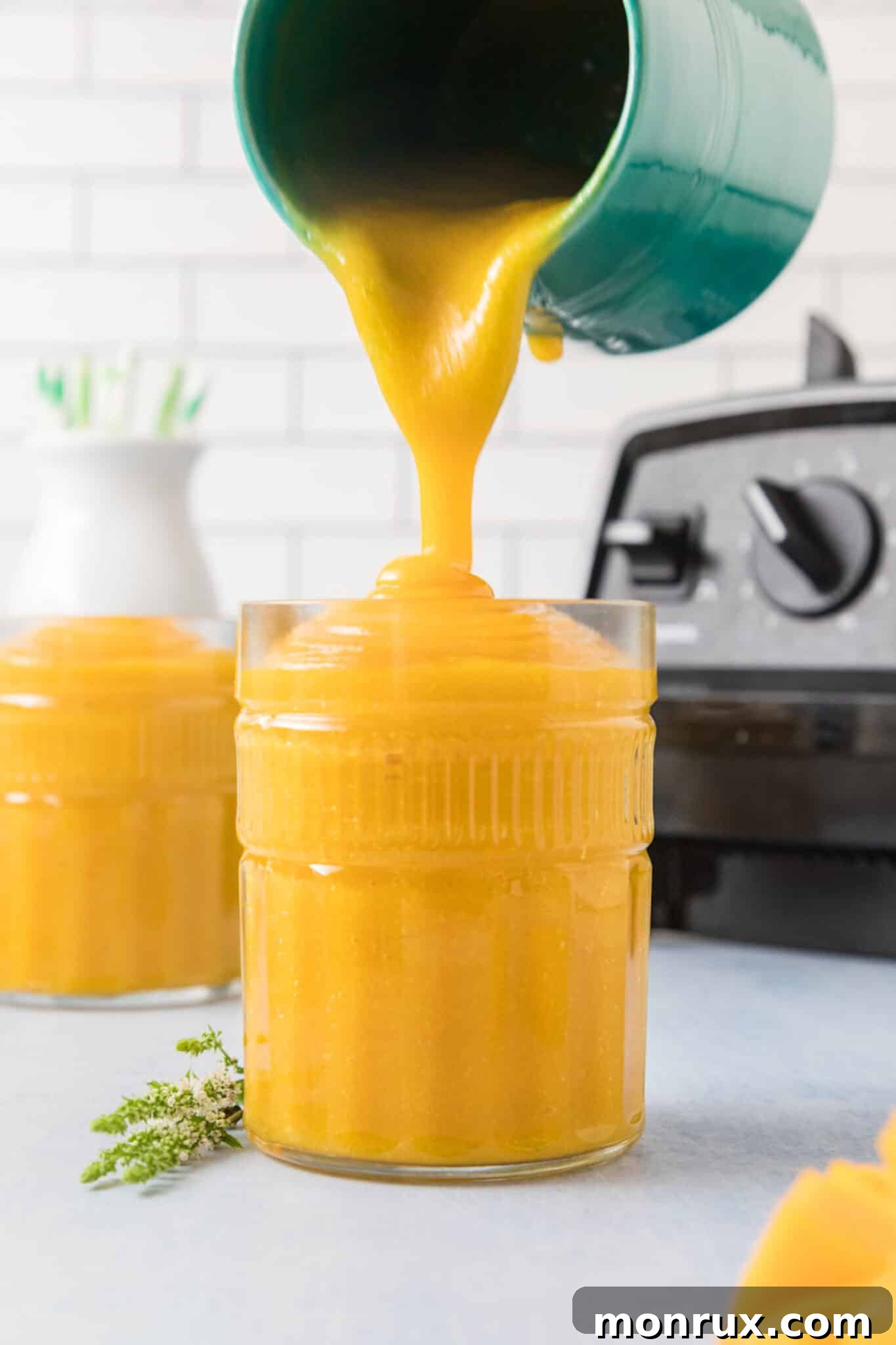
Once blended and optionally strained, pour your freshly made mango juice into individual glasses. For the freshest taste and optimal sweetness, it’s best to serve the juice immediately. For an even more refreshing experience, especially on a warm day, you can chill the juice in the refrigerator for at least 30 minutes before serving, or simply serve it over a generous amount of ice. Garnish with a fresh mint leaf, a slice of lime, or a vibrant piece of mango for an elegant and appealing touch.
This blending and optional straining method is highly versatile and can be applied to other soft fruits, making it a valuable technique for various homemade juices, much like my popular Papaya Juice recipe.
Expert Tips & Delicious Variations for Your Mango Juice
Elevate your homemade mango juice experience with these clever tips and exciting variations, allowing you to customize your drink to perfection and explore new flavor profiles:
- Adjusting Consistency to Your Liking:
- For a Thinner Juice: If you find your juice too thick, simply add more water or your chosen liquid base (e.g., coconut water, orange juice) in small increments until you reach your preferred texture. Blend briefly after each addition to incorporate.
- For a Thicker Juice or Puree: If you desire a thicker, more smoothie-like drink or a vibrant mango puree, simply skip the straining step entirely to retain all the natural fruit fiber. This yields a more substantial and nutrient-dense beverage. You can also blend in a tablespoon of chia seeds, which will absorb liquid and create a wonderfully thick and nutritious drink.
- Sweetness Control & Enhancement:
- The recipe relies on the natural sweetness of perfectly ripe mangoes. If your mangoes aren’t quite as sweet as you’d hoped, or if you simply prefer an extra touch of sweetness, consider adding a small amount of natural sweetener. Options include a pitted Medjool date (blend it in), a dash of pure maple syrup, a spoonful of agave nectar, or a few drops of liquid stevia. Always taste as you go to avoid over-sweetening. Avoid refined sugars to keep it healthy.
- Exciting Flavor Enhancements:
- Ginger Zing: For a delightful warming and zesty kick that perfectly complements the tropical sweetness of mango, add a small piece (up to 1/2 to 1 inch) of peeled fresh ginger root to the blender with the mango chunks.
- Citrus Brightness: A squeeze of fresh lemon juice or lime juice can dramatically brighten the flavor profile and add a delightful tang, balancing the mango’s sweetness and making the juice even more refreshing.
- Minty Freshness: A few fresh mint leaves, either blended into the juice or used as a garnish, can add an incredibly refreshing herbaceous note that elevates the entire drink.
- Spicy Kick: For an adventurous and exotic twist, add a tiny pinch of cayenne pepper, a small slice of a mild chili (like jalapeño, seeds removed for less heat), or even a dash of Tajin seasoning (chili-lime seasoning) to the blender.
- Cardamom Charm: A tiny pinch (about 1/8 teaspoon) of ground cardamom can add an aromatic, subtly floral, and uniquely Indian-inspired flavor that pairs wonderfully with mango.
- Liquid Base Alternatives for Unique Profiles:
- While filtered water is a great neutral base, don’t hesitate to experiment with other liquids to create different flavor dimensions:
- Coconut Water: Enhances the tropical theme, adds natural electrolytes, and provides a subtly nutty sweetness.
- Orange Juice: Boosts Vitamin C content significantly and provides a lovely citrusy sweetness that harmonizes well with mango.
- Pineapple Juice: Creates a vibrant, tangy, and intensely tropical blend that is incredibly refreshing.
- Carrot Juice: For a nutrient-dense and slightly earthy variation, consider blending mango with fresh carrot juice. Check out this Carrot and Mango Juice recipe for inspiration.
- Freezing for Future Enjoyment: Mango juice freezes beautifully, making it an excellent way to preserve the freshness of ripe mangoes, especially if you’ve made a large batch or have an abundance. Pour any leftover juice into ice cube trays and freeze until solid. Once completely frozen, transfer the mango cubes to an airtight freezer bag. These frozen mango cubes are perfect for adding to smoothies, making instant chilled mango juice later (just blend with a splash of water), or for chilling other drinks without diluting their flavor. They can be stored effectively for several months.
- Transform into a Smoothie: Instead of straining, blend the mango mixture with additional ingredients like Greek yogurt, a ripe banana, a handful of spinach, or some protein powder for a wholesome, filling, and customizable mango smoothie.
- Batch Preparation and Storage: This recipe is incredibly easy to scale. You can effortlessly double or triple the ingredients to make a larger batch for parties, family gatherings, or convenient meal prepping throughout the week. Store any leftover juice in a covered airtight container in the refrigerator for up to 3-4 days. While fresh is always best, proper storage helps maintain its quality. A quick stir before serving will reincorporate any natural separation.
Common Questions About Making Mango Juice (FAQs)
Can I use a juicer to make mango juice?
While technically possible, a traditional juicer is generally not ideal for mangoes. Mangoes are a very soft, pulpy, and fibrous fruit, and most juicers, especially centrifugal models, struggle to extract much liquid, leaving a significant amount of waste (pulp) and a thick, often stringy, juice. If you insist on using a juicer, you’ll likely need to combine the mango with harder ingredients like firm carrots or crisp apples, which can help push the mango through the machine more effectively. However, for the best yield, efficiency, and a smoother consistency, a blender or food processor is highly recommended for making mango juice.
Is this recipe the same as mango puree?
This recipe is indeed very similar to mango puree! The primary distinction lies in the final straining step. If you desire a true mango puree, which is thicker and retains all the fruit’s fibrous content, simply skip the straining process after blending the mango and water. This results in a thicker, more concentrated product perfect for use in desserts, baby food, as a sauce for pancakes or yogurt, or even as a base for smoothies.
Can I freeze mango juice?
Absolutely! Freezing mango juice is an excellent and practical way to preserve the freshness and flavor of ripe mangoes, especially if you have an abundance or want to prepare a larger batch for later. To freeze, simply pour the freshly made juice into ice cube trays and allow them to freeze until completely solid. Once frozen, transfer the mango cubes to an airtight freezer bag or container. They will keep well in the freezer for up to several months. These frozen mango cubes are fantastic for adding to smoothies, making quick chilled mango drinks (just blend with a splash of water), or for chilling other beverages without dilution.
Can I use unripe mangoes to make into juice?
No, it is strongly recommended to use only perfectly ripe fruit for making mango juice. Unripe mangoes lack the natural sweetness, vibrant color, and luscious flavor necessary for delicious juice. They tend to be quite tart, sometimes bitter, and often more fibrous, resulting in a less palatable drink that might require excessive amounts of added sweeteners to make it enjoyable, thus negating the healthy aspect of homemade juice.
Can I use frozen mango chunks to make mango juice?
Yes, you can certainly use store-bought or pre-frozen mango chunks to make mango juice. For the best and smoothest juice consistency, it’s ideal to defrost the frozen mangoes in the refrigerator overnight (at least 8 hours) before blending them. If you blend them directly from frozen, the resulting mixture will be much thicker, similar to a smoothie or sorbet, which can still be delicious and refreshing but won’t have the traditional liquid consistency of juice.
I sincerely hope you enjoy making this delightful homemade mango juice recipe! If you do try it, please consider leaving a comment and a starred review below. Your feedback is greatly appreciated and helps other home cooks.
Let’s stay connected! You can follow me on social media for more clean eating recipes, wellness tips, and healthy lifestyle inspiration. Find me on Facebook, Pinterest, Instagram, and YouTube!
Blender Mango Juice Recipe Card
This incredibly easy recipe makes a delicious, naturally sweet, and incredibly healthy mango juice using just a blender. It’s packed with vitamins and antioxidants, and proudly features no added sugar, letting the pure flavor of mango shine!
Print Recipe
- Total Time: 15 minutes
- Yield: 4 servings (approximately 4 cups / 950ml)
Ingredients
- 3 large, ripe mangoes, peeled and pitted (about 3 cups of chopped mango flesh)
- 1 cup cold water (filtered recommended; can also use orange juice or coconut water for variations)
- Optional additions: 1/2 inch fresh ginger (peeled), a squeeze of fresh lime or lemon juice, fresh mint leaves for garnish, a pinch of cardamom
Instructions
- Prepare Mangoes: Peel the mangoes using a vegetable peeler or sharp knife. Carefully cut the flesh away from the large, flat pit. Cut the mango flesh into large, evenly sized chunks.
- Add to Blender: Transfer all the mango chunks and the 1 cup of cold water (or your chosen liquid alternative) to the base of a high-powered blender. Secure the lid firmly.
- Blend Until Smooth: Blend on high speed for approximately 20-30 seconds, or until the mixture is completely smooth and creamy with no remaining lumps. If you prefer a thinner consistency, add an additional 1/4 to 1/2 cup of water, one tablespoon at a time, and blend briefly after each addition until desired thinness is achieved.
- Strain (Optional for Pulp-Free Juice): For a super silky, pulp-free juice, pour the blended mixture through a fine mesh colander or a nut milk bag set over a large bowl. Use a spatula or the back of a spoon to gently press the pulp, extracting as much juice as possible. Discard any remaining fibrous pulp. If you prefer a thicker, more smoothie-like drink with more fiber, you can skip this straining step entirely.
- Serve and Garnish: Pour the fresh mango juice into individual glasses. Serve immediately for the best taste and freshness. For a more refreshing experience, chill in the refrigerator for at least 30 minutes before serving, or serve over ice. Garnish with a fresh mint leaf, a slice of lime, or a small piece of mango for an appealing presentation.
Notes
- Scaling the Recipe: This recipe is incredibly versatile and easily scalable. You can confidently double or triple the ingredients to make a larger batch, perfect for entertaining guests, family gatherings, or simply to have on hand for several days.
- Storage Recommendations: While fresh mango juice is undoubtedly best consumed right after preparation for peak flavor and nutrients, you can store any leftovers. Transfer the juice to a covered airtight container and refrigerate for up to 3-4 days. Natural separation may occur; simply give it a good stir or shake before serving.
- Flavor Customization Ideas: Don’t hesitate to experiment with enhancing the flavor profile. Consider adding a small piece of fresh ginger for warmth and spice, a squeeze of lemon or lime juice for a bright, tangy lift, or even a tiny dash of ground cardamom for an exotic, aromatic twist. You can also swap water for pineapple juice, coconut juice, or orange juice to create different delightful flavor combinations.
- Consistency Adjustments: To achieve a thinner juice, incorporate an additional 1/4 to 1/2 cup of liquid (water or other juice) before blending. Conversely, if you desire a thicker juice or a vibrant mango puree, simply skip the straining step after blending to retain all the natural fruit fiber. For an even more substantial and nutrient-dense drink, consider blending in 1 tablespoon of chia seeds, which will naturally thicken the mixture.
Nutrition Information (per 1/4 of recipe)
- Serving Size: 1/4 of recipe (approx. 1 cup / 237ml)
- Calories: 101 kcal
- Sugar: 22.9 g
- Sodium: 4.1 mg
- Fat: 0.6 g
- Saturated Fat: 0.2 g
- Carbohydrates: 25.2 g
- Fiber: 2.7 g
- Protein: 1.4 g
- Cholesterol: 0 mg
- Author: Carrie Forrest, MPH in Nutrition
- Prep Time: 10 minutes
- Cook Time: 5 minutes (for blending)
- Category: Juice, Beverage, Drink
- Method: Blender, Blending
- Cuisine: Homemade, Tropical, Vegan-Friendly
- Diet: Vegan, Gluten-Free, Dairy-Free, Plant-Based
Explore More Juicing Resources!
If you’re passionate about making fresh, healthy juices at home, you’ll find these resources incredibly helpful for enhancing your juicing journey.
More Fresh Juice Recipes You Might Love
If you enjoyed this mango juice recipe, be sure to explore these other delicious and healthy homemade juice creations to expand your repertoire of refreshing beverages:
- Peach Juice: A Sweet & Aromatic Summer Sip
- Pear Juice: Naturally Sweet & Soothing for Digestion
- Kiwi Juice: Tangy, Green, & Revitalizing with Vitamin C
- Ginger Lemon Shot: Your Potent Daily Immunity Booster
- Liver Cleanse Juice: Support Detoxification Naturally
- Green Juice with Lemon and Ginger: Energize Your Day & Boost Wellness
- Cucumber Juice: The Ultimate Hydrating & Cooling Drink
Don’t forget to join my exclusive newsletter list to get clean eating recipes, wellness tips, and special content delivered directly to your inbox. The newsletter is 100% free with no spam; you can easily unsubscribe anytime you wish.
About the Author
Carrie Forrest holds a master’s degree in public health with a specialization in nutrition and is a certified holistic nutritionist. As a prominent wellness and food blogger, her site welcomes over 5 million annual visitors, inspiring countless individuals. Carrie shares an incredibly moving story of recovery from chronic illness and is deeply committed to empowering other women to transform their health and lives through clean eating and mindful living. Feel free to send her a message via her contact form; she loves hearing from her readers.