Welcome to a comprehensive guide exploring the critical question: Is Reverse Osmosis (RO) water truly beneficial for your health? In this detailed analysis, we’ll delve into the fascinating world of RO filtration, uncovering its scientific process, examining its significant advantages and potential drawbacks, and comparing it with other popular water purification methods. Whether you’re considering an RO system for your home or simply curious about the water you drink, this article provides the essential insights you need to make an informed decision. For many, RO water stands out as an excellent option, offering unparalleled purity and contributing to a healthier lifestyle, provided certain considerations are met regarding budget, availability, and remineralization.
Overview of the Reverse Osmosis Process
Reverse osmosis, often abbreviated as an RO system, is a highly advanced and incredibly effective method used for water purification. This process is essentially the inverse of natural osmosis, a biological phenomenon where water molecules move across a semi-permeable membrane from an area of high water concentration to an area of lower water concentration to achieve equilibrium.
In contrast, reverse osmosis applies external pressure to force water molecules through a specialized, semi-permeable membrane. This membrane is designed with microscopic pores that are so fine they allow only pure water molecules to pass through, effectively leaving behind dissolved inorganic solids such as salts, heavy metals, minerals, chemicals, and various other contaminants. The “rejected” contaminants are then flushed away as wastewater, ensuring that only the purest water collects on the other side.
This sophisticated filtration procedure boasts an impressive contaminant removal rate, often eliminating up to 99% of impurities. Its effectiveness was first harnessed for large-scale applications, most notably in desalinating seawater to make it potable for human consumption. While initially a technology exclusive to government, military, and commercial sectors, advancements have made residential reverse osmosis systems widely available and affordable. Today, many homeowners install RO water filters to transform ordinary city tap water or local well water into exceptionally clean and great-tasting filtered water, right at their kitchen sink.
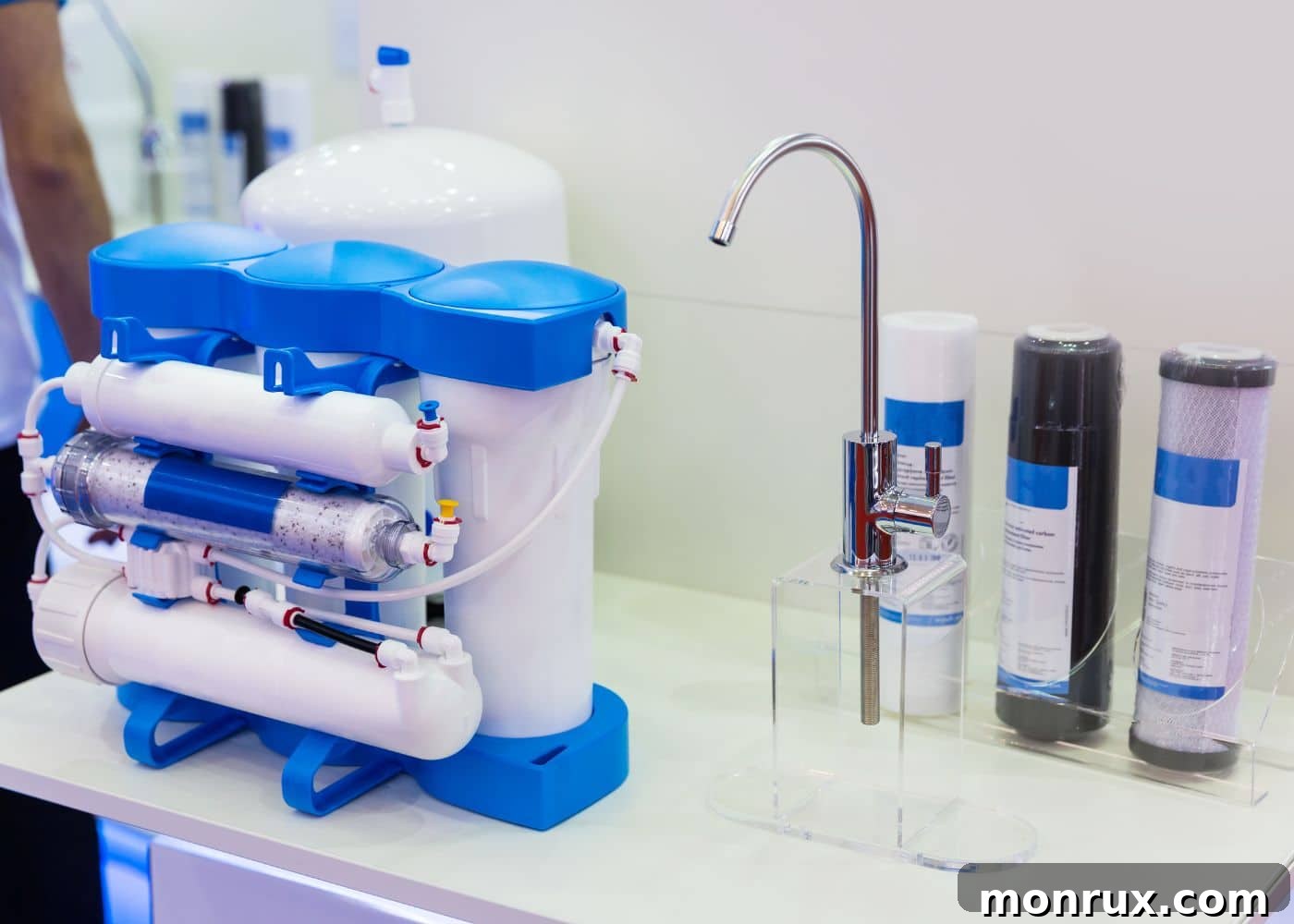
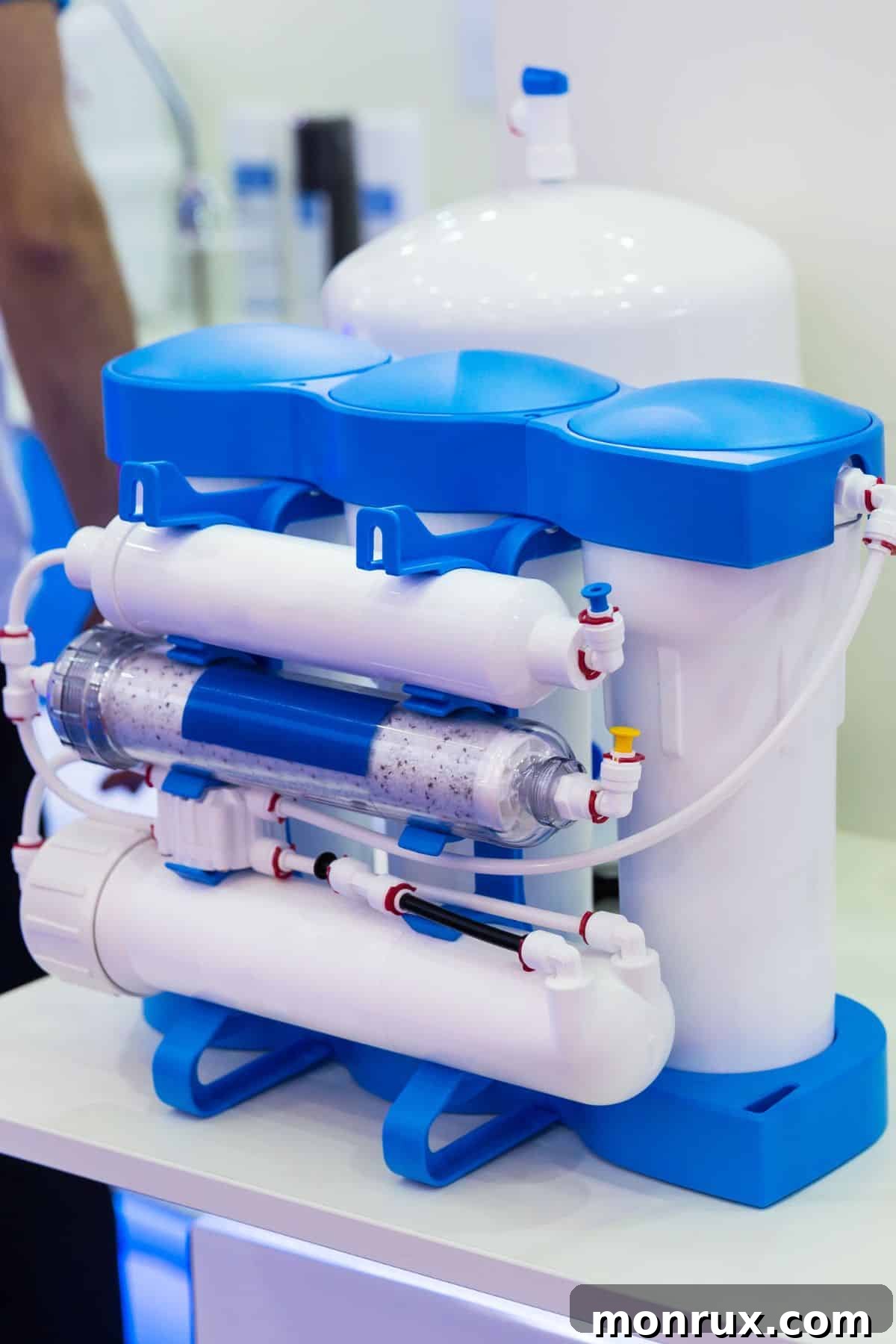
A typical home RO system usually involves multiple stages of filtration. These often include a sediment filter to remove larger particles, a carbon filter to absorb chlorine and organic chemicals, the crucial RO membrane for fine purification, and sometimes a post-carbon filter for final polishing of taste and odor. Some advanced systems also include a remineralization stage to reintroduce beneficial minerals, addressing one of the common concerns associated with RO water.
Key Advantages of RO Water
Embracing reverse osmosis for your home’s water purification comes with a host of compelling benefits, making it a preferred choice for many seeking superior water quality.
Unparalleled Contaminant Removal
One of the most significant advantages of reverse osmosis is its exceptional ability to eliminate a vast spectrum of contaminants from water. Unlike many other filtration methods that only trap larger particles, RO systems, especially high-quality residential units, can remove approximately 99% of dissolved impurities. This includes a wide range of harmful substances such as lead, mercury, arsenic, chromium-6, nitrates, pesticides, herbicides, fluoride, chlorine, chloramines, bacteria, viruses, and even pharmaceutical residues.
The secret to its effectiveness lies in the incredibly fine pores of the RO membrane, which are so small that only water molecules can pass through. This thorough purification process has been so transformative that in communities lacking access to inherently safe drinking water, the implementation of RO filtration has effectively replaced the traditional need to boil water, providing a convenient and reliable source of clean water.
Ideal for Specific Applications Requiring Pure Water
The ultra-pure nature of reverse osmosis water makes it invaluable for situations where mineral-free water is essential. This characteristic purity extends its utility beyond just drinking water, catering to various niche requirements.
For instance, in the realm of home aquariums, delicate aquatic pets thrive in water completely free of added minerals, chlorine, and other tap water contaminants that can be detrimental to their health. RO water provides a stable and clean environment for these sensitive ecosystems.
Culinary arts also benefit significantly from RO water. Professional chefs and gourmet enthusiasts note that the absence of minerals, such as excess calcium or chlorine, allows the true flavors of ingredients to shine through in cooking. Coffee connoisseurs, in particular, champion RO water for brewing. They argue that hard minerals in regular tap water can interfere with the proper extraction of delicate flavor compounds from coffee beans, resulting in a less vibrant and sometimes bitter cup. With RO water, the nuanced aromas and tastes of high-quality coffee are fully realized.
Significant Reduction in Plastic Waste
In many regions where concerns about tap water quality persist, bottled water has historically been the go-to solution for safe drinking. However, this reliance on single-use plastic bottles contributes massively to global plastic pollution, leading to overflowing landfills and contaminated oceans.
Installing a reverse osmosis system at home offers an elegant and eco-friendly alternative. By providing an endless supply of purified water directly from your tap, RO systems dramatically minimize or even eliminate the need to purchase bottled water. This simple switch at the household level plays a crucial role in reducing plastic waste, curbing the environmental footprint, and promoting a more sustainable lifestyle. It’s a tangible way to contribute to pollution reduction while ensuring your family has access to clean, safe drinking water.
For more insights into bottled water options, consider my related article about the healthfulness of Smart Water.
Potential Disadvantages of RO Water
While reverse osmosis offers exceptional water purification, it’s also important to be aware of its potential drawbacks to make a fully informed decision.
Taste Profile May Not Appeal to All
One common observation about RO water is its distinct flavor, or rather, its lack thereof. Because the reverse osmosis membrane removes virtually all dissolved inorganic solids, including the natural minerals that contribute to water’s characteristic taste, the resulting water can be described as “flat” or “insipid” by some consumers. Many people are accustomed to the subtle mineral profiles in tap water or spring water, and the absence of these can be noticeable.
However, this is a subjective experience, and many individuals actually prefer the clean, neutral taste of RO water. For those who find it too bland, modern reverse osmosis systems frequently address this by incorporating a remineralization stage. This post-filtration stage reintroduces a balanced amount of beneficial minerals, such as calcium and magnesium, restoring a more familiar and often preferred taste profile to the purified water.
Initial Investment and Ongoing Costs
Historically, reverse osmosis technology was developed for large-scale industrial, military, or commercial applications, where the significant investment was justified by the need for massive volumes of purified water. For domestic consumers, however, the cost of installing and maintaining an RO filtration system can be a factor to consider.
The initial purchase price of an RO system varies widely, from a few hundred dollars for compact under-sink units to several thousand for whole-house systems. Beyond the upfront cost, there are ongoing expenses. These typically include the regular replacement of filters (pre-filters, carbon filters, and the RO membrane itself), which might be required annually or every few years, depending on water quality and usage. While some systems are DIY-friendly, others may necessitate professional installation and periodic maintenance, adding to the overall cost. Furthermore, the discarded RO membrane and pre-filters contribute to waste materials, though often less impactful than continuous plastic bottle consumption.
Considerable Water Waste
While RO systems excel at reducing plastic waste, a significant environmental and economic drawback is the amount of wastewater produced during the purification process. To effectively flush away the concentrated contaminants rejected by the membrane, RO systems typically discharge a substantial amount of water down the drain, often referred to as brine or concentrate. Traditional, less efficient RO systems can waste anywhere from 3 to 20 gallons of water for every gallon of purified water produced.
This inefficiency means increased water consumption and potentially higher water bills for the consumer. Environmentally, it raises concerns, especially in regions facing water scarcity. The severity of this issue led to India’s government banning the use of RO filters in 2020 in areas where less drastic purification methods suffice, aiming to conserve water and energy resources. However, it’s worth noting that significant advancements in RO technology have led to much more efficient “low-waste” or “permeate pump” systems, which drastically reduce the wastewater ratio, making them a more eco-conscious choice.
Depletion of Beneficial Minerals
One of the most debated aspects of reverse osmosis water is its efficacy in stripping water of virtually all minerals, including those vital for human health. Essential minerals like magnesium, calcium, and potassium, along with bicarbonates, are crucial electrolytes and play key roles in numerous bodily functions, from bone health to nerve function and hydration. Additionally, certain public water supplies include added fluoride to support dental health, which is also removed by RO.
The long-term effects of consuming heavily demineralized water on human health have been a subject of scientific inquiry and discussion. While recent comprehensive studies are limited, an older but significant report from the World Health Organization (WHO) concluded that: “Demineralised water that has not been remineralized, or low-mineral content water – in the light of the absence or substantial lack of essential minerals in it – is not considered ideal drinking water, and therefore, its regular consumption may not be providing adequate levels of some beneficial nutrients.”
This finding underscores the importance of choosing reverse osmosis systems that incorporate a remineralization stage. By reintroducing a balanced profile of healthy minerals post-filtration, these systems ensure that you benefit from ultra-pure water while still receiving the essential nutrients your body needs, mitigating potential health concerns associated with mineral deficiency.
Increased Water Acidity (Lower pH)
When minerals are removed from water through the reverse osmosis process, its pH level naturally decreases, making the water slightly more acidic. This change is not generally considered harmful for direct human consumption, as the human body is highly capable of maintaining its pH balance regardless of the water it drinks.
However, highly acidic water can pose a potential risk to household plumbing. Over time, acidic water can become corrosive, potentially leaching toxic metals like lead and copper from pipes and storage tanks into your drinking water. This can compromise water safety and damage your home’s infrastructure.
Fortunately, just as with taste, remineralization stages in RO systems can effectively counteract this issue. By adding back essential minerals, these filters help to restore the water to a neutral or slightly alkaline pH level, preventing corrosion and ensuring the long-term integrity of your plumbing system while maintaining water quality.
Exploring Other Water Filtration Options
Reverse osmosis is an excellent choice for comprehensive water purification, but it’s not the only method available. Depending on your specific needs, budget, and the contaminants you aim to remove, other water filter options might be more suitable or complementary.
Water Filter Pitchers
Water filter pitchers are among the simplest and most accessible forms of home water filtration. These portable devices feature a filter cartridge typically housed within the lid, designed to reduce various contaminants as water passes through by gravity. The filtration mechanism often involves a physical mesh to trap sediment, dirt, and larger particles, combined with an absorption process.
Activated carbon is a common material used in these filters. Its highly porous structure effectively attracts and traps chlorine, odors, and certain organic compounds, significantly improving taste and smell. Water filter pitchers require no electricity, are cost-effective, and incredibly easy to use. A key advantage is that they generally do not remove beneficial dissolved minerals, preserving the natural mineral content of the water. However, their filtration capabilities are limited compared to RO systems; they typically do not remove dissolved inorganic matter like heavy metals, fluoride, or bacteria and viruses.
Sequestration Filters
Sequestration filters operate on a chemical principle, where a substance is chemically isolated or bound. In the context of water filtration, polyphosphate is the most common sequestering agent used. Its primary function is not to remove minerals from water but to prevent them from causing problems.
Polyphosphate works by binding with hardness minerals, primarily calcium and magnesium, preventing them from forming limescale deposits on surfaces. This is particularly useful in appliances like water heaters, dishwashers, and coffee makers, extending their lifespan and maintaining efficiency. While sequestration helps prevent scale and corrosion, it does not actually remove these minerals from the water. Therefore, sequestration filters are generally used for appliance protection and industrial applications rather than as a primary source for purifying drinking water, as they do not address health-related contaminants.
Ion Exchange Filters
Ion exchange filters are primarily known for their water-softening capabilities. This method works by exchanging undesirable ions in the water with more desirable ones using electronically charged resin beads. Typically, water flows through a tank containing these resin beads, which are usually charged with sodium ions.
As hard water (containing calcium and magnesium ions) passes over the resin, the calcium and magnesium ions adhere to the resin beads, releasing sodium ions into the water. This process effectively softens the water, preventing limescale buildup and improving the effectiveness of soaps and detergents. Beyond softening, ion exchange can also remove a broad range of other contaminants, including certain heavy metals, nitrates, and sulfates, depending on the type of resin used. It is considered a sustainable and efficient process that can significantly improve both the quality and taste of water, especially in areas with very hard water, without the extensive water waste associated with some RO systems.
UV Water Purifiers
Ultraviolet (UV) water purifiers offer an effective solution for eliminating microbiological contaminants in water. Instead of filtering out particles or chemicals, UV systems use a special lamp to emit UV-C light, which has germicidal properties. As water flows through the purification chamber, the UV light penetrates and disrupts the DNA of bacteria, viruses, cysts, and other microorganisms, rendering them unable to reproduce and effectively neutralizing them.
UV purification is highly effective against a wide array of pathogens, making it an excellent choice for treating well water or water supplies where biological contamination is a concern. It is also chemical-free, meaning it doesn’t add any substances to the water or alter its taste, odor, or pH. However, it’s important to note that UV purifiers only address living organisms; they do not remove sediment, chemicals, heavy metals, or dissolved solids. For comprehensive purification, a UV system is often combined with other filters, such as sediment and carbon filters, as a multi-stage approach to ensure both biological safety and overall water quality.
Frequently Asked Questions About RO Water
Yes, reverse osmosis water, due to its virtual absence of minerals, often has a distinct taste compared to other types of water. Because it’s almost totally devoid of dissolved inorganic solids – including salts, beneficial minerals, and contaminants – some people describe its flavor as “flat” or “neutral.” This lack of mineral presence can even impact beverages, with some connoisseurs suggesting it can make coffee or tea taste somewhat bitter or less full-bodied.
However, taste is highly subjective. Many individuals notice little to no difference, and some even prefer the clean, pure taste of RO water, finding it refreshing. If the flavor profile doesn’t appeal to you, there are simple and effective solutions. You can easily add a calcium or alkaline cartridge to your RO system during the installation or filter replacement process. Alternatively, choosing an RO system with a built-in remineralization stage will reintroduce a balanced blend of healthy minerals, restoring a more familiar and enjoyable taste while also helping to neutralize any acidity caused by the decreased pH level.
Reverse osmosis systems generally represent a higher initial investment than simpler water filtration systems like pitchers or faucet filters, but they also offer the most superior level of purification available for home use. The initial outlay for a basic domestic under-sink unit can range from approximately $200 to $600, while more advanced or whole-house systems can cost upwards of $1,000 to several thousand dollars.
When evaluating the worth of this investment, several factors need consideration:
- Installation: While some compact RO units are designed for DIY installation, more complex under-sink or whole-house systems may require professional plumbing, adding to the initial cost.
- Maintenance: All RO systems require periodic maintenance, primarily the replacement of multiple filter cartridges (sediment, carbon, and the RO membrane). These typically need changing every 6-12 months for pre/post-filters and every 2-3 years for the RO membrane, depending on water quality and usage.
- Water Use: Older or less efficient RO systems produce a significant amount of wastewater. While modern systems have greatly improved efficiency (some with a 1:1 or better pure-to-waste ratio), this factor can still subtly impact your water bills, especially with whole-house systems.
Despite these costs, many consider RO water a worthwhile investment due to the unparalleled purity it delivers. It eliminates concerns about a broad range of contaminants, improves the taste of drinking water, and significantly reduces reliance on expensive and environmentally harmful bottled water, offering long-term savings and health benefits.
Reverse osmosis is renowned as a highly efficient type of filtration, capable of removing an impressive array of contaminants. High-quality domestic units can eliminate up to 99% of dissolved solids, chemicals, heavy metals (like lead, mercury, arsenic), chlorine, fluoride, pesticides, herbicides, and even many bacteria and viruses. The microscopic pores of the RO membrane are simply too small for these impurities to pass through.
Compared to other common purification methods:
- Filter pitchers/faucet filters: These primarily use activated carbon to remove chlorine, sediment, and improve taste/odor. They are far less effective at removing dissolved solids, heavy metals, or microorganisms than RO systems.
- Whole-house carbon filters: These are great for treating all water entering your home for chlorine and sediment, but they don’t remove dissolved solids or micro-contaminants at the level of RO.
- UV purifiers: Excellent for killing bacteria and viruses, but they do not remove chemical contaminants, heavy metals, or dissolved solids.
- Distillation: While also producing very pure water by boiling and condensing, distillers are slower, use more energy, and also remove beneficial minerals, similar to RO.
It’s crucial to note that the efficiency of an RO system can vary. Low-cost or uncertified units may not perform as effectively as those from premium brands with proper certifications (e.g., NSF International standards). Always verify the specific certifications and contaminant removal rates for any system you consider to ensure it meets your expectations for water quality.
Yes, reverse osmosis is so effective at purification that it strips water of almost all its minerals, including essential ones like calcium, magnesium, and potassium, which our bodies need for various physiological functions. These minerals act as electrolytes, crucial for hydration, nerve function, muscle contraction, and maintaining healthy bones.
While there’s ongoing research, the general consensus, including the current recommendation from the World Health Organization, suggests that relying solely on heavily demineralized water as a long-term source of drinking water may not provide adequate levels of some beneficial nutrients. Consuming mineral-deficient water over extended periods could potentially impact electrolyte balance or lead to insufficient intake of these vital micronutrients, especially if dietary intake is also limited.
However, this potential drawback is easily mitigated. Many reverse osmosis systems designed for home use come with a built-in remineralization filter. This stage restores a balanced blend of beneficial minerals to the purified water, ensuring you get the comprehensive protection of advanced filtration along with the essential minerals your body needs. Additionally, there are other proactive ways you can add back “good” minerals to reverse osmosis water:
- Adding mineral or electrolyte drops directly to your glass of water.
- Using a pH-balancing filter post-RO to introduce minerals and raise alkalinity.
- Utilizing an alkaline water pitcher or filter, which often remineralizes and adjusts the pH.
- Incorporating mineral-rich salts (like Himalayan pink salt) into your foods.
By taking these simple steps, you can enjoy the exceptional purity of RO water without compromising your mineral intake or overall health.
Recommended RO Filters to Consider
- Waterdrop Tankless RO Filter System: A compact and efficient system often favored for its space-saving design and reduced wastewater.
- SimPure Countertop RO System: Ideal for renters or those needing a portable solution, offering excellent filtration without permanent installation.
- Clover Easy-Install Compact RO Water Filter System: A user-friendly option for quick setup, delivering reliable purification for daily needs.
- Waterdrop Remineralization Filter for RO System: An essential add-on for any RO system, this filter reintroduces beneficial minerals to improve taste and health benefits.
Try These Hydrating Water and Juice Recipes!
Concluding Thoughts on RO Water
In summary, reverse osmosis stands as one of the most powerful and effective water filtration technologies currently available for residential use. Its remarkable ability to remove up to 99% of contaminants, including heavy metals, chemicals, and microorganisms, makes it an ideal solution for anyone seeking ultra-purified water or residing in areas where access to clean, safe drinking water is a significant concern. The purity achieved by RO systems is virtually unmatched by most other household filtration methods.
However, for everyday consumption in areas already served by a safe municipal water supply, the removal of beneficial minerals is a key consideration. To strike the perfect balance between exceptional purity and optimal health, it is highly recommended to choose a reverse osmosis system that incorporates a remineralization stage. This crucial step reintroduces essential minerals like calcium and magnesium, restoring the water’s natural taste and ensuring your body receives the nutrients it needs without compromising the filtration benefits.
If your chosen RO system does not include a remineralization feature, remember that there are several simple and effective ways to remineralize the water yourself, such as adding mineral drops or using an alkaline filter pitcher. By adopting this balanced approach, you can confidently enjoy the superior cleanliness and safety of RO water while simultaneously ensuring adequate mineral intake for you and your family’s long-term health and well-being.
Don’t Miss These Bottled Water Reviews
About the Author: Carrie Forrest holds a master’s degree in public health with a specialization in nutrition and is a certified holistic nutritionist. She is a prominent wellness and food blogger, attracting over 5 million annual visitors to her site. Carrie shares an inspiring story of recovery from chronic illness and is deeply passionate about empowering other women to transform their health. You can connect with her through her contact form.
Note: this post is intended for informational purposes only and should not be considered medical advice. Please consult your healthcare provider for personalized recommendations pertinent to your individual health situation.