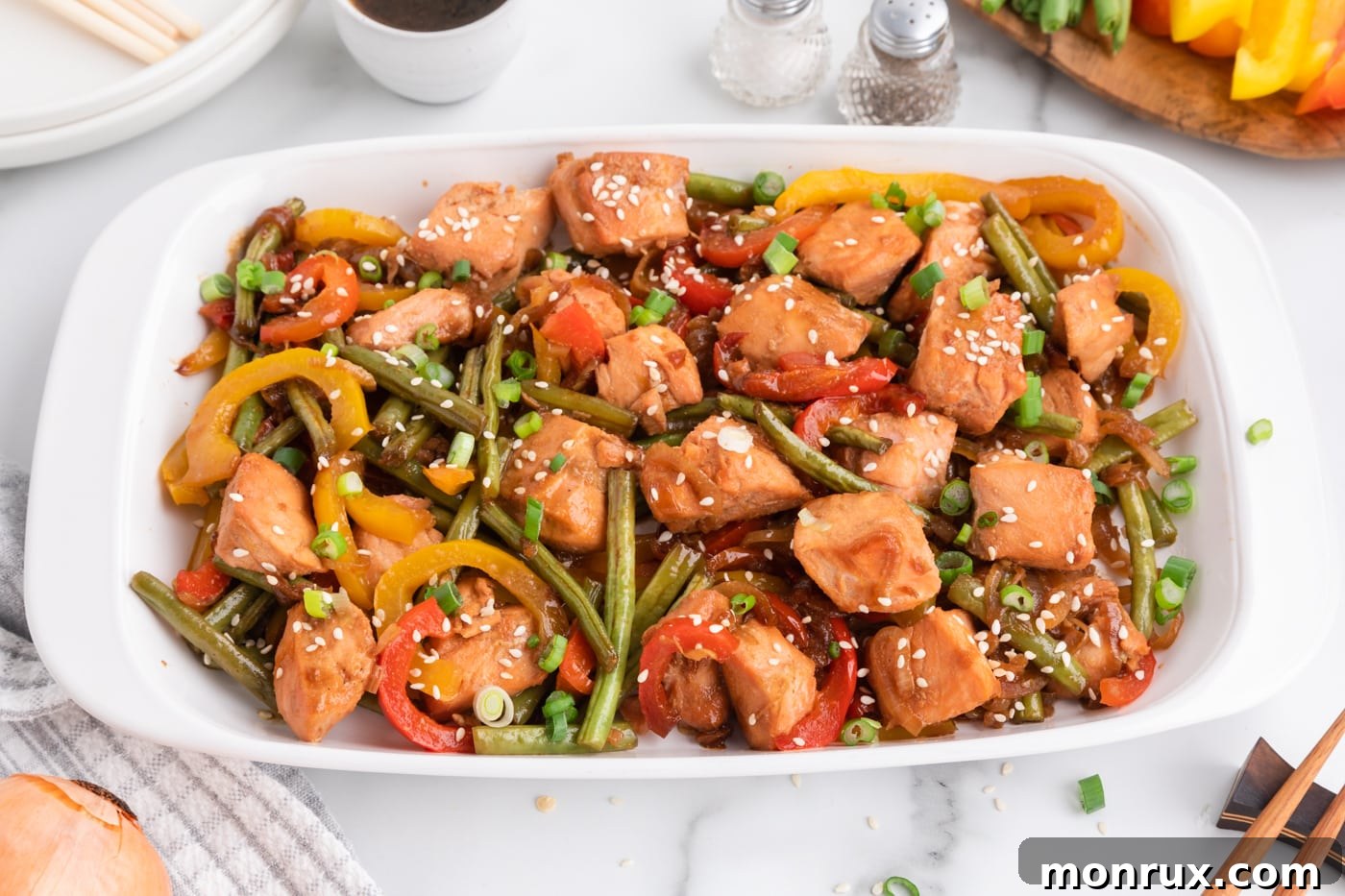
Salmon Stir-Fry stands out as an exceptionally healthy and remarkably quick dinner solution, perfect for busy weeknights. This simple, low-carb rendition offers unparalleled adaptability, allowing you to customize it with your favorite seasonal vegetables or whatever fresh produce you have on hand. Beyond its ease of preparation, this dish provides a burst of vibrant flavors and a balanced nutritional profile, making it a truly satisfying meal that can be effortlessly prepared to be gluten-free, catering to a wider range of dietary needs.
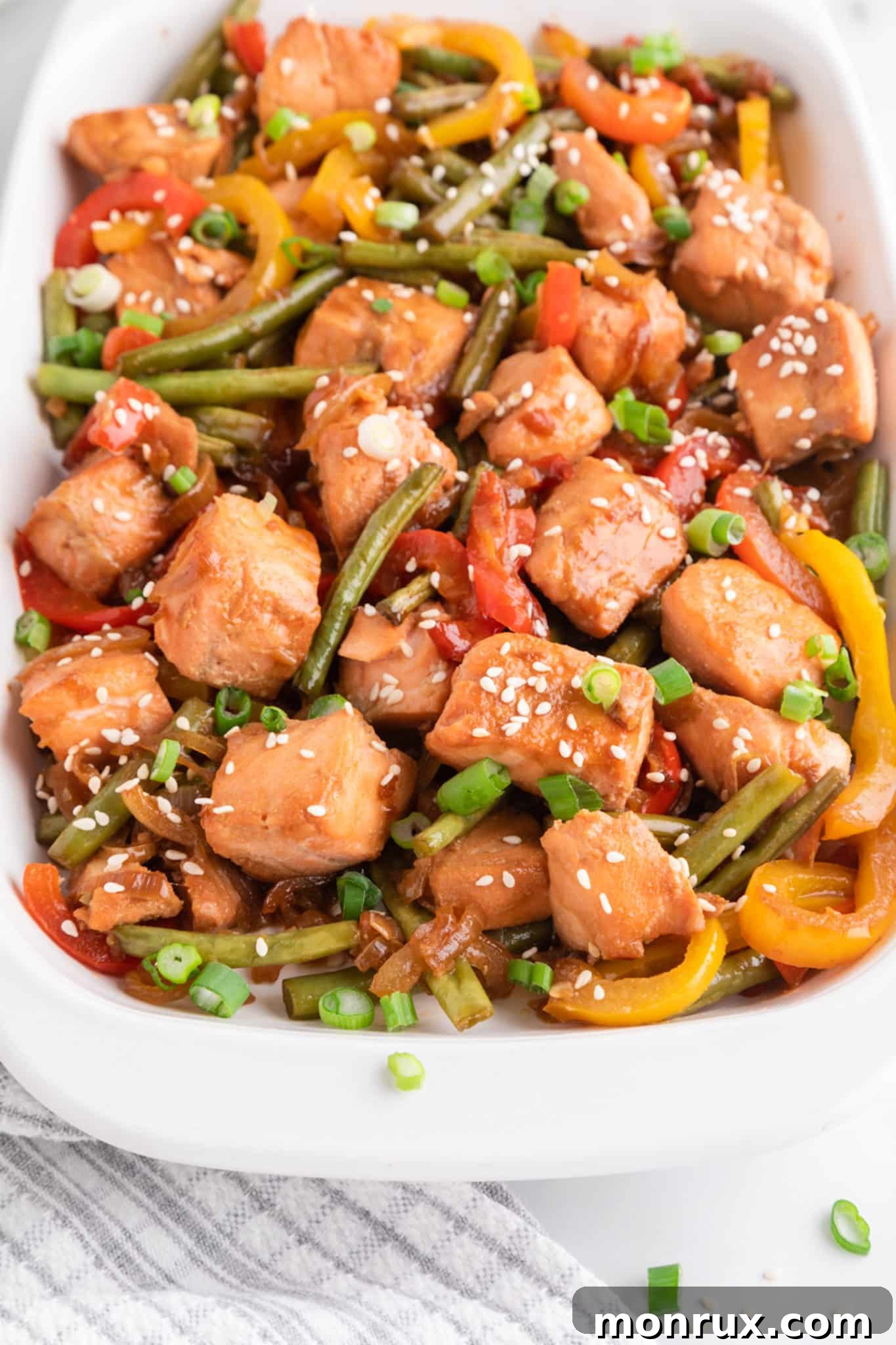
Stir-frying is perhaps one of the most versatile cooking methods, offering endless possibilities for culinary creativity. It empowers you to utilize an array of ingredients, transforming humble vegetables and proteins into an exciting and flavorful meal. Whether you’re selecting your all-time favorite vegetables, rescuing those forgotten gems from the bottom of your fridge, or capitalizing on the week’s best produce deals at the grocery store, a stir-fry seamlessly incorporates them all.
A smart approach is to combine vegetables you already adore with new ones you’re eager to try or those you’re learning to appreciate. The harmonious blend of textures and tastes creates an exciting dining experience. When coated in a perfectly balanced stir-fry sauce, even the simplest vegetables gain an incredible depth of flavor. This, combined with the delicate, succulent pieces of salmon, results in a meal that is not only delicious but also remarkably fresh and satisfying.
This Salmon Stir-Fry recipe transcends ordinary weeknight meals, bringing restaurant-quality flavors into your home with minimal effort. It’s a fantastic way to ensure your family enjoys a wholesome, nutrient-rich dinner packed with lean protein and an abundance of fiber-rich vegetables.
Why Choose Salmon Stir-Fry?
- Maximize Your Produce: This recipe is a fantastic way to minimize food waste by utilizing any vegetables nearing their prime in your refrigerator. From crisp green onions and vibrant red bell peppers to tender green beans, the choice is yours. Embrace seasonality and adapt the recipe to what’s fresh and available, ensuring a unique and delicious meal every time.
- Naturally Gluten-Free (with the right sauce): For those with gluten sensitivities or following a gluten-free diet, this salmon stir-fry is a dream come true. By using a homemade gluten-free stir-fry sauce (like my recommended recipe here), you ensure that your meal is entirely safe and satisfying. Always double-check labels if opting for store-bought sauces to confirm they are gluten-free.
- Customizable and Versatile: Stir-fries are inherently adaptable. You can easily adjust the protein, vegetables, and even the spice level to suit your family’s preferences. This makes it a go-to meal that never gets boring, encouraging healthy eating through variety.
- Rich in Omega-3 Fatty Acids: Salmon is a powerhouse of nutrition, celebrated for its high content of Omega-3 fatty acids. These essential fats are crucial for heart health, brain function, and reducing inflammation, making this stir-fry a deliciously smart choice for your well-being.
- Quick and Efficient Meal Prep: With a total time of just 45 minutes, including marinating, this recipe is ideal for busy individuals and families. The rapid cooking method ensures a fresh, hot meal on the table in no time, making it a perfect weeknight dinner solution.
- Balanced Nutritional Profile: This dish offers a complete and balanced meal, combining lean protein from the salmon, essential vitamins and minerals from the diverse vegetables, and healthy fats. It’s designed to keep you feeling full, energized, and nourished.
Ingredients Spotlight
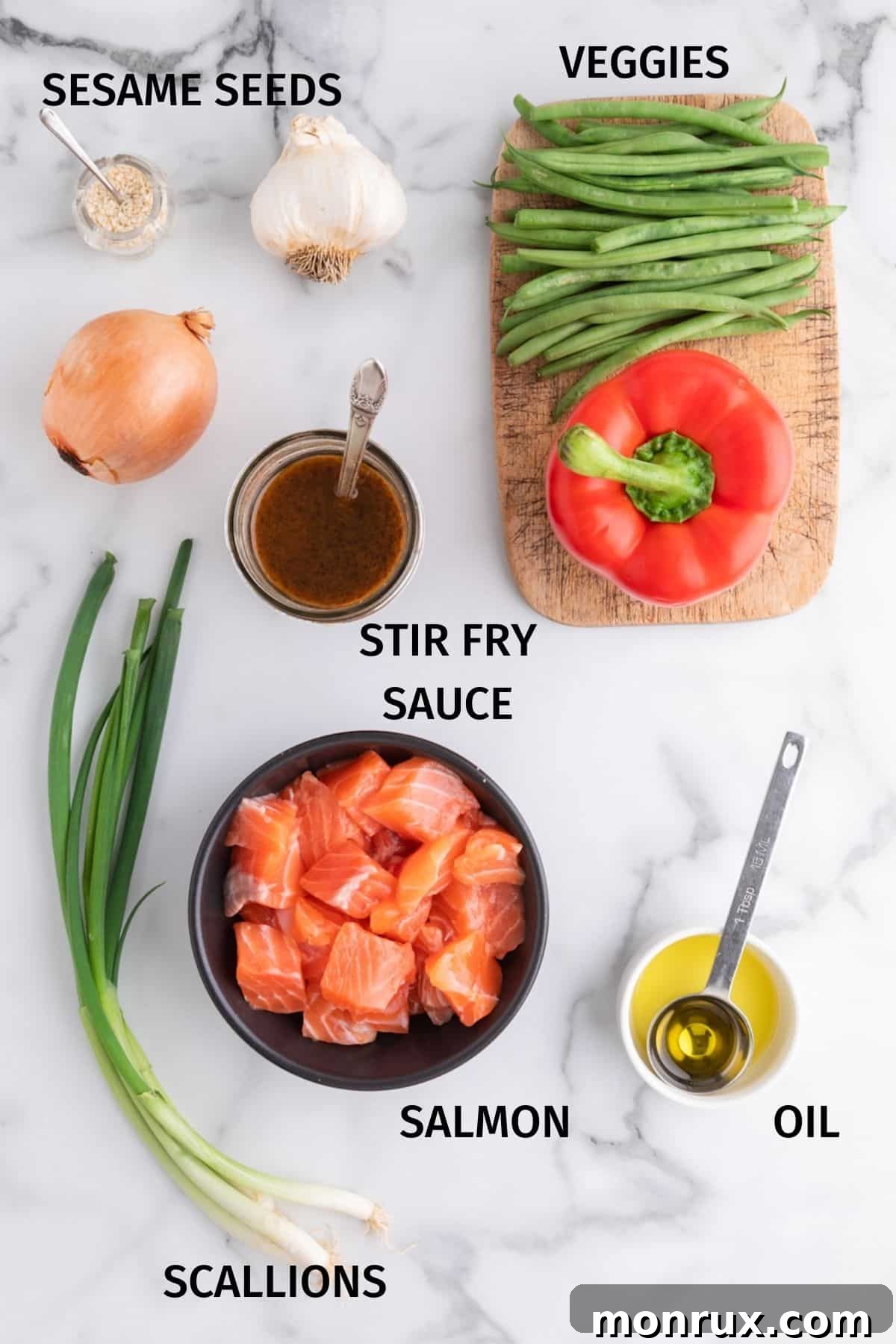
The beauty of this salmon stir-fry lies in its simple yet powerful ingredients, each chosen for flavor, texture, and nutritional value. Here’s a closer look at what makes this dish shine:
- Salmon: The Star Protein
Salmon is more than just a delicious fish; it’s a nutritional MVP, brimming with heart-healthy omega-3 fatty acids, high-quality protein, and essential vitamins like D and B12. When selecting your salmon, prioritize fresh, wild-caught varieties for the best flavor and highest nutritional content. If fresh isn’t an option, high-quality frozen salmon fillets can be easily defrosted and used, offering convenience without compromising on health benefits. Cut into bite-sized cubes, the salmon cooks quickly and absorbs the rich flavors of the stir-fry sauce beautifully. - Stir-Fry Sauce: The Flavor Foundation
The sauce is truly the soul of any stir-fry, binding all the ingredients together with incredible flavor. For this recipe, I cannot stress enough the importance of using my homemade gluten-free stir-fry sauce. It’s crafted to be free from common allergens and refined sugars, ensuring a clean and vibrant taste. If you prefer, you can use coconut aminos or tamari (for a gluten-free option) as a simple alternative to traditional soy sauce, providing that essential umami depth. A well-made sauce ensures that even the most reluctant vegetable eaters will find themselves reaching for seconds! - Vibrant Vegetables: The Essential Crunch
This recipe thrives on a colorful medley of fresh vegetables. Classic choices like crisp onion and fragrant spring onion (scallions), crunchy green beans, and sweet bell peppers (red or yellow for a pop of color) are perfect partners for tender salmon. Other fantastic additions include crunchy snow peas, delicate baby bok choy, tender broccoli florets, nutrient-rich carrots, versatile zucchini, or earthy mushrooms. The key is to cut them into similar sizes to ensure even cooking and a delightful texture. The fresh, crisp quality of the vegetables contrasts wonderfully with the tender salmon, adding both visual appeal and essential nutrients. - Sesame Seeds: The Finishing Touch
Toasted sesame seeds are more than just a garnish; they add a delightful nutty flavor and a crucial textural element to the finished dish. Their subtle crunch complements the soft salmon and crisp vegetables, elevating the overall eating experience. A sprinkle of these tiny seeds brings an authentic Asian-inspired flair to your plate. - Aromatics & Oil: Building the Base
Minced garlic and sliced onions form the aromatic foundation of the stir-fry, releasing their fragrant oils when sautéed to create a deeply flavorful base. A neutral-flavored cooking oil, such as avocado oil, is ideal for stir-frying due to its high smoke point, ensuring your ingredients cook perfectly without burning.
For precise measurements and a detailed list of ingredients, please refer to the complete recipe card located at the end of this post.
Easy Step-by-Step Recipe
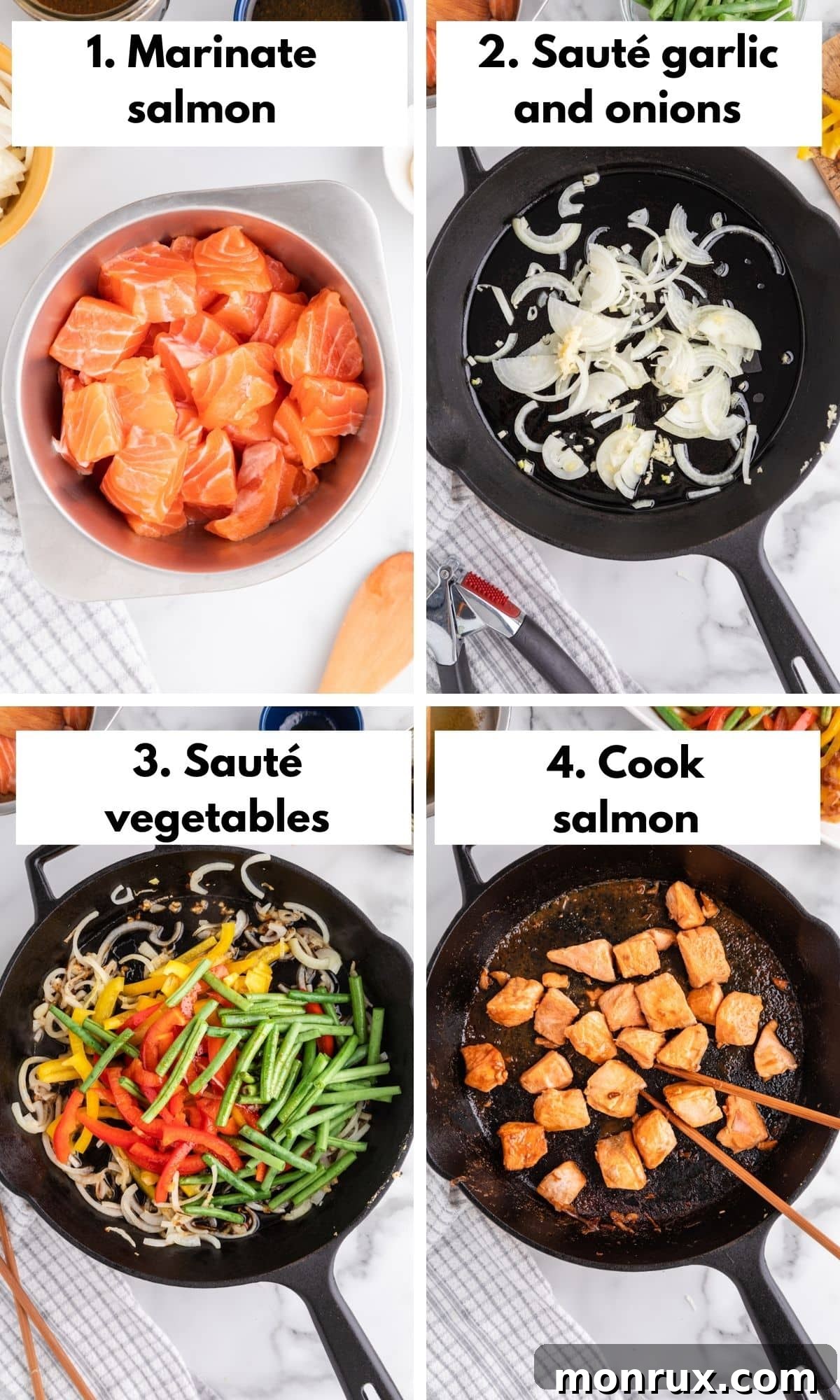
Step One: Prepare and Marinate the Salmon
Begin by taking your fresh salmon fillet and carefully cutting it into uniform, bite-sized cubes, approximately 1-inch in size. This ensures even cooking. In a medium mixing bowl, combine the salmon cubes with 1/4 cup of your delicious stir-fry sauce. Gently toss the salmon to ensure each piece is thoroughly coated. Cover the bowl and allow the salmon to marinate for at least 15 minutes at room temperature, or for an even richer flavor, refrigerate it for up to several hours. Marinating infuses the salmon with incredible taste and helps keep it moist during cooking.
Remember, the exact quantities and specific instructions can be found in the comprehensive recipe card at the end of this post.
Step Two: Sauté the Aromatics
Heat 1 tablespoon of your chosen neutral-flavored cooking oil (avocado oil is highly recommended for its high smoke point) in a large skillet or wok over medium to medium-high heat. Once the oil is shimmering, add the minced garlic and sliced onions. Sauté these aromatics gently for 2-3 minutes, stirring frequently, until they become fragrant and slightly softened but not browned. This step creates a foundational layer of flavor for your stir-fry.
Step Three: Cook the Vegetables to Perfection
To the skillet, add your prepared bell peppers and green beans (or broccoli florets, or any other sturdy vegetables you’ve chosen). Pour in the remaining 1/4 cup of stir-fry sauce. Stir everything well to combine, ensuring the vegetables are coated in the savory sauce. Continue to sauté the vegetables for another 3-4 minutes, or until they reach your desired level of tenderness. For a classic stir-fry, aim for crisp-tender vegetables that still retain a slight bite, preserving their freshness and nutrients.
Step Four: Sear the Salmon and Combine
Carefully transfer the sautéed vegetables from the skillet to a serving plate and set them aside. Increase the heat slightly if needed, then add the marinated salmon, along with any remaining marinade, to the hot skillet. Cook the salmon for approximately 3 minutes on one side, allowing it to develop a beautiful sear. Then, gently flip the salmon pieces and cook for another 2-3 minutes on the other side, or until the salmon is cooked through and flakes easily with a fork. Avoid overcooking to keep the salmon moist and tender.
Step Five: Final Combination and Serve
Once the salmon is perfectly cooked, return the sautéed vegetables to the skillet. Stir gently to combine the salmon and vegetables, allowing all the flavors to meld together. Cook for an additional 1-2 minutes, just long enough to ensure the vegetables are heated through again. Turn off the heat and serve your delicious Salmon Stir-Fry immediately, garnished with chopped scallions and toasted sesame seeds, if desired.
I am confident that this flavorful and healthy Salmon Stir-Fry will quickly become one of your new go-to stir-fry recipes and a cherished addition to your collection of salmon dishes!
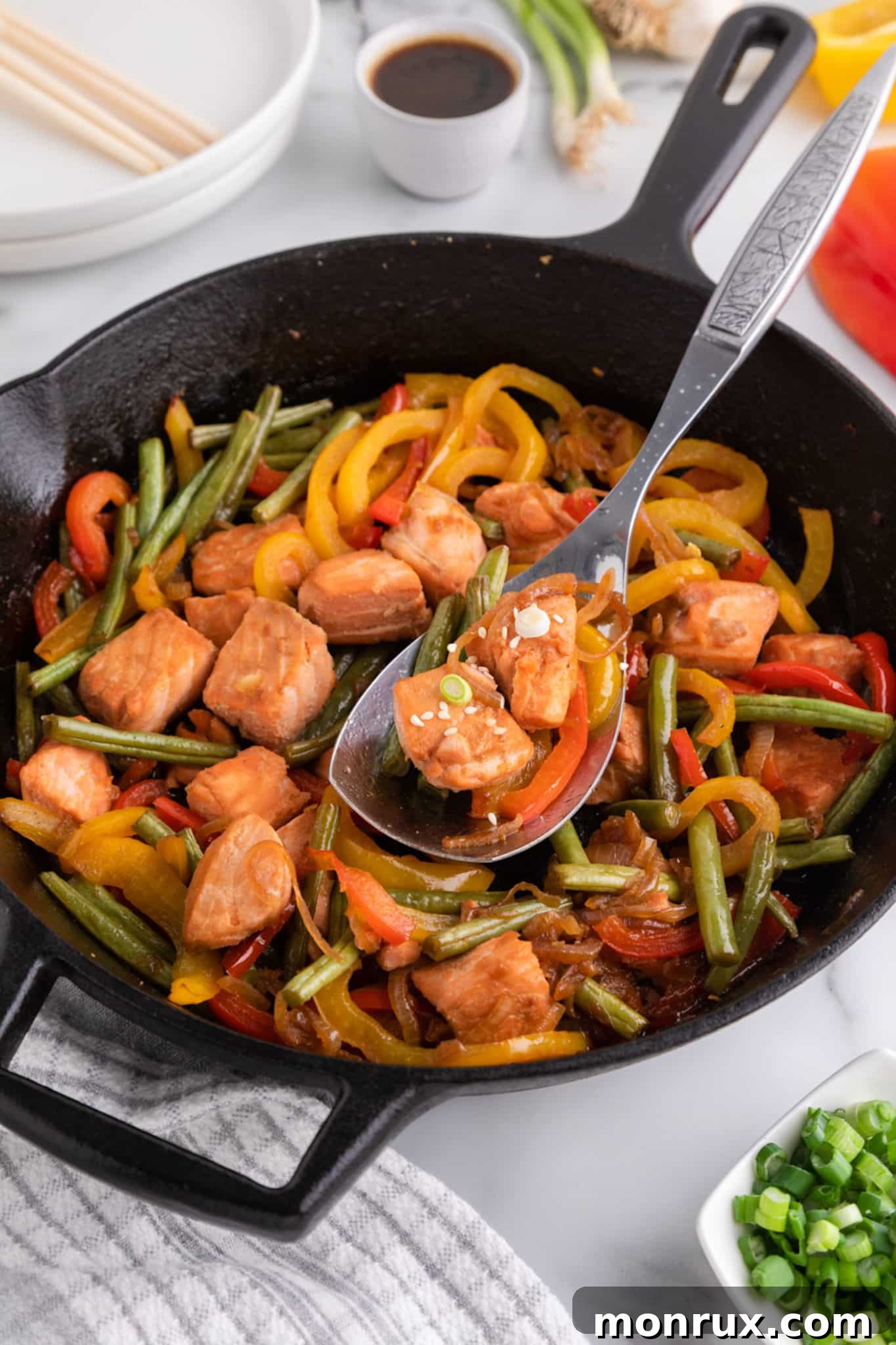
Expert Stir-Fry Tips for Success
- Salmon Portions: Standard salmon fillets typically weigh between 4 to 6 ounces each. When cutting them into cubes, aim for consistency in size to ensure they cook evenly and quickly. For a richer flavor, consider using salmon with the skin on and searing it skin-side down first for extra crispiness, then remove the skin before cubing if preferred.
- Vegetable Versatility: The beauty of a stir-fry is its flexibility. Feel free to experiment with any vegetables you enjoy or have on hand. For 4 servings, approximately 3 cups of chopped vegetables is a good general guideline. Excellent additions include:
- Leafy Greens: Baby bok choy, spinach, or kale (add towards the end as they cook quickly).
- Cruciferous: Cauliflower florets, broccoli florets, Brussels sprouts (halved).
- Root Vegetables: Thinly sliced carrots, daikon radish (add early due to longer cooking times).
- Other Favorites: Sliced zucchini, mushrooms (shiitake or cremini work well), snap peas, snow peas, water chestnuts for extra crunch.
- Aromatics: Fresh ginger (thinly sliced or grated) adds a wonderful zing.
Remember to cut denser vegetables into smaller pieces or add them to the pan first to ensure they cook through.
- Toasting Sesame Seeds: To elevate the flavor and aroma of your sesame seeds, toast them! Place them in a dry (no oil) skillet over low heat. Toast for 3-4 minutes, stirring frequently, until they turn a light golden brown and become fragrant. Be careful not to burn them, as they can turn bitter quickly. This simple step adds a significant boost to the dish’s texture and nutty taste.
- Serving Suggestions: This versatile salmon stir-fry pairs wonderfully with a variety of sides. For a wholesome meal, serve it with fluffy brown rice or fragrant white jasmine rice. If you’re looking for a low-carb option, cauliflower rice is an excellent substitute. For a lighter meal, enjoy it plain. Alternatively, toss the stir-fry with cooked rice noodles or even quinoa for a complete and satisfying dish.
- Sauce Customization: While our homemade gluten-free stir-fry sauce is highly recommended, you can certainly use a high-quality store-bought teriyaki sauce or your favorite homemade teriyaki sauce if preferred. If you enjoy a sweeter sauce, a small amount of brown sugar, maple syrup, or honey can be added to taste. Always ensure any store-bought sauce aligns with your dietary needs, especially if you’re eating gluten-free.
- High Heat, Small Batches: For the best stir-fry results, cook at high heat and avoid overcrowding your pan. If you have a smaller skillet, cook your vegetables in two batches to ensure they get a proper sear and remain crisp, rather than steaming. This technique is crucial for achieving that authentic stir-fry texture.
- Storing Leftovers: Leftover salmon stir-fry can be stored in an airtight container in the refrigerator for up to 3 days. It makes for an excellent packed lunch the next day!
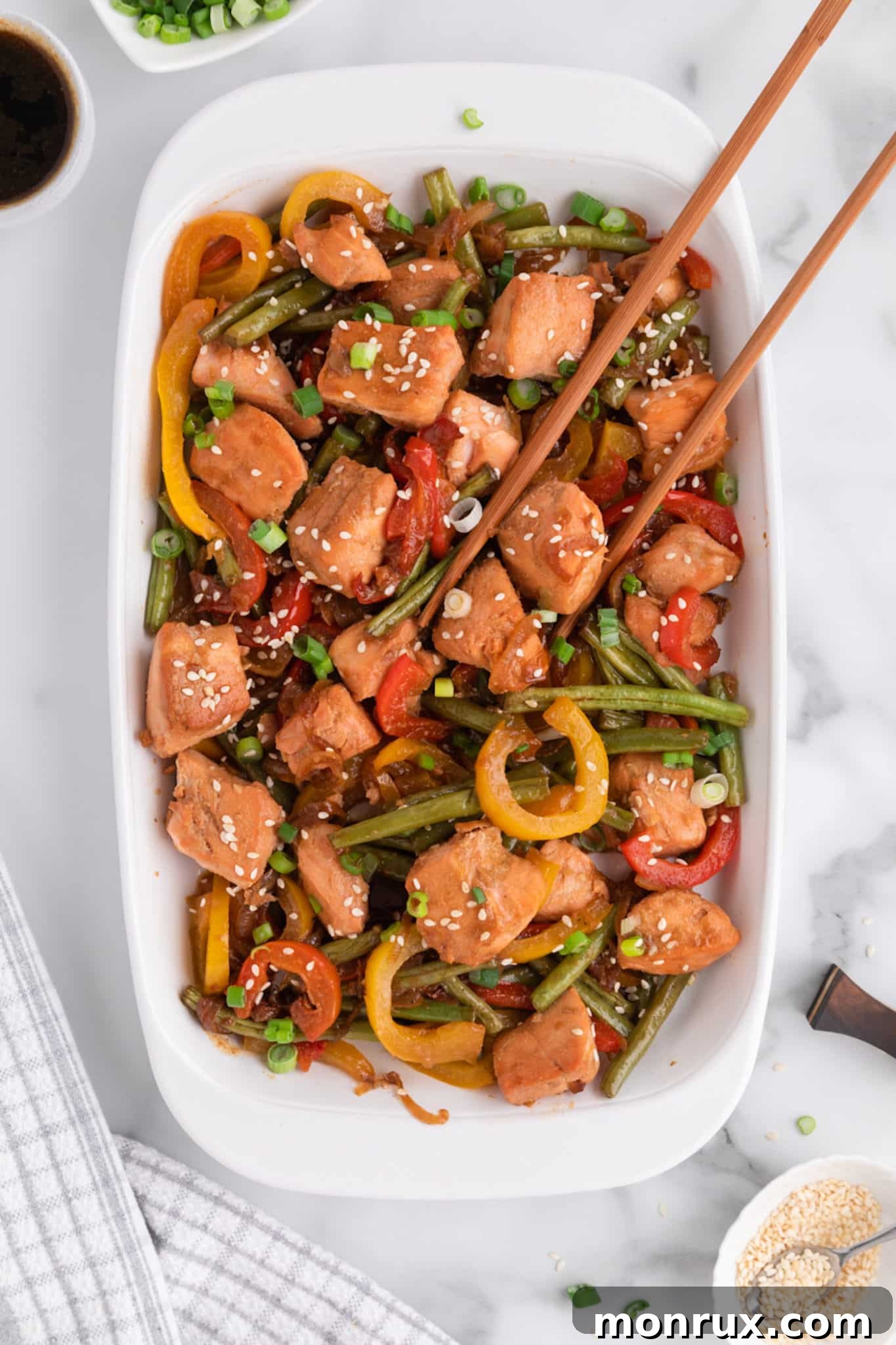
Frequently Asked Questions
What other proteins can I use in a stir-fry?
While salmon is fantastic, stir-fries are incredibly adaptable to other proteins. You can easily substitute 1 pound of boneless, skinless chicken breast, cut into 1-inch cubes. Remember that chicken might require a slightly longer cooking time than salmon. To ensure it’s fully cooked, either cut a piece in half to check for doneness or use a meat thermometer; poultry should reach an internal temperature of 165°F (74°C). Other great options include thinly sliced beef (like flank or sirloin), shrimp (which cooks very quickly), or even plant-based proteins such as firm tofu or tempeh, pressed and cubed for a vegetarian or vegan version.
What vegetables can I use in a stir-fry?
The possibilities for vegetables in a stir-fry are nearly endless! I used green beans and bell peppers in this recipe for their vibrant color and texture, but feel free to let your creativity (and fridge contents) guide you. The most important tip is to cut your chosen vegetables to roughly the same size to ensure even cooking. Also, keep in mind their cooking times: sturdier vegetables like carrots, broccoli, or cauliflower will take longer to soften, so add them to the pan before softer or more delicate options like snap peas, spinach, or mushrooms. This layered approach ensures every vegetable reaches its perfect crisp-tender texture.
Are stir-fries gluten-free?
Stir-fries can absolutely be gluten-free, but it’s crucial to be mindful of the sauce. Many traditional Asian sauces, especially store-bought stir-fry or soy sauces, contain wheat, making them unsuitable for a gluten-free diet. Always read labels carefully to check for gluten-containing ingredients. The safest and most delicious approach is to use a homemade gluten-free stir-fry sauce, like my simple recipe, or opt for certified gluten-free alternatives such as tamari (a gluten-free soy sauce substitute) or coconut aminos, which provide a similar umami flavor without the gluten.
Can I meal prep this Salmon Stir-Fry?
Yes, this Salmon Stir-Fry is an excellent choice for meal prepping! You can prepare and cook the entire dish ahead of time. Once cooled, divide it into individual airtight containers. Store in the refrigerator for up to 3 days. When ready to eat, simply reheat in the microwave or a skillet until warmed through. The flavors often meld and deepen overnight, making it even more delicious the next day. For best results, undercook the vegetables slightly if you plan to reheat, to maintain their texture.
What if I don’t have a wok?
No wok? No problem! While a wok is traditionally used for stir-frying due to its sloped sides that allow for quick, even cooking and easy tossing, a large, heavy-bottomed skillet or a sauté pan will work perfectly well. The key is to use a pan that can get very hot and retain heat. Ensure your pan is large enough so you don’t overcrowd the ingredients, as this can lead to steaming rather than stir-frying. If your skillet is smaller, cook the vegetables in batches to achieve that desirable crisp-tender texture.
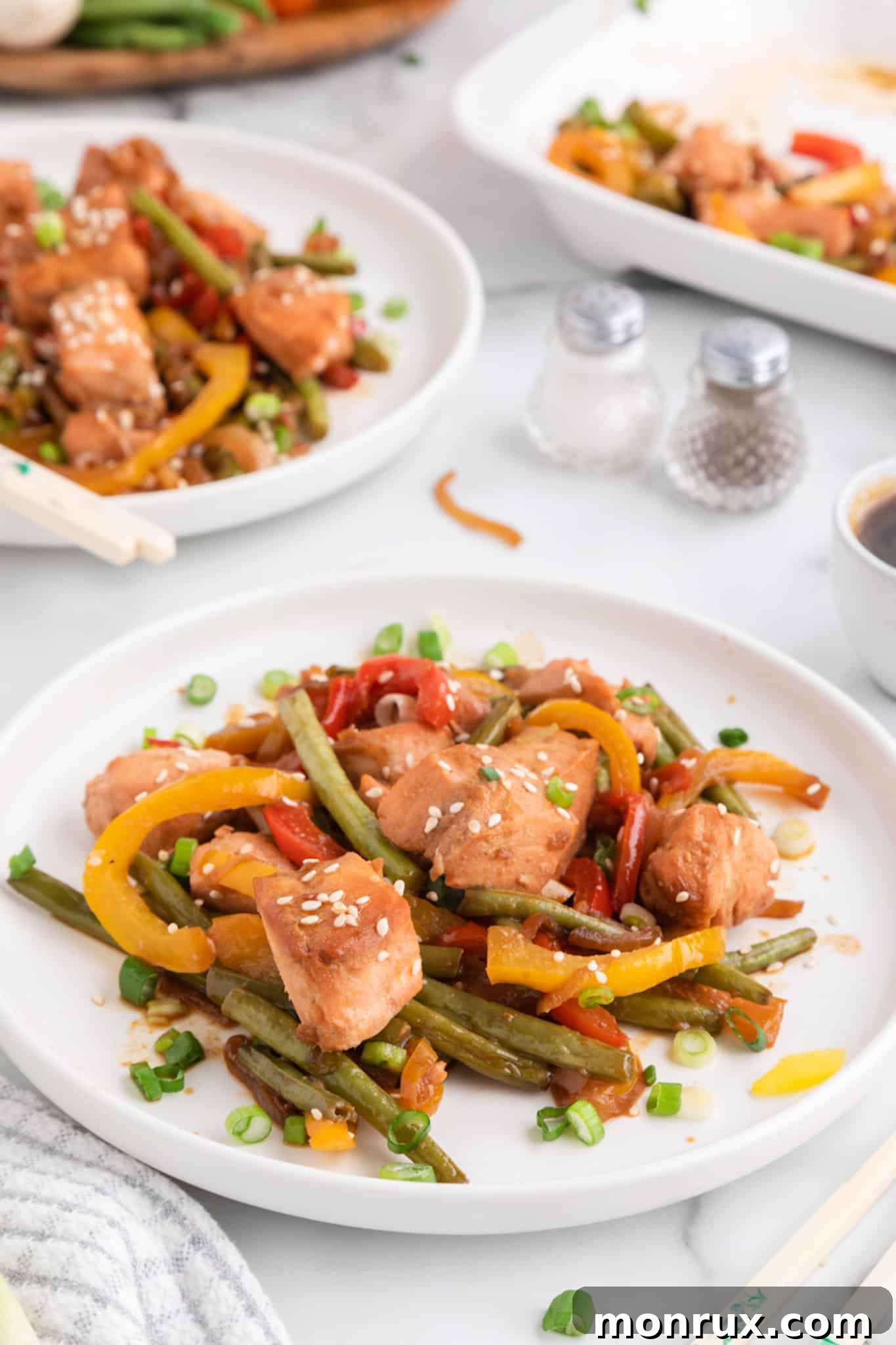
More Healthy Fish Recipes to Explore
If you loved this Salmon Stir-Fry, you’re in for a treat! Here are more delicious and healthy fish recipes that embrace clean eating principles and offer incredible flavor:
- Air Fryer Fish Tacos: Light, crispy fish without the oil, nestled in warm tortillas with fresh toppings.
- Instant Pot Coconut Mahi Mahi: A rich, aromatic stew featuring tender mahi-mahi cooked quickly in coconut milk with vibrant spices.
- Air Fryer Baked Salmon: The simplest way to achieve perfectly cooked, flaky salmon with minimal effort.
- Air Fryer Mahi Mahi with Mango Salsa: A tropical delight, combining succulent mahi-mahi with a refreshing, sweet, and tangy mango salsa.
- Gluten-Free Salmon Burgers: Flavorful and easy-to-make salmon patties, perfect for a quick lunch or dinner.
Perfect Pairings: What to Serve with Salmon Stir-Fry
Complete your Salmon Stir-Fry meal with these delightful and easy-to-make side dishes, designed to complement the rich flavors of the stir-fry:
I truly hope you enjoy making and savoring this recipe! If you do, please leave a comment and a starred review below. Your feedback helps others discover and enjoy these healthy meals.
And, consider following me on social media to stay connected with more clean eating recipes, tips, and inspiration. You can find me on Facebook, Pinterest, Instagram, and YouTube!
Print Recipe
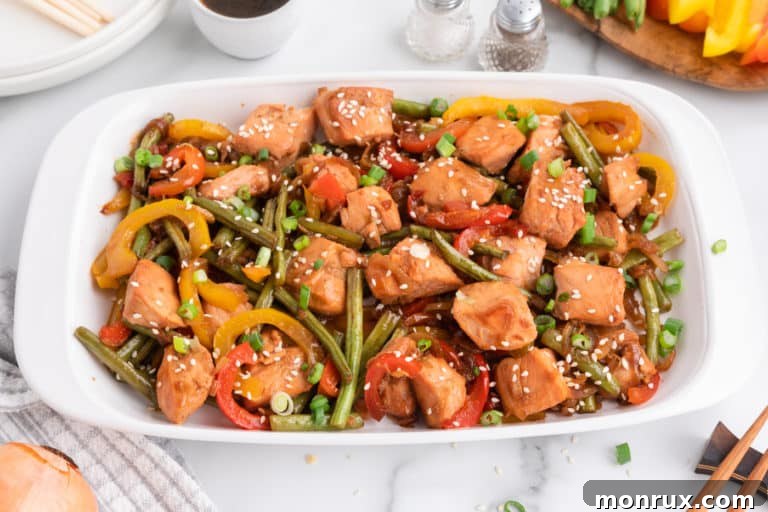
Salmon Stir-Fry With Vegetables and Sauce (Gluten-Free)
5 Stars
4 Stars
3 Stars
2 Stars
1 Star
Average Rating: 5 from 1 review
This Salmon Stir-Fry is a perfect example of a healthy dinner recipe that doesn’t compromise on flavor or speed. Its simple, low-carb nature allows for ultimate customization with your preferred vegetables, while our recommended gluten-free sauce ensures it’s suitable for various dietary needs. Enjoy a balanced, flavorful, and incredibly quick meal that the whole family will love!
-
Total Time:
45 minutes -
Yield:
4 servings
Ingredients
- 16 ounces uncooked skinless salmon fillets, cut into 1-inch cubes
- 1 batch gluten-free stir fry sauce, divided (about 1/2 cup total)
- 1 tablespoon neutral-flavored cooking oil (such as avocado oil)
- 2 garlic cloves, minced
- 1 onion, peeled and sliced into thin rounds
- 1 red or yellow bell pepper, cored and sliced into thin strips
- 1 cup fresh green beans or broccoli florets, trimmed and cut in half
- 2 tablespoons chopped scallions (optional, for topping)
- 1 teaspoon toasted sesame seeds (optional, for topping; see notes for toasting)
Instructions
- In a medium mixing bowl, combine the cubed salmon and 1/4 cup of the stir-fry sauce. Toss gently to ensure all salmon pieces are well-coated. Cover the bowl and let the salmon marinate at room temperature for at least 15 minutes, or for enhanced flavor, you can refrigerate it for up to several hours.
- When you’re ready to cook, heat the neutral-flavored oil in a large skillet or wok over medium heat until it shimmers.
- Add the minced garlic and sliced onion to the hot oil. Sauté for 2-3 minutes, stirring occasionally, until they become fragrant and slightly softened.
- Next, add the bell pepper and green beans (or broccoli) to the skillet, along with the remaining 1/4 cup of the stir-fry sauce. Stir well and continue to sauté the vegetables for another 3-4 minutes, or until they reach a crisp-tender texture. Transfer these cooked vegetables to a separate serving plate and set aside.
- Add the marinated salmon to the now-empty skillet, including any leftover marinade. Cook the salmon for about 3 minutes per side, gently flipping the pieces once, until they are cooked through and easily flake with a fork.
- Return the sautéed vegetables to the skillet with the cooked salmon. Stir gently to combine all the ingredients. Cook for an additional 1-2 minutes, just long enough to ensure everything is heated through and the flavors are fully blended.
- Turn off the heat and serve your Salmon Stir-Fry immediately. Garnish with chopped scallions and toasted sesame seeds, if desired, for an extra burst of flavor and texture.
Notes
- Typical salmon fillets weigh between 4-6 ounces each. Adjust the quantity based on your desired serving size.
- This stir-fry recipe is incredibly flexible. Feel free to substitute or add your favorite vegetables! Aim for about 3 cups of chopped vegetables for 4 servings. Excellent additions include baby bok choy, cauliflower, carrots, zucchini, mushrooms, and snap peas.
- To toast sesame seeds, place them in a dry skillet over low heat. Cook for 3-4 minutes, stirring occasionally, until they turn light golden brown and become fragrant. Watch them closely as they can burn quickly.
- For a complete meal, serve this stir-fry over brown rice, white rice, cauliflower rice, or even cooked rice noodles.
- If you prefer a sweeter sauce, a teaspoon of brown sugar or maple syrup can be added to your stir-fry sauce.
-
Author:
Carrie Forrest, MPH in Nutrition -
Prep Time:
30 minutes -
Cook Time:
15 minutes -
Category:
Dinner -
Method:
Stovetop -
Cuisine:
Asian-inspired -
Diet:
Gluten Free
Nutrition
(Nutritional information is an estimate and may vary based on specific ingredients and preparation methods.)
- Serving Size: 1/4 of recipe
- Calories: 261
- Sugar: 5.7 g
- Sodium: 733.9 mg
- Fat: 12.4 g
- Saturated Fat: 2 g
- Carbohydrates: 12.4 g
- Fiber: 1.9 g
- Protein: 27.8 g
- Cholesterol: 57.9 mg
Don’t forget to join my newsletter list to receive exclusive clean eating recipes, valuable health tips, and direct insights. The newsletter is 100% free, free from spam, and you can easily unsubscribe at any time.
About the Author: Carrie Forrest holds a master’s degree in public health with a specialization in nutrition and is a certified holistic nutritionist. She is a leading wellness and food blogger, attracting over 5 million visitors to her site annually. Carrie shares an inspiring story of recovery from chronic illness and is deeply passionate about empowering other women to transform their health through nourishing food. Feel free to send her a message through her contact form if you have any questions or simply wish to connect.