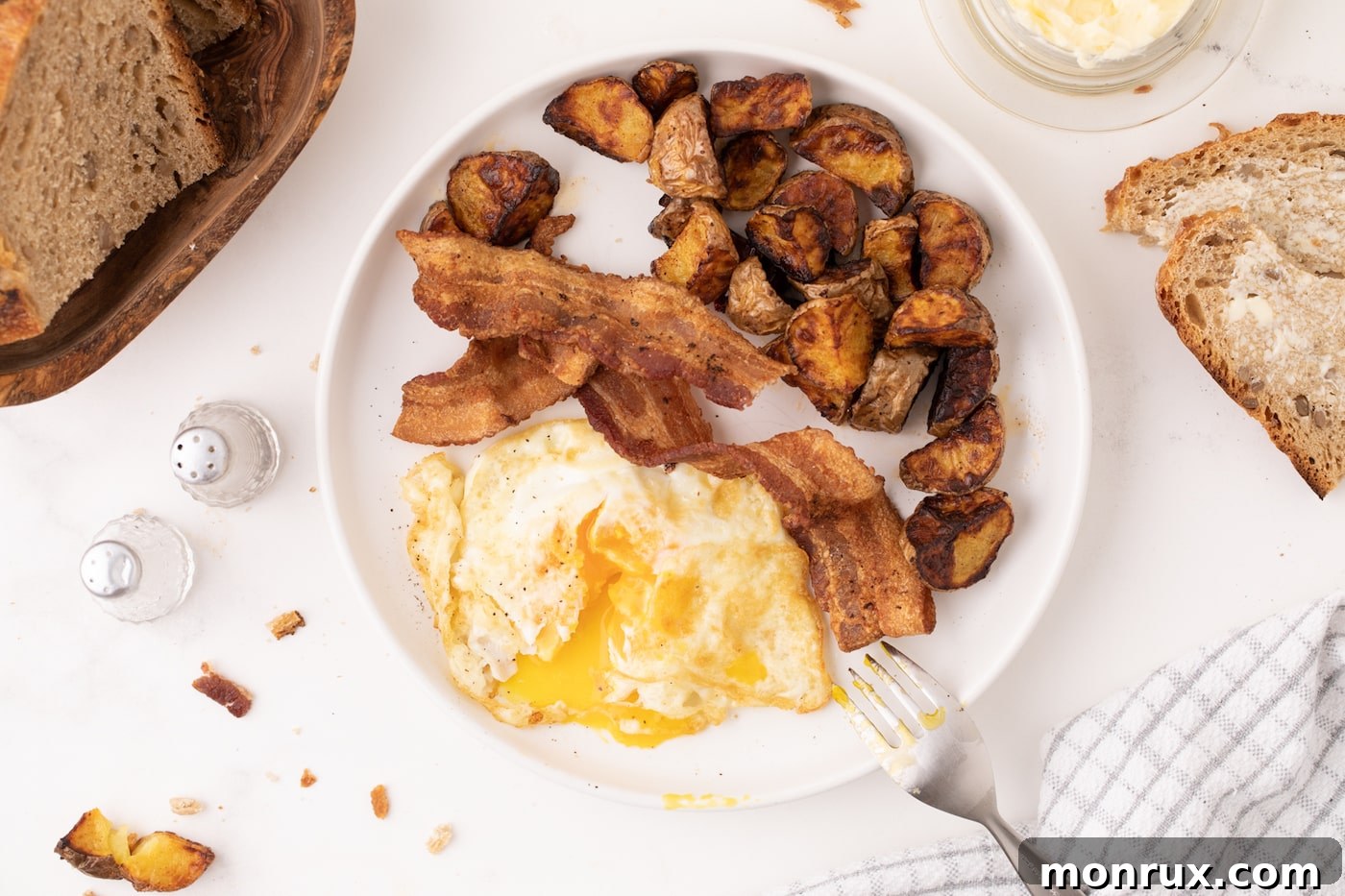
Delight in the culinary art of crafting the perfect over-medium eggs, a breakfast staple cherished for its exquisite balance of a fully cooked white and a luxuriously jammy, partially runny yolk. Often considered the pinnacle of fried egg preparations, over-medium eggs offer a satisfying texture that elevates any meal. This comprehensive guide will walk you through the simple yet precise steps to achieve flawlessly cooked over-medium eggs every single time, ensuring a delightful experience for your palate.
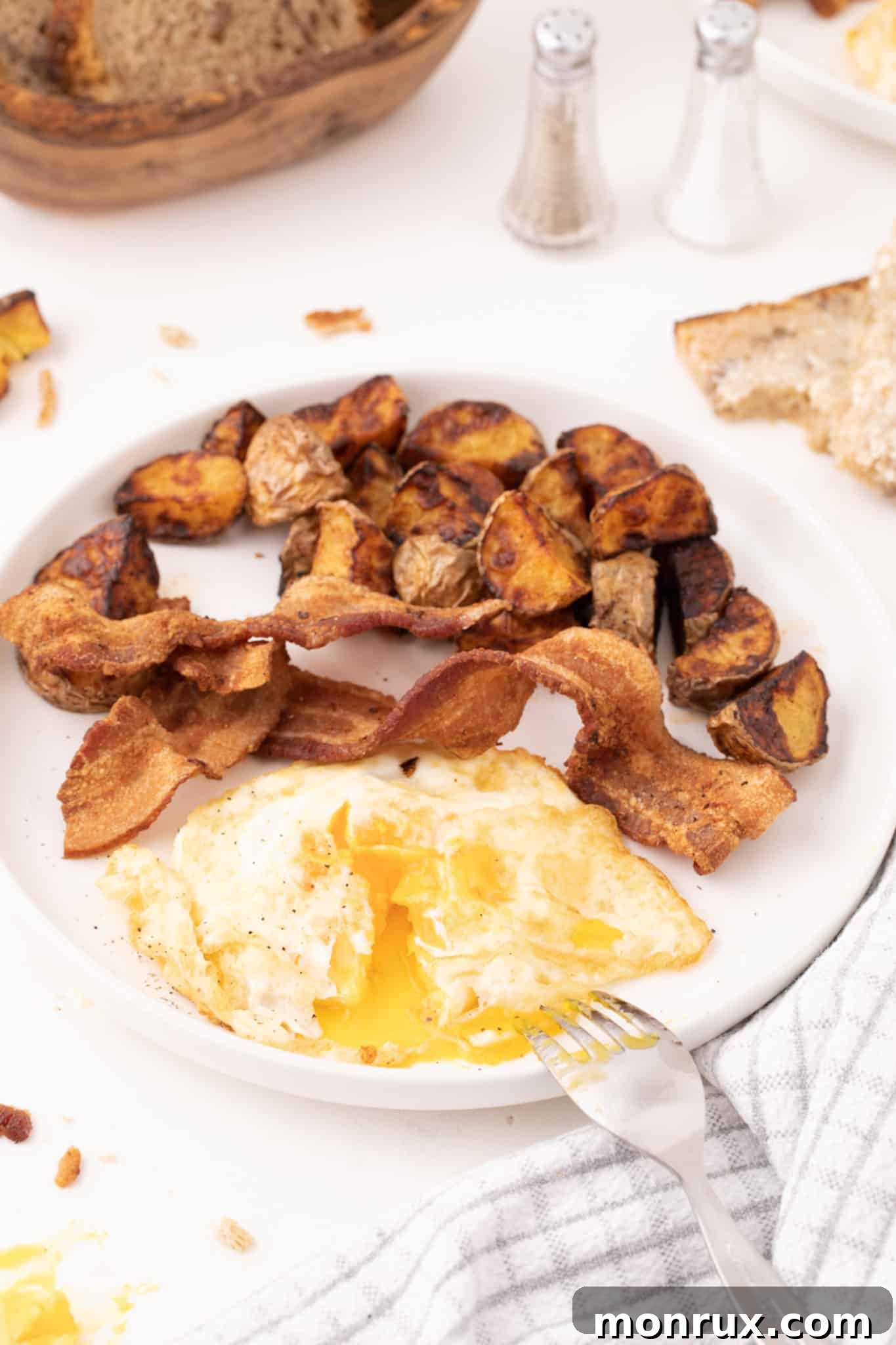
For many, including myself, over-medium eggs represent the ultimate fried egg experience. The magic lies in their unique texture profile: firm, set egg whites encasing a rich, creamy yolk that’s neither completely liquid nor fully solid. This “jammy yolk” provides a decadent burst of flavor and serves as a natural sauce, transforming even the simplest dishes into gourmet delights.
The versatility of eggs cooked over-medium is truly remarkable. They are an impeccable complement to classic breakfast fare like crispy bacon and golden hash browns, yet they also shine as an unexpected star atop savory avocado toast, juicy burgers, hearty rice bowls, roasted vegetables, or even a comforting bowl of pasta. The slightly warm, luscious yolk beautifully enriches other ingredients, binding flavors together and adding an irresistible creaminess.
Achieving this ideal state requires a precise touch and understanding of cooking temperatures and timings. This guide demystifies the process, making it accessible for home cooks of all skill levels to master the art of over-medium eggs and enjoy their perfect texture consistently.
Why Over-Medium? The Perfect Balance
The quest for the ideal fried egg often leads to the over-medium method, a sweet spot between a completely runny yolk and a fully set one. While sunny-side up eggs offer a delicate, unbroken yolk and over-easy eggs provide a quick, fully liquid center, over-medium strikes a harmonious balance. The egg white is thoroughly cooked through, with no translucent areas, offering a pleasant firm texture. Simultaneously, the yolk transforms into a luscious, almost jam-like consistency – warm, flowing, but with a slight creaminess that’s incredibly satisfying.
This partially set yolk is robust enough to not break at the first touch but still liquid enough to ooze enticingly over your plate. It’s this delightful duality that makes over-medium eggs a favorite for many breakfast enthusiasts and a sophisticated addition to a variety of savory dishes. Once you master this technique, you’ll discover why it’s a game-changer for enhancing flavor and texture in countless culinary creations.
Essential Kitchen Tools
Before diving into the cooking process, ensure you have the right tools at hand:
- Nonstick Skillet: A good quality nonstick pan is crucial for easy flipping and preventing eggs from sticking. A well-seasoned cast iron skillet can also work, but requires more fat and careful heat management.
- Spatula: A thin, flexible spatula (like a fish spatula or a rubber spatula) is best for gently sliding under the egg and flipping it without breaking the yolk.
- Small Bowls: Cracking each egg into a separate small bowl before adding it to the pan allows for precise placement and helps prevent shell fragments from getting into your meal.
Key Ingredients
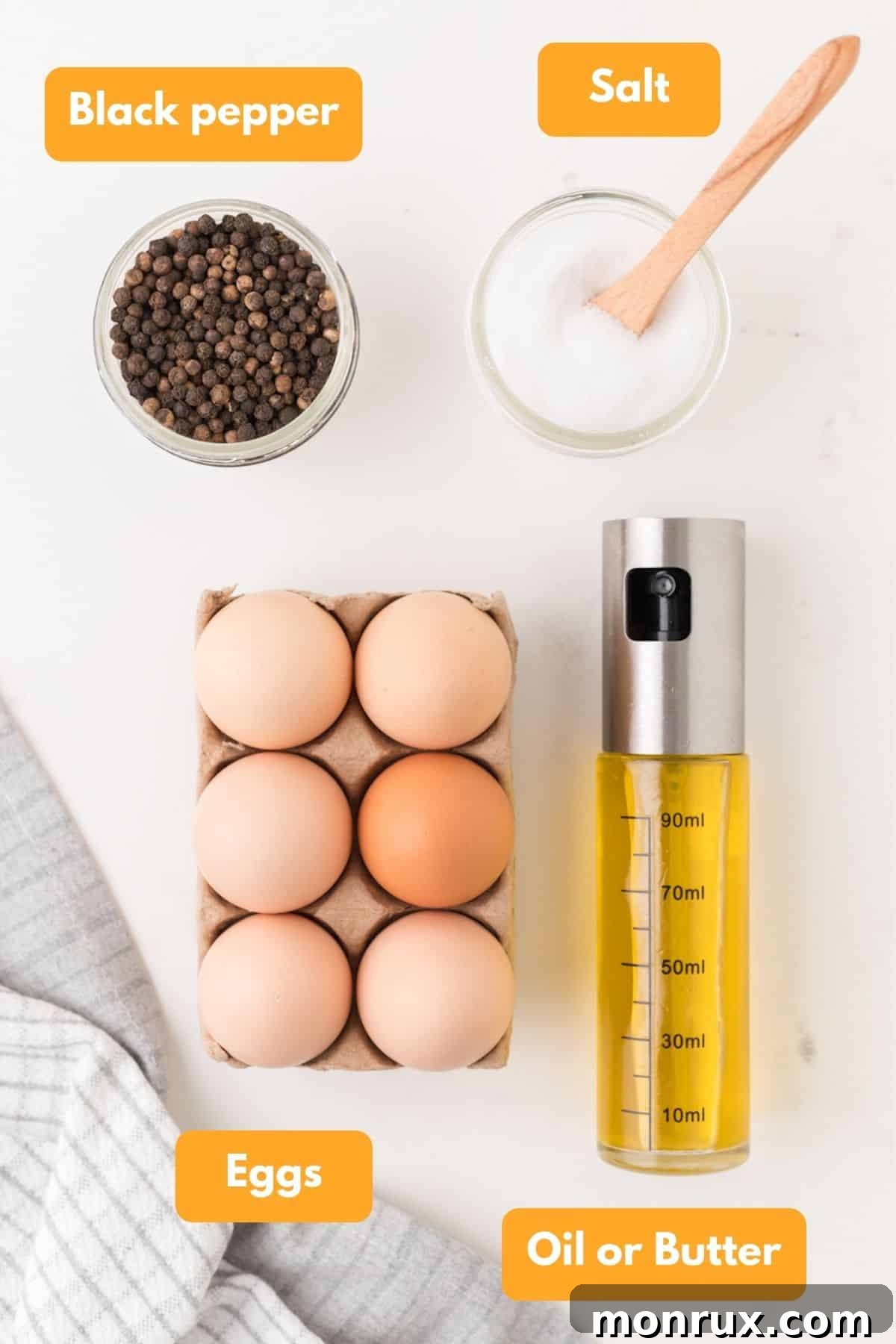
- Oil or butter: To achieve that perfectly cooked, non-stick finish, you’ll need a good cooking fat. Options include olive oil for a delicate flavor, coconut oil for a subtle tropical note, or classic butter for rich, nutty undertones. For a dairy-free choice or added savory depth, bacon fat is an excellent alternative. The key is using just enough to coat the pan without submerging the egg.
- Eggs: Fresh, high-quality eggs are paramount for the best results. Fresher eggs tend to have firmer whites that hold their shape better, leading to a more appealing presentation. For most recipes, large eggs are standard.
- Salt: A sprinkle of salt is essential for seasoning. Don’t underestimate its power to enhance the natural flavors of the egg, bringing out its richness and making every bite more enjoyable.
- Ground black pepper: Optional, but highly recommended for those who appreciate a touch of piquancy. Freshly ground black pepper adds a wonderful aromatic complexity that complements the creamy yolk and savory white.
The frustration of attempting to fry an egg for a runny yolk only to end up with a hard, pale yellow center is all too familiar. With these simple ingredients and precise techniques, you can confidently fry eggs over medium, ensuring a perfect, jammy yolk every time without the risk of overcooking.
Remember, the exact quantities for oil/butter and seasoning are provided in the recipe card at the end of this post, designed to guide you to consistent perfection.
Recipe Steps: Mastering Over-Medium Eggs
Embark on this step-by-step culinary journey to craft over-medium eggs that are consistently perfect. This method, rooted in food science principles and honed through experience, is designed to be foolproof, ensuring delicious results whether you’re a seasoned cook or a kitchen novice.
Step One: Prepare Your Pan
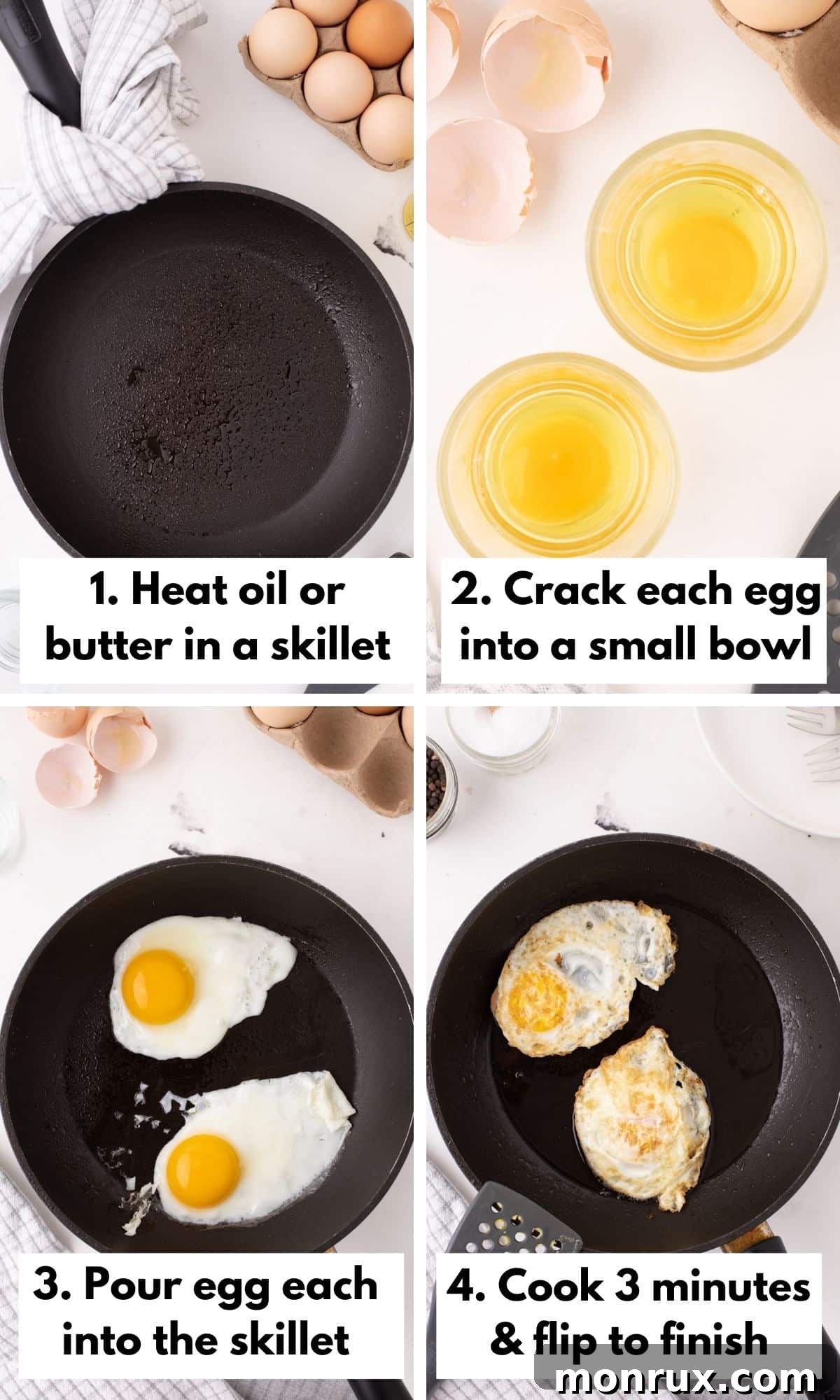
Begin by adding your chosen cooking fat – be it olive oil, coconut oil, or butter – to a medium nonstick skillet. Place the skillet over medium heat. It’s crucial to let the pan heat up sufficiently, but not to the point of smoking. You’re aiming for a temperature where the fat shimmers gently, indicating it’s ready to cook the egg efficiently without burning. This initial heating ensures the egg cooks evenly and prevents sticking, especially vital for cast iron pans.
For precise measurements, refer to the detailed recipe card located at the conclusion of this article.
Step Two: Crack Your Eggs
While your skillet warms, gently crack each fresh egg into a separate small bowl. This seemingly minor step is a professional chef’s secret: it allows you to easily remove any stray shell fragments before adding the egg to the pan, ensures the yolk remains intact, and provides better control when pouring. Breaking eggs directly into the hot pan can sometimes lead to an uneven spread or a broken yolk.
Step Three: Add Eggs to Pan
Once the fat is hot and shimmering, gently pour each egg from its small bowl into the frying pan. Lowering the egg close to the pan’s surface minimizes splashing and helps maintain the egg’s round shape. If cooking multiple eggs, ensure there is adequate space between them to prevent them from merging, allowing each to cook independently.
Step Four: Cook and Flip to Perfection
Allow the eggs to cook undisturbed for 3 to 4 minutes. During this initial cooking phase, the whites of the egg will gradually transition from translucent to a solid, opaque white. Keep a close eye on the edges; they should start to crisp slightly, but not burn. Once the whites are almost completely set, and only a thin layer around the yolk remains slightly jiggly, it’s time for the flip.
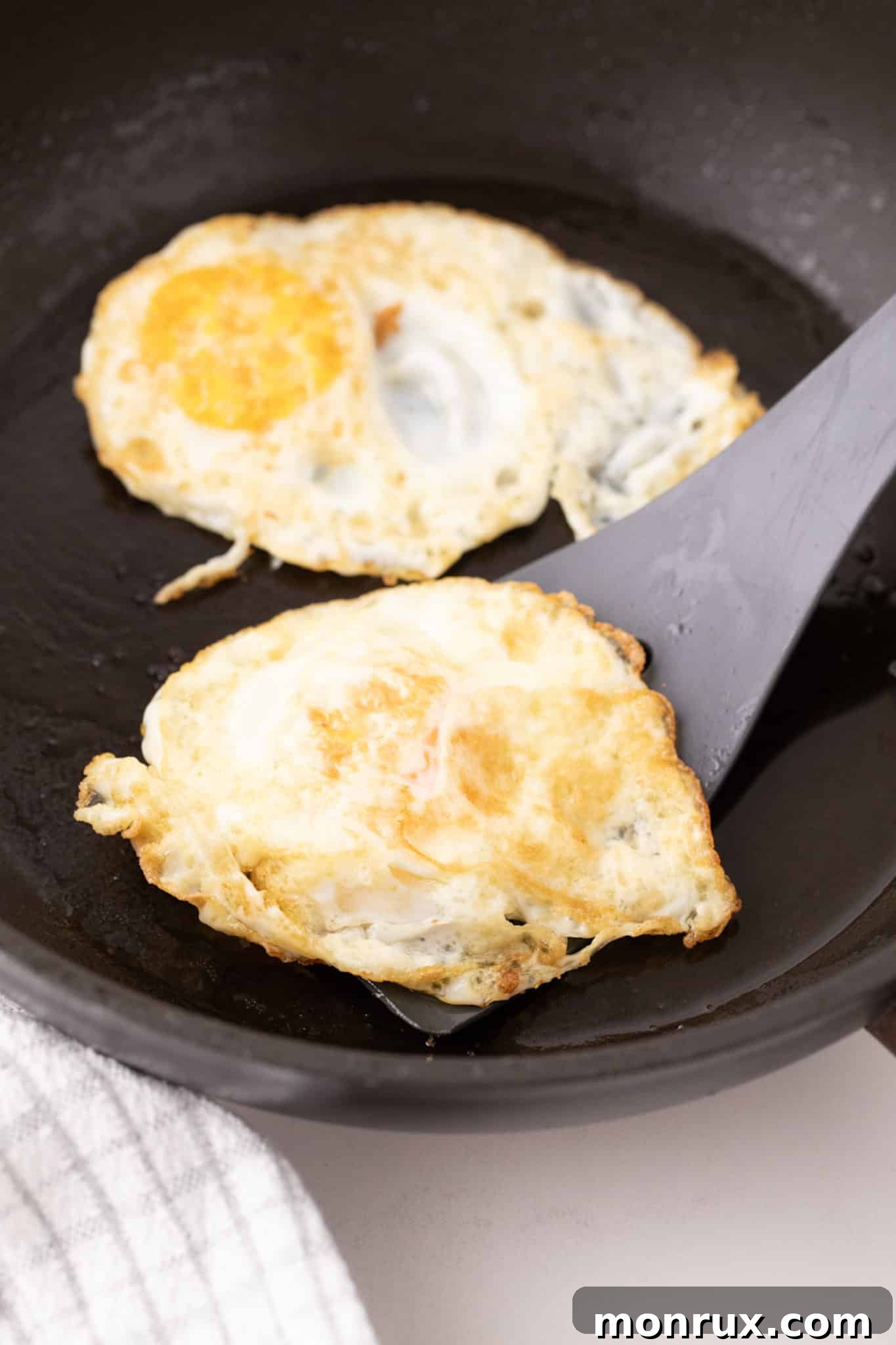
Reduce the heat to low. With a thin, flexible rubber or fish spatula, carefully slide under each egg, ensuring you get the entire white. With a swift, confident motion, gently flip each egg over. Let the eggs cook for another 2 minutes on the second side. This brief cooking period is what transforms the yolk into that coveted jammy, partially runny consistency, while ensuring the top of the egg white is also thoroughly cooked.
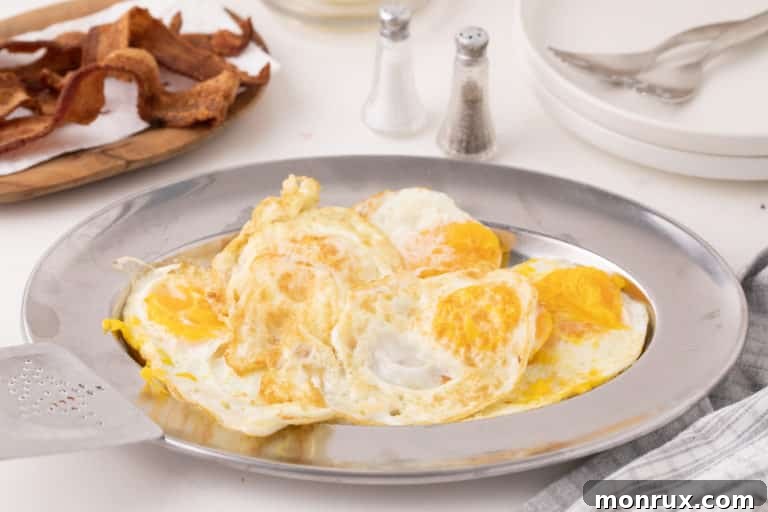
To check for doneness, you can gently press on the yolk through the bottom of the egg. It should feel slightly firm but still yield a little. Once perfectly cooked, use your spatula to transfer the eggs to a plate. Season immediately with a pinch of salt and a grind of fresh black pepper for a truly perfect breakfast or meal topper.
Serving Suggestions & Pairings
Over-medium eggs are incredibly versatile and can elevate almost any dish. While they’re a natural fit for breakfast, don’t limit them to morning meals!
- Classic Breakfast: Pair them with crispy bacon, sausage, toast, or alongside savory Mexican Potatoes or hash browns.
- Brunch Favorites: Serve over avocado toast, alongside fluffy pancakes or waffles, or as part of a hearty breakfast burrito.
- Lunch & Dinner Enhancers: Place a perfectly fried egg atop a juicy burger, a fresh green salad, a bowl of ramen or fried rice, grilled vegetables, or even a slice of pizza for an unexpected and delicious twist. The jammy yolk adds a rich, creamy sauce-like element to any savory dish.
Their rich flavor and satisfying texture make them a fantastic addition to almost any meal, providing an extra layer of indulgence and nutrition.
Troubleshooting Common Issues
Even with simple recipes, sometimes things don’t go as planned. Here are some common issues and how to resolve them:
- Eggs Sticking to the Pan: This usually means your pan wasn’t hot enough, or you didn’t use enough fat. Ensure your skillet is properly preheated and has a thin, even coating of oil or butter.
- Yolk Breaking During Flip: This can happen if the egg white isn’t fully set, or if you’re not using a thin, flexible spatula. Wait until the whites are mostly opaque and use a delicate hand when sliding the spatula underneath.
- Overcooked Yolk: The primary culprit here is high heat or cooking for too long after the flip. Always reduce the heat to low before flipping and stick to the recommended 2-minute cooking time for a perfect over-medium yolk.
- Crispy Edges, Undercooked White: Your heat is too high. Medium-low to medium heat is ideal for frying eggs, allowing the whites to set evenly without burning the edges.
Practice makes perfect, and with these tips, you’ll soon be frying perfect over-medium eggs with confidence.
Nutritional Benefits of Eggs
Beyond their delicious taste, eggs are a nutritional powerhouse, making them a fantastic addition to any diet. They are an excellent source of high-quality protein, essential for muscle repair and growth, and keeping you feeling full and satisfied. Eggs also pack a punch of vital vitamins and minerals, including:
- Vitamin D: Crucial for bone health and immune function.
- Vitamin B12: Important for nerve function and red blood cell formation.
- Selenium: An antioxidant that protects cells from damage.
- Choline: Vital for brain health and development.
- Lutein and Zeaxanthin: Antioxidants that promote eye health.
Incorporating over-medium eggs into your meals is not just a treat for your taste buds but also a smart choice for your overall well-being, providing a wide array of nutrients in a convenient and delicious package.
Recipe FAQs
Over-medium eggs are incredibly versatile! Traditionally, they’re perfect with breakfast foods like toast, bacon, or pancakes. I love them with my Mexican Potatoes. For other meals, add them to burgers, salads, avocado toast, grilled vegetables, pasta, rice bowls, or even on top of a savory pizza. The runny yolk acts like a rich sauce, enhancing almost anything it touches.
Absolutely, yes! Cast iron pans can create beautifully crisp edges on your fried eggs. The key is proper preheating and adequate fat. Ensure your cast iron pan is fully heated before adding the eggs, and don’t skimp on the oil or butter to prevent sticking. Once the eggs are in, immediately reduce the heat to low, as cast iron retains heat much longer than nonstick pans, preventing overcooking.
Yes, olive oil works wonderfully for frying eggs! While it has a lower smoke point than some other cooking oils, fried eggs are typically cooked over medium to low heat, which is well within olive oil’s safe temperature range. It imparts a lovely flavor too. For more information on healthy cooking fats, see my recommendations for the safest cooking oils.
Achieving the perfect over-medium egg typically takes about six minutes in total. After the initial 3-4 minutes of cooking on the first side, flip the egg and cook for an additional 2 minutes. You can gently test the yolk’s doneness by lightly pressing on the bottom of the egg through the pan; it should feel slightly firm yet still offer a gentle give, indicating that desirable jammy texture.
Fresh, large eggs are generally best for frying. Fresher eggs have firmer whites that hold their shape better, leading to a neater, more aesthetically pleasing fried egg. Organic or free-range eggs often boast richer yolks and superior flavor, which can significantly enhance your over-medium eggs.
Yes, you can cook several eggs at once, but be mindful of pan size. Ensure each egg has enough space to cook without crowding, typically leaving about an inch between them. This prevents them from sticking together and allows for even heat distribution, ensuring each egg cooks perfectly. You might need to adjust the cooking time slightly if your pan becomes crowded.
Recipe Notes for Success
- Over-medium eggs are a simple yet effective way to elevate the presentation and flavor of almost any dish. Master this technique, and you’ll find yourself adding a perfectly fried egg to everything from salads to stir-fries, or simply enjoying them with a slice of toast for a complete, quick meal.
- The entire process, from heating the pan to serving, typically takes around 11 minutes. This makes it an incredibly speedy option for breakfast, or an ideal addition to a meal that’s already cooking.
- If scrambled eggs aren’t your preference, over-medium fried eggs might just become your new favorite! Their unique texture often wins over even the most skeptical egg-eaters.
- Don’t be afraid to experiment with different cooking fats. Olive oil, butter, coconut oil, or bacon fat all impart distinct flavors.
- The type of pan truly makes a difference. A quality nonstick pan will provide the easiest flipping and cleanup.
Ultimately, how you prefer your fried eggs is a matter of personal taste, but with these tips, you can always achieve your desired level of perfection!
We hope you enjoy this recipe! If you do, please leave a comment and a starred review below to share your experience.
Stay connected with us on social media for more delicious recipes and healthy eating tips. You can find us on Facebook, Pinterest, Instagram, and YouTube!
Print
Over-Medium Eggs Recipe
5 Stars
4 Stars
3 Stars
2 Stars
1 Star
5 from 7 reviews
Over-Medium Eggs are a delightful way to enjoy eggs, offering a perfect blend of cooked whites and a creamy, partially runny yolk. Similar to sunny-side up eggs, they are briefly flipped to achieve this ideal texture. Here is a detailed, step-by-step guide to make them perfectly every time.
Total Time: 11 minutes
Yield: 1 1x
Ingredients
- Nonstick cooking spray or 1/2 teaspoon oil or butter (olive oil, coconut oil, or bacon fat)
- 2 large, fresh eggs
- Salt and freshly ground black pepper (optional, for serving)
Instructions
- Lightly spray a medium nonstick or cast iron skillet with nonstick cooking spray, or add ½ teaspoon of cooking oil (olive oil, coconut oil) or butter to the skillet.
- Place the skillet on your stovetop over medium heat. Allow it to heat until the oil shimmers or butter is melted and slightly foamy, ensuring even cooking.
- While the skillet heats, gently crack each egg into a separate small bowl. This prevents shell fragments and allows for a controlled pour.
- Carefully pour each egg from its bowl into the preheated skillet, ensuring they are spaced apart.
- Let the eggs cook for 3-4 minutes, or until the whites of the egg have turned almost completely opaque and solid. The edges may begin to crisp slightly.
- Reduce the heat on the skillet to low. Using a thin, flexible spatula, carefully slide under each egg and gently flip it over.
- Allow the eggs to cook for an additional 2 minutes on the second side. This duration ensures the yolk reaches that desired jammy, partially runny consistency.
- Once cooked to perfection, use your spatula to transfer the over-medium eggs to a serving plate. Serve immediately, seasoned with salt and freshly ground black pepper to taste.
A video tutorial for this recipe would be embedded here.
Notes
- If you are using a cast iron skillet instead of a nonstick one, you may need a bit more oil or butter to prevent sticking, and be extra vigilant about heat management.
- For those with dairy allergies, ensure you use cooking oil (like olive or coconut oil) or a vegan butter alternative for frying.
- The total cooking time for an over-medium egg is typically around six minutes. After flipping and cooking for 2 minutes, you can gently press the yolk through the bottom of the egg. It should feel slightly firm, indicating it’s perfectly done with a jammy center.
- For reference, here are the different ways of frying eggs: Sunny-side up – Fried on one side over medium heat until whites are set and the yolk remains completely runny and bright. Over-easy – Fried until the whites are set, then briefly flipped and cooked just long enough for the whites on top to set, leaving the yolk fully runny. Over-medium – The egg is flipped and cooked slightly longer than over-easy, resulting in a partially runny, jammy yolk. Over-hard – The egg is flipped and cooked until the yolk is completely solid, resembling the texture of a hard-boiled egg. The whites will often have crispier edges.
- Always use fresh eggs for the best results, as they hold their shape better and have a superior flavor profile.
- Author: Carrie Forrest, MPH in Nutrition
Prep Time: 5 minutes
Cook Time: 6 minutes
Category: Breakfast
Method: Stovetop
Cuisine: American
Diet: Gluten Free
Nutrition
- Serving Size: 2 eggs
- Calories: 163
- Sugar: 0.4 g
- Sodium: 142 mg
- Fat: 11.8 g
- Saturated Fat: 3.5 g
- Carbohydrates: 0.7 g
- Fiber: 0 g
- Protein: 12.6 g
- Cholesterol: 372 mg
Different Ways of Frying Eggs Explained
The world of fried eggs offers a spectrum of textures, primarily determined by how long and whether the egg is flipped. In culinary terminology, “over” refers to the act of flipping the egg in the pan, while “easy,” “medium,” and “hard” denote the desired doneness of the yolk. Understanding these distinctions allows you to prepare your fried egg exactly how you like it.
Here’s a breakdown of the four primary ways to fry an egg, including our star, the over-medium:
- Sunny-Side Up: This method involves frying the egg over medium heat exclusively on one side. The goal is to cook the whites until they are fully set and opaque, leaving the yolk completely runny, soft, and unbroken on top, resembling a bright yellow sun.
- Over-Easy: After the whites are set, the egg is gently flipped to the second side for a very short period—just enough to lightly set the top layer of the white. The hallmark of over-easy eggs is a completely runny yolk that flows freely when broken.
- Over-Medium: Similar to over-easy, the egg is flipped, but it’s cooked for a slightly longer duration on the second side. This additional cooking time transforms the yolk into a partially runny, almost jam-like consistency – firm around the edges but still delightfully creamy and flowing in the center. The egg white is fully cooked through.
- Over-Hard: For those who prefer a completely firm yolk, the over-hard method involves flipping the egg and cooking it even longer until the yolk is fully set and firm, similar to a hard-boiled egg. The whites typically develop crispier edges in this preparation.
Regardless of the method chosen, the whites of the eggs should always be thoroughly cooked and set, ensuring a safe and enjoyable eating experience. The variation lies entirely in the magnificent yolk!
More Easy Breakfast Recipes You Might Like
- Fluffy Coconut Milk Pancakes
- Hearty Sweet Potato Apple Breakfast Hash
- Delicious Gluten-Free Blueberry Coffee Cake
- Energizing Overnight Protein Oats
- Superfood Healthy Hot Chocolate
- Trendy Pesto Eggs (TikTok Recipe)
- Fresh Vitamix Blended Orange Juice
Explore our extensive collection of clean eating breakfast recipes for more delicious inspirations!
Don’t Miss These Healthy Egg Recipes
Don’t forget to join our newsletter list to receive exclusive clean eating recipes and valuable tips directly in your inbox. Our newsletter is completely free, spam-free, and you can unsubscribe at any time.
About the Author: Carrie Forrest holds a master’s degree in public health with a specialization in nutrition and is a certified holistic nutritionist. She is a prominent wellness and food blogger, attracting over 5 million visitors to her site annually. Carrie shares an inspiring story of recovery from chronic illness and is deeply passionate about empowering other women to transform their health. Feel free to reach out to her through her contact form for any inquiries or support.