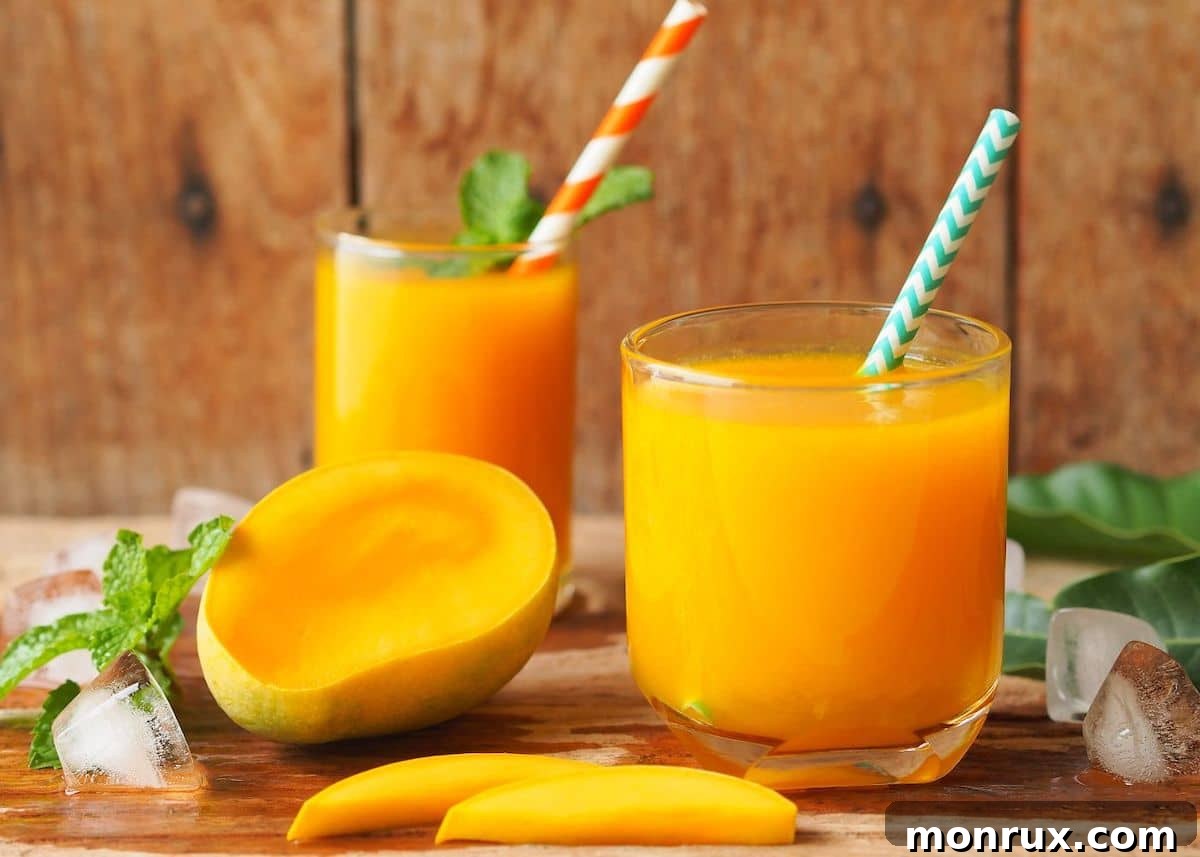
Unlock a vibrant burst of flavor and a powerhouse of nutrition with this incredible Carrot Mango Juice recipe. Naturally sweet and incredibly refreshing, this delightful beverage combines the earthy goodness of carrots with the tropical sweetness of ripe mango, bright orange, and a hint of zesty ginger. Whether you’re a seasoned juicing enthusiast or new to the world of homemade drinks, you’ll find this recipe surprisingly easy to make using either a high-speed blender or a dedicated juicer. Say goodbye to store-bought juices packed with artificial additives and embrace the pure, unadulterated goodness of fresh, wholesome ingredients.
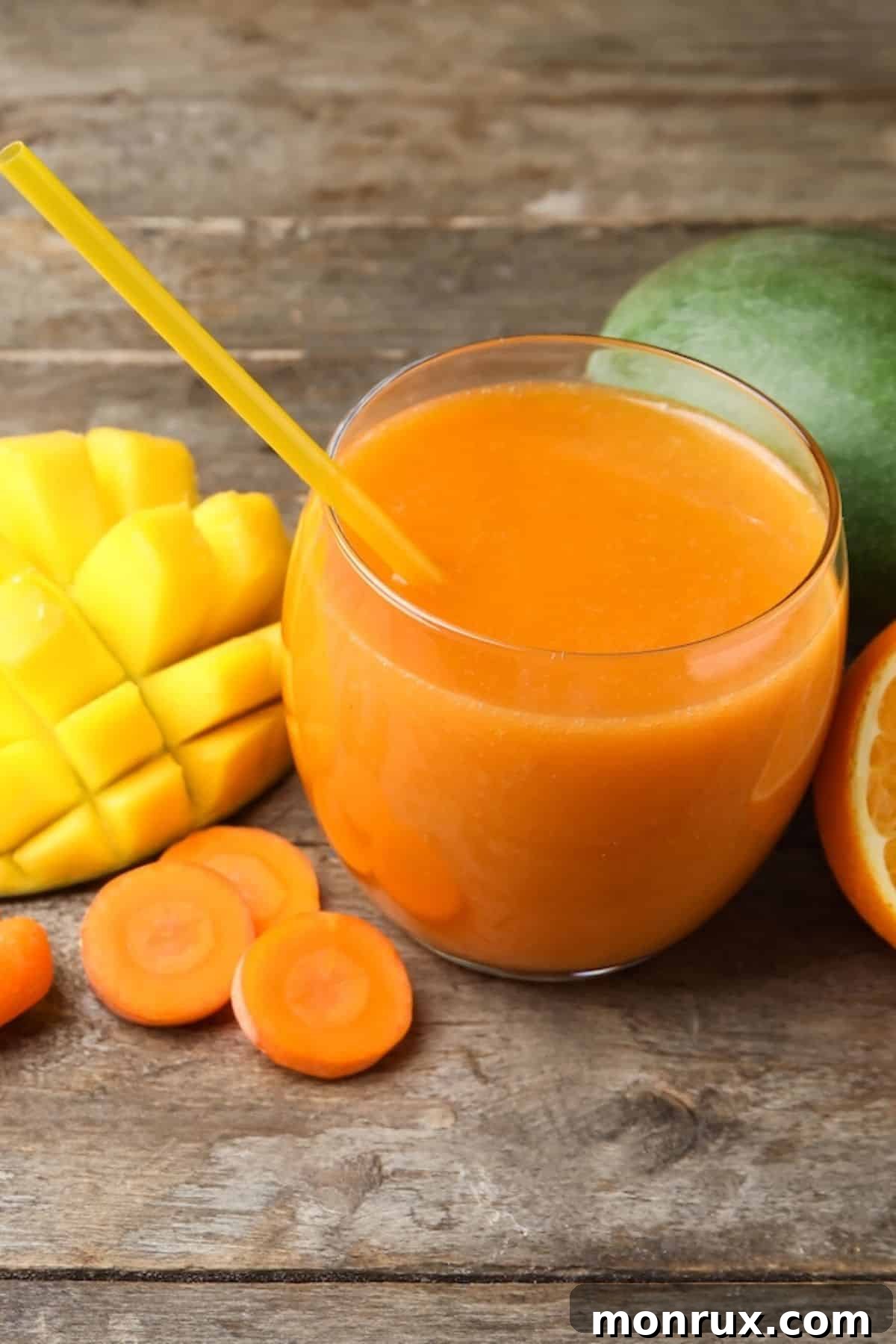
While carrot juice is undeniably easy to prepare, its distinct, strong flavor isn’t always a favorite for everyone. This recipe expertly addresses that by infusing it with the luscious, tropical notes of mango and the sunny tang of orange. These additions not only mellow out the intense carrot taste but also create a beautifully balanced and irresistibly sweet flavor profile. For an extra kick that elevates the entire drink, a touch of fresh ginger is added, providing a subtle warmth and a stimulating zing.
The beauty of this recipe lies in its versatility. If you own a high-speed juicer, you can whip up a batch of smooth, vibrant juice in approximately 5 minutes. No juicer? No problem! A powerful blender works just as effectively. Simply blend the ingredients with a bit of water and then strain the mixture through a fine-mesh sieve or a nut milk bag to achieve a perfectly smooth, pulp-free juice. This gorgeous yellow-orange concoction is bursting with essential vitamins, minerals, and antioxidants, making it a fantastic addition to your daily routine. While it’s a delightful treat year-round, its refreshing qualities make it an especially perfect choice as a summer juice recipe, ideal for cooling down and rehydrating on warm days.
Recipe Benefits (From a Nutritionist)
As a nutritionist, I am thrilled to share the incredible health advantages packed into every glass of this Carrot Mango Juice. It’s more than just a delicious drink; it’s a wellness elixir:
- Nutrient-Dense Goodness: Carrots are exceptionally rich in beta-carotene, a powerful antioxidant that the body converts into Vitamin A. This vitamin is crucial for maintaining healthy vision, boosting immune function, and promoting radiant skin. Mangoes contribute a significant amount of Vitamin C, another potent antioxidant, which further supports immunity and collagen production. Together with oranges, this juice becomes a fantastic source of these vital nutrients.
- Affordable & Accessible Ingredients: One of the best aspects of this recipe is its accessibility. Carrots are notoriously budget-friendly and readily available in most grocery stores year-round. Adding a ripe mango not only elevates the flavor but also provides an exotic touch without breaking the bank, making this homemade juice an economical choice for a healthy lifestyle.
- Balancing Natural Sweetness: This recipe intelligently balances the natural sugars from the sweet mango and orange juice with the earthiness of carrot vegetable juice. This creates a harmonious flavor that is naturally sweet without being overpowering, making it a healthier alternative to many sugary drinks. The ginger also aids in balancing sweetness with its pungent kick.
- Digestive Health Support: While juicing removes much of the fiber, the natural enzymes and nutrients in raw fruits and vegetables can still aid digestion. Ginger, in particular, is well-known for its digestive benefits, helping to soothe the stomach and alleviate nausea.
- Versatile Preparation: Whether you own a state-of-the-art juicer or a simple high-speed blender, you can enjoy this nourishing beverage. I’ve provided detailed instructions for both methods, ensuring that anyone can make this delightful juice regardless of their kitchen equipment. This flexibility makes healthy juicing more accessible to everyone.
- Anti-Inflammatory Properties: Ginger is a well-regarded anti-inflammatory ingredient, and the antioxidants in carrots, mangoes, and oranges contribute to overall cellular health, potentially reducing inflammation throughout the body.
Ingredient Tips for Perfect Juice
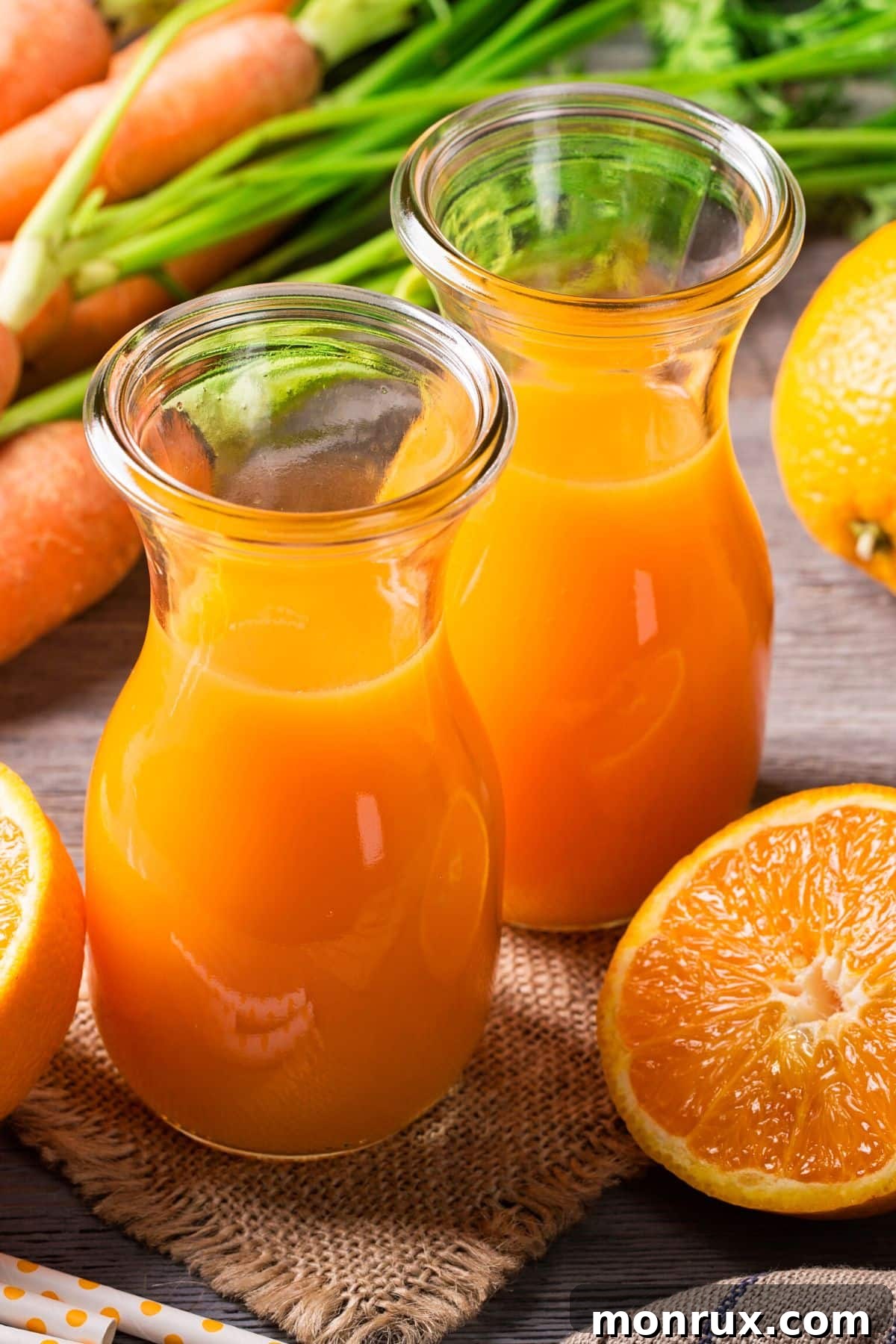
Selecting the right ingredients is key to achieving the most flavorful and nutritious Carrot Mango Juice. Here are some expert tips to guide your choices:
- Carrots: Aim for medium-sized carrots, as they tend to be the sweetest and offer the best texture for juicing. While peeling isn’t always necessary, if you find that your carrots have a particularly strong, earthy flavor, or if you’re sensitive to the taste, go ahead and peel them. Organic carrots are always a great choice to minimize pesticide exposure, though thorough washing is sufficient for conventional produce.
- Mango: The secret to truly exceptional mango flavor lies in using a very ripe mango. A perfectly ripe mango should emit a sweet, fragrant aroma near the stem and yield slightly to gentle pressure when squeezed. Avoid mangoes that are too soft or bruised. If fresh ripe mangoes are unavailable, frozen mango chunks can be used, but allow them to thaw completely before blending for the best texture and flavor. However, nothing quite compares to the sweetness and vibrancy of fresh, in-season mango.
- Orange: Freshly squeezed orange juice is paramount here. While store-bought orange juice might seem convenient, it often contains added sugars and lacks the vibrant freshness of a whole orange. Choose navel oranges for their excellent sweetness and ease of peeling. Ensure they are firm and heavy for their size, indicating a high juice content. You can either juice the orange separately or add peeled segments directly to your juicer or blender.
- Ginger: Ginger adds an invigorating “zing” and a wonderful depth of flavor to this juice. If you’re new to using fresh ginger, it’s best to start with a small piece, perhaps half an inch, and gradually increase the amount in future batches to suit your palate. Ginger’s potency can be surprising! Simply peel the skin with a spoon or vegetable peeler before adding it. It’s a powerful anti-inflammatory and digestive aid, making it a stellar addition to this healthy drink.
For the precise quantities of each ingredient, please refer to the detailed recipe card conveniently located at the end of this comprehensive post.
Equipment Notes (Juicer vs Blender): Which is Right for You?
Making delicious Carrot Mango Juice is wonderfully accessible, offering two primary methods that both yield fantastic results. Your choice between a juicer and a blender often comes down to desired texture, available equipment, and personal preference.
- Juicer: The Quickest Route to Smoothness
A juicer is arguably the quickest and most efficient method for producing a perfectly smooth, pulp-free juice. If you own a juicer, you’ll simply feed the prepped fruits and vegetables into the machine, and within minutes, you’ll have a glass of pure, vibrant liquid. There are two main types of juicers:
- Masticating (Slow) Juicers: These machines “chew” and press the produce slowly, extracting juice with minimal heat and oxidation. This method typically yields more juice and preserves more nutrients, resulting in a higher quality, longer-lasting juice. They are excellent for leafy greens and harder vegetables like carrots. My personal preference is an Omega masticating juicer, known for its efficiency and durability.
- Centrifugal (Fast) Juicers: These juicers rapidly shred produce with a spinning blade and then separate the pulp from the juice using centrifugal force. They are faster and generally more affordable than masticating juicers but can introduce more air and heat, potentially leading to slightly less nutrient retention and quicker oxidation.
With either type of juicer, you’ll enjoy a silky-smooth juice with minimal effort post-extraction.
- Blender: An Excellent Alternative
If a dedicated juicer isn’t part of your kitchen arsenal, a high-speed blender is a superb alternative. While it requires an extra step of straining, the result is still a wonderfully fresh and nutritious juice. When using a blender:
- Add Water: You’ll need to add a small amount of water to help the blender process the dense ingredients into a liquid consistency.
- Blend Thoroughly: Ensure you blend the ingredients until the mixture is as smooth as possible, breaking down all the fibrous material.
- Strain for Smoothness: This is the crucial step for achieving a juice-like consistency. A fine-mesh strainer or, even better, a nut milk bag will make a significant difference. Pour the blended mixture through the bag or strainer, pressing firmly to extract all the liquid and separate it from the pulp. The nut milk bag typically provides a much finer, smoother juice.
My suggestion for blender users: investing in a good quality fine-mesh strainer or a reusable nut milk bag will elevate your homemade blended juices to a new level of smoothness and enjoyment.
Step-by-Step Juicing Guide
Creating this delightful Carrot Mango Juice is a straightforward process, whether you opt for a juicer or a blender. Follow these detailed steps for a perfect batch every time. I personally utilize an Omega masticating juicer for all my juicing endeavors, but a high-speed blender is an equally viable option. If you’re considering new equipment, you might find my guide to the best juicer blenders helpful.
Step One: Prepare Your Produce
Begin by thoroughly washing all your fruits and vegetables under cold running water. It’s essential to remove any dirt or debris, especially when juicing carrots. Next, prepare your ingredients according to your chosen method:
- For a Juicer: Cut the mango, carrots, orange, and ginger into pieces that are small enough to comfortably fit through the feeding tube of your juicer. You want pieces that can be easily processed without jamming the machine.
- For a Blender: Since blenders require more liquid and finer pieces for optimal blending, cut your produce into smaller chunks. This will help achieve a smoother consistency more quickly and efficiently. For mango, ensure the pit is removed and the flesh is diced. Peel the orange and ginger.
Refer to the recipe card at the very end of this post for the precise ingredient measurements and quantities.
Step Two: Assemble Your Ingredients
Now, it’s time to add your prepared ingredients to your chosen appliance:
- For a Juicer: Simply have all your prepped fruit and vegetable pieces ready to be fed into the juicer. There’s no need to add water at this stage, as the juicer extracts pure liquid.
- For a Blender: Place all the cut mango, carrots, orange pieces, and ginger into the base of your high-speed blender. This is also the point where you will add the specified amount of water, which is crucial for helping the blender process the dense ingredients into a liquid.
Step Three: Extract the Juice
Proceed with the juicing or blending process:
- Using a Juicer: Turn on your juicer and systematically feed the prepared produce through the feeding chute. Collect the freshly extracted juice in a pitcher or glass. Most juicers will automatically separate the pulp, providing you with a ready-to-drink, smooth juice.
- Using a Blender: Secure the lid on your blender and blend on high speed for approximately 20-30 seconds, or until the mixture appears completely smooth and well-liquefied. The goal is to break down all the fibrous material as much as possible before straining.
Step Four: Strain and Serve (Blender Method Only)
This final step is particularly important if you’re using a blender:
- For Juicer Users: Your juice is likely already smooth and ready to enjoy!
- For Blender Users: Carefully pour the blended mixture through a fine-mesh strainer or, for superior smoothness, a nut milk bag. Place the strainer or bag over a large bowl or pitcher. Squeeze the pulp from the top downwards to extract every last drop of the liquid, leaving behind the fibrous material. You can discard the collected pulp or save it for other purposes like composting or adding to baked goods.
Serve your fresh Carrot Mango Juice immediately for optimal taste and nutrient retention. For an even more refreshing experience, chill it in the refrigerator for at least 30 minutes, or serve it over ice cubes to enhance its sweetness and vibrant flavor.
Common Questions About Carrot Mango Juice
While mango skins are not recommended for consumption in this recipe due to their taste and potential for irritation, they are excellent for composting. The pulp left over from juicing or blending can also be composted. Alternatively, if you’re using a blender and have a fine, dry pulp, you could experiment with adding small amounts to muffins, breads, or even savory dishes for a boost of fiber, though its texture and flavor might require careful integration.
Pure mango juice does tend to be naturally thicker than many other fruit juices due to the mango’s rich, creamy texture. However, in this specific recipe, the addition of carrot juice and orange juice helps to thin it out considerably, resulting in a more traditional, drinkable juice consistency. If you desire a thicker, smoothie-like consistency, you can reduce the amount of orange juice or water, or check out my Pure Mango Juice recipe for a 100% mango experience.
Yes, you can certainly use frozen mango to make this juice, especially when fresh mangoes are out of season or unavailable. For the best blending experience and a smoother texture, it’s advisable to thaw the frozen mango completely before adding it to your juicer or blender. From my personal experience, however, using fresh, perfectly ripe mango consistently yields the most superior flavor and natural sweetness. Frozen thawed mango can sometimes lack the intense sweetness and vibrant taste that fresh mango offers.
Freshly made juice is always best consumed immediately to maximize its nutrient content and vibrant flavor. However, if you have leftovers, you can store this Carrot Mango Juice in an airtight container in the refrigerator for up to 4 days. While some nutrient degradation may occur over time, it will still retain significant health benefits. For optimal freshness, fill the container to the brim to minimize air exposure.
Absolutely! This Carrot Mango Juice recipe is incredibly versatile and encourages customization. Feel free to adapt the ingredients to suit your taste preferences or to incorporate other beneficial fruits and vegetables. For a more tropical twist, consider swapping the orange for pineapple. Other great additions could include a small piece of turmeric for added anti-inflammatory benefits, a handful of spinach for an extra nutrient boost (though it will change the color), or a squeeze of lime for a brighter, more acidic note. Experiment and find your favorite combination!
I truly hope you enjoy making and savoring this delightful Carrot Mango Juice! If you do give this recipe a try, please take a moment to leave a comment and a starred review below. Your feedback is invaluable and helps others discover this wonderful drink.
Also, don’t forget to connect with me on social media to stay updated with more clean eating recipes and wellness tips. You can find me on Facebook, Pinterest, Instagram, and YouTube!
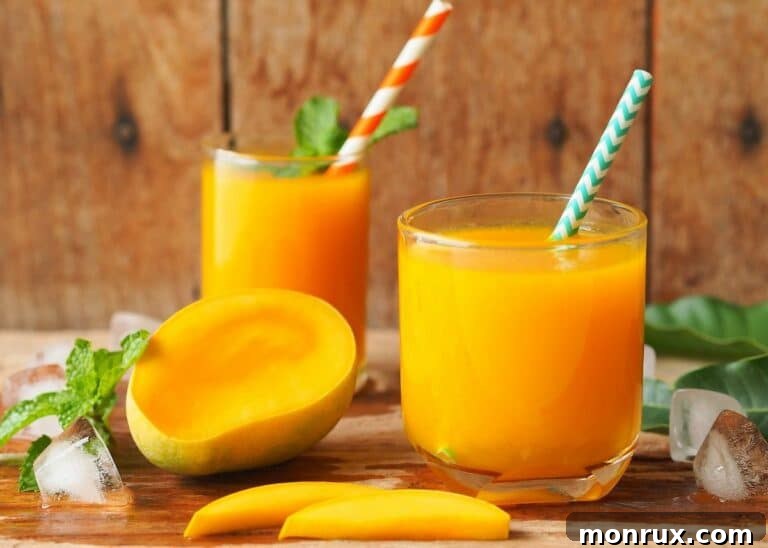
Carrot Mango Juice Recipe (Juicer or Blender)
Rating: 5 Stars from 1 review
This Carrot Mango Juice is bursting with natural flavor and essential nutrition. It offers a bright, tropical, and wonderfully refreshing taste that is universally loved. Easily prepare this delicious homemade juice using either a high-speed blender or a dedicated juicer.
- Total Time: 15 minutes
- Yield: 2 servings
Ingredients
- 1 ripe mango, peeled with the pit removed
- 5 medium carrots
- 1 orange, peeled
- 1 one-inch piece of fresh ginger, peeled
- 1 cup water (if using a blender to make the juice)
Instructions
- Thoroughly wash all your produce. Cut the mango and carrots into large pieces that will easily fit through the feeding tube of a juicer. If you are preparing the juice using a blender, chop your produce into smaller, more manageable pieces to ensure smoother blending.
- If you are using a juicer, carefully feed the prepared vegetable and fruit pieces through your juicer. Allow the fresh juice to collect in a pitcher or glass, and serve immediately for the best taste and nutritional value.
- If you are using a blender, add the chopped mango, carrots, orange, and ginger pieces into the blender base. Pour in 1 cup of water. Blend the ingredients on high speed for 20-30 seconds, or until the mixture achieves a consistently smooth, liquid texture.
- For the blender method only: Pour the blended mixture through a fine-mesh strainer or a clean nut milk bag placed over a pitcher or bowl. Gently but firmly squeeze the pulp from the top downwards to extract all the liquid, ensuring a smooth, pulp-free juice. Discard the remaining fibrous pulp, or set it aside for an alternative use. Serve the fresh juice immediately, or chill it for a few minutes for a more refreshing experience. You can also add ice cubes for enhanced sweetness and flavor.
Notes
- This recipe is easily scalable. Feel free to double or triple the ingredients to prepare more servings, perfect for sharing or meal prepping.
- While fresh juice is always at its peak flavor and nutrient content right after it’s made, any leftovers can be stored. Transfer the juice to a covered, airtight container and refrigerate for up to 4 days.
- This juice recipe is incredibly versatile and open to creative adaptations! Don’t hesitate to experiment with different fruits or a touch more ginger to suit your taste. For a distinctly tropical twist, consider using fresh pineapple in place of the orange.
- Author: Carrie Forrest, MPH in Nutrition
- Prep Time: 10 minutes
- Cook Time: 5 minutes
- Category: Beverage
- Method: Blender or juicer
- Cuisine: Homemade
- Diet: Vegan
Nutrition
- Serving Size: 1/2 of recipe
- Calories: 54
- Sugar: 6.2 g
- Sodium: 75.4 mg
- Fat: 0.2 g
- Saturated Fat: 0 g
- Carbohydrates: 12.6 g
- Fiber: 0.9 g
- Protein: 1.1 g
- Cholesterol: 0 mg
More Refreshing Juice Recipes You Might Like
If you enjoyed this vibrant Carrot Mango Juice, you’ll love exploring other delicious and nutritious juice recipes. Here are some more of my favorites to inspire your juicing journey:
- Beet Carrot Juice: A sweet and earthy blend for detoxification.
- Pineapple and Cucumber Juice: The ultimate hydrating and cooling drink.
- Watermelon Mint Juice: A refreshing summer treat with a hint of coolness.
- Carrot Juice with Orange and Ginger: A classic energizing blend.
- Cucumber Juice in a Blender: Simple, hydrating, and excellent for skin health.
- Papaya Juice Recipe: A tropical digestive aid bursting with flavor.
Essential Juicing Resources!
Deepen your knowledge and enhance your juicing practice with these valuable resources. From boosting energy to selecting the best equipment, these guides cover everything you need to become a juicing pro:
Don’t forget to join my exclusive newsletter list to receive clean eating recipes, wellness insights, and expert tips delivered directly to your inbox. It’s completely free, and I promise no spam; you can unsubscribe at any time.
About the Author: Carrie Forrest is a highly accomplished wellness and food blogger, recognized for attracting over 5 million annual visitors to her popular site. She holds a master’s degree in public health with a specialization in nutrition and is a certified holistic nutritionist. Carrie’s inspiring journey of recovery from chronic illness fuels her passion for empowering other women to transform their health through wholesome eating and mindful living. Feel free to reach out to her directly through her contact form for personalized advice or collaborations.